

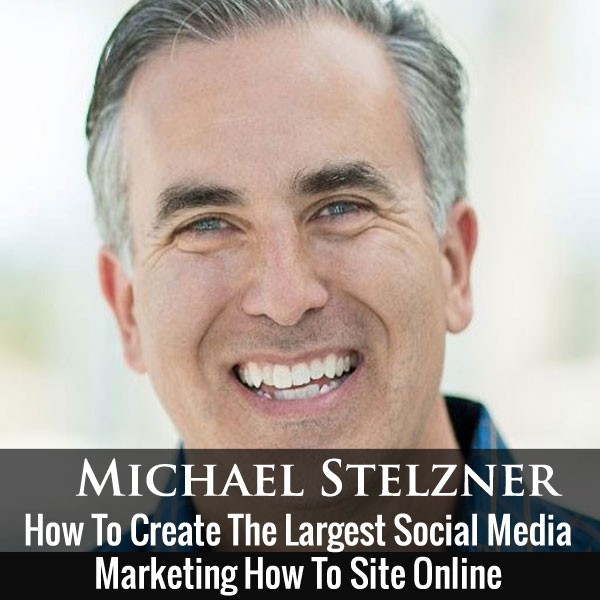
Podcast: Download (Duration: 51:53 — 59.7MB)
Social Media Examiner ranked number one on Google for “Instagram apps” for two and a half years, pulling at least 100,000 page views a month. Mike Stelzner considers it close to worthless, because none of that traffic converted to email subscribers.
He runs no display ads and takes no affiliate commissions. The site sells its own products, plus newsletter placements at $6,000 per slot per send.
Mike founded Social Media Examiner in 2009 after building a white paper consulting business. The site now reaches 560,000 email subscribers and hosts Social Media Marketing World, drawing 3,000 to 4,000 attendees.
This episode covers why he refuses affiliate revenue, how contributors and speakers work for free, what publishing frequency actually does for traffic, and the economics of running a large conference.
A note on timing: this is a 2017 conversation. Platform dynamics and advertising rates have shifted since.
Get My Free Mini Course On How To Start A Successful Ecommerce Store
If you are interested in starting an ecommerce business, I put together a comprehensive package of resources that will help you launch your own online store from complete scratch. Be sure to grab it before you leave!
Table of Contents
Key takeaways
- Selling your own products beats affiliate revenue and avoids disclosure obligations entirely.
- Newsletter ad placements earn far more than display advertising on the same audience.
- Measure content by email conversions rather than traffic, since high-traffic posts often convert poorly.
- Publishing frequency drove traffic growth until editorial quality became the constraint.
- Contributors and speakers work for free when the platform gives them meaningful exposure.
- Google is the largest traffic source, ahead of the email newsletter and Facebook.
- Set email frequency expectations in the welcome message so subscribers are not surprised.
- Offer an opt-out from promotions rather than forcing a full unsubscribe.
Why refuse affiliate revenue on a media site?
Because your own products earn more and affiliate relationships compromise your editorial position. Mike stopped all affiliate arrangements several years before this conversation.
Affiliates expect reciprocity. Promoting someone else’s launch creates an obligation to keep doing it.
Disclosure requirements multiply. A site with many contributors and any equity or affiliate stake needs disclosures throughout its content.
Independence has value. Mike compares the position to Consumer Reports, able to publish any opinion without compliance concerns.
The math settles it. Product revenue exceeds anything affiliate commissions would produce.
How much can you charge for newsletter advertising?
Social Media Examiner charges $6,000 per slot per send, with two slots per email. That is up to $12,000 on each of three weekly sends.
Buyers are purchasing speed. A single send can produce a thousand leads within 48 hours.
The placements read as content. Text-based offers for free ebooks and reports, labeled as sponsored.
Newsletter inventory beats display. Programmatic advertising has driven display rates down year over year.
More display ads make it worse. Cramming ads onto a page drives readers away.
A partner program adds logo placement. Four slots for advertisers committing at least $30,000 a quarter.
How do you measure whether content is working?
Track email conversions rather than page views. Mike’s Instagram apps article ranked first on Google for years while converting almost nobody.
Traffic without conversion is a poor trade. Millions of page views delivering few subscribers do not build the business.
Lower-traffic posts often convert better. Those readers are the ones who stay.
The goal shapes the content. You want people who will keep receiving your content rather than one-time visitors.
How often should a media site publish?
As often as your editorial team can maintain quality. Social Media Examiner scaled from two articles a week up to nine, then settled at six.
Each addition brought more traffic. That relationship held all the way up.
Quality became the ceiling. At nine per week they were occasionally publishing work below their standard to fill slots.
Mike would rather publish nothing than publish weak content. His editorial team found that a relief.
Audience breadth justifies the volume. Covering Facebook, Instagram, LinkedIn, Pinterest, and more requires steady output.
They deliberately avoided very long posts. Two or three focused articles beat one enormous one for their readers.
How do you get expert contributors to write for free?
Build something people want to be associated with. Every contributor at Social Media Examiner writes for free, and so does every conference speaker.
Exposure is the currency. Contributors have landed book deals and built reputations through the platform.
Early credibility came from Mike’s existing reputation. He was established in the white paper world, which made people willing to bet on him.
A handful of known names started it. Five recognizable bloggers each writing monthly created the initial credibility.
That star power recruited everyone else. A “write for us” link in the navigation brought in submissions.
Quality standards attracted talent. Four editors worked on every early article, all volunteers.
What drives traffic to a large content site?
Google first, the email newsletter second, and Facebook third. Mike tracks the newsletter contribution with UTM parameters.
That order reversed over time. In 2009 social drove 60% and search 40%.
Early virality came from sharing. Articles trended on Digg and Delicious roughly weekly.
Timing helped enormously. Businesses coming out of the 2008 downturn saw social as free marketing.
Growth was fast. Twenty thousand subscribers in 90 days and past 100,000 within the first year.
How do you build an email list on a content site?
Place opt-ins aggressively at multiple points and vary the presentation. Social Media Examiner shows four or five capture opportunities on a single article visit.
Entry triggers within ten seconds. A popup appears almost immediately on first visit.
The article carries several more. Sidebar, a scroll-triggered offer near the bottom, and one below the content.
Exit intent catches leavers. Another popup fires as people leave.
The offer stays the same and looks different. Presentation varies at each placement so it does not read as repetition.
Their industry report is the main magnet. It pulls 20,000 to 30,000 opt-ins a month in its eighth year.
Split testing runs almost weekly. Continuous tweaking compounds over a list this size.
How do you email a large list three times a week?
Set the expectation immediately and keep the content valuable. The welcome email states exactly what subscribers will receive.
Text only, no graphics. That helps deliverability and gets to the content faster.
Subject lines come straight from article headlines. Editorial is spread so each send has a strong option available.
Third party testing verifies inbox placement. Mike uses a deliverability service to confirm the major providers accept their mail.
Remind subscribers how long they have been with you. A line at the bottom gives people pause before unsubscribing.
Offer a promotions opt-out. Subscribers can stop promotional mail or downgrade to weekly rather than leaving entirely.
Why run a conference alongside a media business?
Because in-person connection accelerates relationships in ways online cannot. Mike started Social Media Examiner by attending conferences and meeting the people in the space.
Attendees come for the content and return for the relationships. Masterminds, customers, and peers all form there.
Complexity is the moat. Few competitors attempt events at this scale because executing well is genuinely hard.
The financial risk is real. With 2,500 registered attendees, Mike’s event broke even about a week before the recording.
Audience size reduces that risk. A large list and deep relationships make ticket sales more predictable than they are for most organizers.
Monitoring is constant. High and low thresholds trigger spending decisions as sales come in.
Marketing is extensive. Mike describes a 70-page plan spanning podcasts, ads, and behind-the-scenes video.
Frequently asked questions
Should a media site use affiliate marketing?
Mike declines it entirely. Selling your own products earns more and avoids the disclosure requirements and editorial obligations affiliate relationships create.
How much do newsletter ads cost?
Social Media Examiner charges $6,000 per slot per send with two slots available. Buyers pay for speed, since one send can generate a thousand leads in 48 hours.
How do you measure content performance?
By email conversions rather than page views. Mike’s top-ranking Instagram article drew 100,000 monthly page views while converting almost no subscribers.
How often should you publish blog content?
As often as you can maintain quality. More frequency reliably increased traffic until the editorial team could no longer sustain the standard.
How do you get people to write for your site for free?
Build a platform worth being associated with. Contributors accept exposure as payment when it leads to reputation, clients, or book deals.
Where does content site traffic come from?
Google leads, followed by the email newsletter and then Facebook. That ordering reversed over time as search grew and social reach declined.
How do you email a list three times a week without losing subscribers?
Set the expectation in the welcome email, keep every send genuinely useful, and offer a promotions opt-out or weekly downgrade rather than only unsubscribe.
Are conferences worth running for a media business?
They carry real financial risk and produce strong relationships and revenue. A large existing audience is what makes the risk manageable.

