
Podcast: Download (Duration: 52:16 — 60.1MB)
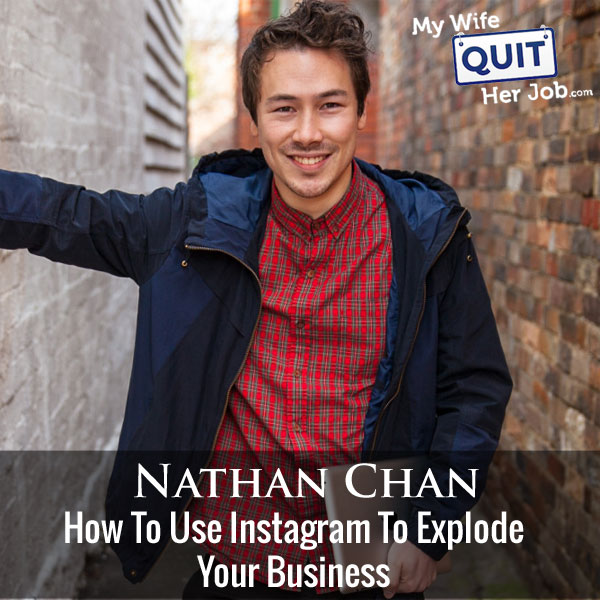
Nathan Chan grew Foundr Magazine’s Instagram account from zero to a million followers in about two years, almost entirely without paid advertising. Three things did it: content his audience actually wanted, a link in bio driving every post toward a conversion, and getting other accounts to share his work at scale.
Foundr started as a side project while Nathan worked a job he disliked. He had never run a business and landed a Richard Branson interview within his first four months.
His view on followers is worth noting up front. He does not particularly care about the follower count, because the email list is what the business runs on.
This episode covers the competitor research that shaped his content, how share-for-share deals work, how to approach micro-influencers with a physical product, and the three types of Instagram account worth understanding.
A note on timing: this is a 2017 conversation. Instagram’s algorithm and features have changed substantially, so treat tactics as historical and principles as durable.
Get My Free Mini Course On How To Start A Successful Ecommerce Store
If you are interested in starting an ecommerce business, I put together a comprehensive package of resources that will help you launch your own online store from complete scratch. Be sure to grab it before you leave!
Table of Contents
Key takeaways
- Foundr reached a million Instagram followers in roughly two years with almost no ad spend.
- Competitor analysis showed startup tips, facts, and quotes performed best in the entrepreneurship niche.
- Share-for-share deals with similarly sized accounts drove growth without a budget.
- Ecommerce accounts need one to two posts daily, while media brands publish five to nine times.
- Micro-influencers at 10,000 to 100,000 followers will often post for a free product.
- Have influencers shoot their own photos, since everyday people using a product outperform models.
- Three account types exist: personal brand, company brand, and niche fan pages that promote others’ products.
- Email beats followers, and Foundr’s quarter-million list is what the business actually monetizes.
How do you decide what to post on Instagram?
Run a competitive analysis before posting anything. Nathan studied what other entrepreneurship publications posted and found startup tips, facts, and quotes consistently outperformed everything else.
He then differentiated within that format. Magazine covers, podcast episodes, lessons from founders he had interviewed, and photos of people.
The goal is attracting the right followers rather than the most. Content about startups and entrepreneurship draws people interested in those subjects.
He acknowledges an omission. More behind-the-scenes content would have strengthened the account.
How often should you post on Instagram?
Depends entirely on your business type. Foundr publishes five to nine times a day as a media brand with a content team.
Ecommerce needs far less. One to two posts daily is sufficient when the images are strong.
Consistency matters more than volume. Nathan is emphatic that nobody should copy his frequency.
Batching makes it manageable. Two hours on a Monday producing a week of posts, scheduled through a tool, works fine.
What is share for share on Instagram?
Two accounts of similar size agree to post each other’s content. Nathan built a roster of 20 to 30 accounts and ran rotations of reciprocal sharing.
This is how he grew without money. He paid a little and mostly traded.
Larger accounts require a different trade. With a 100,000-follower niche page, he might post one of their quotes and link back, and he never changes his own link in bio.
Fan pages participate more readily than brands. Company accounts rarely agree to this kind of swap.
How do you get influencers to promote your product?
Send it free and ask for one post. Nathan plans to send about 300 bottles to influencers for a new ecommerce brand, absorbing the cost because the margins support it.
Target micro-influencers at 10,000 to 100,000 followers. Accounts above 300,000 typically want payment on top of the product.
Outreach is manual. Check whether an email address is listed on the profile, and direct message them if not.
The pitch is short. What you are launching, what inspired it, an offer to send one, and clear direction on what you are looking for.
Follow up until they post. Ask them to email you once it goes live.
Expect a low hit rate starting out. Nathan estimates 10% to 20% in his early Foundr days, helped considerably by having interviews and features to offer in exchange.
Why user generated content outperforms professional photos
Have influencers shoot their own images rather than supplying yours. Ordinary people using a product are more relatable than models.
Celebrity endorsement does work. Everyday users work better for building community around a brand.
You still need professional photography somewhere. A few hundred dollars of product shots for the website gives you polished assets, and phone photos touched up with apps handle the rest.
Every shipment should encourage sharing. Include a card with instructions and an incentive to post.
That solves the content problem permanently. A community producing images gives you an endless supply.
What are the three types of Instagram accounts?
Personal brand, company brand, and niche fan pages. Understanding the difference tells you who to approach.
Personal brand accounts belong to individuals. A trainer, a podcaster, anyone building around themselves.
Company accounts represent brands. Foundr, Nike, or any product business.
Fan pages are dedicated to a topic with no brand attached. They exist to accumulate followers and earn money promoting other people’s products.
Fan page operators are frequently very young. Nathan has cut deals with teenagers running networks of 40 accounts across fashion, watches, luxury, and cars.
You can also build your own. A health and fitness fan page alongside a product brand lets you promote occasionally to an audience you own.
Fan pages grow easily because people treat Instagram like a vision board. Inspirational content spreads without a brand behind it.
What if you cannot give your product away?
Work with niche fan pages instead. Nathan cites a student selling four-wheel-drive vehicles at $30,000 to $70,000 who cannot send free samples.
That seller partners with topical accounts. The audience is right even though the giveaway model does not apply.
Group giveaways are another route. Ten brands in the same category promote one giveaway together, with entry requiring people to follow all participating accounts.
Should you focus on Instagram followers or email subscribers?
Email, without hesitation. Foundr’s list of about a quarter million subscribers is what the business monetizes.
Nathan’s reasoning is ownership. Instagram is not owned media, and an email list is.
The list was pruned deliberately. It exceeded 300,000 before removing subscribers who never opened anything.
Instagram feeds the list rather than replacing it. Every post drives toward a link in bio, rotating through about 20 different lead magnets.
Untrackable influence is the other benefit. Asking new subscribers how they found Foundr, the answer was frequently Instagram even when no click was attributed.
How do you drive conversions from Instagram?
Push everything toward the link in bio and minimize the steps after the click. Nathan linked directly to the App Store, where downloading took roughly three taps.
Free entry point plus low friction is the formula. A free Richard Branson issue with almost no barrier converted well.
Gary Vaynerchuk’s jab-jab-jab-right-hook applies. Most posts give value and occasional posts ask for something.
Ecommerce can point straight at the product. Nathan plans to test coupon codes, free shipping offers, and flash discounts alongside direct product links.
How do you land interviews with famous people?
Find the gatekeeper and make the ask a no-brainer for them. At Richard Branson’s level, the decision belongs to a publicist or assistant.
Locate that person specifically. Tools like Clearbit or Email Hunter, or LinkedIn searches for the head of PR.
Timing beats persistence alone. People launching a book or company actively want press, so Amazon’s coming-soon list is a useful source of targets.
Tailor the pitch to their history. Nathan’s Branson approach leaned on Branson’s own first venture being a student magazine and his work with young entrepreneurs.
Follow up relentlessly and revisit a no. Barbara Corcoran declined, and he came back a year later.
Format carries credibility. A magazine reads as more legitimate than a blog or podcast, the way a television show differs from a YouTube channel.
What can you offer before you have an audience?
Whatever is genuinely valuable to that person. Nathan had no audience when he started and traded lifetime magazine subscriptions, interviews across his magazine, podcast, and blog, mentoring, and introductions.
The exchange has to be mutual. Once his audience grew, exposure alone became sufficient.
Early leverage came from creativity rather than reach. He had an Instagram account and a willingness to find what each person wanted.
Does Instagram still work after the algorithm change?
Yes, though it is harder than it was. Nathan acknowledges engagement is weaker than two years prior and still recommends doubling down.
His evidence is ongoing results. It continues working for Foundr and for students he teaches.
One student selling hair extensions generated over a million dollars in a year with Instagram as her only channel.
Frequently asked questions
How long does it take to grow a large Instagram following?
Foundr reached a million followers in about two years and three months, starting from zero with almost no advertising spend.
How many times a day should you post on Instagram?
One to two times daily for ecommerce, more for media brands with content teams. Consistency matters more than frequency.
What is share for share on Instagram?
Two accounts of similar size agree to post each other’s content. Nathan built a roster of 20 to 30 accounts and rotated reciprocal shares.
How do you get influencers to post about your product?
Send it free. Micro-influencers between 10,000 and 100,000 followers will frequently post in exchange for the product alone.
Should influencers use your photos or their own?
Their own. Everyday people using a product are more relatable than polished brand photography or models.
Are Instagram followers or email subscribers more valuable?
Email. Followers help with influence and reach, and an email list is owned media that you monetize directly.
What is an Instagram fan page?
An account built entirely around a topic with no brand attached, earning money by promoting other people’s products. They are frequently receptive to partnerships.
Do you need professional photos for Instagram?
Some. A few hundred dollars of product photography covers your website and key posts, and phone photos edited with apps handle everyday content.