Podcast: Download (Duration: 51:05 — 58.8MB)
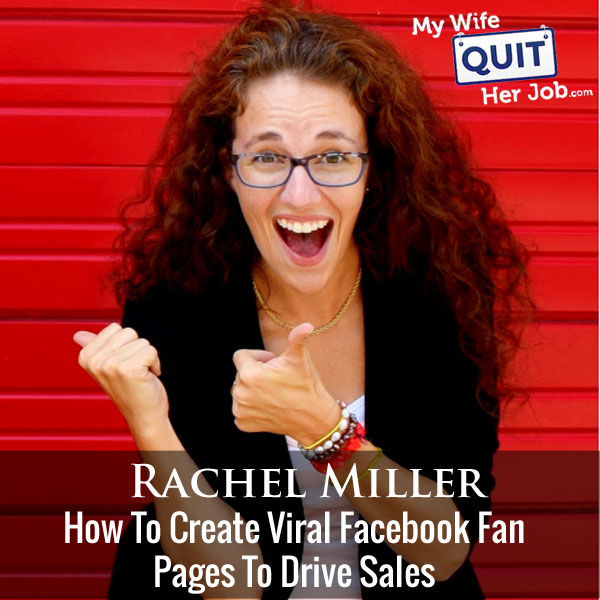
Build the audience first and find products to fit it afterward. Rachel Miller grew Quirky Momma to 2.2 million fans with zero advertising on the first million, and drove over nine million page views to One Crazy House in 2016 without running a single ad.
Her testing method costs almost nothing. Two to three dollars boosting each of six to nine posts, comparing which content converts viewers into page fans.
Her framing on selling is unusual. Sales are the byproduct of collecting the right people rather than the objective of any individual post.
This episode covers how to find the specific audience segment that shares compulsively, why you should share other people’s content early on, the 100,000-fan threshold that changes your strategy, and how to sell without triggering Facebook’s spam signals.
A note on timing: this is a 2017 conversation. Facebook’s algorithm, page features, and invite mechanics have changed substantially since.
Get My Free Mini Course On How To Start A Successful Ecommerce Store
If you are interested in starting an ecommerce business, I put together a comprehensive package of resources that will help you launch your own online store from complete scratch. Be sure to grab it before you leave!
Table of Contents
Key takeaways
- Build the audience first, then find products that fit, since traffic is harder to acquire than products.
- Test content with $2 to $3 boosts, keeping spend low so Facebook treats you as a content source.
- Roughly 200 people reached is enough to judge whether a post converts.
- Interview your first several hundred fans by phone to discover audience segments you would never guess.
- Share more of other people’s content than your own until you reach 100,000 fans, then invert it.
- Under 100,000 fans you can invite post-likers to like your page, capped at 500 per day per person.
- Sell through memes with a tag-a-friend call to action rather than a direct buy instruction.
- The word “sale” reduces reach because it signals a business rather than a content creator.
Should you build an audience or a product first?
Build the audience first. Rachel’s analogy is a horse and cart, where you need both and the horse is harder to come by.
Products get selected to fit the audience afterward. Her chalkboard labels sell to DIY, preschool, and even cat audiences because labeling applies everywhere.
Affiliate links are how she tests demand cheaply. She promotes other people’s products, watches what sells, then decides whether to source it herself.
Sourcing only happens when it is easy. A cat-themed rolling pin earned her $2,000 to $3,000 in a month as an affiliate, and she declined to source it because paint safety testing made it complicated.
Her rule is path of least resistance. Fifteen minutes to make money on an affiliate beats a long compliance process.
How do you find out what your audience wants?
Post six to nine different pieces of content and boost each with two to three dollars to the same broad audience. Whichever converts best tells you what your people respond to.
Keep the budget deliberately small. Spending above five dollars signals to Facebook that you are a business rather than an organic content source.
Roughly 200 people reached gives you a readable result. That is enough to see click-through and conversion patterns.
The metric is page likes rather than post likes. Someone who likes the content and then follows the page has proven they will engage.
Beat your winner repeatedly. Rachel has run 15 rounds of testing, each time trying to top the best performer.
Her cat page discovery was that people respond to cats portrayed as humans. Cat slumber parties, cats behaving like toddlers, cats eating messily.
How do you find the audience segment that shares the most?
Interview your early fans by phone. Rachel asks around 500 fans in and looks for what her most engaged people have in common.
Surveys will not surface it. A survey assumes answers you already suspect, and the valuable segments are ones you would never think to ask about.
Her cat page’s core turned out to be people working at no-kill shelters. A fan mentioned it while talking about his late wife’s volunteer work.
Her crock pot page converted best among Mormon women. Four of five interviewees shared that background, and she has no theory why it works.
People agree to talk more readily than you would expect. Five of six said yes on one page, and four of nine on another.
Those segments produce absurdly cheap advertising. When nearly everyone who sees a post engages with it, Facebook prices likes at a fraction of a cent.
What should you post on a new Facebook page?
Share more of other people’s content than your own at first. You want Facebook to see your page as where the best content in your niche accumulates.
Finding that content takes no tools. Type your topic into the Facebook search bar and the top posts surface.
Add a modifier to narrow it. Searching “silly cats” or “cats baby” targets what your specific audience wants rather than general category content.
Sharing beats re-uploading below 100,000 fans. Above that threshold, uploading your own version outperforms sharing.
Always credit the source. Tag the page, include their URL where possible, and get permission when you can.
What changes at 100,000 Facebook fans?
The invite feature disappears and shares become the dominant signal. Below 100,000 you can invite people who liked a post to like your page.
That invite is manual and capped at 500 per day. Rachel suggests recruiting family members so several people can work through the list.
Above 100,000, the algorithm rewards shares instead. Your content strategy has to shift toward material people forward rather than merely like.
Start emphasizing shares before you get there. Rachel recommends the transition around 50,000 fans.
Coasting at 100,000 is a legitimate strategy. A page at that size drives real traffic on shared content alone, and duplicating the playbook on a second page may beat pushing the first one higher.
How do you sell products on a Facebook page?
Connect the product to a meme and make the call to action about tagging a friend. Rachel’s cat rolling pin post asked people whether they knew a crazy cat lady.
The link goes in without a buy instruction. Nobody is told to purchase, and people share it with friends who then buy.
Connections can be loose. A meme about a cat drinking from the toilet leads naturally to a pet water fountain.
Reserve about a quarter of posts for anything traffic-directing. Pushing products harder than that reads as spam.
Link to products from day one. The goal is learning what your audience buys rather than generating revenue immediately.
Winning products get recycled. Rachel cycles proven posts roughly twice a month every other month, increasing frequency during relevant seasons.
Which words reduce your Facebook reach?
Anything that identifies you as a business selling something. The word “sale” specifically suppresses reach because Facebook wants businesses to buy ads.
Rephrase the same idea. Saying a price is rock bottom, or that something is going fast, communicates urgency without the trigger.
Buy-one-get-one has the same problem. Describing leaving the store with double conveys it without the phrase.
Looking like a company hurts you generally. Facebook favors passionate individuals sharing content over brands promoting products.
Keep the company page as a credential. Rachel treats hers as a resume showing who she is and what she offers, rather than a traffic source.
What is dark posting on Facebook?
Running a post as an ad only, so you can test versions before publishing to your page. The post appears to be on your page and only reaches people you pay for.
Large publishers do this routinely. Nothing appears on their pages that has not been tested first.
The use case is a deadline. Three videos and one week before launch means five dollars on each version tells you which to commit to.
Rachel reserves it for posts that matter. Regular content goes up without testing.
Should you use a Facebook page or a group?
A page for ecommerce, because you cannot run ads from a group. Groups also surrender control over the conversation.
Complaints are harder to manage in a group. Every member can post, and negative feedback about your product is more visible.
Pages allow more moderation. Comments still happen and you have better tools for handling them.
A VIP group can complement a page. Early access to products and discounts for existing customers works well as a secondary space.
Can you revive a dead Facebook page?
Yes, by shifting the focus onto your readers. One of Rachel’s students went from a page stalled at 25,000 fans for years to 265,000 in four or five months.
The change was audience focus. She concentrated entirely on what would thrill the people already there.
Check who is actually following you. Page settings show your existing audience, which frequently reveals mistargeting.
Heavy personal branding is the harder case. A page built around you can still work if you feature readers more prominently, and starting fresh is sometimes simpler.
What content format works best on Facebook?
Video, and it does not need production value. Authentic phone footage frequently outperforms polished work.
The test is whether viewers can picture themselves. A well-produced ad works when the scenario feels reachable.
Links perform worse than images or video. Drive traffic to a blog post using a photo or video with the link in the description or comments.
Comments placement performs better and costs you time. Rachel schedules ahead and accepts slightly worse performance over checking in several times daily.
Frequently asked questions
How do you grow a Facebook page without ads?
Share the best existing content in your niche, test what your audience responds to with small boosts, and invite everyone who likes a post to like your page.
How much should you spend testing Facebook posts?
Two to three dollars per post, never above five. Low spend keeps Facebook treating your page as an organic content source.
How do you find your target audience on Facebook?
Interview your early fans by phone. Rachel’s most valuable segments, including no-kill shelter workers and Mormon women, emerged from conversations rather than surveys.
Should you share other people’s content on your page?
Yes, and more than half of your posts below 100,000 fans. It signals to Facebook that your page is the hub for your topic.
What happens at 100,000 Facebook fans?
You lose the ability to invite post-likers to like your page, and shares become the primary growth signal instead of likes.
How do you sell products on a Facebook page?
Connect the product to entertaining content and make the call to action tagging a friend. Direct purchase instructions read as spam and reduce reach.
Does the word “sale” hurt Facebook reach?
Yes. It signals a business rather than a content creator, and Facebook wants businesses to pay for reach. Rephrase the offer instead.
Should you use a Facebook group or a page for ecommerce?
A page. You cannot run ads from a group, and groups give you far less control when customers complain publicly.