Audio

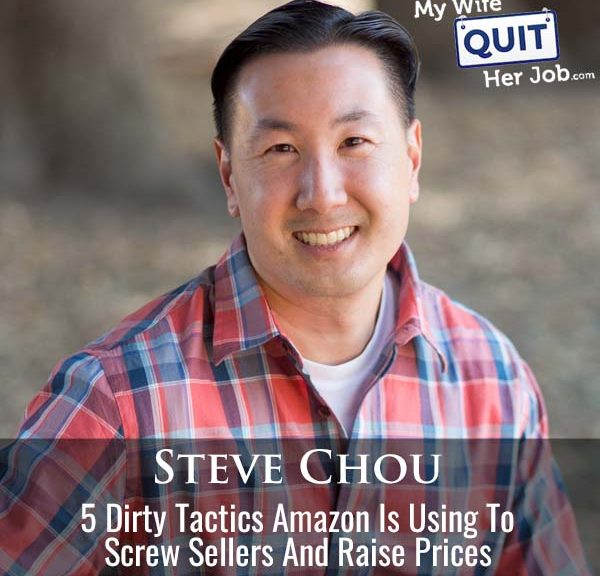
568: Amazon’s Dirty Tactics Are Costing You 61% More On Every Purchase

568: Amazon's Dirty Tactics Are Costing You 61% More On Every Purchase

Amazon is now taking about a 61% cut of the average FBA seller’s revenue in fees, and the FTC has enough evidence in its landmark antitrust case that a federal judge ruled on October 7, 2024 that the case can proceed toward a potential $44 billion fine and a possible corporate breakup. Amazon’s Q2 2024 net sales rose 10% to $148 billion, but operating income roughly doubled from $7.7 billion to $14.7 billion, and almost all of the profit gain came from fee hikes on sellers and a 19.5% increase in advertising revenue, not from actual ecommerce growth (which was up only 4.6%). Consumers pay the difference through higher prices across the entire internet, because Amazon polices seller prices on other sites and removes the buy box if you undercut Amazon anywhere else.

I break down the Q2 income report, the new FBA fees introduced in 2024, the Prime membership changes that hurt buyers, the FTC case (including Judge John Chun’s October 7 ruling), the “alphabet soup” Chinese-seller tactic, and Amazon’s private-label search bias. This is my read as a seven-figure ecommerce seller who has watched Amazon squeeze the marketplace year after year.

Below we cover Amazon’s 2024 income report and where the profits actually came from, the new FBA fees that pushed the seller take to 61%, the specific Prime and returns changes that made buying worse, why Amazon can get away with all of it (the monopoly argument), and the specific playbook for FBA sellers who want to stay profitable.

Key takeaways

  • Amazon Q2 2024 net sales rose 10% to $148 billion, but operating income roughly doubled from $7.7 billion to $14.7 billion. Online store revenue grew only 4.6%, so the real profit growth came from fees and ads, not sales.
  • FBA seller fees now consume roughly 61% of the average seller’s revenue, up more than 30% since 2021.
  • Amazon introduced three new 2024 fees on FBA sellers: an inbound placement fee, a low-inventory fee, and updated returns processing fees. Sellers get penalized both for holding too little and too much inventory.
  • Amazon advertising revenue rose 19.5% year-over-year in Q2 2024. Without ads, most listings do not get shown at all, so this fee is effectively mandatory.
  • Amazon Prime is $14.99/month or $180/year in 2024. Delivery has slowed (many non-metro areas no longer get two-day shipping), refunds now take up to 30 days, and Amazon can now deny refund claims after “investigating” reported missing items.
  • On October 7, 2024, Judge John Chun ruled the FTC’s antitrust case against Amazon can proceed. Potential outcome includes a $44 billion fine and possible breakup.
  • The top 50% of Amazon sellers are now Chinese, with a 25% year-over-year increase in Chinese sellers making over $1 million annually. Many use “alphabet soup” trademarks to flood listings.
  • Amazon polices seller prices across the internet with bots. Sell lower anywhere else and Amazon strips your buy box. That is how Amazon indirectly inflates prices on other sites, not just its own.

Where Amazon’s Q2 2024 profits actually came from

Amazon’s Q2 2024 profits nearly doubled year-over-year (from $7.7 billion to $14.7 billion in operating income) even though its online store sales grew only 4.6% (from $53 billion to $55 billion). Almost all of the profit growth came from fee hikes on third-party sellers and advertising revenue, not from actual ecommerce demand.

The two revenue lines that did grow are the ones sellers pay directly. Third-party seller service fees rose 12%, driven by higher FBA charges plus the new fees introduced this year. Advertising revenue grew 19.5%, because without an ad spend most Amazon listings simply do not surface in search anymore.

That is the whole story of Amazon’s 2024 profitability. Sales barely grew. The take rate on sellers grew a lot. Sellers pay the fees. Consumers pay for the fees through slightly higher prices on and off Amazon.

Amazon FBA fees now take 61% of seller revenue

Amazon FBA sellers now pay Amazon about 61% of their revenue in fees on average, up more than 30% since 2021. The 2024 fee round pushed the take rate to a new high and introduced three specific new charges that reshape how sellers plan inventory.

The new 2024 fees are:

  • Inbound placement fee. Amazon now charges sellers for the privilege of receiving goods into its warehouses. Whether Amazon spreads inventory across fulfillment centers (fast, expensive) or requires you to ship to one location (slower, cheaper) is now a paid choice.
  • Low-inventory fee. Sellers get penalized for keeping too little inventory in stock. The theory is that low-stock listings hurt Amazon’s customer experience, so Amazon charges you to compensate.
  • Updated returns processing fee. Amazon now charges sellers a per-item processing fee on returns above category-specific thresholds, in addition to any prior return costs.

Sellers are stuck balancing between the low-inventory fee (for having too little) and the existing long-term storage fee (for having too much). The sweet spot is narrow, and every miss costs money. That is the practical reality of the 61% take rate.

What changed with Amazon Prime in 2024 (and why it feels worse)

Amazon Prime in 2024 costs $14.99 per month or $180 per year, but buyers now get materially worse service than they did two years ago: slower delivery outside major metros, refund processing that can take up to 30 days, and a new adversarial claims process for missing or defective items.

Delivery speed has degraded across the board. Amazon still markets Prime as two-day shipping, but if you live outside a major metropolitan area, many Prime items now arrive in three to seven days or later. My personal Prime deliveries are consistently late during the holidays.

The refund policy also flipped. In the old model, Amazon refunded your money the moment you initiated a return. Now the refund can take up to 30 days to process after Amazon receives the item.

The change that most upsets loyal customers is the “missing item” workflow. Before, if a package arrived short, you clicked a button in the app and Amazon refunded you immediately. Now you have to file a report and wait for Amazon to investigate. Amazon can conclude that no error occurred and deny the refund entirely, leaving you to eat the cost. That is a real quality-of-service downgrade Prime members are paying more each year to receive.

Why the FTC is suing Amazon (and what changed October 7, 2024)

The FTC sued Amazon in September 2023 for illegally maintaining monopoly power through exclusionary practices that stifle competition, inflate prices across the web, and harm both consumers and third-party sellers. On October 7, 2024, Judge John Chun ruled that the FTC’s landmark antitrust case can proceed, a major defeat for Amazon.

The ruling is important for two reasons. First, more evidence from the case leaked as a result. Second, the possible outcome now includes a fine near $44 billion and a potential breakup of Amazon into smaller companies.

The FTC’s core argument is that Amazon controls sellers in ways no other platform can. Amazon accounts for more than 50% of U.S. ecommerce, over 200 million Americans (roughly 70% of U.S. households) are Prime members, and Prime buyers overwhelmingly buy from listings with the Prime badge. That combination gives Amazon coercive leverage over any third-party brand that needs to reach a mass U.S. audience.

The two specific control mechanisms are the buy box and the prime badge. If Amazon does not award you the buy box, your sales collapse. If your listing loses the Prime badge, Prime buyers filter you out. Amazon uses both as leverage to enforce off-platform price policing.

How Amazon inflates prices across the entire internet

Amazon inflates prices on other websites by monitoring third-party sellers’ prices across the internet with automated bots and stripping the buy box from any listing that undercuts Amazon anywhere else. Since most sellers depend on Amazon for 80% to 90% of their sales, they inflate their prices on their own Shopify sites and elsewhere to match Amazon and avoid retaliation.

That is how Amazon can look like the lowest-price site on the internet while functionally being one of the highest-fee marketplaces. Amazon does not have the lowest prices on merit. It has the lowest prices because it forces sellers to raise prices everywhere else.

The FTC argues that this is textbook artificial price inflation to maintain monopoly power. In a normal competitive market, a company that raised its take rate to 61% and let service quality drop would lose customers to competitors. Amazon’s control over the buy box, the Prime badge, and its bot-driven price surveillance prevents that market correction from happening.

How Chinese sellers and “alphabet soup” brands make everything worse

Chinese sellers now make up about the top 50% of Amazon third-party sellers, with a 25% year-over-year increase in Chinese sellers doing over $1 million annually, and many of them use an “alphabet soup” strategy of trademarking random letter strings (JHKLQ, XYZMN) and selling the same product under dozens of listings to corner category search results.

Because these sellers operate overseas, they can violate Amazon terms of service (incentivized reviews, copying competitors’ products, trademark abuse) with relatively little consequence. When Amazon shuts one down, five new ones open under different alphabet-soup trademarks.

Amazon has finally started enforcing some of these policies against Chinese sellers, but only after the FTC lawsuit created the political pressure to do so. That timing is not a coincidence. Amazon tolerated the chaos for years because the chaos helped Amazon.

Bad-actor sellers are useful to Amazon strategically. They keep prices low, they keep legitimate sellers on the defensive, and they give Amazon leverage to say “if you leave, five others will take your place.” That is what a monopoly with an unlimited supply of expendable sellers looks like.

Amazon’s private-label bias in search results

The FTC alleges that Amazon biases its own search results in favor of Amazon’s private-label brands (Amazon Basics, Solimo, and dozens of others), even when it knows third-party sellers offer higher-quality items. That bias shows up directly on competing sellers’ listings.

A friend of mine sells a niche home product on Amazon and Amazon runs a competing private-label copy at 33% off directly on her listing page. The Amazon private label sits above her buy box, at a lower price, with the Amazon Basics halo. Competing with that as a small brand is close to impossible.

The private-label bias is the endgame of Amazon’s leverage. Amazon watches which third-party products sell well, launches a private-label copy, prices it below the seller, and then uses its own search-result bias to push the private label to shoppers first. That is the entire “Amazon steals your product” playbook the FTC is now formally investigating.

What Amazon FBA sellers should do right now

FBA sellers should treat Amazon as one channel among several, not as the whole business. Concrete steps: build a direct-to-consumer Shopify presence (even a low-effort one), start an email list, invest in your own brand name so you are not competing on generic SEO alone, and stop optimizing purely for Amazon rankings that Amazon can strip at any moment.

Specifically:

  • Build a Shopify or WooCommerce store under your brand name, even if it only does 5% to 10% of your Amazon volume in year one. That store is your escape hatch and your margin recapture channel.
  • Start an email list at the checkout of both stores. Email is the only channel Amazon cannot take from you.
  • Register your brand under Amazon Brand Registry if you have not already, to protect against private-label copies and alphabet-soup imitators.
  • Diversify off Amazon over 18 to 24 months. Aim to get your Amazon share of revenue below 60% so a single Amazon policy change cannot end your business.
  • Model the 61% take rate honestly. Many sellers still price as if fees are 40%. If yours are truly 61%, either your prices are too low or your margin structure needs to change.

Amazon is not going away, and selling on Amazon still works if you know what you are doing. But treating Amazon as the entire business in 2025 is the mistake that catches sellers out when the next fee round drops or the FTC case ends in a settlement.

Frequently asked questions

Is Amazon a monopoly?

The FTC formally accused Amazon of illegally maintaining monopoly power in September 2023, and on October 7, 2024, Judge John Chun ruled the case can proceed. Amazon accounts for over 50% of U.S. ecommerce, and over 200 million Americans (about 70% of U.S. households) are Prime members. Whether Amazon is legally a monopoly is now the question a federal court will decide, with a potential $44 billion fine and possible breakup as remedies.

How much do Amazon FBA fees actually cost sellers in 2024?

Amazon FBA fees now take approximately 61% of the average seller’s revenue, up more than 30% since 2021. That includes fulfillment fees, referral fees, storage fees, and the three new 2024 charges: inbound placement fees, low-inventory fees, and updated returns processing fees. Ad spend, which is now practically required for visibility, is on top of that 61%.

What new Amazon fees came out in 2024?

Three new Amazon fees launched or expanded in 2024: an inbound placement fee (for receiving your goods into Amazon’s warehouses), a low-inventory fee (penalizing sellers who keep too little stock), and updated returns processing fees. These come on top of existing storage fees for holding too much inventory, so sellers are squeezed on both sides of their inventory range.

Why does Amazon Prime feel worse in 2024?

Amazon Prime in 2024 costs $14.99 per month or $180 per year, but service has degraded across three areas: many non-metro U.S. addresses no longer get true two-day shipping, refunds can now take up to 30 days to process after Amazon receives a returned item, and Amazon can now investigate and deny “missing item” claims that used to trigger an instant refund. All three changes are documented in Amazon’s current help pages.

How does Amazon inflate prices on other websites?

Amazon runs bots that continuously monitor sellers’ prices across other websites. If a seller lists a product for less on Shopify, eBay, Walmart, or their own site than on Amazon, Amazon can remove their Amazon buy box or their Prime badge. Since most sellers get 80% to 90% of their sales from Amazon, they raise their prices on other sites to match Amazon, which inflates prices across the entire internet, not just on Amazon.

What are “alphabet soup” Amazon sellers?

“Alphabet soup” Amazon sellers are typically Chinese-owned brands that trademark random-looking strings of letters (like JHKLQ or XYZMN) and sell the same product under dozens of near-duplicate listings to corner search results in a category. This tactic exploits Amazon’s Brand Registry system and floods listings with essentially identical products, pushing legitimate sellers off page one.

Should you still sell on Amazon FBA in 2025?

Yes, but treat Amazon as one channel among several, not the entire business. Sellers who diversify into a Shopify store, an email list, and their own brand name typically make more profit than sellers who put 100% of their revenue on Amazon, because they have leverage when Amazon raises fees, changes policies, or launches a private-label copy of their product. Aim to keep Amazon under 60% of revenue over 18 to 24 months.

I Need Your Help

If you enjoyed listening to this podcast, then please support me with a review on Apple Podcasts. It's easy and takes 1 minute! Just click here to head to Apple Podcasts and leave an honest rating and review of the podcast. Every review helps!

Ready To Get Serious About Starting An Online Business?


If you are really considering starting your own online business, then you have to check out my free mini course on How To Create A Niche Online Store In 5 Easy Steps.

In this 6 day mini course, I reveal the steps that my wife and I took to earn 100 thousand dollars in the span of just a year. Best of all, it's absolutely free!

567: Why Everyone Needs a Side Hustle in 2025 – And the Best Ones to Start Today

567: Why Everyone Needs a Side Hustle in 2025 – And the Best Ones to Start Today

You need a side hustle in 2025 because a single paycheck is now the single point of failure for your household finances. AI, automation, and cheap remote labor are quietly hollowing out both blue-collar and white-collar jobs, and the people I know who feel safest right now are the ones who already have a second stream of income running on the side. The bar to start one has never been lower, and the cost of ignoring it has never been higher.

This episode is a conversation with my longtime co-host Toni Herrbach about why the side hustle has moved from optional to essential, plus the specific low-cost hustles regular people in her family and mine are running today. We cover why AI is different from every previous wave of job displacement, the exact Instagram-only playbook Toni’s daughter-in-law used to build a weekend dog-grooming business, why word of mouth still beats paid ads in the service space, and how a side hustle grows into a full business or a saleable asset over time.

If you have been thinking “I probably need something on the side,” this post is the answer to what and how.

Key takeaways

  • Relying on one job in 2025 is high-risk. AI is displacing coders, retail workers, and support staff at the same time, and construction and skilled trades are the only categories that still look reasonably safe.
  • The cheapest, fastest side hustles today are service-based and run entirely off Instagram or a Facebook page. No website required to start.
  • Word-of-mouth referrals still beat paid ads for service side hustles. Post before-and-after photos, get tagged by happy customers, and let organic sharing do the marketing.
  • Recurring-revenue plans (monthly dog grooming, monthly trail rides) are the fastest way to turn a random gig into a real income stream.
  • Everyone has time. Most people who claim they do not have time to build a side hustle are spending hours a day on YouTube, TikTok, or streaming.
  • The real payoff comes when you monetize the knowledge behind the hustle. Franchise it, sell a course, or sell the business.

Why you need a side hustle in 2025

You need a side hustle in 2025 because job security has stopped being a category that exists in most industries. Toni and I both spent the last two years watching friends in tech, retail, and administrative work get replaced by software or by cheaper remote labor, and neither of us thinks the trend reverses. A second income stream is the practical way to spread the risk.

Here in Silicon Valley, computer science graduates are having real trouble finding jobs because AI can now write production code. In my own business, I no longer hire writers, and I code most of what I need myself with an AI assistant. One engineer can genuinely do the work of five, which sounds great until you realize the other four are the ones losing their jobs.

The retail side is moving just as fast. Airports and grocery stores are rolling out self-checkout, robotic coffee makers, and unmanned snack bars. Amazon’s “just walk out” stores were partially staffed by roughly 1,000 remote reviewers in India before Amazon quietly wound the technology down in 2024. The pattern is the same everywhere: fewer humans on the floor, more cameras and automation behind the scenes.

Which jobs are safest from AI and automation

The jobs safest from AI and automation right now are skilled trades, in-person hospitality where warmth is the product, and personalized service work. Anything that requires a body, a tool, and physical presence on site is hard to automate. Anything where the customer specifically wants to be seen and treated well by a human still commands a premium.

Chick-fil-A is the clearest example of the second category. Their drive-through lines back up city planning because customers will wait for the two people in the brightly colored vests who ask your name and hand you your food with a smile. McDonald’s replaced most of that job with a kiosk, and you can feel the difference the moment you walk in.

Blue-collar work is not immune to change, but it is far more insulated. Roofers, plumbers, electricians, and remodelers still need to be on site, and the labor pool has been shrinking for a decade. A skilled trade is one of the more durable bets you can make in 2025.

How to pick a side hustle that fits your life

The best side hustle to pick is one that leverages something you already know, love, or have professional experience with, so the learning curve is short and the work does not feel like a second job. Toni’s daughter-in-law is a hospital procurement officer during the week and a dog groomer on the weekends because she genuinely loves animals. My daughter is building a print-on-demand course because she has been running an entrepreneurship club at her high school.

Three filters worth applying before you commit:

  • Skill or interest match. If you already do it, teach it, or love it, you will not burn out in month three.
  • Low start-up cost. Under $500 for tools and setup is a reasonable ceiling for a first hustle. You want the ability to walk away.
  • Path to more. Ideally the hustle can grow into recurring income, a business you can hire out, or knowledge you can eventually package and sell.

If you cannot think of anything, start by listing what your friends already ask you for help with. Referrals are the earliest signal that a skill has market value.

The best side hustles to start in 2025

The best side hustles to start in 2025 are service-based businesses run off social media, monetized skills you already have from a day job, and small e-commerce or digital product stores that can be launched from a laptop. All three have a low cost of entry and a real path to full-time income.

Here are the specific hustles Toni and I recommend based on what is actually working for people in our lives right now.

Pet grooming and pet sitting

Pet grooming and pet sitting is one of the strongest weekend side hustles in 2025 because pet ownership is high, owners are willing to pay for convenience, and word of mouth spreads fast. Toni’s daughter-in-law runs her entire grooming business off a single Instagram account. She posts before-and-after photos, accepts bookings by DM, and puts every client on a monthly grooming plan for recurring income.

The American Pet Products Association estimates U.S. pet industry spending at roughly $150 billion a year, with grooming and boarding among the fastest-growing segments. You do not need a storefront to enter. A grooming license, a starter kit, and a phone are enough to begin.

Christmas light installation and seasonal services

Christmas light installation is a seasonal side hustle that few homeowners want to do themselves and that scales into a real business over time. Toni drove past a trailer the other day advertising exactly this service, which is a signal that the model is working locally. Hang lights for six weeks a year, price by linear foot, and you can gross meaningful money in a short window.

The same logic applies to gutter cleaning, pressure washing, leaf removal, and holiday decorating. All of them are physical, seasonal, and hated by most homeowners.

Delivery driving that grows into a fleet

Delivery driving for Amazon, FedEx, or Instacart is a common entry-level side hustle, but the real move is buying your own truck and turning it into a small logistics business. My first employee at Bumblebee Linens started delivering for Amazon at night while working for us. He saved, bought his own truck, and today he owns a small delivery fleet running routes for Amazon and other clients.

The Amazon Delivery Service Partner program specifically funds this path. It has clear entry requirements and a documented playbook for going from single driver to fleet owner.

Monetizing your day-job expertise

If you have 10 or more years in one industry, monetizing that expertise as coaching, courses, or consulting is one of the highest-margin side hustles you can start. Our friend Kelly Snyder built Adore Your Wardrobe teaching women how to dress for their body shape after years in the apparel industry. She now earns more than most of the Nordstrom administrators she used to work alongside.

The pattern works because your day-job knowledge is genuinely rare to the customer. What is obvious to you is a mystery to them, and they will pay to skip the learning curve.

Print on demand and digital products

Print on demand is one of the cheapest ways for a teenager, a stay-at-home parent, or anyone with a laptop to start selling online in 2025. There is no inventory, no shipping, and no upfront cost per design. You upload artwork, list it on a platform like Printful, Printify, or a Shopify store, and the print partner handles fulfillment when an order comes in.

My daughter is building a print-on-demand course right now from her bedroom with a laptop, a phone camera, and a $50 microphone. The class is going through her high school entrepreneurship club first as beta students, then she will sell it publicly.

Instagram-only ecommerce

You can now run a functional ecommerce business entirely off Instagram if you have a strong visual product and a following in your niche. My nephews work at an exotic plant nursery that posts pictures of rare plants with a note like “we have 16 of these” and sells the entire batch inside five minutes. That single channel roughly doubled the nursery’s revenue.

Instagram Shopping, checkout by DM, and the ability to link a Shopify catalog into your feed make this viable without a website. The catch is that you need product photos people want to save and share.

How to market a service side hustle without a website

The fastest way to market a service side hustle in 2025 is a single dedicated Instagram or Facebook page, before-and-after photos of every job, and a DM-only booking flow. That is exactly what Toni’s daughter-in-law does, and she has never spent a dollar on advertising.

Three tactics do most of the work:

  1. Post before-and-after photos of every job. Tag the client. When they re-share, their friends see it and comment “who groomed your dog?”
  2. Get discoverable on local search. Instagram now surfaces posts by location, so tagging your city or neighborhood puts you in front of local buyers automatically.
  3. Book by DM. Skip the website. A conversation in Instagram messages converts higher than a booking form.

Instagram Broadcast Channels are worth adding once you have a base. Subscribers get one broadcast a day, which is effectively a poor person’s email list, and open rates on it are far higher than email in 2025.

Why recurring revenue turns a side hustle into a business

Recurring revenue is what turns a side hustle from a series of one-off gigs into a predictable business you can plan around. Toni’s daughter-in-law puts every grooming client on a monthly plan, so income arrives whether or not she books new clients that week. Her brother’s ranch does the same with monthly trail-ride memberships, giving customers a discount in exchange for filling empty ride slots midweek.

The math is simple. Ten monthly clients at $100 each is $1,000 a month you can count on, and it is far easier to sell one recurring plan than to chase 40 individual bookings.

Any service that customers need again on a schedule is a candidate. Lawn care, cleaning, grooming, pool service, and pest control all fit. Ask for the recurring commitment on the first job, not the fifth.

How to build word-of-mouth referrals fast

The fastest way to build word-of-mouth referrals is to publicly demonstrate expertise in the communities your customers already hang out in, without ever pitching your services. Grayson Bell built a full WordPress-repair business by answering technical questions in blogger Facebook groups for free. He never once said “and by the way, I do this for hire.” After a year, whenever anyone in those groups asked for a WordPress fix, 16 commenters would tag Grayson.

Carson Chow did the same for Shopify design inside the ECF community. When newcomers asked who designed their store, the answer was always Carson. Both built six-figure businesses on two rails: free public expertise, and referrals from happy customers.

The rule is that you have to give away the answer, not the pitch. Prove you know the thing. The business comes to you.

How much time do you really need for a side hustle

You need about five to ten hours a week to make real progress on a side hustle, and almost everyone has that time hidden inside their week if they audit where it goes. I asked my daughter why she had not filmed her next course video, and she told me she had no time. I pulled the traffic log off our home router, saw several hours a day of YouTube, and had my answer.

I am not immune to it either. I waste plenty of time every day. The point is that time is a priority problem, not a supply problem.

A useful exercise: write down every hour you spend on entertainment or scrolling for one week. Cut half of it, and put those hours into the hustle. Most people find eight to ten reclaimable hours inside seven days.

How side hustles grow into businesses you can sell

Every serious side hustle has a monetization path beyond your hourly rate, and the highest-value move is usually productizing your knowledge or building an asset you can eventually sell. Kelly Snyder turned apparel-industry expertise into a course. My delivery-driver former employee turned one truck into a fleet. The septic-tank owner who is currently digging up my yard drives a $170,000 pickup because he sold the labor part of his job to employees years ago.

Bumblebee Linens started with a goal of earning $50,000 a year to replace my wife’s salary, and it turned into far more. This blog started as a side project to cover the mortgage, and it did the same. The key move both times was starting, then compounding, then reinvesting.

If you own the business, the customer list, and the brand, you own something you can eventually sell. If you only own the hours you personally work, you own a job.

Frequently asked questions

Do I really need a side hustle in 2025?

If your household relies on a single paycheck, yes. AI, automation, and offshoring are hitting both white-collar and blue-collar jobs at the same time, and having a second income stream is the practical way to spread the risk. A side hustle also builds skills, an audience, and optionality your day job does not.

What is the cheapest side hustle to start in 2025?

The cheapest side hustles to start in 2025 are service-based gigs marketed off a free Instagram or Facebook page, like dog walking, cleaning, tutoring, hair braiding, or lawn care. Total start-up cost can be under $100 if you already own a phone and basic tools.

Can I run a side hustle without a website?

Yes. Many service side hustles in 2025 run entirely off a dedicated Instagram or Facebook page, taking bookings by DM. You should still register a domain and set up a simple landing page once the business has recurring clients, but it is not required to start.

How much money can a side hustle realistically make?

A part-time service side hustle running five to ten hours a week can realistically clear $500 to $2,000 a month within the first year. Recurring plans and word-of-mouth referrals are the two biggest drivers of how fast that number grows. The ceiling is much higher for hustles that scale into fleets, franchises, or productized knowledge.

Which side hustles are safest from AI displacement?

Side hustles safest from AI displacement are ones that require physical presence, human warmth, or in-person expertise. Skilled trades, pet grooming, home services, in-person coaching, and hospitality all fit. Purely digital hustles that produce generic writing, code, or graphics are the most exposed.

How do I find time for a side hustle with a full-time job and family?

Audit where your time goes for one week using screen-time reports, then reclaim two to three hours a day from entertainment and social media. Most people find eight to ten hours a week that way, which is enough to grow a hustle steadily. Working in tight one-hour blocks after the kids go to bed is more productive than trying to find a free weekend.

What is the best side hustle for a teenager?

The best side hustles for a teenager in 2025 are print-on-demand, tutoring, pet sitting, hair or makeup services, lawn care, and social media management for local businesses. All are low-cost, teach real business skills, and can fit around school hours.

I Need Your Help

If you enjoyed listening to this podcast, then please support me with a review on Apple Podcasts. It's easy and takes 1 minute! Just click here to head to Apple Podcasts and leave an honest rating and review of the podcast. Every review helps!

Ready To Get Serious About Starting An Online Business?


If you are really considering starting your own online business, then you have to check out my free mini course on How To Create A Niche Online Store In 5 Easy Steps.

In this 6 day mini course, I reveal the steps that my wife and I took to earn 100 thousand dollars in the span of just a year. Best of all, it's absolutely free!

566: New US Crackdown Just Killed Dropshipping – What Sellers Must Know

566: New US Crackdown Just Killed Dropshipping – What Sellers Must Know

The new US crackdown on the de minimis rule effectively kills China dropshipping within about 18 months. Three changes matter: every China-origin package now owes customs duties and Section 301, 232, or 201 tariffs regardless of value; the seller must now collect the buyer’s Social Security number to claim the de minimis exemption on that buyer’s behalf; and every shipment must file an electronic certificate of compliance with US safety regulations at time of entry. None of those requirements survive contact with a real dropshipping customer buying a $10 mouth guard.

I break the whole thing down in this solo episode. If you are already running a Shopify or WooCommerce store fulfilled by AliExpress, DSers, CJ Dropshipping, or AutoDS, this post explains exactly what changed, why the economics no longer work, and what to do instead. If you are just thinking about starting a dropshipping business, reconsider.

Below is the full explainer plus what still works, what does not, and the path forward.

Key takeaways

  • The de minimis rule (packages under $800 entering the US duty-free) is being narrowed to exclude Chinese e-commerce shipments. That was the entire cost advantage of AliExpress dropshipping.
  • All China dropshipping shipments will now owe Section 301, 232, or 201 tariffs plus normal customs duties, no matter the package value. Section 301 alone covers roughly 40% of Chinese imports.
  • Sellers must now collect the buyer’s Social Security number to file the de minimis exemption on the buyer’s behalf. Almost no US customer will hand that over for a cheap online order.
  • Every consumer-goods import must file an electronic certificate of compliance with US safety regulations at entry. The buyer becomes the importer of record and legally responsible for that filing.
  • Timing is roughly 18 months for full enforcement based on industry consensus. The rules do not switch on overnight because of the paperwork volume.
  • Domestic US dropshipping and AliExpress fulfillment from US warehouses are not affected. Only cross-border shipments from China to US buyers are.
  • The long-term move for anyone starting an online business is to build a real brand with your own products, not to resell $2 junk from China.

What is China dropshipping and why did it work

China dropshipping is a business model where a seller lists products from AliExpress or a similar Chinese supplier on their own Shopify or WooCommerce store, and when a US customer orders, the Chinese supplier ships the item directly to that customer. The seller never touches the product and never holds inventory. The model worked because three economic advantages stacked on top of each other.

The first advantage was raw price arbitrage. That snoring mouth guard I mentioned in the episode sells for $39.99 on Amazon and costs $1.72 on AliExpress, a 23x markup. Almost any consumer good sourced from a Chinese factory carries similar spreads.

The second advantage was cheap shipping. The ePacket program, launched in 2011 to promote US-China ecommerce, priced a 1-pound parcel from China to the US at roughly $1 to $1.50. Domestic US shipping for the same weight costs several times that.

The third advantage was the de minimis exemption. Any package entering the US worth $800 or less passed through customs duty-free and tariff-free. Stack cheap product, cheap shipping, and zero import taxes together, and you have the economics that made AliExpress dropshipping a viral side hustle for a decade.

What is the de minimis rule and why did the US change it

The de minimis rule is a US customs provision that lets any package worth $800 or less enter the country without paying customs duties or tariffs. It was designed to save Customs and Border Protection from processing paperwork on low-value personal shipments like a $30 toy from another country. The current administration is changing it because Chinese e-commerce platforms have used it to ship billions of dollars a year in commercial merchandise into the US duty-free.

Temu and Shein are the two biggest examples. Temu launched in 2022 and by 2024 had expanded to 79 countries and captured roughly a third of Amazon’s US web traffic. Amazon’s apparel sales fell about 30% year over year as Temu and Shein took share, with virtually every Temu and Shein order arriving in the US duty-free under de minimis.

Customs and Border Protection processed more than a billion de minimis shipments in fiscal 2023, up from roughly 140 million a decade earlier. The rule was written for a smaller trade era and is now the single biggest loophole in US import law.

What are the three de minimis rule changes killing China dropshipping

There are three changes to the de minimis rule that together kill the China dropshipping model. Each one on its own would hurt margins. Stacked together, they make the business unworkable.

Change 1: All China shipments now owe tariffs and duties

The first change requires every package containing goods covered by Section 301, 232, or 201 of US trade law to pay full tariffs and customs duties, regardless of the shipment’s value. In practice that means the de minimis exemption no longer applies to most Chinese-made consumer goods entering the US.

Section 301 targets electronics, textiles, and machinery, and covers roughly 40% of all Chinese imports. Section 232 covers steel, aluminum, and related materials. Section 201 covers products like solar panels and washing machines.

Most dropshipped consumer goods fall under Section 301, so if you sell phone accessories, apparel, home goods, or gadgets from a Chinese supplier, expect your landed cost to jump. Doubling the cost still leaves headroom on a 23x-markup product, but the next two changes are where the model actually breaks.

Change 2: You must collect the buyer’s Social Security number

The second change requires the seller to collect and submit the buyer’s identifying information, including the buyer’s Social Security number, to claim the de minimis exemption on that buyer’s behalf. Commercial importers use an Employer Identification Number for entry filings. Individuals importing for personal use are identified by their SSN.

Because dropshipping treats each customer as the individual importer of record, that means asking your Shopify customer for a Social Security number at checkout to complete a $12 order. Nobody is going to hand over their SSN to buy a phone case from an unfamiliar store, especially one that is obviously fulfilling from China. Identity theft is already at historic levels in the US, and consumers are hyper-aware of Chinese data collection.

This change alone would end the model, and the third one seals it.

Change 3: Certificates of compliance are required at entry

The third change requires every consumer-goods shipment to file an electronic certificate of compliance with US safety regulations at time of entry. The certificate confirms the product meets applicable Consumer Product Safety Commission, FDA, or other regulatory standards for its category.

The reason this rule exists is that a huge share of what ships out of AliExpress and Temu fails US safety standards. AliExpress phone chargers are almost universally not UL certified, which is why lithium-battery fires linked to cheap Chinese electronics have been a recurring story since the hoverboard recalls. Temu has been repeatedly flagged for children’s toys containing unsafe levels of lead and phthalates. Shein has faced regulatory action for clothing containing formaldehyde and azo dyes, and for cosmetics containing mercury.

Under the new rules, the buyer becomes the importer of record and is legally responsible for filing the compliance certificate. No US consumer is going to accept legal liability for the safety compliance of a $10 phone case from a random Shopify store.

When do the new de minimis rules take effect

Full enforcement of the new de minimis rules is expected in roughly 18 months based on industry consensus. The changes cannot switch on overnight because Customs and Border Protection has to build the electronic filing infrastructure, and enforcing immediately would back up US ports of entry for years.

The direction of travel is not in question. Enforcement will phase in as the paperwork systems come online, and by the time it is fully live, the AliExpress and CJ Dropshipping model will not clear economically.

If you are running a China dropshipping store today, treat 18 months as the runway to migrate off the model. If you are still in the planning stage, do not start one.

Which dropshipping models still work under the new rules

The dropshipping models that still work under the new US rules are domestic US dropshipping, AliExpress or CJ Dropshipping orders fulfilled from US warehouses, and print on demand with US-based print partners. Anything that ships cross-border from China to a US customer under the de minimis exemption is what the new rules target.

| Model | Still viable | Why |
|—|—|—|
| Direct China-to-US dropshipping (AliExpress, CJ, DSers direct) | No | Loses de minimis, requires SSN and compliance filing |
| AliExpress or CJ with US-warehouse fulfillment | Yes | Enters US as commercial import, seller is importer of record |
| Print on demand (Printful, Printify, US printers) | Yes | Printed and shipped domestically |
| Domestic dropshipping from US suppliers | Yes | Never crossed a border in the first place |
| Private-label ecommerce (import in bulk, hold inventory) | Yes | Standard commercial import; you own the brand |

The private-label model is the one I recommend for anyone building a real online business. You import product in bulk, pay tariffs and duties upfront, hold inventory, and sell under your own brand. The margins are lower per unit than fake-margin dropshipping, but the business is durable and worth something when you sell it.

What sellers should do right now

Right now, sellers with an active China dropshipping business should start migrating suppliers to US warehouses, testing private-label alternatives, and preserving cash for the transition. Do not wait for enforcement to hit before making the move. Below is the practical sequence.

  1. Audit your current SKUs. Identify which products fall under Section 301, 232, or 201 tariffs and estimate the landed-cost jump when duties apply. Kill anything that will no longer clear a reasonable margin.
  2. Ask suppliers about US warehousing. Many AliExpress and CJ Dropshipping suppliers now stock inventory in US 3PL warehouses. Fulfilling from there sidesteps the border entirely.
  3. Test print on demand for graphic-driven categories. Apparel, mugs, and posters can move to Printful or Printify without touching your product catalog structure.
  4. Start sourcing for private label. Pick your two best-selling categories and negotiate bulk orders from the same Chinese factories that were fulfilling your dropshipping orders. You pay tariffs once on the bulk import, then sell under your own brand.
  5. Build an email list and a real brand. Cheap-junk dropshipping stores have no repeat customers. Owning the customer relationship is what makes the pivot worth it.

Dropshipping was always a tough long-term business because you had no control over product quality, shipping speed, or brand. Every serious ecommerce operator I have interviewed on this podcast who started with dropshipping eventually moved on. Even the CEO of Spocket admitted as much when he came on the show.

Frequently asked questions

What is the de minimis rule for US imports?

The de minimis rule allows any single shipment entering the United States worth $800 or less to enter duty-free and tariff-free. It was created to spare Customs from processing low-value personal packages. Chinese e-commerce platforms have used it to ship billions of dollars a year of commercial goods into the US duty-free.

Is China dropshipping dead in 2025?

China dropshipping is on a roughly 18-month runway to becoming economically unviable under the new de minimis rule changes. Duties and tariffs will apply to virtually all shipments, sellers must collect buyer Social Security numbers to claim any exemption, and every shipment needs a filed certificate of compliance. If you dropship from China direct to US customers, migrate now.

Does the de minimis change affect all dropshipping?

No. The de minimis change targets cross-border shipments from China to US customers. Domestic US dropshipping, AliExpress or CJ Dropshipping orders fulfilled from US warehouses, and print on demand with US printers are unaffected.

Will Temu and Shein still work in the US?

Temu and Shein will keep operating but their prices will rise as they lose the de minimis exemption on direct-from-China shipments. Both are already building US warehouses to fulfill domestically, which lets them keep some price advantage but forfeits the duty-free entry that made them viral. Their headline price gap versus Amazon will narrow.

What can I sell instead of China dropshipping?

The most durable alternative is a private-label ecommerce business, where you import your own product in bulk from a factory, pay the tariffs and duties once, and sell under your own brand at higher margin with real repeat customers. Print on demand and domestic dropshipping also work as lower-margin starting points.

What is a certificate of compliance in customs?

A certificate of compliance is an electronic filing that confirms an imported consumer product meets applicable US safety regulations from the Consumer Product Safety Commission, FDA, or other regulators. Under the new de minimis rules, every consumer-goods shipment must include one at time of entry, and the importer of record is legally responsible for its accuracy.

How long do I have before the new rules take effect?

Industry consensus is roughly 18 months for full enforcement, though phased implementation may hit certain categories sooner. Customs needs to build the electronic filing systems and phase in the paperwork volume. Treat the runway as short and plan the migration off China-direct dropshipping now.

I Need Your Help

If you enjoyed listening to this podcast, then please support me with a review on Apple Podcasts. It's easy and takes 1 minute! Just click here to head to Apple Podcasts and leave an honest rating and review of the podcast. Every review helps!

Ready To Get Serious About Starting An Online Business?


If you are really considering starting your own online business, then you have to check out my free mini course on How To Create A Niche Online Store In 5 Easy Steps.

In this 6 day mini course, I reveal the steps that my wife and I took to earn 100 thousand dollars in the span of just a year. Best of all, it's absolutely free!

565: Why Your Social Media Strategy Isn’t Working—and How to Fix It

565: Why Your Social Media Strategy Isn’t Working—and How to Fix It

Your social media strategy is not working because you are treating it like a set-and-forget marketing channel instead of a daily creative practice, you are trying to grow on three platforms at once with the same content, and you are quitting before the algorithm has enough data to give you a fair shot. Fix it by picking one platform, batch-creating a week of content in a single session, posting daily for at least 90 days, and hooking every post in the first three seconds.

This episode is the final part of a four-part series on content creation, and it is a candid conversation with my longtime co-host Toni Herrbach about what is working on social media right now versus what most creators are wasting their time on. We cover the mindset shift that unlocks social, the exact posting frequency that grew Toni’s friend’s TikTok from 1,500 to 10,000 followers in four and a half weeks, why cross-posting the same reel to Instagram and TikTok underperforms, and whether a beginner should start on short form or long form video.

If your posts are getting 40 views and you are ready to give up, read this first.

Key takeaways

  • Social media is not set-and-forget. Growth is a numbers game, and consistency and frequency beat production value every time.
  • You do not need a microphone, a vlogger camera, or editing software to start. Your phone is enough. Removing setup hurdles is more important than upgrading gear.
  • Pick one platform and go deep before adding a second. Each platform rewards a different content style, and cross-posting the same clip everywhere underperforms.
  • Batch content creation is the only sustainable rhythm. Film seven videos in one sitting, then drip them out over the week.
  • The first three seconds of any short-form video decide whether it plays or gets scrolled. Never lead with “hi, I am [name].”
  • Long-form YouTube is the highest-return investment for creators willing to grind for 12 to 18 months. Short form is the faster gateway drug if you need early wins to stay motivated.
  • Old videos keep earning. A YouTube video that flopped at 60 views in month one can hit 80,000 views three years later once your channel builds authority.

Why most social media strategies fail

Most social media strategies fail because creators treat social like a broadcast channel they can post to twice a week, then check back on for results. Social platforms in 2025 reward frequency, consistency, and native format fluency, and none of those show up in a two-post-per-week cadence. The mindset shift is that social media is a daily creative practice, not a marketing activity.

The second failure mode is trying to be everywhere at once. Cross-posting the same reel to TikTok, Instagram, YouTube Shorts, and Facebook feels efficient. In practice, each platform has a distinctly different audience preference for editing, pacing, and polish, and generic cross-posts underperform native content on every one of them.

The third failure mode is quitting too early. Almost every creator I know who eventually broke through spent 12 to 18 months making content nobody watched before the algorithm gave them a real shot. If you quit at month three, you are quitting in the middle of the required investment.

The mindset shift required to grow on social media

The mindset shift required to grow on social media is accepting that it is a numbers game, and the number is total posts over time, not clever posts. Toni’s friend AJ Bufumo, who spent years making TikToks about mortgage refinancing to modest results, pivoted to making funny videos with his son. Today AJ has more than two million TikTok followers, has been on The Tonight Show, and gets his “bring the boom” dance imitated in the NFL end zone.

The pivot took years. AJ posted consistently the entire time, changing the format based on what the audience responded to, until something hit. That is the actual model.

The most common blocker I see is people convincing themselves they need better gear, a studio setup, or a content calendar before they can start. Our friend Tay from Financial Tortoise built a 300,000-subscriber YouTube channel in three years using only the microphone on his phone, filming straight into the camera. Our friend Jim Wang shoots his TikToks with no external mic at all.

How often should you post on social media

The minimum viable posting cadence for growth on any social platform in 2025 is one post per day, and the top performers post two or three times a day on their primary platform. Anything less than daily makes it very hard to signal to the algorithm that your account is active and worth distributing.

Batching is the only way to sustain that pace without burning out. You do not need to film every day; you need to post every day. Sit down on a Sunday with a shot list of seven ideas, change your shirt between takes if it matters, and film all seven in a single session. Then drip them out through the week.

I typically spend 90 minutes writing a long-form YouTube script and about 15 minutes filming it with a teleprompter. If I redirected that same 90 minutes to short form, I could bank roughly 10 videos, or two weeks of daily posts. The batching math is what makes daily posting realistic for someone with a full-time business.

Which social media platform should you focus on first

You should focus on one social media platform first, matched to your personality, the format of content you can sustain, and the audience you want to build. Trying to grow on three platforms simultaneously guarantees mediocre results on all of them. Pick one, commit for at least 12 months, then add a second only after the first is generating meaningful traffic or revenue.

Here is how Toni and I would match a platform to a creator profile:

| If you are | Best platform to start | Why |
|—|—|—|
| Willing to grind 12-18 months for compounding returns | Long-form YouTube | Highest per-video lifetime value, evergreen search discovery, best monetization |
| Someone who needs early wins to stay motivated | TikTok | Easiest platform to hit early growth from zero, quick feedback loop |
| Building a curated visual brand or lifestyle audience | Instagram | Rewards polished editing, voiceover, and aesthetic consistency |
| Text-first, opinionated, current-events-driven | X or Threads | Fastest way to build an audience around commentary and community |
| Selling to Gen Z or an aesthetic-heavy niche | TikTok + Instagram Reels | Where the buyers are and where discovery is fastest |

TikTok is the fastest way to see early growth

TikTok is the fastest social platform for a new creator to see early growth in 2025 because the algorithm still routinely pushes zero-follower accounts into the For You feed if a single video hits. Our friend Liz, who built the Influencer Fruit Chrome extension for Amazon influencers, had some downtime this fall and started posting on TikTok around one to two videos a day. She grew from 1,500 followers to 10,000 in about four and a half weeks.

She was not niched down. A lot of her content was around lifting heavy weights, but she also posted lifestyle videos, “where did you get that plant” answers, and whatever else felt fun. On TikTok, at the start, breadth beats depth. Post volume until the algorithm shows you what your audience actually wants.

Instagram rewards polished, edited content

Instagram rewards more polished, more curated content than TikTok, and the same clip cross-posted from TikTok to Reels usually underperforms. If TikTok is a raw finger-hitting-the-record-button aesthetic, Instagram is a voiceover-and-B-roll aesthetic. Bed-making content that goes viral on TikTok with someone throwing pillows around performs better on Instagram with a soft voiceover walking through the routine.

If Instagram is your chosen platform, invest in the extra editing pass. It is not optional.

YouTube long-form is the highest-return investment

Long-form YouTube is the highest-return social investment for creators who can commit 12 to 18 months before seeing meaningful results. The reason is that YouTube videos are evergreen. Almost 90% of the videos on my channel still get views today, some in trickles, some in waves, and they compound over time.

Our friend Andy from Marriage, Kids and Money made a video in his first six months that got about 600 views and left him convinced it was a failure. That same video now has more than 80,000 views and has earned him several thousand dollars over time. That is what I mean when I say YouTube is what blogging used to be: every piece of content is a stock that can only go up as your channel accumulates authority.

X and Threads are worth a specific play

X (formerly Twitter) still works for driving email subscribers if you post volume and engage in other people’s threads, but it is no longer possible to grow passively. I ran a full-year X experiment where I hired someone to post three to six times a day, taking snippets from my blog posts and turning them into short standalone posts with occasional lead-magnet links. I grew from roughly 4,000 to 40,000 followers in a year, and X became my third-largest source of new email subs.

The catch is that pure posting no longer works in 2025. You have to reply, quote-post, and get into conversations, or the algorithm ignores you. Threads is currently in the wild-west phase X used to be in, and our friend Deacon Hayes has grown fastest by taking transcripts of his short-form videos and posting them as threads.

How to batch social media content the right way

The right way to batch social media content is to plan a full week of posts in one session, film them back-to-back, and use a scheduling tool for platforms that support it while still posting manually where native uploads perform better. The single biggest lever is committing to one filming day a week and treating it as a non-negotiable calendar block.

  1. List seven ideas the day before. Ideas should each have a hook, a one-line message, and a payoff. Do not walk into the filming session without a shot list.
  2. Change outfits between clips. One shirt change per couple of videos is enough to make the drip feel fresh.
  3. Film all seven in one sitting. Vertical, phone camera, no external mic required. Post-production in your camera roll.
  4. Post at the same time each day. Consistency helps the algorithm profile your audience.
  5. Review analytics weekly, not daily. Adjust the next batch based on what actually performed, not what you assumed would.

How to hook viewers in the first three seconds

The first three seconds of any short-form video decide whether a viewer stays or scrolls, so the opening sentence has to be a real hook, not an introduction. “Hi, I am Steve from My Wife Quit Her Job” is the worst possible opening because it uses valuable attention on information viewers do not care about yet.

Strong hooks share a pattern: an unexpected claim, a specific number, a physical action, or a question the viewer wants answered. A video that opens “I refinanced my mortgage three times last year and here is the mistake that cost me $4,200” beats “hey guys, today we’re going to talk about mortgage refinancing” every time.

The finger-hitting-record opening is popular on TikTok because it signals “this is raw and unpolished,” which the TikTok audience specifically wants. On Instagram, the same energy needs to be baked into a voiceover.

Short form vs long form video for beginners

For most beginners, short-form video on TikTok is the better starting point because the early feedback loop keeps you motivated, and long-form YouTube is the better long-term investment because the videos keep earning for years. The right sequence for most people is short form first to build the muscle, then long form once you can stay on camera and hold attention.

Toni’s argument for starting long form is that YouTube is a stock that only goes up with more content, so the earlier you start planting videos, the earlier the compounding starts. My argument for starting short form is that if your personality needs quick wins to stay in the game, you will quit YouTube in month four when nothing is happening.

Both are correct. If you know you can grind for three years with zero visible results, start on YouTube long form. If you know you need a 5,000-view video in month two to keep going, start on TikTok short form and treat it as the gateway to long form.

Why old social content keeps earning

Old social content keeps earning because algorithms reward creator authority, and once your account establishes authority, the platform starts distributing your back catalog to new viewers. A video that hit 60 views in its first month can hit 80,000 views three years later because your channel now has enough weight for the algorithm to trust the recommendation.

I have watched this pattern play out on my own YouTube channel. Videos I made three years ago that started as duds now generate more money and more email subs than they did in their first year. The lesson is that every video you make in the early days is not a failure. It is a deposit into a compounding account you will withdraw from years later.

The same phenomenon shows up in blog content and Instagram carousels. Old, high-quality assets on any platform get rediscovered as your authority grows. Do not delete underperformers. Let them sit and compound.

Frequently asked questions

How often should I post on social media to grow?

The minimum posting frequency for growth on any social platform in 2025 is one post per day on your primary platform. Top performers post two or three times per day. Batch-filming a week of content in a single session is the only sustainable way to hit that cadence without burning out.

Which social media platform is best for beginners?

The best platform for beginners depends on personality. TikTok is the fastest for early growth from zero, YouTube long form pays off biggest over 12 to 18 months, and Instagram rewards curated visual content. Pick one and commit for at least a year before adding a second.

Do I need a microphone or a good camera to start?

No. A modern smartphone is enough to create video content that competes on TikTok, Instagram Reels, and YouTube Shorts. Financial Tortoise built a 300,000-subscriber YouTube channel using only the phone’s built-in microphone. Removing gear hurdles matters more than upgrading gear.

Should I post the same content on TikTok and Instagram?

You can cross-post the same short-form video to TikTok and Instagram Reels to save time, but native content built for each platform’s aesthetic will outperform generic cross-posts. TikTok favors raw and unpolished clips; Instagram favors polished, edited content with a voiceover.

How long does it take to grow a social media account?

Realistic timelines are four to eight weeks for early TikTok traction, three to six months for a Threads or X breakthrough, and 12 to 18 months for meaningful YouTube long-form growth. Anything faster than that is an outlier, not a plan.

Is X (Twitter) still worth posting on in 2025?

Yes, X still drives real email subs and traffic if you post volume (three to six times a day) and engage actively in other people’s threads. Passive posting no longer works. Threads is currently the wild-west alternative with more growth headroom for new accounts.

Why do my early videos get so few views?

Early videos get low views because the algorithm does not yet know who to show them to, and your account has no authority to boost distribution. That is normal. Those same videos often get thousands to tens of thousands of views a year or two later once your channel grows, so leave them up and keep posting.

I Need Your Help

If you enjoyed listening to this podcast, then please support me with a review on Apple Podcasts. It's easy and takes 1 minute! Just click here to head to Apple Podcasts and leave an honest rating and review of the podcast. Every review helps!

Ready To Get Serious About Starting An Online Business?


If you are really considering starting your own online business, then you have to check out my free mini course on How To Create A Niche Online Store In 5 Easy Steps.

In this 6 day mini course, I reveal the steps that my wife and I took to earn 100 thousand dollars in the span of just a year. Best of all, it's absolutely free!

564: Blogging Is Dead…Or Is It? What’s Actually Happening With Google

564: Blogging Is Dead... or Is It? This Is What’s Actually Happening With Google

Blogging is not dead in 2025, but standalone content sites without a business behind them are on life support after Google’s recent Helpful Content and core updates. Ecommerce blogs attached to a real store are the clear winners of the shift, because Google is now visibly favoring pages tied to a legitimate business with real products, reviews, and transactions. If you are running an ecommerce store, blogging is one of the best things you can do for traffic. If you are trying to build a pure affiliate blog from scratch, I would not start one today.

This episode is part of a four-part series with my longtime co-host Toni Herrbach on how to create content to promote your business. We break down exactly what Google changed, why my own standalone site got hurt while my Bumblebee Linens ecommerce blog got promoted, and what still works if you want to rank in search in 2025. We also cover whether AI Overviews are actually killing search clicks (spoiler: the data is more nuanced than the headlines), and why every content creator still needs an owned home base even if they never write another blog post.

Below is the full breakdown for both camps: ecommerce sellers who want to blog, and standalone bloggers wondering whether to keep going.

Key takeaways

  • Standalone content blogs got hammered by Google’s recent Helpful Content updates. Blogs tied to real ecommerce businesses got a boost.
  • Google’s over-correction was aimed at AI-generated spam sites, and a Google representative has publicly admitted the algorithm went too far. Expect further tuning, but not a reversal.
  • AI Overviews appear on roughly 7% of general search queries and 17% of ecommerce queries. Studies have found search clicks actually went up as users click through to verify AI answers.
  • Google still owns roughly 90% of global search share in 2025. ChatGPT, Perplexity, and Google’s Gemini together account for low single-digit search share.
  • The mobile-first design rule is now non-negotiable. Roughly 75% of blog traffic is mobile, and full-width desktop layouts are painful to read.
  • Every serious online business needs an owned home base with an email list. Depending only on social platforms puts your audience one algorithm change away from zero.
  • Do not launch a standalone affiliate blog today. Build a store, a course, or a product first, then add the blog underneath it.

Is blogging dead in 2025

Blogging is dead as a standalone business model in 2025, and blogging is alive and well as a traffic channel for ecommerce stores, courses, and product businesses. The difference is whether Google can see a legitimate business under the content. If it can, the blog gets rewarded. If it cannot, the content is treated with suspicion regardless of quality.

My own site, mywifequitherjob.com, is a pure content site with no products for sale, and my traffic is down materially since the Helpful Content updates. My Bumblebee Linens blog sits on top of a working ecommerce store with real reviews, real customers, and real transactions, and its blog traffic is up. Same author, same writing standards, wildly different outcomes.

The pattern is not hypothetical. I have talked to multiple SEOs, and Google has publicly acknowledged that the algorithm changes over-corrected against helpful independent publishers. Expect further tuning, but do not expect Google to reverse course on the underlying signal: they want to rank pages attached to real businesses.

Why Google is favoring ecommerce blogs over standalone blogs

Google is favoring ecommerce blogs over standalone blogs because AI-generated content flooded the web starting in 2023, and the fastest way for Google to filter it out at scale was to weight signals only a real business can produce. Real businesses have product listings, verified purchases, customer reviews, transactional pages, and brand mentions on third-party sites. A pure content blog has none of that.

The Bumblebee Linens blog is a good example of the flip side. It ranks well for anniversary gifts and wedding handkerchief content because those posts sit on the same domain as the actual product catalog, the reviews, and the checkout flow. Google can verify the business is real. That trust flows into the blog content.

This is genuinely good news for ecommerce store owners. Blogs and traditional content sites have historically outranked stores for informational queries. That advantage has narrowed sharply since 2023.

What actually changed with Google’s algorithm updates

Google’s recent Helpful Content and core updates changed three things that matter for anyone writing on the web. First, they devalued content on domains without a clear business or brand entity behind them. Second, they raised the bar on E-E-A-T (Experience, Expertise, Authoritativeness, Trustworthiness) signals, which favor named-expert authors with verifiable credentials. Third, they got more aggressive at spotting AI-generated or thin content and demoted the sites hosting it.

The practical consequence is that a site with 500 well-written blog posts and no product, no course, and no author brand behind it is now competing with a site that has 20 posts, 200 product SKUs, 4,000 reviews, and a founder with a public LinkedIn. The second site wins on trust signals Google can measure directly.

I don’t think this reverses. What I do think is that Google will keep tuning to protect independent publishers who are clearly experts in their niche. Signals like a named author with a real bio, published dates, updated dates, and third-party citations of your work matter more than they did a year ago.

Are AI Overviews killing search clicks

AI Overviews are not killing search clicks at the scale most creators fear, based on the data available in late 2024 and early 2025. Google’s AI Overview box appears on roughly 7% of general search queries and 17% of ecommerce queries, not the near-universal presence it briefly had when it first launched. And multiple studies have found that when an AI Overview appears, click-through to the underlying source pages actually goes up, because users click to verify the AI summary they don’t fully trust.

The impact is real but bounded. If your content targets high-informational queries where a two-sentence answer is enough (unit conversions, definitions, quick facts), AI Overviews will cannibalize some of your clicks. If your content targets commercial or transactional queries (best of, product reviews, buying guides), AI Overviews rarely trigger and even when they do, users still click through.

The medium-term move is to write content that is both AI-friendly and click-worthy. Direct answers up top, deep original detail below, so the AI Overview cannot fully replace your page.

How much search market share has Google actually lost

Google has lost only low single-digit percentage points of search share to ChatGPT, Perplexity, and other AI assistants as of early 2025. Google still processes roughly 90% of global searches. The Google antitrust case may eventually force structural changes, including ending the multi-billion-dollar default-search deal with Apple, but the reporting suggests those changes are five or more years away from any real effect.

The strategic implication is that SEO is still the single highest-ROI content investment for ecommerce, and the fundamentals that rank a page in Google are the same fundamentals that get your brand cited in AI answers. ChatGPT and Perplexity both draw heavily on Google-quality signals like backlinks, authority, and structured content.

I have tested this directly. When I ask ChatGPT for the best place to buy wedding handkerchiefs, Bumblebee Linens shows up in the answer, because it ranks number one on Google for the same query. Rank on Google today, get cited by AI tomorrow.

How to write for the web in 2025

Writing for the web in 2025 means throwing out most of what you learned in eighth-grade English class and writing for people scanning content on a phone screen. Long paragraphs, five-sentence intros, and academic prose lose. Short paragraphs, clear headings, and scannable structure win.

Here are the rules Toni and I teach every ecommerce blogger:

  1. Paragraphs of one to two sentences. Anything longer is a wall of text on a phone.
  2. Bold key phrases and use plenty of H2 and H3 headings. Most readers scan headings first, then decide whether to read.
  3. Break up text with images every 200 to 300 words. Visual breaks keep mobile readers scrolling.
  4. Cut ruthlessly on the second pass. Every sentence should earn its place. If you can say it in six words instead of ten, do it.
  5. Design for mobile first. Roughly 75% of blog traffic is mobile in 2025. Preview every post on your phone before you publish.
  6. Constrain content width on desktop. Full-width text is hard to track back to the next line. Keep the reading column around 700 pixels wide.
  7. Run a final grammar pass through AI. Paste your draft into ChatGPT or Claude with the prompt “fix grammatical and spelling errors without changing the content.” Typos on a store page kill trust.

How to do SEO for an ecommerce blog in 2025

SEO for an ecommerce blog in 2025 still follows the same core loop: pick a keyword with real search volume and buyer intent, write the most useful, answer-first, well-structured post on the internet for that keyword, and interlink it with your product and category pages. What changed is that the site under the post matters more than the post itself.

Here is the compressed playbook I run for Bumblebee Linens and teach in my course:

  1. Keyword research. Use Ahrefs if you can afford it, Ubersuggest if you cannot. Look for keywords with real monthly search volume, low-to-medium competition, and clear buying intent.
  2. Match search intent. Google the target keyword and see what already ranks. If the top results are comparison posts, do not publish a definition; publish a better comparison.
  3. Answer the question in the first sentence. AI Overviews and human scanners both extract the top of the page. Lead with the direct answer, then add the depth.
  4. Use every related keyword the tool surfaces. Cover the full semantic footprint of the topic in one post.
  5. Interlink to product and category pages. This is the ecommerce advantage. Send blog readers into the store with contextual links.
  6. Update the post twice a year. Refresh stats, screenshots, and dates. Freshness is a ranking signal Google measures directly.

Ahrefs vs Ubersuggest for keyword research

Ahrefs is the best keyword research tool on the market because it has the most accurate data, largely because their Chrome extension collects real browsing signals from millions of installs on top of their standard crawl. It is expensive, and for a serious ecommerce operator it is worth every dollar.

Ubersuggest is the budget alternative. Neil Patel’s team offers lifetime deals periodically, usually to email subscribers, so join his email list before buying. The data is less comprehensive than Ahrefs but good enough for a small store’s monthly content planning.

Should every ecommerce store have a blog

Not every ecommerce store needs a blog, but every ecommerce store needs some form of content marketing built on its own domain. If you sell fashion where buyers make decisions from photos, a blog is the wrong medium and you should invest in short-form video and influencer content. If you sell products that require explanation, comparison, or teaching (technical products, specialty foods, hobby gear), a blog is the highest-leverage content investment you can make.

The filter is: does someone need to be talked into your product, or is the buying decision purely visual? Explanation-heavy products need blogs. Visual products need video.

Even for visual-product stores, you still need an owned home base with an email capture form. Social platforms can, and do, zero out your reach overnight. An email list is yours forever.

Why every content creator still needs an owned home base

Every content creator still needs an owned home base with an email list because social platforms can, and repeatedly do, destroy audiences that were built entirely on their turf. I personally built a large Facebook Messenger subscriber list before Facebook effectively killed the feature in a single announcement. Every hour of work that went into that list was gone the next day.

The pattern repeats. Facebook throttled organic Page reach, forcing brands into paid ads. Google penalized affiliate blogs. Twitter (now X) changed algorithms, changed rules, and changed hands. Instagram capped links. TikTok is under repeated US regulatory pressure. Every platform that owns your audience can take it back.

An owned website with a working email capture form is the one asset no algorithm can take from you. If your business plan is “I’ll rely on my TikTok audience,” you do not have a business, you have a lease from a landlord who can evict you at any time.

What to do instead if you were going to start a blog

If you were going to start a pure content blog for affiliate income in 2025, do not. Start an ecommerce store, a course, or a productized service first, then build the blog underneath it. The blog will rank better because Google now trusts pages attached to real businesses, and your monetization will be dramatically stronger than affiliate percentages.

If you already have an audience on social and want a home base, the right build is a simple two-to-five-page site with an about page, a contact page, an email opt-in with a lead magnet, and one or two cornerstone content pieces that establish authority. You do not need 300 posts. You need the audience to have somewhere to land.

If you already have a standalone content blog that has lost traffic, the two moves worth trying are consolidation (merge thin posts into deeper hub pages) and adding a real product or service under the site so Google can see a business behind the content. Rebuilding under a store is a bigger project, but the traffic upside is real.

Frequently asked questions

Is blogging dead in 2025?

Blogging is not dead as a channel; it is dead as a standalone business model without a product, course, or store attached. Ecommerce blogs, product-company blogs, and brand blogs are ranking well and driving real traffic. Pure content sites with no business underneath have been hit hard by Google’s Helpful Content and core updates.

Should I start a blog in 2025?

Start a blog in 2025 only if you have a product, course, or business it can drive traffic to. If you are considering starting a pure affiliate blog from scratch, the ROI is significantly worse than it was five years ago, and I would not recommend it. Build a product or a store first, then blog to promote it.

How much has AI Overviews reduced search traffic?

AI Overviews appear on roughly 7% of general search queries and 17% of ecommerce queries as of 2024-2025. Multiple studies have found that when AI Overviews appear, click-through to source pages actually increases modestly, because users click to verify the AI answer. The doomsday click-loss scenarios have not materialized broadly.

What ecommerce topics are best to blog about?

The best blog topics for an ecommerce store are informational and commercial queries your buyers search on the way to purchase: buying guides, “best of” comparisons, product tutorials, use-case articles, gift guides, and glossary or definition pages that map to your product categories. Every post should interlink to product and category pages.

Which keyword research tool should I use?

Ahrefs is the best keyword research tool available in 2025 for accuracy and depth, though it is expensive. Ubersuggest by Neil Patel is the strongest budget option and often runs a lifetime deal for email subscribers. Both work; the difference is data completeness and cost.

Is SEO still worth doing with ChatGPT and Perplexity gaining share?

Yes. Google still handles roughly 90% of global search, and the ranking signals that get you on page one of Google are the same signals that get you cited in ChatGPT, Perplexity, and Google’s AI Overviews. Rank on Google today; get cited by AI tomorrow.

How long is a blog post supposed to be in 2025?

Length is a downstream result of covering the topic completely, not a target. Match the depth of the top-ranking results for your keyword and beat them on original detail, then stop. Most useful ecommerce posts land between 1,200 and 2,500 words. The 5,000-word content-farm era is over.

Do I need a website if all my sales come from Instagram?

Yes. Instagram can throttle, ban, or algorithmically hide your account overnight, and every follower you built is gone with it. An owned website with an email capture form is the one asset the platform cannot take from you. Even a simple two-page site is enough to protect the audience you are building.

I Need Your Help

If you enjoyed listening to this podcast, then please support me with a review on Apple Podcasts. It's easy and takes 1 minute! Just click here to head to Apple Podcasts and leave an honest rating and review of the podcast. Every review helps!

Ready To Get Serious About Starting An Online Business?


If you are really considering starting your own online business, then you have to check out my free mini course on How To Create A Niche Online Store In 5 Easy Steps.

In this 6 day mini course, I reveal the steps that my wife and I took to earn 100 thousand dollars in the span of just a year. Best of all, it's absolutely free!

563: Email Marketing Hacks To Drive Engagement and Sales

563: Email Marketing for Content Businesses: Proven Steps to Drive Engagement and Sales

Email marketing for a content business works best when you build it around one tightly focused lead magnet, one simple welcome automation, and one weekly text email that gives more than it sells. Kit (formerly ConvertKit) is now free up to 10,000 subscribers with one included automation, so the old “email is too expensive to start” objection is dead. In this episode co-host Toni Herrbach and I walk through the exact setup that got both of our lists to pay for themselves, including the affiliate-first monetization path we recommend before you ever build your own product.

The short version: if you are running a blog, a podcast, or a YouTube channel and still do not have an email list, you are leaving revenue on the table that compounds every year you wait. Affiliate links inside emails routinely convert 3 to 10 times better than the same links inside a blog post, and a small list of 250 to 500 loyal readers can still produce meaningful sales when you time a promotion right.

Below we cover why Kit’s free tier removed the last excuse, how to build a lead magnet that matches your content, weekly send cadence and format, how to monetize with affiliates before you have your own product, and the mobile design and CTA rules that quietly kill most emails.

Key takeaways

  • Kit is free up to 10,000 subscribers and now includes one automation, which removes the biggest historical objection to starting a list.
  • One highly targeted lead magnet almost always beats a pile of medium-fit ones. Match it to what you actually sell (or plan to sell) later.
  • Affiliate offers in email are the fastest path to first revenue. Direct links convert far better than sending traffic to a blog post first.
  • Amazon affiliate links are not allowed in email. Route around this by writing the sales pitch in the email and linking to the blog post that holds the Amazon link.
  • Send at least one email per week so subscribers do not forget who you are and your list does not go cold.
  • Text-based emails with a strong hook in the first line usually beat heavily designed template emails for content sites.
  • Ask for one action per email. Multi-CTA emails almost always underperform single-CTA emails.
  • Small lists convert. 250 to 500 highly engaged subscribers routinely produce 10 to 15 percent conversion on the right promotion.

Why email marketing still matters for a content business in 2025

Email is the only channel a content business fully owns, so it protects revenue from algorithm changes on Google, YouTube, Pinterest, and TikTok. Subscribers you can reach directly are worth an order of magnitude more than followers on any platform that can throttle your reach overnight. That is why every experienced creator we know treats their list as the retirement fund of the business.

The economics have also shifted in the creator’s favor. Kit’s free tier at 10,000 subscribers means you can go from zero subscribers to a fully monetizable list without paying a cent for infrastructure. Most content sites will take a year or two to grow into that ceiling.

Once you are on a paid plan, the math still works because email tends to carry the highest revenue per visit of any channel a content site runs. A single well-timed weekly send to an engaged list of a few thousand people often out-earns weeks of social posting.

How to pick a lead magnet that actually converts

The best lead magnet is the one most tightly aligned to the product you sell (or plan to sell) later, because that alignment determines whether the subscribers you attract will ever buy from you. A recipe blogger who monetizes with kitchen product affiliates should not offer a gluten-free lead magnet if half their recipes contain gluten. The lead magnet decides which subscribers you pay to keep on the list.

Sidebar signups pull almost nobody in 2025. You need a specific, valuable reason for a visitor to trade an email, and “I will email you once a week” is not it. Give away a checklist, a mini course, a printable pack, a swipe file, or a short video series that solves one concrete problem.

Two more rules from experience:

  • Cap yourself at one or two lead magnets to start. Every extra one splits your effort and complicates your automation setup.
  • Include a short intro video in the first delivery email. Even a 30-second phone-recorded hello lifts engagement and helps subscribers self-select in or out fast.

Ecommerce vs content lead magnets: what to offer

Content sites and ecommerce stores need different lead magnet formats because the buyer’s intent on arrival is different. Content site visitors are researching a topic, so an informational asset (a checklist, mini course, or printable) fits their frame. Store visitors are shopping, so an incentive on the purchase (a discount, free gift with purchase, or bundle upgrade) usually converts better than an information download.

For my store, Bumble Bee Linens, I run a modified spin-to-win popup that converts between 7 and 8 percent to email and about 50 percent from email on to phone number. The two-step design (email first, then phone for redemption) collects more contact data than a single-field popup, at the cost of a slightly higher friction.

A few ecommerce popup rules worth applying:

  • Do not fire the popup on arrival. Delay it or trigger it on scroll speed or exit intent. Google nerfed mobile exit intent about a year ago, so on mobile detect fast upward scroll as a proxy.
  • Never show the popup to shoppers who have already purchased.
  • Test “email for free gift with purchase” against “email for percent off.” A gift preserves margin better.

Setting up your first welcome automation in Kit

The minimum viable welcome automation is five to seven emails that introduce you, deliver the lead magnet, tell a story about why the topic matters, and make one soft affiliate or product recommendation before the sequence ends. Kit’s free plan includes one automation, which is exactly what a new content business needs. You can add more automations later, but one well-written sequence covers most of the ROI.

The sequence should feel like a friend explaining the topic, not a corporate newsletter. Use plain text, first-person voice, and short paragraphs of one to three sentences.

Toni ran on a single automation for the first two years of her list and it still delivered the majority of her early affiliate revenue. My own longest sequence today is roughly 60 emails, but the first 5 in that sequence do most of the work.

How to monetize a content email list with affiliates

Promoting other people’s products through affiliate links is the fastest path to first revenue on a content list, because you do not need a product of your own and the audience trusts your recommendation. My first meaningful email revenue came from promoting Ramit Sethi’s Earn 1K course to a small list, which produced about 13 sales at his then-price near $1,000. Those commissions paid for years of my email software.

Almost every serious company runs an affiliate program today. Course creators, SaaS tools, physical product brands, book authors, and even ad networks all pay commissions on referred sales. Search “[your topic] affiliate program” and you will find more offers than you can promote responsibly.

Two rules keep affiliate email profitable long term:

  • Route around the Amazon email restriction. Amazon’s Associates terms forbid Amazon links in email. Write the pitch in the email, then link to your blog post that contains the Amazon link.
  • Diversify. When one affiliate goes under or cuts your commission, you do not want to lose five figures overnight. I once lost about $5,000 per month when a single affiliate program shut down.

Why you should still build your own product to sell

Every mature content business eventually needs at least one product it owns, because affiliate income disappears the moment the partner changes terms or goes out of business. Toni promoted a bread-making course as an affiliate that sold 700 copies through her list, earning about $5 per sale on a course that retailed for $29. A first-party product on the same funnel would have kept the full margin.

You do not need to launch a $2,000 flagship course to start. A $9.99 or $19.99 mini course, a paid printable pack, or a template bundle all work as first products. The point is to have something you fully control, so that a good promo email pays you and not an affiliate partner.

The reputational argument matters too. When you send a subscriber to a third-party product that later declines in quality, the trust hit lands on you, not the vendor. Owning the product protects both your income and your brand.

How often to email your content list (and when to send)

Send at least one weekly email so your list stays warm and your sender reputation stays healthy. Silence beyond four to six weeks kills open rates because inactive addresses accumulate, subscribers forget signing up, and spam filters start penalizing sends to disengaged inboxes. A weekly campaign send at a fixed day and time is the safest baseline.

Test the actual send time. I ran a test this week moving one campaign to 6 AM and saw a noticeably higher open rate than my usual afternoon send, after 10 years of sending in the afternoon. The right time for your audience is often not the one you have been using.

Do not confuse “regular” with “constant.” One well-written email a week outperforms three lazy emails a week almost every time.

Text-based emails vs designed templates

Plain text-style emails almost always outperform heavily designed HTML templates for content businesses, because they read as personal correspondence rather than marketing. Both of our lists moved from designed templates to text-forward emails and open rates went up slightly with no drop in click-through. Design still matters for pure ecommerce broadcasts and product launches, where visuals sell the product.

Keep the format consistent so subscribers know what to expect:

  • A subject line that promises a specific benefit or reveals a hook.
  • A one-line first sentence that pulls the reader in (“confession time: my kids hate crock pot meals”).
  • Two to four short paragraphs of context.
  • One clear call to action, ideally as both a text link and a button.

Ask for one action per email

Every email should ask the subscriber to do exactly one thing, because multiple CTAs split attention and reduce total click-through. If the goal is to sell, sell only that. If the goal is to drive traffic to a new blog post or YouTube video, promote only that.

The single-action rule is the single most reliable email-optimization habit I know.

The one exception is a scheduled newsletter that is explicitly framed as a roundup (“this week: three things”). Even then, use one primary CTA above the fold and treat the rest as secondary.

Grocery-aisle logic applies. Give a reader 52 flavors of jam and they buy zero.

Design for mobile: font size, link size, and buttons

Optimize every email for mobile first, because the majority of opens now happen on phones and thumb-tap targets are unforgiving. Use at least 16 to 18 point body font, H2 headings at 22 to 24 point bold, and a real button (not a text link buried in a paragraph) for the primary action. Space CTAs so a fat thumb cannot mis-tap between two adjacent links.

Two extras that quietly lift performance:

  • For any e-commerce or product send, offer three ways to reach the same destination (link on the hero image, a text link in the body, and a button). All three go to the same URL.
  • Preview every email on your own phone before sending. If you cannot click your primary CTA on the first try, neither can your subscriber.

Use your email list to feed your other channels

An email list is the single most reliable growth channel for any new YouTube, podcast, or physical-product launch, because subscribers convert to viewers, listeners, and buyers at rates no cold traffic source can match. Every creator I know who launched a YouTube channel with an existing email list had a measurable head start over creators launching cold. The same is true for launching a physical product outside Amazon.

Concrete plays that work:

  • When a new YouTube video goes live, email the list, ask for a view and a comment, and route them directly to the video (not a blog post about it).
  • Add a “Pin this for later” button at the bottom of every recipe or evergreen email. On my food list, that button is the second most-clicked link in every send.
  • For a physical-product launch, warm the list for two weeks with behind-the-scenes content before the launch email.

Why small lists still convert

A list of 250 to 500 highly engaged subscribers can convert at 10 to 15 percent on the right offer, because early subscribers are almost always your most loyal readers. Case studies of first launches from tiny lists are everywhere for that reason. Loyalty compounds long before size does.

The people who sign up before you have polished lead magnets, funnels, or a big brand tend to be the ones who buy first, promote you to friends, and stay on the list for years. Treat them accordingly. A launch to 500 people that produces 50 buyers at $30 each pays for the whole first year of your list.

Size follows loyalty, not the other way around.

Frequently asked questions

What is the best email marketing platform for a content business in 2025?

Kit (formerly ConvertKit) is the best default for content businesses because its free plan now covers 10,000 subscribers and includes one automation, which is enough to run a real welcome sequence and weekly newsletter. Once you outgrow the free tier, its pricing and creator features remain competitive with MailerLite, Beehiiv, and Substack.

How big does an email list need to be before it makes money?

An email list can produce revenue at a few hundred subscribers if the audience is well matched to the product and the offer is timed to a real need. Case studies of 250 to 500 subscriber launches converting at 10 to 15 percent are common. Growth beyond 10,000 subscribers usually pays for the software and then some.

Are Amazon affiliate links allowed in email?

Amazon Associates explicitly prohibits Amazon affiliate links in email. The workaround is to write the sales copy in the email and link to a blog post on your own site that hosts the Amazon affiliate link, which keeps you compliant while still capturing the click.

How often should I email my subscribers?

Email your subscribers at least once a week to stay top of mind and keep deliverability healthy. Sending less than once a month risks list decay, higher spam complaints, and a cold list that requires warmup before a real promotion.

Should content business emails be plain text or designed?

Plain text-style emails usually outperform heavily designed templates for content businesses because they read as personal correspondence. Save designed templates for e-commerce broadcasts and formal product launches where visuals help sell the product.

What is the best lead magnet for a new content site?

The best lead magnet is a small, specific asset that solves one problem for the exact reader who will eventually buy your product. A mini course, checklist, printable, template, or short video series all work well. Avoid generic offers (“join my newsletter”) that fail to filter for buyer fit.

How do I use my email list to grow a YouTube channel?

Email your list every time a new video goes live, ask for a view, a like, and a comment, and link directly to the YouTube video rather than a blog post. Loyal subscribers deliver watch time and engagement signals that help YouTube’s algorithm push the video to a wider audience.

I Need Your Help

If you enjoyed listening to this podcast, then please support me with a review on Apple Podcasts. It's easy and takes 1 minute! Just click here to head to Apple Podcasts and leave an honest rating and review of the podcast. Every review helps!

Ready To Get Serious About Starting An Online Business?


If you are really considering starting your own online business, then you have to check out my free mini course on How To Create A Niche Online Store In 5 Easy Steps.

In this 6 day mini course, I reveal the steps that my wife and I took to earn 100 thousand dollars in the span of just a year. Best of all, it's absolutely free!

562: US Sellers Rejoice! The Govt Just Destroyed Temu And Shein

562: US Sellers Rejoice! The Govt Just Destroyed Temu And Shein

The de minimis crackdown announced by the Biden administration on September 13, 2024 removes the tariff-free import loophole that let Temu and Shein undercut US sellers on price, and it does so in three ways at once. First, products covered by Section 301, 232, or 201 tariffs no longer qualify for the $800 de minimis exemption, which affects roughly 70 percent of what Temu and Shein sell into the US.

Second, sellers now must supply a 10-digit tariff classification and the buyer’s identifying information (potentially a Social Security number) for every de minimis shipment. Third, all consumer-good importers must file a certificate of compliance with US safety regulations at time of entry, closing the loophole that let unsafe children’s toys, chargers, cosmetics, and textiles slip through untested.

For US ecommerce sellers, this is the biggest structural leveling of the playing field with Chinese direct-to-consumer platforms in a decade. Temu was already losing an average of $30 per US order, PDD Holdings just lost about $55 billion of market cap in a single day, and Temu suppliers are staging sit-ins in Guangzhou over unpaid balances. Rule changes that push retail prices up will accelerate all three trends.

Below I walk through the three advantages Temu leveraged to dominate US ecommerce, why every one of them has now collapsed, exactly what changed in the de minimis rules, and what US sellers should expect over the next 12 to 24 months.

Key takeaways

  • Temu was losing about $30 per US order and roughly $588 to $954 million per year, subsidized by PDD Holdings, which has a market cap near $179 billion.
  • PDD stock dropped over 28 percent in one day (about $55 billion of market cap) after missing quarterly revenue estimates and a bearish outlook.
  • The de minimis change removes tariff-free entry for goods covered by Section 301, 232, or 201, which together cover about 70 percent of Temu and Shein’s US-sold catalog.
  • Sellers now must file a 10-digit HTS code and buyer identifying information (Social Security number or EIN) for every low-value shipment claiming de minimis.
  • All consumer goods must arrive with an electronically filed certificate of compliance, blocking untested items that violate US safety regulations.
  • Temu suppliers held a sit-in in Guangzhou; one seller reported roughly 2 million yuan (about $276,000) in payments frozen by Temu.
  • Effectiveness depends on enforcement, and full CBP operational rollout will likely take 12 to 24 months.

What is the de minimis rule and why did Temu depend on it?

The de minimis rule allowed any shipment valued at $800 or less to enter the United States free of import duties and tariffs, which let Temu and Shein ship packages direct from Chinese factories to US buyers without paying the tariffs a US-based importer would pay. That single exemption is what made a $5 t-shirt or a $12 phone case possible at Temu prices. Every US ecommerce brand importing full container loads has been paying Section 301 tariffs (often 7.5 percent to 25 percent) on the same goods.

The threshold was raised from $200 to $800 in 2016 to speed up small package customs. Chinese direct-to-consumer platforms then built entire business models on top of it, splitting inventory into individual $10 to $30 parcels and shipping them one at a time to US buyers.

The volume grew fast. US Customs and Border Protection processed roughly 1 billion de minimis shipments in fiscal 2023, more than three times the volume in 2019.

The three advantages that let Temu dominate US ecommerce

Temu’s US dominance rested on three specific structural advantages, and every one of them has now weakened or disappeared. Understanding each one is the fastest way to see why the new rules are so damaging in combination.

  • A billion-dollar sugar daddy. PDD Holdings (Pinduoduo), Temu’s parent, has a market cap near $179 billion and used it to subsidize aggressive US pricing.
  • A desperate seller base. Slower Chinese domestic ecommerce demand pushed thousands of Chinese manufacturers onto Temu at whatever margin the platform demanded.
  • The de minimis loophole. Sub-$800 shipments avoided tariffs entirely, giving Temu a structural 10 to 25 percent price advantage over any US importer.

Why PDD Holdings can no longer subsidize Temu

PDD Holdings can no longer bankroll Temu’s losses because its own business is deteriorating fast. In August 2024, PDD grossly missed quarterly revenue estimates and Chinese executives gave pessimistic remarks about domestic ecommerce and PDD’s global outlook. The stock dropped over 28 percent in a single day, marking the largest one-day decline in company history and erasing about $55 billion in market cap.

Temu’s own unit economics are ugly. Wired reported that Temu was losing about $30 per US order, and China Merchants Securities estimated total US losses at $588 million to $954 million per year.

The influencer spend has visibly dried up too. I used to receive constant sponsored-content requests from Temu; over the past few months the activity has stopped almost entirely. Whether they run a Super Bowl ad again in 2026 will be the next real signal.

Why Temu’s Chinese sellers are revolting

Temu’s Chinese sellers are staging sit-ins because Temu’s price-squeeze model has left them unable to make a profit and frequently unable to withdraw their earnings. Hundreds of Temu suppliers recently demonstrated at a Temu-affiliated office in Guangzhou over unfair fines and withheld payments. One household-goods seller reported about 2 million yuan (roughly $276,000) in completed-sale proceeds that Temu had frozen.

The mechanic is punishing by design. Temu regularly demands sellers lower their prices, and if the seller refuses, Temu simply removes the product from the marketplace. If the seller agrees, Temu often lowers the price without disclosing the new number in advance, leaving the seller to discover it after the fact.

China tech analyst Ivy Yang of Wavelet Strategy has said the discontent has been brewing for a while and has finally reached a tipping point. When the underlying supplier base breaks, catalog quality and fulfillment reliability go with it.

What changed in the new de minimis rules (September 13, 2024)

The Biden administration’s September 13, 2024 announcement introduces three specific changes to how de minimis shipments enter the United States, and each one hits Temu and Shein’s model directly. Together they close the loophole for the categories those platforms rely on and add compliance friction to every remaining shipment.

Change 1: Section 301, 232, and 201 tariff goods lose the exemption

Any product subject to Section 301, 232, or 201 tariffs is now excluded from the $800 de minimis exemption, so those shipments owe both customs duties and full tariff rates regardless of parcel size. Section 301 tariffs cover electronics, textiles, and machinery; Section 232 covers steel, aluminum, and related materials; Section 201 covers solar panels and washing machines. Together those categories represent about 40 percent of total US imports from China and roughly 70 percent of what Temu and Shein sell into the US.

Prices on affected items will move to full-tariff-inclusive levels overnight once enforcement is in effect. The 10 to 25 percent effective price increase on most Temu and Shein SKUs erases most of the platform’s headline price advantage over Amazon, Walmart, and US direct-to-consumer brands.

Change 2: Stricter information collection on every de minimis shipment

Every low-value shipment claiming the de minimis exemption must now include a 10-digit HTS tariff classification number and buyer identifying information, which lets US Customs and Border Protection flag or duty items that should not have qualified. When goods are imported for personal use above certain thresholds, the buyer normally provides a Social Security number or EIN. Under the new rules, that requirement can flow through to individual Temu and Shein customers.

Almost no US consumer will hand a Chinese ecommerce app their Social Security number to save $3 on a t-shirt. Existing paranoia about Chinese data collection alone will kill conversion the day the field appears.

If the US chooses to enforce this rule aggressively, it functionally shuts down direct-to-consumer parcel flow from Temu and Shein to US buyers on any covered item.

Change 3: Certificates of compliance required at entry

All importers of consumer goods must now electronically file a certificate of compliance at time of entry, even for de minimis shipments, closing the loophole that let Chinese platforms ship products that failed US safety regulations. The Consumer Product Safety Commission gains real ability to block non-compliant items. This is the change that directly targets the safety-scandal categories Temu and Shein have gotten away with for years.

Concrete examples the rule targets:

  • Children’s toys shipped with unsafe levels of lead, phthalates, and other harmful chemicals.
  • Counterfeit phone chargers and power banks without mandatory UL certification, creating fire and shock risk.
  • Shein-sold textiles and clothing containing formaldehyde or azo dyes linked to skin and allergic reactions.
  • Cosmetics containing mercury or hydroquinone with documented long-term toxicity risk.
  • Children’s apparel and cribs failing US flammability and choking hazard tests.

Consumers who buy uncertified items may themselves be asked to file a certificate of compliance. In practice, almost nobody will do that, which functionally blocks the item.

Temu and Shein price impact: how much will bargains actually rise?

Expected price impact on Temu and Shein US listings is roughly 10 to 25 percent on affected SKUs once the tariff exemption is removed, with additional friction from the new documentation and safety-certification requirements. That range mirrors the underlying Section 301 tariff rates that will now apply. On lowest-margin items (apparel, home goods, small electronics), the increase is often the whole difference between “half of Amazon” and “same as Amazon.”

The knock-on effect is even larger than the sticker price move. Once Temu is no longer meaningfully cheaper than Amazon, its core value proposition (“shop like a billionaire”) disappears and the platform reverts to a slow-shipping Chinese marketplace with an unfamiliar brand.

Shein faces the same math with worse category exposure. Apparel is entirely inside the affected tariff categories.

What this means for US ecommerce sellers

US ecommerce sellers gain the biggest structural pricing tailwind in a decade because the tariff arbitrage that let Chinese direct-to-consumer platforms undercut them is going away. If you sell any category with meaningful Temu or Shein competition (small home goods, apparel, phone accessories, kitchen gadgets, kids items), you should expect measurable share recapture over the next 12 to 24 months as enforcement ramps up.

Concrete actions to consider now:

  • Audit your top-selling SKUs for Temu and Shein listings. Note the current price gap. Model what happens to Temu’s price at plus 15 to 25 percent.
  • Refresh product photography, listing copy, and reviews on Amazon, Shopify, and Walmart. Buyers migrating away from Temu will search on their most familiar platforms first.
  • Lean into US safety compliance in your marketing. CPSC-tested, UL-listed, and FDA-registered claims mean more the moment consumers realize Temu was skipping them.
  • Consider raising prices modestly on any SKU where you have been under-earning to match Temu. Recovered margin funds ad spend and inventory.

How fast will the new de minimis rules actually take effect?

Effective enforcement of the new de minimis rules will likely take 12 to 24 months to reach steady state because CBP has to update systems, issue final regulations, and staff for the increased inspection workload. The September 13, 2024 announcement was a proposed regulatory change, and the formal rulemaking process (notice, comment, final rule, and effective date) typically runs 6 to 18 months on its own. Serious enforcement follows that.

I still expect early aggressive enforcement to set an example. Regulators typically pursue high-visibility actions in the first 6 to 12 months of a new rule to establish precedent, and Temu is the highest-visibility target imaginable.

Sellers should not assume slow rollout means no impact. Even the threat of enforcement plus voluntary compliance from major carriers has already moved prices in some Temu categories.

Frequently asked questions

What is the de minimis rule?

The de minimis rule is a US customs provision that allowed shipments valued at $800 or less to enter the country free of duties and tariffs. It was designed to speed up small package customs but became the loophole Chinese direct-to-consumer platforms used to ship tariff-free to US buyers.

Will Temu prices go up because of the new de minimis rules?

Yes. Temu prices on tariff-affected goods will rise by roughly 10 to 25 percent once the new de minimis rules are enforced, because Section 301, 232, and 201 tariffs will now apply to those shipments. Roughly 70 percent of Temu’s US-sold catalog falls in the affected categories.

Will I have to give Temu my Social Security number?

Under the new rules, buyers of items above certain personal-use thresholds may need to provide a Social Security number or EIN to claim the de minimis exemption. Almost no US consumer is expected to hand a Chinese app their Social Security number, so the practical effect is that affected items will simply carry duties and tariffs like normal imports.

Are Temu products actually unsafe?

Regulators and independent testers have found multiple categories of unsafe Temu and Shein products, including children’s toys with elevated lead and phthalate levels, uncertified phone chargers and power banks with fire risk, and textiles containing formaldehyde and azo dyes. The new certificate of compliance requirement is designed to keep those items out of the US market.

Is Shein affected by the same de minimis rules?

Yes. Shein is affected by the same de minimis changes as Temu, and its apparel-heavy catalog falls almost entirely inside the Section 301 tariff categories that now lose the exemption. The tariff exposure on Shein is arguably greater than on Temu.

Will US ecommerce sellers benefit from the de minimis crackdown?

US ecommerce sellers will benefit because the crackdown removes a 10 to 25 percent structural price advantage that Temu and Shein have enjoyed for years. Sellers competing in the same categories should expect share recapture on Amazon, Shopify, and Walmart over the next 12 to 24 months.

When will the new rules actually take effect?

The September 13, 2024 announcement kicked off a formal rulemaking process that typically runs 6 to 18 months before final rules take effect, with full operational enforcement likely taking 12 to 24 months. Early high-visibility enforcement actions are likely once the rules are final.

I Need Your Help

If you enjoyed listening to this podcast, then please support me with a review on Apple Podcasts. It's easy and takes 1 minute! Just click here to head to Apple Podcasts and leave an honest rating and review of the podcast. Every review helps!

Ready To Get Serious About Starting An Online Business?


If you are really considering starting your own online business, then you have to check out my free mini course on How To Create A Niche Online Store In 5 Easy Steps.

In this 6 day mini course, I reveal the steps that my wife and I took to earn 100 thousand dollars in the span of just a year. Best of all, it's absolutely free!

561: How To Create Long-Form Videos That Blow Up on YouTube

561: How To Create Long-Form Videos That BLOW UP on YouTube

Long-form YouTube videos that consistently get watched come from removing five specific friction points: a permanent camera and lights setup, a teleprompter loaded with an outline (not a full script), AI-assisted hook writing, minimal editing on early videos, and a fixed weekly publish schedule. Co-host Toni Herrbach and I ran a 30-day long-form challenge in September inside our Profitable Audience course and the participants who hit their weekly cadence almost all had those five pieces in place. The ones who missed publish dates almost always failed on setup or editing overwhelm.

The mental model that separates the two groups is simple. Short-form is a dopamine hit that you can film on a phone in five minutes; long-form is a production loop, and the whole game is shortening every step of that loop until pressing record feels effortless. That is why creators like Rob Berger get hundreds of thousands of views per video with lop-off-the-front, lop-off-the-back editing while beginners burn hours on transitions no one watches.

Below I walk through the permanent setup, teleprompter and script approach, AI writing tools that actually help, editing software choices, batching and consistency, and the thumbnail and title choices that get the first few videos discovered.

Key takeaways

  • A permanent camera, lights, and mic setup is the single biggest unlock. Any friction to start recording kills consistency.
  • Use a teleprompter with an outline (not a word-for-word script). Bullet points prevent the “forget everything” freeze without making delivery robotic.
  • Claude by Anthropic writes better hooks than ChatGPT in my testing. Use it to draft intros when writer’s block hits.
  • The best editing software is the one you find intuitive. CapCut, DaVinci Resolve, Camtasia, and Premiere all work; pick one and stop switching.
  • Minimal editing on early videos beats heavy editing. Content quality determines whether a video takes off, not transitions.
  • Batch film all your videos on one day per week so wardrobe, hair, and setup only happen once.
  • Publish on a fixed weekly cadence. One video a week for a full year beats sporadic bursts of three.
  • Titles need one keyword people actually search. Thumbnails need one clear text overlay. Don’t over-design either at the start.

How to make long-form YouTube videos that people actually watch

To make long-form YouTube videos people actually watch, you need to remove the five specific friction points that stop most creators: a permanent studio setup, a teleprompter with outline-only scripts, AI help for hooks, a single editing tool used minimally, and a strict weekly publish schedule. Everything else (thumbnail design, keyword research, camera angles) is optimization that only matters once you are already publishing consistently. Consistency is the multiplier; nothing else matters if you cannot get one video a week out the door for a year.

Long-form is intimidating for reasons short-form is not. There is a real psychological weight to a 10-minute video that carries your name.

Removing the intimidation is the entire job of the setup work below.

Step 1: Build a permanent long-form YouTube setup

The most important single decision for long-form YouTube is to make your recording setup permanent, because every minute you spend setting up lights, mounting a tripod, or clipping on a mic is a minute you use to talk yourself out of filming. I tried and failed to start my channel multiple times over the years, mostly because setup took 20 minutes and I had a green screen I had to tear down after every session. The moment I moved everything into a dedicated corner and left it live, I started publishing weekly.

You do not need a dedicated room. A corner of a den, a rarely-used dining room, or one section of a home office all work.

A minimum viable permanent setup:

  • A camera on a tripod, fixed at eye level and framed. Even a phone works if it stays mounted.
  • One ring light or softbox at the front. Two is nicer, one is enough.
  • A lavalier or shotgun mic that stays plugged in.
  • A teleprompter (a phone stand plus a $10 teleprompter mirror over the lens is fine).
  • A neutral background that will not distract or need styling before every session.

The goal is that “start recording” is one click, not one hour.

Step 2: Use a teleprompter with an outline (not a full script)

The best long-form YouTube script is a bullet-point outline loaded into a teleprompter, because full word-for-word scripts read as robotic on camera and pure improvisation causes the “forget everything” freeze most creators experience when the record light goes on. I use a bullet outline for most videos and only write out full sentences for complicated intros where a specific hook matters. That combination keeps delivery natural without letting the camera erase what I planned to say.

The reason on-stage speakers do not freeze but on-camera creators do is that live speaking builds in acceptance of small flubs. Camera flubs feel permanent because “I can fix that in post” spirals into “I have to fix all of that in post.”

Two tactical rules that reduce editing pain later:

  • When you flub a word, pause a full beat before restarting the sentence. The pause is what makes the mistake findable and removable.
  • For long pauses, clap your hands. The audio spike is the fastest way to find edit points in the timeline.

Step 3: Use AI to write your hooks and outlines

Use AI to write hooks, intros, and content outlines when you hit writer’s block, because generative tools are now good enough to draft usable long-form intros that would take a beginner hours. Claude by Anthropic outperforms ChatGPT on creative writing tasks in my testing, and I now use it as the default for intros. When Toni and I rewrote a student’s pet-niche intro on air using Claude, the output was noticeably stronger than either of us expected.

You are not asking AI to write the whole video. You are asking it to draft the 30 to 60 seconds at the top that determine whether viewers stay past the hook.

A workflow that works well:

  • Watch two or three videos in your niche in the 50,000 to 100,000 subscriber range. Pull their transcripts with a YouTube transcript Chrome extension.
  • Paste each transcript into Claude and ask for a one-paragraph summary and the intro structure.
  • Ask Claude to write three hook variants for your video topic in a similar structure.
  • Pick one, rewrite in your voice, and paste into your teleprompter.

Step 4: Pick one editing tool and stop switching

The best YouTube editing software is the one you find intuitive on your machine at your price point, because switching between CapCut, DaVinci Resolve, Camtasia, and Premiere costs more in relearning time than any of them saves in features.

CapCut is my default for shorts and simple edits at about $60 per year. DaVinci Resolve is genuinely free and preferred by many of our students. Camtasia is comprehensive for tutorial creators.

I once forced myself to learn Adobe Premiere because it is the industry standard. It turned out to be many extra clicks for tasks Camtasia does in one, and for a solo teaching channel that overhead was pure waste.

The rule is: pick one, learn its keyboard shortcuts, and refuse the next shiny tool for at least six months.

Step 5: Do minimal editing on your first videos

Do minimal editing on your first long-form videos, because heavy editing kills your publish cadence long before it improves your view count. Content quality drives views far more than production polish. Our mutual friend Rob Berger gets hundreds of thousands of views per video with essentially no editing beyond trimming the front and back of a single take.

The Clear Value Tax YouTube channel is another example. The creator posts almost every other day, uses one camera angle, no B-roll, no annotations, and just talks about the economy with a serious expression. His videos consistently pull hundreds of thousands of views.

Minimal starter editing checklist:

  • Trim dead air off the front and back.
  • Cut obvious flubs where you paused and restarted.
  • Add a title card if the video needs framing.
  • Add one or two on-screen text callouts for key terms.
  • Leave everything else alone.

If you are teaching software or a spreadsheet, screen recording plus a small talking-head bubble is usually the right layout, not fancy cuts.

Step 6: Batch film on one day per week

Batch film all your long-form videos on one day per week, because “get camera-ready” is one of the highest-friction tasks in the entire workflow and doing it once instead of five times per week is the whole game. Toni sets up on hair-wash days, gets fully film-ready, and knocks out multiple videos in a single session. Some creators also wear the same shirt every batch day so that if a segment gets re-cut later, wardrobe continuity holds.

The alternative is death by a thousand small excuses. If you tell yourself “I might film today,” you end up walking the dog, running an errand, and at 4:30 you no longer want to be on camera. If Tuesday is film day, you show up on Tuesday and film.

Have a rough shot list ready before the batch day so you are not writing scripts during your only camera-ready block.

Step 7: Just start recording (turn on and let it roll)

Turn the camera on and let it roll for the entire session rather than starting and stopping between segments, because start-stop recording creates hours of file wrangling and lost takes that never make it into the edit. I used to stop and restart every time I flubbed, and it made every video take two or three times longer to finish. Now I turn the camera on and let it run.

The rule that goes with continuous recording: when you flub, restart the whole paragraph from the beginning, not just the word. Restarting a full sentence gives the editor a clean take to grab; restarting a word creates a mid-sentence splice that is nearly impossible to hide.

Adobe Podcast (free) can auto-remove long silences from your audio, which is the fastest way to clean the resulting file for a talking-head video.

Step 8: Titles and thumbnails that get first views

Long-form YouTube titles need one clear keyword that people actually search, and thumbnails need one legible text overlay, because the algorithm shows early videos to almost nobody without a hook to click on. Use vidIQ or TubeBuddy to find the specific phrase people type for your topic and work it into the title naturally. Search traffic is what carries new channels before subscriber-driven distribution kicks in.

Thumbnails do not have to be studio-designed. The Financial Tortoise creator takes 50 self-portrait shots in one sitting and pulls from that library for every video. Canva’s YouTube thumbnail templates plus one strong photo cover the first hundred videos of most channels.

Rob Berger literally used no thumbnails for years and still hit tens of thousands of views per video. When he finally added text overlays to his existing thumbnail frames, click-through went up. Do the minimum and iterate.

Step 9: Ignore YouTube channel setup obsession

Do not spend more than 30 minutes setting up your YouTube channel page, because almost no one actually visits it. Header image, playlists, categories, and channel trailers are all real features that matter more once you are at 10,000 subscribers, and they matter almost nothing at zero. Set a decent header, write a two-sentence description, and get back to filming.

Every hour you spend on channel page perfection is an hour not spent on the videos that determine whether the channel exists in six months.

Step 10: Commit to a weekly publish schedule

Publish on a fixed weekly schedule for at least a full year, because algorithmic distribution rewards regularity and audience retention rewards predictability. One video per week for 52 weeks beats three videos followed by four weeks of silence every single time. Toni and I both started at one long-form video per week and only added a second once the first was fully sustainable.

Two mechanics that make weekly sustainable:

  • Keep a backlog. If script writing is your hurdle, keep three to five scripts ready. If filming is your hurdle, keep two or three recorded episodes in the can.
  • Ride hits, replace duds. If a video does well, I ride that momentum and film a second one that week. If a video underperforms, I film a replacement rather than waiting.

Why originality is overrated

You do not need to make 100 percent original videos to grow a YouTube channel, because your delivery, style, and perspective are what audiences follow, not the underlying idea. Six cable networks covered the same debate with the same footage and had six different pundit reactions; the internet works the same way. Almost every popular low-carb cookbook, productivity video, and finance channel is covering ground someone else already covered.

Add your angle. Toni’s angle is a “family first” home economist reader.

Mine is family-first entrepreneurship, which naturally excludes the hustle-culture audience that follows other creators. Those angles are what makes an audience yours.

If you took a proven script and delivered it in your own voice, the video would still find its own audience. Nothing is fully original; that is fine.

Frequently asked questions

How long should a long-form YouTube video be?

Long-form YouTube videos should be as long as the topic genuinely warrants, which is typically 8 to 15 minutes for tutorial and commentary content and 20 to 40 minutes for deep-dive interviews or reviews. Padding a video to hit a watch-time target hurts retention and hurts distribution.

What is the best camera for starting a YouTube channel?

The best camera for starting a YouTube channel is the phone already in your pocket, mounted on a tripod under decent light. Beginners should never buy a camera before publishing 20 videos. Upgrade only when a specific limitation of the phone (low-light quality, autofocus, or lens versatility) is measurably costing you audience.

Do I need a script or can I just wing it?

Most creators do best with a bullet-point outline loaded into a teleprompter, not a full script and not pure improvisation. Outlines prevent the “forget everything” freeze without producing the robotic cadence full scripts create.

What is the best AI tool for writing YouTube scripts?

Claude by Anthropic is the best AI tool I have used for writing YouTube hooks and long-form outlines, because its creative writing quality is noticeably stronger than ChatGPT for narrative work. Use it to draft the intro and structure; then rewrite in your voice.

What editing software should I use for YouTube?

CapCut, DaVinci Resolve, Camtasia, and Adobe Premiere are all good editing choices for YouTube; the best software is the one you find intuitive on your computer at your price point. Pick one and refuse to switch for at least six months.

How often should I upload long-form YouTube videos?

Upload one long-form YouTube video per week for at least a full year before adding a second weekly video. Consistency compounds; sporadic bursts do not.

Do thumbnails really matter for a new YouTube channel?

Thumbnails matter, but obsessing over them delays publishing, which matters more early on. Use a simple text-overlay template, keep the same style across your first 20 videos, and iterate on click-through rate once you have data.

How long does it take for a long-form YouTube channel to grow?

Most long-form YouTube channels take 12 to 24 months of weekly publishing to reach meaningful monetization, though topic and delivery quality can significantly compress that timeline. Short-form virality happens faster; long-form growth is compounding, not viral.

I Need Your Help

If you enjoyed listening to this podcast, then please support me with a review on Apple Podcasts. It's easy and takes 1 minute! Just click here to head to Apple Podcasts and leave an honest rating and review of the podcast. Every review helps!

Ready To Get Serious About Starting An Online Business?


If you are really considering starting your own online business, then you have to check out my free mini course on How To Create A Niche Online Store In 5 Easy Steps.

In this 6 day mini course, I reveal the steps that my wife and I took to earn 100 thousand dollars in the span of just a year. Best of all, it's absolutely free!

560: The Ultimate Guide To Short Form Video Marketing And Getting Results Fast

560: The Ultimate Guide to Video Marketing And Getting Results Fast

Short-form video marketing works when you treat it as a volume game with three fixed inputs: a strong 5-second hook, a succinct payoff in 30 to 45 seconds, and at least one video per day for 90 days. Co-host Toni Herrbach and I ran a 30-day short-form challenge inside our Profitable Audience course and every single participant grew their YouTube subscribers and views over the month. The playbook below is drawn from that challenge, the videos we personally publish on TikTok and Instagram Reels, and student breakdowns we do every week.

The biggest reason most people fail at short-form is not lack of talent or ideas. It is that they treat each video as a production and never build the batch-filming, minimal-editing, permanent-setup workflow that makes daily publishing possible. Remove those friction points and the volume game becomes physically doable.

Below I walk through why short-form is a volume game, the 5-second hook rule, batch filming and one-take recording, minimal editing timelines, the topic-picking heuristic that keeps you from running out of ideas, and the small tricks (AI hooks, no microphone, permanent tripod) that turn a good creator into a consistent one.

Key takeaways

  • Short-form is a volume game. Aim for one video per day, ideally three, for 90 days before judging results.
  • The first 5 seconds decide everything. Lead with a specific statement, not a question, and never with the topic label.
  • Batch-film 10 to 20 videos in one 30-minute session per week. Edit them in a second batch.
  • Minimal editing beats heavy editing for shorts. A 30-second video should take about 6 minutes to edit.
  • Pick a topic tied to what you actually do every day so ideas never run out.
  • Every barrier (microphone setup, tripod hunt, unfamiliar software) that adds 30 seconds to filming will kill your consistency.
  • Repurposing long-form into short-form is fine but underperforms native short-form built from scratch.
  • Every platform has its own dialect. What works on TikTok often falls flat on Instagram Reels or YouTube Shorts.

Why short-form video marketing is a volume game

Short-form video marketing is a volume game because the algorithm on TikTok, Instagram Reels, and YouTube Shorts only starts serving your videos to a wider audience after it has enough signal to know who to serve them to. That signal comes from many videos, not from perfectly polished single videos.

Alex Hormozi famously posted more than 180 pieces of short-form content per day at his peak; most successful creators I know publish three per day. That is the floor for aggressive growth.

The volume also solves the “will anyone see this” problem. When you publish daily, one occasional hit carries the compound of the whole month. Every one of our 30-day challenge participants grew both YouTube subscribers and views over the month because volume alone re-triggered algorithmic distribution.

If you cannot commit to at least one video a day for 90 days, either pick a smaller number and hold it religiously (three per week is the minimum I would attempt), or reallocate the time to long-form instead.

Nail the first 5 seconds: hooks that actually stop the scroll

The first 5 seconds of a short-form video have to make a specific statement that promises a payoff, not ask a question and not name the topic, because the scroll is the default and only a concrete promise interrupts it. When I rewrote our student Kevin’s video on browser privacy, the hook changed from “did you know Chrome incognito might not be private?” to “Chrome incognito almost ruined my marriage.” The second version stops the scroll; the first version confirms it.

Two rules that separate hooks that work from hooks that get skipped:

  • Statement beats question. Questions let viewers self-select out. Statements pull them into a story.
  • Concrete beats abstract. “Incognito almost ruined my marriage” beats “you’re not as safe as you think with incognito.”

Use AI (Claude by Anthropic is my current default; it writes better hooks than ChatGPT) to generate 10 hook variants for any topic, then pick the one that maps to a real story you can tell in the next 25 seconds.

Batch-film 10 to 20 short-form videos in one session

Batch-filming is the single biggest unlock for consistent short-form output because “get camera-ready” is the highest-friction step in the workflow and doing it once instead of ten times is where the entire time savings live. Toni recorded 10 short-form videos before our podcast this morning in a single session, most of them shot straight through in one take. Both of us wear the same shirt on batch days so re-cuts hold visual continuity.

The batch-film loop that works:

  • Write out 10 to 20 hooks in one sitting the day before.
  • Set the phone on a tripod that never moves, positioned where you film.
  • Record all videos back to back, one take each. If you flub, restart the sentence, do not stop recording.
  • Edit the whole batch on a separate day (a 30-second video takes about 6 minutes to edit).
  • Schedule publishes across the following week or two.

For ecommerce brands, the equivalent is batching in your warehouse or office. A friend of mine who ships thousands of physical orders per month sits down at his desk in the morning and pumps out three short-form videos on new orders, packaging, or a customer question before he starts anything else.

Minimal editing keeps daily publishing possible

Do minimal editing on short-form videos because heavy editing on daily content is unsustainable and viewers do not reward it the way they reward hook strength and pacing. A 30-second video with 6 or 7 short clips should take about 6 minutes to edit end to end in CapCut. If yours is taking 30 minutes, cut features (transitions, sound effects, elaborate text animations), not corners.

Two lessons Toni learned running through 70+ Amazon shorts in two weeks:

  • Let the camera roll continuously and cut the single file rather than filming as separate clips. Fewer imports beats more precise takes.
  • Import time is a real cost. Anything that moves the file between phone, desktop, and editor adds friction. Optimize the path.

Zach King-level editing is only worth it if editing is literally your brand. For everyone else, a text overlay, one B-roll clip, and a music track are enough.

Pick a short-form topic tied to what you actually do every day

Short-form works best when the topic sits on top of something you already do every day, because a life or work activity is a bottomless idea supply that a topic you merely find interesting is not. A sourdough baker filming every new loaf, an auto mechanic filming every unusual repair, an exotic plant nursery worker filming every rare specimen, and an ecommerce brand filming every new order shipping all have the same structural advantage: their daily reality supplies content.

The failure mode is picking a topic you love but do not do. Toni once had a student who wanted to make short-form about monarch butterflies but had never studied them.

Pick topics that pass this test:

  • You do the activity almost every day.
  • You know noticeably more about it than the average viewer.
  • You have an angle or opinion others do not.

Remove every barrier that stops you from hitting record

Every friction point that adds 30 seconds to setup will eventually stop you from filming, so the number one job is removing barriers, not adding gear. I am considering dropping the microphone entirely for my short-form because the 30 seconds of plugging it in is what stops me on days I feel like filming outdoors. Toni keeps a tripod set up on her kitchen counter that has not moved in two weeks, so she can snap her phone in and start recording in under 10 seconds.

Barriers worth ruthlessly eliminating:

  • Tripod hunts. Keep it set up.
  • Microphone plug-in. For short-form outdoors or casual, phone audio is often good enough.
  • Lighting adjustments. Film in one location with reliable natural light.
  • Software friction. If your editing app crashes or misbehaves, switch tools before that eats another session.

The corollary rule: never film in start-stop mode. Let the camera roll for the whole session.

Repurposing long-form into short-form: does it work?

Repurposing long-form into short-form works but underperforms native short-form built from scratch, because a clip pulled from a 10-minute video was not written with a 5-second hook in mind. My own long-form-to-short-form clips typically get 5,000 to 20,000 views; occasionally one hits 200,000, but native short-form outperforms repurposed clips on average. The exception is podcast clips on TikTok, where the format itself signals “juicy podcast moment” and long-form conversation clips do well.

If you want to repurpose, do these two things:

  • Write a new intro specifically for the short-form audience. Do not lead with whatever the long-form conversation naturally started with.
  • Trim aggressively. A 90-second podcast excerpt should become a 25-second clip with one clear point.

Every platform is its own dialect (do not cross-post blindly)

TikTok, Instagram Reels, and YouTube Shorts have overlapping formats but different audience expectations, and blindly cross-posting the same file to all three produces mediocre results on all three. Native TikTok content often reads as too casual on Instagram; polished Instagram Reels often read as too corporate on TikTok. Shorts favors slightly longer, more informational cuts than TikTok’s dopamine-heavy format.

The pragmatic middle path most solo creators follow:

  • Create for one platform natively. Post there first.
  • Cross-post the same file to the other two with adjusted captions and cover frames.
  • Accept that cross-posts will underperform native posts by 30 to 60 percent on average. That is still net positive.

Monetization: yes, small short-form audiences can earn

Short-form can monetize at small scale through affiliate links in the description and pinned first comment, not just through ad revenue at massive scale. Our student Kevin’s tech tutorial video pulled a few hundred views but drove hundreds of clicks to affiliate links and made about $60 in the first few days after we told him to place links in the pinned comment. Ad revenue for short-form is roughly $1,000 per 10 million views, so at any scale below viral, affiliate revenue is the primary monetization path.

Piggybacking off a famous creator’s clip (with permission or under their public reuse policies) is a real short-form business, but it is a temporary strategy that does not build your brand. Original content wins long term.

You will hate seeing yourself on video for a year

Almost every creator hates seeing themselves on video for the first year of publishing and the only fix is to publish anyway, because you are the only person who thinks about you as much as you do. No viewer replays your videos to critique you the way you critique yourself.

Toni has been told by her own kids that she is cringy on camera. She kept publishing.

The self-criticism spiral is the single biggest reason people abandon short-form after two weeks. Assume you will hate the first 100 videos.

Publish them anyway.

Frequently asked questions

How often should I post short-form videos?

Post short-form videos at least once a day and ideally three times a day for 90 days before judging your results. Short-form is a volume game and the algorithm needs many videos to learn who to serve them to.

How long should a short-form video be?

Short-form videos should be 15 to 60 seconds, with 30 to 45 seconds as the sweet spot for most topics. Some platforms will show longer shorts in the shorts feed, but the retention curve drops sharply past 60 seconds.

Do I need a microphone for short-form videos?

You do not strictly need an external microphone for short-form video. Phone audio is usually acceptable, especially when filming outdoors or in casual settings. Skip the microphone if setup friction is stopping you from filming.

What is the best editing software for short-form video?

CapCut is the most popular editing app for short-form because it is intuitive, cross-platform, and has strong built-in effects. DaVinci Resolve, InShot, and native TikTok or Instagram editors also work. Pick one you find intuitive and stop switching.

Should I write a script for short-form video?

Script only the first 5 seconds of a short-form video (the hook) and let the rest be spoken naturally from a bullet outline. Full scripts on 30-second videos usually read as rushed or unnatural.

Can I repurpose long-form videos into short-form?

You can repurpose long-form videos into short-form clips, but they will typically underperform native short-form. Rewrite the intro for a short-form audience and trim aggressively rather than pulling raw excerpts.

How much money can you make from short-form video?

Short-form ad revenue is roughly $1,000 per 10 million views, so most monetization at small to mid scale comes from affiliate links in the description or pinned comment. A creator with a few hundred views per video can still generate meaningful affiliate revenue on the right offer.

Which platform is best for short-form video: TikTok, Reels, or Shorts?

TikTok generally delivers the fastest algorithmic growth for new short-form creators, Instagram Reels favors polished visuals and existing follower reach, and YouTube Shorts converts best into long-form subscriber growth. Choose based on which downstream goal matters most.

I Need Your Help

If you enjoyed listening to this podcast, then please support me with a review on Apple Podcasts. It's easy and takes 1 minute! Just click here to head to Apple Podcasts and leave an honest rating and review of the podcast. Every review helps!

Ready To Get Serious About Starting An Online Business?


If you are really considering starting your own online business, then you have to check out my free mini course on How To Create A Niche Online Store In 5 Easy Steps.

In this 6 day mini course, I reveal the steps that my wife and I took to earn 100 thousand dollars in the span of just a year. Best of all, it's absolutely free!

559: The Brutal Truth About Playing It Safe And Why It’s Holding You Back With Chase Jarvis

The Truth About Playing It Safe And Why It's Holding You Back With Chase Jarvis

You stop playing it safe by choosing where your attention goes, then running tiny, low-risk experiments in the direction of your real interests instead of defaulting to the paths other people picked for you. That is the core of the framework Chase Jarvis lays out in his book Never Play It Safe, which he came on my podcast to walk through. Chase is an acclaimed photographer, director, and the founder of CreativeLive, and he argues that safety is really just the well-worn rut of career, relationship, and identity choices you have been conditioned to accept.

The good news is you do not have to blow up your life to get out of that rut. Chase describes seven levers, tools that already exist inside you, that let you redirect toward the work you actually want, one small correction at a time.

Below I break down the levers he covers on the show, how I have used them in my own business, and how to apply them if you are the classic case of a smart professional who followed the safe path and now hates it.

Key takeaways

  • Playing it safe means defaulting to the well-worn paths of others because you were conditioned to. It shows up in career, relationships, and self-awareness.
  • You do not need to be perfect. Chase describes his own life as walking about one percent off course, correcting, then walking one percent smarter the next day.
  • Attention is the first lever. Dr. Andrew Huberman calls the ability to direct attention the defining characteristic between success and failure in any endeavor.
  • Time is the second lever. Life is long. There is enough time in your twenties, thirties, forties, or fifties to start a new career, and painter Carmen Herrera had her first Whitney retrospective at 99.
  • Intuition is a muscle, not a magic gift. Most people confuse fear with a gut feeling because they have never practiced the difference.
  • The right kind of failure is a fast, deliberate second attempt with one or two variables changed. Not “try, try again,” and not “fail fast” without a debrief.
  • Framing something as a tiny experiment lowers the psychological cost of starting. Test in the next town before you go all in nationally.
  • You can make a living from almost any niche interest if you go deep enough. A million-person niche is plenty when you only need to be in the top 1 percent.

What does it mean to play it safe?

Playing it safe means defaulting to the well-worn paths that other people, your family, your school system, or your peer group, have already walked, because that is what you were conditioned to do. Chase’s definition is deliberately broad. It covers career, relationships, your relationship with yourself, your discipline, and whether you are willing to listen to what your gut is actually telling you.

The trap is that these paths look responsible from the outside. Go to a good school, get a stable job, sit in an office in perpetuity as a doctor, lawyer, or engineer. I was the poster child for this growing up as an Asian American, and I know a lot of my friends never strayed from that script because every other path looked scary.

The point is not that the safe path is evil. The point is it is a default, and defaults were chosen by someone else for someone else. If you never audit whether that default fits you, you can walk a degree off your real direction for ten years and end up a thousand miles from where you actually wanted to be.

Do you have to blow up your life to stop playing it safe?

You do not have to blow up your life to stop playing it safe. Chase is explicit that his book is not a “quit your job, move to France, wear a beret” manifesto. This is an inside job, and the correction can happen without moving cities, changing marriages, or dropping your income to zero.

His mental model is one percent. He describes his own trajectory as returning to himself one percent better, one percent smarter, one percent faster than the day before. Over years, that compounds into a life that looks unrecognizable to the person who started, without any single dramatic leap.

That framing matters because most people who feel stuck also feel that any move has to be huge to count. It does not. The seven levers below are all low-cost, low-drama corrections you can start today.

The 7 levers from Chase Jarvis’s Never Play It Safe

The book is organized around seven levers, one per chapter, and each lever is a tool that already lives inside you. Chase’s argument is that if you learn to use even one of them intentionally, you get disproportionate leverage on the direction of your life. The ones he unpacked in most detail on the show are attention, time, intuition, and failure, which are the four I cover below with the most depth.

Lever 1: How to use attention to change your life

Attention is the first lever because everything else you do downstream depends on where you point your focus. Chase cites Dr. Andrew Huberman, who runs the Huberman Lab podcast out of Stanford and has surveyed the underlying research, and Huberman calls the ability to direct your attention the defining characteristic between success and failure in any endeavor.

What that means in practice is your day is a series of attention decisions. What you look at when you first wake up, whose opinions you weight, whether you open your inbox or open your project, whether you listen to the career counselor pushing you toward medicine or the small voice pulling you toward the thing you actually love.

Most of us leak attention to whichever notification, person, or worry is loudest. Redirect it once, and you have already changed the day. Do that consistently, and you change the trajectory.

Lever 2: How to think about time so you stop rushing

Chase’s second lever is time, and his reframe is that life is long, not short. The “seize the day, hair on fire” version of hustle has real value at the margin, but it tends to make people run around stuffing tasks into a calendar instead of choosing what to go deep on.

If you treat life as long, you can afford to spend a full decade mastering photography, then use what you learned about learning to build a company, then write books, then teach. That is Chase’s actual arc. It is also what makes it possible for a 50, 60, or 80 year old to start something new without feeling ridiculous.

The clearest example he gave was painter Carmen Herrera, who had her first Whitney retrospective at 99. I had a similar moment with a student who signed up for one of my classes at age 80 and asked if it was too late. It is not.

The other half of the time lever is flow. Clock time is the schedule you keep. Flow is the experience of an entire chapter of a book, or an entire loyalty program for your store, getting written in one sitting because you were so deep in the work you forgot to eat lunch. Chase’s point is that when time bends like that for you around a task, that is a signal about what you should be doing more of.

Lever 3: Is a gut feeling real, or is it fear?

A real gut feeling is a body signal, not a story your brain tells you, and most people mislabel fear as intuition because they have never practiced the difference. Chase calls intuition a muscle. If you have never trained it, of course your first attempts feel unreliable.

I asked him about the moment my wife told me she wanted to quit her six-figure job. My “gut” said she should keep working. Chase’s answer was that what I called gut was actually fear, a constricted feeling in the body that I had labeled as caution because that felt safer to admit than being scared.

His practical exercise is a body scan. When someone tells you what you should do, park the brain for a second and ask what your body is doing. Constricted or open. Excited or heavy. Then journal on it. He credits James Clear with the prompt “what do I really want?” and says asking it every day for seven days is transformational because your answer sharpens with each iteration.

Lever 4: The kind of failure you should actually be seeking

The right kind of failure is a fast, deliberate second attempt with one or two variables changed after a real debrief. That is what the failure science supports, and it is different from both “try, try again” and “fail fast, fail forward,” which are the two clichés most people default to.

The debrief is the load-bearing piece. After something does not work, name what did not work, pick a small number of variables to change, and re-run the attempt while the context is still fresh. If you wait too long between attempts, you lose the value of what you learned.

Chase’s example is a toddler learning to walk. When a child stumbles for the 139th time, no parent shrugs and says, well, this one is not a walker. The kid stabilizes on the couch arm, adapts, and tries again in seconds. That is the model.

The wrong version of this, and the one I see most often in my audience, is people who “tried something for two years” but were doing one specific thing wrong the entire time. Running ads on the wrong platform. Selling on the wrong marketplace. Not iterating on the actual variable that broke the thing.

The other trap is the opposite extreme. Very complex failures with a thousand inputs are hard to learn from because you cannot isolate what mattered. Chase points to how the military struggles to debrief real combat outcomes for exactly this reason. Aim for the middle: small experiments where the number of variables is low enough to isolate what actually moved the outcome.

How to run a tiny experiment instead of betting the business

A tiny experiment is a small, cheap, time-boxed test of one variable that gives you data without putting the whole project at risk. It is the practical form of the failure lever, and it is scattered throughout the book as an antidote to the “go all in” narrative.

Chase gave a great example on the show. I told him about a friend who runs a food critique site that succeeded only after he narrowed from all of California to one small town. Chase’s follow-up was, do not immediately try to scale it to a national brand. Try the same playbook in the next town over. Localize it 25 percent. See if it works. That is a tiny experiment. It costs almost nothing and it tells you whether the model travels.

The framing lowers the psychological cost. You are not “launching a business,” you are “running a test.” If it fails, you have data. If it works, you have a template.

Can you really make a living doing what you love?

Yes, you can make a living from almost any niche interest if you are willing to go deep enough to become an expert in it. Chase’s phrasing was direct. Give him any interest, papaya farmer, moon rover designer, food critic in a small town, and he can build a case for how to make an insane living doing that thing.

The math works because niches are bigger than they look. Any interest you have, there are at least a million other people on the internet who share it. You do not need all of them. You need to be in the top one percent, which is not as unreachable as it sounds because most people never actually try.

Smaller niches also let you charge more. Less competition, more pricing power, and a more loyal audience. My food critic friend covers a town of one to two million people and pulls in thousands of dollars a month from what is effectively his hobby.

The route to top-one-percent is depth. Get close to the thing. Volunteer, join a group, spend a month working in it, know somebody who does it. The moment you are inside it, you start seeing inefficiencies that the incumbents miss because they are the family farmers who inherited the operation, and you are the curious outsider looking with fresh eyes.

Why “life is long” is the most freeing part of this framework

“Life is long” is the reframe that unlocks most of the other levers because it removes the artificial pressure that says every decision has to be right the first time. If you have decades ahead, then a five-year detour into photography that teaches you how to learn is not a wasted five years, it is training for the next chapter.

This is the piece I would put in front of anyone stuck in a career they picked at 22 and now hate. Whatever you learned in the last relationship, the last job, the last failed launch, is portable into the next one. There is no wasted effort if you frame it constructively.

The 80-year-old who signed up for my audience-building class had more energy and rigor than most 30-year-olds because he was doing something aligned with who he actually was. That is what “life is long” looks like in practice.

How the Never Play It Safe framework applies to online business

The seven-lever framework maps almost one-to-one onto how I have built and run my ecommerce and online businesses. Attention is why I do not chase every trend. Time is why I let a good idea marinate before I productize it. Intuition is why I sometimes ignore the spreadsheet when it tells me a product line is fine but my body says the customer base is drifting.

Failure and tiny experiments are the biggest ones. Every product line I have launched went through a small-batch test before I committed inventory. Every course I have sold started as a workshop for a small group. Nothing was ever a “bet the company” launch, and that is not because I am risk averse. It is because tiny experiments give you real signal for a fraction of the cost.

If you are running an online store, a content site, or a course business, the leverage move is not to work harder inside the safe path. It is to pick the one lever above that you are weakest on and spend a month getting deliberate about it.

Frequently asked questions

What is the book Never Play It Safe by Chase Jarvis about?

Never Play It Safe is a practical guide to freedom, creativity, and a life you love, built around seven internal levers you can pull to stop defaulting to the well-worn paths other people picked for you. The levers include attention, time, intuition, and a specific type of deliberate failure, and each chapter walks through how to use one of them.

Who is Chase Jarvis?

Chase Jarvis is an acclaimed photographer, director, and entrepreneur who has shot campaigns for Apple, Nike, and Red Bull, and whose work has appeared in the New York Times and Wired. He founded the online education platform CreativeLive and hosts the Chase Jarvis Live show.

How do I know if I am playing it safe?

You are probably playing it safe if the path you are on was picked mainly to satisfy family expectations, school counselors, or peer approval rather than your own curiosity. Ask yourself what you would do this year if nobody would judge you for it, and how far that answer is from what you actually spend your days on.

How do I tell the difference between intuition and fear?

Do a body scan when the decision comes up. Fear tends to feel constricted, heavy, and story-driven, with the brain immediately narrating threats. Intuition is a quieter body signal that shows up before the story starts, and the muscle strengthens with practice through journaling and reflection.

What is a tiny experiment in this context?

A tiny experiment is a small, cheap, time-boxed test of one variable of a new business or life direction. Instead of quitting your job to become a food critic, you run a critique newsletter for one town for three months and see whether readers actually show up.

Can I really make money doing something I love?

Yes, if you are willing to go deep enough to become genuinely expert in it, because any interest with a million people passionate about it can support a full living from the top one percent of practitioners. Smaller niches often pay better because competition is lower and audiences are more loyal.

Is it too late to start over in my 40s, 50s, or later?

No. Life is long, and every skill and lesson from your prior chapters is portable into the next one. Painter Carmen Herrera had her first Whitney retrospective at 99, and Chase’s framing is that a new decade-long career is fully available in your fifties or sixties.

Where can I get Never Play It Safe by Chase Jarvis?

The book is available anywhere books are sold, and Chase offers a bonus bundle including a live launch event, a masterclass, and a companion workbook at chasejarvis.com. The offer at launch was around $705 in bonuses for buyers who registered their receipt on the site.

I Need Your Help

If you enjoyed listening to this podcast, then please support me with a review on Apple Podcasts. It's easy and takes 1 minute! Just click here to head to Apple Podcasts and leave an honest rating and review of the podcast. Every review helps!

Ready To Get Serious About Starting An Online Business?


If you are really considering starting your own online business, then you have to check out my free mini course on How To Create A Niche Online Store In 5 Easy Steps.

In this 6 day mini course, I reveal the steps that my wife and I took to earn 100 thousand dollars in the span of just a year. Best of all, it's absolutely free!

558: How To Be More Productive Than 99% Of The Population

558: How To Be More Productive Than 99% Of The Population

The productivity hacks that make the biggest difference are free, do not require software, and take zero setup. My co-host Toni Herrbach and I ran through the ones we actually use every day on the podcast, and the through-line is the same as what productivity researchers keep finding: a consistent daily routine, a small daily priority list, ruthless focus on high-impact work, physical movement, and knowing your own peak hours will out-perform any app you can download.

If you are staring at a to-do list that never shrinks, most of these are things you can implement before the end of today.

Below we cover the routine that runs the whole thing, why one daily priority beats a list of fifteen, the tiny-experiment habit that keeps big projects moving, how to protect your peak hours, and the batching and boundary-setting rules that let us actually finish our weeks.

Key takeaways

  • A daily routine is the highest-leverage productivity hack. Same time, same task, same order, five days a week. It removes decision fatigue and forces you to start.
  • Procrastination is usually fear or self-doubt in disguise, not laziness. A routine forces the work to happen even on the days you do not feel like it.
  • Set one priority for tomorrow before you go to bed. Not fifteen. One. Doing this the night before saves 20 to 40 minutes every morning.
  • Focus on activities that actually move the needle. Bank accounts, LLCs, and business cards are procrastination dressed up as progress.
  • Get off the computer on purpose. A 10-minute walk after lunch or hitting tennis balls for 30 minutes resets your brain better than more screen time.
  • Minimize distractions with a lights-off, phone-away, single-tab work block. Most people lose 2+ hours a day to social media without noticing.
  • Make everything one-switch to start. If it takes 5 to 10 minutes to set up your recording rig, you will not record. Pre-stage everything.
  • Learn to say no by default. Every yes eats mental bandwidth even when the task itself is small.
  • Batch similar tasks. Edit all your podcast episodes in one sitting. Film 10 videos in a row. Cut every context switch you can.
  • Know your peak hours and defend them. Toni does deep work 7 to 10 a.m. Others peak from 6 p.m. to 2 a.m. Working at the wrong time doubles the effort.

Why a daily routine is the single best productivity hack

A daily routine is the highest-leverage productivity hack because it removes the “should I start now” decision every morning and replaces it with autopilot. Toni’s insight was that having to drive one of her kids to school again this year, after a year without that anchor, has made her dramatically more productive because it forces her out of bed and into a scripted first hour.

The mechanism is simple. Procrastination is almost never about being lazy. It is about an unrealized fear or self-doubt about the task itself. A routine sidesteps the internal debate because the routine does not care how you feel.

My own version is that I write YouTube scripts at my son’s volleyball practice three nights a week. I do not decide whether to write. I show up at practice, I open my laptop, and I write. That is it.

Why one daily priority beats a list of fifteen

Setting one priority for the next day is more productive than a list of fifteen because a list of fifteen guarantees you will feel like you failed no matter what you finish. Pick one, do it first, and everything after that is a bonus.

The best time to pick that one priority is the night before. I keep a running Google Doc of everything I need to do, and each night I move one item to the top for tomorrow. When I wake up, there is zero decision cost. I already know what I am doing.

Toni disagrees on one edge case. If you are in a slump, recovering from illness, or coming back from a life transition, knocking out a few easy list items can give you the psychological wins you need to build momentum. That is fair, but as a default operating mode a single priority beats a long list every time.

Focus on high-impact activities, not busywork

The highest-leverage productivity hack after “have a routine” is to spend your best hours on the one activity that actually moves the needle, even when the results take weeks to show. Everything else is negotiable.

The classic trap is that new entrepreneurs default to easy, familiar tasks the moment they feel stuck. They open a bank account. They form an LLC. They design business cards. They tweak a logo. None of those things sell a product or write a piece of content or ship a feature, but all of them feel productive because they were completed.

My rule is that if a project might take a week or a month to show results, that is fine. The app I wrote for my ecommerce store took a full week with zero visible progress during that week, and by the end it moved the entire business. Time on the highest-impact thing pays out even when it looks like nothing is happening.

Why getting off your computer makes you more productive

Stepping away from the screen for 10 to 30 minutes in the middle of the day usually produces more output for the rest of the day than working straight through does. That is Toni’s rule and it lines up with the research on cognitive fatigue.

For her it is a walk around the block after lunch or playing with the dogs. For me, it is hitting a tennis ball or a volleyball for 30 minutes, which for some reason recharges me even though I get physically tired. The common denominator is real physical movement and no phone.

The pattern most people fall into is opposite: they leave the desk, and immediately open a screen (phone, TV, TikTok), which does not reset anything. If you cannot get outside, YouTube has free 10-minute breathing and stretching videos that work just as well as a walk. The point is to break the screen loop, not fill it with different content.

How to eliminate distractions and get 2 hours a day back

Most knowledge workers lose two or more hours every day to social media and email context-switching, and eliminating those hours is often the single biggest productivity unlock available. When Toni used to coach moms building online businesses, she made every client install a time-tracking app on the first call. The numbers came back and universally shocked them.

The lever is not willpower. It is friction. Lock yourself in a room. Turn the overhead light off. Keep only the keyboard light on. Close every tab that is not the task. Put the phone in another room.

Darren Rowse, the founder of ProBlogger, wrote his first ebook 30 minutes a day before the rest of his house woke up, and the launch did around $30,000 on a $5.99 book. The whole book got written in around three months. The lesson is not “you need three months,” it is “you need 30 uninterrupted minutes.”

The Pomodoro technique: when it works and when it does not

The Pomodoro technique works because it gives your brain a defined finish line, which makes any overwhelming task feel finite. You work in 25 or 30 minute increments, then take a short break, then repeat.

Toni’s analogy for why it works is a 5K. If someone tells you to run until they say stop, you quit. If they tell you to run 3.2 miles, you complete it, because your brain can plan against a fixed endpoint.

For me, the technique breaks flow state. If I am mid-script or mid-code and a 25-minute timer goes off, I lose the thread. My alternative is time-blocking in bigger chunks. I work two hours in the morning before anyone in the house is up, on the one hard thing. Our friend Erin Chase from $5 Dinners used to block three-hour chunks. Pick the block size that matches your personality, then defend it.

Comparison: Pomodoro vs. long time-blocking

ApproachBlock lengthBest forWorst for
Pomodoro25 to 30 minutesPeople who struggle to start, admin tasks, email, learnersDeep coding, long-form writing, editing that needs flow
Medium blocks60 to 90 minutesMost creative work, meetings-heavy daysMulti-hour deep-work projects
Long time-blocks2 to 3 hoursDeep work, coding, writing, video editing, flow statePeople who cannot sustain focus past 45 minutes without practice

Start with whichever block matches your current focus stamina, then extend as you get stronger.

Make everything one-switch to start

If your recording rig, workout setup, or writing environment takes 5 to 10 minutes to boot, you will skip it on the days that matter most. Pre-stage every recurring task so starting is a single flip of a switch.

My video setup is exactly one switch. I walk into the room and I hit record. If it took me 10 minutes to set up lighting, mic, and camera every time, I would find a reason to not record. The friction adds up.

This also works in life. Toni has her kids sleep in the next day’s clothes when they struggle to wake up. She has her kitchen laid out so a knife and a cutting board are within arm’s reach of each other. Zero-friction starts turn “will I do it” into “how much will I get done.”

How to say no and protect your calendar

The default answer to new commitments should be no, and you only flip it to yes when the ask clearly serves the top one or two priorities of your business. Every yes eats mental bandwidth even when the task itself is small.

The temptation is loudest when the ask looks like a cool opportunity: speak at this event, join this podcast, be on this trip, sign up for this affiliate program. The question is always the same. Does it directly help my business, and is the payoff worth the calendar and mental cost?

Speaking at an event whose entire audience is your ideal customer is usually a yes. Speaking on a topic that has nothing to do with your brand is a no even if it flatters you. Signing up for a thousand affiliate programs you will never promote is a no because their emails will clog your inbox for years.

The smaller ones matter too. “Sure, I will promote this for you” and “yeah, I can jump on that call” and “I will take a look at your document” all cost real mental cycles. Say no by default.

Batching similar tasks: why it saves hours a week

Batching means doing many instances of the same task in one sitting, and it saves hours a week because it eliminates the mental cost of switching between different modes of work. If I am already editing a podcast, I edit three of them in a row. If I am filming YouTube videos, I film ten.

Toni does the same with her Amazon videos: ten at a time, once she is set up in filming mode. It works because setup is expensive. Once you are in a mode, staying in it is nearly free. Switching modes is where the time goes.

The rule extends beyond content. Batch cook meals. Batch grocery runs. Batch errands on one afternoon. The productivity gain shows up everywhere.

Know your peak hours and defend them

Everyone has 3 to 4 hours a day when their brain works dramatically better than it does the rest of the day, and defending that window from meetings and busywork is the highest-return time-management move you can make.

Toni peaks 7 to 10 a.m. and can effectively call it a day for deep work by lunch. Her old editor did her best work 6 p.m. to 2 a.m. My deep-thinking window is early morning before the house is up, and I am basically a vegetable after lunch for anything cognitively heavy. Workshops and webinars are fine after lunch, but coding, writing, or strategy is not.

The same principle applies to days of the week. I try to get most of my week done on Monday. Our friend Andrea treats Monday as part of her weekend and peaks mid-week. There is no universal answer. Learn yours, then schedule your hardest work into it and your admin into everything else.

Frequently asked questions

What is the single best productivity hack?

The single best productivity hack is a consistent daily routine that runs your first two to three hours on autopilot. It removes the “will I start” decision, which is where most procrastinators lose their morning, and it works even on days you do not feel motivated.

How many priorities should I set for the day?

Set one clear priority for the day, and do it before anything else. A list of fifteen guarantees you feel like you failed no matter how much you finish, and it tends to reward crossing off easy busywork instead of doing the one thing that actually moves the business.

Does the Pomodoro technique actually work?

The Pomodoro technique works well for people who struggle to start a task, because the 25-minute timer gives the brain a defined finish line. It works less well for deep-flow work like coding, long-form writing, or editing, because the alarm breaks concentration. Pick the block length that matches the work, not the fad.

How do I stop wasting time on social media?

Track the time first, because most people underestimate their social media use by half. Then work in a room with the phone out of reach, close every browser tab that is not the task, and reserve social media for one or two scheduled windows per day rather than an always-open background app.

What is time blocking?

Time blocking is the practice of assigning specific tasks to specific chunks of the day (say, 7 to 9 a.m. for writing, 9 to 10 for email, 10 to 12 for a project) and defending those blocks from interruption. It works because the calendar makes the decision for you and reduces context switching.

How do I know when my most productive time of day is?

Track your energy and output for two weeks. Note when you naturally get the most done, when you feel sharpest, and when tasks feel like a slog. The pattern usually reveals a 3 to 4 hour peak window per day, and once you find it, you schedule your hardest work into it and your low-value work into the rest.

Should I say yes or no to new opportunities?

Default to no, and only flip to yes when the opportunity clearly moves one of your top one or two current business priorities. Every yes costs mental bandwidth even when the task itself is small, and unrelated opportunities pile up until they crowd out the work that actually matters.

I Need Your Help

If you enjoyed listening to this podcast, then please support me with a review on Apple Podcasts. It's easy and takes 1 minute! Just click here to head to Apple Podcasts and leave an honest rating and review of the podcast. Every review helps!

Ready To Get Serious About Starting An Online Business?


If you are really considering starting your own online business, then you have to check out my free mini course on How To Create A Niche Online Store In 5 Easy Steps.

In this 6 day mini course, I reveal the steps that my wife and I took to earn 100 thousand dollars in the span of just a year. Best of all, it's absolutely free!

557: Why You’ll Never Get Anywhere In Business If You Don’t Stop THIS Habit!

556: What’s Really Going On? A Behind the Scenes Look At How We're Changing Our Business

The way to beat shiny object syndrome is to draw a hard line between your working hours and your exploring hours: money-making activities only on the clock, and every “what if I also did this” idea gets pushed to your evenings, your weekends, or a dedicated brainstorming outlet like coaching or a mastermind. My co-host Toni Herrbach and I built this episode around the exact ways we each fight it, because it is the single biggest productivity killer we see in our audience and we are both guilty of it too.

Shiny object syndrome is not a personality flaw. It is a form of procrastination that comes from fear or self-doubt about the hard, unfinished work in front of you, and it hits everyone from first-time sellers to eight-figure operators.

Below we cover what shiny object syndrome actually is, why it wrecks businesses that are otherwise ready to scale, how founders like Nathan Barry and Spencer Jan built giant outcomes by killing their side projects, and the concrete rules Toni and I use to keep it contained.

Key takeaways

  • Shiny object syndrome is compulsively chasing new business ideas instead of finishing the profitable one already in front of you.
  • It is usually procrastination rooted in fear or self-doubt, not laziness. The new idea feels fun because the old one feels hard.
  • The founders who win big almost always kill their side projects. Nathan Barry shut down a seven-figure course business to focus on ConvertKit, now worth hundreds of millions.
  • Spencer Jan shut down a $4M/year apparel business to go all in on Solo Stove. Solo Stove became a public company worth hundreds of millions.
  • New founders should never split their focus at the start. Not two websites, not two social channels, not Amazon and Shopify simultaneously. One thing, done first.
  • Diversification later in the business is fine. Splitting from day one is a way to guarantee neither channel gets to escape velocity.
  • Split your calendar. Money-making activities on the clock, shiny-object exploration on your own time.
  • Use a mastermind, a course, or coaching calls as a legitimate outlet for the creative “what if we did X” energy so it does not leak into your own business.
  • Even background thinking costs you. If you are writing today’s video while daydreaming about a new product line, that video takes two to three times longer.
  • New projects are always fun for the first 15 minutes and then they are work. Assume that up front and decide anyway.

What is shiny object syndrome in business?

Shiny object syndrome is the compulsive habit of chasing a new business idea, product line, marketing channel, or side project instead of finishing the profitable work already in front of you. Toni and I both consider it one of the top two productivity killers for entrepreneurs, tied with self-doubt.

The mechanism is straightforward. The idea in front of you is hard, half-built, and full of the annoying reality of customer complaints, broken printers, and 2 a.m. inventory. The new idea is 100 percent fantasy, which is why it feels so much more energizing.

You can even have shiny object syndrome inside a business that is already running. My print-on-linens experiment for Bumblebee Linens was fun for the first month, then slowly became the biggest time sink in my week. Embroidery has always been our bread and butter, and I diluted it chasing a printer I bought partly because it looked cool.

Why founders who focus on one thing win bigger

The founders who build outsized outcomes almost always shut down their profitable side projects to pour everything into one. That pattern shows up so consistently across the guests we have hosted on the podcast that Toni and I now use it as a diagnostic.

Nathan Barry ran a course business generating seven figures a year while ConvertKit was still doing roughly six figures. He killed the course business to focus. ConvertKit (now Kit) is worth hundreds of millions of dollars today.

Spencer Jan was doing $4M a year in apparel when Solo Stove was around the same size. He shut apparel down. Solo Stove eventually went public and hit valuations in the hundreds of millions. In hindsight it looks obvious. In the moment, walking away from $4M a year of proven revenue is one of the hardest business decisions there is.

Jim Wang built Bargaineering by becoming the AB testing expert on landing pages. He did not spin off a print-on-demand t-shirt store or a Facebook group empire. He drilled into one narrow specialty and made millions from it.

The real cost of shiny object syndrome

The real cost of shiny object syndrome is not the hours you spend on the new project, it is the hours you lose on the current one because your brain will not fully leave the new idea alone. That is the part most founders undercount.

Say you are writing a video about Temu for your channel. In the back of your mind you are calculating hat printing margins because you just watched a YouTube on it and got fired up. The Temu video now takes two to three times longer than it should, because half of your attention is offloaded to a business you have not even started.

Toni saw this in real time last week filming Amazon short-form videos. She had a limited window to record 10 videos for a guaranteed-money program, and she caught herself 40 minutes deep rabbit-holing a completely different Amazon project idea that she will “probably never do.” Meanwhile the clock on the actual paying gig was ticking.

Why new entrepreneurs should never split focus on day one

New entrepreneurs should pick one channel and one product and give it 100 percent of their attention until it is generating meaningful revenue, and only then think about diversifying. We get the “can I start two websites at the same time” or “should I do Amazon and Shopify at the same time” question on every webinar, and the answer 99 percent of the time is no.

The reason is that both channels demand a full learning curve. Setting up a Shopify store correctly, running paid traffic, and getting to a profitable acquisition cost is a multi-month effort on its own. Launching an Amazon listing that ranks and converts is a completely different multi-month effort. Split your effort day one, and neither one gets past the tough middle where most stores die.

Diversification later is smart. Diversification from day one is a way to lose twice.

How to tell if your new idea is shiny object or a real opportunity

The honest test for whether a new idea is shiny object or a legitimate opportunity is whether it advances your current business or competes with it, and whether the timing on the current business can actually afford the distraction. Not every impulse is a distraction, but most are.

A real opportunity usually meets three tests. It is aligned with what you already sell or the audience you already have. It has a clear monetization path within a defined time window. You can commit protected hours to it without starving the thing that pays your bills.

A shiny object usually looks the opposite. It is a completely new audience, in a category you have never sold in, with a monetization plan of “figure it out later,” and you plan to squeeze it into hours you did not actually have.

Comparison: focused founder vs shiny-object founder

BehaviorFocused founderShiny-object founder
Response to new ideaAdds to an ideas doc, revisits monthlyOpens 15 tabs, starts building today
Number of active projects1 to 2 core, aggressively defended5 to 10, all half-finished
Response to boredomSits with the boring middle of the current projectStarts something new for the dopamine
Reaction to a $4M side business that is not the main betShuts it down like Nathan Barry and Spencer Jan didKeeps it running, splits focus, wins neither
Weekly outputShips the highest-impact thing every weekFeels busy, ships nothing meaningful

How to beat shiny object syndrome: the rules that actually work

The rules Toni and I use to keep shiny object syndrome contained fall into three buckets: separate the calendar, get an outlet, and force honest math on new ideas. All three are needed. Any one of them alone will not hold.

Rule 1: Split your calendar into money time and exploration time

Money-making activities happen during your working hours, and every shiny-object idea gets pushed to evenings, weekends, or a dedicated Sunday afternoon. Toni’s version is Monday through Friday, 9 to 5, is for activities that make money now or have a clear line to making money soon. Everything else is Wednesday night or Sunday during football.

This is why she can research home renovation shows or Scottish castle vlogs and still hit her Friday deadlines. The exploration has a container. It does not steal from the paying work.

Rule 2: Get a legitimate outlet for the creative energy

Founders who love business ideas need a legitimate place to talk about them so the ideas do not leak into their own operations. For Toni and me, the outlet is our course. We spend hours a week on Zoom coaching calls, in Facebook groups, and on Friday check-ins with students, and I get to brainstorm new business models with them constantly.

The critical part is that after the call, it is their idea to execute, not mine. I walked away from a great brainstorm about a specialty camper business last week and never thought about it again. That would not have happened if there was no outlet for the creative energy at all.

If you do not run a course, the equivalent outlets are a mastermind group, a paid coaching relationship where you are the coach, or in-person events like Seller Summit where you can enjoy other people’s passions without signing up to build them.

Rule 3: Force honest math on any new project before you start

Before you commit to any new idea, calculate the real cost in hours per week and the real revenue potential per hour, and only then decide. We ran this in real time on the podcast for a coaching business I was toying with.

Charge $500 for four one-hour calls a month per client. That is around $125 an hour. Take on 5 hours a week of clients and you are at $500 a week. Now ask: if you spent those same 5 hours on YouTube videos for your existing channel, would you clear more than $500? For me the answer was yes, and the coaching idea died on the spot.

That same math kills a lot of shiny objects before they eat six months.

When is a “shiny object” actually your next long-term bet?

Not every new idea is shiny object syndrome. Some of them are legitimate next bets, and the giveaway is that they line up with a long-term monetization plan you have been circling for years and that fit your current life stage better than the last version did.

The Shopify apps project I opened up on the podcast is the case in point. I have wanted to build a SaaS product for 10 years, but I always killed the idea because SaaS in the 2010s meant “you never see your kids again.” AI has changed the economics. I can now code a competitive Shopify app in a week, and I already have a captive beta audience in my course members.

The way to test whether an idea is a bet or a distraction: has it been on the back of your mind for years, does it plug into an audience you already own, does it monetize with a model you already know how to run (recurring revenue in this case), and can you carve real hours for it by dropping something less important. If four out of four, it is probably a bet. If one out of four, it is shiny object.

Why a project always stops being fun after week 1

Every new project is fun for the first 15 minutes to two weeks, and then it becomes work, and the founders who succeed are the ones who assume that in advance and decide to build anyway. This is Toni’s “mind sweeper” concept. Everyone wants a mind sweeper to hand the boring middle of a project to, but nobody actually has one, so you either do the boring middle yourself or you abandon the project.

Print-on-linens for me was fun for the first month. Now I have taken apart the heat press twice in three weeks. Toni’s Amazon short-form videos are cool until the fifth batch of 10, when they become a grind.

Assume it. If a new idea does not survive the honest question “am I willing to still do this on month six when it stops being novel?”, it is a shiny object. Kill it before it costs you anything.

Frequently asked questions

What is shiny object syndrome?

Shiny object syndrome is the compulsive habit of jumping between new business ideas, products, or marketing channels instead of finishing the one already generating revenue. It is one of the top productivity killers for entrepreneurs and is usually rooted in fear or self-doubt about the current unfinished project rather than genuine strategy.

Why is shiny object syndrome so bad for a business?

Shiny object syndrome slows every project you touch by two to three times because your attention is split even when you are technically working. It also prevents the compounding that a single focused channel produces once it gets past the difficult early months, which is where most businesses die.

How do I stop chasing new business ideas?

Split your calendar into “money-making hours” and “exploration hours,” and put every new idea into a running ideas document instead of starting it. Revisit the doc monthly. Most ideas that felt urgent last month will look obvious as shiny objects when you re-read them cold.

Should I start two businesses at the same time?

No. Every business demands a full learning curve to get past the early painful months, and splitting your time between two guarantees neither one gets to the point of being self-sustaining. Pick one, get it profitable, then diversify.

Should I sell on Amazon and Shopify at the same time when I am starting?

No, not when you are starting. Both channels require months of dedicated learning and iteration to work, and splitting focus between them from day one usually results in neither generating meaningful revenue. Pick one, get to a repeatable process, then expand to the other.

How did Nathan Barry and Spencer Jan beat shiny object syndrome?

Both of them shut down profitable existing businesses to focus on the one they believed had the bigger long-term ceiling. Nathan Barry shut down a seven-figure course business to focus on ConvertKit, now worth hundreds of millions. Spencer Jan shut down a $4M/year apparel business to focus on Solo Stove, which eventually went public.

Is shiny object syndrome always a bad thing?

No. If a new idea has been on the back of your mind for years, plugs into an audience you already own, monetizes with a model you already know how to run, and you can carve real hours for it by dropping something less important, it is probably a legitimate next bet rather than shiny object syndrome. The test is honest math and time cost, not gut feel.

I Need Your Help

If you enjoyed listening to this podcast, then please support me with a review on Apple Podcasts. It's easy and takes 1 minute! Just click here to head to Apple Podcasts and leave an honest rating and review of the podcast. Every review helps!

Ready To Get Serious About Starting An Online Business?


If you are really considering starting your own online business, then you have to check out my free mini course on How To Create A Niche Online Store In 5 Easy Steps.

In this 6 day mini course, I reveal the steps that my wife and I took to earn 100 thousand dollars in the span of just a year. Best of all, it's absolutely free!

556: What’s Really Going On? A Behind the Scenes Look At How We’re Changing Our Business

556: What’s Really Going On? A Behind the Scenes Look At How We're Changing Our Business

Webinars that sell content-creator courses convert dramatically worse than webinars that sell ecommerce courses because the buyer’s biggest objection is not “does this business model work” but “am I good enough to do this.” Selling a physical product is a familiar mental model everyone has walked through a store to understand. Selling your own voice, face, or knowledge triggers a much deeper self-doubt loop, and a curriculum-heavy how-to webinar cannot bulldoze through that.

My co-host Toni Herrbach and I ran this episode as a live, unfiltered brainstorm because the same three-day workshop format that converts great for my ecommerce class underperforms for our content-creator class. We wanted to walk through the specific fixes we are testing.

Below we cover why content webinars convert worse, the identity gap between “I can sell a product” and “I can sell my knowledge,” how to reframe the “this takes a year” slide without lying, the pricing model tradeoff between one-time and $99/month, and the balance between real teaching and the aha-moment framing that content buyers need before they will click “buy.”

Key takeaways

  • Ecommerce webinars sell better because “buy a product, list it, sell it” is a mental model everyone already has.
  • Content-creator webinars sell worse because the core objection is identity, not economics. Buyers do not believe they personally are good enough.
  • The “you will not make money for a long time” slide is honest and correct, but it lands as a downer on an audience already fighting self-doubt.
  • Content webinars need real, named examples of people who look like the audience earning real money, not just generic case studies.
  • Deep how-to teaching converts great for buyers who already have confidence. It converts poorly for buyers who need to believe they can even start.
  • Pat Flynn’s Pokemon shorts channel hit around $1,200 a month by month three with no audience leverage, which is proof of concept in a form beginners can copy.
  • Charging $99/month for open-ended access is easier to sell than $997 up front, but has an ethics problem when people pay for 17 months.
  • Reframe the how-to workshop toward “here is the one thing you need to do first” instead of “here are the twelve advanced tactics.”
  • Fully rah-rah, teach-nothing webinars convert well but leave attendees with nothing. That is not a tradeoff we are willing to make.
  • One-on-one calls with content buyers are always about talking them into believing in themselves. With ecommerce buyers, they are usually about talking them out of premature scaling.

Why do content-creator webinars convert worse than ecommerce ones?

Content-creator webinars convert worse than ecommerce webinars because the objection sitting between the audience and the buy button is identity-based, not economic. Everyone has walked into a store. Everyone has bought a product online. “Sell a physical product” is a familiar mental model, so an ecommerce buyer needs mostly a tactical playbook to move forward.

A content-creator buyer needs to believe two harder things first. That making money from information, video, or audio online is real, not a fake internet fantasy. And that they personally are interesting enough, expert enough, or on-camera enough for anyone to care.

Both beliefs sit deeper than any tactic can reach. That is why the same three-day, curriculum-heavy format that packs my ecommerce workshop with buyers converts poorly on the content-creator side.

The identity gap: selling a product vs selling yourself

The core reason content webinars underperform is what Toni calls the identity gap. Selling a product is easy to justify to yourself and everyone around you. Selling yourself, your knowledge, or your voice feels like standing on a chair and yelling “look at me,” which is exactly what most people spend their whole lives being told not to do.

Her exact phrase captures it. “Selling a red pen is easy. Selling my own talents, really hard.” A product can fail because the packaging was bad, the ads did not convert, or Amazon changed its algorithm. A content brand that fails feels like a referendum on you as a person.

That is why our one-on-one calls with content-side prospects are almost always about talking someone into believing they are worth listening to. The mental health coach in our course, for example, gets discouraged when a webinar attendee does not follow through, and internalizes it as evidence about her as a person rather than as a marketing variable to adjust.

Why the “this takes a year” slide is the wrong opener

The “you will not make money for a long time” slide, delivered on slide three of a webinar, is technically true but strategically wrong for a self-doubting audience. It sits on top of an existing pile of “I am probably not good enough at this” and pushes the attendee straight out the door before you have earned any belief.

The intent is good. Neither of us wants to sell a get-rich-quick fantasy. My ecommerce workshop uses the same “this will take a year” framing and it lands fine, because ecommerce buyers know they need to source, sample, and ship inventory. They can picture the year. Content buyers cannot picture even the first step, so a year sounds infinite.

The fix is a reframe. Set honest expectations without leading with the downer. Show a range: some people move fast with the right idea and format, most take longer, none get rich in a weekend. Then move to the belief work before the timeline work.

Pat Flynn’s Pokemon shorts as a repeatable case study

The clearest recent example of a content channel that hit money fast without pre-existing audience leverage is Pat Flynn’s Pokemon shorts channel, which reportedly cleared around $1,200/month by month three with no cross-promotion from his existing platforms. He deliberately built it as an independent case study.

The structure is copyable even for beginners. Buy a pack of Pokemon cards. Open one on camera in under 60 seconds. Show the reveal. Repeat. It works because it stacks three of the most reliable short-form ingredients at once: a huge existing audience of interested viewers (people who buy Pokemon cards), a built-in gamble-and-reveal narrative structure, and a length short enough that even non-fans keep watching.

For our purposes, the point is that if you have any idea that fits that framework (short, story-driven, taps a large existing enthusiasm), traction inside 12 months is achievable. Faster is possible if the format snaps into place immediately.

Comparison: what ecommerce buyers and content buyers actually need

DimensionEcommerce buyerContent-creator buyer
Core objectionHow does the business model workAm I good enough to do this
Mental modelBuy → list → sell → ship, familiarSpeak → publish → attract → monetize, foreign
Most needed on the webinarTactical depth, specific playbooksBelief, examples that look like them, aha moments
Our 1-on-1 conversation directionTalk them out of over-scopingTalk them into starting
Best proofReal revenue screenshots from storesNamed creators with modest audiences making real money
Timeline framing that works“About a year, here is why”“Some fast, most slower, here is what fast looks like”

What content-creator webinars actually need

Content-creator webinars need to prioritize belief-building alongside tactical teaching, because the audience needs to answer “can I do this” before they can even hear “here is how to do this.” That is the shift we are testing.

Concretely that means more real, named case studies of people who look like the audience earning real money. Our own examples are always suspect because everything we build now benefits from an existing audience, so we have to lean on students in our course and independent creators like Pat Flynn who ran the same play from zero.

It also means one clear aha moment during the webinar. Not just “here is how affiliate links work” but a moment where the attendee thinks “oh, I actually could do this.” I did not have belief until I had my first $50 day. We cannot manufacture a $50 day for the attendee in real time, but we can manufacture a moment where they see their own idea would work.

The $99/month vs one-time pricing tradeoff

The $99/month subscription model is easier to sell to a content-creator audience than a $997 one-time payment, but it creates an ethics problem when subscribers stay for 17 months without noticing that a lifetime option was cheaper. That is the exact conflict we ran into when we ran monthly billing before.

The one-time price is honest and generous. Everyone gets everything, no upsells, no separate module unlocks. The friction is that a self-doubting content-creator buyer looks at $997 up front and hears “commit before you know if you can do this.”

$99/month solves the friction. It also creates its own moral drag when a customer forgets they subscribed and pays $1,683 over 17 months for what they could have owned outright for $997. Our current thinking is to bring the monthly option back but explicitly cap the cumulative charge (or auto-convert to lifetime after 12 months) so nobody ends up overpaying because they missed a calendar reminder.

How much teaching is too much teaching in a webinar?

The right amount of teaching in a webinar is enough that the attendee walks away with one usable thing even if they never buy, but not so much that you cover 12 advanced tactics they cannot yet act on. The current version of our content workshop is too far toward “cover everything,” and it is one of the reasons the conversions lag.

We already know the “teach nothing, only sell” model works commercially. We watched a lot of those before launching our workshop and hated all of them, because you leave with nothing. That is a boundary we are not willing to cross. But it does convert. So the honest read is: there is real conversion lift on the “less teaching, more clarity” side of the spectrum, and we have to find our version of that.

The specific test we are running is a workshop that focuses on one thing (getting started, plus a framework for picking what you are good at) instead of the current pretty-advanced sweep that includes ad exclusions, affiliate deep-dives, and sponsorship strategy on day two.

Why faceless AI channels tempt beginners (and why they are a trap)

Faceless, AI-generated video channels appeal to content-creator beginners because they remove the identity problem entirely. If a channel does not have your face, your voice, or your name on it, then when it fails there is nothing personal to internalize.

The tradeoff is that you are not building an audience for yourself, you are building an audience for a bundle of AI content that any competitor can replicate in a weekend. Toni and I both feel a little uncomfortable about even including a faceless AI lesson in our course, because we do not think the long-term earnings hold up. The short-term earnings are real, though. On my TikTok feed right now roughly 40 percent of what I see is AI-generated shorts.

Our current position is to teach it as one option, with a clear caveat that we believe it is a short-lived opportunity and that building a real personal or product brand is what has held up over 10+ years.

The 4-part fix we are testing

Rather than rewrite the workshop end to end, we are testing four discrete changes and measuring their impact separately. That is a small-experiment approach that will let us keep whatever works and roll back whatever does not.

Fix 1: Reframe the timeline slide

Drop the flat “you will not make money for a long time” opener. Replace with a range that includes real recent fast-growth examples (Pat Flynn’s shorts, our creator-course students, the TikTok house-flipper who went from zero to huge in six weeks), then honest expectations that most creators take longer.

Fix 2: Lead with belief before tactics

The first 20 minutes rebuild identity, not curriculum. Named students, revenue numbers, and demonstrations that the attendee’s own knowledge is sellable. Only after the belief work do we move into how-to.

Fix 3: Rebuild the pricing option

Bring back a $99/month option, but with a hard cap so it converts to the lifetime license after 12 months. Nobody overpays through forgetfulness.

Fix 4: Narrow the workshop to one thing

Cut the day-two advanced content. Focus the whole workshop on getting started, picking your topic, and shipping the first piece of content. Deep tactics stay inside the course, where paying students actually use them.

Frequently asked questions

Why do content-creator webinars convert worse than ecommerce webinars?

Content-creator webinars convert worse because the buyer’s main objection is identity, not economics. Ecommerce buyers already believe the business model works and need tactics. Content buyers need to be convinced first that they personally are good enough to sell their voice, knowledge, or face online.

How much money can a beginner content creator realistically make in the first year?

Most beginners take longer than 12 months to see meaningful revenue, but a strong topic in a strong format can hit $1,000+ per month inside 6 months. Pat Flynn’s Pokemon shorts channel reportedly cleared around $1,200 per month by month three with no audience leverage, which sits at the fast end of the realistic range.

Is a $99/month subscription better than a one-time course fee?

A $99/month subscription is easier to sell for higher-doubt audiences because the up-front commitment is smaller. The downside is that customers who stay past roughly 10 months end up paying more than a one-time license would have cost, which creates an ethics problem worth solving with a cap or auto-conversion after 12 months.

Should content webinars be more “rah-rah” and less tactical?

Pure rah-rah webinars convert well but leave attendees with nothing usable. The better balance for content webinars is one clear aha moment plus one usable tactic, packaged around belief-building examples of creators who look like the audience.

Are AI-generated faceless YouTube and TikTok channels a good starting point?

AI-generated faceless channels can produce short-term revenue and remove the identity barrier that stops most beginners, but they build an audience for the content, not for you, and are easy for competitors to replicate. Treat them as a short-term opportunity rather than a durable brand strategy.

What is the biggest mistake creators make when starting?

The biggest mistake is trying to learn every tactic before shipping the first piece of content. Most creators need to publish 20 to 50 mediocre pieces before they figure out their voice, and every hour spent studying instead of shipping delays that discovery.

How do I know if my knowledge is worth selling?

If you have solved a problem in your own life that other people are actively googling, you almost certainly have knowledge worth selling. The audience will tell you what parts of your experience are valuable by which pieces get the most engagement, so start publishing and let the signal come to you rather than trying to decide up front.

I Need Your Help

If you enjoyed listening to this podcast, then please support me with a review on Apple Podcasts. It's easy and takes 1 minute! Just click here to head to Apple Podcasts and leave an honest rating and review of the podcast. Every review helps!

Ready To Get Serious About Starting An Online Business?


If you are really considering starting your own online business, then you have to check out my free mini course on How To Create A Niche Online Store In 5 Easy Steps.

In this 6 day mini course, I reveal the steps that my wife and I took to earn 100 thousand dollars in the span of just a year. Best of all, it's absolutely free!

555: The Secret To Crushing Black Friday Without Slashing Prices

555: The Secret to Crushing Black Friday Without Slashing Prices

You can grow Black Friday and Cyber Monday sales without slashing your prices by stacking a waitlist launch, a loyalty-point event, bundles, free-with-purchase gifts, and daily flash sales with real scarcity. In this episode of the My Wife Quit Her Job podcast, Toni Herrbach and I walk through the exact BFCM playbook we run in our own stores (Bumblebee Linens for me, The Happy Homeschool for Toni) so you protect your margins instead of racing competitors to the bottom.

The math is brutal on discounting. If you sell at 50% margin, a 20% off sale means you have to sell roughly twice as many units just to break even on gross profit. So we keep our biggest discount at 15% and lean on offers that feel bigger to customers than they actually cost us.

Below is the full framework: how long your promotion should run, how to warm the list up, how to structure the waitlist, and the specific daily emails we send from mid-November through Cyber Monday.

Key takeaways

  • Never discount more than you have to. A 20% off sale at 50% margin forces you to double unit sales just to hold your gross profit flat.
  • Run the promotion 12 to 14 days, not two weeks of teasers. Teasing too early trains customers to pause spending until the sale starts.
  • Launch a new product or run a challenge in the first week of November so people who need to buy that month still have a reason.
  • A one-day waitlist coupon (stacked on top of the sitewide discount) is our single biggest revenue day of the year.
  • Use a loyalty program as a “1% discount that feels like 20%”: bonus-point days, half-price rewards, and outright point bonuses.
  • Free-with-purchase and bundles boost AOV and let you liquidate slow-moving SKUs without touching the sticker price.
  • Dial down Facebook ads in October and November of election years. CPMs commonly run 2x to 4x normal on top-of-funnel campaigns.

Why deep Black Friday discounts destroy profit

Deep Black Friday discounts destroy profit because a small percentage off the price is a huge percentage off your gross margin. If your product costs $10 and sells for $20 (a 50% margin), a 20% off promotion drops your revenue per unit from $20 to $16 and your gross margin from $10 to $6. You now need to sell roughly 1.67 units for every one unit you used to sell just to keep gross profit flat.

At 30% off, that break-even multiplier jumps to about 2.5 units. This is why we cap our biggest promotion at 15% at Bumblebee Linens and lean on offer structures that feel bigger than they cost.

How long should your Black Friday promotion run?

Twelve to fourteen days is the sweet spot for most stores, running from the Wednesday or Thursday before Thanksgiving through the Saturday after Cyber Monday. Big-box retailers now stretch “Black Friday” through the entire month of November, and Walmart drops its holiday catalog before Halloween, but small brands do not need to match that.

A shorter, more concentrated window keeps the sale from cannibalizing full-price sales in early November. Two weeks is long enough to hit every segment of your list with multiple emails without the message going stale.

I am not a fan of teasing the sale two weeks before it begins. When you announce “big Black Friday deals coming in 14 days,” you train your customers to hold off on every purchase they were about to make at full price, and pre-sale revenue tanks.

What to sell in the first two weeks of November

Give people who need to buy in early November a reason to buy from you at full or near-full price, so you do not lose those sales while waiting for Black Friday. There are three plays that work well.

1. Launch a new product the first week of November. We have done this for two years in a row. Launch pricing gets set at whatever the Black Friday discount will be, and we tell customers directly, “This is the best price this product will ever be. You will not see it lower on Black Friday.”

2. Run a five-day themed challenge. Pick a topic customers care about, send five daily emails on that topic, go live on Facebook, and put related products on a small discount during the challenge window. This works when you do not have a new product to launch.

3. Sell a genuinely limited-edition November-only product. Size the run based on the last three years of November order volume, so you can actually sell out and market the scarcity honestly. A holiday-themed tote bag or seasonal design works for almost any category.

Why a loyalty program beats a sitewide discount

A loyalty program is functionally about a 1% discount, but it feels to customers like a much bigger reward. That is why loyalty is the core of my BFCM strategy at Bumblebee Linens instead of deep sitewide markdowns.

The specific levers I run during Black Friday week are double-points days, half-price rewards (customers redeem their points for twice the usual value), and outright bonus-point drops for existing members. Every one of those becomes an excuse to send another email.

Each email adds another chance to make a sale without touching the price a first-time visitor sees. New shoppers still get the sitewide 15% off; loyalty members feel like they are getting something extra.

How to run a Black Friday waitlist that stacks on top of your sale

The waitlist is our single biggest revenue day of the entire year, and it works by giving list members one 24-hour window with an extra discount on top of the regular Black Friday sale. If sitewide is 20% off, waitlist members get an additional 10% off on the first day only.

Toni has been running this for three years at The Happy Homeschool and increases the stacked discount by five percentage points each year. Here is the exact five-email sequence.

Email 1 (three weeks out): “Black Friday is coming. We are doing something we have never done before. Get on the waitlist to know exactly when the one-day discount starts.” Use a click-to-tag in Klaviyo so subscribers do not have to opt in again.

Email 2 (five to six days later): Sent only to people not yet on the waitlist. Add a free-with-purchase gift that day only (something you already need to liquidate from the warehouse).

Email 3 (resend to unopens): Same content as email one or two, new subject line, sent to the segment that never opened the previous email.

Email 4 (48 hours before the sale, text-only): A short two-sentence personal-style email. “Hey Steve, tomorrow you get 35% off. You are not on the waitlist and you will not get the coupon. Click here and I will email it to you.” Even this two-sentence email consistently makes real money.

Email 5 (waitlist day, 6am): “Here is your coupon. Live until midnight.” Follow at 2pm with a reminder to unopens who have not purchased.

How to use free-with-purchase to raise AOV without discounting

Free-with-purchase moves the needle because a $3 gift feels bigger to the customer than a 10% discount, and it costs you less than the equivalent markdown. If your average order is $100, a 10% discount costs you $10 in margin; a $3 free gift costs you $3.

Set a purchase threshold that pushes AOV up ($50 or $100, depending on your price point). Make the free item something that only exists during this window, so it has “collect it or miss it” pull.

Beauty brands like Clinique run this play with limited-edition makeup bags every holiday season and it works because the bag itself is never available for sale. Any brand can do the same thing with a seasonal tote, holiday-themed accessory, or overstock SKU.

How to bundle products to boost average order value

Bundles let you raise the ticket size and quietly move slow-moving inventory at the same time. We create gift packs during BFCM that are only offered during the sale, price them higher than any single item, and stuff them with SKUs we want out of the warehouse.

Customers feel like they are getting more product for their money. In reality, the perceived value is high and our unit-level margin on the bundle is often better than the individual items would be at their sale price. Think of the pre-made stockings at drugstores in December: cheap toys in a stocking with a “Look at everything you get for $19.99” label.

How to refresh product photography for the holiday season

Reshoot your best sellers in holiday settings so customers who did not think they needed the product suddenly picture it in their home. A napkin ring on a bare table is a commodity; the same napkin ring on a fully-set Christmas table with evergreen, red plates, and glassware is a gift.

You can do a lot of this with AI now. Upload a real product photo to Midjourney or a similar tool and prompt it to set a Christmas table or stage the product in a seasonal scene.

For anything you sell (glassware, barware, table runners, home goods), the holiday-reframed shot becomes the hero image on the product page and the header of every BFCM email. That single change often lifts click-through without any price movement.

How to run daily flash sales with scarcity-based coupon codes

Flash sales keep sales alive on the “dead” days in the middle of BFCM (Monday through Wednesday before Thanksgiving, when families are traveling), using coupon codes with hard, limited-quantity caps. This is Toni’s signature Cyber Week play at The Happy Homeschool.

The email lists five coupons, each with a cap:

  • Free shipping (first 10 orders)
  • $10 off your order (first 25 orders)
  • $5 off your order (first 25 orders)
  • Buy one, get one free (first 30 orders)
  • 10% off your order (first 25 orders)

Customers click through and race to try codes until they find one that still has quantity left. It creates urgency without touching the sitewide price, and it teaches you (via the back end) which offer type moves your specific audience the most.

For The Happy Homeschool the winner is consistently free shipping and dollar-off coupons; buy-one-get-one barely moves the needle. For Bumblebee Linens, small dollar-off coupons attract low-margin customers and percentage-off coupons attract the AOV we actually want.

How to segment the flash-sale email for maximum lift

Send the limited-coupon email to three distinct segments and treat them as separate campaigns. The revenue-per-recipient numbers tell you where the offer is really working.

Segment 1: Everyone who has not purchased yet this Black Friday. This produces the biggest raw revenue number because it is the largest audience.

Segment 2: One-time buyers who have not purchased in six months. This is the highest-performing segment on a per-recipient basis. It reactivates lapsed customers with a low-friction reason to click.

Segment 3: Subscribers who have never purchased. This email consistently converts more never-buyers than any other campaign we run.

Should you dial down Facebook ads on Black Friday?

Yes, dial down Facebook ad spend in November of an election year, and consider dialing it down every November regardless. CPMs and CPCs on Meta commonly run 2x to 4x their normal level in October and November of election years because political advertisers flood the auction.

Ads that break even in a normal month can bleed cash in an election-year November. Google search ads are usually less affected because search intent is stable; Meta and other social platforms take the biggest hit.

We start dialing Meta spend down in September of election years and shift budget toward email (which has near-zero incremental cost) and toward retargeting only the warmest segments.

How to use live video to sell during Black Friday

Going live on Facebook or your own site during BFCM does three things at once: it becomes another excuse to send an email, it legitimizes your business to shoppers who have never bought from you, and (when you run ads to the live) it produces cheaper impressions than a standard video ad.

If you do not want to be on camera, film the warehouse. Show orders being packed, bundles being assembled, and the shipping team working. That is the same social-proof pattern that makes TikTok Shop convert so well: real people, real physical product, real fulfillment.

Pair the live with a ManyChat flow that watches for a keyword in the comments. When someone comments “hanky,” the bot DMs them a product link and a coupon code. That turns passive viewers into a segmented list you can email again.

Frequently asked questions

What is the highest Black Friday discount you should offer?

Cap your biggest sitewide discount at 15% to 20% if you sell at typical 50% gross margins. Anything deeper forces you to sell dramatically more units just to hold gross profit flat, and it trains customers to wait for the sale next year.

How long should a Black Friday sale run?

Twelve to fourteen days is the sweet spot for most ecommerce stores, starting the Wednesday or Thursday before Thanksgiving and ending the Saturday after Cyber Monday. That is enough time to email every segment without the message going stale and without teasing customers so early that pre-sale revenue collapses.

Do Black Friday waitlists actually work?

Yes. A one-day waitlist coupon stacked on top of the sitewide sale is consistently the highest single-day revenue driver of our year. The key is giving list members a real reason to sign up (an extra 10% off on top of the sale) and delivering the coupon in a short, text-only email at 6am on the promised day.

How much can a loyalty program replace discounting on Black Friday?

A well-run loyalty program (double-points days, half-price rewards, bonus-point drops) functions as roughly a 1% discount that feels like a 20% reward to members. It cannot fully replace a sitewide sale because new visitors do not have any points, but it can shift a large share of holiday revenue from discount-driven to reward-driven.

What should I sell in November before Black Friday starts?

Launch a new product the first week of November at what will become the Black Friday price, run a themed five-day challenge, or drop a genuinely limited-edition November-only SKU. Any of the three gives early-November shoppers a reason to buy from you at full price rather than wait.

Does free-with-purchase work better than a discount?

Free-with-purchase almost always beats an equivalent-cost discount because a $3 gift with a $30 perceived value feels bigger than a 10% coupon. It also lets you liquidate overstock and creates a “collect it while it lasts” seasonal hook that percentage-off coupons cannot match.

Should I run Facebook ads during Black Friday in an election year?

Dial Meta spend down starting in September of an election year because CPMs commonly hit 2x to 4x normal. Keep Google search ads running (search intent is stable), and shift the freed budget into email, SMS, and retargeting your warmest audiences.

What is the biggest Black Friday mistake ecommerce sellers make?

Racing competitors to the deepest discount and destroying gross profit for the whole holiday quarter. The stores that win Black Friday are the ones that grow revenue through offer structure (waitlists, bundles, free gifts, loyalty rewards, flash-sale scarcity) rather than through a bigger percent-off number.

I Need Your Help

If you enjoyed listening to this podcast, then please support me with a review on Apple Podcasts. It's easy and takes 1 minute! Just click here to head to Apple Podcasts and leave an honest rating and review of the podcast. Every review helps!

Ready To Get Serious About Starting An Online Business?


If you are really considering starting your own online business, then you have to check out my free mini course on How To Create A Niche Online Store In 5 Easy Steps.

In this 6 day mini course, I reveal the steps that my wife and I took to earn 100 thousand dollars in the span of just a year. Best of all, it's absolutely free!

554: Turn First-Time Buyers Into Lifelong Customers with These Strategies

554: Turn First-Time Buyers Into Lifelong Customers with These Strategies

You turn first-time ecommerce buyers into repeat customers by running a loyalty program that behaves like a 1% discount but feels like a 20% reward, layered with a post-purchase email flow that reintroduces the program two weeks after the first order. In this episode of the My Wife Quit Her Job podcast, Toni Herrbach and I break down the exact loyalty structure we run in our stores (Bumblebee Linens for me, The Happy Homeschool for Toni), including point values, VIP tiers, redemption thresholds, and the Klaviyo flows that turn point balances into a second, third, and fourth purchase.

Repeat customers already drive between 36% and 50% of our revenue. That number climbs when a loyalty program gives us another reason to email without discounting the sticker price a first-time visitor sees.

Below is the full playbook: how many points to award for which actions, when to trigger a “you have $5 to spend” flow, how to run a triple-points event so it lifts your entire email account, and when in your business it actually makes sense to sign up.

Key takeaways

  • A loyalty program is functionally a 1% to 3% discount, but psychologically it feels far bigger and drives repeat purchases without touching the sticker price.
  • Award 3 points per $1 spent, 250 points for a product review, 500 points for a birthday, and 200 points for signup. Reward the actions you want more of.
  • Redemption rates run 7% to 10% on average. Unclaimed points are pure margin, like unredeemed gift cards.
  • Trigger a “congratulations, you have $5” Klaviyo flow the moment a customer hits 500 points. That flow can hit 70% open rate and 11% click-through.
  • Introduce the program in a post-purchase email two weeks after delivery. New-member versions of this email hit ~10% click-through.
  • Run triple-points events two to three times a year. Even when they do not spike revenue, they lift open and click rates across your entire email program.
  • Sign up for a paid plan (Smile.io, Yotpo, etc.) once you hit roughly 1,000 monthly orders, or sooner if paid ads are your primary acquisition channel.

Why a loyalty program is the best way to earn repeat customers

A loyalty program earns repeat customers because it behaves like a 1% to 3% discount, but psychologically feels like a much bigger reward, and every point balance becomes another reason to email. Redemption rates run between 7% and 10% at most stores, which means most of the points you award are never redeemed. That gap is pure margin.

The two levers that consistently drive repeat purchases without cutting price are loyalty points and free-with-purchase gifts. Both let you feel generous to the customer without giving up gross profit like a 20% off sale would.

Airline miles, hotel points, and coffee-shop apps prove the psychology. A 1% cash-back rate at Starbird chicken changes where I choose to eat lunch, even though the actual dollar value is tiny.

How much does a loyalty program cost for an ecommerce store?

Most stores on Shopify or BigCommerce will use a third-party app, and the practical price range is $49 to $1,000 per month depending on tier and features. Smile.io starts at $49/month for the base plan, jumps to about $200/month for the mid-tier where the interesting features live, and $1,000/month for the Plus plan.

Start on the $49 tier if your store is doing anywhere from six figures to low seven figures a year. Every store I know that runs even the base tier makes back the $49 many times over from the extra emails alone.

Do not start on the $1,000 Plus plan just because it has cool features. Those features only pay for themselves once you are running weekly loyalty campaigns to an engaged list, which is not where you are on day one.

What actions should a loyalty program award points for?

Award points for every action you want customers to take more often, weighted by how much you value each one. Here is the point structure I recommend based on what we run at The Happy Homeschool.

  • 3 points per $1 spent (translates to roughly a 3% cash-back rate at 100 points = $1 redemption)
  • 200 points for signup (turns email opt-in into a low-friction “you already have $2 waiting” hook)
  • 250 points for a product review (high value because reviews compound over years)
  • 500 points for a birthday (customer gives you a segmentable date; you get another annual email trigger)
  • 50 points per social share (Facebook, Instagram)
  • 500+ points for user-generated video content (the highest-value asset most brands are starved for)

The point-per-dollar rate is the only number you have to get right for your margin. Everything else is a knob you can turn based on what you need more of this quarter.

How to structure loyalty program VIP tiers

Add a VIP tier that unlocks after the second purchase, because statistics consistently show a customer who has bought twice is likely to become a long-term repeat buyer. That single threshold does more work than a five-tier system does at most small brands.

The tier-two benefit should be a real bump: 2x reward points on every subsequent order. That is a benefit worth chasing without costing you meaningful margin (2x of a 3% cash-back rate is still just 6%).

Setting the tier requirement at “two purchases” rather than “500 points” prevents customers from creating throwaway accounts to farm signup and review bonuses. Marriott, Hyatt, and every airline prove the point: status tiers change where people book.

How to introduce the loyalty program in your post-purchase email flow

Introduce the loyalty program in a dedicated post-purchase email that lands roughly two weeks after delivery, split into two versions (one for members with zero points, one for members who already have some). The 14-day timing matters because the customer has the product in hand, has probably used it, and has forgotten about you.

The zero-points version explains the program from scratch: how to earn, what points are worth, what actions get the biggest boost. This version hits about a 10% click-through rate at The Happy Homeschool because most recipients are learning about the program for the first time.

The existing-member version reminds them of their current balance and nudges the next action (“Only 100 points from your next $5 reward”). It runs about a 50% open rate and near-4% click-through.

How to trigger a “you have $5 to spend” reward flow in Klaviyo

Trigger a celebratory Klaviyo flow the exact moment a customer’s point balance hits your lowest redemption threshold (500 points = $5 at our standard rate). Toni borrowed this pattern from Chubbies, the men’s swimwear brand, and it consistently outperforms almost every other automated flow in her account.

Email 1 (immediate): Fireworks, confetti, “Congratulations, you have $5 to spend.” 70% open rate. 11% click-through. 0.6% order rate.

Email 2 (7 days later): A share-with-a-friend nudge ($5 for you, $5 for them). Lower engagement, higher revenue per person.

Email 3 (14 days later): Subject line “Have you checked your balance lately?” 60% open rate. 10% click-through.

The whole flow triggers when the Klaviyo profile property “points balance” hits 500. Set it once and it runs forever.

How to run a triple-points event for maximum email engagement

Run a triple-points earning event for a 24-hour window two to three times a year, and send it only to segments that already have points (a signal of engagement). This does two things at once: it drives repeat purchases from existing customers, and it lifts your open and click rates across your entire email program.

At The Happy Homeschool, one of Toni’s triple-points events during the summer back-to-school sale sent only to point-holders. It hit strong per-recipient revenue despite going to under 20,000 people.

The real win was the follow-up email 24 hours later, sent only to the roughly 500 people who purchased during the triple-points window. Subject line: “You just earned all these points, spend them while things are still on sale.” Result: 71% open rate. 20% click-through rate.

That single email dragged the sending domain’s engagement metrics up for the rest of the campaign. Even the revenue-per-send was modest ($481 from 500 recipients), the deliverability lift compounded across every other email that week.

How to stack a loyalty reward with a sitewide sale and a free gift

Stack three things in one email to point-holding customers during a big sale: the sitewide discount, triple loyalty points, and a free-with-purchase gift. This is Toni’s highest-converting sale-email template.

The psychology matches how humans actually shop. Give a busy customer one offer and they weigh it against their to-do list. Give them three offers, and they feel the compounding value (“I would be leaving money on the table if I did not buy”).

The free-with-purchase item should be something you need to liquidate from the warehouse (perceived value $25 to $35, actual cost to you $1 to $3). Toni cleared an entire slow-moving SKU with this exact stack in a single week.

What redemption threshold moves the most customers?

The $5-off redemption is consistently the most-used reward, followed closely by $10 off, at stores that offer both. At The Happy Homeschool, the $5 coupon is the top redemption; $10 is second (customers wait to build up); the free digital product (a $10-perceived-value Bible study) is a distant third.

The lesson: keep your lowest threshold reachable after the first or second order. A 500-point threshold at 3 points per $1 hits after roughly $167 in spend, which is well within most customers’ second purchase.

Do not let the first order redeem the signup bonus alone. Require the second order for the first redemption, so the reward system reinforces the behavior you actually want (repeat purchases), not just email signups.

How to use a loyalty program to collect user-generated content

Award outsized point bonuses (500 to 1,000 points) for customer video testimonials and photos, because user-generated content is one of the highest-leverage assets in ecommerce and it is chronically undersupplied at most brands. Short-form video especially compounds across TikTok, Instagram Reels, YouTube Shorts, and your own product pages.

Set explicit hooks in the loyalty page: “Upload a photo of you holding the product: 500 points. Upload a video review: 1,000 points.” The point value should feel absurdly generous, because most customers will never take the action, and the ones who do are giving you a permanent marketing asset.

Product reviews often do not need extra incentive because they arrive organically. Reserve the biggest point bonuses for the assets you cannot generate any other way.

When should you sign up for a paid loyalty program?

Sign up for a paid loyalty app once you hit roughly 1,000 monthly orders, or sooner if paid ads are your primary customer acquisition channel. The order threshold matters more than the revenue threshold because 1,000 orders means you have around 800 to 1,000 distinct customers to enroll in a given month.

If you are spending $10 or more to acquire each customer through Meta or Google ads, sign up sooner. Every dollar you spend making a customer come back is a dollar you do not have to spend acquiring a new one.

The one non-negotiable: have your email templates and campaign calendar ready to go before you enable the paid plan. Loyalty programs die when brands sign up, dump the widget on the site, and never mention it in another email.

How to display point balances in every email you send

Drop the Klaviyo merge tag for point balance at the very top of every marketing email you send, right below the header. When a customer opens a Black Friday email and sees “You have 780 points” (worth $7.80 off), it materially raises purchase probability without changing the offer.

Segment your list into “has points” and “has zero points” and send a different top-of-email block to each. The zero-points version is a short paragraph explaining how to earn (avoids showing an ugly “null” balance and turns the empty spot into an acquisition moment).

Every major loyalty app (Smile.io, Yotpo, LoyaltyLion) exposes point balance as a Klaviyo profile property. Set the merge tag once in your header block and it flows through every campaign automatically.

Frequently asked questions

What is the average redemption rate for ecommerce loyalty programs?

Ecommerce loyalty programs typically see 7% to 10% redemption rates on earned points. That means 90% of the points you award are never redeemed, which is why the effective cost of a loyalty program is far lower than the headline point-back rate suggests.

How much does a loyalty program cost per month?

Most third-party loyalty apps start at about $49/month for the base plan and scale to $200/month for mid-tier features and $1,000/month for enterprise tiers. Smile.io is the most widely-used option on Shopify; Yotpo and LoyaltyLion sit in similar price ranges.

What is a good point-per-dollar rate for a loyalty program?

Three points per $1 spent, with 100 points equaling $1 in rewards, is a solid default (roughly a 3% cash-back rate). Higher-margin categories can offer up to 10% back; lower-margin categories should stay closer to 1%.

Should loyalty points expire?

Expiring points create urgency but risk alienating customers who feel punished for not redeeming fast enough. Most successful programs (including The Happy Homeschool) keep points permanent and use expiring bonus points for time-limited campaigns instead.

Can you allow customers to redeem points on their first order?

You can, but requiring the second order for the first redemption reinforces the repeat-purchase behavior you actually want. If you already give a signup bonus (say 200 points = $2), gating that first redemption to order two makes the program a repeat-purchase driver, not an acquisition discount.

How do you get customers to redeem loyalty points?

Trigger an automated Klaviyo flow the moment a customer hits your lowest redemption threshold, then follow up 7 and 14 days later. That three-email sequence at The Happy Homeschool consistently produces 60%+ open rates and 10%+ click-through rates.

Do loyalty programs work for stores that do not get repeat purchases?

Loyalty programs still add value even in one-and-done categories (wedding, mattress, hot tub) because point balances make every marketing email more engaging and unlock referral mechanics. Adjust the point structure to reward shares, reviews, and referrals rather than repeat purchases.

How many revenue points come from repeat customers vs new customers?

Existing customers typically drive 30% to 50% of total ecommerce revenue at healthy stores. At Bumblebee Linens (wedding, mostly one-and-done) repeat customers are about 36%; at The Happy Homeschool (homeschool curriculum, high LTV) they are about 50%.

I Need Your Help

If you enjoyed listening to this podcast, then please support me with a review on Apple Podcasts. It's easy and takes 1 minute! Just click here to head to Apple Podcasts and leave an honest rating and review of the podcast. Every review helps!

Ready To Get Serious About Starting An Online Business?


If you are really considering starting your own online business, then you have to check out my free mini course on How To Create A Niche Online Store In 5 Easy Steps.

In this 6 day mini course, I reveal the steps that my wife and I took to earn 100 thousand dollars in the span of just a year. Best of all, it's absolutely free!

553: Amazon & TikTok Join Forces! How Google’s Legal Woes Could Change E-Commerce Forever

553: Amazon & TikTok Join Forces!  How Google's Legal Woes Could Change E-Commerce Forever

Amazon has struck deals with TikTok and Pinterest that let users buy Amazon products in-app without leaving those platforms, and a federal judge just ruled Google a monopoly in search, kicking off appeals that could reshape ecommerce traffic for years. In this episode of the My Wife Quit Her Job podcast, Toni Herrbach and I break down what both stories mean for Amazon sellers, TikTok creators, Amazon influencers, and bloggers who depend on Google traffic.

The Amazon-TikTok deal is a huge win for content creators and Amazon influencers, and a mixed bag for third-party Amazon sellers who face unpredictable inventory swings and new fees. The Google ruling could open the door for SearchGPT, Perplexity, and Pinterest and TikTok search to take real share, especially if Apple’s $20 billion default-search deal with Google gets unwound.

Below is what we know now, what we do not, and what to do about it before the next domino falls.

Key takeaways

  • Amazon signed deals with TikTok and Pinterest that let shoppers buy Amazon products in-app without leaving those platforms.
  • Amazon influencers can now opt in to have their vertical review videos placed as ads on TikTok, Pinterest, and other Amazon ad inventory (huge new revenue lane for creators).
  • Federal judge ruled Google a monopoly in August 2024. Appeals will take 2 to 4 years, but the Google/Apple $20B/year default search deal is a likely early casualty.
  • SearchGPT (OpenAI) launched in preview and returns citations with links, closer to Perplexity than to a 10-blue-links Google page.
  • Gen Z is already skipping Google. Younger women search Pinterest and TikTok for how-to, product, and recipe queries; younger men skip search entirely.
  • TikTok Shop routinely lists the same product at 40% to 60% off the Amazon price, so being featured on TikTok can drain your Amazon inventory in hours and trigger low-inventory fees.
  • Klaviyo now integrates with 350+ tools (including Canva). Check the Klaviyo integrations page before you pick any quiz, loyalty, or storefront app.

What the Amazon TikTok Pinterest deal means for shoppers

Amazon’s deal with TikTok and Pinterest lets a shopper buy an Amazon product directly inside those apps once they link their Amazon account, without ever navigating to Amazon.com. Products appear in your For You feed on TikTok or in Pinterest search results, tagged as Amazon items with pricing pulled from Amazon’s catalog.

Fulfillment stays with Amazon (FBA in most cases), so orders arrive in Amazon boxes, returns go through Amazon, and Prime shipping still applies. The friction that normally kills social commerce (unfamiliar checkout, sketchy returns policy) gets removed by piggybacking on Amazon’s existing infrastructure.

The rollout is early. As of this episode, Pinterest and TikTok have not turned it on for every user, and the checkout paths still lead to the platform’s own listing rather than Amazon’s, but full integration is expected in the following months.

What the Amazon TikTok deal means for Amazon influencers

Amazon influencers can now opt in to have their vertical product review videos placed as ads on TikTok, Pinterest, and any other network in Amazon’s ad inventory, with commissions paid back to the influencer whose video drove the sale. This is a massive new revenue lane that did not exist a month ago.

The mechanic works like this. If you are already in the Amazon Influencer program, you shoot vertical product reviews and upload them so they live on the Amazon listing itself. Amazon has spent years measuring which of those videos drive the highest conversion rate on each listing.

Amazon now takes the top-performing videos and places them as ads on TikTok, Pinterest, and other ad slots. If a shopper sees your video, clicks through, and buys the reviewed product (or a related product), you get the influencer commission, which is typically higher than a plain Amazon Associates link would pay.

The opt-in is a single checkbox in your Amazon Influencer dashboard. Only vertical videos qualify. Horizontal videos are ignored for this program.

Why the Amazon TikTok deal is a mixed bag for Amazon sellers

The Amazon-TikTok deal is a mixed bag for third-party sellers because TikTok virality drives unpredictable sales spikes and TikTok Shop pricing typically has to be 40% to 60% below Amazon retail to convert. That combination creates three new problems.

Inventory whipsaw. A viral TikTok can drain your FBA inventory in hours. Once you go out of stock, you tank your Amazon ranking, and if you had raised your inventory target to prepare for the spike, you now pay Amazon’s low-inventory fee on the way down.

Compressed margins. To convert on TikTok Shop you usually need a steep discount plus a higher affiliate payout to creators. A $75 Amazon dress selling for $45.95 on TikTok Shop is a typical spread. After FBA fees, TikTok’s take, and the creator commission, the margin can go negative on the TikTok orders themselves.

Cannibalization. A price-sensitive shopper who sees the same product cheaper on TikTok will not pay Amazon retail unless they need a size or color that is out of stock on TikTok. Amazon sales collapse while TikTok sales barely cover costs.

The one scenario where the trade works: a product launch where you use TikTok to buy sales velocity, ride the resulting Amazon rank surge into organic Amazon sales, and then quietly wind down the TikTok promotion.

How TikTok Shop pricing compares to Amazon retail

TikTok Shop pricing typically runs 40% to 60% below the same product’s Amazon retail price, driven by TikTok’s requirement of steep discounts and higher affiliate payouts to creators. The pricing gap is baked into how TikTok Shop convinces impulse buyers to pull the trigger inside the app.

ChannelTypical priceDiscount vs Amazon
Amazon retail$75Baseline
TikTok Shop$45.95~39% off
ECF example (Paul’s brush)$6 on TikTok vs $26 on brand site~77% off

This pricing gap is why featuring a product on TikTok is only sustainable when it functions as a loss-leader gateway to a broader catalog. Paul at ECF sells a $26 brush for $6 on TikTok because it introduces buyers to the rest of his brand’s product line.

What the Google monopoly ruling actually says

A federal judge ruled in August 2024 that Google illegally maintains a monopoly in general search and search advertising, primarily through exclusive default-search deals with device makers and browsers. Google pays Apple roughly $20 billion per year to be the default search engine in Safari, and pays similar sums to Mozilla, Samsung, and others.

Google is appealing. Based on the Microsoft precedent from the early 2000s, appeals typically take two to four years to resolve, and the remedy phase can drag out even longer. A full breakup is unlikely.

The Microsoft antitrust case is the closest parallel. Microsoft was not broken up, but within roughly a year it had to give Windows users a choice of default browser, which opened the door for Firefox and later Chrome to take share from Internet Explorer.

How the Google ruling will change ecommerce and blog traffic

The most likely near-term remedy is the end of Google’s exclusive default-search deals, especially the Apple deal, which alone could shift several percentage points of Google’s search share to competitors. Even a 3-percentage-point loss in global search share would materially affect Google’s ad revenue and, downstream, the paid-search economics for ecommerce brands.

For bloggers and content sites, the near-term effect is more competition for the search-referral traffic that used to come almost exclusively from Google. SearchGPT (OpenAI), Perplexity, Pinterest search, and TikTok search all become viable additional sources.

For Amazon and Shopify sellers running Google Ads, the ruling piles onto the existing complaints about opaque Performance Max attribution and quarter-end spending patterns. The scrutiny on Google will likely produce more transparency requirements over the next few years.

What SearchGPT is and why it matters

SearchGPT is OpenAI’s search product, launched in preview in July 2024 to about 10,000 users, and it delivers direct answers with clickable citations rather than a page of 10 blue links. It is closer in format to Perplexity than to classic Google.

The important detail for bloggers: SearchGPT cites its sources with links. Where Google’s AI Overviews summarized answers and hid the source, SearchGPT places clickable citations in the response, which means well-written, well-sourced blog content can still get referral traffic.

OpenAI has the scale to be a genuine Google competitor in a way Perplexity does not, because it is bundled with ChatGPT’s existing hundreds of millions of users. If Apple ever chooses to route Siri or Safari default search through SearchGPT instead of Google, the shift would be immediate.

How Gen Z searches (and why Google is losing them)

Younger women in Gen Z increasingly use Pinterest and TikTok as their default search engines for how-to, product, recipe, and lifestyle queries, and younger men skip search-style behavior altogether in favor of Reddit and YouTube. Pinterest has publicly said Gen Z is now its primary target audience.

The pattern shows up in individual behavior. Toni’s teenage daughters search TikTok for recipes and how-to content, not Google. Her older daughter uses Pinterest for product discovery.

For ecommerce brands and bloggers, the implication is that Google traffic alone is a shrinking share of total addressable demand. Getting visible on TikTok search, Pinterest search, and (increasingly) LLM answers matters as much as ranking on Google.

How to use the Klaviyo integrations page before picking any tool

Klaviyo now integrates with more than 350 tools, so the first place to look before signing up for a quiz app, loyalty program, storefront widget, or design tool is Klaviyo’s integrations page. Choosing a non-integrated tool creates data silos that undermine the whole point of email marketing.

Klaviyo recently announced a Canva integration, so you can design email creative in Canva and pull it directly into Klaviyo without exporting images by hand. Similar integrations exist for the major loyalty apps (Smile.io, Yotpo, LoyaltyLion), the major quiz apps, and most Shopify storefront tools.

If a tool does not integrate with Klaviyo, its data cannot trigger flows or personalize emails, which cuts most of its value. Filter on integration compatibility first, then evaluate the tool’s features.

Should you launch a product on TikTok Shop to seed Amazon rank?

Launching a product on TikTok Shop to buy sales velocity and then riding the resulting Amazon rank surge can work, but only for products where you can absorb 40% to 60% discounts on the launch inventory and where the Amazon fees plus TikTok fees still leave enough margin to survive the promo window. Most products cannot.

The math works when you have very high margins (custom apparel, digital-adjacent physical products, cosmetics), a low-cost gateway SKU that leads shoppers to higher-margin items, or a genuine viral hook that keeps TikTok demand elevated after the promotional discount ends.

The math fails when your baseline margin is under 40%, your fulfillment costs are inflexible, or your Amazon low-inventory penalty would eat the entire TikTok-driven profit. Model both channels’ economics before you turn on the promotion.

Frequently asked questions

How does the Amazon TikTok integration work for shoppers?

Once a shopper links their Amazon account to TikTok, Amazon products appear in the For You feed and can be purchased without leaving TikTok. The order is fulfilled by Amazon (usually via FBA), so shipping, returns, and Prime benefits work exactly as they would on Amazon.com.

Can Amazon influencers make money from the TikTok integration?

Yes. Amazon influencers can opt in to have their vertical product review videos placed as ads on TikTok, Pinterest, and other networks in Amazon’s ad inventory, with commissions paid back on any sales driven by their video. Only vertical videos qualify; horizontal videos are excluded.

What is SearchGPT?

SearchGPT is OpenAI’s search product that returns direct answers with clickable source citations, launched in preview in mid-2024. It combines ChatGPT’s conversational format with real-time web search and cited links, similar to Perplexity but backed by OpenAI’s scale.

Will Google be broken up because of the antitrust ruling?

A full breakup is unlikely. Based on the Microsoft antitrust precedent, the more likely remedies are the end of Google’s exclusive default-search deals (including the ~$20B/year Apple deal), forced browser and search-engine choice screens, and ongoing scrutiny of Google’s business practices for the next decade.

How long will the Google antitrust appeal take?

Google’s appeal will likely take two to four years to resolve. The Microsoft case took roughly the same time from initial ruling through final remedy negotiation, and Google has signaled it will fight every stage.

Is TikTok Shop worth it for Amazon sellers?

TikTok Shop is worth it for high-margin products, gateway loss-leaders, or product launches where the goal is sales velocity to move Amazon rank. It is usually not worth it as a steady sales channel because the required discount (40% to 60% below Amazon retail) plus TikTok’s fees plus higher creator payouts compress margins to near-zero or negative.

How is Gen Z searching for products?

Gen Z women increasingly use Pinterest and TikTok as their default search engines for products, recipes, and how-to content instead of Google. Gen Z men lean toward Reddit and YouTube. This is the group that will drive the next decade of search behavior, and Google’s share of their attention is already meaningfully lower than for older cohorts.

Which Klaviyo integrations should ecommerce brands prioritize?

Prioritize loyalty programs (Smile.io, Yotpo, LoyaltyLion), review platforms, quiz apps, SMS providers, and design tools like Canva. Before signing up for any tool that touches customer data or email creative, check the Klaviyo integrations page (which now covers 350+ apps) to avoid data-silo problems later.

I Need Your Help

If you enjoyed listening to this podcast, then please support me with a review on Apple Podcasts. It's easy and takes 1 minute! Just click here to head to Apple Podcasts and leave an honest rating and review of the podcast. Every review helps!

Ready To Get Serious About Starting An Online Business?


If you are really considering starting your own online business, then you have to check out my free mini course on How To Create A Niche Online Store In 5 Easy Steps.

In this 6 day mini course, I reveal the steps that my wife and I took to earn 100 thousand dollars in the span of just a year. Best of all, it's absolutely free!