Audio

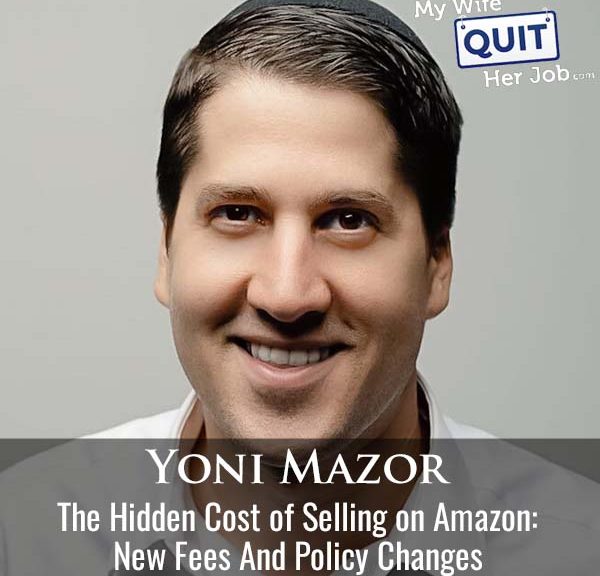
552: The Hidden Cost of Selling on Amazon: New Fees And Policy Changes With Yoni Mazor

552: The Hidden Cost of Selling on Amazon: New Fees And Policy Changes With Yoni Mazor

The most important Amazon FBA reimbursement policy change of 2024 is a hard deadline of October 23 that cuts your look-back window for lost-warehouse claims from 18 months down to 2 months, a 90 percent reduction. On this episode of the My Wife Quit Her Job podcast, I sat down with Yoni Mazor, founder of Getida, who audits Amazon FBA reimbursements for thousands of sellers and has been to nearly every Amazon event on the calendar.

Amazon announced the change on July 24 and framed it as a benefit, since Amazon will now proactively reimburse sellers for lost-warehouse inventory. Yoni’s read is different. Amazon was already automatically issuing those reimbursements. The real change is the shortened window, which quietly transfers money back to Amazon whenever a seller does not audit their account in time.

Below is a breakdown of what the new policy actually says, what it costs a seven-figure seller in real dollars, the three FBA claim types that matter most, and the exact Seller Central process for filing lost-warehouse claims before the deadline.

Key takeaways

  • The October 23 deadline cuts the look-back window for FBA lost-warehouse reimbursement claims from 18 months to 2 months. Sellers must audit and file claims for the full prior 18 months before that date.
  • A seven-figure Amazon seller can expect 1 to 3 percent of annual revenue back in reimbursements across all 30 claim types. Lost-warehouse alone is worth roughly 1 percent, or about $10,000 on $1M in FBA sales.
  • The three highest-value FBA claim types are lost inbound shipments (9 months look-back in the US), lost warehouse (soon 2 months), and weight-and-dimension overcharges (90 days).
  • Amazon reimburses at retail value, not cost. Reclaimed money is margin, not just recovered COGS.
  • Amazon’s stated 3-year plan is to double its overall profit margin from about 6 percent to 12 percent. Higher FBA fees, new inbound placement fees, and low-inventory fees all fit that pattern.

What are Amazon’s new FBA reimbursement policy changes?

Amazon’s new FBA reimbursement policy is a July 24, 2024 announcement that Amazon will automatically reimburse sellers for inventory Amazon loses inside its fulfillment centers, and that starting October 23, 2024, sellers will have only 60 days to audit those claims instead of the previous 18 months.

The auto-reimbursement piece is not new in practice. Amazon has been running that automated payout on lost-warehouse inventory for years. What is new is the shortened window for sellers to verify Amazon’s math and file for any missed payouts on that claim type.

The change applies to one specific claim type out of the roughly 30 discrepancy types Amazon tracks. The other 29 keep their existing look-back windows, at least for now.

How much does the new reimbursement deadline cost a typical Amazon seller?

The new reimbursement deadline costs a typical seven-figure Amazon FBA seller roughly $9,000 in unrecoverable claims per year, based on Yoni’s paper-napkin math. Annual discrepancy rates run 1 to 3 percent of revenue across all 30 claim types, and lost-warehouse claims are worth about one third of that.

On $1M in FBA sales, that is about $10,000 in lost-warehouse claims per year. Under the old 18-month window, all of it was recoverable. Under the new 60-day window, only the most recent 2 months of that $10,000, or about $1,000, will still be eligible when the deadline hits.

The seller who is already actively auditing gets hit less. If you are recovering $3,000 of the $10,000 yourself today, the remaining $7,000 is what a specialist would clean up. After October 23, $6,000 of that becomes permanently unclaimable.

What are the three most important FBA reimbursement claim types?

The three highest-value FBA reimbursement claim types are lost inbound shipments, lost-warehouse inventory, and weight-and-dimension fee overcharges. Together they account for the majority of the 1 to 3 percent of revenue an FBA seller is typically owed each year.

Lost inbound shipments happen when you ship 1,000 units to Amazon and Amazon receives 900. In the US, sellers have 9 months to reconcile these. In Europe, the window is 6 months. Amazon requires supplier invoices and proof-of-delivery documentation before it will pay.

Lost-warehouse inventory is what the new October 23 policy touches. Amazon loses the units after check-in and owes you back the retail value. Look-back window is dropping from 18 months to 2 months.

Weight-and-dimension overcharges happen when Amazon’s system thinks your phone case is the size of a refrigerator and charges $15 in FBA fees instead of $6. The look-back window here is 90 days.

A bonus category worth watching is customer-return issues, which come in two flavors: customers who get refunded but never send the item back, and customers who send back the wrong item (a “wrong FNSKU return”).

FBA reimbursement claim types at a glance

Claim typeWhat it isCurrent look-back (US)What changed in 2024
Lost inbound shipmentUnits missing between your dock and Amazon’s receiving9 monthsNo change (was 18 months in 2019, now stable)
Lost warehouseUnits Amazon loses after check-in18 months → 2 months on Oct 2390% reduction in look-back window
Weight-and-dimension overchargeFBA fee charged on wrong product dimensions90 daysReduced from 18 months around 2020
Customer return issuesRefunded but not returned, or wrong item returnedVariesNo change

How do you file an FBA lost-warehouse reimbursement claim in Seller Central?

To file an FBA lost-warehouse reimbursement claim yourself, download the inventory ledger report from Seller Central, then use the built-in FBA Lost Warehouse Reimbursement Tool to submit each eligible FNSKU and transaction ID. Amazon will investigate and pay out on eligible claims automatically.

Here is the exact click path Yoni walked through on the episode:

  1. In Seller Central, go to Reports, then Fulfillment, and download the Inventory Ledger Report. The Excel file gives you two columns you need: FNSKU and TRID (transaction ID).
  2. Back in Seller Central, use the search bar to open the FBA Lost Warehouse Reimbursement Tool.
  3. Paste the FNSKU and TRID pairs into the tool’s search boxes. It is a copy-paste job.
  4. The tool will tell you whether each entry is eligible. Eligible entries open a case automatically, and Amazon issues the reimbursement if the units are truly missing.
  5. Repeat until you have cleared the full 18 months of history. Do this before October 23, 2024.

If the process is unfamiliar, or if you sell across multiple ASINs and shipments and cannot audit that volume by hand in time, this is the exact use case for a service like Getida. Yoni’s team runs on a success-fee model where you only pay when they recover money, with no subscription cost up front, and podcast listeners can get the first $400 in recoveries free at getida.com/mywifequit.

Why is Amazon raising FBA fees and tightening reimbursement windows in 2024?

Amazon is raising FBA fees and tightening reimbursement windows in 2024 because CEO Andy Jassy has committed to doubling Amazon’s overall profit margin from roughly 6 percent to 12 percent over the next three years. Jassy came from AWS, Amazon’s high-margin cloud division, and the FBA fee changes are the retail side executing on that goal.

Beyond the reimbursement deadline, sellers in 2024 are absorbing three other fee categories that did not exist a few years ago:

  • Inbound placement fees. Amazon charges you to receive your bulk inventory unless you agree to split shipments across multiple fulfillment centers yourself. Splitting adds real supplier labor and logistics cost.
  • Low-inventory fees. If a hot-selling ASIN has less than 4 weeks of supply on hand, Amazon charges an additional fee because Amazon is losing sales it could have made.
  • Rising PPC costs. Amazon’s ad business crossed $41 billion in 2023 and is now the third leg of the digital-ad triopoly alongside Meta and Alphabet, with NFL and NBA streaming rights layered on top. More ad inventory means more competition for keyword bids.

Yoni’s read is that this is the retail evolution playbook. Walmart followed the same curve in the 1970s and 80s, adding chargebacks, guaranteed margins, and pay-to-play shelf space until only well-capitalized brands could survive the store.

What Amazon FBA sellers should do before October 23, 2024

Before October 23, 2024, every FBA seller should audit the full 18 months of lost-warehouse claims and file for any missed reimbursements while the old look-back window is still open. After the deadline, the same claims become permanently unrecoverable.

Two practical action items to run this week:

  1. Audit lost-warehouse claims yourself using the Seller Central inventory ledger and the FBA Lost Warehouse Reimbursement Tool (steps above). Even a few hours of copy-paste work can surface thousands in recoverable claims if you have not done this before.
  2. Bring in a specialist for anything you miss. Getida and similar services work on a success-fee model. If you sign up before the deadline, they can clean up the remaining 17.5 months of history before the window closes and only get paid on what they recover.

Amazon reimburses at retail value, not cost, so a $9,000 recovery is $9,000 of margin. On the runway into Q4, that is enough to fund a meaningful bump in ad spend, an extra product launch, or another round of inventory before the holiday rush.

Frequently asked questions

When is the new Amazon FBA reimbursement deadline?

The new Amazon FBA reimbursement deadline is October 23, 2024. On that date, the look-back window for lost-warehouse inventory claims drops from 18 months to 2 months. Any eligible claims older than 60 days after October 23 become permanently unrecoverable.

Does the shortened reimbursement window apply to all FBA claim types?

No. The shortened 60-day window applies only to lost-warehouse claims, which is one of roughly 30 FBA discrepancy types. Lost inbound shipments still have a 9-month window in the US, weight-and-dimension overcharges keep their 90-day window, and customer-return issues follow their own rules.

How much money is a typical Amazon FBA seller owed in reimbursements?

A typical Amazon FBA seller is owed 1 to 3 percent of annual FBA revenue in reimbursements across all 30 claim types. On $1M in FBA sales, that is $10,000 to $30,000 per year. Lost-warehouse claims specifically are usually about one third of that total.

Does Amazon automatically reimburse for lost inventory?

Amazon automatically reimburses for some lost-warehouse claims, but not all of them, and not for the other 29 claim types. Sellers still need to audit their own accounts and file missed claims within Amazon’s specific look-back windows for each category.

What is Getida and how does it work?

Getida is an FBA reimbursement audit service that scans your Seller Central data for missed claims across all 30 discrepancy types and files them on your behalf. There is no subscription fee. Getida charges only a success fee on money it recovers, and podcast listeners get the first $400 in recoveries free at getida.com/mywifequit.

Is Amazon making it harder for FBA sellers to be profitable in 2024?

Yes. In addition to shrinking the reimbursement window, Amazon added inbound placement fees, low-inventory fees, and continues to raise PPC costs. CEO Andy Jassy has publicly committed to doubling Amazon’s profit margin from about 6 percent to 12 percent over three years, and FBA sellers are absorbing much of the cost of that plan.

I Need Your Help

If you enjoyed listening to this podcast, then please support me with a review on Apple Podcasts. It's easy and takes 1 minute! Just click here to head to Apple Podcasts and leave an honest rating and review of the podcast. Every review helps!

Ready To Get Serious About Starting An Online Business?


If you are really considering starting your own online business, then you have to check out my free mini course on How To Create A Niche Online Store In 5 Easy Steps.

In this 6 day mini course, I reveal the steps that my wife and I took to earn 100 thousand dollars in the span of just a year. Best of all, it's absolutely free!

551: How To Go On Vacation Without Your Business Falling Apart (w/ Few Employees)

551: How To Go On Vacation Without Your Business (w/ Few Employees) Falling Apart

The way to take a vacation without your small business falling apart is to build a 3 to 4 week content buffer in advance, delegate one repeatable process to your team every 6 months, and go in expecting to accept that a handful of small things will drop. On this episode of the My Wife Quit Her Job podcast, my co-host Toni and I compared notes after I got back from a family trip to the Olympics in Paris and Toni finished a five-week house renovation while running her client work.

The context is important. This advice is for founders with a small team or no team at all. If you own a 200-person company with layered management, your vacation strategy looks entirely different, and it took the owners we know a decade of hard years to get there. For the rest of us running lean, the plan below is what actually keeps the business intact.

Below is the exact prep we each use to buy time off: buffer building, delegating one process at a time, flipping your work schedule when life forces it, and the honest conversation about what has to be allowed to slide.

Key takeaways

  • Build a 3 to 4 week content buffer before any real trip. Add one extra piece of content per week for the month leading up to your vacation instead of trying to batch it all in the final week.
  • Delegate one repeatable process every 6 months. Film every last little step on video, hand it off, and stop touching that process forever.
  • When chaos forces you off your normal schedule, flip your hours instead of fighting them. Working 3 to 7 pm in daylight beat working 4 to 8 pm in a dark house under construction spotlights.
  • Book a hotel or Airbnb for a “productivity retreat” when you need to catch up. Removing every household distraction produced more focused output than a full home office day.
  • Accept in advance that one YouTube video, one blog post, or one TikTok will not go out. Nobody’s career ended from missing a single upload.
  • Take two kinds of vacation each year. The adventure trip (which is exhausting) and the do-nothing trip (which is actually restful). One does not substitute for the other.

Why do most small business owners struggle to take a real vacation?

Most small business owners struggle to take a real vacation because they cannot mentally switch off, they have not documented their systems well enough to hand them to anyone else, and they treat their entire buffer as a reserve they refuse to use. The result is a “vacation” spent monitoring email and putting out fires from a hotel Wi-Fi connection.

An added wrinkle for lean online businesses: every family cruise Toni and I have taken has been derailed by a website hack, a credit card compromise, a domain expiration, or an employee getting sick at the wrong time. Boat internet in 2014 was molasses, and even today’s improved cruise Wi-Fi forces the choice between paying for a package or actually disconnecting.

The mental disconnect is the bigger problem. Working a day job means the brain switches off at 5 pm. Owning the business means it never does. Any real vacation plan has to account for that.

How much content buffer do you need before a small-business vacation?

For a two-to-three week trip, plan for a 3 to 4 week content buffer built up over the month leading into it, not the week of. The math is simple: one extra piece of content per week for four straight weeks gives you a full month of runway without any single week feeling brutal.

Trying to batch a month of content in the final week before a trip is where most small business owners burn out and cancel. Front-load one extra deliverable per week starting a month out and the vacation prep becomes almost invisible in the calendar.

The buffer is meant to be used. If your buffer is topped off when you leave and half-depleted when you return, it did exactly its job. Feeling stressed watching it drain during the trip is a sign you have not internalized what a buffer is for.

How do you delegate work in a small business before you leave?

The most effective way to delegate work in a small business before a vacation is to pick one repeatable process, film every step of it on video, hand it to one team member, and then stop touching that process forever. Trying to delegate everything at once in the two weeks before a trip is how founders end up doing all the work anyway plus training on top of it.

Toni’s rule is to give any real delegation project a full year to stick. Trust the person on small pieces first, expand the scope quarter by quarter, and by the time you take a big trip, most of the day-to-day is already off your plate.

For a physical process, film literally every step. Before this Olympics trip, our print production kept breaking down on us, so we spent a week filming a crap ton of video covering every last little thing about running the printers. We handed the videos to one employee, walked her through the material a couple of weeks before the trip, and now that process is off my plate for good.

How do you flip your work schedule when life forces you off your normal hours?

To flip your work schedule when life forces you off your normal hours, do the location-dependent work when it has to happen and shift your client or content work into the leftover block, even if that leftover block is 3 to 7 pm. Trying to protect a normal 9-to-5 while everything else is on fire wastes the daylight and produces worse work in both jobs.

Toni’s example: renovating a dark house with no lighting made painting from 4 pm to 8 pm impossible without 100-degree construction spotlights. Flipping to house work from 9 am to 3 pm in natural daylight and client work from 3 pm to 7 pm produced more of both.

The pro of running your own small business is that nobody notices when you rearrange your hours. Clients had no idea Toni was working 3 to 7 pm for three weeks. As long as you are responsive on your phone during normal hours, the schedule flip is invisible.

Why booking a hotel for a “productivity retreat” produces more focused work

Booking a hotel or Airbnb for a two-day productivity retreat produces more focused work than staying home because the room strips out every household interruption. There is no broken appliance to fix, no laundry pile in the corner, no neighbor at the door, and no half-finished project across the hall pulling you into a 10-minute detour that becomes an hour.

Toni pulled this off unintentionally by moving into a hotel and Airbnb during the first three weeks of her house renovation. She got a ton of work done and built up enough buffer to absorb the second half of the renovation with no client-facing disruption.

This is worth doing on purpose when you have a real deadline or a stretch of neglected work. Points hotels are cheap, the room forces monkish focus, and two days often produces what a week at home would.

What has to be allowed to drop when you take a real vacation?

The honest answer is that one or two small deliverables have to be allowed to drop when you take a real vacation, and the founder has to decide in advance which ones. A skipped YouTube upload, one blog post that does not go out, a TikTok that does not get published. None of these end a career.

The counter-example most people know is Simone Biles pulling out mid-competition at the Tokyo Olympics for mental health reasons. She came back to Paris as the most decorated American gymnast of all time. Stepping away at the right moment did not ruin her; it reset her.

The trap for a founder is the identity piece. In the US especially, “what do you do?” is the first question at any social gathering, and small business owners feel like every dropped output is a personal failure. Stepping back for two weeks is not the failure. Refusing to step back until you burn out is.

Two vacation types every small business owner needs

Every small business owner needs two kinds of vacation per year: an adventure trip that is exhausting but memorable, and a do-nothing trip that is actually restful. One does not substitute for the other.

  • The adventure trip. Every day scheduled, up at 6:30 am, chasing museums and excursions and the “get your money’s worth” mindset. You come home tired, often sick, and needing a week to catch up. Worth doing, but not restorative.
  • The do-nothing trip. Beach, pool, 16 books in a week, no schedule. This is the one that actually resets you. Toni does one of these annually; I mostly do the first kind and pay for it.

If you only do the adventure trip, you will come home more depleted than you left and blame vacations in general for the exhaustion. Book the do-nothing trip separately.

Frequently asked questions

How far in advance should a small business owner start prepping for a vacation?

Start prepping 4 to 6 weeks out for any trip longer than a long weekend. Build the content buffer by adding one extra deliverable per week, hand off any recurring process you can film in a day or two, and lock in a backup for customer service. Two weeks of prep is not enough for a two-week trip.

Can you actually take a vacation as a solo entrepreneur with no employees?

Yes, but only by front-loading content and lowering the bar on real-time responsiveness. Batch 3 to 4 weeks of scheduled posts before you leave, put an autoresponder on email, and accept that anything time-sensitive that hits your inbox mid-trip will wait until you are home. If a solo business genuinely cannot survive 10 days without you, that is a systems problem, not a vacation problem.

What is the biggest mistake small business owners make on vacation?

The biggest mistake small business owners make on vacation is refusing to unplug and then not enjoying either the vacation or the work. Checking Slack from the beach ruins the beach without actually solving the work problem. Either be at work or be on vacation; the hybrid ruins both.

How do you handle a business emergency while you’re traveling?

Decide in advance who is empowered to make what call and how they will reach you. For most small businesses, that is one trusted person with a decision-making tree covering the top three likely fires: payment processor issues, hosting outages, and customer service escalations. Everything else waits.

Should you tell clients you’ll be on vacation?

Only for the clients who have real-time expectations, and only for the exact dates you will be unreachable. Most client relationships in a small service business run just fine on a one-day response time, which almost any vacation location can support. Overcommunicating that you will be gone often creates more anxiety on both sides than it prevents.

How do you get back into the routine after a vacation?

Give yourself one full recovery day at home before your first work day back, and do the highest-friction tasks first. Answering the accumulated email backlog before starting real work is a common trap. Do one substantive piece of real work in the morning, then process email in the afternoon.

I Need Your Help

If you enjoyed listening to this podcast, then please support me with a review on Apple Podcasts. It's easy and takes 1 minute! Just click here to head to Apple Podcasts and leave an honest rating and review of the podcast. Every review helps!

Ready To Get Serious About Starting An Online Business?


If you are really considering starting your own online business, then you have to check out my free mini course on How To Create A Niche Online Store In 5 Easy Steps.

In this 6 day mini course, I reveal the steps that my wife and I took to earn 100 thousand dollars in the span of just a year. Best of all, it's absolutely free!

550: Why Content Creators Are Quitting: Is It Still Worth It?

550: Why Content Creators Are Quitting: Is It Still Worth It?

Content creation is still worth it in 2024, but only if you build across multiple platforms, own an email list, and sell your own product or course instead of relying entirely on brand deals, ad revenue, or Google search traffic. On this episode of the My Wife Quit Her Job podcast, my co-host Toni and I dug into a Wall Street Journal piece titled “Social Media Influencers Aren’t Getting Rich, They’re Actually Barely Getting By” and compared it to what we are seeing in our own creator network.

The single-platform, single-income-stream creator business is the one that is dying. Google search traffic to independent sites dropped to about 36 percent of results (the rest goes to Reddit, LinkedIn, Quora, and other aggregators). Ad-thrive bloggers are walking away from sites without even trying to sell them. Pet influencers we met at Pet Summit are living entirely off brand deals that vanish the moment a bigger creator shows up in the niche.

Below is what the creators who are quietly thriving all have in common, the RPM math on TikTok vs. YouTube, and why every kid, entrepreneur, and day-job professional should be creating content right now even if they never intend to make a dollar from it.

Key takeaways

  • Creators quitting today are almost all single-platform, single-revenue-stream operators. Google-only affiliate bloggers, TikTok-only influencers relying on brand deals, and Instagram-only pet accounts are the profiles getting wiped out.
  • Creators still thriving all sell their own product. A course, membership, physical product, or high-ticket service sold to an email list, distributed through creator collabs.
  • YouTube RPMs run $50 to $60 in peak season. TikTok Creativity Fund pays about $0.50 to $1 per RPM. That is roughly 100x more revenue per view on long-form YouTube than short-form TikTok.
  • TikTok is now a search engine for Gen Z. About 40 percent of TikTok views come from TikTok Search. Recipes, how-tos, and product research all happen there now.
  • The most valuable use of content creation is not the ad revenue. It is the resume, the credibility, and the doors it opens for speaking, TV bookings, hiring outcomes, and any job you apply for later.
  • Google now indexes selectively by default, according to reports from portfolio site owners. Being cited by AI answers and appearing in aggregator platforms (Reddit, Quora, YouTube) matters more each quarter.

Why are content creators quitting in 2024?

Content creators are quitting in 2024 primarily because single-platform business models are collapsing at the same time. Google’s helpful-content and core updates decimated affiliate bloggers, Instagram’s algorithm changes crushed pet and lifestyle influencers who relied on brand deals, and TikTok’s creator payouts never scaled into a sustainable income for most people.

The Wall Street Journal piece Toni and I discussed reported that most social media influencers are “barely getting by,” and the pattern is consistent with what we see in real forums and masterminds. Google-dependent creators in the ad-thrive/mediavine tier are literally walking away from sites without listing them for sale. Pet influencers with millions of Instagram followers depend on brand deals that dry up in a quarter when the algorithm shifts.

The creators quitting are the ones who bet everything on one traffic source and one revenue stream. Most did not diversify while the going was good, and there is no fast way to build a second leg once the first one goes.

Which creator business models are still working in 2024?

The creator business models still working in 2024 all share three traits: multi-platform distribution, an owned email list, and a product the creator sells directly to that list. The people we know quietly stacking six and seven figures are almost never doing it on ad revenue and brand deals alone.

A concrete example from a real-life friend of Toni’s: a pelvic-floor physical therapist with a PhD started running webinars for other therapists five years ago. Today she works three days a month at her private practice, holds webinars two to three times a week, is a sought-after international speaker (Dubai and beyond), and earns most of her income from her digital courses and trainings. She leveraged her domain expertise and built the whole thing on webinars plus an email list, not on going viral.

The pattern is repeatable across niches. Kristen at Pet Living built a YouTube-first content business around pet-behavior education. Her friend who took Marie Forleo’s B-School launched a coaching business from zero and hit six figures in 18 months by networking hard, running email campaigns, and creating a real product.

YouTube vs. TikTok vs. blogging: what pays best for creators?

For pure revenue-per-view, YouTube pays roughly 100x more than TikTok on ads alone. A peak-season YouTube RPM in a business or finance niche runs $50 to $60. The TikTok Creativity Fund pays $0.50 to $1 per RPM, and only on videos over 60 seconds. Blogging is a distant middle ground: the top 20 posts generate almost all the traffic, and Google is sending less of it every quarter.

PlatformTypical RPMContent shelf lifeBest monetization path
YouTube (long-form)$5 to $60Years (evergreen how-to lives 4 to 5+ years)Ads + email capture + affiliate + your own course
TikTok$0.50 to $1 (Creativity Fund, 60+ sec)3 days to 6 months depending on the videoBrand deals, TikTok Shop, funneling to email
Instagram ReelsBonus programs only, inconsistent2 to 3 days typicallyBrand deals, ecommerce (best e-comm platform)
Blog (Google SEO)$10 to $40 (varies by niche)Multi-year for evergreen, but declining trafficAds + affiliate + funnel to product
Amazon Influencer (video reviews)Prime Day and Q4 spikes; some creators paying for vacations from single eventsLives on Amazon listings indefinitelyCommission on sales, evergreen once posted

The stat that sharpened my thinking: my total TikTok Creativity Fund earnings since I started are around $120. A single YouTube video from the past two weeks made over $1,000 in ad revenue alone in a week and change. The RPM gap is that big.

Why long-form content beats short-form for creator businesses

Long-form content beats short-form for creator businesses because it captures email, ranks in search for years, and monetizes at RPMs that are 10 to 100 times higher than short-form platforms. Short-form is a top-of-funnel awareness tool. It is not a business by itself for most niches.

The email capture problem is the biggest one. On a five-minute YouTube video, I can pause at the four-minute mark and say “if you’re enjoying this, my free six-day mini course goes deeper” and drop the link in the description and pinned comment. On a 30-second TikTok, the viewer swipes away before the CTA lands. My TikTok email captures are so small they do not register in my daily numbers.

TikTok can still work as a top-of-funnel channel and as a source of brand deals, TikTok Shop commissions, and Amazon Influencer video content. Treat it as a distribution channel that feeds a longer-form asset. Never as the whole business.

Why TikTok search matters more than most creators realize

TikTok search now drives about 40 percent of the views on my TikTok account, and Gen Z uses TikTok as their default search engine for recipes, how-tos, and product research. That fundamentally changes what “shelf life” looks like for a TikTok video: some of them keep pulling views for six months, because searchers keep finding them.

Toni’s teenagers default to TikTok for anything they want to learn quickly. Recipes, home repair (though my husband Brian refused to trust a plumbing tutorial from TikTok when we needed to replace a cast iron vent pipe, and searched YouTube for a licensed plumber instead), medical education from licensed professionals, product reviews. TikTok search behavior is legitimizing the platform as a knowledge source for a younger audience.

For creators, this means SEO-style keyword thinking is starting to apply to TikTok captions and on-screen text. Ranking in TikTok search is a real, growing traffic source that most creators are not optimizing for yet.

How Google’s AI changes are affecting bloggers in 2024

Google’s AI changes are affecting bloggers by cutting the share of search traffic going to independent websites and increasingly routing users to Reddit, Quora, LinkedIn, aggregator sites, and AI-generated answers instead. Recent reports from portfolio site owners indicate Google is also more selective about indexing new content, meaning many pages never enter the index at all.

The strategy shift on our blog has been complete. I used to originate every piece of content as a blog post and then repurpose it into a YouTube video. That order is reversed now. YouTube scripts come first, and the transcripts get turned into blog posts. The blog posts do not follow traditional SEO structure at all, and to my surprise, some of them are still ranking.

The takeaway for existing bloggers is not to abandon the blog. It is to stop treating blog traffic as the primary business. Let the blog collect long-tail search traffic, use it to feed your email list, and put your creative energy into the platform where new attention is actually growing.

Why every entrepreneur should create content even if they never monetize it

Every entrepreneur, professional, and job-seeker should create content in 2024 even with no intention of monetizing it because a public body of work is now the most valuable resume you can build. It opens doors for TV bookings, speaking gigs, hiring decisions, and referrals in ways a static LinkedIn profile never will.

Concrete examples we watched play out:

  • Friends at Sellers Summit in Orlando (Connie Albers, Leslie Samuel, Josh Elledge) are regulars on local news because they have vaults of on-camera video. News stations audition by watching your existing clips.
  • A hiring decision at a friend’s company came down to three candidates. The one with a professional portfolio website and a YouTube channel walking through his own product work got hired over two candidates who only had resumes.
  • Contractors and service businesses that post real work on video (like our friend John in our course, who runs a landscaping business and films his projects) close prospects faster than the ones who show up with a text-only quote.
  • My own daughter is filming a course right now, and even before it launches, the process of producing it has upgraded her presentation, editing, and on-camera skills in a way no side project could match.

The old advice was “write a book.” The 2024 version is “build a video portfolio.” Books still work, but a real body of on-camera work is a faster, more visible signal of competence in almost every field.

How to start a content business in 2024 the right way

To start a content business in 2024 the right way, pick one long-form primary platform (usually YouTube or a blog), one short-form distribution platform (TikTok or Instagram Reels), commit to an email capture strategy from day one, and plan to launch your own product within 12 to 18 months instead of relying on ad revenue.

Here is the sequence most successful creators we know followed:

  1. Choose your primary long-form platform. YouTube if you can be on camera, a blog if you cannot. This is the asset that will still be earning in five years.
  2. Add short-form as a distribution channel. Repurpose long-form content into TikTok, Reels, and YouTube Shorts. Do not build your business on any of them.
  3. Capture email from every touchpoint. A real lead magnet in the description, in the pinned comment, on the blog sidebar, in the podcast outro. Not just “subscribe to my newsletter.”
  4. Sell one thing to that list. A digital product, membership, physical product, or high-ticket service. This is where the actual money is.
  5. Diversify traffic through collabs. Guest appearances on other creators’ channels are the single fastest way to grow an email list once you have a product to sell.

Even if the podcast, YouTube channel, or blog never becomes a full-time income, the skills and the portfolio compound into everything else you do. That is the real reason creating content is still worth it in 2024.

Frequently asked questions

Can you still make a full-time living as a content creator in 2024?

Yes, but the path is narrower than it was five years ago. Full-time creators today almost always sell their own product (course, membership, physical goods, or high-ticket service) to an email list, on top of ad revenue and brand deals. The single-revenue-stream creator business has largely stopped working.

Which platform is the best for new content creators to start on?

YouTube is the best platform for most new content creators to start on today because it pays the highest RPM, the content has a multi-year shelf life, and it is the easiest platform to capture email addresses from. Blogging is still viable in narrow, low-competition niches, but is a slower path than it was pre-AI.

How much money do content creators actually make?

Creator income is bimodal. A small number of top creators earn seven and eight figures. The vast majority earn less than a full-time salary, and Wall Street Journal reporting in 2024 confirmed most social media influencers are “barely getting by.” The creators who cross the six-figure line consistently are almost always selling their own product, not living off ad revenue alone.

Is blogging dead in 2024?

Blogging still works as a supporting asset for a broader creator business, but the growth curve for independent sites has flattened and is likely to keep declining as AI answers absorb informational queries. Blogs are useful for email capture, SEO long-tail traffic, and feeding a course or product funnel. Blogs no longer work as a standalone business for most people.

Should I quit my day job to become a full-time content creator?

Do not quit your day job for content creation until your side income covers your basic living expenses for at least six months and you have proof your revenue is not tied to a single algorithm change. The reason so many creators are quitting in 2024 is that they went full-time on a single platform’s tailwind and got wiped out when the wind shifted.

What’s the fastest way for a new creator to make money?

The fastest way for a new creator to make money is brand deals in the niche they already have audience credibility in, followed by affiliate commissions, followed by TikTok Shop or Amazon Influencer video reviews on high-turnover products. The slower, more durable path (owning an email list and selling your own product) makes far more money in the long run but takes 12 to 24 months to compound.

I Need Your Help

If you enjoyed listening to this podcast, then please support me with a review on Apple Podcasts. It's easy and takes 1 minute! Just click here to head to Apple Podcasts and leave an honest rating and review of the podcast. Every review helps!

Ready To Get Serious About Starting An Online Business?


If you are really considering starting your own online business, then you have to check out my free mini course on How To Create A Niche Online Store In 5 Easy Steps.

In this 6 day mini course, I reveal the steps that my wife and I took to earn 100 thousand dollars in the span of just a year. Best of all, it's absolutely free!

549: Big Tech Is Squeezing Your Business Dry (And What To Do About It)

549: Big Tech Is Squeezing You Dry (And What To Do About It)

Every big tech platform that ecommerce sellers depend on eventually gets worse for the people who built it. Amazon, eBay, Etsy, Facebook, and Shopify all follow the same three-stage playbook: attract users with a great free service, lock them in, then squeeze both sides for every dollar of profit they can extract. In this episode of the My Wife Quit Her Job podcast, I explain why this pattern is so predictable and what you have to do to stop it from killing your business.

I have been selling on Amazon for over a decade, and I have personally watched the FBA program go from a no-brainer to a fee-riddled trap. The same thing happened to Facebook pages, then Facebook groups, then Facebook Messenger marketing. Each time I built on rented land, the landlord raised the rent or bulldozed the building.

Below I break down the exact stages every platform moves through, the specific 2024 Amazon fees that pushed sellers over the edge, and the “owned marketing” strategy I now use to keep my businesses insulated from the next platform meltdown.

Key takeaways

  • Every big tech platform follows a three-stage pattern: win users, lock them in, then squeeze profit until quality collapses.
  • Amazon FBA fees now regularly consume 45 to 60 percent of revenue between the 15 percent referral fee, 10 to 15 percent FBA fee, and 20 to 30 percent for ads.
  • Amazon’s Q4 2023 third-party seller revenue hit 43.4 billion dollars, up 20 percent year over year, while retail revenue rose only 9 percent. Most of the growth came from squeezing sellers, not selling more products.
  • Facebook has burned sellers three times: pages, groups, and Messenger all lost reach the moment they became valuable.
  • The defense is owned marketing: email, SMS, and your own website. You control the customer list, so no platform can turn off the tap.
  • Ride new waves early (TikTok Shop, TikTok organic) and expect them to enshittify on schedule too.

What is the enshittification of big tech platforms?

Enshittification is the predictable decay of a two-sided platform as it matures, moving from great for users, to great for business customers, to great only for shareholders. Cory Doctorow coined the term in 2022 to describe how Amazon, Facebook, Google, and TikTok all rot in the same way. The technical version is simple: platforms subsidize one side of the marketplace to grow, then squeeze both sides once they are locked in.

For ecommerce sellers, the pattern always plays out in three stages. First, the platform is generous with reach, low fees, and great support.

Then, once buyers and sellers cannot leave, the platform slowly turns every free feature into a paid one. Finally, the platform maximizes short-term profit until quality collapses and the whole thing stops working.

The three stages of platform enshittification

Every major ecommerce platform I have used moves through the same three stages, in the same order, on roughly the same timeline. Understanding the stages is what lets you predict where a platform is right now and how much runway you have left.

Stage 1: The platform bends over backwards for users

New platforms have no leverage, so they compete on service quality. Amazon FBA in 2010 charged tiny fees, accepted any quantity of inventory with no penalties, and threw in free Prime shipping for your customers.

Amazon warehouses had space, and Amazon actively begged sellers to try the program. It was a private ATM machine for anyone willing to import from Alibaba.

Facebook pages worked the same way. Post something in 2010 and 100 percent of your fans saw it. Building a fan page was the highest-ROI marketing activity on the internet for about three years.

Stage 2: The platform locks in both sides of the marketplace

Once buyers cannot easily leave (huge selection, low prices, generous returns) and sellers cannot leave (that is where the customers are), the platform quietly starts changing the rules. Amazon hit this stage around 2016 when they launched the Dragon Boat program and started aggressively recruiting Chinese sellers directly into US fulfillment centers.

Within three years, Chinese sellers flooded Amazon with dirt-cheap products, blatantly copied US sellers’ listings, gamed reviews, and manipulated rankings with impunity. Amazon did essentially nothing for years because from Amazon’s point of view, one seller being replaced by another is a wash. Amazon takes its cut either way.

Stage 3: The platform maximizes profit and quality collapses

Once a platform is public, the founder rarely controls the roadmap anymore. Shareholders want quarterly earnings growth, and the fastest way to hit those numbers is to raise fees on the side of the marketplace that cannot leave. That is when the fee squeeze accelerates and the service quality drops.

Amazon is deep into this stage now. Ads eat the first two pages of most search results, FBA fees keep climbing, and Prime deliveries regularly miss the promised window. The platform still makes money, but the ecosystem is being drained.

How Amazon FBA fees add up to 45 to 60 percent of revenue in 2024

Amazon FBA fees now consume roughly 45 to 60 percent of a seller’s revenue once you add up the referral fee, fulfillment fee, ad spend, and the newer surcharges. Here is the current stack most sellers are dealing with.

FeeRateWhat it covers
Referral fee15% of sale priceAmazon’s cut of every transaction
FBA fulfillment fee10 to 15% of sale pricePick, pack, ship, customer service
Advertising (PPC)20 to 30% of sale priceSponsored placements to stay visible
Inbound placement fee$0.21 to $6.00 per unitDistributing inventory to multiple FCs (new in 2024)
Low-inventory surchargeVariable per unitPenalty for holding too little stock at Amazon

The inbound placement fee is new for 2024. Amazon now charges 21 cents to 6 dollars per unit just to accept standard and bulky products into the warehouse, which is supposed to reflect the cost of distributing your inventory across their network.

The low-inventory surcharge is the fee that made sellers furious. If you typically sell 1,000 units per month and your stock at Amazon drops to 500 units, Amazon charges you a per-unit fee on the missing 500. You get penalized for holding too much inventory (long-term storage fees) and now you also get penalized for holding too little.

Why Amazon buyers are getting worse products and slower shipping

Amazon’s buyer experience has also decayed measurably in the last few years. This past Christmas, I received fewer than 25 percent of my Prime orders inside the promised delivery window. Prime now costs 139 dollars a year, up from 79 dollars a decade ago.

Amazon also quietly changed some default behaviors that cost you shipping speed. Many product pages now default to a slower delivery option, and some items have minimum-order requirements to unlock free Prime delivery even if you are a paid Prime member. I have accidentally chosen slower shipping this way multiple times.

Product quality has slid too. Roughly 50 percent of top sellers on Amazon are now based in China, and a chunk of them violate trademark and copyright law with no meaningful consequence. One popular repair YouTuber recently tested several sets of 5-amp fuses bought on Amazon and found that none of them actually blew at 5 amps.

How Amazon’s own numbers prove sellers are subsidizing the growth

The clearest evidence that Amazon is in the squeeze stage comes from its own 2023 Q4 earnings. Third-party seller services revenue reached 43.4 billion dollars in the quarter, up 20 percent year over year. Amazon’s online store revenue was only up 9 percent over the same period.

Third-party sellers are growing revenue for Amazon at more than twice the rate of Amazon’s own retail sales. That gap is not because sellers are magically selling more units. It is because Amazon keeps taking a bigger cut of each transaction.

Customer service for sellers has moved in the opposite direction. Ten years ago you could get a real human on the phone at Seller Central. Today the responses are canned templates, and it can take weeks to resolve a suspended listing or an unfair review.

Facebook’s three-strike record: pages, groups, and Messenger

Facebook has run the enshittification playbook on ecommerce sellers three separate times, on three separate features. Each time the pattern was identical: build free reach, get sellers to invest years of effort, then throttle reach and demand payment for what used to be free.

Round one was Facebook pages. I built a large fan page when pages were driving huge referral traffic. Facebook then throttled organic page reach to a few percent of followers and forced page owners to pay to boost posts.

Round two was Facebook groups. Groups filled the void when pages died, and I built a private group of 20,000 users. Facebook then throttled group reach to make room for more ad inventory in the feed.

Round three was Facebook Messenger marketing. Free direct messages to opted-in subscribers were an incredible marketing channel, so I built a large Messenger list. Facebook then shut off the free messaging and started charging per message.

Which platforms are in which stage right now (2024)

Below is my read on where the main ecommerce platforms sit on the enshittification curve as of 2024. Wave riders should look at where a platform is on this list and plan accordingly.

PlatformStageWhat that means for sellers
Amazon FBALate stage 3Fees maxed out, seller support collapsed, buyers frustrated
Facebook / Meta adsStage 3CPMs high, organic reach near zero, targeting weakened
eBayStage 3Fee creep and buyer trust issues
EtsyLate stage 2Fees rising, mass-produced Chinese product floods harming artisans
ShopifyStage 2Core is solid; app-tax and fee creep growing
Google SearchStage 3Ads eating SERP, AI Overviews cutting click-through
TikTok ShopStage 1Wild-west era; subsidized discovery, low seller fees
TikTok organicStage 1Massive free reach still available

How to protect your ecommerce business from the next platform meltdown

You protect your business from platform enshittification by building on assets you control, and by treating every third-party platform as a distribution channel you will eventually have to replace. That combination is what I call owned marketing, and it is the single biggest strategic shift I have made in the last decade.

Owned marketing is any channel where you personally control the customer list and the delivery mechanism. Email is the clearest example. Once you have a customer’s email address, you can email them as much as you want, and no platform can shut off the connection.

The owned marketing stack that actually survives

Owned marketing assets should be the foundation, and platforms should be the funnel that fills them. My current stack looks like this.

  • Your own website (Shopify, WooCommerce, BigCommerce). You own the customer relationship, product data, and checkout flow.
  • Email list. Highest-ROI channel, no platform sits between you and the send.
  • SMS list. 95 percent-plus open rates, direct to the customer’s phone.
  • A blog or content library you host. Feeds SEO and AI search citations independently of any social platform.
  • A podcast or YouTube channel. Rented land, but the content library is portable across platforms.

Every platform channel (Amazon, TikTok, Meta ads, Google ads) should exist to funnel customers into one of the owned assets above. If a channel disappears tomorrow, the business survives because the customer list survives.

Ride new waves early, then get off before the crash

Owned marketing is defense. Riding new waves is offense. The best time to be on a platform is stage 1, when the platform is subsidizing your growth because it needs sellers to attract buyers.

TikTok Shop and TikTok organic are in that window right now. Fees are low, discovery is subsidized, and creators still get real free reach. That will not last, so you should be there today, capturing customers into your email and SMS lists while the platform is still generous.

The rule is simple: expect every platform to go to crap eventually, and it will keep you honest about diversifying before the squeeze starts.

Frequently asked questions

What is enshittification?

Enshittification is the predictable decline of a two-sided platform as it moves from serving users, to serving business customers, to serving only shareholders. The term was coined by writer Cory Doctorow in 2022 to describe how Amazon, Facebook, Google, and TikTok all decay in the same way once they lock in both sides of their marketplace.

How much does it cost to sell on Amazon FBA in 2024?

Total Amazon FBA costs typically consume 45 to 60 percent of a seller’s revenue. The stack includes a 15 percent referral fee, a 10 to 15 percent FBA fulfillment fee, 20 to 30 percent for advertising, plus newer surcharges like the inbound placement fee (21 cents to 6 dollars per unit) and the low-inventory surcharge.

What is the Amazon low-inventory surcharge?

The Amazon low-inventory surcharge is a per-unit fee Amazon charges when you carry less inventory in FBA than your recent sales velocity suggests you should. If you typically sell 1,000 units per month and your stock drops to 500, Amazon charges a fee on the 500-unit shortfall, on top of the standard FBA fees.

Is Amazon FBA still worth it?

Amazon FBA is still worth it for many sellers, but the margin is much thinner than it was five years ago, and it is no longer safe to rely on it as your only channel. Most successful Amazon sellers today treat FBA as one channel of several, use it to fund and grow an owned direct-to-consumer store, and capture email and SMS lists at every opportunity.

What is owned marketing and why does it matter?

Owned marketing is any marketing channel or asset that you personally control, with no third-party platform in between you and the customer. Email lists, SMS lists, and your own website are the core examples. It matters because owned channels survive platform algorithm changes, fee hikes, and account bans, which are the failure modes that kill platform-dependent businesses.

Which ecommerce platforms are safest to build on right now?

The safest ecommerce foundation is your own store (Shopify, WooCommerce, or BigCommerce) plus an email list, because you control the customer relationship end to end. Among third-party platforms, TikTok Shop and TikTok organic are currently in the subsidized early stage, which makes them the best places to acquire new customers cheaply before fees rise.

How do I know when a platform is about to enshittify?

The clearest warning signs are rising fees on sellers, more of the SERP or feed being replaced by ads, worse customer support, and heavy recruitment of low-cost sellers who race to the bottom on price. When those signals stack up together and the platform is publicly traded and past the founder-led era, the squeeze is already in motion.

I Need Your Help

If you enjoyed listening to this podcast, then please support me with a review on Apple Podcasts. It's easy and takes 1 minute! Just click here to head to Apple Podcasts and leave an honest rating and review of the podcast. Every review helps!

Ready To Get Serious About Starting An Online Business?


If you are really considering starting your own online business, then you have to check out my free mini course on How To Create A Niche Online Store In 5 Easy Steps.

In this 6 day mini course, I reveal the steps that my wife and I took to earn 100 thousand dollars in the span of just a year. Best of all, it's absolutely free!

548: Amazon Declares War On Temu And Screws All Amazon FBA Sellers

548: Amazon Declares War On Temu And Screws All Amazon FBA Sellers

Amazon just launched a new low-cost online store that ships unbranded goods directly from Chinese factories to US shoppers in 9 to 11 days, in a direct assault on Temu and Shein. For third-party Amazon FBA sellers, this is the worst piece of Amazon news in a decade. Chinese factories selling on the new store skip US import duties (thanks to the 800-dollar de minimis rule), skip the middleman, and undercut FBA prices by 5x to 40x on identical products.

In this episode of the My Wife Quit Her Job podcast, I break down exactly what Amazon announced, why the new store is going to leak into the main Amazon search results whether Amazon admits it or not, and the four-step defense strategy I am using in my own store at Bumblebee Linens to stay competitive.

Below is the full breakdown of Amazon’s new direct-from-China store, why the pricing gap is impossible to close under current FBA fees, the Temu and Shein numbers driving Amazon’s reaction, and the ecommerce playbook that still works when generic products go to zero.

Key takeaways

  • Amazon opened a new online store shipping unbranded goods directly from China in 9 to 11 days, initially targeting clothing and household items under 20 dollars and one pound.
  • Chinese sellers on the new store avoid US import duties under the 800-dollar de minimis rule, skip the middleman, and skip most Amazon FBA fees.
  • Temu had 82.4 million active US shoppers in September 2023, up from 4.6 million a year earlier, and was the most-downloaded ecommerce app of 2023 with 120 million-plus downloads.
  • Identical products already sell for 5x to 40x more on Amazon than on Temu (a 40-dollar Amazon floor mat is 1.06 dollars on Temu).
  • Amazon’s own new 2024 fees (inbound placement fee of 21 cents to 6 dollars per unit, low-inventory surcharge) make the FBA pricing gap even wider.
  • The four defenses that still work: sell premium and trust-heavy categories, offer personalization, own your website and email list, and build a real brand.

What Amazon just announced about its direct-from-China store

Amazon has opened a new online storefront that lets Chinese factories sell unbranded goods directly to US consumers, with shipping times of 9 to 11 days instead of the usual Prime 1 to 2 days. The rollout is phased. The first phase targets unbranded clothing and household items priced under 20 dollars and weighing under one pound.

Amazon is actively recruiting Chinese factories into the program right now, and the model is essentially identical to Temu: factory-direct, cheap, slow. The goal is to stop the massive market-share drain Amazon has been suffering to Temu and Shein over the last two years.

Why Amazon is copying the Temu and Shein model

Amazon is copying Temu and Shein because Americans have proved they will happily wait 9 to 11 days to save 5x to 40x on generic products. Amazon’s own apparel revenue is down roughly 30 percent year over year, and tens of millions of shoppers have shifted spend to the two Chinese platforms.

How big Temu and Shein got, in numbers

The scale that forced Amazon’s hand is startling. Below are the September 2023 monthly active shopper counts for the major US ecommerce platforms, per GWS Magnify.

PlatformUS monthly active shoppers (Sept 2023)Note
Amazon142 millionStill #1
Walmart85.5 millionNeck and neck with Temu
Temu82.4 millionUp from 4.6M a year earlier
eBay40 millionHalf of Temu

Temu was also the most-downloaded ecommerce app in the world in 2023 with more than 120 million downloads, per Statista, surpassing Amazon. Two years after launching in the US, Temu already has more than half of Amazon’s monthly shopper base.

How much cheaper Temu is on identical products

The price gap on identical products is enormous. On a foam floor mat, Amazon lists 40 dollars while Temu lists 1.06 dollars, a 40x difference. On a neck fan, Amazon lists 23 dollars while Temu lists 6.95 dollars, roughly 3x cheaper.

The products are literally the same items shipped from the same Chinese factories. The only difference is that the Amazon listings sit behind US import duties, FBA fees, and a US-based middleman.

Why Amazon FBA sellers cannot match direct-from-China pricing

US-based Amazon FBA sellers cannot match direct-from-China prices because the FBA fee stack, plus US import duties, plus the middleman markup, is structurally 30 to 60 percent of the retail price before the seller earns a dollar. A Chinese factory selling direct on the new Amazon store skips almost all of that.

The Amazon FBA fee stack in 2024

Here is what a US FBA seller pays on a typical product, on top of the cost of goods and shipping to the US.

FeeRate
Referral fee15% of sale price
FBA fulfillment fee10 to 15% of sale price
Inbound placement fee (new 2024)$0.21 to $6.00 per unit
Low-inventory surcharge (new 2024)Variable per unit
US import duties and tariffsCategory-dependent, often 7 to 25%
Advertising to stay visible20 to 30% of sale price

The inbound placement fee is new in 2024. Amazon now charges 21 cents to 6 dollars per unit just to accept standard and bulky items into a fulfillment center. The stated justification is to cover the cost of distributing your inventory across the network.

The low-inventory surcharge is the other new 2024 fee. In the past you only got penalized for holding too much inventory in FBA. Now you also get penalized for holding too little.

What Chinese sellers on the new store pay instead

A Chinese factory selling direct on the new Amazon store bypasses most of that stack. Packages under 800 dollars enter the US under the de minimis rule with no import duties or tariffs. There is no US middleman, no US warehouse, and no FBA fulfillment fee because Amazon ships directly from China.

The combined effect is a 30 to 60 percent structural pricing advantage. A US FBA seller cannot beat that gap on a generic product no matter how efficient the supply chain is.

Why the new store will bleed into regular Amazon search

Amazon has said the new low-cost store will live in its own section on the site. In practice, the cheaper direct-from-China listings will almost certainly show up alongside regular listings in normal Amazon search results, because Amazon has done exactly this before with its own private-label products.

Amazon makes money either way. Whether a shopper buys your FBA product or a 3x-cheaper direct-from-China alternative, Amazon takes its cut. The incentive to hide the cheap listings from mainstream search does not exist.

The likely search experience: a shopper types in your product, sees a Chinese direct-from-China listing at one-third the price sitting right next to your listing, and clicks the cheaper option. Brand loyalty on Amazon is close to zero for most categories, so the price gap wins.

How to fight back: the 4-step defense for ecommerce sellers in 2024

The four defenses that still work against direct-from-China competition are picking trust-heavy categories, offering personalization, owning your web presence and email list, and building a real brand on emotion instead of price. Below is how I am applying each of these in my own businesses.

Step 1: Move into categories a Chinese factory cannot easily replicate

The first move is to reposition your product portfolio into categories where trust, safety, or expertise matter more than price. A student in my course sells skincare, and skincare is a great example. Consumers are not going to buy a no-name skincare product from a Chinese factory at one-tenth the price because they have no idea what chemicals are in the formulation.

Other trust-heavy categories to consider include supplements, baby products, pet food, kitchen items that contact food, and anything with a safety certification. In each of these, buyers reliably pay a premium to reduce perceived risk.

Step 2: Add personalization Chinese sellers cannot match

The second move is to add customization that a bulk-shipping factory cannot deliver cost-effectively. At my store Bumblebee Linens, we have doubled down on personalization: custom embroidery, custom printing, custom monogramming on almost every product we sell.

Personalization is a real operational pain, and that is exactly why it is a moat. A Chinese seller shipping thousands of identical units per day cannot easily monogram a linen handkerchief for a wedding and get it to a US customer on a deadline.

Step 3: Own your website and email list

The third move is to stop building your business exclusively on Amazon and start building assets that you own. Your own website, your own email list, and your own SMS list are all channels where no platform can undercut you or change the rules overnight.

Amazon is a distribution channel, and it should be one channel among several. Every Amazon sale should be treated as an opportunity to capture a customer into an owned marketing channel that will still be there in five years.

Step 4: Build a real brand that sells on emotion, not price

The fourth move is to actually build a brand around your products, because a brand insulates you from price competition on commodity goods. The technical definition of a brand is just a name that identifies your goods, but a real brand triggers an emotion that makes price irrelevant.

Dr. Squatch is the textbook example. The company sells bar soap for 8 dollars while a comparable Chinese-made bar sells 50-for-79-cents on Temu, and Dr. Squatch is a nine-figure business because their commercials sell masculinity and sexual companionship rather than soap.

True Classic Tees is another one. A plain colored t-shirt from True Classic costs 30 dollars while 8 similar shirts on Temu are 13.49 dollars, and their commercials sell the promise of looking buff and hiding your gut. That emotional payoff is why they became a nine-figure company on a commodity product.

The through-line is simple. If you are competing on price on Amazon in 2024, you are competing directly with Chinese factories that ship for free under de minimis. If you are competing on brand, personalization, trust, or premium positioning, you have a business that can survive the shift.

What US Amazon FBA sellers should do in the next 90 days

The next 90 days matter, because the new Amazon direct-from-China store is going to accelerate the pricing pressure faster than most sellers expect. Below is the short-list of actions I would take right now if I were still primarily an Amazon FBA seller.

  • Audit every SKU. Any generic, unbranded product under 20 dollars is at risk of being undercut. Plan an exit path or a premium upgrade.
  • Move into premium, trust-heavy, or customizable product lines that direct-from-China sellers cannot easily replicate.
  • Stand up an owned Shopify or WooCommerce site and start driving Amazon buyers to it with insert cards, warranty registration, and free content.
  • Build an email and SMS list. These are the only marketing channels no platform can shut off.
  • Start producing content (video, podcast, blog) that builds real brand recognition off Amazon.
  • Diversify sales channels. Sell on Shopify, TikTok Shop, Faire, wholesale, and other platforms so no single platform can end your business.

Frequently asked questions

What is Amazon’s new direct-from-China store?

Amazon’s new direct-from-China store is a low-cost online storefront that lets Chinese factories sell unbranded products directly to US shoppers, with 9 to 11 day shipping. It is Amazon’s competitive response to Temu and Shein, and it initially focuses on clothing and household goods priced under 20 dollars and weighing under one pound.

What is the 800-dollar de minimis rule?

The de minimis rule is a US customs provision that allows packages valued at 800 dollars or less to enter the country without paying import duties or tariffs. It is the loophole that lets Temu, Shein, and Amazon’s new direct-from-China store deliver factory-direct products to US shoppers without the fees a US-based importer has to pay.

How much bigger is Temu than a year ago?

Temu grew from 4.6 million US monthly active shoppers in September 2022 to 82.4 million in September 2023, an 18x jump in one year (source: GWS Magnify). Temu was also the most-downloaded ecommerce app in the world in 2023 with more than 120 million downloads, per Statista, surpassing Amazon.

Can Amazon FBA sellers still compete in 2024?

Amazon FBA sellers can still compete in 2024, but not on generic sub-20-dollar products against direct-from-China listings. The winners will be sellers who move into premium categories, offer personalization, build a real brand, and diversify sales onto owned channels like their own website and email list.

Will the direct-from-China products show up in regular Amazon search?

Amazon has stated the new low-cost storefront will have its own section, but direct-from-China products almost certainly will appear alongside regular listings in normal Amazon search. Amazon has repeatedly promoted its own private-label products in mainstream search, and it collects fees on the cheaper Chinese listings either way.

What product categories are safest from direct-from-China competition?

Categories where trust, safety, expertise, personalization, or brand matter more than price are the safest. Skincare, supplements, baby and pet products, food-contact kitchen items, personalized gifts, custom apparel, and premium branded goods all resist commodity price pressure from direct-from-China sellers.

What is the best defense for a small ecommerce business right now?

The best defense is to build an owned direct-to-consumer store, capture every customer into an email and SMS list, and use marketplaces like Amazon as one distribution channel rather than the whole business. That way, when Amazon or any other platform changes the rules, your customer relationships and margins survive.

I Need Your Help

If you enjoyed listening to this podcast, then please support me with a review on Apple Podcasts. It's easy and takes 1 minute! Just click here to head to Apple Podcasts and leave an honest rating and review of the podcast. Every review helps!

Ready To Get Serious About Starting An Online Business?


If you are really considering starting your own online business, then you have to check out my free mini course on How To Create A Niche Online Store In 5 Easy Steps.

In this 6 day mini course, I reveal the steps that my wife and I took to earn 100 thousand dollars in the span of just a year. Best of all, it's absolutely free!

547: The Formula For Running A Record-Breaking Sale With Email Marketing

547: The Formula For Running A Record-Breaking Sale With Email

The formula for running a record-breaking email sale campaign is to segment aggressively, send more than twice a day, use price-slash graphics instead of raw percent discounts, and rotate through 8 to 10 distinct email angles (points reminders, low-stock alerts, gated coupon batches, personal-style text emails, category-specific product highlights) so you never send the same message twice. In this episode of the My Wife Quit Her Job podcast, my co-host and email consultant Tony Rowland walks through the exact 30-plus-email playbook she built for her largest client’s biggest sale of the year: an 11-day, 25%-off, site-wide sale that generates the majority of the store’s annual revenue.

Tony is an email consultant who runs Klaviyo email programs for ecommerce brands, and this client sells homeschool curriculum and Bible studies on Shopify. The mid-July sale window matches when homeschool parents actually plan the next school year, which is why timing matters more than most stores realize.

Below is the full breakdown: the segmentation strategy, the day-by-day email cadence, the specific tactics that changed conversion (price-slash graphics increased sales by 30 percent overnight), the loss-leader trick that turned a 1.50 dollar product into a 10,000-dollar email, and the exact discount stack Tony uses to re-activate purchasers, non-purchasers, and rewards-heavy customers.

Key takeaways

  • Run a long sale (10-plus days) only when your margins can absorb the discount profitably. This store runs 25 percent off site-wide because paper products have high margins.
  • Send 30-plus emails across 11 days, average 2 per person per day, using dozens of tight segments rather than one blast.
  • The two most important segments are purchasers vs. non-purchasers, then a rewards-tier split (500+ points vs. under 500 vs. never bought).
  • Slash the original price on the product page and show the sale price next to it. This single change increased sales by 30 percent and has held.
  • Use automatic discounts, not coupon codes. Codes cost you conversions and complicate ads.
  • Watch your Shopify dashboard on Day 1 for a surprise best-seller, then build a same-day loss-leader email around it (Tony’s 1.50-dollar Bible study drove ~10,000 dollars).
  • Rotate between hard-sell graphic emails, plain-text “personal” emails, gated-coupon-batch emails, and pure social-proof emails so no group gets fatigued.

When is an 11-day email sale worth running?

An 11-day email sale is worth running when your product margins can absorb the discount and still leave a healthy profit, and when the seasonality of your niche gives you a real reason for the sale window. Tony’s client runs a 25 percent off site-wide sale for 11 days every July because homeschool parents plan curriculum for the upcoming school year in mid-July, and paper-product margins are high enough that 25 percent off is still profitable per unit.

The wrong reason to run a long sale is because everyone else is discounting. If your margins are 30 to 35 percent and you take 25 percent off, you may generate a lot of revenue and net 3 to 5 percent, which is not a business. Never run a discount you cannot sustain profitably for the length of the sale.

The July timing is deliberate. Tony’s client tried moving the sale to June once and revenue dropped roughly 20 percent, because homeschool families had just finished the school year and were not ready to think about buying curriculum yet.

The 3 core segments that structure the entire campaign

The three core segments that structure the entire 11-day campaign are purchasers vs. non-purchasers, rewards-tier splits inside purchasers, and behavior-based sub-segments (recent viewers, category-specific past buyers, non-openers). Below is how each layer works.

Segment 1: Purchasers vs. non-purchasers

The single most important cut is whether a subscriber has ever bought before. Purchasers already trust the brand, so the messaging is about spending, not convincing. Non-purchasers need heavy social proof and the strongest incentive, because they still need convincing that the product is worth buying at all.

Segment 2: Rewards tier (500+ points vs. under 500 vs. never bought)

Inside the purchaser group, Tony splits by rewards balance. Customers with over 500 rewards points get a “cash in your points” message because they are hoarders waiting for a sale (like a Costco cash-back user waiting to redeem).

Customers with under 500 points get a value-focused message. Non-purchasers get social-proof-heavy emails on best sellers only.

Segment 3: Category-specific and behavior-based sub-segments

The third layer is dozens of small behavioral segments: purchased Bible study but not curriculum, purchased cards but not a Bible study, viewed product X in the last 180 days without buying, opened emails but did not click.

Each segment gets a targeted product email highlighting the specific product they are most likely to buy, at 25 percent off.

The 11-day email cadence: what goes out each day

The 11-day cadence sends roughly two emails per person per day, drawn from a rotating set of about a dozen email templates. Below is the day-by-day plan.

DayEmail themeSegment
Day 1 AMSale opens (3 versions by rewards tier)Purchasers 500+, purchasers under 500, non-purchasers
Day 1 PMSame-day loss-leader (surprise best-seller call-out)All engaged
Day 2Clearance items now discount-eligibleAll
Days 3-4Product-specific highlights (viewed, didn’t buy)Behavior-based micro-segments
Day 5Triple rewards points (24 hours)Purchasers
Day 6Cash-in-your-points reminderDay 5 point earners
Sunday (day 6 or 7)Educational + surprise free-shipping evening dropChristian audience, no hard sell
Day 7Low stock alert (real low-stock SKUs)All
Day 8Free product with purchase ($19 cards for $5)All
Day 8-9Gated coupon batch (limited-quantity codes)Non-purchasers of this sale
Day 935% off for never-purchased (with $50 minimum)Never-purchasers only
Day 10Text-only “personal” emails (3 versions)All, by past purchase
Day 10Pure social proofNon-purchasers
Day 11 (last day)Countdown timer, sale-ends emailsAll

Send-time spacing (12 hours apart)

Emails go out 12 hours apart when there are two on the same day, typically 6 AM and 6 PM in the customer’s timezone. Anyone who purchases in the previous 24 to 72 hours is excluded from the next general-blast email so recent buyers do not get pestered.

The 5 tactical email plays that drove the most revenue

Five specific plays inside the campaign drove disproportionate revenue: the price-slash graphic, the surprise loss-leader email, the gated-coupon batch, the triple-points event, and the text-only “personal” emails. Below is exactly how each works.

Play 1: Slash the price on the product page (30 percent sales lift)

The single highest-ROI change Tony made was showing the original price with a strikethrough, next to the discounted price, on every product page. Before this change, the store simply lowered the prices during the sale, so a 10-dollar item became 7.50 dollars with no visible reference to the original price. Buyers had no idea they were getting a discount.

Adding a slash-through of the original price alongside the sale price (using a Shopify sale-price app) increased sales by 30 percent immediately, and that lift has held. People cannot do the math on 25 percent in their head, so they need to see the before-and-after visually.

Play 2: The same-day loss-leader email

On Day 1 of the sale, Tony watches the Shopify dashboard in real time to see which product is unexpectedly hot. This year it was a clearance Christmas Bible study, priced at 2 dollars because of typos, which dropped to 1.50 dollars with the sale discount.

Tony threw together an email that same evening, sent it out with a big red X on the 2-dollar price and 1.50 dollars alongside, and it drove roughly 6,000 dollars in three hours and nearly 10,000 dollars total. The mechanism is the loss-leader effect: the 1.50 dollar item is the gateway that gets people into the cart, and once they add it, they add another 50 to 75 dollars of full-price merchandise.

Play 3: Gated-coupon batch email (limited-quantity codes)

Around day 8, Tony sends purchasers-who-haven’t-purchased-during-the-sale an email with a batch of limited-quantity codes. Each code applies a different perk (free shipping, 5 dollars off, BOGO, 5 percent extra, 10 percent extra), and each code has a fixed number of uses.

The scarcity is real: once the free-shipping code runs out, it is gone. Tony monitors the redemption rate throughout the day and can add uses to codes if needed (except free shipping, which has a real cost). This email routinely generates around 20,000 dollars on its own by forcing on-the-fence purchasers to act before their preferred code is used up.

Play 4: Triple rewards points event (day 5)

On day 5, when the sale enters its natural mid-week lull, Tony runs a 24-hour triple-rewards-points event for the purchaser segment. The follow-up email 24 hours later goes to everyone who earned points during that window, showing their new balance and pointing them at items they can cash in on. This turns the free credit into another purchase inside the same sale.

Play 5: Text-only “personal” emails on day 10

Two days before the sale ends, Tony sends text-only emails styled to look like a personal note from the store owner. Three versions run in parallel, keyed to past purchase behavior:

  • Never bought: “I noticed you haven’t shopped the sale yet, have you heard about it?”
  • Past buyer, didn’t buy this sale: “You might not know this, but here’s how to save 25 percent.”
  • Bought this sale: “Wanted to say thanks. If you regretted skipping X, here’s a free-shipping code for you today.”

Text-only emails work because they land like a real person wrote them, and they should be used sparingly (a few times per year) to keep that effect intact.

Automatic discounts vs. coupon codes: which converts better

Automatic discounts convert better than coupon codes in almost every scenario, because coupon codes cause a measurable drop-off at checkout: shoppers forget the code, mistype it, or confuse an “O” for a “0”. Tony’s store applies the 25 percent off automatically, so the discount is visible on the product page (via the price slash) and again at checkout.

The one exception is when you want to gate a discount to a specific list. In that case, use a code, and use it inside a specific email so the audience is already highly qualified.

The other big benefit of automatic discounts is that they play nicely with paid ads. When a cold ad-traffic visitor lands on the product page, the price slash is already visible, so they see the discount without needing to remember a code from the ad copy.

How to write emails that get opens after subscribers are already fatigued

The trick to keeping open rates from collapsing during a long sale is variety of format, not variety of subject line. Tony rotates hard-sell graphic emails, plain-text personal emails, social-proof heavy emails, product-education emails, and pure-scarcity emails so no subscriber sees the same style twice in a row.

Watch these deliverability metrics daily

  • Unsubscribe rate baseline: about 0.1 percent per send. If it spikes above that, pull back on frequency.
  • Spam rate: near zero is healthy. Any real signal here means immediate cadence cut.
  • Open rate: expect to slide from 45 to 50 percent on Day 1 down to 35 to 40 percent by Day 8 to 10. That is normal.

Tony over-sends rather than under-sends because every additional email generates revenue, provided unsubscribes stay in the healthy range. The lost subscribers are people who were never going to buy anyway.

Email flows to update BEFORE any big sale

Every automated email flow that will fire during the sale must be audited before Day 1. This includes the abandoned-cart series, welcome series, post-purchase upsell series, browse-abandonment flow, and any winback flows.

  • Refresh all product images. Redesigned products break automated emails without warning.
  • Test every link. Old landing pages get deleted and flows keep pointing at 404s.
  • Verify pricing references. If you say “up to X percent off” anywhere in a flow, make sure the number still matches this year’s sale.
  • Confirm the automated upsells align with the sale (Tony uses OneClick Upsell, which lets you schedule upsells to fire during specific email campaigns).
  • Check that segments feeding your flows still contain the right people.

How to run this sale in your own store: a starter framework

A starter version of this sale for a smaller store looks like a 3 to 5 day sale, 10 to 20 percent off, with 5 to 8 emails total. You do not need 30-plus emails on day one. Below is the minimum viable version to run first.

  1. Pick a sale window tied to real seasonality. Match your customer’s buying rhythm, not the calendar.
  2. Verify your margins. Model the discount at expected sales volume and confirm you are still profitable.
  3. Segment purchasers vs. non-purchasers at minimum. Add a rewards-tier split if you have a loyalty program.
  4. Slash the original price on the product page. This alone often lifts sales double digits.
  5. Send Day 1 (kickoff), Day 2 (top-seller call-out), Day 3 (social proof), Day 4 (personal text email to non-buyers), Day 5 (last-day countdown).
  6. Watch the dashboard for surprise winners and build a same-day email around whichever product is trending.
  7. Save every email you write. Next year, you duplicate and tweak, saving 20-plus hours of work.

Frequently asked questions

How many emails should I send during a big sale?

For an 11-day sale, plan for roughly 30 emails total, sent to different segments so each person receives about 2 emails per day. For a shorter 3 to 5 day sale, 5 to 8 emails total is a reasonable starting point. The rule is over-send rather than under-send, and monitor unsubscribe and spam rates daily to make sure you stay in a healthy range.

What discount is too big for a sale?

A discount is too big when it turns your net margin negative or unsustainably thin. Most ecommerce stores should not run more than 10 to 20 percent off site-wide unless margins are 60 percent-plus, because after ad spend and processing fees, larger discounts erode all profit. A 25 percent site-wide discount only makes sense for high-margin categories like paper goods, digital products, or custom-made items.

Should I use automatic discounts or coupon codes?

Automatic discounts convert better than coupon codes in nearly every scenario. Shoppers forget codes, mistype them, or confuse similar-looking characters, and every point of friction costs sales. Use coupon codes only when you want to gate a discount to a specific email segment or to run limited-quantity redemption plays.

Why does showing a slashed-out original price increase sales?

Showing the original price with a strikethrough next to the sale price visually communicates savings without asking shoppers to do percentage math in their heads. In Tony’s store, adding this on-page price slash increased sales by 30 percent, and the effect has held. People do not compute 25 percent of 15 dollars on the fly, so they need to see the discount visually.

How do I keep open rates high across a long email sale?

Rotate email formats aggressively so subscribers see hard-sell graphics, plain-text personal emails, social-proof emails, product-education emails, and scarcity emails in different weeks. Segment tightly so people get emails about products they actually care about. Expect open rates to slide 5 to 10 points over an 11-day window; that is normal, not a failure.

Is it OK to send more than one email per day during a sale?

It is fine to send two or even three emails per day during a big sale, provided each email goes to a distinct segment or has a distinct angle (loss-leader alert, cash-in-your-points reminder, low-stock alert, gated coupon). Exclude recent purchasers (past 24 to 72 hours) from the next general blast so buyers do not get pestered right after they check out.

How far in advance should I plan a big sale email campaign?

Plan a big sale email campaign at least 4 to 6 weeks in advance, and audit every automated flow (welcome, abandoned cart, post-purchase, browse abandonment) in the week before Day 1. Refresh product images in old flows, test every link for 404s, verify pricing references, and confirm segments still populate correctly. Broken automations that fire during a sale destroy trust and revenue.

I Need Your Help

If you enjoyed listening to this podcast, then please support me with a review on Apple Podcasts. It's easy and takes 1 minute! Just click here to head to Apple Podcasts and leave an honest rating and review of the podcast. Every review helps!

Ready To Get Serious About Starting An Online Business?


If you are really considering starting your own online business, then you have to check out my free mini course on How To Create A Niche Online Store In 5 Easy Steps.

In this 6 day mini course, I reveal the steps that my wife and I took to earn 100 thousand dollars in the span of just a year. Best of all, it's absolutely free!

546: Google Pisses Off Sellers And The Latest Updates From TikTok

546: Google Pisses Off Sellers And The Latest Updates From TikTok

Google just stopped accepting credit cards for ad payments, TikTok launched AI avatars and gave creators real search-metric data for the first time, Reddit rolled out in-content ads, and Adobe quietly tried to grant itself rights to your creative work. This week’s episode of the My Wife Quit Her Job podcast covers the biggest platform shifts hitting online sellers right now, and my co-host Tony Rowland and I break down what each one actually means for how you run your business.

The credit-card payments change is going to cost heavy Google Ads spenders millions in lost credit-card rewards. TikTok’s new avatar tools and search analytics start closing the gap on Google. And every platform announcement this week points in the same direction: content-creation costs are approaching zero, and the moat is now trust, demonstration, and real expertise.

Below is the full rundown of every update: what changed, why the platform did it, and what to change in your own business today to stay ahead of the shift.

Key takeaways

  • Google Ads no longer accepts credit cards. Payment options are ACH, wire transfer, or paper check. This wipes out a common travel-hacking play where advertisers earned huge credit-card rewards on ad spend.
  • TikTok launched licensable AI avatars that let creators publish videos without appearing on camera, and creators can also license their own likeness.
  • Adobe quietly updated its terms of service to imply broad rights to user content for AI training, and reversed course after backlash.
  • Reddit started running native in-content ads inside threads. Combined with Reddit’s SEO surge, this means ad fatigue is landing on a platform that used to be ad-light.
  • TikTok now shows creators real search metrics inside the app, mirroring what Google Search Console used to provide before Google removed keyword data.
  • User-generated content ads are underperforming plain image ads for several sellers, likely because audiences can now detect scripted, paid UGC.
  • Wix released an AI website generator, but Wix still lacks the third-party app ecosystem to support a serious ecommerce business.

Why Google stopped accepting credit cards for Google Ads payments

Google stopped accepting credit cards for Google Ads payments to save on interchange fees, which typically run 1.5 to 3 percent of every transaction. Advertisers must now pay via ACH bank debit, wire transfer, or (surprisingly) paper check. For high-spending accounts, the interchange savings for Google are enormous, but the collateral damage to advertisers is real.

For years, savvy advertisers used credit-card rewards on Google Ads to earn massive travel points, cash back, and sign-up bonuses. Some of my friends earned millions of points a year on ad spend alone, funding first-class travel entirely from advertising budgets that were going to be spent anyway. That perk is gone.

Why ACH is a worse deal than a credit card

ACH is worse than a credit card in three ways: no rewards, no float, and much weaker dispute rights.

  • No rewards. You forfeit the 1 to 5 percent cash-back or points you were earning on the same spend.
  • No float. ACH pulls money directly out of your bank account within days. A credit card gives you roughly 30 days before the balance is due.
  • Weaker dispute rights. Credit-card chargebacks are well-defined consumer protections. ACH disputes exist but are slower and less favorable to the account holder.

The other risk is standing authorization. Once Google (or any vendor) has your ACH details, they can pull funds essentially any time. If Google over-charges or double-charges, the money is already gone from your account while you dispute it.

Why Facebook and TikTok Ads are likely to follow

If Google can push advertisers off credit cards, Meta and TikTok will notice. Facebook and TikTok have exactly the same interchange-fee bill, and if they can eliminate it without losing advertisers, they will. Expect similar payment-method restrictions from those platforms in the next 12 to 24 months.

What TikTok’s new AI avatars mean for content creators

TikTok’s new AI avatars let creators generate video content without ever appearing on camera, by combining a stock or custom avatar with a voice (yours or a licensed one) and a script. TikTok showed working demos where the avatars are close to indistinguishable from real humans on screen.

The two use cases are stock avatars (a library TikTok provides) and custom avatars (a digital twin trained on your likeness). The custom-avatar version is what changes content strategy, because you can now film once, then generate hundreds of videos of “you” saying anything, in any language.

The avatar production pipeline creators are already using

Some creators are already stringing this together with automation tools. The flow looks like this.

  1. ChatGPT writes 20 TikTok scripts in one prompt.
  2. Make.com or Zapier passes each script into ElevenLabs, which converts the script into your cloned voice.
  3. The voice file feeds into TikTok’s avatar tool (or a comparable video generator), producing a publishable video.
  4. The video posts automatically to TikTok.

The economics are dramatic. A creator who used to film and edit ten videos a week can now publish 100-plus, at close to zero marginal cost per video, without touching a camera.

The identity theft risk from AI avatars

The obvious risk is impersonation. If your face and voice can be cloned by anyone with a few seconds of your content, someone can create videos of “you” endorsing products, courses, or scams that you never approved. TikTok requires creators to label AI-generated video, but enforcement will be uneven.

Our friend Andrew Youderian recently cloned my voice as a demo and made me say things I would never say in real life. The technology to protect against this does not exist yet, which is why some sellers (like Emmaloos Boutique’s Tiffany Ivanovsky) are already dealing with cloned TikTok accounts diverting sales to knockoff stores.

Why user-generated content ads are underperforming plain image ads in 2024

User-generated content ads are underperforming plain image ads because audiences have learned to spot paid, scripted UGC and are no longer swayed by it. Several Facebook ad buyers have reported the same trend independently: creator-style talking-head ads used to convert better than static images, and now the pattern is flipping.

The reason is exposure. Once shoppers see enough perfectly-lit, perfectly-spoken, perfectly-attractive “regular people” reviewing products, they figure out that these are paid UGC creators reading a brief, not real customers. The illusion breaks and the persuasion breaks with it.

What still works for ecommerce video ads

Product demonstration content still works, because demonstration is harder to fake than testimonial. A video of the product being used, installed, cleaned, or in action shows the buyer what they will actually experience, and the format resists AI replication because it requires real physical setup.

The kitchen sink ad Tony has been served 30 times in a week is a textbook example: a real person drops the sink in without removing the countertop, washes glasses on the built-in bar, uses the built-in cutting board, and demonstrates each feature. That kind of demo is far more persuasive than a talking-head UGC creator saying “I love this sink so much.”

Expertise-signal content also still works. A licensed pediatrician recommending a baby product converts far better than a Kim Kardashian mention, because the expertise is directly relevant to the purchase.

A friend of ours had Kim Kardashian organically post about his baby blanket and it drove roughly four sales. A “Dr. Sharon Williams, board-certified pediatrician” placement on the same product could plausibly do 10x that.

Adobe’s terms-of-service AI training scandal, explained

Adobe quietly updated its terms of service in early June 2024 with language that implied Adobe could access user-created content and use it to train AI models. After massive public backlash from Adobe’s professional creative user base, Adobe reversed course and issued a clarified terms-of-service update within days.

The scandal matters because Adobe touches roughly every professional creative workflow on the planet: Photoshop, Illustrator, Premiere, InDesign, Lightroom. If Adobe can train on user content by default, the entire creative industry’s output becomes AI training data by default.

The precedent is worse than the specific reversal. Every major creative-software vendor is now on notice that professional users will read the TOS and revolt if training-data language appears. Expect very careful, very lawyered-up TOS updates going forward.

Reddit’s new in-content ads: what they look like and what they mean

Reddit rolled out native in-content ads that sit inside thread pages, rather than only in the sidebar or above the header. This is a meaningful expansion of Reddit’s ad inventory, and it lands at the exact moment Reddit is receiving the largest search-traffic bump in its history from Google.

Reddit went public in March 2024, which is the classic trigger for a platform to raise ad load. Public shareholders demand quarterly earnings growth, and expanding ad inventory is the fastest path to it. Expect Reddit’s ad density to keep climbing.

How Reddit search traffic and in-content ads collide

The unfortunate combination is heavy search-traffic entrants (new users who arrive from Google without knowing Reddit’s UX) plus native ads that look like real posts (users can accidentally click ads thinking they are content). For search-driven sellers, this means the Reddit citation strategy for AI answer engines is still valuable, but user experience on Reddit is degrading.

TikTok search metrics: the analytics Google took away

TikTok now shows creators real in-app search metrics, including which queries brought users to their content, search-driven view counts, and search-based discovery data. This is data Google Search Console used to provide before Google removed keyword-level data in 2011 with the “not provided” change.

Why TikTok search is the next Google for many queries

TikTok search has been quietly replacing Google search for younger users on a growing set of query types. My kids search TikTok for restaurants, product reviews, and how-to content. TikTok returns a video showing the food, the menu, the atmosphere, and real reactions, which is a better answer than 10 blue links plus an AI Overview.

For ecommerce sellers, TikTok search analytics unlock a Google Search Console-style workflow: find the queries driving your content, optimize titles and captions for those queries, expand into related queries. This is a real SEO opportunity, and it exists inside a platform where search intent is already visual.

Wix’s new AI website builder: why I still would not recommend Wix for ecommerce

Wix released a new AI website generator that builds ecommerce sites from a text prompt describing what you want to sell and how you want it to look. The generated sites look good visually, but Wix remains a poor choice for a serious ecommerce business for one reason: the third-party app ecosystem is not there.

Why designing the website is the easiest part

Designing the website is the easiest part of an ecommerce business, and it only has to be done once. The hard parts are the ongoing work: email marketing, SMS, upsell flows, subscriptions, reviews, loyalty, wholesale, POS integration, accounting, ad-platform integrations. Every one of those needs a third-party app, and most of the best ones do not support Wix.

Klaviyo integration with Wix requires jumping through additional hoops. OneClick Upsell and similar Shopify-native tools do not exist in the Wix ecosystem. Every integration friction point compounds into recurring maintenance costs.

What to use instead

For a serious ecommerce business, use Shopify, WooCommerce, or BigCommerce. Each has a mature third-party app ecosystem, deep integrations with every ad and email platform, and a large enough developer community that whatever you want to build will already exist as an app.

What every online seller should do in the next 90 days based on this week’s changes

The specific actions that matter for online sellers based on this week’s platform news are: adjust ad-payment workflows, experiment with TikTok avatars carefully, shift ad creative toward demonstration over UGC, and audit your Reddit and TikTok search presence.

  1. Set up an ACH funding account for Google Ads that is separate from your main operating account, so a mistaken charge cannot drain everything. Keep only 1 to 2 weeks of ad spend in it.
  2. Test TikTok avatars for supplementary content (evergreen product education, restock announcements) but keep a real human on camera for your brand-defining content.
  3. Rebalance ad creative away from generic UGC talking-head ads toward product-demonstration videos and expert-voice-of-authority content.
  4. Audit your TikTok search analytics the moment they are available in your account, and optimize captions and hashtags for the queries driving your discoveries.
  5. Read the terms of service on every SaaS you use. Adobe will not be the last vendor to try to expand rights to user content for AI training.
  6. Do not migrate to Wix even if the AI site generator looks compelling. The third-party app tax will hurt you within a year.

Frequently asked questions

Can I still pay for Google Ads with a credit card?

You can no longer pay for Google Ads with a credit card. Google has switched to ACH (bank debit), wire transfer, and paper check as the only accepted payment methods. This change is happening across accounts globally and removes the credit-card rewards play that heavy advertisers used to fund travel and cash back.

What is a TikTok AI avatar?

A TikTok AI avatar is a digital character (either from TikTok’s stock library or based on your own likeness) that TikTok can animate to speak any script in a chosen voice. The result is a publishable video that looks like a person talking to the camera, without any actual filming. Creators use them to scale video production without appearing on camera themselves.

Is Adobe using my content to train AI?

Adobe rolled back the June 2024 terms-of-service update that implied broad rights to user content for AI training, after significant backlash from the creative community. As of the revised terms, Adobe states it is not using customer content to train its Firefly AI models. Users should still read updated terms carefully whenever any creative-software vendor issues a TOS change.

Are user-generated content ads still effective?

User-generated content ads are still effective for some audiences and products, but effectiveness has declined as consumers have learned to recognize paid UGC. Several ecommerce advertisers report that plain image ads and product-demonstration videos now outperform talking-head UGC ads in their accounts. The safest current strategy is to test formats side by side in your own account rather than assume UGC always wins.

How do I check TikTok search metrics for my account?

TikTok search metrics are available inside the TikTok Creator Center under the analytics tab, and inside the Business Center for business accounts. The rollout has been gradual, so if you do not see search data yet, check back in a few weeks. The data mirrors what Google Search Console offers, showing which queries drove users to your content.

What is the safest way to fund a Google Ads account after the credit-card change?

The safest way to fund a Google Ads account is a dedicated bank account holding only 1 to 2 weeks of expected ad spend, connected to Google via ACH. This limits exposure if a billing error or fraudulent charge occurs, since ACH pulls funds directly and dispute processes are slower than credit-card chargebacks. Keep your main operating account separate.

Is Wix a good platform for a new ecommerce store?

Wix is not a good platform for a new ecommerce store planning to scale, because Wix lacks the mature third-party app ecosystem that ecommerce operations require. Klaviyo integration is more difficult, popular upsell tools are not available, and every integration friction becomes ongoing maintenance cost. Shopify, WooCommerce, and BigCommerce are all better foundational choices.

I Need Your Help

If you enjoyed listening to this podcast, then please support me with a review on Apple Podcasts. It's easy and takes 1 minute! Just click here to head to Apple Podcasts and leave an honest rating and review of the podcast. Every review helps!

Ready To Get Serious About Starting An Online Business?


If you are really considering starting your own online business, then you have to check out my free mini course on How To Create A Niche Online Store In 5 Easy Steps.

In this 6 day mini course, I reveal the steps that my wife and I took to earn 100 thousand dollars in the span of just a year. Best of all, it's absolutely free!

545: Expert Advice on Building a Massive Online Following With Nathan Barry

545: Expert Advice on Building a Massive Online Following In Today's Landscape With Nathan Barry

The best way to build a massive online following in 2024 is to pick the one content platform you personally enjoy consuming, publish the same short-form format every day for 12 months straight, and route every new follower into an email list (because email is still the highest-ROI creator channel, driving 30 percent of revenue in ecommerce and up to 90 percent in publishing). In this episode of the My Wife Quit Her Job podcast, I talk with Nathan Barry, the founder and CEO of ConvertKit (rebranding to Kit in September 2024), which now serves 50,000-plus creators and does 40 million dollars a year in ARR.

Nathan runs the largest creator conference in the industry (Craft + Commerce) and has a front-row seat to what actually drives creator revenue right now. He shared the exact numbers behind why today’s creators are making 10x what they made a decade ago, which platform pairings are working best in 2024, and the free “Creator Network” recommendation feature inside ConvertKit that has driven 5.5 million new email subscribers in the last year.

Below is the full breakdown: the two-reason case for why creator income has exploded, the platform-selection framework, the exact email-list growth playbook top creators use, and the paid-recommendation model (SparkLoop) that lets you scale email subscribers without spending a dollar on Facebook ads.

Key takeaways

  • Creator incomes are up roughly 10x since 2011. Making 1 million dollars a year from an audience is now common, up from 60,000 to 100,000 dollars being the top of the game a decade ago.
  • Two forces drive the shift: audience sizes are massively bigger (James Clear runs a ~3 million subscriber newsletter) and creator marketing is substantially better (design, copy, conversion, product pricing).
  • Choose your platform by what you personally enjoy consuming, not by what someone else is winning on. Winning playbooks exist on X, LinkedIn, Instagram, TikTok, and YouTube.
  • Cross-post in pairs: X + LinkedIn for text, Instagram Reels + TikTok for short-form video. Cross-posting is a hook and content quality test in disguise.
  • Instagram Reels is the fastest way to build top-of-funnel today. Attorney Jefferson Fisher grew a 5.4M-follower Instagram and a 250K email list on the same format every video.
  • YouTube is the most durable long-term platform for creators. It rewards deep, high-quality content and does not chase trends the way TikTok does.
  • Email is still the highest-ROI creator channel. 30 percent of ecommerce revenue, close to 90 percent of publishing revenue.
  • ConvertKit’s free Creator Network recommendations feature drove 5.5 million new subscribers to creators in its first year. For many creators it is now their #1 growth channel.
  • SparkLoop turns paid Facebook-ad-style acquisition into a creator-to-creator marketplace. Some creators recoup 50 to 75 percent of their Facebook ad costs by recommending SparkLoop partners after signup.

How much are top online creators actually earning in 2024?

Top online creators are routinely earning 1 million dollars-plus per year from their audiences in 2024, and the median full-time creator is earning many multiples of what a comparable creator earned in 2011. When Nathan and I both entered the creator world around 2010 and 2011, a creator making 60,000 to 100,000 dollars a year was at the top of the game. Today that number would not raise an eyebrow.

The two forces behind 10x creator incomes

Two forces are behind the roughly 10x jump in creator incomes over the last decade. Both compound.

  • Audience sizes are much bigger. Ten years ago, 10,000 newsletter subscribers was a massive list. Today James Clear is pushing 3 million subscribers, Nathan’s own personal list sits around 40,000 without hard promotion, and creators regularly scale from 20,000 to 80,000 subscribers in a single year.
  • Creator marketing is much better. Copywriting, conversion optimization, design, product pricing, funnel structure. Every layer of the sales machine has improved. High-quality design used to be the exception on creator sites and is now the baseline.

Where the money is coming from by revenue type

Where creator revenue lands depends heavily on where the audience was built. The mapping is fairly predictable.

Primary growth platformDominant revenue modelTypical price point
YouTubeAds + sponsorshipsCPM/deal-based
X (Twitter)Digital products, courses$30 to $200 (volume) or $1,000 to $5,000 (high-ticket)
Instagram / TikTokMixed: products, sponsorships, brand dealsVaries
Email / newsletterDigital products, coaching, sponsorships$30 to $5,000+

The highest-earning creators skew heavily toward digital products. Either a high-volume 30 to 200 dollar tier (ebooks, mini-courses) or a high-ticket 1,000 to 5,000 dollar tier (flagship courses, cohorts). Coaching is another lever, because a coaching business at 1,000-plus dollars per month needs only 20 to 40 clients to generate 20,000 to 40,000 dollars a month.

How to pick the right content platform for your audience-building strategy

Pick the content platform you personally enjoy consuming, not the platform someone else is winning on. Nathan’s rule is that copying a playbook from a friend who is exploding on X falls apart within a month if you personally hate X, because the daily grind of publishing is unsustainable without genuine enjoyment of the medium.

The pair-your-platforms strategy

Platforms pair naturally by content format. Publish the same content to both platforms in a pair and get twice the reach for one production effort, plus a built-in A/B test on your hooks.

  • Text pair: X (Twitter) + LinkedIn. About 90 percent of the content is directly reusable.
  • Short-form video pair: Instagram Reels + TikTok. Same clip, slightly different thumbnail styling to feel native to each platform.
  • Long-form pair: YouTube long-form + Podcast (video-first). The same recording feeds both.

The cross-posting bonus is signal quality. If a video crushes on Instagram and also crushes on TikTok, the hook and content are strong. If it wins on one platform and dies on the other, you had a lucky algorithmic bounce, not a true winner.

Which platform is fastest for top-of-funnel growth in 2024?

Instagram Reels is currently the fastest platform to grow top-of-funnel followers. Attorney Jefferson Fisher (@jefferson_fisher) grew his Instagram following to 5.4 million by publishing the same-format video every day: himself in his car, seatbelt across, teaching one specific communication tactic. His email list is 250,000 subscribers built entirely from Instagram and TikTok.

The recipe is the same across creators winning on Reels right now.

  • Same visual format every video (setting, framing, opening frame).
  • Same duration (about 60 seconds).
  • Same posting cadence (once per day, same time).
  • Narrow topic focus so the algorithm can classify you cleanly.

Why YouTube is still the most durable creator platform long-term

YouTube is the most durable long-term platform for creators because YouTube consistently rewards deep, high-quality content and does not shift its algorithm on trends the way TikTok does. Creators who invest in YouTube build compounding libraries that continue to earn views and revenue for years.

The tradeoff YouTube requires is public identifiability. Casey Neistat was mobbed at the Boise airport before he made it to a car when he came to speak at Craft + Commerce, because millions of YouTube subscribers recognize his face. Mark Manson, who has sold tens of millions of books, attended the same conference and 80 percent of attendees did not know who he was until he took the stage, because his growth was in print and podcast rather than YouTube.

The “how famous do you want to be” question

Nathan’s framing is that platform selection determines your daily life. If you do not want to be recognized when you go out to dinner with your family, you should probably not build a large YouTube channel with your face on every thumbnail. If you want to be famous enough that anyone you want to talk to will take your call but not so famous that you cannot walk down the street, target podcast, newsletter, and text-first platforms instead.

Why podcasts are the highest-quality-listener channel for creators

Podcasts consistently produce the highest average listener income and the deepest audience relationships, even though they are the hardest platform to grow. Nathan chose to invest in his Nathan Barry Show podcast despite modest reach (around 5,000 downloads per episode) because the listeners are top professional creators, bestselling authors, and multi-million-subscriber YouTubers.

The tradeoff is real. Podcast audiences grow slowly, but they build the strongest trust of any platform.

Podcasts are also increasingly video-first, with a significant share of many podcast audiences now consuming episodes on YouTube. Nathan estimates 80 percent of his podcast growth effort now goes into YouTube distribution.

How to build an email list from any social platform in 2024

The email-list playbook that works in 2024 is essentially the same one that worked in 2012: put something genuinely valuable behind an email opt-in, then promote it consistently across whichever platform is your primary channel. What has changed is the audience sizes and the tools, not the mechanics.

The core lead-magnet playbook

The lead-magnet playbook still delivers, and Jefferson Fisher’s 250,000-subscriber email list is the current-day proof. The steps.

  1. Pick a topic you cover regularly and identify a specific tactical asset (checklist, template, guide, framework) that solves a real, narrow problem.
  2. Put it behind an email opt-in. Give it a memorable name.
  3. Promote it in Instagram Stories, Reel captions, X threads, podcast episodes, or YouTube video end-cards, depending on your primary platform.
  4. Customize the lead magnet to the content category. Different reels can point to different lead magnets by topic.
  5. Use a warm-up sequence to convert the new subscriber into a fan, not just a subscriber count.

Clickbait is only clickbait if you do not deliver. A catchy hook plus a deep payoff is good marketing, not manipulation.

Why the “post-subscribe” moment is the biggest untapped growth lever

The single most underused growth lever in email marketing is the post-subscribe confirmation moment. Most creators send a thank-you page and a welcome email, and stop there. ConvertKit’s Creator Network feature turns the post-subscribe moment into a recommendation surface for other newsletters your subscribers will love.

Since ConvertKit launched Creator Network in 2023, it has driven 5.5 million new subscribers to creators. For many ConvertKit customers, Creator Network is now their single largest source of new email subscribers, because compound growth on peer-to-peer recommendations beats any single ad channel.

How SparkLoop’s paid-recommendation model changes email list growth economics

SparkLoop is a paid creator-to-creator recommendation network that turns list growth into a marketplace where creators pay each other per verified engaged subscriber. Nathan’s team acquired SparkLoop in 2023 and it now powers many of the biggest newsletter growth strategies in the industry.

How the SparkLoop math works

The math is straightforward. A creator like Sahil Bloom (750,000-plus subscribers) sets a pay-per-verified-subscriber rate, say 2 dollars, and defines what “verified” means (opens 2 emails within 14 days, or clicks a link within 14 days). Other creators browse the SparkLoop directory, pick partners they genuinely read and respect, and recommend those partners in their own signup flow or email content.

The recommender earns per verified referred subscriber. The paying creator gets high-intent, pre-warmed subscribers who came from a source that already vets them. Both sides win, and no ad platform takes a cut.

How to use SparkLoop to offset Facebook ad costs

The clever move is stacking SparkLoop on top of your existing paid subscriber acquisition. If you already spend on Meta ads to grow your list, the post-subscribe form is prime real estate for SparkLoop recommendations.

Recommending 3 to 5 SparkLoop-paying partners at the moment of signup can recoup 50 to 75 percent of your Facebook ad cost per subscriber, so your net acquisition cost drops sharply.

The recommended subscribers do engage somewhat lower than direct organic subscribers, but not substantially lower if you pick partners carefully and warm them up. The rule is only recommend creators whose newsletters you would send to your best friend.

What ConvertKit changed by rebranding to Kit and going free to 10,000 subscribers

ConvertKit is rebranding to Kit in September 2024 and just increased its free tier from 1,000 subscribers to 10,000 subscribers, a 10x jump that makes it a no-brainer for any creator starting from scratch. The free plan includes broadcasts, a basic autoresponder sequence, and access to the Creator Network recommendation feature.

Nathan also launched a Kit App Store modeled on Shopify and WordPress, where third-party developers build apps that extend Kit for niche use cases (SMS, CRM boards, specialty automations). This lets Kit stay focused on its core feature set while opening the door to specialized functionality the core team does not have capacity to build.

How creators are combining physical ecommerce with digital products

The most powerful creator business model right now is combining a physical ecommerce brand with a digital-product content arm that cross-promotes both directions. Nathan shared an anonymized case study of a portfolio company doing 2 million dollars a year in physical ecommerce that scaled its digital product line from about 20,000 dollars a month to 120,000 to 200,000 dollars a month in the last year.

The lift came from three changes: professional-grade digital content, better product-market fit on the digital SKUs, and Facebook ads driving cold traffic into the digital funnel. Each side lends credibility to the other, and once the combination clicks, launching a new product to a warmed-up audience becomes almost automatic.

Frequently asked questions

How much can a creator realistically earn from a newsletter in 2024?

A creator with a well-monetized newsletter of 30,000 to 50,000 engaged subscribers can realistically earn 200,000 to 500,000 dollars a year in 2024, and top-tier newsletter creators like James Clear earn multiples of that. Revenue comes from digital products (30 to 200 dollar range at volume or 1,000 to 5,000 dollar high-ticket), coaching, sponsorships, and affiliate revenue. The exact number depends heavily on product mix and audience quality.

Which social platform is best for growing an email list?

Instagram Reels is currently the fastest platform to build a large email list, because Reels drive massive top-of-funnel exposure and a single lead magnet promoted across Reels and Stories can add hundreds of subscribers per day for a creator with strong content. X, LinkedIn, YouTube, and TikTok all also work well. Pick the platform you personally enjoy publishing on, and pair it with a natural sibling (Reels with TikTok, X with LinkedIn).

What is a Creator Network in ConvertKit / Kit?

Creator Network is a free ConvertKit (soon Kit) feature that lets you recommend other creators’ newsletters in your post-signup flow, and lets other creators recommend yours. Subscribers can join recommended newsletters with a single click without re-entering their email. In its first year, Creator Network drove 5.5 million new subscribers to creators using it, and for many creators it is now their single largest source of new email signups.

What is SparkLoop and how does it work?

SparkLoop is a paid creator-to-creator recommendation network that lets newsletter creators pay each other for verified engaged subscribers, where a creator sets a per-subscriber payout (often 1 to 5 dollars) and defines what counts as engaged (opens, clicks). Other creators browse the directory and recommend those newsletters in their signup flows or emails, earning per verified referral. SparkLoop supports about 19 email service providers.

How much is ConvertKit / Kit free?

ConvertKit’s free plan (soon rebranded as Kit) supports up to 10,000 subscribers, an increase from 1,000 subscribers as of the 2024 update. The free plan includes unlimited broadcasts, a basic autoresponder sequence, landing pages, and access to Creator Network recommendations. Paid tiers add automation flows, advanced segmentation, and more advanced features.

Should I focus on TikTok or Instagram Reels for creator growth?

Instagram Reels currently produces more durable follower relationships than TikTok, because TikTok’s algorithm skews harder toward pure discovery and behavior-based recommendations, which makes it easy to gain followers who never see your later content. TikTok is still excellent for testing hooks and for TikTok Shop ecommerce. The best strategy is to cross-post the same content to both, then invest more heavily wherever you get the deeper follower engagement.

Is blogging still a viable creator platform in 2024?

Blogging as a standalone strategy has weakened significantly in 2024, with Google’s core updates and AI Overviews cutting organic traffic to many food, lifestyle, and general-interest blogs. Blogs still work as part of a multi-platform hub-and-spoke strategy, especially when paired with YouTube, a newsletter, and a podcast. Almost no successful creator is a pure blogger today.

I Need Your Help

If you enjoyed listening to this podcast, then please support me with a review on Apple Podcasts. It's easy and takes 1 minute! Just click here to head to Apple Podcasts and leave an honest rating and review of the podcast. Every review helps!

Ready To Get Serious About Starting An Online Business?


If you are really considering starting your own online business, then you have to check out my free mini course on How To Create A Niche Online Store In 5 Easy Steps.

In this 6 day mini course, I reveal the steps that my wife and I took to earn 100 thousand dollars in the span of just a year. Best of all, it's absolutely free!

544: It’s Game Over For Etsy Sellers In The US. Here’s What’s Happening…

544: It's Game Over For Etsy Sellers In The US.  Here's What's Happening...

Chinese sellers are officially back on Etsy. Etsy quietly added China to its approved Etsy Payments country list in mid 2024, and that single administrative change is the marketplace equivalent of rolling out the red carpet for 1.4 billion new potential sellers. On this solo episode of the My Wife Quit Her Job podcast I broke down exactly what to expect, and this post is the fully organized version of that breakdown for anyone who sells on Etsy in the US.

Etsy sellers should assume history is about to repeat itself. Amazon opened its platform to Chinese sellers in 2016 and it took years of stricter onboarding, video interviews, utility bill verification, and constant seller pushback before things stabilized. Etsy has a fraction of Amazon’s resources to police the flood.

Below is what changed on Etsy, why Chinese sellers have a structural cost advantage on the platform, and what US handmade sellers can do right now to stay visible when the seller pool doubles.

Key takeaways

  • Etsy added China to its Etsy Payments approved country list in 2024. That is the operational step that lets Chinese sellers list, get paid, and ship, so treat it as the real signal that the return is happening.
  • Chinese sellers were on Etsy until 2021, when they were quietly removed to protect the handmade brand. Etsy needs revenue growth (gross sales slipped from $13.49B in 2021 to $13.16B by 2023), which is why the door opened again.
  • Expect a repeat of the 2016 Amazon playbook: a flood of new accounts, rampant trademark and copyright violations, and Etsy scrambling to build stricter onboarding after the fact.
  • Chinese sellers ship direct from China under the $800 de minimis threshold, so they skip import duties and sales tax. US sellers already paid duties on their raw materials.
  • Around 50 percent of top Amazon sellers are already Chinese. If a similar share moves onto Etsy, the seller pool roughly doubles from about 7.5 million and product visibility collapses for everyone else.
  • Etsy’s $15 account setup fee will not slow this down. Amazon tried the same, and Chinese seller networks routinely spin up new accounts whenever old ones are banned.

What did Etsy actually change with Chinese sellers?

Etsy added China to its Etsy Payments approved country list, which is the technical prerequisite for Chinese sellers to open shops, receive payouts, and process orders on the platform. Etsy has not made a formal announcement, so many sellers have not noticed, but adding a country to Etsy Payments is functionally the same as opening the door.

Chinese sellers used to be on Etsy up until 2021, when they were silently removed over concerns about protecting the integrity of the handmade marketplace. From an Etsy financial perspective, letting them back in unlocks a market of 1.4 billion new people almost overnight.

The financial pressure is the driver. Etsy’s gross sales went from around $13.49 billion in 2021 to $13.16 billion in 2023, and shareholders want growth. Bringing China back is the fastest way to inflate seller count and listing volume without changing the product.

Why did Etsy remove Chinese sellers in 2021?

Etsy removed Chinese sellers in 2021 because the marketplace was being flooded with knockoffs, stolen product photography, and factory-made items being sold as handmade. Etsy’s brand identity is built on handmade and vintage, and the influx directly threatened that positioning.

Thousands of Chinese sellers were pulling images from legitimate handmade shops and listing cheap factory versions at a fraction of the price. The cleanup was significant, and it worked for a few years.

The 2024 reopening reverses that decision under financial pressure. The same enforcement problems that caused the 2021 removal have not been solved, only paused.

How Etsy is about to repeat Amazon’s 2016 mistake

Etsy is about to hit the exact wall Amazon hit in 2016 when it opened up to Chinese sellers, which is a wave of new accounts, mass trademark and copyright violations, and no stringent onboarding in place to catch bad actors. Amazon was overwhelmed and spent years building the verification stack we know today.

To open an Amazon seller account in 2024 you have to complete a 10 minute video interview, submit legal identification, and provide utility bills that prove your real address. Etsy currently does none of that at scale. The $15 account setup fee is not a verification system, it is a speed bump.

Because Etsy is smaller than Amazon and has fewer resources, this will play out worse before it plays out better. Bans get issued algorithmically, so legitimate sellers get caught in the crossfire while spam accounts spin up replacements the same day.

The unfair advantages Chinese sellers have on Etsy

Chinese sellers have three structural advantages that no US Etsy seller can match on price alone: no US import duties under the de minimis rule, radically lower labor costs, and much faster cheap shipping thanks to the direct-from-China logistics network Temu and Shein already built. Every one of those advantages compounds on top of the algorithm boost that new listings usually get.

The $800 de minimis rule advantage

The de minimis rule states that a seller does not pay US import duties on shipments valued under $800, and almost every Etsy product falls well under that threshold. Chinese sellers shipping direct to US buyers avoid duties entirely.

US Etsy sellers do not get that treatment. If you source raw materials domestically, the duties and taxes are already baked into your price. If you import fabric, blanks, or components in bulk from China, you pay duties on the containerized shipment.

Labor cost advantage on handmade competition

Chinese factories can produce printed shirts, jewelry, home goods, and craft items at labor rates that are a fraction of US wages. A mom and pop shop selling a genuinely handmade item is competing against a factory paying workers roughly one tenth what an American maker pays themselves.

Etsy’s terms of service already allow production partners as long as handmade items are made or designed by the seller. That gray area is about to be exploited at scale by factories willing to check the box.

Cheap and fast shipping from China

Shipping from China used to be slow and expensive. Temu is now offering free or low cost shipping to the US with delivery windows of 4 to 15 days, and in one year Temu already reached roughly one third of Amazon’s shopping traffic.

The same logistics network powering Temu is available to Chinese Etsy sellers. Cheap and reasonably fast is enough to win the buyer who is comparing a $12 mass produced item to a $34 handmade one.

How Chinese sellers will affect Etsy search visibility

Adding Chinese sellers to Etsy roughly doubles the seller pool and multiplies the listing pool by an order of magnitude, which crushes visibility for existing US sellers. Etsy’s algorithm ranks products by quality score, and quality score is driven by sales, so aggressive low-price sellers win share and then keep it.

There are roughly 7.5 million sellers on Etsy today. Amazon has about 10 million sellers and about 6.3 million of those are Chinese. If Etsy tracks even part of the way toward the Amazon distribution, existing sellers get diluted quickly.

Listings scale even faster than sellers. Chinese sellers tend to publish many more SKUs per shop than the average Etsy maker, so the item pool could balloon 10x while the seller count only doubles.

Trademark and copyright infringement risk on Etsy

Trademark and copyright infringement is about to spike on Etsy because Chinese factories moving onto the platform have a documented pattern of listing counterfeit branded goods, fake celebrity merchandise, and stolen designs. Etsy will fight it, but algorithmic enforcement always produces collateral damage, so legitimate shops will get banned along with the actual bad actors.

Look inside Etsy seller forums and you already see complaints from shops with hundreds of sales getting banned with no clear reason. One example that made the rounds is the YouTuber Matira Made Jewelry, whose Etsy account was banned after three years of selling and hundreds of positive reviews.

Banning Chinese sellers is a game of whack a mole. Because they operate offshore, a banned account is easily replaced with another, and the cost per replacement is trivial compared to the sales generated before the takedown.

Etsy vs Amazon vs Temu for handmade sellers in 2024

Here is how the three platforms compare for a US maker deciding where to compete.

PlatformSeller verificationChinese seller shareDuties on imports under $800Handmade positioning
Etsy$15 setup fee, minimal ID checksGrowing quickly in 2024None under de minimisOfficial brand, weakening in practice
AmazonVideo interview, ID, utility billAbout 63 percent of top sellersNone under de minimisHandmade is a small side category
TemuDirect-from-factory modelOverwhelmingly ChineseNone under de minimisNot a handmade platform at all

What Etsy sellers in the US should do about Chinese sellers

US Etsy sellers should stop competing on price with factories they cannot beat and start competing on the things factories cannot copy fast: brand, story, custom personalization, real photography, and a customer relationship that lives off Etsy. That is the same playbook that saved handmade Amazon sellers when China arrived in 2016.

Build an email list of your existing buyers so you own the relationship if Etsy visibility craters. Diversify to your own Shopify store or another marketplace so Etsy is one channel, not the only channel. Lean into personalization, made to order, and product categories that ship poorly from China because of weight, fragility, or customs classification.

If you sell truly handmade items, say so in your photography and your listings in a way that a factory cannot fake. Show the workspace, the hands, and the process. That trust signal is what your buyer is paying the premium for.

Frequently asked questions

Are Chinese sellers actually allowed on Etsy again?

Yes. Etsy added China to the Etsy Payments approved country list in 2024, which is the operational step that lets Chinese sellers open shops, get paid, and ship. Etsy has not made a formal announcement, but adding a country to Etsy Payments has always signaled that country going live on the platform.

Why is Etsy letting Chinese sellers back onto the platform?

Etsy is under significant financial pressure from investors after multiple years of declining gross merchandise sales, which fell from about $13.49 billion in 2021 to $13.16 billion in 2023. Opening to Chinese sellers is the fastest way to grow listing volume and seller count without changing the product itself.

Will the $15 Etsy setup fee stop Chinese sellers?

No. A $15 setup fee is trivial for organized offshore sellers and does not include the identity verification (video interview, utility bill, government ID) that Amazon now requires. Chinese seller networks routinely absorb far higher account creation costs on Amazon and eBay.

How did Chinese sellers change Amazon after 2016?

Chinese sellers now make up roughly 63 percent of top Amazon sellers, and Amazon spent years building the verification stack (video interviews, ID checks, utility bill address verification) after being overwhelmed by low quality and counterfeit listings. Even with those controls, counterfeit and trademark enforcement remains a constant issue.

What is the de minimis rule and why does it matter for Etsy?

The de minimis rule lets shipments valued under $800 enter the US without paying import duties, and almost every Etsy purchase falls under that threshold. Chinese sellers shipping direct to US buyers avoid duties that are baked into US sellers’ costs, which is a permanent price advantage of 10 to 30 percent depending on category.

Should I move my Etsy shop to Shopify?

You should build a Shopify store (or similar) as a second channel so Etsy is not your only revenue source, but for most handmade sellers Etsy is still worth keeping for its built-in buyer traffic. The right frame is diversification, so a bad Etsy month or a wrongful ban does not end your business.

Is Temu going to hurt Etsy sellers directly?

Yes, indirectly and directly. Temu has trained US shoppers to accept 7 to 15 day shipping in exchange for very low prices, which sets the price ceiling in categories that overlap with Etsy, and the same Chinese sellers on Temu can now open Etsy shops too.

I Need Your Help

If you enjoyed listening to this podcast, then please support me with a review on Apple Podcasts. It's easy and takes 1 minute! Just click here to head to Apple Podcasts and leave an honest rating and review of the podcast. Every review helps!

Ready To Get Serious About Starting An Online Business?


If you are really considering starting your own online business, then you have to check out my free mini course on How To Create A Niche Online Store In 5 Easy Steps.

In this 6 day mini course, I reveal the steps that my wife and I took to earn 100 thousand dollars in the span of just a year. Best of all, it's absolutely free!

543: Google Search Is Dying. Here Are Your Best Traffic Alternatives

543: Google Search Is Dying.  Here Are Your Best Traffic Alternatives

The best Google search traffic alternatives in 2024 are long form YouTube, short form video on TikTok and YouTube Shorts, TikTok Shop, Pinterest, and an email list that you actually work. On this episode of the My Wife Quit Her Job podcast, my co-host Toni and I walked through what is happening to Google-dependent creators (bloggers in AdThrive, Raptive, and Mediavine tiers are walking away from sites they built for a decade) and the exact channels the people we know are moving to instead.

Google search traffic for independent publishers is collapsing quickly, and AI-powered search results only accelerate it. My personal prediction is that search as we knew it is effectively dead within two to three years, and probably sooner if you rely on affiliate or review-style content.

Below is what to double down on right now, in the order of priority we think makes sense for content creators and ecommerce brands in 2024.

Key takeaways

  • Email is the highest-leverage recovery move for any site that already has a list, even if that list is only 5,000 to 10,000 subscribers. You already have permission to reach these people, and Google cannot take it away.
  • Long form YouTube is our number one recommended alternative for publishers. It is harder to fake with AI, it compounds like a blog used to, and if you have five to fifteen years of written content, you already have the entire script library.
  • Short form video (TikTok, Instagram Reels, YouTube Shorts) is the fastest new-audience channel and is now merit-based, so a video from a 6,000 follower account can hit 295,000 views (this is what happened to our friend Jim Wang at Best Wallet Hacks in 2024).
  • TikTok Shop is a serious ecommerce channel. A single Seller Summit speaker (Tiffany) reported doing about $500,000 a month in revenue on TikTok Shop.
  • Pinterest is still growing, especially with Gen Z, and it is one of the few social channels you can outsource almost entirely. Repurposing short form video onto Pinterest outperforms static image pins about 90 percent of the time in our own tests.
  • Referral or share-to-unlock incentives on your newsletter (like the SparkLoop system Nathan Barry built) can significantly grow an email list without new paid traffic.

Why is Google search traffic dying for independent sites?

Google search traffic is dying for independent sites because Google is prioritizing large legacy domains (Forbes, Reddit, Quora, LinkedIn) and its own AI Overviews in the result stack, which pushes independent publishers off page one. AI Overviews in particular give the answer inside the search page, so the click never happens.

In the personal finance mastermind I share with Toni, sites that dominated search for over a decade are seeing traffic and revenue drop hard. Many members built million dollar businesses on Google traffic with email lists of only around 5,000 people because affiliate revenue optimized better than email did at the time.

That trade off worked for years and is now the reason many of those sites cannot recover. Without a list, there is no way to reach the audience that Google stopped delivering.

The email list is the first place to double down on

Email is the first place to double down on because you already own the relationship, the deliverability, and the conversion path, so it delays the decline while you build new traffic sources. Even a 5,000 to 10,000 person list is enough revenue leverage to buy time for a longer term pivot.

If you have been leaning on Google for years, most of your email opportunity is unclaimed. You are probably not sending often enough, not segmenting, not asking existing subscribers to share, and not using your emails to move readers to a channel that Google does not control.

Our friend Chanel runs a good example of the shareable-newsletter model. She uses SparkLoop (from ConvertKit founder Nathan Barry) so that if a subscriber refers 10 new readers, they earn a shout out or a specific reward. Referral loops let a list grow off its own audience.

Long form YouTube is our number one traffic alternative to Google

Long form YouTube is our top Google-alternative pick because it is a search engine in its own right, it is much harder to fake with AI than written content, and each video compounds views for years the way a good blog post used to. YouTube is also the one channel where your face, voice, and expertise directly build the trust that AI-generated content cannot.

Roughly 30 percent of my YouTube views come from returning viewers and the other 70 percent are brand new discovery, which is exactly the ratio a struggling blog is failing to hit right now. Even a below-average video on an established channel will pick up around 2,000 lifetime views because subscribers set the floor.

If you have been blogging for 5, 10, or 15 years, you already have an encyclopedia of scripts. Turning that library into video is a much faster path than starting from zero on a topic.

Short form video is the fastest new-audience channel

Short form video (TikTok, YouTube Shorts, Instagram Reels) is the fastest way to reach a brand new audience in 2024 because the algorithms are merit-based, so a good video can go viral without a big follower count. Our friend Jim Wang runs Best Wallet Hacks on TikTok, and one of his videos hit 295,000 views on an account with only about 6,000 followers.

Jim’s format is easy to copy: he films directly inside the TikTok app on his daily walk, using the pause button between short thoughts instead of editing afterward. No teleprompter, no script, no post production. The natural cuts fit the TikTok style.

For ecommerce, the bar is even lower. A 5 to 10 second POV clip (“looking for the best gift for your girlfriend but you cannot think of anything”) over product footage, or a shot of an order pile, or a quick pack-and-ship video, all work. You do not have to stand there like a QVC host.

How TikTok Shop changes the ecommerce game

TikTok Shop turns the discovery feed into a fully integrated checkout, so a shopper can go from watching a product video to a completed order in the same swipe. Credit card is prefilled, address is prefilled, and the friction that kills conversion on an unknown brand’s website is gone.

At Seller Summit 2024, Tiffany broke down her TikTok Shop numbers and reported doing roughly $500,000 a month on the platform. That is real ecommerce, not creator side income, and it says the channel deserves serious attention if you sell physical products.

The trade off is real: you give up customer data (TikTok emails come through as garbled forwarders, similar to Amazon), you have to ship within three days or risk permanent bans, and going viral without inventory is dangerous. Some sellers have resorted to shipping empty boxes with an out-of-stock note and a discount code to avoid the ship-time penalty (which is mail fraud territory, so do not do that).

Pinterest is quietly still a strong traffic channel

Pinterest is still growing (users, and especially Gen Z users), and it is the easiest social channel to outsource because there is no on-camera work and the same short form videos you already made for TikTok work here too. As Google search quality drops, Pinterest keeps taking share of visual-intent searches like “best hotels in Croatia,” “spring travel outfits,” or “chicken noodle soup in the Instapot.”

In our own testing (I ran a lot of side by side experiments in April 2024), short form video pins linking to a blog post beat a static image pin about 90 percent of the time. If you are already creating short form video for TikTok, uploading it to Pinterest is close to free traffic.

Pinterest is also unusually outsourceable. A VA, an agency, or a low cost overseas team can run the whole account with zero on-camera involvement, which is not true for YouTube or TikTok.

Reddit and Quora are the new backdoor SEO plays

Reddit and Quora are outranking most independent publishers in Google right now, which is why some marketers are farming them for traffic. Our friend Spencer Haws reported building around 11,000 visits in one month by creating aged Reddit accounts (about 1,000 karma each) and posting his links inside relevant subreddits, plus building his own subreddit as a distribution channel he controls.

Whole services have popped up in the last few months offering Reddit posting as a service, and larger companies are quietly using them. The same pattern is happening on Quora, where marketers publish content directly on the Quora platform instead of their own site because Quora ranks better than they do.

I would use these as supplements, not as the main plan. Anything Google is rewarding this hard usually gets throttled once the abuse becomes obvious, so treat Reddit and Quora as traffic bonuses on top of channels you actually own.

Google search traffic alternatives compared

Here is how the main alternatives compare on the dimensions that matter to a publisher or ecommerce brand rebuilding from Google decline.

ChannelCompounding traffic?You own the audience?Ecommerce-friendly?Effort per unit of content
EmailNo (send and gone)Yes (you own the list)VeryLow to medium
Long form YouTubeYes (evergreen search)Partial (platform owned)Yes, with product tie insHigh
TikTok / Reels / ShortsNo (feed decays quickly)NoYes, especially TikTok ShopLow
TikTok ShopNoNo (no customer email)Yes, direct checkoutMedium (fulfillment risk)
PinterestPartial (pins can compound)PartialYes (visual products)Very low (outsourceable)
Reddit / QuoraPartial (thread rankings)NoLimitedMedium (community effort)

What ecommerce brands should focus on right now

Ecommerce brands should treat short form video, TikTok Shop, and repurposing to Pinterest as the three highest leverage plays, because they all convert intent to sale quickly and require far less production than long form video. Long form YouTube is still worth building for brand authority, but the fastest revenue in 2024 is the TikTok Shop pipeline.

At Bumblebee Linens, we started a system where staff film two 5 to 10 second clips a day (an interesting order, a personalized hanky, a pile of orders on the packing table) into a shared Dropbox folder, and a social media manager captions and posts them. A live feed of the embroidery machine would be equally strong content: people watch candles being poured and giraffes at zoos for hours.

If you sell a product that lends itself to process footage (printing, stitching, pouring, assembling), that is your unfair short form advantage. Manufacturing content is one of the most reliably watched genres on TikTok and Reels.

What bloggers and content creators should focus on right now

Bloggers and content creators should prioritize their email list first, long form YouTube second, and short form video third, in that order, because that sequence protects the revenue you already have while you build the discovery channels that will replace Google. A pure affiliate or review site without a plan for any of those three is the exact profile that is getting wiped out.

Repurposing is the multiplier. A single 10 minute YouTube video becomes 5 short form clips, 3 email newsletters, and 10 Pinterest video pins if you have a system to slice it up.

Every one of these channels rewards consistency. Three to five short form posts a week, one long form YouTube per week, and a weekly email is the pattern that separates the creators who are quietly rebuilding traffic from the ones who are still refreshing Search Console.

Frequently asked questions

Is Google search really dying or just changing?

Google search is not disappearing, but organic clicks to independent publishers are declining fast because AI Overviews, big-brand domain preference, and Reddit or Quora threads now occupy most of the space above the fold. My working prediction is that independent-publisher search traffic is effectively dead within two to three years for pure affiliate and review sites.

What is the single best Google traffic alternative for a blogger?

For a blogger with existing content, the single best Google traffic alternative is long form YouTube, because it is a search engine in its own right, videos compound like blog posts used to, and your existing back catalog is already a script library. Start with converting your top-performing existing posts.

Should ecommerce brands invest in TikTok Shop in 2024?

Yes, ecommerce brands should test TikTok Shop in 2024, because integrated checkout inside the feed converts far better than sending shoppers to an unknown brand’s website. Real sellers are reporting $500,000 a month in TikTok Shop revenue, so it deserves serious attention even given the customer-data trade offs.

How big does an email list need to be to matter?

An email list of even 5,000 to 10,000 engaged subscribers is enough to generate meaningful revenue and to buy time for a bigger traffic pivot. What matters far more than list size is send frequency, segmentation, and whether readers actually click on the emails you send.

Is Pinterest still worth investing time into in 2024?

Yes, Pinterest is still worth it in 2024, especially for visual product categories, recipes, travel, home, and fashion, and it is now essentially the only major social channel that a VA can run end to end with no on-camera involvement from you. Repurposed short form video pins currently outperform static image pins in our tests about 90 percent of the time.

Should I stop blogging on my WordPress site?

No, keep publishing, but stop treating your WordPress blog as the primary traffic source. Blog for E-E-A-T signals, to feed your email list, and to give your YouTube and short form video a home base, and let the discovery channels do the traffic acquisition work.

Are AI-generated YouTube videos a viable strategy?

AI-generated YouTube channels can grow, but they build an audience that is less valuable when you go to sell the channel or when you try to convert to your own product, because the trust of a real face and voice is what carries the sale. If your goal is a personal brand, keep yourself on camera.

I Need Your Help

If you enjoyed listening to this podcast, then please support me with a review on Apple Podcasts. It's easy and takes 1 minute! Just click here to head to Apple Podcasts and leave an honest rating and review of the podcast. Every review helps!

Ready To Get Serious About Starting An Online Business?


If you are really considering starting your own online business, then you have to check out my free mini course on How To Create A Niche Online Store In 5 Easy Steps.

In this 6 day mini course, I reveal the steps that my wife and I took to earn 100 thousand dollars in the span of just a year. Best of all, it's absolutely free!

542: The UGLY Truth About Print On Demand That No Guru Will Tell You

542: The UGLY Truth About Print On Demand That No Guru Will Tell You

The ugly truth about print on demand is that the margins are much thinner than any guru will admit. A quality Printful shirt costs about $16.25 plus $4.69 shipping for a total of $20.94, so hitting even a $5 profit means selling at $26, and hitting $10 means charging $31, which is out of reach for anyone who is not a celebrity or influencer. On this solo episode of the My Wife Quit Her Job podcast I walked through the real numbers of running a print on demand business, and this post is the organized version of that breakdown.

Print on demand is easy to start, and that is exactly why so many people fail at it. There is no inventory, no fulfillment, and no upfront capital, but the flip side is razor thin margins, limited product control, and direct competition from Temu shirts that land for about $7 including shipping.

Below is the honest math, the DTF printer alternative I switched to at Bumblebee Linens, and the specific negatives of print on demand that no guru will tell you.

Key takeaways

  • The Printful math: a quality shirt is $16.25 plus $4.69 shipping = $20.94 all in. To make just $5 profit you have to price at $26, and to make $10 you have to price at $31. Very few buyers will pay that for a non celebrity brand.
  • To net $100,000 a year at $5 per shirt, you need to sell 20,000 shirts a year, or about 55 shirts every day. That is a real business, not a passive side income.
  • Buying a DTF (direct to film) printer flips the math. My Sublistar Star 4 printer paid itself off in about 3 months, and a shirt now costs me about $5 all in ($4 blank plus $1 ink), which is a 3x margin at a $15 sale price.
  • You have to be familiar with Photoshop and a bit of scripting to run a DTF printer efficiently. I wrote my own Photoshop script that pulls orders from my site and packs designs onto the film automatically.
  • Temu now sells fully printed shirts for about $7 including shipping (7 to 15 day delivery from China). A viral design will get copied on Temu inside a week.
  • Common POD gotchas: 97 percent of Printful orders ship within 5 business days (about half in 3), product discontinuations force manual re-creation of listings, stock outs on popular sizes only surface after a customer orders, and most POD providers do not allow custom packaging or inserts without an upcharge.

What is the real profit margin on print on demand?

The real profit margin on print on demand is around $5 to $10 per shirt at retail prices most buyers will not accept, which is why so few POD stores scale into full time income. A quality Printful tee runs $16.25 with printing on one side, shipping adds $4.69, and your all-in cost is $20.94, so a $26 sale price only nets $5.

If you want a $10 profit, you have to charge $31, and most people will not pay that for a shirt from a brand they have never heard of. Cheaper Printful blanks exist, but the quality drops quickly, and quality is what saves POD from being a one-time-purchase business.

You do control retail pricing, but the market caps you. The most I have ever paid for a shirt is $40 at a concert, and that was a memento with emotional value. A pure design tee has no such premium.

How much do you have to sell to make a living from POD?

To net $100,000 a year in print on demand at a $5 per shirt margin, you have to sell 20,000 shirts a year, which works out to about 55 shirts every single day. That is a genuine ecommerce operation with real marketing spend, not a set-it-and-forget-it side income.

The math looks better at $10 per shirt (10,000 shirts a year, about 27 shirts a day), but hitting $10 per shirt means pricing at $31, which crushes conversion. So the math tightens either way.

This is why POD is a good first ecommerce experiment and a bad long term business model unless you either build a real brand or move fulfillment in-house.

Why I bought a DTF printer for my ecommerce store

I bought my own DTF printer (a Sublistar Star 4) in 2023 because print on demand margins on my custom linens were too thin to run a real business on, and paying for my own printer let me collapse cost of goods from about $16 down to about $5 per shirt. Everything printed after the payoff month is basically gravy.

DTF (direct to film) is the same technology many POD companies use behind the scenes. You print your design onto a special film, dust it with DTF powder, bake it in an oven for about 60 seconds, then heat press the film onto the garment. Print quality is dark, crisp, and holds up through many washings.

The Sublistar Star 4 runs about $6,000 to $10,000 depending on configuration. If you sign up for their newsletter, they occasionally run sales (they had a $3,000 deal in 2023). We recouped the printer cost in profit within about 3 months of ownership.

How the printed-in-house cost math actually breaks down

Doing it in house drops cost of goods per shirt from about $16.25 (Printful) to about $5 (in house) using US-blank shirts, or as low as $2 using bulk China-sourced blanks. That is a 3x to 7x margin improvement at the same retail price, which lets you either lower prices to sell more units or keep prices flat and buy ads profitably.

An apples-to-apples US blank tee runs about $4 or less in bulk. Bulk from China lands closer to $1 per shirt. Ink and DTF consumables run about $1 per shirt for a complex design with heavy solid coverage, and closer to 25 to 30 cents for simpler designs like our handkerchiefs.

That means the same shirt Printful charges $16.25 for costs me about $5 to produce, and I can list at $15 and still triple my money. At $15, far more people actually buy.

The hidden work of running a DTF printer

DTF printers take real weekly maintenance, and running one efficiently at volume means being fluent in Photoshop and comfortable with a bit of scripting. The machine is messier than a desktop inkjet, needs cleaning at least once a week, and the print head clogs if you skip periodic cleaning cycles or leave it idle for too long.

I have ruined a couple of print heads learning this the hard way. The rule is that a DTF printer is not a machine you use occasionally. Consistent use is required or the heads clog and you pay to replace them.

Efficient production also requires packing many order designs onto one film sheet so you do not waste material. I wrote my own Photoshop script that pulls the day’s orders off my website, aligns them, packs them tightly, and sends them to the printer. Without something similar, throughput drops fast and film waste eats your margin gain.

Product and design limitations of print on demand

Print on demand ties you to a narrow catalog of blanks, and no POD company will print on merchandise it does not stock, so anything custom is off the table. If a customer wants a specific branded towel or an odd substrate, you cannot fulfill it through POD, but with your own printer you can print on almost anything, including canvas shoes.

Some POD providers restrict where a design can go on the garment. Custom Cap (the provider my kids use for kidincharge.com) does not allow prints on garment sleeves. Owning the printer removes every one of those rules.

Print quality is also inconsistent across POD networks. Printify, for example, is many different contractors under one interface, so the same order placed with two providers can look noticeably different. When we ordered 50 shirts through a POD provider for my daughter’s school team, about 20 percent came back with poor print quality, and by the time they were refunded there was no time left in the season to reorder.

The annoying operational issues of print on demand

Print on demand is not truly set-it-and-forget-it. My kids’ store at kidincharge.com is four years old, and in that time countless products have been discontinued, each of which forces us to rebuild the listing from scratch on the POD site. Multiply that across 50 or 100 or 1,000 products and it is a real time cost.

Stock outs are the other constant. Providers regularly run out of medium size shirts (the most common size), and you only find out when a customer has already ordered on your site. One holiday season we had to scramble to a different shirt brand with no time to check the print quality first.

Branding is limited too. Most POD companies do not allow custom inserts, and any that do charge extra, which further squeezes an already thin margin. Since printed apparel has almost zero barriers to entry, brand is what separates a POD store from a commodity, so this restriction hurts.

Print on demand vs in-house printing (DTF) at a glance

FactorPrint on demand (Printful)In house DTF printer
Cost per printed shirt~$16.25 + $4.69 shipping~$5 (US blank) or ~$2 (China blank)
Upfront investment$0$6,000 to $10,000 (sale prices ~$3,000)
Margin at $26 retail~$5 per shirt~$21 per shirt
Time to fulfill3 to 5 business days plus shippingSame day to next day
Product flexibilityCatalog blanks onlyAny substrate the printer can accept
Custom branding / insertsLimited, extra costFull control
Maintenance burdenNoneWeekly cleaning, periodic head cleaning, learning curve

Why Temu is the biggest print on demand threat right now

Temu is the single biggest threat to print on demand shops in 2024 because it sells fully printed shirts direct from China at about $7 including shipping, which is a third of what your POD store has to charge to make a profit. Delivery takes 7 to 15 days, and buyers keep ordering anyway.

The other Temu problem is design theft. If you build a design that starts to sell, expect a copy of it on Temu inside a week at a price you cannot match through a POD provider. In-house printing is the only way to bring your unit cost close to competitive, and even then you win on shipping speed and quality, not price.

Print on demand is still fine as a way to dip a toe into ecommerce and validate whether people want your designs. If you plan to make life-changing money selling printed merchandise, you almost certainly need to do more of it yourself.

Frequently asked questions

Is print on demand still profitable in 2024?

Print on demand is still profitable but only at a small scale, because the $5 to $10 margin per shirt at $26 to $31 retail limits both volume and marketing budget. Most POD stores that scale past hobby income either build a real brand with premium pricing or move fulfillment in house.

How much money can you actually make with print on demand?

To net $100,000 a year at a typical $5 per shirt margin you need to sell about 20,000 shirts a year, or 55 shirts every day. That is a real ecommerce operation with real marketing spend, so treat POD like a business, not a passive income scheme.

What is a DTF printer and is it worth the investment?

A DTF (direct to film) printer prints your design onto a special film that you powder, bake, and heat press onto fabric, producing dark crisp prints that survive many washes. At a $6,000 to $10,000 price point it pays back quickly if you already have volume, and my Sublistar Star 4 paid for itself in about 3 months.

Which is better for margins, Printful or Printify?

Printful gives more consistent quality and shipping because it is a single-supplier operation, while Printify is a marketplace of many contractors where results can vary significantly between providers even on the same order. Margins are similar on both, so choose Printful for consistency and Printify only if a specific product is exclusive to it.

Can print on demand compete with Temu on price?

No, print on demand cannot compete with Temu on price because Temu sells fully printed shirts for about $7 including shipping direct from China, and no POD provider can get anywhere near that cost. The only ways to compete are in-house printing, faster shipping, higher print quality, and building a real brand that justifies the premium.

Do you have to know Photoshop to run a POD or in-house printing business?

You can start a POD store with almost no design skill by buying or commissioning designs, but running an in-house printer efficiently requires Photoshop (or similar) fluency to pack designs onto film without waste. Scripting Photoshop to auto-pull orders from your site becomes worth the effort once you are printing more than a few shirts a day.

What are the biggest hidden downsides of print on demand?

The biggest hidden downsides of print on demand are constant product discontinuations that force listing rebuilds, hidden stock outs on popular sizes that only surface after a customer orders, inconsistent print quality across providers, restricted branding and packaging, and long fulfillment windows that hurt during holidays. All of these get worse the larger your catalog grows.

I Need Your Help

If you enjoyed listening to this podcast, then please support me with a review on Apple Podcasts. It's easy and takes 1 minute! Just click here to head to Apple Podcasts and leave an honest rating and review of the podcast. Every review helps!

Ready To Get Serious About Starting An Online Business?


If you are really considering starting your own online business, then you have to check out my free mini course on How To Create A Niche Online Store In 5 Easy Steps.

In this 6 day mini course, I reveal the steps that my wife and I took to earn 100 thousand dollars in the span of just a year. Best of all, it's absolutely free!

541: Google Screws Up Again! Here’s What Happened And How It Affects You

541: Google Screws Up Again! Here's What Happened And How It Affects You

The Google Content Warehouse API leak (about 2,500 pages, published May 2024) confirmed three things Google’s public reps had denied for years: site authority as a per-domain score exists, click data from Chrome is used to boost, demote, and reinforce rankings, and a “host age” parameter throttles brand new sites in what most SEOs already called the sandbox. On this episode of the My Wife Quit Her Job podcast, my co-host Toni and I broke down what the leak actually revealed and how it fits with Google’s AI Overviews backfiring in real time.

The one thing Google apparently was not lying about is expertise, authoritativeness, and trustworthiness (E-E-A-T). The leaked API tracks author signals and applies a separate scorecard to YMYL (your money, your life) topics. So the E-E-A-T playbook still holds.

Below is what the leak confirmed, how Google’s AI Overviews are producing dangerous answers (eat rocks, add glue to pizza sauce, jump off a bridge), the Reddit and Quora ranking farms marketers are now exploiting, and what to do about all of it if you run a site.

Key takeaways

  • Site authority is real. Google’s leaked API includes a “siteAuthority” score, even though public statements have denied a domain-level authority signal for years.
  • Chrome click data feeds the ranking algorithm. This is a big part of why Google originally launched Chrome, and it now factors into boosts, demotions, and reinforcement.
  • The sandbox exists. It is called “hostAge” in the leaked API and throttles new sites, exactly as veteran SEOs described for over a decade.
  • E-E-A-T signals are tracked at the author level, and YMYL (your money, your life) content has a separate scorecard. Author authority and topic focus still matter.
  • Backlinks from high-authority pages that get no traffic are devalued. Paying Forbes to publish a link on a dead page is close to worthless.
  • Google AI Overviews are producing dangerous answers by parroting Reddit jokes: “eat one to two rocks per day,” “add a cup of glue to your pizza sauce,” and “find the nearest bridge and jump off it” in response to “I’m depressed, what should I do?” Google has since dialed AI Overview coverage back from around 80 percent of queries to under 15 percent.
  • Reddit and Quora farms are now a real industry. One SEO (Spencer Haws) drove about 11,000 monthly visits by aging Reddit accounts to 1,000 karma and seeding links across subreddits.

What was in the Google Content Warehouse API leak?

The Google Content Warehouse API leak is a roughly 2,500 page internal API document published in May 2024 that describes the variables Google’s ranking systems track, and SEOs have combed through it to confirm behaviors Google publicly denied. It reads like technical API documentation, not a strategy memo, so the signals are inferred from parameter names and definitions.

The credible summaries (many people ran the document through ChatGPT to make it navigable) point to three big confirmations: site-level authority scoring, click-based ranking feedback loops, and a new-site throttle. These are all things the SEO industry believed for years and Google reps kept denying in public.

The gap between Google’s public statements and the leak is not accidental. Google withholds and sometimes contradicts information about the algorithm to discourage gaming, which the leak now makes explicit.

Google’s leaked “site authority” score explained

The leak confirms a “siteAuthority” variable, which is a per-domain authority score, even though Google’s public reps have denied domain authority as a ranking factor for years. This matches what every SEO could see happening in the results: Forbes can publish about a topic and instantly outrank an established niche site.

The trick was the terminology. Google denied “domain authority” (the term Moz uses), while the internal system uses “site authority.” Same idea, different label, and technically not a lie.

This is the same behavior that produces the “kid didn’t tell you everything” defense. Google’s public messaging keeps the exact API name off limits, so denials read as true even when the underlying capability exists.

How Google uses Chrome click data to rank pages

The leak indicates that Google tracks click data from Chrome and uses it for boosting, demoting, and reinforcing rankings, even though Google has publicly downplayed clicks as a ranking signal for years. That is likely a large part of why Google launched Chrome in the first place, because building better search required real click behavior data at scale.

Click signals are exactly the kind of feedback loop that other platforms like TikTok have used from the start. TikTok gives new content a small initial audience and then either boosts or demotes based on how people react, which is arguably a better model than throttling every new site by default.

The obvious concern with click-based ranking is manipulation (paid clicks, click bots), which is part of why Google historically avoided admitting it. The leak makes that avoidance harder to sustain.

The sandbox is real (it is called “hostAge”)

The leaked API includes a “hostAge” parameter that throttles very new sites, which matches what SEOs have called the Google sandbox for years and Google reps have consistently denied. Brand new domains get held back from ranking their own content for weeks or months, ostensibly to limit spam sites.

I lived this personally at Bumblebee Linens. When we launched, I could not even rank for my own domain name for about four months, which is unheard of today. What eventually pulled me out was a Google-authored blog post my sister in law happened to write that mentioned our store, after which our pages started appearing in results almost the next day.

The sandbox controls spam, but it also punishes legitimate new sites indiscriminately. A better model would be TikTok’s: show new content to a small audience, promote what performs, demote what does not.

What Google was actually telling the truth about (E-E-A-T)

Google’s public statements about E-E-A-T (expertise, authoritativeness, trustworthiness) hold up in the leaked API, because Google does track author-level signals and applies a separate scorecard to YMYL (your money, your life) content like health and finance. Focused, expert authors on a tightly defined topic are advantaged.

The API also includes a “site focus score” that rewards sites that stay tightly on-topic, at least in theory. In practice this parameter is clearly not fully enforced, since Forbes now writes about everything from supplements to housing markets and still ranks.

For a new site, the E-E-A-T angle is the most actionable takeaway. Go deep on a specific niche (something like ultra marathon running in cold weather, if you have real expertise) rather than broad and shallow.

Google’s AI Overviews are backfiring right now

Google’s AI Overviews launched in May 2024 as front-and-center AI answers on search results, and they are backfiring because they parrot Reddit jokes and sarcastic answers as if they were fact. Google has already scaled AI Overview coverage down from roughly 80 percent of queries at launch to under 15 percent, but the damage to trust is already done.

The examples that made the rounds are cartoonishly bad: “I’m depressed, what should I do” returned a Reddit-sourced suggestion to “find the nearest bridge and jump off it.” “How do I keep cheese from falling off my pizza” returned “add a cup of glue to your sauce and that ought to thicken it up.” “How many rocks should I eat a day” returned “one to two rocks per day” from a Reddit joke thread.

For everyday searches, this destroys trust. Toni was recently searching Klaviyo documentation for dynamic coupon codes, spent three minutes reading what she thought was Klaviyo’s own knowledge base (it was even in Klaviyo’s brand colors), and only then realized it was an AI-generated summary that was partially wrong.

Why Reddit and Quora are gaming Google search now

Reddit and Quora threads now outrank most independent publishers in Google search, which has spawned an entire ecosystem of Reddit and Quora farming services that seed links into high-ranking threads for paying clients. Whole agencies have appeared in just the last few months to run this at scale for larger companies.

Our friend Spencer Haws is running the individual version of this strategy. He builds Reddit accounts up to around 1,000 karma each, then posts other people’s content plus occasional links to his own inside relevant subreddits. Last month that approach drove about 11,000 visits from Reddit alone.

The second half of Spencer’s play is owning a subreddit outright, which functions like a Facebook group you control. You can post more freely, but you have to grow the community first.

Quora is the same pattern. Instead of blogging on your own domain, marketers publish directly on Quora because Quora ranks for the query and their site does not.

What the Google leak means for backlink strategy

The Google leak indicates that backlinks from high domain authority pages that get little traffic are devalued in the algorithm, so paying $500 to Forbes to run a paid guest post is close to worthless if that post is buried on a low-traffic page. Sponsored placements on high-DR sites almost always land on exactly this kind of low-traffic archive URL.

Parasite SEO (placing content on a high authority site to piggyback on its rankings) got a partial crackdown in early May 2024, mostly through manual demotions on coupon and deal pages. Whether the crackdown is fully algorithmic yet is unclear, and most enforcement so far looks like case by case penalties on large sites rather than a systematic filter.

The takeaway is that the link needs to sit on a page people actually visit. A quiet link on the trafficked Wikipedia article for your topic is worth more than a paid Forbes placement on a dead page.

Google leak confirmations vs public denials

Here is the map of what the leak confirmed against Google’s long-standing public statements.

SignalGoogle public positionLeaked API reality
Domain / site authorityNo domain authority signalsiteAuthority variable exists
Click data in rankingClicks are not a ranking signalChrome click data used to boost, demote, reinforce
Sandbox on new sitesNo sandboxhostAge parameter throttles new domains
Author-level E-E-A-TSignals are usedConfirmed, and YMYL has separate scorecard
Site focus / topical authorityTopical authority matterssiteFocusScore exists (enforcement inconsistent)
Devalued low-traffic backlinksNot explicitly discussedLink value tied to source page traffic

Is blogging still worth it after the Google leak?

Blogging is still worth it if the site sells a product, service, or brand, because Google is favoring content attached to a real business over pure affiliate and review sites. If the plan is a pure affiliate site or a review site that survives entirely on search traffic and affiliate revenue, 2024 is a rough time to start.

Ecommerce blogs are far less affected. Bumblebee Linens actually gained traffic in the latest updates, which is anecdotal but consistent with what I hear from other ecommerce operators. A product site tied to a real business has stronger E-E-A-T signals and is less exposed to helpful-content style demotions.

For an ecommerce brand, use WordPress on a subdomain (or a directory) rather than Shopify’s built-in blog if you have the time, mostly because of plugin flexibility. If setting up WordPress is going to keep you from blogging at all, the Shopify blog has improved enough in the last five years that it is fine.

What to actually do after the Google leak (playbook)

The right response to the Google leak is to lean into the signals it confirmed: build a real per-topic authority profile, earn links on pages that actually get traffic, and stop expecting new domains to rank quickly. That is a different playbook than the “publish 500 thin affiliate pages and pray” model that dominated the last decade.

Focus your site on a narrow topic and build depth (real E-E-A-T beats broad and shallow). Chase backlinks from pages people actually read (a link on a trafficked page beats a paid Forbes placement on a buried URL). Assume the sandbox is real (new sites need patience, plus off-platform signals that reference the brand by name).

Then diversify off Google entirely. YouTube, TikTok, email, Reddit, and Quora are all where a growing share of the click and trust flow is going, and Google’s own AI Overview mess is only accelerating that shift.

Frequently asked questions

What is the Google Content Warehouse API leak?

The Google Content Warehouse API leak is a set of internal API documentation (about 2,500 pages) that surfaced publicly in May 2024, describing the variables Google’s ranking systems store and pass around. It is written like technical API docs, so SEOs have been extracting the ranking implications by cross referencing parameter names and definitions.

What did the Google leak actually confirm?

The leak confirmed three things Google’s public reps had denied for years: a per-domain “siteAuthority” score exists, Chrome click data is used for ranking boosts, demotions, and reinforcement, and a “hostAge” parameter throttles brand new sites (the long-suspected sandbox). It also confirmed that author-level E-E-A-T signals are tracked and that YMYL content has a separate scorecard.

Are Google AI Overviews still being shown on all queries?

No, Google scaled AI Overview coverage back from about 80 percent of queries at launch (May 2024) to under 15 percent after high profile failures like “eat one to two rocks per day” and “add a cup of glue to your pizza sauce” went viral. AI Overviews still show on many informational queries, but not everywhere they did at launch.

Do backlinks from Forbes and other high-DA sites still work?

Backlinks from high domain authority sites still help, but only if the specific page hosting your link actually gets traffic, because the leak indicates that link value is tied to source page traffic. Paying $500 for a guest post that lands on a buried Forbes archive page is close to useless.

Is the Google sandbox really a thing?

Yes, the sandbox is real. The leaked API includes a “hostAge” parameter that throttles new domains, which matches what SEOs have described as the sandbox for over a decade even though Google’s public messaging denied it. Off-platform brand mentions and press coverage can help a new site exit the throttle faster.

Is Reddit farming a legitimate SEO strategy in 2024?

Reddit farming (aging accounts, then seeding links across relevant subreddits) is a real strategy driving real traffic in 2024, and paid Reddit posting services now exist. Anything Google is rewarding this hard usually gets throttled once the abuse becomes obvious, so treat Reddit as a supplement to owned channels, not a plan.

Should I still blog for SEO after the Google leak?

You should still blog if the site is attached to a real product, service, or brand, because Google is favoring content tied to genuine businesses. Pure affiliate or review sites that rely entirely on search traffic and affiliate revenue are the profile currently getting hit hardest.

I Need Your Help

If you enjoyed listening to this podcast, then please support me with a review on Apple Podcasts. It's easy and takes 1 minute! Just click here to head to Apple Podcasts and leave an honest rating and review of the podcast. Every review helps!

Ready To Get Serious About Starting An Online Business?


If you are really considering starting your own online business, then you have to check out my free mini course on How To Create A Niche Online Store In 5 Easy Steps.

In this 6 day mini course, I reveal the steps that my wife and I took to earn 100 thousand dollars in the span of just a year. Best of all, it's absolutely free!

540: Game-Changing Tips And Strategies From Sellers Summit 2024 With Toni Herrbach

540: Game-Changing Tips And Strategies Learned From Sellers Summit 2024 With Toni Herrbach

Sellers Summit 2024 was our best year yet, and this Sellers Summit 2024 recap pulls the single most useful tip out of every speaker’s session so you can apply the strategies without waiting for the recordings. My co-host and Sellers Summit co-founder Toni Herrbach and I sat down right after the event to walk through every talk we saw, from Mina Elias on Amazon PPC to Tiffany Ivanovsky on TikTok Shop to Spencer Haws on publishing 987 blog posts in a year.

Sellers Summit is the ecommerce conference Toni and I have run together for 8 years. This year we sold out with 50% first-time attendees, added a photographer, moved the closing party back to the hotel rooftop, and every one of the 15+ sessions was a hit. Below is the takeaway from each talk, organized so you can jump to the tactic you need.

This is a working recap of every Sellers Summit 2024 session, the one tactic we’d steal from each speaker, and how to apply it to your own store.

Key takeaways

  • The biggest theme of Sellers Summit 2024 was content and brand-building, driven by Amazon fees rising and margins shrinking.
  • Toni’s email marketing session pushed flows first, then segmentation, personalization, and product education instead of pure promo blasts.
  • Tiffany Ivanovsky’s TikTok Shop store was on pace to hit $1 million in the month of May 2024 selling primarily denim.
  • Spencer Haws published 987 blog posts in one year and walked through the exact hiring and QA process he used.
  • Trivium (Mina Elias’ agency) ran free pre-summit Amazon audits and printed the results as bound booklets, generating standing-room-only booth traffic.
  • Kristin Levine’s DIY PR session was standing-room-only, and Elaine from Quiet Light warned attendees they need 2-3 years of clean books before an exit.

What made Sellers Summit 2024 different from prior years

Sellers Summit 2024 stood out because for the first time every single talk landed, the criteria for speakers is dialed in after 8 years, and 50% of the 200+ attendees were first-timers who still felt welcomed by the community. Toni and I both felt this was the strongest speaker lineup we have ever put on.

Two operational changes moved the needle. We hired a professional photographer (Francesca) who captured every session and every attendee, and we brought the closing party back to the rooftop of the host hotel for the first time since 2019. Attendees told us the closing venue alone made the week.

The feedback we kept hearing from repeat conference-goers was that Sellers Summit is one of the only ecommerce events where sponsors, speakers, and attendees genuinely mingle instead of splitting off at 5pm. Several attendees told us they go to 10 to 20 events a year, and the openness at this one is unusual.

Toni Herrbach on email marketing flows and segmentation

Toni’s session made the case that ecommerce email marketing lives or dies on flows, and the entire Klaviyo team sat in the front row while she said it. Set the flows up once, monitor them, and they run in the background, delivering better return per hour than any broadcast.

After flows, she covered three practical layers: segmentation (send the right email to the right person, not blast-to-all), personalization (use the customer data Klaviyo already has), and product education (most brands do a terrible job explaining why their product is better made, US-manufactured, patented, or built to last). Product-education emails let you send to your list without another sale banner.

On segmentation, most of the extra work happens inside the flow, not in writing 4x more broadcasts. Buyers of Product X automatically drop into Email A; non-buyers get Email B, using Klaviyo’s dynamic tags. You write the branches once and they run forever.

Mina Elias on Amazon PPC and the pre-summit audit trick

Mina’s Trivium session on the three pillars of Amazon success was our favorite Amazon talk this year, and it stood out because it was actionable instead of spreadsheet-heavy like last year’s. Attendees left with a specific plan for improving their PPC and rankings.

The genius play from Trivium was outside the session. Before the event, they audited attendee brands from the app, printed the audits as bound booklets, and spread them across their sponsor table so people would walk by and spot their own brand name. Then a Trivium team member walked each attendee through the findings live.

That single tactic drove more booth traffic than any giveaway in the room. Other sponsors were visibly taking notes. If you sponsor an ecommerce event next year, pre-audit the attendee list.

Kristin Levine on DIY PR for ecommerce brands

Kristin Levine’s DIY PR playbook was standing-room-only, which was the first PR session we have ever put on at Sellers Summit and clearly overdue. Kristin has been in PR for 25 to 30 years, and her session gave attendees a repeatable pitch process instead of a “hire an agency” answer.

The demand for this session confirmed something we have seen for years: PR pays. Our own store landed a Today Show segment that generated 7x normal daily orders in the first 12 seconds after the segment aired, and features in national magazines have become permanent social proof on our website.

If you sell physical products and have never pitched a journalist, this is the topic we would prioritize next.

Elaine from Quiet Light on selling your ecommerce business

Elaine’s Quiet Light session on getting top dollar for your business in 2 to 3 years drove home that most sellers start the sale process at least a year behind where they need to be. The bookkeeping, the return accounting, the SKU-level margin data, none of it is where a buyer will need it on the day you decide to list.

Mike Jackness gave a similar talk after selling Colorit years ago, and the specific gotcha he flagged was return accounting: how many returns you had, what the reason codes were, and how they hit margin. Buyers will diligence that line. Most sellers cannot answer it.

Even if you are 3 to 4 years from an exit, this session teaches you how to get your books in order now so you do not delay the sale by another year when the time comes.

Chris Schaffer on how big brands use organic content

Chris Schaffer’s talk broke down exactly how big brands use organic content to build a moat, and it is the session where the room takes the most notes every single year. Chris has done nearly every discipline in ecommerce and content over his career, so his frameworks come from actual execution, not theory.

He gave attendees a practical playbook they could take home and start using the next day. If you want a repeatable organic-content engine that does not depend on Google ads, this is the talk to watch on the recording.

Angela on growing an ecommerce business with organic Instagram

Angela ran a seven-figure ecommerce business on almost pure organic Instagram, and her Sellers Summit talk laid out exactly how she does it. She hardly spends anything on paid ads, which for most brands is the reverse of the current playbook.

The room loved her. She had the stage presence and the specifics, and she retired her husband off the business. Attendees walked out with a concrete organic Instagram playbook, not a “post consistently” platitude.

Brett Curry on Google performance max and paid ads that work

Brett Curry’s paid ads talk was refreshing because he showed which ads are working right now and which are not, using real client examples. One client sells vivid hair colors (orange, purple, pink), and Brett showed the exact video creatives that were converting, then broke down every element frame by frame.

Brett is honest about the state of paid ads and never sugarcoats what has stopped working. Even attendees who plan to outsource ads walked out understanding what to demand from an agency. Google is fighting for its life right now, and Brett laid out how to still win inside it.

Annette on Profit First for ecommerce sellers

Annette’s “You Made a Product, Now Make a Profit” session applied Mike Michalowicz’s Profit First method to ecommerce, and attendees literally hugged her after the session. She is a certified Profit First consultant, and the method guarantees you actually pay yourself instead of reinvesting every dollar back into inventory.

The number of ecommerce sellers we meet who never pay themselves is shocking. Profit First is the fix. If you are running a store where every dollar of margin gets sucked back into stock or ads, this session (or Mike’s book) will change how you allocate cash.

Ritu on using AI to automate small business tasks

Ritu’s AI session was the most immediately actionable talk of Sellers Summit 2024. She works with Bernie (an electronics seller and longtime friend of the podcast) and shared the exact ChatGPT-driven micro-automations she uses to shave hours out of the week.

One example: ask ChatGPT to write a Google Apps Script you can paste into Gmail that pulls every email of a specific type into one view. No more scrolling for that one message from three weeks ago. Small tips like this compound.

Attendees came out of this session calling it a game-changer for their business. If you are still doing manual Gmail searches, Gmail exports, or line-by-line data cleaning, you are the target audience.

Bernie on competing with Chinese sellers when you share their factories

Bernie’s talk on how to fight back against Chinese sellers who source from the same factories was tactical and battle-tested. Electronics is one of the most competitive categories on Amazon, and Bernie has survived by out-branding and out-quality-controlling the copycats.

The best moment of his session was accidental. Mid-talk, the AV-provided cable to his laptop failed, and he pulled his own branded cable out of his bag and swapped it in.

The Chinese cable had failed live on stage; his branded one worked. You cannot script a better commercial than that.

Spencer Haws on publishing 987 blog posts in a year

Spencer Haws walked through the exact SOP he used to publish 987 blog posts in one year, including hiring writers, training them, and QA-ing for AI-generated content. He showed screenshots of the traffic and ad revenue that resulted, so nothing was hypothetical.

His hiring and QA process is the reusable asset from the session. Attendees left with a step-by-step content SOP they could apply to blog posts, YouTube scripts, short-form video, or Amazon influencer videos. Spencer uses the same process for every content medium.

If you have been holding off scaling content because “you can’t write it all yourself,” Spencer’s talk is the counterexample.

Tiffany Ivanovsky on TikTok Shop and pacing to $1M in a month

Tiffany Ivanovsky’s TikTok Shop store sells apparel (primarily denim) and was on pace to do $1 million in TikTok Shop sales in the month of May 2024 alone, excluding Shopify, retail, and live selling. Her session was standing-room-only despite pre-event skepticism that TikTok Shop was fading.

Her strategy hinges on affiliates and short-form video volume. She brought her team, and each team member ran roundtables on their specialty: one on affiliates, one on ads. Attendees could go deep with whichever discipline they cared about.

She shared her monthly revenue by month, including down months (out of inventory, banned for a comment), and showed videos that worked next to videos that flopped. Deep inventory is non-negotiable on TikTok Shop, because one viral video empties your warehouse in hours.

Eugenia Chen on organic TikTok and hitting millions of followers

Eugenia Chen (roughly 6 million TikTok followers) covered the organic TikTok principles that let a brand grow without paid ads, and her session paired perfectly with Tiffany’s. She is a mathematician by background and reduced TikTok success to a repeatable formula.

Watch Eugenia’s session first to learn the platform principles, then watch Tiffany’s to apply them to a TikTok Shop store. Bonus: Eugenia brought her dog Huxley, who co-presented for the first few minutes.

Jake Thomas on YouTube titles and thumbnail hacks

Jake Thomas’ YouTube titles and thumbnail session gave attendees a repeatable framework for writing hooks that get the click. He showed titles that worked next to titles that flopped and broke down why, guessing when the cause was ambiguous. Titles and thumbnails are roughly 85% of YouTube growth.

Jake’s newsletter is one of the few I read weekly. If you make YouTube videos and are frustrated with view counts, the tunnel of title + thumbnail is where your gains are hiding. Once I started applying his approach to my own channel, growth followed.

Andrea on how to run a million-dollar product launch

Andrea’s million-dollar launch session made the point that a million-dollar launch is not built on launch day. It is built in the 9 months of prep before it, and she walked through every tool, milestone, and asset her team lines up.

The takeaway is timeline, not tactics. If you want a big launch, count backward from launch day and start building the runway now, not the week before.

Brandon Young on Amazon product research using AI

Brandon Young’s Amazon session showed how he uses AI to generate and test product images, keywords, and listing angles. His wife is reportedly an 8-figure Amazon seller, so his tools (Data Dive and others) are built on actual seller data instead of hypotheticals.

What sets Brandon apart is he makes everything feel doable. Nothing in his session lands as “great for you, impossible for me.” If you sell on Amazon and want to steal his workflow for testing images at scale, watch the recording.

Toni on Facebook ads (a talk she rewrote the night before)

Toni gave the closing talk on Facebook ads, and rewrote the whole thing the night before because one of her mastermind members had a product that was perfect for Facebook ads but had never tried the channel. She built the new deck around that member’s product and even created sample ad creatives during the rewrite.

Attendees noticed the effort and told her so afterwards. The bigger point: if you are running a mastermind or a course, the best content is often the specific case study a member hands you.

Sponsors that made Sellers Summit 2024 great

The sponsors who show up prepared and ready to work with attendees are the ones who close business at the event. Klaviyo fed everyone tacos with a mariachi band on Wednesday night.

Steve Weigler gave 30-minute legal sessions all week. Liz from Fluencer Fruit filmed 32 UGC product videos on-site. Carbon6 hosted registration with cookies and a raffle.

Highbeam pitched 4.5% checking accounts for ecommerce sellers, which is worth moving your working capital over for. Channelable, Helium 10, Jungle Scout, Pam from RPC, Katita, and LinkWerks all ran booths where sellers actually sat down with a laptop and got help. That is the model.

The Katita Amazon trivia stat that shocked the room

Katita runs an Amazon-facts trivia contest every year, and one stat drew the biggest gasp of 2024: reportedly around 30% of Amazon sellers claim to source from the US or “Made in USA.” Most of the room guessed 2 to 5%. That single stat says a lot about how buyers are marketing on Amazon right now.

How to watch the Sellers Summit 2024 recordings

All Sellers Summit 2024 session recordings will be available a few weeks after the event at SellersSummit.com. If you missed the live event and want to catch the specific sessions covered above, that is where they live. Tickets for Sellers Summit 2025 will be announced once the venue and date are confirmed.

Frequently asked questions

What is the Sellers Summit?

Sellers Summit is an ecommerce conference co-founded by Steve Chou (My Wife Quit Her Job) and Toni Herrbach, running annually since 2016. It focuses on actionable ecommerce strategy across Amazon, DTC, content, and paid ads, and caps attendance to keep the community close.

How many people attend Sellers Summit?

Sellers Summit is intentionally kept small, with roughly 200 attendees and a 50/50 mix of returning and first-time attendees in 2024. The size is the point: sponsors, speakers, and attendees actually mingle instead of splitting off after sessions.

Who were the Sellers Summit 2024 speakers?

The Sellers Summit 2024 lineup included Toni Herrbach on email and Facebook ads, Mina Elias on Amazon PPC, Kristin Levine on PR, Elaine from Quiet Light on exits, Chris Schaffer on organic content, Angela on organic Instagram, Brett Curry on Google Performance Max, Annette on Profit First, Ritu on AI automation, Bernie on competing with Chinese sellers, Spencer Haws on scaled content, Tiffany Ivanovsky on TikTok Shop, Eugenia Chen on organic TikTok, Jake Thomas on YouTube titles, Andrea on product launches, and Brandon Young on Amazon research.

What was the biggest theme at Sellers Summit 2024?

The biggest theme was content and brand-building. Roughly half the sessions focused on organic content across TikTok, YouTube, Instagram, and blogs, driven by Amazon fees rising and margins shrinking. Sellers can no longer rely on Amazon to build their brand for them.

How is TikTok Shop performing for apparel sellers?

Tiffany Ivanovsky’s Sellers Summit 2024 session showed her TikTok Shop denim brand on pace to do $1 million in TikTok Shop sales in the month of May 2024. That figure excludes her Shopify, retail, and live-selling revenue, so it is a floor, not a ceiling.

When will Sellers Summit 2025 tickets go on sale?

Sellers Summit 2025 tickets have not been announced. They will go on sale once the venue and date are confirmed, and the podcast will announce the on-sale date.

Where can I watch the Sellers Summit 2024 recordings?

Sellers Summit 2024 session recordings will be available at SellersSummit.com a few weeks after the event. Attendees receive access as part of the ticket.

I Need Your Help

If you enjoyed listening to this podcast, then please support me with a review on Apple Podcasts. It's easy and takes 1 minute! Just click here to head to Apple Podcasts and leave an honest rating and review of the podcast. Every review helps!

Ready To Get Serious About Starting An Online Business?


If you are really considering starting your own online business, then you have to check out my free mini course on How To Create A Niche Online Store In 5 Easy Steps.

In this 6 day mini course, I reveal the steps that my wife and I took to earn 100 thousand dollars in the span of just a year. Best of all, it's absolutely free!

539: When To Hire Help And Where To Find The Best Talent With Toni Herrbach

539: When to Hire Help and Where to Find the Best Talent With Toni Herrbach

Knowing when to hire help for your business comes down to one rule: wait until you have some revenue coming in, and then outsource the tasks that either drag your mood down or block you from doing higher-value work. My co-host Toni Herrbach and I get this question in almost every coaching call, and in this episode we walked through when we made each of our first hires, what we outsourced, and where we found the people (spoiler: mostly the Philippines).

Most new sellers ask about hiring in the wrong order. They want to hire a Facebook ads manager before they have made a single sale, or a customer service person before they have a single customer. We waited years to make our first hires and would do it that way again, with one exception we cover below.

This is a step-by-step guide on when to hire, what to hire out first, and the exact platforms and processes we use to find help both overseas and in the US.

Key takeaways

  • Wait to hire until you have paying customers or a task is so painful it is blocking you from making the content or product that generates revenue.
  • Toni went 2 years and roughly $100K to $200K in revenue before her first Bumblebee Linens hire (embroidery and packing help).
  • Toni’s first content-business hire was writers at $25 per article, because the blog was earning $6K to $7K/month in ad revenue and needed 3 to 4 articles a week.
  • Customer service is the highest-ROI first hire for most ecommerce sellers because the emotional drain is as costly as the time drain.
  • Start overseas (Philippines) on OnlineJobs.ph or a managed service like Intelligencia (formerly Second Office), then move to Indeed for in-person US roles.
  • You must be proficient enough in a task to spot BS before you outsource it. Never hire out marketing you have never done yourself.

When should you make your first hire?

You should make your first hire when a specific task is either draining your mood, dragging productivity down, or physically preventing you from doing higher-value work, and only after you have some revenue coming in. Hiring before you have customers is the single most common mistake we see in coaching calls.

The tell is when a task starts owning your day emotionally. Toni describes logging into customer service email and being in a bad mood for hours afterward. Steve describes finger calluses from embroidering after his engineering day job.

Once a task is costing you output on everything else you do, hire it out.

The exception: hire earlier if a task is technically preventing content or product creation. If video editing is why you cannot publish YouTube videos, an overseas video editor is worth the money even before the channel is monetized.

How long did Steve wait to make his first Bumblebee Linens hire?

Steve waited about 2 years and roughly six figures in revenue (somewhere between $100K and $200K) before making the first Bumblebee Linens hire. The role was packing and embroidery help, and it went to the son of a family friend so he could operate the $7,000 embroidery machine in the Chou family home.

The first hire’s job started as packing but expanded to embroidery because Steve hated running the machine at night. He had already spent a full year working an engineering day job, then embroidering after dinner until bed. The finger calluses made the ROI on hiring obvious.

The trust piece mattered. The embroidery machine was fragile, expensive, and inside our house, so the first hire had to be someone we already trusted. He came from a housekeeper’s family, which is how we solved the trust problem before it became a hiring problem.

What was Toni’s first ecommerce hire?

Toni’s first paid ecommerce hire was customer service, because customer emails were ruining her mood every single day. Before that, her kids helped pack orders in exchange for Chick-fil-A milkshakes, but the emotional cost of customer service was what pushed her to hire a real employee.

The trigger was a single Amazon customer complaint about a package with tire marks on the envelope. The customer accused Toni of hating people with cancer because the gift was intended for her sister. When you cannot stop yourself from writing an angry response, it is time to hand the inbox to someone whose business it is not.

Toni first hired one of her adult children for the customer service role. It could just as easily have been an overseas VA, because customer service work is fully remote. The point was getting out of the inbox, not who took over.

Why did we wait so long to hire a dedicated customer support person?

We waited until 2023 to hire a dedicated customer support person at Bumblebee Linens, because email volume never felt high enough to justify a full-time salaried role. Instead we had warehouse employees answering the phone between packing tasks, and productivity was destroyed every time an old lady wanted to chat for 30 minutes.

The dedicated hire lifted warehouse fulfillment throughput back up, freed Jen from ever answering another phone call, and turned out to be worth every dollar. The mistake was thinking a dedicated hire only made sense at 100+ tickets a day. Even at 20 tickets a day, the context-switching cost was higher than the salary.

When should content-business owners make their first hire?

Content-business owners should make their first hire once monthly revenue reliably covers the hire and the task in question is either the biggest time sink in the week or the one blocking new content from shipping. Video editing is the highest-ROI first content hire for most creators.

Toni made her first content hire around 2010 to 2011: writers at $25 per article. Her blog needed 3 to 4 articles a week at the time (a much heavier cadence than today), and even at $200 per month for 8 articles, the math worked against $6K to $7K in monthly ad revenue.

Steve waited far longer, until 2018 or 2019, mostly because he could not quantify the value of a single article. Once the money was clearly there, he treated a fixed percentage of revenue as an “automation fund” and stopped correlating individual pieces of content to individual dollars.

Should you hire a video editor before your channel is making money?

You should hire a video editor before your channel is monetized if editing is the specific reason you cannot publish more videos. A 30-video-in-30-days test with our students showed every channel grew from just doing the reps, so anything preventing more reps is worth outsourcing.

The math: if you are spending 20 hours a week editing, that is 20 hours you could spend filming, scripting, or building the business behind the channel. An overseas video editor costs a fraction of a US editor and takes 3 to 6 months to fully train, but the payoff is a channel that ships weekly.

The second reason to hire an editor early is emotional. If you dread editing, you will unconsciously stop filming to avoid the dread. The math above still applies, but “I stopped making content” is the real cost.

What are the 3 things you must understand before you hire someone?

Before you hire anyone, you must understand your customer, understand the task well enough to spot BS, and have a written expectation of what “good” looks like. Skip any of the three and the hire will disappoint you, regardless of who you hire.

You do not need to be an expert in the task. You need enough baseline knowledge to interview a candidate or agency and detect vague answers.

If you are hiring a Facebook ads agency, listen to 5 podcasts on Facebook ads and talk to 3 friends who run ads before the sales call. Then you can smell BS.

You cannot hire out marketing until you have made a sale yourself. No agency will know your customer better than you do at launch, so any agency you hire early is guessing with your money.

Where should you hire from? Philippines vs US for remote work

For remote work that does not require physical presence, start in the Philippines. We have hired customer service, podcast editing, video editing, and executive assistant roles from the Philippines and consistently found stronger work ethic and lower cost than US remote hires for the same roles.

The tradeoff is cultural and communication. Filipino hires can be reluctant to ask clarifying questions when a task is ambiguous, so heavy Loom-video training upfront is non-negotiable.

Steve maintains a private WordPress site with training videos organized by topic. Toni uses a private YouTube channel with unlisted playlists.

For in-person US roles (warehouse, embroidery, retail), we use Indeed. Temp agencies work but cost 3 to 4x a Filipino hire and about 2x a direct US hire, so we only use them when we cannot find talent through Indeed.

Where to hire in the Philippines: OnlineJobs.ph vs managed services

OnlineJobs.ph is the best direct-hire platform in the Philippines and includes a free tutorial series worth 30 to 45 minutes of your time before you post your first job. It covers cultural nuances, expectations, and templates most first-time hirers get wrong.

For your first Filipino hire, or for e-commerce-specific roles, a managed service like Intelligencia (formerly Second Office) pre-vets and pre-trains VAs on Shopify, Amazon, and standard ecommerce workflows. They also provide a physical office (which matters during brownouts) and verify daily attendance. The service costs more but removes the interview and training risk.

Once you have one trusted VA, use them to help hire the next one. When we hired our graphic designer, our existing VA screened candidates from OnlineJobs.ph down to a final 3, so we only had to interview the top of the pile.

How to hire in the US when you need someone in person

When you need someone in person in the US, hire on personality and work ethic first, because most operational tasks (packing, embroidery, phone support) can be trained. We hire through Indeed for scheduled roles, and we hire directly out of other people’s jobs when we spot someone great.

The tactic Toni uses: if you go to a restaurant, a Chick-fil-A, or a Joann Fabric and someone is head-and-shoulders better than everyone else in the store, hand them your card. Toni’s daughter-in-law was recruited off her Chick-fil-A shift multiple times because Chick-fil-A screens for personality. That signal is real.

Steve pushes back that personality-only hires have burned us at Bumblebee Linens (great people who could not execute the work). The synthesis: personality is necessary but not sufficient. Confirm they can do the work in the first week.

Why training videos beat live training for remote hires

Recorded training videos beat live training because you never miss steps on video, and the hire can rewatch as needed instead of asking the same question 3 times. Steve’s rule: keep Camtasia running in the background any time you do a task you might delegate later.

Steve’s Bumblebee Linens training site is a dedicated WordPress install with videos organized by topic (printer maintenance, embroidery, packing). His podcast editor was onboarded from a single 1-hour Camtasia video that Toni ended up watching too. Toni runs the same system on a private YouTube channel with unlisted playlists (cheaper than paid Loom).

Live training feels faster in the moment but reliably skips a detail you covered in the recording. Steve tried to live-train his wife on the new printer, skipped a step, and she made the exact mistake he had covered in the video she declined to watch.

Common mistakes we see with first-time hires

The three most common first-hire mistakes are: hiring before there is a business, undertraining and then getting frustrated when the hire underperforms, and not paying VAs consistent hours during slow weeks (which pushes them to find a second job and quietly demote you).

Toni’s first VA left after 6 to 9 months because Toni had a slow work period and did not guarantee hours. The VA found a second job, deprioritized Toni, and quality tanked.

The fix is guaranteeing weekly hours regardless of workload once the relationship is established. That guarantee is what buys you their attention.

Steve’s version: have the “if things slow down, you still have this job” conversation up front, and ask for weeks or months of notice if they plan to leave. It is uncomfortable to raise, but it prevents the slow fade.

Frequently asked questions

What should be my first hire in ecommerce?

Customer service and packing are the two most common first hires in ecommerce, because they are time-consuming, emotionally draining, and easy to train. Customer service can be done fully remote (including from the Philippines); packing must be in person.

What should be my first hire in a content business?

For most content businesses, video editing is the highest-ROI first hire because it is the biggest time sink and the emotional dread of editing is what stops most creators from publishing more. Writers are the second most common first hire, especially if you need 2+ articles per week.

How much do overseas VAs cost from the Philippines?

Filipino VAs on OnlineJobs.ph typically cost $4 to $8 per hour for general admin, $6 to $12 per hour for specialized roles like video editing or graphic design, and $10 to $20 per hour for senior executive assistants. Managed services like Intelligencia cost more but include recruiting, training, and office facilities.

Is OnlineJobs.ph or Intelligencia better for hiring in the Philippines?

OnlineJobs.ph is cheaper and gives you full control but requires you to interview, train, and manage the VA yourself. Intelligencia (Second Office) is more expensive but pre-vets and pre-trains VAs on ecommerce platforms, provides a physical office, and handles attendance. Use OnlineJobs.ph if you have hiring experience; use Intelligencia for your first Filipino hire.

Can I hire someone to run Facebook ads before I have made a sale?

No. You cannot hire out marketing (Facebook ads, SEO, email) until you have made sales yourself, because no agency will know your customer, angles, or messaging as well as you do. Agencies without seller-side context guess with your money.

How long does it take to train a new remote hire?

Plan for 3 to 12 months to fully ramp a remote hire, depending on role complexity. Video editors typically take 3 to 6 months to reach independent output. Executive assistants and multi-tool roles can take a full year, which is normal even for full-time W-2 hires in the US.

Should I hire a friend or family member for my first role?

Friends and family can work as first hires when trust matters more than skill (like Steve’s embroidery hire operating an expensive machine in his house), but expect awkwardness if you have to correct performance. Toni has hired her adult kids successfully. If the role is skill-heavy and the personal relationship matters, hire outside.

I Need Your Help

If you enjoyed listening to this podcast, then please support me with a review on Apple Podcasts. It's easy and takes 1 minute! Just click here to head to Apple Podcasts and leave an honest rating and review of the podcast. Every review helps!

Ready To Get Serious About Starting An Online Business?


If you are really considering starting your own online business, then you have to check out my free mini course on How To Create A Niche Online Store In 5 Easy Steps.

In this 6 day mini course, I reveal the steps that my wife and I took to earn 100 thousand dollars in the span of just a year. Best of all, it's absolutely free!

538: What We’d Do Differently If We Restarted Our Content Business Today With Toni Herrbach

538: What We’d Do Differently If We Restarted Our Business

If we had to start a content business from scratch today, here is the exact plan: pick a niche you can monetize, put up a one-page website with an email opt-in, publish 5 pillar blog posts, turn each one into a long-form video, then chop each video into 10 to 15 short-form clips. My co-host Toni Herrbach and I built this restart plan on the podcast because every one of our content-creator friends is starting over right now thanks to Google’s volatility.

The tactical difference between our two versions is small but revealing. Steve would start with short-form video and add long-form and blog posts later.

Toni would start with the 5 pillar blog posts and use them as the source material for everything else. Both plans end in the same place, which is why we walked through both.

This is a straight decision guide for anyone starting a content business in 2024, including the specific first 5 pieces of content, the medium order, and the timeline to expect before you see results.

Key takeaways

  • Pick a niche you can monetize, but do not overthink it. The delivery matters more than the topic, especially in video.
  • A website is non-negotiable, even if it is a single landing page with an email opt-in and a lead magnet. Social alone is a rented audience.
  • Toni’s plan: 5 pillar blog posts of 2,000 to 3,000 words each become the source material for 5 long-form videos and 75 to 100 short-form clips.
  • Steve’s plan: start with short-form for the quick wins and the psychological momentum, then add long-form once you are comfortable on camera.
  • Commit to at least 12 months of consistency. Steve committed to 5 years when he started his YouTube channel.
  • Choose education over entertainment. Educators monetize through courses, consulting, and products. Entertainers depend on brand deals that can dry up.

Why we would restart a content business today

We would restart a content business today because Google has become volatile enough that most of our content-creator friends are already starting over, and short-form video plus AI-assisted repurposing has made the mechanics dramatically easier than they were 15 years ago. The information you need to succeed is free and searchable, where it used to be locked behind private mastermind groups.

Steve’s blog traffic has been on a roller coaster since Google’s recent updates, and the ride is not close to over. AI overviews, algorithm shifts, and volatile SERPs mean the “rock solid” model of blog-plus-SEO from 2010 to 2020 no longer works standalone. A modern content business needs multiple owned channels.

The upside is that the barrier to entry has never been lower. A blog can go live for $3 a month, video costs the price of a phone you already own, and AI tools flatten the learning curve on scripting, ideation, and repurposing.

Step 1: How to pick a niche you can actually monetize

Pick a niche you can monetize by combining something you can talk about repeatedly with a proven audience of buyers, then narrow to a demographic or angle that is not already saturated. Do enough research to confirm real demand exists, but stop before you spend a month “researching” instead of starting.

Everyone has a niche they can monetize. If you can talk for 10 minutes about the NBA with a friend, that is a niche.

Pilar in our Profitable Audience course was a flight attendant who now sells travel brochures globally to travel agencies. She never would have found that opportunity without starting.

The best positioning is a well-known niche with a specific angle. “Personal finance” is oversaturated, but “frugal finance for Asian families” is not.

“Travel” is oversaturated, but “solo travel for women in the US” is not. Find the niche inside the niche.

Step 2: Why you still need a website (even if it is one page)

You still need a website in 2024, even if it is a single landing page with an email opt-in, because everything else you build is on rented land. Instagram, TikTok, and YouTube can shut your account down at any time, and platform algorithms can throttle your reach without notice.

Our friend Leslie lost his YouTube channel (he got it back, but the loss was real). If your only asset is 2 million TikTok followers and TikTok bans your account, you have nothing. If you had those 2 million people plus even a fraction on an email list, you still have a business.

WordPress on cheap hosting costs about $3 per month. You do not need a designer, a logo, or a custom theme.

Steve’s original home page was ugly for years, and Toni’s early blog looked bad. Neither mattered. What mattered was capturing emails and hosting the pillar content.

Step 3: Write your first 5 pillar blog posts

Write 5 in-depth pillar blog posts of 2,000 to 3,000 words each, each covering a different subtopic inside your niche. These become the source material for every other content format you produce, and they reinforce your own expertise on the topic before you record video.

For a gardening niche, that might be: how to start seeds in spring, natural pest control for vegetable gardens, summer garden maintenance, fall garden prep, and a beginner’s first-garden guide. Each one supports the others. Each one covers a distinct search intent.

The reason to write first, even if writing is not your strength, is that most people learned how to write in school and never learned scripting. Writing 2,000 words on a topic reinforces the knowledge in your head, produces something concrete you can look at with pride, and makes recording the video feel easy because you have already done the thinking.

Step 4: Turn each pillar post into a long-form video

Turn each pillar blog post into a long-form video by feeding the post into ChatGPT and asking for a conversational video script, then editing the script into your own voice and filming it. The blog post has already done the research and outlining; the script is just a delivery translation.

For the natural-pest-control pillar post, the corresponding video is a long-form YouTube on “how to keep pests out of your garden without pesticides.” Same information, different medium. If the blog post is well-structured with clear headers, the script practically writes itself.

Long-form video is where most new creators get stuck because of editing dread. The fix is a minimum-viable-edits approach: hard cuts only, no B-roll, no motion graphics.

Publish 5 to 10 videos at that minimum before deciding what editing is actually worth adding. Most of it will not be.

Step 5: Chop each video into 10 to 15 short-form clips

Chop each long-form video into 10 to 15 short-form clips by filming a separate short for each header/point in the source blog post, not by editing chunks out of the long-form. Editing chunks out requires skilled editing; filming separate shorts requires only your phone.

If a pillar post has 10 headers, that is 10 short-form videos. Five pillar posts times 10 headers each equals 50 to 75 shorts, enough for 3 to 4 months of daily posting on TikTok, Instagram Reels, or YouTube Shorts. Two shorts per header takes you to 100+ pieces.

ChatGPT can help draft short-form scripts, but for shorts the hooks need to be sharp enough that AI usually falls flat. Steve now writes his own short-form directly off the long-form script instead of using ChatGPT for it.

If you can riff, riff. If you cannot, write it out.

Should you start with short-form or long-form video?

Start with short-form if you have never been on camera, because the psychological wins from a short-form video hitting 500 to 1,000 views are what fuel the discipline to keep going. Start with long-form if you already write well and can commit to a longer time horizon before you see traction.

Steve’s version of the restart starts with short-form for exactly this reason. Long-form asks you to write a 2,000-word article, film for 20 minutes, and then edit for hours before seeing a single view. Short-form is a 15-second video that you can post before lunch and get feedback on by dinner.

Toni’s version starts with the pillar blog posts because writing reinforces the expertise and produces a concrete artifact. Both plans converge on the same repurposing engine within the first 3 months. Pick the on-ramp that matches how you learn.

Set a realistic timeline: at least 12 months of consistency

Set your expectation at a minimum of 12 months of consistent content before you judge results. Steve committed to 5 years when he started his YouTube channel. Anything less than a year is not a fair test of the business model, and setting a 3-month horizon is the fastest way to talk yourself into quitting.

Toni’s ongoing cadence goal is realistic and worth stealing: 2 pillar blog posts per month, 1 long-form video per week, and as many shorts as you can film. That volume is achievable while working a full-time job, and it compounds because every blog post feeds a video which feeds 10 shorts.

If a 12-month commitment feels heavy, that is your signal to pick a niche you actually care about talking about. You will not sustain the cadence on a topic that bores you.

Why education content beats entertainment content for monetization

Education content beats entertainment content for monetization because educators can sell courses, consulting, digital products, and physical products tied to their expertise. Entertainers monetize through brand deals and merch, both of which are volatile and often require huge audiences to earn a living.

The bar for “entertaining enough to build a career” is astronomically high. Most successful entertainers we watch are outliers in some way (11 kids in NYC at Juilliard, a family openly logging their obscene NYC spend). You are competing with those outliers and with professional TV.

The bar for education content is much lower. If you can teach someone how to fold a fitted sheet, clean a paintbrush, or organize a drawer, you have a wedge.

Melissa (a laundry-tutorial TikToker) now teaches on TV. The niche was folding.

Why the “quick win” of short-form can become a trap

Short-form quick wins become a trap when creators keep chasing the next viral clip and never build the email list, long-form catalog, or product line that lets them own the audience. We see it constantly: 200,000 Instagram followers, no email list, no course, no product, entirely dependent on brand deals.

The fix is discipline. Even while you are riding a short-form quick-win high, keep the pillar blog posts and long-form videos on schedule, and always link viewers to something you own. A landing page with a lead magnet and an email opt-in is the minimum viable “you own the audience” asset.

Brand deals feel great until they aren’t. Steve just took a brand deal where the company doubled the required video length after the script was written, and the negotiation drained more time than the deal was worth. Owning your own course lets you fire the customer.

Steve’s restart plan vs Toni’s restart plan (side by side)

Here is how Steve’s and Toni’s restart plans differ step by step. Both work. Pick the one that matches your default learning style.

Steve’s restart plan (video-first)

  1. Set up a WordPress landing page with an email opt-in and lead magnet.
  2. Start filming short-form video daily on your phone to build camera comfort.
  3. Once comfortable, add one long-form video per week.
  4. Repurpose each long-form video into a blog post.

Toni’s restart plan (writing-first)

  1. Set up the same WordPress landing page with email opt-in.
  2. Write 5 pillar blog posts of 2,000 to 3,000 words each.
  3. Turn each pillar post into one long-form video via ChatGPT script + your edits.
  4. Chop each long-form into 10 to 15 short-form clips (one per header).
  5. Ongoing: 2 pillar posts per month, 1 long-form per week, daily shorts.

Steve starts with quick wins to build momentum. Toni starts with reinforced expertise and a repurposing pipeline. Both plans converge at the same 3-month mark.

Frequently asked questions

How much money do I need to start a content business?

You need roughly $3 to $30 per month to start a content business today. That covers WordPress hosting ($3 to $15/month), an email tool with a free tier (ConvertKit, Beehiiv, MailerLite), and optional editing software. Cameras, mics, and paid tools are optional upgrades, not entry costs.

Do I need a website if I have a big TikTok or Instagram following?

Yes, you need a website even with a large social following, because social platforms can suspend or shadow-ban your account at any time and you have no way to contact your audience if that happens. A one-page site with an email opt-in is enough to protect the audience you have built.

Should I write blog posts first or make videos first?

If you already write comfortably, write 5 pillar blog posts first and use them as the source for video. If you dread writing but can talk on camera, start with short-form video and add long-form and blog posts later. Both paths converge on the same repurposing pipeline within 3 months.

How long is a pillar blog post?

A pillar blog post is typically 2,000 to 3,000 words and covers a distinct subtopic inside your niche in depth. It should be structured with clear H2 headers so each header can later become an independent short-form video.

Should I use ChatGPT to write my video scripts?

ChatGPT is useful for turning a blog post into a first-draft long-form script that you then edit into your voice, but it is not reliable for short-form scripts because the hooks are hard for AI to nail. Write short-form hooks yourself and use AI for long-form structure.

How long does it take to make money from a content business?

Plan for at least 12 months of consistent publishing before meaningful revenue. Some creators monetize faster with existing audiences or paid ads, but most take 12 to 24 months. Steve committed to 5 years when he started his YouTube channel and monetization arrived earlier than expected because he did not quit early.

Should I focus on education or entertainment content?

Focus on education content. Educators can monetize through courses, consulting, digital products, and their own product lines. Entertainers depend on brand deals and merch, both of which require huge audiences and are volatile. The percentage of educators who make a full-time income is meaningfully higher than the percentage of entertainers who do.

I Need Your Help

If you enjoyed listening to this podcast, then please support me with a review on Apple Podcasts. It's easy and takes 1 minute! Just click here to head to Apple Podcasts and leave an honest rating and review of the podcast. Every review helps!

Ready To Get Serious About Starting An Online Business?


If you are really considering starting your own online business, then you have to check out my free mini course on How To Create A Niche Online Store In 5 Easy Steps.

In this 6 day mini course, I reveal the steps that my wife and I took to earn 100 thousand dollars in the span of just a year. Best of all, it's absolutely free!

537: Why Do Some Entrepreneurs Succeed While Others Crash? Here’s Our Take

537: What Determines Whether A New Entrepreneur Will Succeed Or Fail

The single trait that predicts why some entrepreneurs succeed and others quit is the internal will to do the work when it stops being fun, and it turns out to matter far more than starting capital, experience, or having a great job. My co-host Toni Herrbach and I have taught almost 6,000 students across Profitable Online Store and Profitable Audience, and after analyzing the ones who ship versus the ones who stall, the pattern is unmistakable.

The counterintuitive finding is that a well-paying job can actually hurt your odds. Students with cushy tech-company salaries are our most risk-averse and most likely to never start, because the pain of losing weekend beach trips or giving up Friday night with friends outweighs the pain of their current job. Meanwhile, students who are down to their last dollar often outwork everyone else because they have to.

This is a straight breakdown of the personality, financial, and mindset traits we see separating successful entrepreneurs from stalled ones, based on 13 years of teaching.

Key takeaways

  • Internal will and pain threshold predict entrepreneurial success better than starting capital, tech skill, or industry experience.
  • A cushy job is a double-edged sword: it gives you runway, but it also raises your quit threshold so high that most people never start.
  • Having a secondary income (spouse, rental property, or day job) lets you take risks that a purely self-supporting entrepreneur cannot.
  • Loving the process (SEO, PPC, listing optimization) beats loving the product every time. Product-only love without process love is the most common failure pattern.
  • Integrators (people who execute) should generally not start their own businesses. They should join a visionary who has ideas but cannot ship.
  • Reframe frustration as a challenge. Frustrated entrepreneurs quit; challenged entrepreneurs solve problems.

Does having money in the bank help or hurt when starting a business?

Having money in the bank helps in one specific way (it lets you absorb setbacks without shutting down) and hurts in another (it raises the pain threshold you need to hit before you actually start). The net effect depends on your personality and how you frame the runway.

Steve’s evolution on this is telling. For years he preached “keep the income coming in while you build,” because a full-time engineering job funded his family while Bumblebee Linens got off the ground. But watching students at high-paying tech companies (rhymes with “Oogle”) struggle to ever start convinced him that a cushy job can be an active handicap.

The rule: if your current job is comfortable enough that you don’t feel enough pain to sacrifice weekend beach trips, kid activities, or Friday nights, you will never build the business on the side. You need pain in the current situation greater than or equal to the pain of starting.

Why a secondary income stream is a hidden advantage

A secondary income stream (spouse, day job, rental properties, or an existing business) is a hidden advantage because it lets you take risks and absorb setbacks that a solo-income entrepreneur cannot afford. Toni credits her ability to build her jewelry business to having a husband whose income covered the household while her blog revenue temporarily dropped.

The clean example: when Toni started her jewelry business, she deprioritized her blog and its revenue dropped from about $100K/year to $50K to $75K during the transition. She could absorb that loss because household income was covered elsewhere. A friend in silicone baby products hit regulatory approval hurdles and had to walk away because she needed her income intact to pay bills.

If you do not have a spouse, look for cheaper equivalents. Rental income, a stable part-time job, or an existing business that runs on autopilot all serve the same function.

The goal is not the specific structure. The goal is the ability to say “no” to a bad customer or “wait” on a decision without going broke.

Why “bootstrapped with zero” also has hidden advantages

Being bootstrapped with zero has its own advantage: the pain of failure is so high that quitting is not an option, so the internal will is forged by necessity. Some of the most successful entrepreneurs we know (Kim Sorgius, Bob Lotich, Kyle Taylor of Penny Hoarder) started with almost nothing and outworked everyone.

Kim Sorgius spent her grocery money to attend a conference to learn how to start her blog. Kyle Taylor built and eventually sold Penny Hoarder for a reported ~$100M starting on the struggle bus.

Liz Saunders (event coordinator turned software founder) worked bar shifts to bridge to her first real gigs. None of them had capital, and all of them had a will that would not stop.

The tradeoff: bootstrapped-with-zero entrepreneurs cannot absorb setbacks like a counterfeiter hijacking their Amazon buy box. Toni dropped price to break-even for a week or two to reclaim her buy box; a broke seller cannot afford to do that. So zero-capital works, but it narrows your options at every decision point.

Why engineers and analysts are our hardest students

Engineers and analysts are our hardest students because they research every decision to death and treat starting a business as a well-scoped project with predictable outcomes, which it never is. Analysis paralysis kills their momentum before they publish a single piece of content or list a single product.

The pattern is consistent: they enroll in the course, then immediately ask “should I keep this quiet at work,” “what platform is best,” “which theme should I buy.” These are questions that only matter after you have a business. Steve is an engineer himself and recognizes the trap because he almost fell into it.

The fix is to force a public commitment on a short deadline. Publish one video by Friday, or list one product by month-end.

Do the thing before the research is complete. Every entrepreneur we know who broke out of analysis paralysis did it by shipping ugly.

Do you need to love your product to succeed?

You do not need to love your product to succeed, but you must love either the product or the process (SEO, PPC, listing optimization, email marketing). Loving only the product without loving the process is our most common failure pattern, because process work is where the daily grind actually lives.

Steve has zero personal interest in handkerchiefs, the flagship product at Bumblebee Linens. He loves the process: conversion optimization, ads, email flows, SEO.

That process love has powered a 15+ year business selling products he does not use. Brandon Young and his wife love the Amazon process so much they could sell almost anything.

The failure case: a seller with deep personal passion for the product but no interest in learning Shopify, ads, or Klaviyo. Nothing carries them through the technical friction, so they quit at the first setup obstacle. Passion for the product buys you a starting sprint, not a marathon.

Reframe frustration as a challenge (or you will quit)

Reframe technical frustration as a challenge you want to solve, because entrepreneurs who stay in “frustration mode” quit and entrepreneurs who flip to “challenge mode” keep going. This is not motivational fluff; it is the single mindset shift that separates most of our long-term successful students from the ones who disappear.

Toni’s frame when she was stuck moving a WordPress widget: “if I can figure this out, another mom out there is going to pay off her credit card debt because of what I teach.” Steve’s frame when he did not want to debug a broken printer: “this is going to let my kids print whatever they want and make money doing it.”

Jim Wang built Bargaineering into a life-changing exit because he loved the A/B testing challenge, not because he loved his day job or hated it. The topic (personal finance) was the vehicle. The process (SEO, testing, community) was the fuel.

Visionaries vs integrators: which one starts a business?

Visionaries (idea-generators) should start businesses; integrators (executors) should join a visionary’s business as the first hire. Integrators who try to start solo tend to build beautiful websites for products no one wants, because they can execute anything but do not know which thing to execute.

Toni’s example: a student built a gorgeous site with every form working, every automation running, and every design element polished, but the underlying niche and positioning were not viable.

Execution was flawless, but the vision was wrong. That store will not work no matter how well the checkout functions.

The corollary: if you are a natural integrator, your business needs a co-founder or client who is a natural visionary. Alternately, look for what is already working for other creators (like Jim Wang copying TikTok trends onto his channel) and integrate that. Copying at a strategic level is not plagiarism; it is applied integration.

The visionary weakness: no execution without hiring

Visionaries who cannot execute must be willing to hire, because their ideas die on the shelf otherwise. This is the single biggest reason visionaries fail: they generate ideas endlessly, never ship, and then blame the market instead of their own execution gap.

The tools have never been better. Fiverr, Upwork, overseas VAs, AI, no-code website builders, and AI-generated first drafts all lower the execution bar dramatically. A visionary today who cannot ship in 2024 could not have shipped in any prior era either, so the excuse of “I do not have the skills” no longer holds.

The playbook: write the vision, hand it to Fiverr or an overseas VA, and iterate. Toni’s own approach for anything she does not want to build herself. Steve’s counter-example (learning to fix his own printer instead of paying for service) is an outlier and not the recommended default.

The trap of the “I don’t know how to make money” question

The “I don’t know how to make money from this” question is a trap because monetization ideas appear once you start creating content and interacting with your audience, not before. Students who wait for a monetization plan before starting never start. Students who start and let the money reveal itself find opportunities they never would have predicted.

Pilar in Profitable Audience started with travel brochures for her own trips. Only after publishing did she discover that travel agencies globally wanted to buy them. The opportunity was invisible from the sidelines and obvious once she was in the market.

If you have a topic you can talk about and an audience you can reach, the money will show up in some form (courses, consulting, physical products, brand deals, ads, digital downloads, memberships). Trust that and start.

Rules for entrepreneurial success, based on 6,000 students

After teaching almost 6,000 students, the rules that reliably separate the entrepreneurs who succeed from the ones who quit are:

  1. Have a strong reason. The pain of your current situation must equal or exceed the pain of starting the business. Without that, you will quit at the first hard week.
  2. Love the product or the process. Not both is fine. Neither is fatal.
  3. Reframe frustration as challenge. Every technical obstacle is a puzzle for the person you serve, not a personal insult.
  4. Do not hire out what you cannot do yourself. You must be proficient enough to detect BS from any agency or contractor.
  5. Use every tool available. Fiverr, Upwork, overseas VAs, AI. What used to take a team and $50K now takes a laptop and a weekend.
  6. Read Start by Jon Acuff if you are stuck. The best book we have found for entrepreneurs who overthink and never ship.

Two books that fix the “cannot start” problem

If you cannot get started, read Jon Acuff’s Start. If you cannot finish what you start, read Finish.

Toni recommends both to overthinkers in our courses. Steve interviewed Jon Acuff on the podcast previously.

Start is the more important of the two for most stuck entrepreneurs, because it directly addresses self-doubt and the overthinking loop. The ironic footnote: most people do not finish Finish. If you only read one, read Start.

Frequently asked questions

Do I need money to start a business?

No, you do not need money to start most online businesses. Bootstrapped entrepreneurs starting with nothing (Kim Sorgius, Kyle Taylor of Penny Hoarder, Bob Lotich) have built and sold major businesses. What you need is time and internal will. Starting capital helps absorb setbacks but is not required to launch.

Is it better to start a business while working full-time?

Starting a business while working full-time is better if you can tolerate 12 to 24 months of side-hustle grind without burning out, because the income cushion lets you make patient decisions. It is worse if your job is comfortable enough that you never actually put in the side-hustle hours. Pain threshold matters more than schedule.

Do I have to love my product to succeed?

You do not have to love your product to succeed if you love the process (SEO, PPC, email marketing, listing optimization). Product love and process love are both viable paths. Loving neither is the failure case. Steve has run Bumblebee Linens for 15+ years without any personal interest in handkerchiefs, powered entirely by process love.

Are visionaries or integrators more likely to succeed as entrepreneurs?

Visionaries are more likely to succeed as solo entrepreneurs because they can generate the ideas the business runs on. Integrators (execution-focused people) are more likely to succeed as first hires inside a visionary’s business, because they can implement flawlessly but often struggle to choose what to build.

What is the single biggest predictor of entrepreneurial success?

Internal will (the refusal to quit when the work stops being fun) is the biggest predictor of entrepreneurial success. Skill, capital, and industry experience can all be acquired later. Will is the one input we cannot teach and the one that most reliably separates our successful students from those who stall.

How do successful entrepreneurs handle setbacks?

Successful entrepreneurs reframe technical and business setbacks as challenges to solve rather than as personal frustrations. Toni reframes WordPress bugs as “helping another mom pay off her credit card debt.” Steve reframes broken printers as “this will let my kids make money.” The reframe is not fluff; it is the mechanism that carries entrepreneurs through years of daily obstacles.

What are the best books for stuck entrepreneurs?

Jon Acuff’s Start and Finish are the best books for stuck entrepreneurs who overthink and never ship. Start addresses self-doubt and the overthinking loop; Finish addresses completion. If you only read one, read Start first, because most stuck entrepreneurs never get past the starting line.

I Need Your Help

If you enjoyed listening to this podcast, then please support me with a review on Apple Podcasts. It's easy and takes 1 minute! Just click here to head to Apple Podcasts and leave an honest rating and review of the podcast. Every review helps!

Ready To Get Serious About Starting An Online Business?


If you are really considering starting your own online business, then you have to check out my free mini course on How To Create A Niche Online Store In 5 Easy Steps.

In this 6 day mini course, I reveal the steps that my wife and I took to earn 100 thousand dollars in the span of just a year. Best of all, it's absolutely free!