Podcast: Download (Duration: 44:46 — 51.5MB)
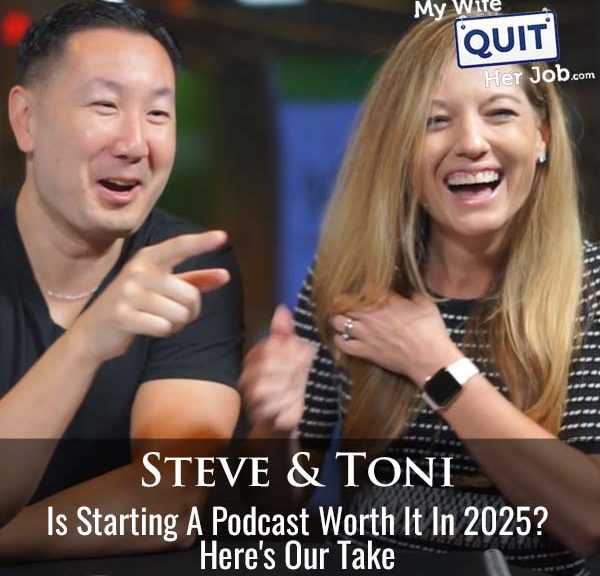
Traditional media is collapsing and building your own audience on YouTube, podcasts, and newsletters is now the single highest-leverage marketing move any brand can make in 2025. In this episode of the My Wife Quit Her Job podcast, my co-host Toni Anderson and I dig into a jarring stat: MSNBC’s primetime shows drew only about 118,000 viewers aged 25 to 54 in early 2025, a number a mid-sized YouTube channel routinely beats on a single video.
The power has flipped. Legacy TV networks are now the ones chasing partnerships with individual creators, not the other way around, and a spot on a large YouTuber’s channel (Mr Beast, Joe Rogan, Graham Stephan) is worth more than an appearance on ABC Nightly News.
Below you will find the numbers behind the shift, the specific plays a small ecommerce brand can run today, why a video podcast is now essential, and how to build content when you (or your brand) do not want to be the on-camera face.
Key takeaways
- MSNBC primetime drew only ~118,000 viewers aged 25 to 54 in early 2025. Many YouTube videos on this channel beat that number in days.
- 83% of Gen Z listens to podcasts on video, and YouTube has become the dominant podcast platform. Audio-only podcasting is a dying growth engine.
- A single video podcast can be edited 80% by a $30/month Adobe Premiere plugin called Autopod, which cuts jump-cuts and dead space automatically.
- Major news outlets now publish full segments to TikTok every day, because that is where the audience under 55 is.
- A guest spot on a mid-to-large YouTube channel (Graham Stephan, Jamerrill Stewart) drives more measurable business impact than an appearance on network TV.
- Ecommerce brands do not need content to hit seven figures (paid ads alone can do it). Content is what makes 7-figure growth compounding and cheap.
- For product-only brands where the founder does not want to be on camera, hire an existing content creator who is already making affiliate videos about you, and pay them per video for owned content.
How badly is traditional media actually collapsing?
Traditional media is collapsing far faster than most brands realize. MSNBC primetime shows drew only about 118,000 viewers aged 25 to 54 in a Nielsen-tracked week in early 2025, and their total audience skews so heavily to 65+ that most of the “million viewer” headline numbers you see are people over 54.
For context, that 118k number is smaller than the weekly audience of a single mid-sized YouTube channel. Individual creator videos regularly hit that same figure inside 24 hours. Yet a network like MSNBC employs hundreds of people, pays anchors, runs studios, and buys satellite time to deliver it.
Under-55 audiences have effectively abandoned linear TV. They watch news clips on TikTok, follow long-form conversations on YouTube podcasts, and rely on Instagram and X for real-time updates. The networks know this, which is why every major news brand now has a full-time team publishing to TikTok and YouTube.
Why owning your own audience matters more than ever
Owning your own audience matters because the platforms you rent attention on (Google, Meta, Amazon, TV) are all in structural decline in reach, cost, or algorithmic reliability, while the channels you fully control (email, your subscribed YouTube audience, your podcast RSS) keep paying dividends for years. A subscriber is an asset. A rented click is an expense.
The 2024 US election was a live demonstration. The Trump campaign layered the traditional TV route with a heavy podcast strategy (Joe Rogan, Theo Von, Lex Fridman), reaching millions of under-45 voters that no cable buy could touch. Regardless of your politics, the media strategy was quietly brilliant. Every brand can copy the framework.
The other reason to own it: every rented platform will eventually change its terms. Facebook page reach cratered. Google organic search is being cannibalized by AI Overviews. Amazon keeps taking more of the customer relationship. The list you own is the only asset that survives all of them.
Why every podcast should become a video podcast in 2025
Every podcast should become a video podcast because 83% of Gen Z listeners now consume podcasts on video, YouTube has overtaken Apple Podcasts and Spotify as the top podcast discovery platform, and audio-only podcasts are stuck in a decade-long growth slump largely because Apple has done a poor job promoting the medium.
The economics used to make video podcasting a nightmare. A 40- to 50-minute episode edited to YouTube standards took a full day of an editor’s time, and there was no easy way to automate the mechanical work.
That has changed. Autopod, a plugin for Adobe Premiere (roughly $30/month on top of an Adobe subscription), automatically handles jump-cuts between speakers and removes dead space, which is 75% to 80% of the actual editing work on a two-person podcast. What was a full day becomes two to three hours.
The other overlooked benefit is watch time. Even though most people leave a video podcast running in the background, YouTube still counts every minute toward watch time, which feeds the algorithm. A single 40-minute podcast episode can produce more watch time than five 8-minute video essays.
Why a YouTube guest spot beats a national TV appearance in 2025
A guest spot on a mid-to-large YouTube channel now delivers more measurable business impact than an appearance on national network television, because the YouTube audience is under 55, actively engaged, and one click from your website. TV appearances still boost credibility for older audiences and press-friendly quotes, but the traffic and sales don’t compare.
I got booked on ABC Nightly News once for a promotional segment and it did produce a real bump. That was ten-plus years ago. Today, an appearance on a channel like Graham Stephan (roughly 4-5M subscribers), Jamerrill Stewart’s Large Family Table (roughly 1M subscribers), or any topically-relevant creator with 100k+ subscribers will drive more sales than any network hit.
The AJ Rivera story is the modern template. AJ built a real audience with his Bring The Boom channel, then partnered with Mr Beast, and that one relationship snowballed into appearances at the Super Bowl and the World Series. The old TV playbook (get a publicist, pay to play, wait for the booking) has been replaced by “become a real creator, then collaborate with bigger ones.”
How to build a content brand when you do not want to be on camera
The best play when the founder does not want to be on camera is to hire an existing content creator who is already making organic videos about your product, and pay them per video to create owned content you can post on your own social channels. This is exactly what Andy at Marriage & Money does for Robert Farrington at The College Investor and several other creators: writes the scripts, films, edits, delivers finished content the brand owns.
Steps to actually do this:
- Search TikTok, Instagram Reels, and YouTube Shorts for people who have already tagged or reviewed your product using their affiliate link.
- Pick two or three who match your brand’s tone and audience.
- Offer per-video pay (typically $75 to $300 for a short-form clip, depending on their following) with the deliverable being usage rights on your channels.
- Give them creative direction on the first two videos, then step out of the way once you see what performs.
This solves three problems at once. You get someone genuinely enthusiastic about the product on camera, you get consistent creative output without hiring a full-time videographer, and you avoid the back-and-forth energy tax of managing sponsored partnerships.
Should you use AI avatars for ecommerce video content?
You can use AI avatars for short-form video ads today, and they already work well enough to fool most viewers on a 30- to 60-second clip. The best avatar tools (HeyGen, Synthesia, Captions) start from a real human who has actually recorded training footage, which is why the output is much more convincing than fully-synthetic characters.
Where they work: paid ads under 90 seconds, product feature explainers, and any script-driven format where the on-screen “person” is essentially a narrator. There are already ad campaigns running on YouTube and TikTok using the same avatar on the same couch reading different scripts for different companies.
Where they struggle: anything that requires genuine emotional connection with an audience, long-form content where subtle body language matters, and any format where authenticity is the actual value proposition. Mr Beast’s business only exists because viewers connect with him as a person. An AI avatar cannot replicate that.
The pragmatic 2025 answer: use AI avatars for the top of the funnel (paid ads, feature demos) and use real humans (yourself, a hired creator, an employee) for the content that builds long-term audience relationship.
The content strategy for a boring product ecommerce brand
For a boring or non-visual product (sprinkler parts, doorknobs, industrial linens), the content strategy that works is telling the human stories around the product, not the product itself. Bumblebee Linens sells embroidered handkerchiefs, which is not visually exciting on its own. But every one of those handkerchiefs was ordered for a wedding, an anniversary, or a memorial, and each of those has a story.
My planned Bumblebee YouTube approach is to pull anonymized customer personalizations from 17 years of order history, tell the love story or life event behind each one, and use AI-generated imagery to protect customer privacy while illustrating the story. The product barely appears. The narrative carries.
Two comparable examples that already work:
- Katana / sword brands whose entire YouTube presence is young employees chopping fruit, ice blocks, and improvised targets. The product is incidental to the entertainment.
- Beardbrand, where the content is grooming lifestyle and personality-led, and the product line is a side effect of the audience.
The pattern: find the human, emotional, or entertainment layer around your product and build content on that layer. Your product’s job in the video is to be seen, not to be the star.
How to start a video podcast (equipment and workflow)
To start a video podcast on a reasonable budget, you need a 1080p camera per speaker (a Logitech Brio or Sony ZV-1 works fine), a dedicated USB or XLR microphone, a service like Riverside or SquadCast for high-quality remote recording, and Adobe Premiere plus Autopod for editing. Total setup cost for a two-person show is under $2,000, plus roughly $60 to $90/month in software.
Camera quality matters less than most people assume. My main podcast has hit 400,000+ YouTube subscribers on 1080p, and the incremental gain from 4K on a talking-head video is small. Audio quality matters much more. Invest there first.
For editing, Autopod handles the mechanical 80% (speaker cuts, silence removal), and a human editor handles the remaining 20% (highlight moments, captions, thumbnail-friendly frames). A 40-minute two-person episode should take about 2 to 3 hours of human editing time using this stack, versus 8 to 12 hours without automation.
Frequently asked questions
How many people actually still watch cable news?
Cable news primetime audiences under 55 are shockingly small. MSNBC drew only about 118,000 viewers aged 25 to 54 in tracked early-2025 weeks, and most of the “million viewer” totals cable networks report are heavily weighted toward viewers 65 and older. Younger audiences have moved to TikTok, YouTube, and podcast content almost entirely.
Is starting a podcast in 2025 still worth it?
Yes, but only if you launch it as a video podcast on YouTube from day one. Audio-only podcasting has been in slow-growth mode for years because Apple’s discovery and search tools are weak. YouTube is now the top podcast platform, and 83% of Gen Z listeners consume podcasts on video.
What is Autopod and does it work for podcast editing?
Autopod is an Adobe Premiere plugin (about $30/month) that automatically cuts between speakers in a multi-camera podcast and removes silence. It handles roughly 80% of the mechanical editing work on a two-person podcast, taking a typical 40-minute episode from 10+ hours down to 2 to 3 hours of human editing time.
Should I focus on TV appearances or YouTube guest spots for my brand?
For measurable business impact in 2025, prioritize YouTube guest spots on channels with 100k+ engaged subscribers over national TV segments. TV still helps for older-audience credibility and press quotes, but a guest slot on a topically-relevant YouTube channel will typically drive more traffic and sales than an ABC or NBC morning-show hit.
How do I make ecommerce content when I do not want to be the face of the brand?
Hire an existing content creator who is already making organic content about your product using their affiliate link, and pay them per video to create owned content you can post on your own channels. Rates typically run $75 to $300 per short-form video depending on the creator’s audience size, and you get usage rights on your own social platforms.
Are AI avatars good enough to use in real ecommerce videos?
For short paid ads (under 90 seconds) that are essentially narrated scripts, yes. Tools like HeyGen and Synthesia produce avatars trained on real humans that are convincing enough for TikTok and YouTube ads. For long-form content where audience connection matters, stick with real people.
Do I need a 4K camera to start a video podcast?
No. 1080p is more than good enough for a talking-head podcast. My channel reached 400,000+ subscribers on 1080p, and viewers watching in the background at 480p on their phone will not notice the difference. Spend the equipment budget on a good microphone and reliable lighting first.
I Need Your Help
If you enjoyed listening to this podcast, then please support me with a review on Apple Podcasts. It's easy and takes 1 minute! Just click here to head to Apple Podcasts and leave an honest rating and review of the podcast. Every review helps!
Ready To Get Serious About Starting An Online Business?
If you are really considering starting your own online business, then you have to check out my free mini course on How To Create A Niche Online Store In 5 Easy Steps.
In this 6 day mini course, I reveal the steps that my wife and I took to earn 100 thousand dollars in the span of just a year. Best of all, it's absolutely free!