Audio

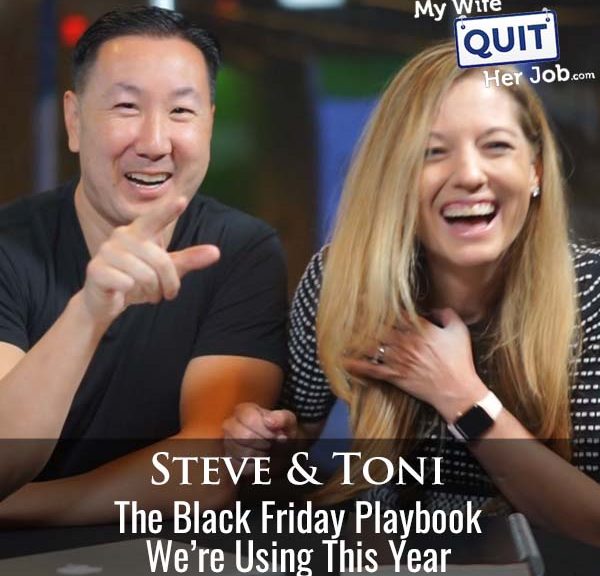
616: The Black Friday Playbook We’re Using This Year

616: The Black Friday Playbook We’re Using This Year

The Black Friday ecommerce playbook that actually protects margins for a small brand looks almost nothing like what the big retailers are running. Instead of stacking 40 percent off sitewide with expensive top-of-funnel ads, the winning move for most independent stores is a shorter sale window, single-item flash discounts, bundles that lift average order value, free gift-with-purchase, and a live selling event to earn attention without cutting price. That is what my co-host Toni Anderson and I are running across our stores this year, and in podcast episode 616 we walked through every piece of it.

Toni runs marketing at a homeschool curriculum brand and I run Bumblebee Linens, so between us we cover a giftable ecommerce business and a non-giftable one. Both play Black Friday differently, and the contrast is where the useful lessons live.

Below is the full breakdown of what we are doing this year, what we are intentionally avoiding, and the math behind why deep discounts crush most ecommerce brands.

Key takeaways

  • Black Friday is no longer one day. Sales start in early November and stretch through Cyber Monday, so a small brand should stagger, not stack.
  • Every percentage point of discount has to be paid back in incremental sales. A 25 percent discount usually needs sales to nearly double just to break even after rising ad costs.
  • Black Friday customers acquired via ads are typically less sticky, so you cannot lean on lifetime value to justify losing money on the first order.
  • Bundles, free gift-with-purchase, and flash free shipping windows lift AOV and engagement without cheapening the brand.
  • A one-time live selling event with the owner on camera can drive Black Friday sales while feeding the ad algorithm and email list at the same time.
  • Keep coupon codes stupid-simple (“ADD10”, “FREE”) because customers cannot spell “MOTHER25” on a phone at 11pm.

Why the traditional Black Friday ecommerce playbook is broken

The traditional Black Friday ecommerce playbook broke because the whole calendar got pulled forward. Retailers now start pushing holiday promotions in early November, Amazon runs Prime Day events in October, and Target and Walmart run competing “days” against Amazon at the same time. By the time the actual Friday after Thanksgiving arrives, shoppers have already been trained to buy for weeks.

Sam’s Club had Christmas decorations up on November 1 this year. That is the new normal.

The consequence for small ecommerce brands is that a single-day 40-percent-off sitewide sale no longer stands out. You are one of 200 emails hitting the inbox that morning, competing with retailers who can lose money on any single SKU because they will make it back on volume.

How much a Black Friday discount really costs your ecommerce margins

A Black Friday discount really costs your ecommerce margins two ways at once: the price cut itself, and a spike in ad costs to acquire the customer you just discounted to. Both hit the same P&L line. When you stack them, a promotion that looks like a revenue win can actually be a profit loss.

Here is the math we run before agreeing to any percentage-off promotion. Assume 60 percent of your customers come from paid ads, which is normal for a lot of ecommerce brands. Your cold-traffic ads on Black Friday cost more because every advertiser is bidding at once.

Now layer on a 25 percent discount. On top-of-funnel ads to new customers, a 2x return on ad spend is a healthy baseline. With a 25 percent discount stacked on top, a 2x ROAS ad set is usually breaking even at best, and often losing money on that first purchase.

That is only fine if the customer comes back. Toni and I both see the same pattern: Black Friday customers acquired through paid ads are often less sticky. They bought a gift for someone else, or they bought because the ad promised a promotion, so they behave less like your core customer and repeat at lower rates.

The rule of thumb: 15 percent discount needs to double sales

The rule of thumb we use is that a 15 to 20 percent Black Friday discount typically has to nearly double sales just to break even once you add rising ad costs and lower repeat rates. If your gross margin is 50 percent, a 20 percent discount can wipe out most of the profit on that order. If your margin is 80 percent, you have more room, which is why paper-based and digital products can afford deeper cuts than physical goods with heavy COGS.

What Steve and Toni are doing differently for Black Friday this year

What Toni and I are doing differently for Black Friday this year is spending most of our energy on tactics that lift order value and engagement rather than tactics that cut price. Discounts are a piece of it, but they are not the headline. The headline is bundles, gifts, live selling, and a shorter, tighter promotional calendar.

Here is what is actually on each of our plans this season.

Toni: 12 Days of Christmas flash sale, bundles, live selling, free gift-with-purchase

Toni’s brand runs a 12 Days of Christmas sale with one heavily discounted flash item each day for 12 days. This year, she pulled last year’s sales data on every item and adjusted this year’s lineup based on what actually converted. The winners get a small pre-sale price increase before the discount, and the losers get rolled into bundles to move inventory and lift AOV.

The other big piece is her monthly “exclusive” free gift-with-purchase, which she now escalates over Black Friday. Every month has a limited free gift you cannot buy anywhere else, and during Black Friday the free gift is stacked with a custom tote bag for orders over 100 dollars. That $100 threshold does the heavy lifting on AOV once everything is discounted.

New this year: a Friday-before-Black-Friday live sale hosted by the brand owner on Facebook and YouTube, with 10 giftable products on a dedicated landing page. More on that below.

Steve: retargeting-only ads, bundles, free shipping flash windows, live-sale test

At Bumblebee Linens I dial down cold ads over the holidays and lean almost entirely on retargeting plus email and SMS. Wedding linens are a one-time purchase for most buyers, so paying a premium for cold Black Friday clicks rarely pencils out.

I stagger promotions across the window instead of running one big sitewide sale. Free shipping flash windows, single-day bundle promos, and one specific email tactic (below) do most of the work. Our biggest discount stays around 15 percent because the math above holds: any deeper and we would be selling more and making less.

I am also going to try a live selling event this year, borrowing directly from what Toni is doing.

Ecommerce bundling strategy: lift AOV and offset weaker margins

An ecommerce bundling strategy lifts average order value and offsets weaker margins by pairing a lower-margin hero product with a high-margin add-on and offering a small discount on the pair. The bundle still feels like a deal to the customer, but the blended margin holds up.

Toni’s brand does this with games. Board games have real COGS (their cost on a board game can run around 9 dollars), while a printed timeline product runs a 98 percent margin. Bundle the two together with a small discount, and the blended margin on the bundle is far healthier than the board game sold alone.

Card games get the same treatment because the components cost 40 to 50 cents to produce. Bundling lets a brand introduce a lower-margin physical product without dragging down the P&L when it inevitably gets discounted.

The other reason bundling works during Black Friday: it changes the frame of reference. Customers are not evaluating whether your 15 percent discount is bigger than the competitor’s 25 percent discount. They are evaluating whether they get more product for the price, which is a comparison you can win without cutting price further.

Free gift-with-purchase: exclusive monthly items that drive repeat orders

Free gift-with-purchase drives repeat orders when the free gift is genuinely exclusive to that month and cannot be bought anywhere else. Toni’s brand caps the cost of each free gift at roughly 20 cents to make and requires it to ship flat so it does not change the shipping box size or postage. Recent examples include a New Year’s Eve countdown pack (balloons, confetti, prompt cards), a gratitude jar kit, lunchbox notes for kids, and a car bingo pack scheduled for spring break.

The gifts work as monthly hooks because customers know they will not see this exact item again. One customer placed 10 separate local-pickup orders to get 10 gratitude packs for family members. That is not the intended behavior, but it is a strong signal that the exclusivity mechanic is working.

Layer the monthly free gift with a $100-threshold tote bag over Black Friday, and you now have two AOV-lifting incentives running at once without discounting the underlying product any further.

Flash free shipping window: the 5-hour email tactic that made $30,000

A flash free shipping window means announcing free shipping for only a few hours in the evening, which creates urgency without cutting product price. Toni tested this earlier in the year with a single email sent around 7 pm saying “free shipping until midnight,” and that single email generated roughly $30,000 in sales.

The reason it works is timing. Most brands blast their Black Friday emails at 6 am, so a 7 pm free shipping email is not competing head-to-head with the same 200 morning senders. The scarcity is real (five hours) so people actually act instead of tabbing it for later.

Free shipping costs you less than a percentage-off discount in most catalogs, and it converts particularly well on the days when open rates are otherwise weak. Bake one or two of these into the sale window instead of adding another sitewide discount day.

Live selling on Black Friday: how a first-time live event actually pays off

Live selling on Black Friday pays off in four ways at once: direct sales from viewers, engagement signal that lifts the Facebook ad algorithm, retargetable traffic to a dedicated sale page, and a video asset that lives on for the rest of the promotion. Toni is running her first live sale event with the brand owner as host on the Friday before Black Friday.

The setup is deliberately minimal for the beta. The owner will go live on Facebook and YouTube from the warehouse, with 10 giftable products physically on the shelves behind her, and speak to each product for about 45 minutes. Viewers click through to a dedicated landing page with those 10 products at Black Friday pricing.

There is no separate coupon code for the live sale in this first version because the team wants to run paid ads to the replay, and time-limited codes complicate ad campaigns. Next iteration will likely test a code so the traffic source is cleanly measurable.

Why the owner on camera matters

The owner on camera matters because it is a trust and disruption move at the same time. In the homeschool and curriculum category, essentially no competitor is running live selling, so being first is the disruption. Kim (the brand owner) is comfortable on camera and can talk through why each product is worth giving, which is very different from a discount email.

One production note that transfers to any live sale in a warehouse: cover or move any shipping boxes labeled “China.” Customers get bent out of shape when they see the country of origin, even if realistically most consumer product boxes come from the same place. Keep the visual behind the host on-brand.

Coupon codes for Black Friday: keep them stupid-simple

Coupon codes for Black Friday should be as short and readable as possible because customers cannot spell them on a phone at 11 pm. Toni’s team went through and simplified everything: 5 percent off is “ADD5,” 10 percent off is “ADD10,” free shipping is “FREE.” No mixed case, no random letters, no ambiguity.

Historic evidence: a coupon code of “MOTHER25” produced a stream of failed checkouts because shoppers typed “MUTHER25,” “MOTHERS25,” and “M-U-T-H-E-R.” Every one of those is a lost sale. In Shopify, wherever possible, use auto-applying discount links so the code is pre-populated at checkout and there is nothing to type.

For the “scarcity code” tactic (email says there are only 22 codes at 30 percent off, six codes at 40 percent off, and so on) the code does need to be enterable, but it should still be as short as you can make it. Expect a handful of complaint emails from customers who try a code that has already run out.

On a 50,000-person segment, Toni sees maybe three complaint emails per campaign. That is an acceptable cost for the click-through and engagement bump the tactic produces.

Email and SMS cadence: how often to text on Black Friday

Email and SMS cadence on Black Friday depends heavily on how giftable your catalog is. Toni’s team currently sends about four SMS messages over nine days during Black Friday, which is aggressive by their historical standard but restrained compared to giftable ecommerce brands that text every day.

At Bumblebee Linens I stay conservative on SMS because our customers skew toward wanting privacy and daily messages annoy them. If we sold consumer giftables, I would text every day of the window, because the shopper mindset during Black Friday is stock-up-and-grab-a-deal, and a daily nudge fits that mindset.

The rule of thumb: match your send frequency to how likely the customer is to buy again this week, not to how aggressive the average Black Friday sender is being.

The “click any of 5 images” email trick (Mr Beast style)

The “click any of 5 images” email trick, borrowed from Mr Beast, is an email with five product images where only one image links to a working discount. Every image is clickable and every image goes to a different page, so click-through rates go up dramatically. Deliverability improves for every subsequent send because ISPs weight engagement.

The softer version, which Toni’s audience prefers, is a “thumbs up / thumbs down” style email that asks a light question and treats both answers as an engagement click, sending both to the same page. Engagement lifts, deliverability improves, and no customer feels tricked.

Either version is best pulled out once during Black Friday, not repeated across the sale. It is a deliverability boost, not an everyday tactic.

Frequently asked questions

Should a small ecommerce brand discount deeply on Black Friday?

Most small ecommerce brands should not discount deeply on Black Friday because the required lift in sales to break even after ad-cost inflation and lower repeat rates is unrealistic. A 15 percent discount already usually requires nearly doubling sales just to break even. Focus first on bundles, free gift-with-purchase, and flash free shipping windows, which raise order value without cutting price.

Is Black Friday still worth it for ecommerce?

Black Friday is still worth it for ecommerce, but the calendar is stretched from early November through Cyber Monday, so the single-day playbook no longer works. The sellers who profit run a staggered promotional window with multiple lower-intensity tactics rather than one massive sitewide sale, and they lean on retargeting and email instead of expensive cold ads.

How do you protect margins on Black Friday?

You protect margins on Black Friday by capping your maximum discount at a percentage your gross margin can absorb (roughly 15 percent for a 50 percent gross margin business, up to 35 percent for an 80 percent gross margin business), running bundles that blend high- and low-margin SKUs, and dialing down cold-traffic paid ads in favor of retargeting, email, and SMS. Free gift-with-purchase and free shipping flash windows lift AOV without cutting product price.

What ad strategy works best for Black Friday?

The best Black Friday ad strategy for most small brands is heavy retargeting plus a light-to-moderate spend on cold prospecting, because cold CPMs spike during the window and Black Friday buyers repeat at lower rates. A 1.5x to 2x ROAS on retargeting is achievable; a 2x ROAS on cold traffic paired with a 25 percent discount is usually breakeven at best.

Does live selling actually work for ecommerce brands outside of clothing?

Live selling can work for ecommerce brands outside of clothing when the owner or a strong on-camera personality hosts and the format is treated as a disruption in a category where nobody else is doing it. Toni’s homeschool-curriculum brand is testing a live sale on the Friday before Black Friday specifically because no direct competitor in the category runs live events, which makes the format attention-earning on its own.

How simple should Black Friday coupon codes be?

Black Friday coupon codes should be as short and unambiguous as possible (“ADD10,” “FREE,” “SAVE20”) because a meaningful percentage of customers fail to type longer codes correctly on mobile at checkout. Wherever the platform allows (for example, Shopify’s auto-apply discount links), pre-populate the code in the URL so the customer never has to type it.

How often should I email or text during Black Friday?

If your catalog is highly giftable, texting daily during the Black Friday window and emailing at least once per day is defensible because shoppers expect deal cadence and are actively stocking up. If your catalog is not giftable, restrain to two to four SMS messages across the entire nine to eleven day window and lean on segmented emails, because your audience is not in a stock-up mindset and daily messages will unsubscribe them.

I Need Your Help

If you enjoyed listening to this podcast, then please support me with a review on Apple Podcasts. It's easy and takes 1 minute! Just click here to head to Apple Podcasts and leave an honest rating and review of the podcast. Every review helps!

Ready To Get Serious About Starting An Online Business?


If you are really considering starting your own online business, then you have to check out my free mini course on How To Create A Niche Online Store In 5 Easy Steps.

In this 6 day mini course, I reveal the steps that my wife and I took to earn 100 thousand dollars in the span of just a year. Best of all, it's absolutely free!

615: How Montana Knife Company Hit 8 Figures On Shopify Without Amazon

615: How Montana Knife Company Hit 8 Figures On Shopify Without Amazon

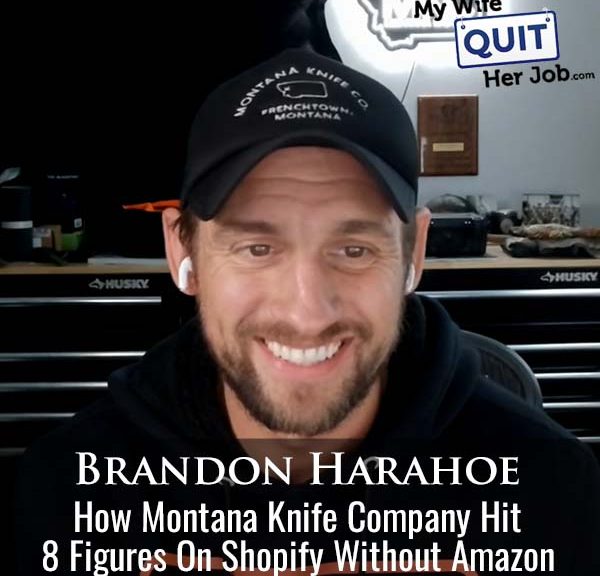
Montana Knife Company scaled to eight figures on Shopify by pairing a legendary craftsman with a weekly drop model, an obsessively-built email list, day-one SEO investment, and a decision to stay 100 percent direct-to-consumer without Amazon or wholesale. In podcast episode 615, I sat down with Brandon Harahoe, co-founder and VP, to walk through the exact playbook they used from launch in December 2020 to a 51,000 square foot manufacturing facility in Montana.

The bigger story is that Montana Knife Company (MKC) built its brand while unable to run paid ads for the first three or four years, because ad platforms flagged hunting knives as weapons. That constraint forced them to build organic email, organic social, and organic search from day one, and those channels are still doing most of the heavy lifting even now that paid ads finally work.

Below is Brandon’s full breakdown of the drop model, the email strategy, the SEO-plus-YouTube system, and how a made-in-USA hunting knife brand out-competed 100-year-old incumbents in five years.

Key takeaways

  • Montana Knife Company launched in December 2020 with 150 knives, sold out in 14 minutes, and never took a pre-order because they refused to ship a knife they had not already made.
  • Josh Smith became the youngest master bladesmith in history at 19, which anchored the brand’s craft credibility from day one.
  • Every knife ships the next day. Roughly 99 percent of orders since launch have hit that standard.
  • Email was the primary channel for the first two years because paid ads were blocked as “weapons” content across Meta and Google.
  • SEO was the first outside hire, before anyone drew a salary. MKC now outranks 100-year-old incumbent knife brands.
  • They run about 100 drops per year (weekly Thursday knife drops, Saturday in-stock drops, and two apparel drops per week).
  • Wholesale is under 0.5 percent of revenue. They have turned down Cabela’s-scale wholesale contracts to protect D2C capacity.
  • Return rates are so low that reducing them further became a company metric was replaced by growing the top of the funnel.

The Montana Knife Company backstory: from $15,000 daggers to sub-$500 hunting knives

The Montana Knife Company backstory starts with Josh Smith, who began making knives at 11 and became the youngest ever certified master bladesmith at 19, a record no one has broken in two decades. Before MKC, Josh made $3,000-to-$30,000 custom knives for collectors, including replicas commissioned for sheiks in Abu Dhabi and Dubai after being flown to London archives to study historical swords. The show Forged in Fire is based on the same certification process that Josh went through; he appeared on seasons one and two.

The problem with $15,000 collectible knives was that buyers did not use them. Josh’s stated mission was to distill everything he knew into one hunting knife every hunter could actually use in the field. The brand tagline captured it: “Used, abused, and passed down.”

Josh’s mom trademarked “Montana Knife Company” and registered the URL in 2000. When Brandon joined 20 years later, he had to track down the domain from a small Montana web agency to link it to Shopify.

Why Made in USA works for a knife brand (and where the tradeoffs are)

Made in USA works for a knife brand because it aligns with an audience (hunters, outdoorsmen) that already values American craftsmanship, and it survives supply-chain shocks like the 2020 lockdowns. The tradeoff is real: Chinese, Pakistani, and Taiwanese knife factories have 30 to 40 years of manufacturing refinement, and their labor costs run roughly 4x lower with steel costs 15 to 40 percent lower. Brandon is direct that many of those overseas knives are legitimately good products.

MKC bet on Made in USA anyway for three reasons: personal alignment with American manufacturing, supply-chain control after watching COVID break the industry, and a market gap. The knife category had spent a decade racing to the bottom (making $20 blister-pack knives designed to be thrown out and replaced), and no one was building a premium heirloom Made-in-USA option.

The bet worked because “things men pass down” is a shrinking category. Watches, firearms, wallets, and knives are essentially the last consumer objects that get handed to the next generation. Nobody wants your iPhone 13.

How Montana Knife Company got its first sales without Amazon

Montana Knife Company got its first sales by pre-loading Instagram with landscape photography for three months while the first batch was being made, then leaning on personal networks for the initial buyers. Brandon had 10-plus years of photography experience and dumped a large catalog of Montana landscape imagery onto the account to grow followers before there was a single knife to sell.

The first drop on December 18, 2020 was 150 knives (the Speed Goat model). They sold out in 14 minutes. There was no next batch ready because the factory was Josh’s garage and they had to order more raw steel.

The bootstrapping loop was brutal but simple: sell, use the revenue to buy more steel, wait for manufacturing, sell again. That loop is why the “drop model” exists at all.

The drop model is the honest output of a company that refused to sell what it could not ship the next day, and it stuck as the operating rhythm even after cash flow stabilized.

The weekly drop model that runs the business

The weekly drop model at Montana Knife Company means the website only ever lists what can ship the next day, with roughly 100 drops per year across knives and apparel. Every Thursday night is a knife drop, every Saturday is an in-stock drop, and there are two apparel drops each week (Tuesday and Friday).

The rule is inviolable: they only launch on the website what the shop can physically ship the next day. As many knives as the manufacturing team completes that week is exactly what goes live on Thursday.

That constraint made pre-orders impossible from day one. Other knife-industry CEOs told Brandon he was insane for refusing to take pre-orders, because a pre-order database can be used to secure cheaper bank financing. MKC declined every time because they did not want to take money for a knife that might get lost between heat treat and blade grind.

Same models, rotating drops, six colors

Same models, rotating drops, and only six colors is the MKC branding rule that separates them from most drop-based knife brands. Most competitors run drops as “30 fully custom knives, all different, this is the only time you get this.” MKC does the opposite: about 28 core models that rotate through weekly drops in a fixed six-color palette.

The reference is Rolex, not custom knife culture. The Blackfoot is the Submariner and the Stonewall is the Daytona. When you see an MKC knife hanging on a hunting pack across a campground, the branding is immediately recognizable, which is impossible to pull off with unlimited customization.

Four to five times a year they layer in an event drop like “Blaze Friday” (an orange knife drop event). Those are the only times you get non-standard colorways.

Why email was the entire growth channel for the first two years

Email was the entire growth channel for Montana Knife Company’s first two years because paid ads were blocked. Meta, Google, and other platforms flagged hunting knives as weapons content, and Brandon spent hours on calls with Google Ethics and Meta trying to get exceptions. They only figured out paid ads at around year three.

Before founding MKC, Brandon ran his own agency specializing in Klaviyo-plus-Shopify email builds for large accounts. He came into MKC with an obsessive focus on list quality, telling Josh directly, “I don’t care if your grandma buys a knife, she has to do it through the Shopify site and I want her email.”

The list-building tactic was the drop itself. There was no email discount, no lead-magnet ebook. Customers wanted the knives so badly (after watching them sell out) that giving up an email and SMS number on a first visit was the cost of admission.

That is worth pausing on. In an industry where every ecommerce brand offers 10 percent off for an email, MKC built a huge engaged list by making the product the incentive.

The SEO strategy that beat 100-year-old knife brands

The SEO strategy that let Montana Knife Company outrank century-old incumbent knife brands was to hire an SEO contractor as the first outside expense (before either founder paid themselves a salary) and to publish one or two blog posts per week covering every knife, steel, blade grind, and handle in the category. Brandon partnered with a contractor named Joel from Flux on day one because he saw incumbents were “sleeping behind the wheel” on organic search.

The pillar-and-cluster approach was intentional: exhaustive coverage of the knife taxonomy so any search intent in the space landed on MKC content. Five years in, they are outranking companies with a 100-year head start.

Every blog is paired with a video that lives on YouTube (originally as the SEO-friendly video companion to the written post). That coupling is what turned the YouTube channel into a real growth engine.

How Montana Knife Company uses YouTube as middle-funnel content

Montana Knife Company uses YouTube as middle-funnel content by pairing informational blog-companion videos (“how to sharpen a knife like a master bladesmith,” “how to field dress a deer”) with a weekly behind-the-scenes shop vlog. The informational content pulls new viewers in through search and recommendations. The vlog turns those viewers into subscribers because the shop crew is a group of on-camera personalities who feel like people you would want to have a beer with.

YouTube is now one of the top four or five converting sources on MKC’s post-purchase exit survey. Paid YouTube ads work particularly well because the organic content is strong enough that viewers subscribe after seeing an ad, not just click through.

The pattern generalizes: paid ads convert better when they feed into a channel worth subscribing to.

Instagram, TikTok, and Twitter: how MKC chose its social channels

Montana Knife Company chose its social channels by matching format to team strength rather than trying to cover every platform. Brandon has personally posted on Instagram every single day for five years without missing a day, and most days he posts two or three times because the current algorithm rewards frequency.

Instagram is the anchor because one of the co-founders was strong on camera and Brandon is a photographer. TikTok Shop is not a priority because the price point (a $1,300 chef set) makes creator seeding a big gamble. Twitter is essentially abandoned because nobody on the team is a natural copywriter, and they refuse to fake it.

The rule Brandon repeats to other founders: pick the platform your team can execute on daily, and drop the ones you can’t.

Why Montana Knife Company said no to Amazon (for now)

Montana Knife Company said no to Amazon because they have not had the manufacturing capacity to serve both their D2C funnel and a wholesale channel at the same time. They have already hired an Amazon-native marketer (three years ago) and poached a COO who ran packaging and fulfillment at Amazon Spokane, so the operational chops are in place. They are just waiting for capacity.

The economic logic mirrors their wholesale stance. Big-box retailers (Cabela’s-scale) knock on the door regularly asking for 60,000 knives for a given year. Every unit committed to wholesale is a unit not available for the D2C drop calendar, so the answer stays “not yet.”

They will eventually enter wholesale and Amazon because older buyers do want to hold a knife in a physical store before purchasing. That is a real audience they are currently missing. It is a “later” problem, not a “never” problem.

The Blaze Friday model: run Black Friday every quarter

The Blaze Friday model at Montana Knife Company means running a Black Friday-scale event every quarter instead of concentrating all the effort into November. Brandon looked at his Q4 workload after 18 Black Friday cycles in D2C ecommerce and realized MKC’s customers were not buying in November because it was Black Friday. They were buying because the team was pouring quarters of energy into the launch.

Now they do the exact same playbook (two-month lead-up, Facebook ads, email captures, product-launch treatment) around a Blaze Friday orange-knife event in August, and around similar events in Q1 and Q3. The Blaze Friday drop is Blaze orange colorway knives, which sold out at scale.

The framing shift is what matters. Any product restock at MKC is treated like a product launch, and any product launch is treated like a brand relaunch. That level of effort is the moat.

The one habit Brandon says beats AI and paid ads

The one habit Brandon says beats AI and paid ads is a founder or marketer who is genuinely excited about the brand every day. He is direct about the pattern: most marketers he talks to do not care about the company, they care about their end-of-quarter bonus. That energy leaks into the content.

If the person making the content is not excited, why would the customer be? That is his stated hack for 2025, 2026, and 2027.

MKC leans into it operationally too: Josh and Brandon are both directly reachable in Instagram DMs, they run a Facebook fan group of 6,000-to-7,000 collectors as an ongoing product-design channel, and they publish weekly vlogs from inside the shop. Every one of those signals human ownership rather than a boardroom optimizing for margin.

Frequently asked questions

What is Montana Knife Company’s business model?

Montana Knife Company operates a 100 percent direct-to-consumer model on Shopify with a weekly drop calendar (roughly 100 drops per year), no Amazon presence, and less than 0.5 percent of revenue from wholesale. Every knife is made in Montana by the company’s own 65-person manufacturing team, and every order ships the next day.

How did Montana Knife Company scale without Amazon?

Montana Knife Company scaled without Amazon by building an obsessively curated email list, publishing SEO-optimized blog and video content weekly from day one, and running a weekly drop model that generated persistent scarcity and repeat traffic to Shopify. They also ran zero paid ads for the first three years because ad platforms blocked hunting knife content as “weapons,” which forced them to master organic channels first.

How much does a Montana Knife Company knife cost?

Montana Knife Company knives sit in the premium field-use hunting knife tier, roughly 10 to 50 times cheaper than Josh Smith’s pre-MKC custom knives (which ran $1,500 to $30,000) and priced above mass-market imports. The exact price varies by model; check the current drop calendar on the Montana Knife Company website for live pricing.

Is Montana Knife Company on Amazon?

Montana Knife Company is not on Amazon as of episode 615. The team has hired the operational talent to launch on Amazon when the timing is right, including a COO poached from Amazon’s Spokane fulfillment operation, but they are prioritizing D2C manufacturing capacity until the new 51,000-square-foot facility is running.

Who owns Montana Knife Company?

Montana Knife Company was co-founded by Josh Smith, the youngest ever certified master bladesmith, and Brandon Harahoe, who came in from ecommerce and marketing to build the brand’s marketing engine and back-end systems. Josh runs product and craft. Brandon runs marketing, ecommerce, and brand.

What is the drop model in ecommerce?

A drop model in ecommerce is a release cadence where a brand launches a limited quantity of a product at a scheduled time, ships whatever sells within a short window, and does not restock until the next scheduled drop. Montana Knife Company runs roughly 100 drops per year and only launches what its factory can ship the next day, which is a stricter version of the model than most streetwear and sneaker brands that pioneered it.

How can a Made in USA brand compete with cheaper overseas manufacturers?

A Made in USA brand can compete with cheaper overseas manufacturers by targeting a category where craftsmanship and heirloom quality are the buying decision, not price per unit, and by building a founder-led brand that competitors relying on marketing alone cannot match. Montana Knife Company acknowledges overseas knives are often technically good products, so their moat is craft heritage (Josh Smith’s master bladesmith credentials), transparent US manufacturing shown weekly on video, and a direct-to-consumer relationship that removes retail margin.

I Need Your Help

If you enjoyed listening to this podcast, then please support me with a review on Apple Podcasts. It's easy and takes 1 minute! Just click here to head to Apple Podcasts and leave an honest rating and review of the podcast. Every review helps!

Ready To Get Serious About Starting An Online Business?


If you are really considering starting your own online business, then you have to check out my free mini course on How To Create A Niche Online Store In 5 Easy Steps.

In this 6 day mini course, I reveal the steps that my wife and I took to earn 100 thousand dollars in the span of just a year. Best of all, it's absolutely free!

614: The Hidden Rules of Brand Deals That Influencers Never Talk About

The Hidden Rules of Brand Deals That Influencers Never Talk About

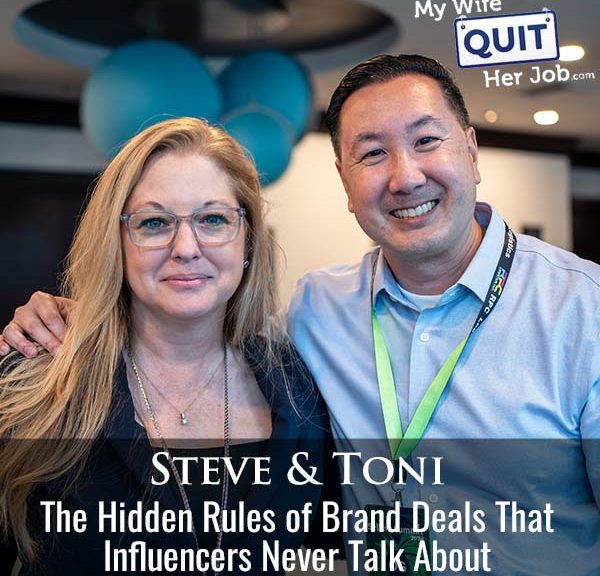
The hidden rules of influencer brand deals are that the money is rarely the real payment, the biggest risk is your own channel, and the most valuable skill is knowing when to walk away. My co-host Toni Anderson and I have been in the influencer game since blogs paid in Twinkies, and in podcast episode 614 we broke down every mistake we have made and every rule we now use to decide whether a brand deal is worth taking.

The gap between what influencers post publicly and what they actually deal with behind the scenes is huge. There are net-90 payment terms that vanish for three months, legal reviews that kill deals silently, scripts that would tank a channel, and back-and-forth negotiations that eat more time than the actual content. Every one of those is a normal part of the job.

Below is the full playbook we walked through: how to price, negotiate, protect your reach, spot bad deals early, build a lightweight media kit, and think about brand alignment before saying yes.

Key takeaways

  • Money alone is rarely worth a bad brand deal. Time to script, edit, and negotiate almost always outweighs the fee.
  • The biggest risk of a brand deal is your channel, not the fee. One misaligned sponsorship can reduce reach for months on YouTube, TikTok, and Instagram.
  • Alignment matters more than money. A sponsored email for a movie or product your audience finds offensive can trigger thousands of unsubscribes in one send.
  • Always ask up-front for creative control at the outline level, and get the list of banned words and competitors in writing.
  • Read the contract, and paste it into ChatGPT to surface hidden clauses like net-90 payment terms.
  • Ask for half up-front on any long-form video project, or walk.
  • Small brands give you more creative freedom; big brands survive legal review but often kill deals silently. Both have tradeoffs.
  • Build a media kit even if you rarely take deals, so pricing conversations are quick and defensible.

What influencer brand deals actually pay (and why the fee is rarely the point)

Influencer brand deals actually pay in three currencies: cash, product, and experience. In the early days a brand deal often paid only in product (a box of Weight Watchers Twinkies was Toni’s very first “payment” in 2008). Today cash fees can hit $5,000 for a single restaurant mention or six figures for a large campaign, but the fee is rarely the real point.

The real question is what a deal costs you: hours to script, days to produce, and reach lost if the content misaligns. A $5,000 dedicated YouTube video that takes 15 hours to script, film, edit, and negotiate is a low hourly rate once you count the calendar time. A cheap deal that tanks your algorithm for a month is negative EV even if the check clears.

That is why the most experienced creators say “no” more than they say “yes.” The floor is not the fee. The floor is whatever the deal costs your channel.

How to price an influencer brand deal (media kit, rate cards, and negotiation)

You price an influencer brand deal by starting from a documented media kit, not by guessing per email. A media kit at minimum should include audience size and demographics per platform, engagement metrics, average views on recent sponsored content, and links to two or three case studies with real results (views, comments, click-through rate, conversions).

If sponsored content is a primary revenue stream, publish the media kit on a static web page and share the link every time a brand asks. If it is occasional revenue, keep the kit private and share it only for deals you actually want. Public rate cards are optional; most experienced creators keep pricing private because it lets them quote higher on deals they do not want, and take them if a brand accepts.

Every “extra” a brand asks for is a separate line item: base video price, cross-post to Instagram, cross-post to TikTok, embed in a blog post, short-form derivative video, exclusivity window, whitelisting for paid ads. Price each one. They do not come free.

The ChatGPT contract check

Paste every brand contract into ChatGPT and ask “what are the important stipulations I need to be aware of here” before signing. This catches net-90 payment terms, unusual exclusivity clauses, and usage rights that would prevent you from repurposing the content on your own channels. One expensive mistake I made pre-pandemic was signing a net-90 contract without noticing, then forgetting the deal existed until the payment finally landed three months later.

Negotiate payment terms whenever possible. Large corporations may be locked into a 90-day AP cycle, but small and mid-size brands will often move to net-30 or split payment (half up-front, half on delivery) if you ask.

Why misaligned brand deals hurt your channel more than they help

Misaligned brand deals hurt your channel more than they help because your subscribers followed you for a specific point of view, and content that violates it triggers unsubscribes and lost reach. One friend of ours took a sponsored email deal for the movie The Shack based on its Christian marketing, then lost thousands of subscribers in one send when parts of her conservative audience objected to the theology.

The pattern generalizes: a mutual friend of ours took a payday-loan sponsorship a decade ago and permanently damaged his recommendation credibility, because payday loans are widely seen as predatory. Nestle did enough sponsored influencer work during their formula controversy to give the creators involved significant blowback.

The rule is simple. Read the brand’s press coverage before signing, and refuse any deal you cannot honestly stand behind for a decade.

The FTX celebrity trap

The FTX celebrity trap is a good reminder that even huge brands can be dangerous. Tom Brady and other celebrities took millions to endorse FTX. The crypto exchange turned out to be a large-scale Ponzi scheme, and the endorsers ended up in class-action lawsuits and permanent reputation damage.

You cannot fully vet every brand, but you can decline categories where the risk of hidden fraud is elevated (unregulated financial products, medical devices, MLM structures).

Time cost of a brand deal: the hidden line item

The time cost of a brand deal is the hidden line item that kills more sponsorships than any price disagreement. A single Kraft cheese-brand campaign in the blogging era required Toni to host an actual party, invite family members, prepare cheese sandwiches, photograph the whole event for a blog post plus three Pinterest images plus Instagram content. That is a week of work for what was effectively coupon compensation.

Today the time cost has shifted from parties to production. A short-form phone video is one to two hours; a long-form scripted YouTube video is 10 to 20 hours across script, film, edit, and revision cycles. The revision cycles are usually where the deal breaks.

I once negotiated a dedicated YouTube video for a specific tool, scripted it over three weeks, filmed to the approved script, and then had the brand demand at the 11th hour that I double the length from 15 to 30 minutes. There was no additional payment offered. I walked away, published the video with a redesigned narrative anyway, and it did over $5,000 in AdSense revenue on its own.

Creative control on brand deals: outline over script

Creative control on brand deals should be negotiated at the outline level, not the script level, because reading a script tanks engagement on any conversational channel. Ask the brand up-front for three to five talking points you must hit and a written list of banned words, banned phrases, and competitor names you cannot mention. Then produce the content in your own voice.

The banned-word list is a hidden trap most creators miss. Every large brand has one or two phrases they refuse to be associated with (I have hit this with Frito-Lay and Procter and Gamble campaigns), and you need the list in advance or the video gets rejected in review.

Refuse any deal that demands a verbatim script unless the fee more than pays for the reach damage. Your audience will feel the difference immediately.

Small brands vs big brands for sponsored content: the real tradeoffs

Small brands and big brands both have real tradeoffs for sponsored content. Small brands give you far more creative freedom, move faster, and are more willing to negotiate on price and terms, but they carry payment risk (they may vanish) and hidden reputational risk (you may not know how they are run). Big brands survive legal review with paperwork and pay reliably, but the deal cycle is longer, the creative control is tighter, and legal can kill an agreed deal without notice.

Toni worked with Jim Wang on a financial project where they agreed on everything with a brand only to hear “we just need to send this to legal.” The project sat there for months and effectively died.

When to prefer big brands

Prefer big brands when payment risk is a bigger concern than creative friction. A small brand can go bankrupt before invoicing, and there is no legal recourse worth pursuing. A large brand pays net-30 or net-60 like clockwork, and gives you a case study you can put in your media kit.

When to prefer small brands

Prefer small brands when you are getting started or when creative freedom matters more than absolute reliability. Small brands often let you keep the creative wheel because they do not have a legal team, and they are grateful for your reach. That produces better content, which usually converts better for them.

Brand deal red flags: how to spot a bad deal before you sign

Brand deal red flags to watch for before you sign include: verbatim scripts with no creative flexibility, net-90 payment terms without an offset, no half-up-front option on long-form work, exclusivity clauses longer than 90 days, no written list of banned words or banned competitors, refusal to let you use your own affiliate link where one exists, and a brand rep who spams you daily without personalizing outreach.

The affiliate-link point is worth calling out. Always ask whether you can layer your existing affiliate link on top of the paid deal; many brands will say yes, some refuse, and a few will get angry later when they see the commissions. Get the answer in writing before the content ships.

How to use an affiliate cut to double a brand deal

You can double a brand deal by asking the brand to layer an affiliate commission on top of the flat fee for the sponsored post. It is a normal ask for most brands with an existing affiliate program, and the smart brands offer it up-front because affiliate tracking is the cleanest way to measure whether an influencer actually drives revenue.

If the brand has no affiliate program, you can sometimes negotiate a custom discount code as a proxy (both a small perk for your audience and a tracking mechanism for the brand). Refuse the deal if the brand blocks both an affiliate link and a discount code and has no other tracking, because then neither side can prove the deal worked.

Building a lightweight media kit that closes deals

Building a lightweight media kit that closes deals takes an afternoon and pays for itself the first time a brand asks for your rate. My current recommendation is a single web page with: audience size and demographic breakdown per platform, real-time subscriber and view feed, three case-study videos with view counts and engagement stats, and a note on how to inquire about rates.

For a podcast the equivalent is a page with monthly downloads charted, listener demographics, and top-episode metrics. Do not publish the price list. Send that only to brands you actually want to work with, so you can quote based on fit rather than a public number.

The other benefit of a media kit is it stops the back-and-forth. If a brand emails asking for rates and you send a link with all the answers, you save two to four hours of email volleyball per lead.

How to say no to brand deals without burning the bridge

You can say no to brand deals without burning the bridge by being direct about what you would take, so the brand knows how to come back with something better. When a rep pitches me a product I would not use, I tell them exactly that, and I ask them to be more selective about future outreach. Every “yes” costs a real slice of my week, so my baseline is skepticism.

The other useful move is a rate high enough that only deals worth doing get accepted. If you would only do a video for $20,000 because the topic is off-brand, quote $20,000. Sometimes a brand will accept, and then you have a moral commitment to actually deliver the video.

When “experience payment” is worth more than cash

Experience payment is worth more than cash when the trip, event, or access itself is something you would have paid for anyway. Toni did years of unpaid influencer work for Disney because the exchange was free park tickets, Disney Halloween party access, Christmas party access, and fast passes for a family with young kids. The out-of-pocket savings alone (Disney tickets plus $75 per person for special events) exceeded what a small cash fee would have paid.

The rule is: if the experience is on your bucket list and the brand covers it, count that as compensation. Just do not let experience-only deals dominate your calendar, because swag does not pay rent.

Documenting your work is the actual influencer hack for 2026

Documenting your work publicly is the actual influencer hack for 2026 because algorithms and brands both reward the loudest expert on any topic, and AI is compressing everyone else. A friend of ours has a college-aged son who walked onto TikTok, filmed a daily “here is what I am wearing today” video, and now has clothing companies paying him to wear their products.

He is not doing anything special. He is documenting, consistently, publicly.

The point generalizes past outfit-of-the-day content. Any consistent public documentation of your expertise (case studies, teardown threads, project updates, screen recordings) puts you in front of brands who would never find you through a search.

The internal version of the same rule: the loudest qualified person in a room usually gets the opportunity. In 2026 that room is the internet.

Frequently asked questions

How much do influencer brand deals pay?

Influencer brand deals pay anywhere from free product plus experiences (at the entry level) to five- and six-figure fees for creators with large engaged audiences, and pricing scales with reach, engagement, exclusivity, and content type. A short-form phone video from a mid-tier creator commonly quotes in the low four figures. A dedicated long-form YouTube video from an established creator can quote $5,000 to $50,000 or more.

Should influencers do brand deals with big brands or small brands?

Influencers should do brand deals with big brands when payment reliability and case-study value matter most, and with small brands when creative freedom and speed matter more. Big brands survive legal review and pay net-30 or net-60, but the deal cycle is longer and can be killed silently by legal. Small brands move fast and give you more creative control, but they carry payment risk and hidden reputational risk.

What are net-90 payment terms in a brand deal?

Net-90 payment terms mean the brand has 90 days after invoicing to pay you, which is standard for many large corporations but can be a serious cash-flow problem for a creator. Always ask a brand to move to net-30 or split payment (half up-front, half on delivery) before signing, and paste any contract into ChatGPT to surface payment terms and other buried clauses.

Can I use my own affiliate link on a sponsored post?

You can use your own affiliate link on a sponsored post in most cases, but you must ask the brand in writing before the content ships. Some brands will refuse, most will approve, and a few will get angry retroactively when they see commissions posted. Getting a “yes” in advance protects both the relationship and the revenue.

Do influencers need a media kit?

Any influencer taking paid brand deals needs a media kit, even a lightweight one, because it shortens the sales cycle, defends higher rates, and answers the brand’s baseline questions without back-and-forth. The kit should include audience size and demographics per platform, engagement metrics, and two to three case-study links with real results.

How do I decide if a brand deal is worth taking?

You decide if a brand deal is worth taking by asking four questions: does the product align with what my audience already trusts me on, does the fee cover both my production time and the reach risk, do I have creative control at the outline level or is this a scripted read, and are the payment terms reasonable. If any answer is no, the deal is usually not worth it regardless of the check.

How do I get brands to reach out for deals?

You get brands to reach out for deals by consistently documenting your expertise or lifestyle publicly on the platforms your target brands care about, then making it easy to find your media kit and contact info. Consistency beats reach in the outreach phase; a college student posting a daily outfit-of-the-day video on TikTok will get clothing deals faster than an occasional poster with 10x the followers.

I Need Your Help

If you enjoyed listening to this podcast, then please support me with a review on Apple Podcasts. It's easy and takes 1 minute! Just click here to head to Apple Podcasts and leave an honest rating and review of the podcast. Every review helps!

Ready To Get Serious About Starting An Online Business?


If you are really considering starting your own online business, then you have to check out my free mini course on How To Create A Niche Online Store In 5 Easy Steps.

In this 6 day mini course, I reveal the steps that my wife and I took to earn 100 thousand dollars in the span of just a year. Best of all, it's absolutely free!

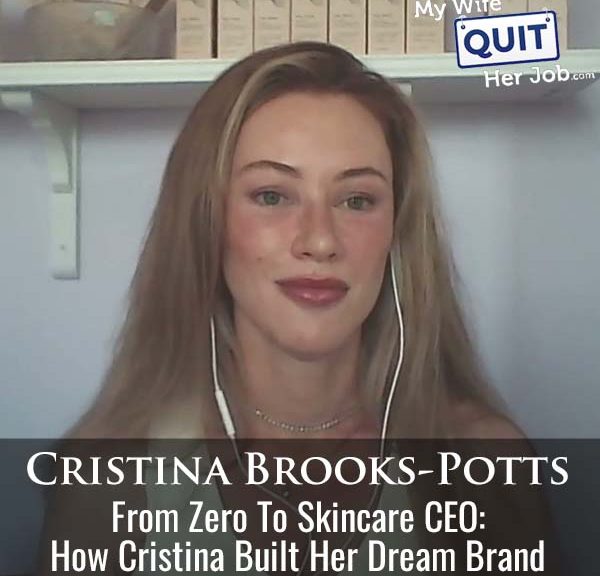
613: From Zero To Skincare CEO: How Cristina Brooks Potts Built Her Dream Brand

613: From Zero To Skincare CEO: How Cristina Brooks Potts Built Her Dream Brand

You can start a skincare brand from scratch on roughly $50,000 to $80,000, without ads, without a large social following, and without pre-orders, if the product is genuinely research-led and solves a specific unmet problem. That is exactly what my student Cristina Brooks Potts did with Authentic Ego, a skincare brand for hormonal, sensitive, and acne-prone skin that launched in 2023 after two years of R&D, attracted venture capital interest within 18 months, and grew almost entirely through Reddit mentions and organic backlinks.

Cristina joined my Create A Profitable Online Store course in 2021 and cashed out her retirement savings to fund the first product runs. She had no pre-order list, no wait-list, and barely any social presence when the store went live.

Her first 30 days had zero sales. Then Reddit users started finding her, reviewing her serums, and linking to her from every skincare community that mattered.

In podcast episode 613 we walked through exactly how she did it: the R&D-first formulation approach, how she found a real chemist, why she manufactured in the USA with Korean packaging, how much it actually cost, and the Reddit-first marketing playbook that a “founder in a sweatshirt” can run.

Key takeaways

  • Total launch cost for Authentic Ego: roughly $80,000 US, covering formulation, first product runs of two SKUs, packaging, testing, and site build.
  • Bare minimum to start a research-led skincare brand today is about $50,000 for one or two custom SKUs (not white-label), roughly $25,000 per SKU.
  • Cristina spent two years on market research using Reddit before launching. Reddit subreddits (r/acne, r/SkincareAddiction, r/FungalAcne) were the primary source for identifying real customer pain points.
  • She had zero social presence, no pre-orders, and no email list at launch. First 30 days: zero sales. Then organic Reddit mentions and backlinks compounded.
  • The brand attracted VC interest within about 18 months without paid marketing spend beyond a few dollars a day boosting one TikTok video.
  • Manufacturing is in California (formulation and fill), packaging is sourced from Korea to protect against China tariffs and IP loss.
  • You own your IP if you formulate the recipe yourself; you do not if a contract lab formulates for you and calls it “theirs.”
  • FDA does not require certifications for cosmetic skincare, but claim language must stay defensible.

Marketing-led vs research-led skincare: why the distinction matters

Marketing-led skincare starts with a brand vibe, hires a contract manufacturer to hand you a slightly modified existing formula, and layers in whatever “actives” are trending on Google. Research-led skincare starts with an identified physiological problem, works backward from that problem to the ingredient combination that solves it, and only then engages a chemist to build the recipe. Most brands (including most celebrity brands) fall in the first bucket.

Cristina’s category insight: half of women get a second wave of hormonal acne in their late 20s and 30s, often layered with sensitivity issues (rosacea, eczema, perioral dermatitis, malassezia folliculitis) and aging concerns. The mass-market acne aisle answers with single-note actives (benzoyl peroxide, salicylic acid) that are often too harsh for that exact skin type.

That gap is where Authentic Ego lives. The brand formulates around four principles of early acne development (oxidative stress, lipid peroxidation, microbiome dysbiosis, and inflammation) rather than the standard exfoliate-and-kill-bacteria approach that everyone else runs.

How much it costs to start a skincare brand from scratch

It costs about $50,000 minimum to start a research-led skincare brand from scratch with one or two custom (non-white-label) SKUs, and about $25,000 per SKU on the low end. Cristina’s full launch to two SKUs was around $80,000 US and covered formulation, a first inventory run of roughly 1,000 units per SKU, primary and secondary packaging, safety and dermatologist testing, brokerage fees to import bottles from Korea, 3PL setup, and the Shopify store.

The largest single cost bucket is inventory. Skincare product runs are capital-intensive because minimum order quantities from manufacturers are typically 1,000 units at the low end and 50,000 at the high end. Bottle MOQs from Korean suppliers are typically 5,000 units, which is reasonable compared to domestic bottle suppliers who often quote 50,000-unit minimums.

You can shave the total by doing your own Shopify build, your own product photography, and your own founder content, but the formulation, testing, and inventory line items are largely fixed.

How to find a skincare chemist who will actually work with you

You find a skincare chemist who will actually work with you by ignoring the mass-market contract manufacturers with polished websites and doing forensic Googling until you find independent chemists whose websites are three pages deep and barely maintained. Cristina spoke to 30 to 40 chemists at the start of her search. Most refused the project because it challenged the standard acne-formulation approach, and one biochemist with 40+ years of experience took it on because she found the approach genuinely interesting.

The independent chemist matters because she formulates the recipe you designed rather than handing you a pre-existing formula with a few tweaks. She also does small-batch fills (1,000 units) that big contract manufacturers refuse to touch.

The signal for a good chemist partner: they have their own small manufacturing team, they are personally responsive, they do not have a flashy website, and they are willing to challenge industry defaults.

How to protect your skincare brand’s IP

You protect your skincare brand’s IP by formulating the recipe yourself and hiring a chemist to operationalize it, so the underlying blueprint stays in your head and no lab can legally lock you in. Most white-label labs own the formulas they hand you, so if you ever want to switch manufacturers you cannot take the recipe with you. That is anti-competitive by design and it is the norm.

The safer pattern: you pay the chemist for their formulation work and specify in writing that the resulting recipe is yours. This is normal for founder-led research-first brands and unusual for marketing-led brands who are just picking from a catalog.

Patents are theoretically available but heinously expensive for a small skincare brand. The practical protection is proprietary knowledge (which ingredients you deliberately avoid, and why) combined with a real R&D moat that competitors cannot copy without doing the same underlying research.

Reddit as a skincare market research and marketing channel

Reddit is the single best market research and organic marketing channel for skincare, because niche subreddits (r/acne, r/SkincareAddiction, r/FungalAcne) contain years of unfiltered customer complaints, ingredient debates, and product recommendations that no survey tool can match. Cristina spent two years reading Reddit as a “civilian” account before launching, asking real questions and learning exactly how her target customer described their problems.

That two years of Reddit reading is what let her position Authentic Ego with copy that resonates immediately. The brand launched with no email list and no pre-orders, but the first customers found the site via SEO, reviewed the serum on Reddit, added it to third-party review sites like Thing Testing and Skin Sort, and generated roughly 300 organic backlinks within 18 months.

How to post on Reddit as a skincare brand without getting banned

You post on Reddit as a skincare brand without getting banned by writing genuine resource guides (Cristina’s blog posts covered adjacent topics like taking B5 for acne, water filters, DIY cleansing oil) rather than promotional posts, and by never assuming a mod’s tolerance for brand accounts. Cristina got banned for life from r/acne after answering one product question under her brand account.

Google now indexes Reddit heavily and users deliberately append “reddit” to search queries, so Reddit content ranks visibly in Google results for skincare terms. That doubles the value of any Reddit resource guide you publish; it works as both a Reddit and a Google surface.

The Authentic Ego marketing playbook: founder-led TikTok on $2 a day

The Authentic Ego marketing playbook is founder-led TikTok content boosted with a few dollars a day in paid spend, layered on Reddit organic growth and word-of-mouth reviews. Cristina resisted social media for the first year because she wanted the brand to be about customers, not the founder. Once she started posting as herself, “in a sweatshirt on TikTok,” growth accelerated.

One specific video (about why one bottle of the Authentic Ego serum replaces five separate acne products) went semi-viral. She spent a couple of dollars a day for a full year running it as a paid ad, which is a fraction of what a typical DTC skincare brand spends.

The lesson she gives to any first-time founder: get on camera immediately, treat yourself as the conduit to the customer, and post consistently. Waiting to feel ready is the mistake.

Why Authentic Ego manufactures in USA with Korean packaging

Authentic Ego manufactures in USA (California) with Korean packaging to protect against both tariff exposure on finished skincare imports and IP loss to Korean contract manufacturers. Cristina sourced bottles from Korea in 2021 specifically because she anticipated a US-China trade war and wanted the components to come from a non-China origin.

The tradeoff Cristina names honestly: quality out of China is now equivalent to Korea for most skincare packaging, and roughly 80 percent of raw skincare ingredients globally are sourced from China regardless of finished-product origin. The Korea decision was insurance against political and tariff risk, not a pure quality decision.

Finished-skincare imports from Korea now face a 15 percent tariff (down from a much higher earlier rate), which is manageable. The bigger risk many Korean-manufactured skincare brands face is IP: some Korean contract manufacturers do not release the formula rights, so the brand cannot manufacture the product anywhere else.

FDA rules and claims for a new skincare brand

FDA rules for a new cosmetic skincare brand require no certification or approval before selling, but they limit the claims you can make on the product page. Claims like “treats acne at the root” or “clears acne in 12 hours” cross into drug-claim territory and can trigger an FDA warning letter. Descriptive claims (supports acne-prone skin, hydrating, formulated for sensitivity) are safe.

Historically the FDA has focused warning letters on egregious drug-style claims (melts fat in 12 hours) and has not sent many since the Obama administration. The practical rule for a founder: state what the product supports rather than what it treats, and back specific numeric claims with real evidence.

The “80 percent of consumers agreed” claim you see on many product pages is a consumer perception study. It is a low-rigor survey of free-product recipients, and Cristina refuses to use them because the numbers are essentially designed to sell rather than measure.

Clinical vs consumer perception studies in skincare

Clinical studies in skincare use a supervised panel over 30 to 90 days with objective photographic measurement of specific outcomes, while consumer perception studies survey free-product recipients about how the product made them feel. Real clinical studies cost meaningfully more than consumer perception studies and produce evidence a serious buyer or investor will actually trust.

Dermatologist testing has its own hidden shortcut. Most dermatologist-tested claims come from patch tests applied to volunteers’ backs (not faces) over two weeks, with volunteers who skew 60 to 85 years old because the pay is low. That does not reflect real-world use on a target customer’s face at all.

Authentic Ego is moving away from back-patch dermatologist tests and toward at-home use tests on target-demographic customers. That is more expensive but produces defensible real-world evidence.

Frequently asked questions

How much does it cost to start a skincare brand from scratch?

It costs a bare minimum of about $50,000 to start a research-led skincare brand from scratch with one or two custom (non-white-label) SKUs, and roughly $25,000 per SKU on the low end. Cristina Brooks Potts spent about $80,000 US to launch Authentic Ego with two SKUs, covering formulation, first inventory run of 1,000 units per SKU, primary and secondary packaging, safety testing, brokerage fees for Korean packaging, 3PL setup, and the Shopify store.

Do you need FDA approval to sell skincare?

You do not need FDA approval to sell cosmetic skincare in the United States. The FDA regulates skincare as cosmetics rather than drugs and does not require pre-market approval, but you must keep marketing claims defensible. Drug-style claims like “treats acne at the root” or “melts fat in 12 hours” can trigger a warning letter.

Should I white-label my skincare or formulate my own?

White-label skincare is faster and cheaper to launch but the lab typically owns the formula, so you cannot switch manufacturers and you have no real R&D moat. Formulating your own recipe with an independent chemist costs more up-front but keeps the IP in your name, lets you switch manufacturers, and gives you an actual competitive advantage.

How did Authentic Ego market without paid ads?

Authentic Ego marketed without paid ads by doing two years of Reddit market research before launching, posting genuine resource guides on Reddit rather than promotional content, encouraging organic reviews on third-party sites like Thing Testing and Skin Sort, and building a founder-led TikTok presence boosted with only a few dollars a day. Roughly 300 organic backlinks accumulated within about 18 months of launch.

Where should I manufacture a skincare product?

You should manufacture your skincare product in the US or Korea for quality, and choose between them based on tariff and IP considerations. Korean contract manufacturers offer better economies of scale but often refuse to release formula IP; US formulation and fill costs more but keeps the IP with you and avoids finished-product import tariffs. Packaging can be sourced from Korea with reasonable MOQs (around 5,000 units) versus 50,000-unit minimums common with US bottle suppliers.

Can I own the IP to my skincare formula?

You can own the IP to your skincare formula if you formulate the recipe yourself and specify in writing that the resulting recipe belongs to your brand. Most white-label labs retain formula rights by default, so you cannot take the recipe elsewhere. If you pay an independent chemist to build a recipe you designed, negotiate ownership up front.

How long does it take to develop a skincare product?

Developing a research-led custom skincare product from initial concept to first inventory run typically takes 12 to 24 months. Cristina Brooks Potts spent about two years from joining the course in 2021 to launching Authentic Ego in 2023, working full-time in enterprise sales and funneling commission income into the brand.

I Need Your Help

If you enjoyed listening to this podcast, then please support me with a review on Apple Podcasts. It's easy and takes 1 minute! Just click here to head to Apple Podcasts and leave an honest rating and review of the podcast. Every review helps!

Ready To Get Serious About Starting An Online Business?


If you are really considering starting your own online business, then you have to check out my free mini course on How To Create A Niche Online Store In 5 Easy Steps.

In this 6 day mini course, I reveal the steps that my wife and I took to earn 100 thousand dollars in the span of just a year. Best of all, it's absolutely free!

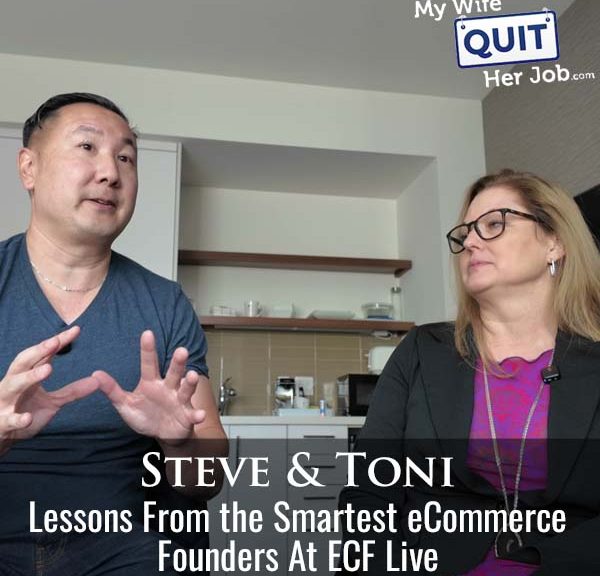
612: Lessons From the Smartest eCommerce Founders At ECF Live

612: Lessons From the Smartest eCommerce Founders At ECF Live

The best eCommerce Fuel Live 2025 lessons for DTC operators cluster around six themes: AI workflow automation is finally practical, Facebook ads have shifted from creative-first to message-first, image generation with Nano Banana is replacing Photoshop for most brand work, hiring is quietly moving from the Philippines to Kenya, the “scale-fast-and-exit” path is producing a lot of miserable founders, and the founder-to-CEO transition is where most seven-figure operators are stuck. My co-host Toni Anderson and I recorded podcast episode 612 in Bozeman, Montana at the eCommerce Fuel Live conference (ECF), walking through everything we learned across two days.

ECF is a small annual conference run by Andrew Youderian for seven- and eight-figure ecommerce founders. The room is small enough that every hallway conversation matters. We compared notes on the sessions we split up to attend, from Facebook ad strategy with Andrew Faris to AI image generation with Reto, to the founder-to-CEO talk with Aiden.

Below is the full breakdown of what actually mattered from ECF Live 2025, with specifics on the tools, tactics, and hiring shifts that mid-size ecommerce operators are moving on right now.

Key takeaways

  • AI workflow automation with n8n or Make is the highest-leverage practical shift, replacing thousands-per-month SaaS tools with $20/month setups.
  • Facebook ads have moved from “test many creatives” to “test many messages” (Andrew Faris’s framework). Copy-and-tweak creative variations no longer work because Meta detects and suppresses near-duplicates.
  • Google’s Nano Banana image model, accessed through AI Studio, is replacing Photoshop for most ecommerce lifestyle-image work.
  • Hiring in the Philippines is saturating (staff churn is rising because demand is high); Kenya is emerging as the next hungry English-speaking hiring market.
  • Latin American developers at roughly $30K to $40K per year are producing quality output equivalent to US developers, especially with AI-assisted workflows.
  • The “scale fast, exit” mentality produces most of the ECF depression stories; the “milk the business, take home $1M to $2M a year” path is quieter and healthier.
  • The founder-to-CEO transition (Aiden’s talk) is where most operators stall. If you brought your laptop to a two-day conference, you are still operating as a founder.

AI workflow automation with n8n and Make: the practical starter

AI workflow automation with n8n and Make is the practical starter for any ecommerce operator, because it lets you replace expensive SaaS tools with $20-a-month AI-connected workflows that automate the specific processes your business actually runs. Kevin (an ECF regular) did a live demo showing how to trigger a Slack notification from a Google Sheet update, then extend that to real business events. n8n is free if self-hosted (roughly one-click installs on most modern servers), and Make is a paid but cheap alternative for teams under 10,000 operations per month.

The rule Kevin gave: use whatever automation tool your team is already comfortable with. Switching midstream costs more than the incremental price savings.

The first automation to build is usually a large-order notification. I set up a workflow that scans every ecommerce order, runs the customer through ChatGPT with historic order context, and returns a probability score (0 to 100) that the buyer is a wedding planner or event planner. That triggers a Slack notification so my team can personally reach out to those customers rather than dropping them into a generic Klaviyo sequence.

Inventory forecasting is the next automation to build

Inventory forecasting is the second automation most ecommerce operators should build with n8n or Make, because the paid SaaS tools in this category cost thousands of dollars a month for features you use 10 percent of. Piping your order history into ChatGPT or Claude with a prompt tuned to your reorder cadence produces usable weekly forecasts for a fraction of the cost.

Get 80 percent of the value at 5 percent of the cost.

Facebook ads in 2026: message-first, not creative-first

Facebook ads in 2026 are message-first, not creative-first, because Meta now suppresses near-duplicate creatives inside a single account. Andrew Faris’s ECF session was blunt: taking a video that works and swapping the hook or headline no longer scales the winning ad, because Meta detects the similarity and picks one to run while nerfing the rest. The rule of thumb Andrew shared is that variations need to be at least 70 percent different to count as distinct ads.

The new approach is to organize each Facebook ad by message, put 10-plus creatives inside a single ad that all carry the same message, and measure at the message level rather than the creative level. Meta wants more creatives per ad set, so consolidation wins.

Andrew is also softening on his old “pump out as many creatives as possible” advice. With AI image tools, generating dozens of visual variations is trivial, so the constraint has shifted back to message quality. Find the message that works, then use AI to generate as many visual variations as you want.

Nano Banana and AI Studio: the Photoshop replacement

Google’s Nano Banana model, accessed through AI Studio, is functionally replacing Photoshop for most ecommerce lifestyle imagery work. Reto’s ECF session walked through a specific workflow that lets a brand generate holiday-themed lifestyle photos from existing product photos in seconds. That is a real dollar saving because Christmas photo shoots cost thousands of dollars and can be difficult to justify for a small product line.

The example that landed for me: I sent an email promotion, opened one of my old email creatives with Nano Banana, asked it to change the year to the current one, and shipped the email. In Photoshop, without the source PSD file, that would have been a 20-minute clone-tool job.

The productivity delta compounds fast. Ten small image edits per week at 10 minutes each saved is roughly 90 hours per year returned to the team.

The image prompting cheat codes

The image prompting cheat codes Reto gave were the highest-value part of her session, because the biggest reason people say AI image tools “do not work” is that they do not know the terminology to describe what they want. She named specific composition, lighting, and post-processing terms that produce dramatically better outputs.

The related tool she recommended is Prompt Llama (promptlama.com), a site of pre-built image prompts you can adapt by swapping in your own product. Use one of the site’s Christmas-themed prompts, replace “llama” with “wedding handkerchief,” and you have a holiday lifestyle image.

Custom mini-apps in AI Studio

AI Studio also lets you write custom mini-apps that chain multiple image operations (remove background, remove watermark, expand and blur, replace subject) into a single reusable workflow. That is functionally your own private Photoshop, tuned to the exact operations your brand runs every week. If you use Google Workspace, the app is shareable across your Drive with no separate logins.

Hiring shifts: Kenya, Philippines, Latin America

The hiring shift most ecommerce operators missed in 2025 is that Filipino talent is saturating and Kenya is emerging as the next hungry English-speaking hiring market. A friend at ECF, Jeff Oxford, had a Philippines team of 100+ people and moved the entire team to Kenya after seeing staff churn spike. Filipino workers now have so much demand that losing a job carries no urgency; Kenyan workers are eager, English-fluent, and motivated in the way Filipino workers were five years ago.

I am not moving my Philippines team today, but I am running the Kenya evaluation for my next hire. If you are scaling now, at least benchmark Kenya against the Philippines rate card before defaulting to what you know.

Latin American developers replace US developers

Latin American developers at roughly $30K to $40K per year are replacing US developers on many ecommerce teams because AI-assisted coding has flattened the quality gap. In Zach Plansky’s more technical ECF session, several attendees confirmed they run Latin American dev teams where the developers instruct AI to write code rather than writing it directly. Our friend Carson (a senior developer) sat in the same session nodding along; developers still matter, but the work is shifting from “write code” to “direct AI to write code.”

That does not mean you fire your US developer. It means the marginal next hire is meaningfully cheaper without a quality penalty.

The Ecuador warning: check labor laws first

Check labor laws before hiring in any specific country. Lisa (of 50 Flowers) shared at ECF that running her business in Ecuador is painful because local labor laws effectively make certain classes of employees un-fireable after a tenure threshold. That kind of rule kills the flexibility you were hiring internationally to get.

The AI model stack for ecommerce founders in 2026

The AI model stack most ECF founders converged on for 2026 is Nano Banana for images, Kling or Sora for video, ChatGPT for general tasks (with waning enthusiasm), Claude for creative writing (regaining ground), and Gemini for speed-sensitive tasks and coding. The models leapfrog each other every quarter, so the pragmatic move is to check back monthly and rotate.

I canceled my Midjourney membership because Nano Banana caught it and passed it. ChatGPT slowed down noticeably after the GPT-5 upgrade (I can type faster than it outputs on many prompts), so I have moved creative writing back to Claude. Gemini was a surprise at ECF: many operators use it heavily now, particularly for coding tasks where its speed matters. Lars’s bet is that Gemini wins overall because Google has the most to lose.

The takeaway on prompt quality: if a specific model is “not working” for you, the problem is almost always the prompt, not the model. Describe what you want with the specificity you would use with a new employee, and results improve dramatically.

Scale fast vs milk the business: two founder paths

Scale-fast-and-exit versus milk-the-business is the philosophical split ECF surfaces every year, and 2025 leaned heavily toward the milking path because too many “scale fast” stories ended in burnout. Andrew Youderian’s ECF opener asked several founders to tell the story of their lowest point. Most of those low points came from scaling too fast. One friend spent $5 million of his own money on his business after signing a personal guarantee. Others leveraged their homes.

The alternative is a $3M-to-$5M business netting $1M-to-$2M per year for a founder who wants a family life, weekends, and a low-stress operating cadence. Dana (a mutual friend) has built and sold multiple businesses in this range and is a strong argument for the pattern. If you cannot easily spend $1M per year (and most people cannot without buying real estate or cars), the “milk it” path may already be delivering the outcome the exit path is chasing.

Ezra Firestone’s wealth-building rule

Ezra Firestone’s ECF talk kept coming back to a specific wealth-building rule: one of the best ways to build wealth is to build businesses and sell them, then invest the proceeds. He is targeting a $100M outcome. Most operators in the ECF room would be delighted with $10M. Both are legitimate targets; the question is whether the multi-year burnout to get to $100M is worth it given the life stage you are in.

Founder-to-CEO transition: the Aiden test

The founder-to-CEO transition test that came out of Aiden’s ECF talk is simple: if you brought your laptop to a two-day conference, you are not operating as a CEO yet. A real CEO can go 48 hours managing only from a phone because the team is running the business without them.

The founder-to-CEO shift is where most seven-figure operators stall, because the founder mentality is “just fix it myself” and the CEO mentality is “build the process and train someone.” Founders who cannot make that shift end up bottlenecked by their own ownership of every problem.

Bill D’Alessandro’s story from years ago fits: when his business grew, he had to let go a friend who had been in the company from the beginning because the friend had not grown with the company. That decision was emotionally hard and financially necessary. Most founders wait too long on those calls.

The EO swap-companies idea

Jordan (a member of EO) shared a specific idea at lunch: every operator in his EO group should run each other’s companies for a week and make the hard people decisions without the emotional overhead. You cannot easily fire a friend or an early hire; a stranger can. That is a real advantage of hiring a CEO if you can afford it.

Portland Leather: the 5M-to-10M lesson

Portland Leather’s founder Curtis closed ECF with a lesson that resonated with a lot of the operators in the room: the marketer who was great in 2017 is not a great marketer today if they are still running the 2017 playbook. Going from $5M to $10M requires doing something different from what got you to $5M.

Curtis’s Etsy-to-Shopify jump illustrates the point. He was a top Etsy seller, tested Shopify on the side, made one sale on Black Friday, and shut down Etsy immediately. Straddling two channels for years usually hurts because you never fully commit. Sometimes the right move is a sharp pivot.

The Portland Leather backstory also has the classic scale-fast pattern (last $100 in the bank, homelessness, detox, then rebuilding). Those stories almost always come from single men without dependents, which is worth flagging if you are a founder with a family and evaluating whether that risk profile fits your life.

The three levers that move a store from six to seven figures

The three levers that reliably move an ecommerce store from six figures to seven figures are Meta ads, email marketing, and organic search working together. I hit seven figures at Bumblebee Linens once I added meta ads and email marketing on top of the SEO base. Any one of those channels alone stalls; two or three compound.

Portland Leather’s Curtis made the same point at a higher scale: to double your business, you have to think 10x. Tweaking the website or running the same ad set will not get you to the next tier. The outsized moves (new channel, new market, new format) are where the growth lives.

Frequently asked questions

What is eCommerce Fuel Live?

eCommerce Fuel Live (ECF) is a small annual invite-only conference for seven- and eight-figure ecommerce founders, run by Andrew Youderian. It typically hosts about 200 attendees, prioritizes hallway conversations over sponsor booths, and rotates locations year to year (2025 was Bozeman, Montana).

What AI tools are ecommerce founders actually using in 2026?

Ecommerce founders in 2026 are using Nano Banana (via Google AI Studio) for image generation, Kling and Sora for video generation, ChatGPT for general workflow tasks, Claude for creative writing, and Gemini for coding and speed-sensitive tasks. n8n and Make are the workflow-automation layer that connects those models to Shopify, Klaviyo, and internal tools.

What is Nano Banana?

Nano Banana is Google’s high-quality image generation and editing model, accessed through Google AI Studio. Ecommerce operators use it to generate lifestyle photos from product photos, swap backgrounds, apply seasonal themes, and edit existing marketing images in seconds. It is significantly faster than ChatGPT’s image tools and is functionally replacing Photoshop for most brand work.

How do you automate ecommerce workflows without paying thousands of dollars per month?

You automate ecommerce workflows without paying thousands of dollars per month by using n8n (free if self-hosted) or Make (cheap up to about 10,000 operations per month) to connect Shopify, Klaviyo, Slack, and AI models like ChatGPT and Claude. Most expensive SaaS tools in this category use only 10 percent of their features for a given brand, so a $20-a-month AI-powered workflow often replaces a $2,000-a-month SaaS tool.

Are Facebook ads still worth running for ecommerce in 2026?

Facebook ads are still worth running for ecommerce in 2026, but the strategy has moved from creative-first to message-first because Meta now suppresses near-duplicate creatives. Consolidate ads by message, put 10 or more creative variations inside a single ad, and measure performance at the message level. Copy-and-tweak creative variations no longer scale.

Should ecommerce founders hire developers in Latin America?

Ecommerce founders should evaluate Latin American developers on their next hire because the total cost of $30K to $40K per year now delivers quality output on par with US developers, especially with AI-assisted coding workflows. Filipino talent is saturating (higher churn, less urgency); Kenya is the emerging low-cost English-fluent market. Benchmark all three before defaulting to one.

What is the founder to CEO transition?

The founder-to-CEO transition is the shift from personally solving every problem in your business to building processes and hiring people who solve those problems for you. Aiden’s ECF test: if you brought your laptop to a two-day conference and could not manage from your phone, you are still operating as a founder. Most operators stall at this transition somewhere between $2M and $10M in revenue.

I Need Your Help

If you enjoyed listening to this podcast, then please support me with a review on Apple Podcasts. It's easy and takes 1 minute! Just click here to head to Apple Podcasts and leave an honest rating and review of the podcast. Every review helps!

Ready To Get Serious About Starting An Online Business?


If you are really considering starting your own online business, then you have to check out my free mini course on How To Create A Niche Online Store In 5 Easy Steps.

In this 6 day mini course, I reveal the steps that my wife and I took to earn 100 thousand dollars in the span of just a year. Best of all, it's absolutely free!

611: The Shopify Features That Are Exploding Sales For Big Brands With Kurt Elster

611: The Shopify Features That Are Exploding Sales For Big Brand With Kurt Elster

The Shopify AI features actually moving the needle for big brands right now are AI live chat sales agents, AI-assisted theme block generation inside the editor, AI-populated product recommendations, and Shopify Flow plus the Shopify Knowledge Base app that feeds ChatGPT and Perplexity your product catalog through Shopify’s built-in MCP integration. On this episode of the My Wife Quit Her Job podcast, I sat down with Kurt Elster, founder of EtherCycle and host of The Unofficial Shopify Podcast, to break down exactly which features his agency clients are turning on and which ones are still hype.

Kurt has consulted on hundreds of Shopify stores for over a decade, and I have been running my own ecommerce store for 18 years now. This year is easily the most tumultuous stretch either of us has seen outside of COVID, with AI and tariffs upending playbooks that used to just work.

Below is a breakdown of the Shopify AI features his clients are using to grow sales, the AOV apps worth installing on a bare-bones store, what’s overhyped, and how SEO is being reshaped by AI answer engines.

Key takeaways

  • AI live chat sales agents in Shopify are lifting AOV for merchants who deploy them, but you must review conversations because the AI often marks tickets “resolved” when it isn’t.
  • Shopify’s in-editor AI block generator (built into the theme editor at no extra cost) writes usable widget code from a one-sentence prompt.
  • Shopify Knowledge Base is a free app that exposes your catalog to ChatGPT and Perplexity via Model Context Protocol, and shows you how many times AI recommended your products.
  • Traditional and technical SEO (schema, structured data, collection pages sliced by long-tail queries) is the highest-leverage way to get cited by AI search.
  • The AOV stack Kurt actually recommends: cross-sells, drawer cart with free-shipping progress bar, free gift with purchase, post-purchase upsells (especially “buy another of what you just bought at 15% off”).
  • Most AI apps in the Shopify app store are ChatGPT wrappers charging 10x the underlying credit cost. Vibe-code the simple stuff yourself; buy apps that actually solve pain.

What Shopify AI features are boosting sales for big brands?

The Shopify AI features actually boosting sales for big brands fall into four buckets: AI live chat sales agents, AI-generated theme blocks, AI-populated product recommendations, and Shopify’s new AI-facing catalog surfaces (Knowledge Base and MCP). Kurt confirmed his agency is deploying all four on client stores this year.

Shopify has invested heavily in AI because its CEO Tobias Lutke is a developer-first operator, so the initial wave is framework and tooling that other developers now build on top of. That is why the interesting stuff is showing up inside the admin, inside the theme editor, and as first-party apps rather than as one big consumer feature.

How Shopify Sidekick answers analytics questions in the admin

Shopify Sidekick is Shopify’s built-in AI assistant that answers questions inside the admin, including complex analytics questions about sizes, colors, and inventory forecasting. Kurt tested it on an apparel store with hundreds of listings and asked it to break down which sizes and colors sell for inventory planning, and it nailed the analysis on the first try.

He did not trust the answer, so he ran the same analysis by hand and Sidekick had gotten it right. A year ago Kurt was giving Sidekick a hard time with intentionally tricky questions, and now he is quietly using it for real work.

How Shopify’s AI theme editor generates blocks from a prompt

Shopify’s AI theme editor lets you add a block to any section, describe what you want in one sentence, and have the AI generate the code for that block inside the visual editor at no extra cost. Kurt says this is the single most useful AI feature Shopify has shipped for merchants who are not developers.

The full-theme “generate a theme from a description” tool is less useful. Kurt has tried it several times and says the results feel random, closer to a starting point than a finished theme. The block-level generation inside the theme editor is different because it operates on a small, well-scoped piece of code that Shopify’s engine understands deeply.

Shopify’s Liquid code is well-documented and exposed in a specific way that AI models can parse, so the AI does a remarkable job on small widgets. The tradeoff is that generated code tends to be longer than a human would write, and complex additions can create maintenance headaches later. Simple widgets, sale badges, and layout tweaks are the sweet spot.

How AI live chat sales agents raise AOV on Shopify stores

AI live chat sales agents on Shopify raise AOV by proactively engaging shoppers with product-specific questions the store’s data can answer, and merchants running them report meaningfully higher average order value from shoppers who engage. Kurt runs one on a client store where the app does its own conversion tracking, and shoppers who interact with the agent buy more per order.

The good ones work like a floor salesperson in a retail store. The bot pops up on a product page and asks a question it already knows the answer to (“would you like to know more about the ingredients?”), because ingredients is a meta field it can read. That is a clever prompt design because it engages the shopper with information the AI is confident about.

Two things to watch. First, many of these agents do not identify themselves as AI unless you ask directly. Kurt’s client-facing bot is titled “Virtual Sales Consultant” and when he asked it “are you AI?” it dodged with “I’m here to help with any questions.”

Second, “resolved” is self-scored by the AI, and the AI is generous with itself. Kurt saw one case where a shopper asked “can I return just the lid of the jar?” The bot said “sure, reach out to a sales consultant” and marked the ticket resolved. The store cannot actually take back just the lid.

If you deploy one, audit the conversation logs weekly. Watch for cases where the AI marks tickets resolved that a human would have flagged, and cases where the bot commits the store to something it should not.

How to use AI to populate related-product recommendations

The way to populate related-product recommendations across a large catalog is to run every product image through an AI embeddings model (Kurt and I both use OpenAI’s CLIP-style image embeddings), store the resulting vectors in a database, and then look up similar products at request time. I did this on my own store and it lifted AOV by roughly 17%.

The problem it solves is that on most stores the top 20% of products yield 80% of sales, which means the frequently-bought-together fields for the long tail of products are empty or thin. AI image embeddings let every product on the site have a populated “recommended products” grid that is visually and categorically related, even if it has never sold with anything else.

The hierarchy I use is frequently-bought-together first (using an FP-Growth association algorithm on real order data), and then similarity search from the image-embedding database as the fallback. On a typical Shopify store this maps to the related-products meta field that Shopify’s Search and Discovery app reads.

How Shopify Knowledge Base and MCP get your products cited by AI search

Shopify Knowledge Base is a free first-party Shopify app that exposes your catalog to ChatGPT and Perplexity through Model Context Protocol (MCP), and reports how many times AI answer engines recommended your products. It also lets you write FAQ answers that the AI will use when shoppers ask questions about your store.

Every Shopify merchant is opted into the catalog integration by default. Perplexity and ChatGPT can query your product data structurally, so when a shopper asks Perplexity “what is a good high-protein snack under 200 calories” and your product qualifies, the AI can surface it and the shopper can complete the checkout on your site.

Shopify announced a native ChatGPT checkout integration at its June developer conference, with a preview shipped shortly after. Checkout still occurs on your website today, but a one-click ChatGPT checkout is coming and would use existing Shop Pay payment credentials to eliminate friction.

Kurt and I agree the historical parallel is worth watching. Meta and TikTok native checkouts mostly did not stick, though Shop Pay has more ubiquity than Meta Pay ever did.

How to do SEO for Shopify in the age of AI search

SEO for Shopify in the age of AI search is having a renaissance because AI answer engines pull from the top 10 to 30 organic search results to answer questions, and structured data (schema markup) that used to be a nice-to-have is now how AI extracts your product facts with confidence. If you rank in traditional SEO and you have clean schema, you are the source AI cites.

Kurt’s SEO clients are focused on three moves. First, add rich structured data to product and collection pages so AI can extract facts cleanly. Second, slice broad collection pages into narrow long-tail collection pages (“men’s performance polos” instead of just “men’s tops”) to capture exact-match query phrases.

Third, use AI to write SEO titles, meta descriptions, and alt text at scale on catalogs that were too big to hand-edit before.

The AI-assisted SEO cleanup is what moved my own store’s organic traffic to an 18-year high this year. I wrote Python scripts that connect to my store’s API, find every product missing an SEO title or meta description, generate one using Google Shopping best practices, and generate alt text from the product photo plus description. A human still reviews every entry before it goes live, but the whole pass takes about an hour instead of weeks of data entry.

Kurt uses the same pattern on client stores. On a store with 1,000 products, generating and reviewing alt text on every image would previously never happen. With AI, it takes one afternoon and improves both accessibility and image search visibility at once.

The bare-bones Shopify apps Kurt Elster installs on every store

The bare-bones apps Kurt installs on every new Shopify store are first-party Shopify apps that live in the admin (Search and Discovery, Shopify Flow, Knowledge Base), plus one paid data tool (Matrixify), plus a small number of front-end AOV apps chosen based on the store’s specific pain points. He avoids apps that bloat front-end load time or duplicate what he can build in a Liquid section.

The reasoning is simple. Every front-end app you install adds page weight and a monthly fee, and rarely does one solve a problem that a small custom section could not. First-party admin apps are low risk because they only touch the admin, not the storefront.

The paid tool he swears by is Matrixify, which exports and imports pretty much everything in a Shopify store as a spreadsheet. That matters for AI workflows because a spreadsheet is what you feed into ChatGPT or Claude to bulk-edit product data, then re-import into Shopify. Bulk edits that used to take days can now take an hour.

The AOV app stack that works on Shopify in 2026

The AOV app stack Kurt recommends starts with a good cross-sell and upsell layer, adds a drawer cart with a free-shipping progress bar, layers on free-gift-with-purchase, and finishes with post-purchase upsells on the thank-you page. Once conversion basics are handled, AOV is where the compounding returns are.

His picks by function:

  • Order editing: Cleverific Order Edit, so shoppers can fix their own orders and cut support tickets.
  • Cross-sells and upsells: Zipify OneClickUpsell for pre and post-purchase; Rebuy for site-wide personalized recommendations.
  • Free gift with purchase: Kurt is launching his own app for this. Free gift is his favorite promo because it lifts AOV without discounting the core product.
  • Drawer cart: Slides out from the right on add-to-cart. Put a free-shipping progress bar, a “you’re $25 away from a free gift” progress bar, and related items inside it.
  • Frequently bought together on product pages: Also good for internal linking and SEO.
  • Post-purchase upsells: The single most successful post-purchase offer his agency has seen is “buy another one of what you just bought at 15% off, we’ll ship them together.” Especially strong for consumables.

The one caveat on the “buy another one” post-purchase upsell: run it during high-sale periods only, not 24/7/365. Merchants who run every winning promo year-round train buyers to expect the discount and destroy their margin.

Which Shopify AI features are overhyped?

The most overhyped Shopify AI features are the third-party AI apps that are thin wrappers around ChatGPT and Claude, charging 10x the underlying credit cost for a UI layer merchants could replicate themselves. When you use ChatGPT enough you start to recognize its writing syntax, and you notice it inside a lot of “AI” apps that charge $30 a month for what would cost $3 in API credits.

Kurt’s blanket rule: if the AI app is not doing something structurally hard that requires deep integration with the Shopify data model or with a hardware or workflow you cannot recreate, you are paying for a wrapper.

That does not mean every AI app is bad. Kurt loves several. It just means read the app description skeptically before paying for another middleman.

The other overhyped bucket is fully agentic browser-control AI (“tell an agent to go log into your Shopify store and fix a thing”). Proof-of-concept demos exist, they are rough, and neither Kurt nor I want an AI clicking around inside our store admin unsupervised yet. Wait for that one to mature.

Frequently asked questions

What are the top Shopify AI features in 2026?

The top Shopify AI features in 2026 are Shopify Sidekick (in-admin AI analytics assistant), AI block generation in the theme editor, AI live chat sales agents, AI-populated product recommendations using image embeddings, and Shopify Knowledge Base plus MCP for exposing your catalog to ChatGPT and Perplexity.

Does Shopify’s AI theme generator work?

Shopify’s full-theme AI generator is best treated as a starting point rather than a finished theme, and Kurt Elster describes the results as feeling random. The AI block generator inside the theme editor is much more useful and produces working widget code from a one-sentence prompt at no extra cost.

Do AI live chat agents actually increase Shopify sales?

AI live chat agents on Shopify do increase sales when they proactively engage shoppers on product pages with data-driven questions, and merchants running them report higher AOV from shoppers who interact. The catch is that the AI often self-scores tickets “resolved” when they are not, so audit conversation logs weekly.

How do I optimize my Shopify store for AI search engines like ChatGPT and Perplexity?

The way to optimize a Shopify store for AI answer engines is to rank in traditional Google SEO first (AI cites the top 10 to 30 organic results), add rich schema markup to product and collection pages so AI can extract product facts, install Shopify’s free Knowledge Base app to opt into the ChatGPT and Perplexity MCP integration, and slice broad category pages into long-tail collection pages that match specific search phrases.

What is the Shopify Knowledge Base app?

The Shopify Knowledge Base app is a free first-party Shopify app that exposes your product catalog to ChatGPT and Perplexity via Model Context Protocol, reports how many times AI answer engines recommended your products, and lets you write FAQ answers that AI models will use to answer shopper questions about your store.

What is the best post-purchase upsell on Shopify?

The single most successful post-purchase upsell Kurt Elster’s agency has seen is offering the shopper another unit of the product they just bought at 15% off, shipped together with the original order. It works best on consumable products, and you should run it only during high-sale periods to avoid training customers to always expect the discount.

Is Shopify Flow free?

Shopify Flow is free for all Shopify plans now, though it was originally a Shopify Plus-only feature. It is one of the highest-ROI first-party apps because it automates admin workflows (tagging, notifications, inventory triggers) that would otherwise chew up hours per week.

I Need Your Help

If you enjoyed listening to this podcast, then please support me with a review on Apple Podcasts. It's easy and takes 1 minute! Just click here to head to Apple Podcasts and leave an honest rating and review of the podcast. Every review helps!

Ready To Get Serious About Starting An Online Business?


If you are really considering starting your own online business, then you have to check out my free mini course on How To Create A Niche Online Store In 5 Easy Steps.

In this 6 day mini course, I reveal the steps that my wife and I took to earn 100 thousand dollars in the span of just a year. Best of all, it's absolutely free!

610: How To Use AI To Scale 7 & 8 Figure Ecommerce Brands With Ritu Java

610: How To Use AI To Scale 7 & 8 Figure Ecommerce Brands With Ritu Java

Seven and eight figure ecommerce brands are using AI in four specific places right now to scale: AI-optimized listings written for Amazon Rufus and other LLM shopping assistants, AI-generated video and image creative at 10x the old speed, low-code automations in Google Apps Script and Make.com that eliminate repetitive team work, and prompt-based content workflows that plug directly into Facebook, email, and product feeds. On this episode of the My Wife Quit Her Job podcast, I sat down with Ritu Java, CEO and co-founder of PPC Ninja, to break down the exact tools and automations her agency and top ecommerce clients are running.

Ritu has helped thousands of Amazon sellers scale, speaks at over 100 industry events, and just delivered a standing-room session on AI at my Sellers Summit conference. She is one of the few operators who genuinely lives in AI-land every day, so I wanted to pull out her real workflow, not the LinkedIn version.

Below is what her seven and eight figure clients are doing, the specific tools she uses, and the AI automation rule she applies to her own agency.

Key takeaways

  • Amazon listings must now be optimized for Rufus (Amazon’s LLM shopping assistant), not just SEO. That means proactively addressing negative Rufus answers, adding us-vs-them comparison images, and building FAQ images the LLM can parse.
  • Under 5% of PPC Ninja’s clients have changed prices in response to tariffs. Most are just being extremely cautious with ad spend.
  • Ritu’s AI stack: ChatGPT for brainstorming and planning, Claude for code and low-code tasks, Perplexity for live web research, Gemini for Google Workspace integration and long-video transcription, Sora and OpenArt for video creative.
  • Her automation rule: if a task happens more than three times, automate it. She combines Google Apps Script (free, inside Workspace) with AI-generated JavaScript to build custom internal tools in under an hour.
  • Canva is the final assembly layer for AI-generated creative. There are roughly 200 to 300 AI tools inside the Canva app set on top of Magic Expand, Magic Grab, and Magic Erase.
  • PPC Ninja’s minimum criteria for taking on a client: $1M in annual sales AND an 8%+ conversion rate. Below 8% conversion, no ad spend math works.

How are 7 and 8 figure ecommerce brands actually using AI right now?

Seven and eight figure ecommerce brands are using AI right now for four things that consistently move the needle: AI-optimized product listings for LLM shopping assistants like Amazon Rufus, rapid AI-generated video and image creative for ad testing, low-code Make.com and Google Apps Script automations that eliminate repetitive team work, and prompt-tuned content generation for social and product copy at scale. Ritu Java confirmed those are the four buckets her agency clients pay for and see returns on.

The pattern across every case is the same. AI is not replacing the strategist. It is compressing the time between idea and finished asset, which lets a small team ship 5 to 10 times more variations, tests, and optimizations per week than before.

How to optimize Amazon listings for Rufus (Amazon’s LLM)

To optimize Amazon listings for Rufus, extract every question and answer Rufus surfaces on your product page, proactively address the negative ones in your images and A+ content, add a comparison image against competing products, and add an FAQ image that Rufus can read. Rufus reads both the text on your images and the meaning of the images themselves, so images are the highest-leverage surface.

Rufus is Amazon’s built-in LLM shopping assistant, accessible from a small button on the left side of the product page. When a shopper clicks it, Rufus offers pre-curated prompts (roughly 15 at a time) about the product, then answers based on the listing, reviews, Q&A, and A+ content.

The workflow PPC Ninja uses on client listings has three parts. First, extract the Rufus Q&A. Ritu’s team built a simple JavaScript browser tool that simulates clicks on every Rufus prompt and captures the questions plus answers as copyable text.

Ritu, who does not consider herself a programmer, built this tool with Claude in about 30 minutes.

Second, feed the extracted Q&A into a custom GPT that generates the content updates your listing needs. Third, build the new listing assets: FAQ images that mirror the questions Rufus is answering, comparison images against competing brands, and care-instruction pages that pre-empt negative reviews.

Why Rufus changes the SEO timeline

Rufus takes longer to update than traditional SEO because it needs to see customer opinion actually shift over time before the answer changes, so treat listing optimization as a multi-week to multi-month feedback loop, not an overnight win.

How to use AI to reframe a product’s negative narrative on Amazon

You reframe a product’s negative Amazon narrative by identifying the most common negative Rufus answer, then adding on-listing content that puts the responsibility on the shopper instead of the product. Ritu’s example: a delicate pendant that customers report “falls off.” The fix is a care instruction on the listing that says do not wear it in the shower, keep it away from shampoo, treat it as a treasure with care. Rufus then includes that context in its answer.

One negative Amazon review can influence what Rufus says about your product, even out of thousands of positive ones. That is why the reframing work is disproportionately valuable at scale. A single well-designed image can neutralize an entire complaint cluster.

What are the best AI tools for ecommerce operators in 2026?

The best AI tools for ecommerce operators in 2026 are ChatGPT for brainstorming and planning, Claude for coding and low-code automation, Perplexity for live web research, Gemini for Google Workspace and long-video transcription, and Canva plus Sora or OpenArt for AI creative. Ritu splits work across all of them because each has a specific strength.

Her breakdown, tool by tool:

  • ChatGPT. Brainstorming, planning, high-level structuring. Ritu says it never makes her feel stupid about typos and shorthand, which matters when you are working in AI all day with multiple tabs open.
  • Claude. Coding and low-code tasks. Handles JavaScript, browser bookmarklets, and downloadable HTML interactive apps well. The catch is credits burn fast even on the paid plan, so she uses it for execution and does the planning in ChatGPT.
  • Perplexity. Live web research where you need current sources cited.
  • Gemini. Google Workspace integration (Gmail, BigQuery, Looker Studio). Massive token window (up to 1 million+), and it transcribes hour-long video files reliably. Ritu personally dislikes its habit of correcting her spelling.
  • Canva. Final assembly for creative, plus 200 to 300 in-app AI tools and native features like Magic Expand, Magic Grab, and Magic Erase.
  • Sora, OpenArt, Kling, VO3, MiniMax. AI video generation. Sora is unlimited on the ChatGPT paid plan, and OpenArt is a $14/month gateway to about 40 videos worth of credits across Kling (Colors 2), VO3, MiniMax, Flux, and others.

How to automate ecommerce operations with Google Apps Script and AI

The way to automate ecommerce operations with Google Apps Script and AI is to have Claude or ChatGPT generate the JavaScript for you, then paste it into Google Apps Script (free with any Workspace account) so it runs against Gmail, Drive, Sheets, Calendar, or Google Spaces. Ritu builds most of her internal tools this way in under an hour.

Her three-times rule: if a team member does the same task more than three times, it becomes a candidate for automation. She looks for these opportunities in her operations every single day and finds them constantly.

The example she walked through: Walmart Seller Central sends every OTP login code to her email because her team’s logins are aliases of her address. Instead of manually forwarding codes to a globally distributed team in Philippines and India, she built a Google Apps Script that watches Gmail for the Walmart OTP email, extracts the code, and posts it to a dedicated Walmart channel in Google Spaces via a webhook. Whoever needs to log in grabs the code themselves.

Google Spaces is the Slack-equivalent inside the Google ecosystem, and PPC Ninja runs 45 to 50 Spaces (one per client plus internal ones). The automation stack that made this possible was Apps Script for glue and Claude for the JavaScript, and the whole thing shipped in an afternoon.

How to automate Facebook posting with Make.com and ChatGPT

You automate Facebook posting with Make.com by connecting a Google Drive folder as the trigger (upload an image → automation fires), routing the image to ChatGPT via API to generate a caption with emojis and hashtags, and then posting to Facebook (or multiple platforms) either directly or with a human-in-the-loop review step. Ritu runs this on her own jewelry brand and says the captions rarely deviate from her prompt.

The prompt is the load-bearing piece of the workflow. If your prompt has enough clauses (brand voice, tone rules, hashtag count, emoji policy, opening line style), the output is reliable enough to auto-post. If it does not, add a review step in the Make scenario before the Facebook publish action.

How to fix ChatGPT’s em-dash and hype problem in your custom instructions

You fix ChatGPT’s em-dash and hype problem by putting your style rules in both custom instructions AND memory, and by creating a short “code word” the LLM recognizes as an instruction to clean up its output. Ritu uses a made-up nonsense word only she and her ChatGPT know, and typing it triggers a full pass to remove em-dashes and other giveaways.

Memory is a per-account ChatGPT feature (under Settings) that stores facts about you across sessions. Ritu also references named writer styles she wants ChatGPT to emulate: for example, “write in the stable and calm style of Seth Godin, not hype-y or clickbait-y.” Memories cannot be edited, only deleted and recreated.

Custom instructions and memory work together. Custom instructions are the always-on system prompt, and memory is the persistent context that survives conversations. Both together give you a much higher probability that ChatGPT will actually respect the rules you set.

Which AI video generation tools work for ecommerce brands?

The AI video generation tools worth using for ecommerce creative in 2026 are Sora (unlimited on ChatGPT paid plans), OpenArt (a $14/month gateway to Kling, VO3, MiniMax, Flux and more), and Kling’s Colors 2 model for high-quality short clips. Ritu warns that 9 out of 10 generated videos are unusable garbage, which is why cost per video matters.

Her workflow uses multiple models on the same shot. She iterates the prompt in cheaper tools until the concept is right, then runs the final prompt on the more expensive premium model (Kling or VO3) to generate the version she ships. A five-minute VO3 video she recently saw broken down publicly had a book-length prompt, generated multi-step by AI, with reference images injected for lighting, angle, and style.

OpenArt is Ritu’s answer to the “which subscription do I pay for” question. At $14/month for roughly 4,000 credits (about 40 videos), you get access to almost every leading model without buying five separate subscriptions.

What are PPC Ninja’s client criteria and why 8% conversion matters

PPC Ninja works with ecommerce brands that have at least $1M in annual sales AND an Amazon listing conversion rate of 8% or higher. Below 8% conversion, the ad math simply does not work no matter how good the PPC agency is.

The reason is arithmetic. At 20% conversion, five clicks make one sale, so at $1/click your acquisition cost is $5 (a 10% ACOS on a $50 product). At 2% conversion, 50 clicks make one sale, so acquisition cost is $50 (a 100% ACOS on the same $50 product).

Ritu’s guidance: if your conversion rate is below 8%, fix your listing first, then hire the agency.

The one exception is very high-price-point products, where a low conversion rate is offset by a high per-sale margin. Those can still work.

Frequently asked questions

How do 7 and 8 figure ecommerce brands use AI?

Seven and eight figure ecommerce brands use AI in four main areas: LLM-optimized product listings (especially Rufus optimization on Amazon), AI-generated video and image creative for rapid ad testing, low-code Make.com and Google Apps Script automations that eliminate repetitive team tasks, and prompt-tuned content generation for social, email, and product copy at scale.

What is Amazon Rufus optimization?

Amazon Rufus optimization is the practice of structuring your Amazon listing (images, A+ content, bullets, and text) so that Rufus, Amazon’s built-in LLM shopping assistant, recommends your product and answers shopper questions favorably. The core moves are extracting Rufus’s Q&A, adding FAQ and comparison images that address common questions, and pre-empting negative Rufus answers with reframed on-listing content.

What is the best AI tool for coding if you are not a developer?

The best AI tool for non-developers who need to generate working code is Claude, because it handles JavaScript, HTML, and low-code tasks cleanly and returns usable output on the first try more often than ChatGPT. The tradeoff is that Claude burns through credits quickly, so many operators plan in ChatGPT and only switch to Claude for the actual code generation.

How does Ritu Java decide what to automate?

Ritu Java’s rule is: if a task happens more than three times, consider automating it. She looks for those patterns every day in agency operations and typically builds the automation in Google Apps Script or Make.com using AI-generated code, shipping most tools in under an hour.

What is the best AI video tool for ecommerce ads?

The best AI video tool for ecommerce ads in 2026 depends on budget: Sora is unlimited on the ChatGPT paid plan and good enough for concept iteration, while OpenArt at $14/month is a gateway to Kling, VO3, MiniMax, and Flux with about 4,000 credits (roughly 40 videos). For premium finished ads, Kling’s Colors 2 and Google’s VO3 lead the pack.

What conversion rate do you need on Amazon to run profitable ads?

You generally need an Amazon listing conversion rate of at least 8% to run profitable PPC ads at scale, because below that the cost per click math does not close on typical price points. Higher-priced products can tolerate lower conversion rates because each sale absorbs more click cost.

Will AI replace ecommerce agencies?

AI is not replacing ecommerce agencies in the near term, though it is shifting the nature of the work. Brands still need humans for business direction, context, oversight, and quality control on AI-generated outputs. The agencies that will survive are the ones that use AI internally to do more per client and expand into services that were previously not economical.

I Need Your Help

If you enjoyed listening to this podcast, then please support me with a review on Apple Podcasts. It's easy and takes 1 minute! Just click here to head to Apple Podcasts and leave an honest rating and review of the podcast. Every review helps!

Ready To Get Serious About Starting An Online Business?


If you are really considering starting your own online business, then you have to check out my free mini course on How To Create A Niche Online Store In 5 Easy Steps.

In this 6 day mini course, I reveal the steps that my wife and I took to earn 100 thousand dollars in the span of just a year. Best of all, it's absolutely free!

609: Forget Apple Podcasts. This Is Where Listeners Really Are

609: Forget Apple Podcasts. YouTube Is Where Listeners Really Are

YouTube is now the number one platform for weekly podcast listeners, which is why every new podcast should launch a video version on YouTube from day one, and why I finally launched the video version of the My Wife Quit Her Job podcast after 11 years of audio-only publishing. On this episode I sat down with my co-host Toni Anderson to walk through the exact decision (separate channel vs. combined), the editing stack that made the video version economical, and the traps every podcaster should avoid when moving to YouTube.

Video podcasts on YouTube get pulled in a way audio podcasts never can: through the YouTube algorithm, through YouTube TV suggestions on the actual television, and through cross-links from YouTube’s shopping and search surfaces. That is why in my own webinar audience surveys, the answer to “how did you find me?” has flipped from “the podcast” five years ago to “YouTube” almost universally today.

Below is the full playbook: why YouTube overtook Apple and Spotify, whether you should combine channels, what to do about editing, and the guest and thumbnail workflow that actually scales.

Key takeaways

  • YouTube is the number one platform for weekly podcast listeners, largely because most people now watch YouTube on their TV (via YouTube TV, integrated smart-TV YouTube buttons, and 65-inch 4K TVs that cost $300 to $400).
  • If you already run a successful non-podcast YouTube channel, launch the video podcast on a separate channel to avoid dragging down your existing videos’ watch-time metrics.
  • New podcasters starting from scratch should put the podcast on YouTube from day one. It is a no-brainer with no downside.
  • Do not blast your email list to a fresh podcast episode on YouTube. Wait about a week so YouTube’s algorithm can find real viewers first; email-driven clicks with short watch times hurt the video.
  • Firecut (with a DaVinci Resolve version coming) automates two-camera switching, um/uh removal, zoom cuts, and B-roll insertion. It makes editing a two-stream video podcast almost hands-off.
  • Short-form clips work as promo, but only if the editor is skilled enough to cut individual words together, add B-roll, and caption cleanly. Cheap overseas clip editors typically cannot spot the interesting moments.

Why YouTube is now the number one podcast platform

YouTube is now the number one platform for weekly podcast listeners because most people watch YouTube on their TV rather than a computer or phone, and YouTube TV plus smart-TV integrations have made YouTube the default “just another channel” for consumers who have cut cable. Every new 65-inch smart TV ships with a dedicated YouTube button on the remote and integrated YouTube TV as an option, so YouTube shows up in front of shoppers by default.

Two secondary drivers matter. First, YouTube TV has become a serious cable replacement (including deals like NFL Sunday Ticket), and it aggressively promotes YouTube video content inside the YouTube TV interface. Second, YouTube TV commercials increasingly include a “send to phone” button that lets shoppers move directly to a purchase, which shortens the distance from ad view to conversion and increases advertiser demand.

The evidence I trust the most is my own webinar audience. Five years ago, when I asked how attendees found me, most said “the podcast.” Today it is almost universally “YouTube,” to the point where one outlier person says something different per webinar. That is the shift.

Should you put your podcast on your existing YouTube channel or start a separate one?

If you already have a successful non-podcast YouTube channel generating meaningful revenue, launch the video podcast on a separate channel. If you are starting from scratch with no existing channel, put the podcast on YouTube from day one and do not overthink the decision.

The reason to separate is protective. A one-hour podcast has a completely different watch pattern than a 10-to-15 minute standard YouTube video, and mixing them trains YouTube’s algorithm to serve your regular videos to the wrong audience. My YouTube mastermind was unanimous that combining the two would risk tanking the main channel’s performance.

My YouTube rep at YouTube pushed the opposite argument: launching a fresh channel wastes the 450,000+ subscribers already on my main channel who would happily watch the podcast. The tie-breaker for me was that my main channel generates six figures. When there is real revenue at risk, do not experiment on the whim.

The one middle path that works is publishing short clips (not full episodes) of your podcast to your main channel. Those can perform like standalone videos and drive discovery to the separate podcast channel underneath.

Which podcasters actually combine long-form podcasts with regular YouTube videos on the same channel?

Almost nobody does this successfully. When I scoured YouTube for examples of channels that mix regular short-form YouTube videos with full-length podcast episodes, I could only find one person doing it reasonably well, and even in that case the 10-to-15 minute “regular” videos were actually clips of the podcast repackaged.

When I asked my YouTube rep for examples, she sent three, and all three followed the same pattern: podcast episodes plus podcast clips repackaged as regular videos, not genuinely separate content types. Some of the clips were edited so tightly that they read like regular long-form videos, which is a real strategy, but not a “one channel does both natively” strategy.

The takeaway: assume the two content types do not mix on one channel. The exception is if you are willing to invest heavily in cutting your podcast into standalone-quality videos that hide the podcast format.

How to edit a video podcast without going broke

The editing stack that makes a two-camera video podcast economical is a plugin called Firecut, which takes both video streams and automatically switches camera angles, cuts out ums and ahs, adds zoom cuts, and can even insert B-roll from a Storyblocks account. To first order you can publish straight out of Firecut with minimal manual touch-up.

Firecut supports Premiere today, with a DaVinci Resolve version coming. The output is polished enough that the only manual work I do is enhancing the first minute of each episode with extra B-roll and animation on the guest introduction, because a strong first minute is what drives watch-time on YouTube.

Editing was the single biggest reason I waited 11 years to launch the video version. Manually switching between two camera streams, cutting filler words, and adding zoom cuts is 5 to 10 hours of edit work per episode.

Firecut compresses that into a few minutes. It is genuinely why the economics finally worked.

How to make short-form clips from a podcast for TikTok and YouTube Shorts

The best short-form clips from a podcast are edited word-by-word by a skilled editor who can identify the interesting moment, cut individual filler words out, add B-roll, and caption the result. Automated tools like Opus Clip produce mediocre results. Cheap overseas clip editors typically cannot spot what is actually interesting.

I tried Opus Clip for a long time and eventually switched to a hybrid approach: for my regular YouTube channel, I now just record fresh standalone clips myself instead of trying to slice them from long-form conversations. Direct-to-camera clips take less time than editing a good podcast clip.

For actual podcast clips (with a guest), the best example I have seen was a friend who had me on his podcast and delivered 10 clips back to me that were genuinely well done. His editor painstakingly cut individual words and three-word phrases together, added B-roll, and captioned each clip. It looked slightly choppy in a good way and removed 100% of the filler.

The economic tradeoff on that editor is real. A stateside video editor with that skill costs roughly 5x an overseas one, and you get what you pay for. If short-form is a real acquisition channel for you, pay the stateside rate.

How to launch a YouTube podcast: the promotion strategy that works

The way to launch a YouTube podcast without hurting the algorithm is to publish the episode, wait roughly a week for YouTube to organically distribute it to new viewers, and only then send the episode to your email list. Blasting your email list on day one drives clicks with short watch times (readers who bounce after 30 seconds), which YouTube reads as a bad video and suppresses.

Two more distribution moves worth doing. First, use YouTube Community Posts on your main channel to point your existing audience at the new podcast channel, once you have real distribution momentum on the podcast itself. Second, post short-form clips as Shorts on both channels; on the main channel they will get more views and can funnel viewers to the podcast channel.

Expect a slow ramp. I am giving my own YouTube podcast a full year before I judge it. Even for a creator with 450,000+ subscribers on a related channel, a brand-new podcast channel is still a brand-new channel and takes the same slog every other channel takes.

How to help podcast guests deliver a better video

The way to help podcast guests deliver a decent video is to tell them upfront it is a video podcast, ask them to sit in a well-lit area, use earphones for cleaner audio, and use at minimum their phone camera or a webcam. Do not obsess over guest quality: audio is now the easiest thing to fix with AI post-processing, and viewers care about content substance far more than production polish.

The gold standard is asking guests to come to a studio (which is what Joe Rogan, Brandon Turner, Dax Shepard, and Kristen Bell do), because it guarantees camera, mic, and lighting consistency. That is only worth it if the podcast is the core of your business, and you have enough gravity that guests will travel to you.

For guests who are not professional creators (successful ecommerce sellers, subject matter experts, first-time interviewees), assume they have nothing. Ask them to plug a $20 lav mic into their phone and sit near a window. You will get 80% of the quality with 5% of the friction.

How thumbnails work for a YouTube podcast

Podcast thumbnails follow the same rules as regular YouTube thumbnails (bold facial expressions, high contrast, minimal text, tested against 3 to 4 variants), and every episode needs its own custom expression rather than a reused template. For a new podcast channel with minimal views, invest less time per thumbnail than you would on your main channel and scale up once the channel earns real revenue.

My main channel thumbnail process is intense. I generate 12 versions per video, pick my top 4, run titles through vidIQ’s AI for opinions, and let my co-host cast the tie-breaking vote. For the podcast channel, I use a simpler two-photo layout (me plus the guest) with a one-line hook and skip the multi-round testing.

If a guest ever objects to their thumbnail photo, swap it. Do not fight over a thumbnail because the relationship is worth more than the thumbnail. Most professional guests understand that “interesting expressions get clicks” and will trust the process once they see the results.

What is a realistic timeline and view expectation for a new video podcast?

A realistic timeline for a new video podcast on YouTube is 12 months to reach 1,000+ views per episode consistently, and years to reach the six-figure per-episode view counts of an established creator. Do not judge the channel by early view counts. Judge it on watch-time trends, subscriber growth, and whether it is finding new viewers who never saw your other content.

Watch-time is your leading indicator. Even at low view volumes, a podcast can have 2x to 3x the watch-time of standard YouTube videos, because a listener who commits to a full episode gives you 40+ minutes of session time. That is a positive signal to the algorithm even when raw view counts are small.

Frequently asked questions

Is YouTube really the number one podcast platform in 2026?

Yes. YouTube is now the number one platform for weekly podcast listeners, and one of the biggest drivers is that most people watch YouTube on their TV via smart-TV apps and YouTube TV. Apple Podcasts and Spotify are still important, but YouTube is where the incremental audience is growing.

Should I put my podcast on my existing YouTube channel?

If your existing YouTube channel already generates meaningful revenue with short-form standard videos, launch your podcast on a separate channel to avoid disrupting the algorithm’s read on your main content. If you are starting fresh with no existing YouTube presence, put the podcast on YouTube from day one on your main channel.

What is the best editing tool for a two-camera video podcast?

Firecut is currently the best editing tool for a two-camera video podcast because it automates camera switching, removes ums and ahs, adds zoom cuts, and can insert B-roll from a Storyblocks account. It runs in Adobe Premiere with a DaVinci Resolve version reportedly coming, and it makes video podcast editing close to hands-off.

Should I email my list every time I publish a new podcast on YouTube?

No. Wait about a week after publishing before emailing your list, so YouTube can organically distribute the episode to new viewers who watch longer. Email-driven clicks with short watch times hurt the video’s algorithmic performance.

How long does a podcast guest need for a decent video?

For a decent video, a podcast guest needs a well-lit area (ideally facing a window), earphones for cleaner audio, and any camera at least as good as a modern phone camera. A cheap lav mic plugged into a phone is a huge audio upgrade if the guest does not already own a proper microphone.

Do people actually watch podcasts on YouTube or just listen?

Most YouTube podcast viewers listen with the video running in the background, glancing over only when the host references a webpage, an image, or plays a clip. The video half of the format is more about YouTube distribution and TV surface area than about people staring at the screen for an hour.

Is it worth cutting podcast clips for TikTok and YouTube Shorts?

Yes, but only if the clips are edited by someone skilled enough to spot the interesting moment, cut individual filler words, add B-roll, and caption cleanly. Poorly edited clips will hurt your brand more than they help. A skilled stateside editor costs roughly 5x an overseas editor for a reason.

I Need Your Help

If you enjoyed listening to this podcast, then please support me with a review on Apple Podcasts. It's easy and takes 1 minute! Just click here to head to Apple Podcasts and leave an honest rating and review of the podcast. Every review helps!

Ready To Get Serious About Starting An Online Business?


If you are really considering starting your own online business, then you have to check out my free mini course on How To Create A Niche Online Store In 5 Easy Steps.

In this 6 day mini course, I reveal the steps that my wife and I took to earn 100 thousand dollars in the span of just a year. Best of all, it's absolutely free!

608: Why Most Amazon Sellers Will Fail In 2025 (And What Winners Do Differently) With Norm Farrar

608: Why Most Amazon Sellers Will Fail In 2025 (And What Winners Do Differently) With Norm Farrar

The reason most Amazon sellers will fail in 2025 is that they are still running 2017 tactics (keyword-stuffed titles, thin bullets, weak brand, and zero owned audience) while the winning sellers are building off-Amazon communities via newsletters, WhatsApp groups, and referral loops so they never have to compete on price on the marketplace. On this episode of the My Wife Quit Her Job podcast, I sat down with Norm Farrar, host of Lunch With Norm and Marketing Misfits, longtime advisor to seven and eight figure brands, and co-owner of a family manufacturing operation in China, to walk through the exact community-building system he is deploying on client brands right now.

Norm has trashed hundreds of listings live on his podcast and helped hundreds of sellers scale, and his conclusion is that the biggest gap between sellers who make it and sellers who fail is not the product. It is the community around the product.

Below is his full playbook: how to build a brand community when you sell on Amazon, the newsletter and referral system that scales it, which platform to use (Facebook vs WhatsApp vs Discord), the Google knowledge panel move that most sellers ignore, and how to structure your team so the community runs without you.

Key takeaways

  • The single biggest reason Amazon sellers fail in 2025 is running outdated 2017 tactics (keyword-stuffed titles, weak bullets, weak brand, and zero owned audience) instead of building a community that pulls demand off-Amazon.
  • Norm’s newsletter now generates more leads than his podcast. He would have built it years earlier if he had known.
  • The best community starter is a lifetime warranty plus a recurring value asset (Norm’s knife client uses a weekly meal plan) delivered from a QR code on the product packaging.
  • WhatsApp has outperformed Facebook Groups for engagement on Norm’s own community. Facebook Groups still work for niche recipe-and-hobby groups where content sharing is native.
  • Norm uses Beehiiv for his newsletter and runs a native referral program (1 referral gets a prompt PDF, 5 referrals gets a course, 100+ referrals unlocks a virtual summit ticket). Last month referrals alone added 300 to 400 subscribers.
  • Never give away your own core product for free (it cheapens the brand). Give away related items, add-ons, or excess supplier stock.
  • Google knowledge panels dramatically increase the odds your brand gets cited by AI and ranks in Google, and most sellers do not know they can claim one.

Why most Amazon sellers will fail in 2025

Most Amazon sellers will fail in 2025 because they are running 2017 playbooks (long keyword-stuffed titles, keyword-stuffed bullets, no brand differentiation) at a time when Amazon rewards brand, community, and off-platform traffic more than raw keyword optimization. Norm Farrar, who has torn apart hundreds of listings on his “Trash My Product” segment, says most sellers still have no idea their listings look like they were built five years ago.

The winning sellers are doing three things differently: they build a brand distinct enough that a buyer would type its name into Amazon directly, they build an owned audience (newsletter, community, SMS list) so they can drive external traffic to their listings, and they invest in content and referrals that keep their brand top-of-mind between purchases.

The gap is not talent. It is that most sellers are still optimizing the listing when the leverage moved to what happens before and after the shopper sees the listing.

How to build a brand community around an Amazon or DTC product

The way to build a brand community around a product is to give away a recurring, high-value asset (like a weekly meal plan for a knife brand or a fact-of-the-week for a niche product) that people actually want to receive, capture the email via a QR code on the packaging, and funnel those emails into a group where the topic is the niche, not the product. Norm’s case study is a knife brand that went from zero followers to a 7,000-person Facebook group by giving away a weekly meal plan.

The client’s stack, step by step:

  1. Fix the packaging first. The knife’s original packaging was bad. New packaging raised perceived value and gave the brand permission to sit at a higher price point.
  2. Add a QR code to the package. The code leads to a landing page with a lifetime warranty offer, a free cookbook, and a weekly meal plan subscription. All three feed the email list.
  3. Seed content by gifting product to chefs and culinary schools. Chefs and students provided recipes plus UGC (photos, videos of them holding the knife). That content stocked three cookbooks and every social channel.
  4. Grow the group with meal plans, not sales pitches. The Facebook group grew to 7,000 people around recipes and cooking tips. The brand is present in the group but does not spam it.
  5. Run contests that generate UGC. Buyers post photos of the knives on Instagram, which pulls more people into the group.
  6. Launch new products to the community. The brand now has 11 knives. Every product launch goes to the community first with almost no discounting required.

The whole engine works because the shared interest is cooking, not knives. Buyers stay engaged with each other over recipes. The brand sells more knives as a natural byproduct.

What platform should you build your community on: Facebook, WhatsApp, or Discord?

The right platform for a brand community depends on the audience: WhatsApp beats Facebook Groups for high-engagement business and B2B communities where members want direct chat, while Facebook Groups still work best for consumer niche communities (recipes, hobbies, DIY) where the content-share format is native. Norm’s own community migrated from Facebook to WhatsApp and saw meaningfully higher engagement.

The other platforms worth considering are Discord (Norm admits it is over his head, and it is where a lot of Gen Z and gaming-adjacent audiences live), Telegram (Norm’s guest Gracie Rybak swears by it, but Norm shut his down to reduce channel sprawl), Circle and School (subscription community platforms), and community-inside-newsletter platforms like Beehiiv.

Regardless of platform, one structural move that scales: split your community into topical sub-groups. Norm runs five WhatsApp sub-groups under one master community (sourcing, events, general lounge, etc.). Each has its own do’s and don’ts and its own culture, which prevents the spam-and-noise collapse that happens when everyone posts in one channel.

Why your newsletter should be the center of your community strategy

Your newsletter should be the center of your community strategy because it is the highest-lead-generating asset in most brand-community stacks. Norm’s newsletter now beats his podcast for lead generation, and he says he would have started it years earlier if he had known.

The Beehiiv-native referral program is the compounding engine. Norm keeps the first tier low friction (one referral gets a prompt PDF), then stacks rewards as the numbers grow: five referrals gets a small course (Norm partnered with Mark Degrasse for the giveaway), higher tiers get his Honu Tariff Terminator ($400 value) or Kevin King’s virtual summit ticket at 100+ referrals. Last month the referral program alone added 300 to 400 new subscribers to Norm’s list.

Beehiiv handles the referral tracking, unique referral links, and reward unlocks natively. That is a big deal because bolting on a referral system with third-party tools like SparkLoop or ReferralHero adds work that stops many operators from ever launching one.

What Norm puts in the newsletter to keep engagement high

Norm’s weekly newsletter combines one personal story with a business twist, plus a recurring contest called “Wheel of Kelsey” tied to that week’s podcast episode, plus one signature format element (a poll under key articles). Every brand needs its own version of the recurring format hook: for a food brand a recipe of the week, for a pet brand a fact of the day, for a supplement brand a stack of the week.

How to bootstrap a Facebook Group or WhatsApp community from zero

You bootstrap a brand community from zero by posting daily yourself at the start (or more), seeding conversation with polls and questions, running contests to generate engagement, and asking the group directly what content they want more or less of. Norm posted heavily in his own WhatsApp community for months, and only backed off when engagement stayed steady with less input.

Two structural moves he uses now:

  • Post relevant news the group actually cares about. Any big Amazon or AI update goes into the group with a short framing. When a major Facebook hack made news, Norm posted it and the group exploded with 25 to 50 chats.
  • Ask the group how much content they want from you. When engagement dropped a few percent, Norm asked directly whether the group wanted more updates or wanted him to back off. The answer was a specific dose: one or two Amazon updates per week, more if truly interesting.

Norm’s engagement math: even in a 500-person group, roughly 10% (about 50 people) drive most of the conversation. Those are the people who become your unofficial moderators, referrers, and brand ambassadors. Chase engagement, not follower count.

Which contest and giveaway incentives work best for brand communities?

The contest incentives that work best in a brand community are related products (accessories, add-ons, third-party items) rather than your own core product, because giving away your own core product for free cheapens the brand in the shopper’s mind. Norm’s rule: give away a set of AirPods, a related tool, or excess supplier stock, but never your flagship product at zero dollars.

The exception is products you deliberately do not sell in your store. On my own DTC store I give away a wedding handkerchief in exchange for a phone number for SMS.

The handkerchief is not in our catalog, so it does not devalue anything on the site. The stock is excess inventory from a supplier who just wants to move it.

How to manage a growing brand community without burning out

You manage a growing brand community without burning out by installing moderators (usually volunteers who emerge from the top 10% of engaged members), gating entry with 4 approval questions to filter spammers, splitting the community into topical sub-groups, and using a communication aggregator like Ramboxx to consolidate every channel into one interface.

Norm’s community started fully self-managed. Once about five volunteer moderators emerged from the active members, he stepped back to weekly check-ins and the community kept running. Spammers get removed in about 30 seconds because the moderators are motivated by the same brand-fit values as the community itself.

The tool tip that saved him hours is Ramboxx (roughly $3/month), which piles every messaging and social channel into one desktop app with per-channel icons. His assistant handles anything generic and only surfaces urgent messages to him. It is a small tool that gives back a lot of hours per week.

Why every serious brand needs a Google knowledge panel

Every serious brand needs a Google knowledge panel because the panel is one of Google’s strongest signals of authority, and without it your odds of ranking (and of getting cited by AI answer engines) drop significantly. AI models like ChatGPT and Perplexity cite entities Google recognizes as authoritative, and the knowledge panel is Google’s structured entity record for your brand or person.

To claim one, Google your own name or brand, click the three dots on the panel that appears, and click “Claim this knowledge panel.” Google will ask for a government ID (a passport photo is common) and manually verify you within 1 to 5 days. Different keywords can generate different panels (Norm has 12 panels across “Amazon,” “Lunch With Norm,” “Marketing Misfits,” and other keyword phrases), and merging them takes a separate Google request.

The rejection cases Norm has seen are usually cases where the applicant submitted the wrong role. Apply as the credential Google can most easily verify: podcast host if you host a podcast, public speaker if you speak at events, author if you have a published book.

Present one strong credential rather than a vague mix.

Frequently asked questions

Why do most Amazon sellers fail in 2025?

Most Amazon sellers fail in 2025 because they still run 2017 tactics (keyword-stuffed titles, weak bullets, weak brand, and zero owned audience) while the winning sellers build off-Amazon communities, newsletters, and referral loops that pull demand to their listings and let them stop competing on price.

Should I build my community on Facebook, WhatsApp, or Discord?

WhatsApp beats Facebook Groups for high-engagement business and B2B communities, while Facebook Groups still work best for consumer niche communities where content-sharing is native (recipes, hobbies, DIY). Discord and Telegram are worth testing if your audience already lives there. The right choice is wherever your specific audience already spends time.

What is the best newsletter tool for building a brand community?

Beehiiv is the best newsletter tool for building a brand community that includes a referral loop, because it has native referral tracking and reward tiers built in without third-party bolt-ons. Norm’s newsletter is on Beehiiv and its referral program alone added 300 to 400 subscribers in a single recent month.

How do I get people into my community from Amazon customers?

You get people into your community from Amazon customers by putting a dynamic QR code on your product packaging that leads to a landing page offering something high-value (lifetime warranty, free cookbook, weekly meal plan, exclusive content). Dynamic QR codes let you change the offer without reprinting packaging.

Should I give away my own product to grow my community?

No, giving away your own core product for free cheapens the brand in customers’ minds. Give away related items, accessories, add-ons, or excess supplier stock instead. The one exception is products you do not carry in your own store, which cannot devalue your active catalog.

How do I claim a Google knowledge panel for my brand?

To claim a Google knowledge panel, Google your name or brand, click the three dots on the panel that appears, click “Claim this knowledge panel,” and submit a government ID plus proof of your role (author, podcast host, public speaker, brand founder). Google manually verifies within 1 to 5 days.

What is Ramboxx and why do community operators use it?

Ramboxx is a low-cost desktop app (roughly $3/month) that consolidates every messaging and social channel (Slack, WhatsApp, Messenger, and social DMs) into one interface, so operators can manage a large community without switching between 10 apps. Norm uses it and has an assistant answer generic messages while flagging urgent ones.

I Need Your Help

If you enjoyed listening to this podcast, then please support me with a review on Apple Podcasts. It's easy and takes 1 minute! Just click here to head to Apple Podcasts and leave an honest rating and review of the podcast. Every review helps!

Ready To Get Serious About Starting An Online Business?


If you are really considering starting your own online business, then you have to check out my free mini course on How To Create A Niche Online Store In 5 Easy Steps.

In this 6 day mini course, I reveal the steps that my wife and I took to earn 100 thousand dollars in the span of just a year. Best of all, it's absolutely free!

607: Will Vibe Coding Replace Shopify Apps? A Discussion With Toni Herrbach

607: Will Vibe Coding Replace Every Shopify App? A Discussion With Toni Herrbach

Vibe coding is the practice of building working software by describing what you want to an AI in plain English, and it is already replacing a large class of Shopify and WordPress apps that used to charge $30 to $500 a month. On this episode of the My Wife Quit Her Job podcast, my co-host Toni Herrbach and I walked through the apps we have already replaced with weekend vibe-coded builds, the tools that make it possible for non-coders, and the exact tradeoffs to weigh before you cancel your first subscription.

The short version is that any simple, single-purpose Shopify or WordPress app is now at risk. A quiz plugin that used to cost $50 a month took Toni’s team a weekend in Claude, and a warehouse box-tracking system that would have run hundreds of dollars a month took me four hours in Replit.

The bigger the app does, the safer its business model is for now, but the floor is rising fast.

Below is what vibe coding actually means, which app categories are already dead, the tool stack we recommend for different skill levels, and the security and maintenance risks nobody talks about.

Key takeaways

  • Vibe coding means describing what you want in natural language to an AI like Claude, ChatGPT, Lovable, or Replit and letting it produce working code. You do not need to know how to program to get a functional app out of it.
  • Simple single-purpose apps (quizzes, loyalty programs, on-site search, box tracking, dashboards) are the first casualties. If an app costs $9 to $50 a month and does one thing, you can probably replace it in a weekend.
  • The winning workflow is to scaffold the app into small functions yourself, then have AI fill in each function. Telling AI “build me an app that does X” usually fails; giving it 20 small, well-defined jobs works.
  • Best tool by skill level: Lovable for pure beginners building a simple web app, Replit for anything that needs a database and deployment (great for non-coders shipping a full app), Claude Code or ChatGPT for people who already know a little code.
  • The real tradeoff is not price, it is maintenance. Every time you extend a vibe-coded app it can break what already worked. Anything mission-critical to your revenue still deserves a real developer or a real SaaS.
  • Security is the sleeper risk. Recent prompt-injection attacks against AI email integrations show that connecting your AI tools to sensitive systems like Gmail or your store admin can leak data.

What is vibe coding and how does it work?

Vibe coding is the practice of building software by telling an AI in plain English what you want the software to do, then iterating with the AI until it works. The term became popular in early 2025 after AI researcher Andrej Karpathy tweeted about it, and it now describes a workflow that non-programmers can use to ship real, functioning apps.

The mechanics are straightforward. You open a tool like Claude, ChatGPT, Lovable, or Replit and type a description of what you want, for example “build me a quiz that asks 10 questions and sends the score to my ConvertKit list.” The AI writes the code, shows you the result, and you keep asking for changes until it works the way you want.

The reason this matters for ecommerce is that a huge slice of the Shopify and WordPress app ecosystem is made up of small, single-purpose tools that charge a monthly fee for functionality a modern AI can now generate in an afternoon. The gap between “I want a feature” and “I have the feature live on my store” has collapsed.

Which Shopify and WordPress apps can vibe coding actually replace?

The apps most exposed to vibe coding are the small, single-purpose plugins that charge $9 to $50 a month and do one specific thing. On the episode, Toni and I ran through five real examples where we (or someone in our courses) replaced a paid app with a vibe-coded build, and each one paid for itself within the first month.

Quiz apps and lead-capture funnels

Toni’s team built a full quiz on a WordPress site over one weekend in Claude, wired directly into ConvertKit. Paid quiz plugins like Interact or Riddle run $17 to $175 a month depending on volume. The build took roughly two focused work sessions: one to decide the quiz logic and the copy, one to have Claude generate and refine the code.

Loyalty programs and rewards apps

Back when I first added a loyalty program to Bumblebee Linens, the provider I was quoting wanted around $500 a month at my sales volume. Loyalty apps like Smile.io and LoyaltyLion are still priced in the $200 to $800 a month range at scale. A basic points-per-dollar program that syncs to Shopify customer tags is well within what a vibe-coded build can handle in a weekend.

On-site AI search

I built my own on-site AI search for the Bumblebee Linens store before I realized there were apps selling the same thing for around $50 a month. It went live fast and cost nothing beyond the AI API calls, which are pennies per search.

Warehouse and box tracking

The one I am most proud of. I vibe coded a QR-code warehouse box tracker in about four hours.

When a box arrives you print a QR sticker and scan it in. When someone pulls from that box they scan it. When the box is empty they scan it one more time and toss it.

Purpose-built warehouse inventory apps with scanners cost hundreds of dollars a month.

Productivity and fulfillment dashboards

I also built a fulfillment productivity dashboard that tracks embroidery output, print orders, and packages out the door, by employee and by day. Before this we had no visibility into daily output.

Within days of turning it on, one week of consistently low numbers by a specific employee corrected itself the moment we mentioned we were tracking. Purpose-built ecommerce ops dashboards run $99 to $300 a month.

Vibe coding tools compared: Lovable vs Replit vs Claude Code vs ChatGPT

The right vibe coding tool depends entirely on what you are building and how much programming background you already have. Here is how the four tools I actually use stack up for ecommerce work.

ToolBest forSkill neededHandles databases and deploy?Starting price
LovableSimple web apps, prototypes, single-page toolsNoneYes, hostedFree tier, paid from $25/mo
Replit (with Agent)Full apps that need a database, login, and a live URLNone to someYes, fully managedFree tier, paid from $25/mo
Claude (web + Claude Code)Anyone who wants top-tier writing quality and can copy code into their own projectSome helpful, not requiredNot directly, you deploy yourselfFree tier, Pro from $20/mo
ChatGPTQuick “how do I do this in X” questions and small code chunks; never hits credit limits the way Claude doesSome helpfulNot directlyFree tier, Plus from $20/mo

My personal read: if you have zero coding background and you want a real app with a database (like Toni’s son wanting to build a card-game leaderboard for his friends), Replit is the easiest full-stack path. If you want to make a quiz or a landing-page tool, Lovable will get you there fastest. If you know a little code already and you care about clean output, Claude is the strongest writer and Claude Code is a serious coding environment.

The scaffolding workflow that makes vibe coding actually work

The single biggest mistake people make with vibe coding is telling the AI “build me an app that does X” in one prompt. Give a human master coder that same prompt and they would not be able to build it either. They would ask you 30 clarifying questions first.

The workflow that works is scaffolding. Break the app down into small, well-defined functions yourself before you write any code. For a quiz app, that is functions like “render one question,” “store the answer,” “calculate the final score,” “post the email to ConvertKit,” “show the results page.” Then have AI fill in each function one at a time.

Two things happen when you scaffold. First, the AI stays on the rails, because a small function has a small scope and the AI cannot wander off into building things you did not ask for. Second, when the AI gets a function wrong (and it will), the damage is contained to one file, not the whole app.

Where vibe coding still breaks in 2026

Vibe coding today is still bounded by three real limits that anyone considering replacing a paid app needs to weigh honestly. Getting the first version working is easy. Everything after that is where the wheels come off.

Extending an app often breaks what already works

Once a vibe-coded app is working to first order, any request to add or change a feature can break something that used to work. This is the single most common complaint about vibe coding on TikTok and in developer communities right now. The more you extend a codebase without understanding it, the more fragile it gets.

Complex apps are still beyond it

You cannot vibe code something on the scale of Shopify itself, or a real ERP, or a checkout flow that has to handle 50 edge cases and PCI compliance. The rough rule I use is that if the app has more than about 20 distinct screens or workflows, you are past the reliable zone for a solo non-coder.

You still have to check the output

Google’s new Nano Banana image editor (technical name Flash Image Generation Experimental 2.5) can take any product photo and edit it in seconds, but Toni caught it generating a man with a tail on the first pass. Code has the same failure mode. AI will produce something that looks right and quietly does the wrong thing, and if you are not technical enough to spot it, it can ship broken to your customers.

The security risk nobody is talking about with vibe coded apps

Prompt injection is a fast-growing attack surface, and it matters more the deeper you wire AI tools into your business. The pattern to know: an attacker sends you an email (or an image, or a document) that contains a hidden instruction. When your AI-integrated inbox reads it, the AI treats the hidden text as a command from you and executes it, which can leak sensitive data out of your account.

Security researchers documented multiple prompt-injection vulnerabilities in AI email integrations across 2025, including a widely-reported ShadowLeak attack against ChatGPT’s connectors that could exfiltrate Gmail data through a hidden prompt in an email. The specific bugs get patched, but the class of attack is here to stay.

The practical takeaway for ecommerce sellers is to be deliberate about what you connect. Standalone vibe-coded apps that live on your own server and only talk to your store API are fine. Wiring an AI agent into your admin email, your Shopify admin, and your bank account at the same time is not.

Should ecommerce sellers actually vibe code their own apps?

The honest answer is that it depends on where you are in your business. Solo sellers and small teams already spending 60 to 70 hours a week on the business often do not have the weekend to spend coding, and a $30 a month app is real value for the time it saves. Sellers with a little more breathing room and any tolerance for tinkering can absolutely start replacing apps today.

There is also a middle path that Toni and I both recommend: use vibe coding to build the small, one-off internal tools you have been putting off because they were never worth hiring a developer for. Examples include a packing-station photo tracker, a dashboard for who packed which order, or a quick QR system for inventory.

These are the projects with the highest return, because there is no SaaS to replace and no learning-curve tax.

How to get started with vibe coding this weekend

Start with something small, real, and non-critical. Do not try to replace your loyalty program on day one. Pick a project where the worst-case failure is “the tool does not work and I go back to what I was doing before,” and use that project to learn the tool.

Step 1: Pick one tool and one project

If you have never coded, sign up for a free Lovable account and pick a project like a personal quiz, a simple calculator, or a habit tracker. If you want a full app with a database and a login, start with Replit’s Agent. If you already know a little code, jump straight into Claude or ChatGPT and use whichever you already pay for.

Step 2: Write a one-page spec before you prompt

Before you type a single word into the AI, write a short document that describes exactly what the app should do, from the point of view of a user. What screens does it have, what data does it store, what happens when the user clicks each button.

This is the single biggest lever on quality.

Step 3: Ask the AI to list the components

Paste your spec into the AI and ask it to list the components the app will need before it writes any code. This is the scaffolding step.

Ask it what pieces you are missing, and have it educate you on the technologies it plans to use.

Step 4: Build one function at a time

Have the AI implement one small function at a time and test each one before moving on. When something breaks, paste the error message back and ask what went wrong. Being polite helps more than you would expect, and if the AI keeps making the same mistake, tell it what you actually want to see.

Step 5: Ship it internally before you ship it publicly

Run the app yourself for at least a week before you put it in front of customers. Vibe-coded apps often fail in edge cases the AI did not anticipate, and finding those failures on your own time is much cheaper than finding them on Black Friday.

Frequently asked questions

What is vibe coding in simple terms?

Vibe coding is building software by describing what you want in plain English to an AI, which then writes the code for you. You iterate with the AI until the app works the way you want, without needing to know a programming language yourself.

Can vibe coding really replace Shopify apps?

Yes, for a growing class of simple single-purpose Shopify apps. Quizzes, on-site search, loyalty programs, custom dashboards, and internal tracking tools are all replaceable with weekend vibe-coded builds today. Complex apps with heavy integrations, payment flows, or large user bases are still safer as paid SaaS.

What is the best vibe coding tool for a total beginner?

Lovable is the easiest starting point for simple web apps and works with a free account. If your app needs a database and a live URL, Replit’s Agent handles the deployment for you. Both are usable with zero prior coding experience.

How much does vibe coding cost?

Most vibe coding tools have a free tier and paid plans starting around $20 to $25 per month. Claude Pro, ChatGPT Plus, Lovable’s paid plan, and Replit’s paid plan all cluster in that range. Compared to a single Shopify app subscription, one AI plan pays for itself if it replaces even one $30 a month plugin.

Is vibe coded software safe to use in a real store?

It can be, but you have to test it thoroughly and keep it away from anything critical until you trust it. Run the app internally for at least a week, do not wire it into sensitive systems like payment processing without an experienced review, and be aware of prompt-injection risks if the app connects to email or an AI agent with account access.

Will vibe coding put Shopify app developers out of business?

The simplest apps are already under real pressure and some will not survive. Complex apps with strong network effects, deep integrations, or ongoing service components (like Klaviyo or Gorgias) are much safer because the value is in more than just the code. The middle of the market, apps that charge $30 to $100 a month for a single feature, is where the biggest disruption is happening.

What is the biggest mistake people make when they start vibe coding?

Prompting the AI with one giant request like “build me an app that does X.” Break the app into small, well-defined functions and have the AI build one at a time. The clearer and smaller the request, the better the output.

I Need Your Help

If you enjoyed listening to this podcast, then please support me with a review on Apple Podcasts. It's easy and takes 1 minute! Just click here to head to Apple Podcasts and leave an honest rating and review of the podcast. Every review helps!

Ready To Get Serious About Starting An Online Business?


If you are really considering starting your own online business, then you have to check out my free mini course on How To Create A Niche Online Store In 5 Easy Steps.

In this 6 day mini course, I reveal the steps that my wife and I took to earn 100 thousand dollars in the span of just a year. Best of all, it's absolutely free!

606: Kevin King On The Future Of Ecommerce: Amazon vs DTC In 2025

606: Amazon Vs. DTC: Kevin King Reveals Where Ecommerce Is Really Headed

The Amazon-only gold rush is over, and the winners in 2026 will run a three-legged stool of marketplaces, social commerce, and agentic AI. On this episode of the My Wife Quit Her Job podcast, I sat down with Kevin King, a veteran Amazon seller and the host of the Marketing Misfits and AM/PM podcasts, to get his read on where ecommerce is actually headed. Kevin runs the Billion Dollar Seller Summit and Billion Dollar Sellers newsletter, and he still runs a real Amazon business himself.

His bottom line is blunt. Amazon is now a real business that demands operators, DTC has to be part of any serious brand plan, TikTok Shop is real but tiny next to Amazon, and agentic AI is about to open a gap between sellers who use it well and those who do not. Kevin predicts that some sellers doing $5M a year today will be doing $500K in two years, purely because a competitor started using AI correctly.

Below is the full playbook we walked through: how much cash you actually need to start on Amazon today, whether DTC or Amazon should be first, the categories winning on TikTok Shop, and the specific agentic-AI use cases already producing real returns for advanced sellers.

Key takeaways

  • The Amazon gold rush is over. Selling on Amazon in 2026 is a real business that requires logistics, sourcing, inventory, finance, and marketing skills, not a side hustle with a phone dinging on the beach.
  • Kevin’s cash rule of thumb is 2.5x your initial landed cost. If you have $10,000 to invest, find a product you can land for $4,000 or less, so you can fund the next inventory order before the first one pays out.
  • Amazon should be a launch platform and a shopping-cart-of-choice, not a whole business. Build a real DTC brand alongside it, because you cannot get the customer data or the repeat-purchase experience on Amazon.
  • TikTok Shop’s total GMV was around $20-50 billion last year depending on the source, versus Amazon’s roughly $700 billion (1P + 3P combined). It is real, but it is Amazon’s weekend, not a full replacement.
  • Tmoo (Temu) is aggressively recruiting US sellers with a “no fees” pitch, but Temu sets the retail price and Amazon sellers will lose their buy box if they list there. Very few Western sellers are winning on Temu today.
  • Agentic AI (autonomous AI agents that talk to each other via protocols like MCP) is the single biggest shift ahead. Advanced sellers like Trypoll are already stringing PPC agents, sourcing agents, and creative agents together for tasks that used to take 20 to 30 people a month.
  • Copy Coders, a $10,000 custom LLM built on top of Claude by Genesis, has doubled and tripled Kevin’s email conversion rates. The prompt behind it is 19,000 words long, which is the honest reason “just use ChatGPT” is not the same thing.
  • Product discovery is moving from Google and Amazon search to LLM chats. Andrew Jassy has already told Amazon internally that generative AI will change how people discover products.

Is Amazon still worth it for new sellers in 2026?

Amazon is still worth it in 2026, but only as one leg of a real branded business, and only for founders who treat it like a real business from day one. The days of slapping a made-up brand on an Alibaba spatula, coasting on organic reviews, and listening to your phone ding at the beach are done.

Kevin has been selling on Amazon since it launched a marketplace, and he is emphatic that the mental model has to change. New sellers need to be comfortable wearing every hat: sourcing, logistics, inventory finance, PPC, listing optimization, customer service, and brand building.

The people who cashed out through aggregator acquisitions in 2020-2021 were right place, right time. Most of the aggregators failed. Most of the founders who tried to launch a second brand after their exit have struggled, because the skill set they had was riding a rising tide rather than operating a mature marketplace.

How much money do you actually need to start selling on Amazon?

The rule Kevin still teaches inside the Freedom Ticket course is that you need at least 2.5 times your initial landed cost in working capital. If your entire budget is $10,000, you should be sourcing a product that lands (landed cost is unit cost plus freight, duties, and inspection) for $4,000 or less on the first order.

The reason for the multiple is cash flow, not conservatism. You need money in the bank to place the next purchase order before Amazon pays you for the first one, or you run out of stock and lose organic rank. Running out is worse than starting slow.

The number you actually need also depends on where you live and what “worth it” means to you. A $1,000-a-month side income can change a family’s life in Pakistan, the Philippines, or parts of Latin America. In the US, it is barely a side hustle, so US sellers need to plan for larger inventory buys, larger PPC budgets, and thinner margins as Amazon fee hikes keep compressing the middle.

Should you start on Amazon or DTC first?

Amazon is still the fastest way to prove that a product sells, because the traffic is already there and buyers show up with credit cards out. Kevin’s metaphor is that Amazon is a freeway of buyers driving by at 60 miles an hour with the window down, and your only job is to stand in the right spot and swipe as they pass.

DTC (a Shopify store or similar) is the opposite. You have to drive every visitor yourself through meta ads, TikTok, cold email, an existing list, or SEO. That is a completely different skill set, and it is why so many Amazon sellers fail when they open a Shopify site and think putting up the store is the work.

If you already know how to drive traffic (or you have a partner who does), Kevin actually recommends starting DTC first in 2026, then letting Amazon be the overflow for buyers who need the Prime trust badge. If you do not know how to drive traffic yet, start on Amazon, maximize it (add Canada, then Europe), and use the profits to fund the DTC build.

How Amazon and DTC compare for ecommerce sellers today

The two channels are genuinely different animals, and picking one because you already know the other is the most common mistake Kevin sees. Here is how the tradeoffs stack up in 2026.

FactorAmazonDTC (Shopify)
Traffic sourceBuilt in; buyers with intent already thereYou drive every visitor yourself
Customer dataAmazon keeps it; you cannot email buyersYou own the email list and purchase history
Customer experienceFixed Amazon templateFull control over brand, upsells, retargeting, abandoned cart
TrustHigh (Prime badge)You have to earn it
Repeat purchase mechanicsLimited to Subscribe & SaveNative flows, subscriptions, loyalty, email
Skill set neededOperations, PPC, listing SEO, inventory financePaid traffic, funnel design, retention, brand
Best used forLaunch, proof of concept, prime-loyal buyersBuilding a real brand you own end to end

The strategic answer Kevin keeps coming back to is that serious brands run both. Use Amazon to catch the buyers who will not trust a new domain. Use DTC to build a customer list you actually own, and to sell upsells, subscriptions, and repeat orders that Amazon will not let you offer.

Which strategies are working best on TikTok Shop right now?

TikTok Shop is the shiny object of 2025-2026, and it is real, but the ceilings are lower than most sellers assume. TikTok Shop’s total GMV last year ran between roughly $20 and $50 billion depending on the source you trust, versus Amazon’s approximately $700 billion combined 1P and 3P. That is meaningful, but Kevin’s framing is that TikTok Shop is Amazon’s weekend, not a full replacement.

The categories that actually work on TikTok Shop are impulse-buy, sub-$100, entertainment-adjacent products. Beauty, supplements, small electronics gadgets, pet products, apparel, and art all show up in the success stories. Kevin cited a founder doing $21 million a year selling women’s pants on TikTok Shop, and another doing about $6 million a year selling artwork.

The reason TikTok Shop converts is the seamless in-feed checkout, where the video keeps playing while you check out and there is almost no interruption. That is a purchasing environment purpose-built for impulse, so if your product needs more than a few seconds of consideration or costs more than $100, it will struggle there.

TikTok Shop is also going through real turbulence. They cut back the free-shipping and promo-discount subsidies that fueled early growth, executed a large US layoff, and replaced US executives with China-based leadership. Add the ongoing US ban uncertainty, and this is a channel to test, not a channel to bet your company on.

Is Temu worth selling on for US ecommerce sellers?

Temu (Tmoo) is aggressively recruiting US sellers right now, but the terms are hostile enough that almost no Western sellers are winning there. Temu’s pitch is “no fees,” which is technically true, and misleading in practice.

The catch is that Temu sets your retail price. You send in a product with a wholesale cost you can accept, they mark it up and list it however they want, and if that price is lower than your Amazon price, Amazon will strip your buy box under its fair-pricing policy. Kevin heard the pitch in person during Amazon Accelerate in Seattle and walked out convinced no serious Amazon seller can play.

Temu has also lost roughly half its US traffic and 60-70% of its US sales since the de minimis rule change, and Shein is fighting a similar battle. Unless you are a Chinese-based seller or a first-time seller with nothing to lose on Amazon, Temu is a hard pass in 2026.

What is agentic AI and how are top ecommerce sellers using it?

Agentic AI is a step up from a chatbot. It is a system of specialized AI agents that each own one job (PPC, sourcing, listing creation, image generation, keyword research), and that talk to each other through a common protocol like MCP (Model Context Protocol) to actually execute tasks with minimal human supervision.

Kevin’s mental model is that instead of hiring the top PPC person from a top agency like Clear Ads, you clone that person’s knowledge into an agent. Then you clone your best sourcing person into another agent, your best listing writer into a third, and so on. The human stays in the loop for judgment calls, but a stack of agents can now execute 24/7/365 what used to take 20 to 30 people a month.

This is not science fiction. Trypoll (an ecommerce platform) is already running an agentic stack that handles roughly 70% of the coordination Kevin described. The prediction Kevin is willing to put a number on: some Amazon sellers doing $5 million a year today will be doing $500,000 a year in two years, because a competitor in their category started using agentic AI correctly and pulled away.

The AI use cases already working for average sellers

Most sellers are still using AI at the “rewrite this email” level, which is kindergarten. The next step up is the one that pays back this quarter: video ad creation with tools like Veo 3, positioning-angle testing, avatar generation for UGC ads, customer-service chatbots, and negative-review remediation workflows.

Copy Coders is the specific tool Kevin uses that has doubled and tripled his email conversion rates on the Billion Dollar Sellers newsletter. It is a custom LLM built on Claude by Genesis, priced around $10,000 a year (sometimes sold at $5,000). What makes it different from “just use ChatGPT” is the base prompt, which Kevin says is 19,000 words long and trained on Ogilvy and the classic copywriters going back 100 years.

Custom LLMs on your own content

The other pattern to watch is founders building custom LLMs on top of their own body of work: podcast episodes, courses, newsletters, webinars, and event content. Someone can then query “what does Kevin King think about the Amazon buy box?” and get the actual answer from the actual person, without the internet hallucinations that a generic LLM adds.

Kevin has one of these launching in two weeks, in both a free scaled-back version and a full-content version. I tried building one on my own content roughly a year ago and it was not ready. The models have improved enough that this is worth revisiting in late 2026.

How AI is changing how people discover ecommerce products

Product discovery is quietly moving from Google and Amazon search into LLM chats. Kevin cited a story from the CEO of Pattern, a $1.8 billion Amazon seller with 16 data scientists on staff, whose youngest daughter did not accept the family’s usual first-car recommendations. Instead she typed into ChatGPT that she was a 16-year-old girl who liked X, Y, and Z, got a specific Jeep recommendation, and trusted the AI over her parents.

That is the pattern that is scaling. Buyers are doing their research in ChatGPT, Gemini, Perplexity, and Claude, then going directly to Amazon or the brand’s site to complete the purchase. Traffic from open Google search to product review sites has been declining steadily for exactly this reason.

Amazon CEO Andy Jassy already sent an internal memo warning that generative AI will change how customers discover products, and told his teams to embrace it or get left behind. For sellers, the takeaway is that being cited by AI (through solid product content, third-party reviews, and structured data) is becoming as important as ranking in Amazon search or Google.

What Kevin King recommends ecommerce sellers do next

Kevin’s practical to-do list for any seller who wants to still be in business in 2028 is short and specific. Start dabbling in AI now, even if you are not technical, because the logic of how to prompt is a learnable skill. Photographers and creative pros who have learned to prompt image models are thriving; the ones who did not are being priced out.

Build a real brand, not just a product SKU. Get into a category with a repeat-purchase mechanic (consumables, apparel, personalized, subscriptions) instead of one-time buys like a ladder someone buys every 20 years. If you already sell on Amazon, expand to Canada and then Europe before you add a second US channel.

Layer marketplaces, social commerce, and AI. Use TikTok Shop for top-of-funnel discovery on impulse-friendly products, use Amazon as the trusted shopping cart, and use DTC as the brand home where you own the customer. Then wire agentic AI into the parts of your workflow that repeat every week.

Frequently asked questions

Is Amazon worth selling on in 2026?

Yes, but only as one channel in a real branded business, and only if you treat it like a real business. New sellers need working capital of at least 2.5x their landed cost, operator-grade skills across sourcing, logistics, and PPC, and a plan to expand into DTC and other marketplaces. The gold rush is over, so treating Amazon as a passive side hustle no longer works.

Should new ecommerce sellers start on Amazon or Shopify first?

It depends on whether you already know how to drive traffic. If you do, start on Shopify (DTC) so you own the customer list and the brand from day one, and add Amazon later as an overflow channel. If you do not, start on Amazon to prove the product on borrowed traffic, then build DTC with the profits.

How much money do I need to start selling on Amazon?

Kevin King’s rule is 2.5 times your first landed inventory cost as total working capital. On a $10,000 budget that means a product that lands for under $4,000 on the first order. US sellers should expect to need more than sellers in lower-cost countries, because $1,000-per-month profit is life-changing income in some markets and barely a side hustle in others.

Is TikTok Shop a good channel for ecommerce brands right now?

TikTok Shop is a real channel for impulse-friendly, sub-$100 categories like beauty, supplements, small gadgets, apparel, and pet products. Its total GMV is still a fraction of Amazon’s (roughly $20-50 billion vs Amazon’s ~$700 billion), and the platform is going through executive turnover and subsidy cuts. Test it for top-of-funnel discovery, do not bet the company on it.

Is Temu worth selling on for US sellers?

Not for most US sellers. Temu’s “no fees” pitch is undercut by the fact that Temu sets the retail price, which will strip your Amazon buy box if the Temu price is lower. Temu has also lost roughly half its US traffic and 60-70% of its US sales since the de minimis rule change, so the platform itself is shrinking.

What is agentic AI for ecommerce in plain English?

Agentic AI is a stack of specialized AI agents that each own one job (PPC, sourcing, listings, images) and coordinate with each other through a common protocol like MCP to execute tasks with limited human supervision. For ecommerce, it means a small team can now do the coordination work of 20 to 30 employees, running 24/7/365 across data volumes no human can process.

How can an average ecommerce seller use AI today without being technical?

The highest-return uses are video ad creation with tools like Veo 3, positioning-angle testing, avatar generation for UGC content, chatbot-driven customer service, and email copy optimization. For serious email revenue, purpose-built tools like Copy Coders (a Claude-based custom LLM by Genesis) can double or triple conversion rates on newsletter and promotional sends.

Where is ecommerce product discovery actually happening in 2026?

Increasingly inside LLM chats like ChatGPT, Gemini, Perplexity, and Claude, then routed to Amazon or the brand’s site for checkout. Google organic traffic to review and comparison sites has been declining for two years, and Amazon’s own CEO has internally warned that generative AI will reshape how buyers discover products. Being cited by AI is becoming as important as ranking in classic search.

I Need Your Help

If you enjoyed listening to this podcast, then please support me with a review on Apple Podcasts. It's easy and takes 1 minute! Just click here to head to Apple Podcasts and leave an honest rating and review of the podcast. Every review helps!

Ready To Get Serious About Starting An Online Business?


If you are really considering starting your own online business, then you have to check out my free mini course on How To Create A Niche Online Store In 5 Easy Steps.

In this 6 day mini course, I reveal the steps that my wife and I took to earn 100 thousand dollars in the span of just a year. Best of all, it's absolutely free!

605: Why 99% Of Ecommerce Content Fails (And What Actually Works) With Chris Shaffer

605: Why 99% of Ecommerce Content Fails (And What Actually Works) With Chris Shaffer

The ecommerce content strategy that actually works in 2026 is a single YouTube channel, 10-to-12-minute videos, niche-first (not product-first), story-driven, published imperfectly, and repurposed everywhere else. On this episode of the My Wife Quit Her Job podcast, I sat down with Chris Shaffer, a consultant who runs content and marketing for dozens of ecommerce brands and who has spoken at every Sellers Summit I have run. His argument is that 99% of ecommerce content fails because brands make videos about their products instead of about the people who use them.

The specific example he keeps coming back to is Black Rifle Coffee. They do not make coffee content, they make content for first responders and military.

Linus Tech Tips does not make screwdriver content, they make content for the IT-guy audience that then buys screwdrivers, apparel, and everything else. Once you flip your content from “here is my product” to “here is my audience,” the entire playbook falls into place.

Below is the full framework: why YouTube beats every other platform for ecommerce, how to find video ideas your audience is already watching using a test account, why an iPhone and a $150 DJI mic beat a $4,000 camera setup, and the story-first approach that lets even faceless brands (or a middle-aged Chinese guy selling wedding handkerchiefs, in my case) build a real channel.

Key takeaways

  • The single biggest ecommerce content mistake is making videos about your product. Make them for the niche your product serves: fishermen, campers, runners, first responders, brides, whoever.
  • YouTube beats every other platform for ecommerce because content is evergreen. A 4-year-old video can still take off; the same TikTok goes dark in 2-4 weeks and Instagram effectively dies within hours if it does not go viral.
  • Long-form (10 to 12 minutes) is the sweet spot for YouTube. You can chop a long video into TikToks, Reels, and Shorts, but you cannot chop a 60-second TikTok into a long-form video.
  • The fastest way to find video topics your audience will actually watch is a test-account trick: create a fresh YouTube account, watch 3 to 5 videos from big creators in your niche, and let the recommendation feed hand you a list of proven titles.
  • Production value does not matter as much as niche fit. Scott Volker and his son shot 52 videos in a 24-hour marathon using only an iPhone and a DJI mic, and viewers cannot tell the difference from a $4,000 camera.
  • Ecommerce channels have a lower view-count bar because every viewer is a potential buyer. 500 to 1,000 views on a fishing-lure video is real revenue, even though a media company would call that a failure.
  • Stories always beat specs. Max Miller’s Tasting History channel runs a recipe with the history of the dish woven through it, and outperforms both pure recipe channels and pure history channels because the story is the hook.
  • Done beats perfect. If you kind of hate the finished video, it is probably ready to publish. You will never be happy with the first video or the hundredth video.

Where should ecommerce brands actually focus their content in 2026?

Ecommerce brands should focus almost all their content energy on one long-form video platform, and in 2026 that platform is YouTube. Written content is a diamond dozen now that AI can generate a full brand-voice blog post from a keyword input in seconds, so it should stay in the mix but not lead. Short-form video (TikTok, Reels, Shorts) is downstream from a good long-form video, which is where the ideas and the depth come from.

The reason YouTube wins is that its content is evergreen in a way no other platform is. Every video you publish accumulates views for years. If you look at any healthy YouTube channel’s monthly views, most of them are coming from the back catalog, not the videos published that month.

TikTok and Instagram are the opposite. A TikTok can hit for a couple of weeks and then drops off, and Instagram is even harsher: if a post does not hit in the first few hours, it functionally never gets seen again.

That is why Chris frames YouTube as a stock that only rises, and short-form as a series of lottery tickets.

Why brands should stop making product content and start making niche content

The single biggest failure mode Chris sees in ecommerce content is brands making video after video about their product. There is not a 12-minute video in “how to French-press coffee,” because unless you are boiling water on camera for eight minutes, the whole process takes about four.

The fix is to build content for the people who buy your product, not the product itself. Black Rifle Coffee sells coffee, but the content is for first responders and military.

Linus Tech Tips sells screwdrivers, IT-guy apparel, and merchandise, but the content is tech news, reviews, and IT-guy humor. Their live show alone has done six figures in revenue on a single stream with a single pitch line at the end.

The mental unlock is defining your niche as a group of people who identify with something or say they love something. “I am a fisherman.” “I love camping.” “I am a bride.” Once you have the identity, the content ideas become obvious.

Take a water bottle brand. If your buyers are runners, the content is about running; if they are campers, the content is about camping.

The water bottle is the thing you sell; the niche is what you talk about.

How to find YouTube video ideas your audience is already watching

The fastest way to find video topics your ecommerce audience will actually watch is a test-account trick that shortcuts weeks of keyword research. Create a brand-new Gmail address and a fresh YouTube account. Watch 3 to 5 videos from the biggest creators in your niche.

Within a handful of videos, YouTube’s recommendation algorithm figures out what you are into and starts feeding you the exact titles and topics that are already performing well in your space. Screenshot or bookmark the ones that keep showing up, and you have a proven-title list.

The reason this works is that YouTube’s algorithm is a proxy for your audience. Every other platform (Instagram, TikTok, Facebook, YouTube itself) is trying to keep you on the platform for as long as possible, which means it is designed to surface the videos your audience wants to watch. If you act like your customer, YouTube will hand you your customer’s watch list.

The output is a bucket of proven ideas like “the 15 fishing lures everybody needs to use” or “how to catch more fish for $5” that you can now put your own spin on. You are not ripping anyone off; you are riding a topic wave the audience is already on.

What production quality do you actually need for ecommerce YouTube?

Ecommerce brands routinely overestimate the production quality they need for a YouTube channel that actually converts. High-budget channels like Linus Tech Tips or Mr Beast look intimidating, so brand owners assume they need a Sony camera, an editor, and a set. They do not.

An iPhone plus a $150-ish DJI Mic 2 (Bluetooth) is enough. Scott Volker and his son ran a 24-hour marathon to produce 52 fully edited videos with thumbnails, one per week for a year, using only that setup. Viewers cannot tell the difference between that and a $4,000 rig.

What actually matters is the content itself. Niche-fit content shot on a phone will always beat generic content shot on cinema-grade cameras. Upgrade production only after you know the format works.

How to get past the “first video” fear that kills most ecommerce channels

The single hardest hurdle for ecommerce founders is recording that first video. Most people try to make it perfect in one take, fluff a word 15 seconds in, stop, start over, fluff another word, and repeat until they hate the whole exercise. Chris’s fiancee once did 20 takes of the same video because there was one word she could not pronounce, even though she says it every day.

The fix is a “one-shot” approach with mistakes left in. If you flub a word, take a breath, fix the word, and keep going. Real people say “um” and “uh.” Editing lets you trim the awkward pauses out later, but only if you keep the camera rolling long enough to have something to trim.

An even faster escape from perfectionism is to go live. On a live stream, there is no editing step: you hit go, you talk for as long as you planned, you hit stop, and the video is done.

Chris has run entire ecommerce channels on this “live show, then repurpose into videos and a podcast” workflow for years.

Should ecommerce brand YouTube videos be scripted or off-the-cuff?

Ecommerce YouTube videos should be bullet-pointed, not word-for-word scripted, with one exception. The exception is the hook (the opening 15 to 30 seconds where you tell the viewer why they should stay for the next 12 minutes), which is worth scripting tightly.

Everything after the hook should be an outline. If you know your niche, you can talk about the 15 fishing lures or the 5 email-marketing plays from bullet points more naturally than you can read them off a teleprompter. Word-for-word scripts produce stiff delivery and lock you into an exact phrasing that makes flubs feel like disasters.

The trick most founders miss is that the things you think are silly, repetitive, or obvious are exactly what your audience needs to hear. You know so much more about your niche than the average viewer that your “beginner” content is their “finally, someone explained this” moment. If you finish a video and think “who would watch this?”, that is usually the one that overperforms.

Story is the format that wins on YouTube for ecommerce

Stories always sell better than specs, and that is doubly true on YouTube for ecommerce. If you have to pick between “here are the 10 features of this product” and “here is the story of the person who bought it,” take the story every single time.

Max Miller’s Tasting History channel is the cleanest example. There are a million recipe channels on YouTube (most viewers just want the recipe, and cooking video is punished if the food does not look immaculate), and a million history channels.

Max started cooking on camera and then tells the full history of the dish across the middle of the video (his most recent one is on spotted dick, a classic English pudding with currants). Viewers watch the whole thing because they are there for the story, not the recipe.

For an ecommerce brand this maps directly. I am launching a Bumblebee Linens YouTube channel where every video is the story of one couple whose wedding handkerchief we made, told with AI-generated cartoon versions of them behind a green screen. The story is the hook, the handkerchief is the payoff, and the whole thing is producible in my home office in a single sitting.

Faceless ecommerce YouTube channels: do they work?

Faceless ecommerce YouTube channels absolutely work, as long as the storytelling replaces the on-camera presence. The trap most faceless creators fall into is turning the channel into a slideshow of product shots with a voiceover reading specs, which reads as an ad and gets zero traction.

The alternative that works is picking a single narrative frame and running it across every video: history of the object, customer stories, before/after transformations, or expert commentary layered over stock footage. If the frame is strong enough, viewers do not care whose face is on screen.

For a wedding handkerchief brand, “the story of this couple” is the frame. For a cooking-tools brand, “the history of this dish or utensil” is the frame; for a fishing-gear brand, “this fishing spot has a wild story” is the frame.

The channel becomes a story engine that happens to sell a product.

Should you launch a YouTube channel with 1 video or 15 in the bank?

You should launch a YouTube channel the moment you have one video that is 80% of what you want, not when you have 15 in the bank. The single most common question Chris gets at Sellers Summit every year is some version of “how many videos should I have before I launch,” and the honest answer is: one that is done.

You will never be happy with the first video, and you will not be happy with the hundredth. You will look back at whatever you shot six months ago and cringe. That is a healthy sign that you are getting better, and it is a terrible reason to keep delaying.

Publishing early also unlocks the one thing that improves your content faster than any other input, which is real audience feedback. Comment sections are messy, but the actual critiques (what worked, what did not, what they wish you had covered) shape the next video in a way brainstorming never can.

The one exception: batching for founders who need a buffer

The “publish immediately” rule has one honest exception. If you know that a weekly deadline will spike your anxiety and cause you to burn out, batch-produce a buffer of 3 to 5 videos before you launch, so you can take a week off without missing a week on the channel.

That is my personal workflow on the My Wife Quit Her Job channel, and it is the model I am running for the new Bumblebee Linens launch. I film 5 videos in a single sitting, keep them in the bank, and never feel forced to create under pressure. The filming itself is fast; the slow part is finding the idea and the story.

The tradeoff is that batching delays your launch date and can trigger the “make it perfect” spiral Chris warns about. If you know you have that tendency, either use live video (which removes the editing step entirely) or set a hard cap on how many videos you will batch before you go live.

How ecommerce brands should think about views vs revenue on YouTube

Ecommerce YouTube channels win on conversion, not on view counts, and that fundamentally changes what a “successful” video looks like. A media company needs 100,000 views on a video to justify the production budget. An ecommerce brand does not.

The reason is that the audience is pre-qualified. The only people watching your “15 fishing lures everybody needs” video are people who fish, which means they are the most likely people on the internet to buy your fishing lures. Even 500 to 1,000 views on a niche video is a room full of potential buyers.

That is why Chris’s brands can hit real revenue on YouTube channels where the top videos peak at 80,000 to 100,000 views. Repurposed videos that pull 10,000 to 15,000 views are still meaningful revenue because every viewer is a customer, not a media impression. Set your view expectations by your conversion economics, not by MrBeast comparables.

How to widen a niche without losing your ecommerce audience

The biggest content-strategy debate for ecommerce founders is how wide to cast the net: only the exact people who buy your product, or a broader audience with overlap. In most cases you want to go one level wider than the product, but not two.

For a kayak-bass-fishing gear brand, “fishing” content is wider than “kayak bass fishing” content and captures a broader audience that still overlaps. “Hunting wild elk in Alaska” is one level too wide and loses the fit. The test is whether the broader group contains most of your buyers, not just some.

The tactic Chris recommends is broadening the title and framing while keeping the content itself relevant. Instead of “5 effective ways to email market,” title the same video “The number one return-on-investment marketing strategy you need to pay attention to this year.” Same content, wider net, same buyers still watching.

Why YouTube recommendations matter more than YouTube search for ecommerce

YouTube views come mostly from recommendations, not from search, and that is a huge deal for how ecommerce brands should title their videos. Somewhere between 60% and 70% of all YouTube views (and possibly more) come from the homepage, sidebar, and up-next feed, not from search queries.

That means keyword-only titles are leaving views on the table. If your title reads like a search-optimized string (“Email marketing tips 2026”), YouTube’s recommendation engine has fewer signals to work with when it tries to place you in front of the right viewer. A slightly broader, more compelling framing gets picked up by both search and recommendations.

The takeaway is that you should still consider search-friendly language, and you should not let it dominate. The best-performing titles read like something a real person would click, not like a keyword-tool output.

Frequently asked questions

What is the best content platform for an ecommerce brand in 2026?

YouTube. It is the only major platform where content stays evergreen and accumulates views over years, which matters far more than the short-term reach of TikTok or Instagram. Use long-form YouTube as the source, and repurpose highlights into TikTok, Reels, and Shorts.

How long should ecommerce YouTube videos be?

10 to 12 minutes is the sweet spot for most ecommerce niches. It is long enough to tell a real story, deep enough for YouTube’s recommendation algorithm to reward, and easy to chop into shorter clips for TikTok, Reels, and Shorts. Podcasts and live shows can go longer, but 10 to 12 minutes is a safe default.

What is a “niche” for an ecommerce brand?

A niche is a group of people who identify as something or say they love something (fishermen, campers, brides, first responders, dog owners). Your niche is not your product, it is the people who buy your product. Content should be for the niche, not about the product.

Do you need expensive equipment to start an ecommerce YouTube channel?

No. An iPhone plus a Bluetooth mic like the DJI Mic 2 is enough to shoot professional-looking video. Scott Volker and his son shot 52 fully edited videos in a 24-hour marathon using only that setup, and viewers cannot tell the difference from cinema cameras. Upgrade after the format works.

How many videos should I have before I launch a YouTube channel?

One that is at 80% of what you want. Waiting until you have 15 in the bank is the fastest way to never launch. The audience feedback that improves your content faster than anything else only starts once you publish, so get one out and iterate from there.

Should I script my ecommerce YouTube videos word for word?

Script the hook (first 15 to 30 seconds), then bullet-point the rest. Word-for-word scripts produce stiff delivery and lock you into a phrasing that makes flubs feel like disasters. Bullet points let you talk naturally from your existing knowledge of the niche.

Can a faceless ecommerce YouTube channel actually work?

Yes, if you commit to a strong storytelling frame. Choose one narrative device (history of the object, customer story, transformation, expert commentary over stock footage) and run it across every video. The story is what earns the watch time; the face is optional.

How many YouTube views do you need to make an ecommerce channel worth it?

Far fewer than a media company. Every viewer is a pre-qualified buyer in your niche, so 500 to 1,000 views on a niche video is real revenue. Successful ecommerce channels routinely peak at 80,000 to 100,000 views on their best videos while still driving meaningful sales from smaller, more relevant audiences.

I Need Your Help

If you enjoyed listening to this podcast, then please support me with a review on Apple Podcasts. It's easy and takes 1 minute! Just click here to head to Apple Podcasts and leave an honest rating and review of the podcast. Every review helps!

Ready To Get Serious About Starting An Online Business?


If you are really considering starting your own online business, then you have to check out my free mini course on How To Create A Niche Online Store In 5 Easy Steps.

In this 6 day mini course, I reveal the steps that my wife and I took to earn 100 thousand dollars in the span of just a year. Best of all, it's absolutely free!

604: Amazon In 2025: What It Takes To Sell At Scale (And How Ai Changes The Game) With Bernie Thompson

604: Amazon In 2025: What It Takes To Sell At Scale (And How Ai Changes The Game) With Bernie Thompson

Selling on Amazon at scale in 2026 requires world-class content marketing, disciplined tariff-hedged sourcing, per-SKU channel strategy, and deep AI automation, in that order. On this episode of the My Wife Quit Her Job podcast, I sat down with Bernie Thompson, the founder of Plugable Technologies (a leading US-based USB, docking-station, and adapter brand that competes head-on with Anker and Ugreen). Bernie has been operating at eight figures on Amazon for over a decade, and he walked through the exact playbook that keeps a real scale seller alive when fees are up, tariffs are volatile, and buyers are increasingly starting their product research inside ChatGPT and Claude.

The single biggest shift Bernie sees is that AI has moved discovery from an “infinite shelf” (search results with many options) to a curated shelf of one to three products per query. Bernie’s answer is to double down on the content depth that has fed Plugable’s search rankings for years, because the same “how does this work with that” articles, videos, and Q&As that won Google now feed the LLMs.

Below is the full playbook: how to optimize a brand for LLM citations, why per-SKU channel routing beats “Amazon first, DTC later,” how Plugable is coping with 55% tariffs on unexempted electronics, the exact AI-automation stack Bernie’s team runs, and how to think about the “everyone becomes a manager” future of ecommerce work.

Key takeaways

  • AI search is compressing the results page from many blue links to 1 to 3 product recommendations. Winning brands are the ones LLMs already “know” through years of deep, connective content.
  • The content strategy that wins LLMs is the same one that wins Google: long, honest “does this work with that” articles, videos, and Q&As, published across written and video formats. Plugable just crossed 50,000 YouTube subscribers on exactly this approach.
  • Concrete AI-SEO wins that work today: cite verifiable facts about your business (“we have sold over a million handkerchiefs” got Steve’s site picked up by AI as “the highest volume handkerchief seller”), and load a vector database of your product descriptions to power on-site AI search.
  • Plugable routes each SKU to a specific sales channel (Amazon, B&H, distributors, Shopify) using a spreadsheet-driven buy-box on their site, and moves SKUs off Amazon when they cannot rank against consolidated Chinese brands.
  • Anker, Ugreen, and Baseus have consolidated the Chinese USB brand landscape. Amazon feels “less competitive” only in the sense that the churn of 5-letter no-name brands has slowed; the surviving Chinese brands are tougher operators than what came before.
  • 2025 tariffs sit at 55% on cables and chargers out of China, and 0% on laptops, phones, and docking stations under the “Tim Cook” exemption. Plugable is discontinuing about half of its exposed SKUs, absorbing 55% on the other half, and betting the docking-station exemption holds.
  • US Q2 2025 tariff revenue hit ~$64B (up from $17B a year earlier), a ~4x jump that is being absorbed by importers so far. Price increases have been unusually delayed, mostly because of political and media pressure on big retailers.
  • Bernie’s most impactful AI use is code generation. A script that used to take 4 to 8 hours now takes ~30 minutes in Cursor. His second-most impactful use is company-visible custom GPTs loaded with SOPs, matched one-to-one with roles.

What does selling on Amazon at scale actually look like in 2026?

Selling on Amazon at scale in 2026 means running a professional operation across sourcing, tariff strategy, content, and AI automation at once, with no gaps. The “post a listing and let Amazon drive traffic” era is over even for large sellers. Bernie compares Amazon in 2026 to the pre-Amazon retail world of gatekeepers, only now the gatekeeper is the LLM that decides which one to three products get named in an AI answer.

For a brand like Plugable, that translates into per-SKU channel discipline. Every product is tagged for a target sales channel (Amazon, B&H Photo, IT distributors, or Shopify) inside a spreadsheet, then Python pushes that metadata to Shopify, and Liquid templates render a custom buy-box on the product page that routes buyers to whichever channel is right for that specific SKU.

The result is that Plugable can pull a SKU off Amazon when Chinese-brand consolidation makes it unrankable, and instead push all traffic for that item to a distributor or their own Shopify. It also means new products launch differently. If it is a commodity like a USB cable, Plugable does not even target Amazon success anymore, because Anker, Ugreen, and Baseus own that shelf.

How is AI search changing product discovery for Amazon sellers?

AI search is collapsing product discovery from a page of 30 to 60 blue links into a conversational answer that names one to three products. That is a fundamentally different game than SEO or Amazon organic ranking, because the AI is choosing on the buyer’s behalf instead of surfacing options.

The good news for brands with genuine expertise is that LLMs preferentially cite sources that are already deep, well-organized, and connective. Plugable’s whole content strategy for the last decade has been “does this work with that,” which is exactly the compatibility-shaped content LLMs need to answer real user questions. That head start compounds now.

The bad news is that no one has a reliable playbook for “influencing the LLMs” yet, and pretending otherwise is dishonest. What works is putting out more of the same great content, in more formats, so the training runs and retrieval indexes have more chances to pick you up. Bernie’s stated ambition is to publish much more content in 2026 than in 2025, in both video and written form.

How to optimize a brand for AI search citations in 2026

The single highest-return AI-SEO tactic today is publishing verifiable, quantified facts about your brand on your own site and having them cited back by the LLMs. I did this on my Bumblebee Linens site by writing “we have sold over a million handkerchiefs” as a stat on multiple pages. Within weeks, AI models were describing me as the highest volume handkerchief seller on the internet, and that citation is now driving referral traffic.

The second highest-return move is loading a vector database (Pinecone, Weaviate, or a self-hosted equivalent) with your full product catalog and using it to power on-site AI search. My Bumblebee Linens implementation replaced the standard Shopify search with semantic matching, and the sales lift was immediate. This is one of the pieces that vibe coding, per my conversation with Toni in episode 607, can now put together in a weekend.

The third move is multimodal content. LLMs now tokenize video, extract visible context (what you are holding, what you are plugging in), and index both the words and the scene. Video used to be dark content to search engines. Now it is fully indexed by AI, so the 50,000 YouTube subscribers Plugable has built are a real training-data asset, not just a distribution channel.

Is Amazon really less competitive for scale sellers in 2026?

Amazon is not less competitive at scale in 2026, even though the total seller count has dropped. The apparent slowdown in competition is really a consolidation among Chinese brands, and the survivors are tougher operators than the churning 5-letter brand names of 2020.

In the USB and charger category specifically, Anker, Ugreen, and Baseus are now the dominant Chinese brands. Five years ago, search results on Amazon rotated through an endless stream of nameless 5-letter brands that would appear, undercut on price, and disappear. Today those same searches consistently return the same three or four consolidated brands, plus a shrinking set of survivors.

The lesson for Western sellers is that “fewer sellers” reads as opportunity only if you can compete with the brands that survived. Bernie’s read is that this consolidation reflects the brutal internal Chinese market: any brand that survives Chinese domestic competition arrives on Amazon as an unusually strong operator. Assuming the field is easier because it looks thinner is a mistake.

How are Amazon sellers handling 2026 tariffs at scale?

The 2026 tariff landscape is uneven and volatile. Plugable is paying 55% on cables and chargers still sourced from China, and effectively 0% on laptops, docking stations, and adapters under the electronics exemption informally known as the “Tim Cook exemption” (Bernie’s phrase for the phones-and-computers carve-out negotiated after the initial April 2025 announcements).

Plugable’s response is a three-part playbook. Discontinue about half of the 55%-exposed SKUs, keep the other half on the shelf and absorb the tariff (mostly because the SKUs matter for the coherence of the product line), and lean hard on the SKUs that combine the exemption with eight years of “get out of China” sourcing work into Vietnam, Malaysia, and Thailand.

The bigger risk is planning. Bernie has to place multi-million-dollar POs today for goods that arrive four months from now, which is two full tariff-policy change cycles under the current cadence. The uncertainty is real, and the whole ecommerce industry has been running Ford-tough on price because nobody wants to raise unless they have to.

Why prices have not yet risen the way tariff math implies

US Q2 2025 tariff revenue hit approximately $64 billion, up from about $17 billion in the same quarter of 2024. That is roughly a four-fold increase, and the math says prices should be up significantly by now. They mostly are not.

The reason is a mix of political pressure on large retailers (Walmart, Apple, Amazon are all being publicly named), uncertainty about whether specific rates will stick, and importers absorbing hits rather than telegraphing weakness to competitors. Electronics as a category has actually seen slight price declines in 2025, though this is not sustainable.

Bernie’s prediction is that when the dam breaks, prices will move up fast rather than gradually. That is worth planning for in Q4 2026 inventory and pricing.

Loopholes and gray zones on tariffs

The de minimis rule change in 2025 closed a major tariff-avoidance loophole (bulk shipments to Canada or Mexico, then reshipped in under-$800 parcels to the US). That was a genuine win for US sellers who compete against Chinese brands.

The remaining tariff-avoidance vector is misdeclaration on customs paperwork: wrong HS code, understated declared value, or (legally) shifted profit reported by the manufacturer of record. Chinese sellers can legally declare a lower value than a US importer of the same good, because they only have to report input costs (not the retail invoice), and they can strip out their own profit. Once tariffs are at 55%, a 20-30% understatement is the whole ball game.

Bernie’s warning is that a set of US-based sellers he sees online are using gray strategies to lower declared cost of goods, and CBP has audit authority to reach back years. When those audits land, the resulting bills routinely destroy the businesses. Chinese sellers have far less at stake, because a company can simply reincorporate and reappear.

The AI stack a scale Amazon seller actually runs in 2026

Plugable’s AI stack is a working example of what a scale seller looks like when AI is threaded through operations rather than bolted on. It has four layers.

Layer 1: Code generation with Cursor

Bernie’s single most impactful AI use is code generation in Cursor, an AI-native code editor built on VS Code. Scripts that would have taken 4 to 8 hours to write from scratch now take about 30 minutes: 5 minutes to first working code, 25 minutes to fix the two or three problems that show up. That compression has changed what is worth automating.

Layer 2: Company-visible custom GPTs

The whole executive team is on OpenAI’s paid business plan, which gives them company-visible GPTs (one per role) loaded with the relevant SOPs and internal knowledge. Any team member can ask SOP-level or strategy-level questions and get answers grounded in the actual company documents rather than the open internet.

Layer 3: Apps Script for Google Workspace automation

Plugable is a Google Workspace shop, and Apps Script is the go-to for non-developer team members automating Gmail and Sheets workflows. Apps Script is a good “safe” area for AI-generated code because each script is a small, standalone unit; if the AI produces something broken, the blast radius is that one script.

Common Plugable use: an Apps Script that calls the Keepa API (a widely used Amazon price-and-rank history tracker), pulls the data for a list of ASINs, and fills a spreadsheet. That is a task the finance and marketing teams now build for themselves.

Layer 4: SQL + BigQuery + Connected Sheets

For data pipelines, Plugable pulls raw data (from APIs, Amazon, or their own systems) into BigQuery, then uses Google’s Connected Sheets feature to expose that data directly in spreadsheets via SQL queries. LLMs are unusually good at writing SQL because the target language is highly constrained, so non-developer team members can now build multi-join queries with AI assistance.

How to think about AI code generation if you are not a developer

The most important mental shift for non-developer sellers is that vibe coding is a communication skill, not a technical skill. Tools like Replit, Lovable, Cursor, Kiro (Amazon’s new AI IDE, launched in 2025 out of AWS), and Windsurf let anyone describe what they want in plain English and get working code back. The bottleneck is how clearly you can describe what you want.

The tell that you are the bottleneck: if the LLM is not producing what you want, the problem is almost always the prompt, not the model. The teams shipping the best AI-assisted code are writing 10-page SOPs (or in Cursor’s case, “cursor rules”) that describe the architecture, database, logging, and conventions the code should follow. Bernie’s current project has roughly 1,000 lines of plain-English architectural rules feeding Cursor every time it writes code.

Bernie’s frame: being a good AI code prompter is the same skill as being a good boss. You have to describe what you want in enough detail that the person (or model) on the other end can actually execute without endless back-and-forth. Both roles reward conceptual clarity and a wide vocabulary of the things that are possible.

The “everyone becomes a manager” future of ecommerce work

Bernie’s mental model for the next 2 to 3 years of ecommerce work is that every operator becomes a manager of AI agents. You will have a team reporting to you, and much of that team will be AI, not people. That is a very different world from the one most sellers have trained for.

The uncomfortable implication is that individual-contributor experts (the people who take pride in doing the craft themselves) are the worst positioned for the shift. Their instinct is to reject AI output as slop because it does not match their personal quality bar. That is the same trap first-time managers fall into, and it stops scale in both cases.

The generalized answer is the same as with human employees: you have to delegate anyway, accept 80% output on the first pass, and iterate to your quality bar over time. Refusing to delegate is the only way to guarantee no scale, whether the workforce is human or machine.

What college major or skill set is future-proof for the AI ecommerce era?

There is no single future-proof major, and Bernie is honest that he does not know exactly what to tell his kids. What is clear is that the barbell is widening: deep technical experts in the tightest AI-scarce specialties (foundational AI research) are commanding hundreds of millions of dollars, while many talented general-purpose programmers are out of work.

The bet Bernie is leaning toward for his kids is broad-based education, exactly what a traditional four-year liberal-arts degree was originally designed to produce. A wide vocabulary of concepts is what lets you prompt LLMs effectively, and prompting is the primary skill layer above whatever the LLMs themselves are doing.

The complementary bet is on people skills, relationships, and creative organization. Once everyone can generate an app in a weekend, the differentiators become the ability to organize, delegate, and connect. That is what “future-proof” looks like in a world where the technical layer commodifies fast.

Frequently asked questions

What does it take to sell on Amazon at scale in 2026?

Selling on Amazon at scale in 2026 requires professional operations across sourcing (with active tariff hedging), content marketing (which now feeds LLM citations as well as Amazon SEO), per-SKU channel strategy, and deep AI automation across code, data, and internal tools. The old “list a product and let Amazon drive traffic” model is over; scale sellers now run structured operations more like traditional retailers than solo entrepreneurs.

How is AI changing Amazon product discovery?

AI is compressing discovery from a page of options into a conversational answer that recommends 1 to 3 products. Brands with years of deep, connective, “how does this work with that” content are best positioned to be cited, because LLMs preferentially reference sources they recognize as consistently authoritative in a category.

What is the fastest AI-SEO win for an ecommerce brand?

Publishing quantified, verifiable facts about your brand on your own site (revenue milestones, units sold, years in business, product firsts) and repeating them in structured form. Steve’s site got picked up by AI as “the highest volume handkerchief seller on the internet” within weeks of publishing the stat “we have sold over a million handkerchiefs.” Vector-database on-site search is the second big win.

Are 2025 tariffs actually hitting Amazon sellers?

Yes, unevenly. Rates range from 55% on cables and chargers to 0% on laptops, phones, and docking stations under the electronics exemption. US Q2 2025 tariff revenue was about $64 billion, roughly 4x the same quarter a year earlier. Prices have not risen proportionally yet, because importers are absorbing the hit under political and competitive pressure, but that is unlikely to hold indefinitely.

What AI tools does a scale Amazon seller actually use?

Cursor (AI-native code editor) for internal automation, OpenAI paid plan with role-matched custom GPTs loaded with SOPs, Google Apps Script for lightweight Gmail and Sheets automation, and SQL against BigQuery for data pipelines. Newer entrants worth watching include Amazon’s Kiro IDE (launched 2025) and Windsurf.

Should ecommerce sellers still use Buy with Prime on their Shopify site?

It depends on your channel strategy. If Amazon is your primary channel for a given SKU, Buy with Prime can help you capture buyers who need the Prime badge to convert. If you are trying to shift traffic away from Amazon on that SKU (to own the customer data), route the buy box to your own Shopify checkout or a distributor instead. Plugable does this per-SKU using a spreadsheet-driven configuration.

Is coding still a good career for the AI era?

Deep specialists in AI-scarce niches (foundational AI research, hardcore ML infrastructure) are getting record compensation, while general-purpose programming is under pressure. The most durable skill set is broad conceptual literacy plus the ability to prompt, delegate, and manage AI-assisted work. That looks more like management or a liberal-arts foundation than a traditional CS degree.

How should ecommerce sellers price and plan inventory under tariff uncertainty?

Assume prices will eventually catch up to declared tariff rates, and plan for a fast rather than gradual adjustment when they do. Diversify sourcing away from China where the math works, pull SKUs that are structurally unprofitable at the new rates, and be conservative with 6-month-plus purchase orders written under uncertain policy. Absorbing the tariff is a defensible short-term move only if your competitors are doing the same.

I Need Your Help

If you enjoyed listening to this podcast, then please support me with a review on Apple Podcasts. It's easy and takes 1 minute! Just click here to head to Apple Podcasts and leave an honest rating and review of the podcast. Every review helps!

Ready To Get Serious About Starting An Online Business?


If you are really considering starting your own online business, then you have to check out my free mini course on How To Create A Niche Online Store In 5 Easy Steps.

In this 6 day mini course, I reveal the steps that my wife and I took to earn 100 thousand dollars in the span of just a year. Best of all, it's absolutely free!

603: Why Vietnam May Be The Best Kept Secret In Sourcing With Jim Kennemer

603: Why Vietnam May Be The Best Kept Secret In Sourcing With Jim Kennemer

Vietnam is the strongest China alternative for most physical-product sellers in 2026, with an effective US tariff of 20% (versus 55% on China) and cost parity or better on apparel, textiles, wooden goods, bags, footwear, and stamped metal parts. That is the take from my conversation with Jim Kennemer, founder of Cosmo Sourcing, who has helped clients source over $100 million in products from Vietnam, Mexico, and Southeast Asia.

If you are still 100% dependent on China, Vietnam is where most sellers should look first. The catch is that MOQs are higher than they used to be (roughly 1,000 units for apparel now), you have to chase suppliers instead of the other way around, and the factories expect you to bring the tech pack.

This post walks through the current tariff picture, which product categories actually make sense in Vietnam, real MOQs and pricing, how to find and vet suppliers, and how Vietnam stacks up against Thailand, Indonesia, and Mexico.

Key takeaways

  • Vietnam tariff is 10% today and jumps to 20% on August 1, 2026, versus 55% on China and 30% on Mexico.
  • Cosmo Sourcing has moved $100M+ in products through Vietnam, Mexico, and Southeast Asia for clients in over 30 countries.
  • Best Vietnam categories: apparel and textiles, wooden goods, bags and backpacks, footwear, stamped metal, and increasingly OEM electronics.
  • Typical apparel MOQ in Vietnam is now around 1,000 units (up from 100 to 300 pre-trade-war).
  • Vietnam expects clients to provide full tech packs, step files, and DWGs. Chinese-style “napkin sketch to sample” is not standard.
  • A new July 1 Vietnam rule requires 40% of value to originate in-country for an export certificate, and customs is starting to enforce it.
  • You initiate the conversation in Vietnam. Suppliers do not chase you the way Alibaba vendors do. WhatsApp and Zalo are the messaging apps of choice.

What is the current Vietnam tariff situation in 2026?

The current US tariff on Vietnamese goods is 10% and scheduled to jump to 20% on August 1, 2026, per a single Truth Social post that both sides have since aligned around but not formally signed. That still compares favorably to China (55%), Thailand (36%), and Mexico (30%). Indonesia and the Philippines are sitting at 19%.

Nothing is fully locked in. Jim’s clients are placing multi-million-dollar POs based on that single Truth Social post, and there is a real risk the number moves again before the goods clear customs two to three months later.

There is a second wrinkle worth understanding. The same post mentioned a 40% “transshipment” tariff on goods that route from China through Vietnam. In practice, the working interpretation is that if a substantial share of raw materials originates in China (say, the metal components in an otherwise Vietnamese-assembled product), those components get taxed at 40% while the finished good gets the standard 20%.

Vietnam is also cracking down internally. As of July 1, 2026, factories cannot get an export certificate unless they can verify 40% of the product’s value was made in Vietnam. Customs has started holding shipments to check.

Why source from Vietnam instead of China?

Sellers move to Vietnam for two reasons: to duck the 55% China tariff, and because Vietnam has genuinely better manufacturing than China in a handful of categories even before tariffs. If your product is apparel, textiles, wooden goods, footwear, or bags, Vietnam is the primary answer. If your product is complex electronics or highly specific plastic injection, China is still faster and cheaper without tariffs factored in.

The other reason is diversification. Jim’s larger clients (running $10M+ in annual purchasing) are willing to pay more for Vietnamese or Thai supply just to have a second option. When one Truth Social post can move your landed cost by 30 points overnight, having a validated backup factory is worth the premium.

Which product categories does Vietnam do best?

Vietnam is strongest in apparel and textiles, wooden goods, footwear, bags and backpacks, and increasingly OEM electronics and stamped metal. Apparel is the flagship: Jim estimates over 6,000 apparel factories in Vietnam employing more than two million people, competing at every tier from cheap t-shirts to high-technical gear jackets and outerwear.

Wooden goods are the other clear win, and this one is not tariff-driven. Vietnam is tropical, has huge wood plantations, and gets free-trade access to Cambodian and Thai lumber through ASEAN. Furniture MOQs are typically a container load, which works out to 100 to 400 units depending on the size of the piece.

Electronics manufacturing is Vietnam’s fastest-growing industry. Two years ago Cosmo Sourcing struggled to find qualified electronics factories at all. Today they are running OEM electronic projects with competitive pricing, and northern Vietnam (around Hanoi) has become a serious lighting and electronics hub thanks to easy component flow from China.

Vietnam vs China vs Thailand vs Indonesia vs Mexico: sourcing comparison

Here is how the main alternatives stack up in mid-2026 based on Jim’s client data:

CountryCurrent US tariffBest forTypical price vs ChinaMOQ pressure
China55%Complex electronics, plastic injection, private-label readyBaselineLowest, most flexible
Vietnam10% (20% Aug 1)Apparel, textiles, wood, bags, shoes, growing electronicsComparable pre-tariff~1,000 units apparel, container-load furniture
Thailand36%Appliances, plastic injection, some metalSlightly higher than VietnamSimilar to Vietnam
Indonesia19%Footwear, wooden goods, some apparelComparable to VietnamSimilar to Vietnam
MalaysiaVariesMetal goods, stamped metalHigherHigher
Mexico30%Large-corporation owned factories, not contract manufacturing1.5x to 2x ChinaVery limited options
IndiaVariesTextiles, but each region is a different marketVaries wildlyHigh cultural friction

What are typical MOQs in Vietnam?

Vietnam MOQs are meaningfully higher than they were two years ago, and roughly 1,000 units is the new floor for apparel. Cosmo Sourcing used to maintain an in-house list of factories willing to run 100 to 300-unit apparel orders. As demand from China refugees surged, almost every one of those factories raised their minimum to around 1,000.

For furniture, expect a container load. Depending on the size of the piece, that lands between 100 and 400 units. Handkerchiefs, napkins, and simple cut-and-sew items follow the fabric roll: rolls run from 1,000 to 10,000 square meters, so your effective MOQ tracks whichever roll size the factory sources for your material.

Higher-end and lower-volume categories can still go smaller. Cosmo has run 100-unit projects on high-end hiking backpacks and dress manufacturing, because the per-unit value is high enough to make the factory’s time worthwhile.

How do you find Vietnamese suppliers?

Alibaba covers less than 20% of Vietnamese suppliers, so you cannot rely on it the way you would in China. The three practical channels are Vietnamese trade shows, Google (Google is not blocked in Vietnam), and, oddly, Yellow Pages, which is still very active there for factory listings.

Trade shows are the highest-signal option if you can travel. The ones worth targeting:

  • Global Sources Vietnam. The best general-purpose trade show, launched two years ago with around 600 vendors and now closer to 800 to 1,000. Not just the Hong Kong show anymore.
  • VIFA. The main show for home goods and furniture.
  • Category-specific shows. Separate flagship shows exist for clothing and for footwear. Pick the one that matches your niche.

Yellow Pages is a real lead source, but the listings are broad. Jim’s team will pull 50 to 100 contacts from a Yellow Pages category, cross-check each against the factory website, Google, and ImportYeti, and end up with maybe 20 to 30 legitimate candidates. Then that gets narrowed further based on client fit.

How is the Vietnam sourcing process different from China?

Vietnam expects you to bring the tech pack. Chinese factories often keep in-house designers who can turn a napkin sketch into a sample. Vietnamese factories rely on the client to supply full tech packs, product specs, step files, and DWGs, and they mostly work on the “made for manufacturing” step from there.

You also have to initiate and chase. On Alibaba you post an RFQ and factories come to you. In Vietnam, you contact the factory first and then follow up. Response rates improve dramatically if your RFQ is well-written, leads with your realistic order size, and signals a real path to scale (a sample order, then a few small orders, then 1,000+).

The mechanics after that are similar to China. Wire transfers for anything above sample size, WhatsApp or Zalo for day-to-day communication (nothing is blocked in Vietnam), and freight-forwarder logistics that are essentially identical to Chinese export. Turnaround runs 30 to 45 days for clothing and textiles, closer to 60 days for furniture. Most factories have at least one English speaker on the sales team, and translation apps handle the rest.

IP protection in Vietnam: how does it compare to China?

IP protection is meaningfully stronger in Vietnam than in China. NDA and IP-protection agreements are more enforceable, Vietnamese courts do not automatically favor the local factory, and Western law firms have Vietnam representation if you ever need to escalate.

Cosmo Sourcing has not had a client see a Vietnamese factory copy their product and sell it on Amazon. Vietnamese factories are manufacturing-focused rather than sales-focused, so the counterfeit-on-Amazon playbook that plagues some Chinese suppliers is much rarer.

Vietnam sourcing regions: north vs south

Vietnam has three manufacturing regions but two that matter. Northern Vietnam around Hanoi is close to the Chinese border and specializes in electronics, lighting, and any category that needs component flow from China. Southern Vietnam around Ho Chi Minh City runs about 55% of the country’s production capacity and is where most furniture, apparel, textile, and bag production sits.

Central Vietnam is the third region and is smaller. If your product is not electronics or lighting, plan on the south. Cosmo Sourcing put its own office in Binh Duong province (which formally merged into Ho Chi Minh City on July 1, 2026) specifically to sit inside the largest industrial zone in the country.

When Mexico, Thailand, or Indonesia make more sense

Mexico is not viable right now for most Amazon-scale sellers. Even before the current 30% tariff, Jim benchmarked Mexican prices at 1.5x to 2x China. The bigger issue is structural: Mexico’s manufacturing base is set up for large corporations building their own facilities, not for the contract-manufacturing model where a US seller places a 1,000-unit order with a factory.

Thailand is worth looking at for appliances (Cosmo sourced a tankless water heater from Thailand) and for plastic injection where you need more advanced tooling than Vietnam offers. The 36% tariff makes it a rough choice for US sellers today, but Australian and European buyers with different trade terms use Thailand heavily.

Indonesia is emerging as the next big Southeast Asia manufacturing base for basic commodities and footwear. Jim sees Indonesia as the country most likely to fill the “cheap basic goods” niche as Vietnam moves upmarket. The 19% tariff is one point better than Vietnam, and pricing on shoes and industrial wooden goods is competitive.

Is manufacturing coming back to the US?

Not for most of what Amazon sellers ship. Jim’s benchmark: a t-shirt from a US factory runs around $30, versus $1 to $2 from Vietnam. The realistic domestic-manufacturing story is high-value goods (airplanes, cars, microchips, some shipbuilding), not commodity apparel or footwear.

That is not a policy opinion so much as a math problem. Even a 55% tariff on Chinese production and a 20% tariff on Vietnam does not close a 15x labor and infrastructure gap on low-margin consumer goods.

How to work with Cosmo Sourcing

Cosmo Sourcing runs on a flat-fee model instead of commission, which is deliberate. Commission agents typically only represent two or three factories and steer you toward those. A flat fee lets Cosmo pull two to six competing quotes per product category and hand you real options.

The process: intake call to confirm the project is a fit for Vietnam or another country, then direct factory introductions with transparent contact details, then two to six quotes back for you to choose from on price, quality, or lead time. Third-party QC inspections are coordinated but run through inspection specialists rather than in-house.

You can reach Jim at Cosmo Sourcing (cosmosourcing.com) or by email at jim@cosmosourcing.com.

Frequently asked questions

What is the current US tariff on goods from Vietnam?

The US tariff on Vietnamese imports is 10% as of late July 2026, scheduled to rise to 20% on August 1, 2026. Nothing has been formally signed by both governments, so the number could still move, but 20% is the working assumption for planning purposes.

What is Vietnam’s MOQ for apparel and textiles?

Typical apparel MOQ in Vietnam is around 1,000 units in 2026, up from 100 to 300 units before the trade war pushed demand into Vietnam. Higher-end or lower-volume products (dress, hiking gear, technical outerwear) can sometimes run in the 100-unit range because per-unit value is higher.

Is Vietnam cheaper than China for manufacturing?

Vietnam is roughly price-comparable to China before tariffs for cut-and-sew, wooden goods, bags, and footwear, and often cheaper for wood-based products because raw materials are local. Silicone molding and complex plastic injection generally cost more in Vietnam than China. With the 55% US tariff on Chinese goods and 10% to 20% on Vietnam, most sellers land cheaper via Vietnam even when pre-tariff pricing is identical.

Can I find Vietnamese suppliers on Alibaba?

Alibaba covers less than 20% of Vietnamese manufacturers, so it is a starting point at best. Vietnamese trade shows (Global Sources Vietnam, VIFA), Google searches, Yellow Pages, and sourcing agents with in-country teams cover the other 80%.

What is Vietnam’s 40% transshipment tariff?

The 40% transshipment tariff applies to Chinese-origin goods that pass through Vietnam and are re-exported as Vietnamese. The working interpretation is that if a substantial share of raw materials (like Chinese metal components) is used in an otherwise Vietnamese-made product, those components get taxed at 40% while the finished good gets the standard Vietnam rate. Vietnam is also enforcing a new July 1, 2026 rule requiring 40% of a product’s value to originate in-country for an export certificate.

What are the best communication apps for Vietnamese suppliers?

WhatsApp and Zalo are the two standard messaging apps for factory communication in Vietnam. Nothing is blocked, so email works too, and Google Translate is used routinely on both sides when English is limited.

How long do Vietnamese factories take to ship an order?

Clothing and textile orders in Vietnam typically take 30 to 45 days from PO to finished goods. Furniture and more complex products can take closer to 60 days. Shipping and freight-forwarding timelines to the US are the same as from China because international ocean freight standards are identical.

I Need Your Help

If you enjoyed listening to this podcast, then please support me with a review on Apple Podcasts. It's easy and takes 1 minute! Just click here to head to Apple Podcasts and leave an honest rating and review of the podcast. Every review helps!

Ready To Get Serious About Starting An Online Business?


If you are really considering starting your own online business, then you have to check out my free mini course on How To Create A Niche Online Store In 5 Easy Steps.

In this 6 day mini course, I reveal the steps that my wife and I took to earn 100 thousand dollars in the span of just a year. Best of all, it's absolutely free!

602: How I’m Using AI To Grow My Store And Courses In Unexpected Ways

602: How I’m Using AI To Grow My Store And Courses In Unexpected Ways

Over the past month I shipped four AI-powered upgrades to Bumblebee Linens and my courses, and three of them are already lifting sales in measurable double-digit ways. This episode is me walking my co-host Toni Herrbach through exactly what I built, why it works, and what any Shopify or WordPress seller could copy without a coding background.

The short version: an “also bought” recommendation engine that lifted product-page conversions 18% on day one, a vector-based onsite search that lifted search-driven sales 10% in two weeks, a private course chatbot (SteveBot) that answers student questions with links to the exact lessons that cover them, and a Discord-based course community that finally replaced Facebook groups.

Here is the full breakdown of each project, the specific tools and libraries involved, what surprised me, and what I would tell you to try first if you run a store or a course.

Key takeaways

  • AI-driven “frequently bought together” plus visual-similarity fallback lifted Bumblebee Linens product-page conversions ~18% in the first day.
  • Vector search on ~1,000 SKUs lifted search-driven sales ~10% in two weeks after fixing a ~60% zero-results problem.
  • SteveBot ingests every lesson, blog post, and Seller Summit video and answers questions with links to the source lesson (no hallucinations because it only pulls from your content).
  • Discord replaced Facebook groups for the course community. Threads, custom bots, and voice rooms are built in.
  • Underlying tech: FP-Growth for basket analysis, image embeddings for visual similarity, a vector database for search, and RAG for the chatbot.
  • Warning: the initial lift from any site change tends to overstate the steady-state lift. Expect the 18% to settle closer to 10%.

AI recommendation engine: how “frequently bought together” lifted sales 18%

The biggest short-term win was building an Amazon-style “frequently bought together” section for every product page on Bumblebee Linens, and it lifted sales 18% on the first day it went live. That number will drift down as the novelty wears off, but even a 10% steady-state lift is worth the two days of build time.

The math is done by a Python library called FP-Growth, which takes every order in the database and tells you which products co-occur, at what confidence level, and at what lift percentage. Feed it your full order history and it produces a matrix of “if a customer bought A, they are N% more likely to buy B.”

The catch on a large catalog is coverage. Bumblebee Linens has close to 1,000 SKUs, and following the 80/20 rule, only the top 20% had enough co-purchase data to populate a real “bought together” module. The bottom 80% would have shown nothing.

Visual similarity fallback: how AI fills the gap for low-data products

For any product with too little co-purchase data, an image-embedding model looks at the product photo, turns it into a numeric vector, and pulls the visually closest products in the catalog as the recommendation. This means every product page shows a populated “bought with” section, even brand new SKUs with zero order history.

If a customer buys a Battenberg lace handkerchief, the model finds every visually similar Battenberg lace handkerchief in the catalog and shows those. The recommendation is grounded in real product features (lace pattern, color, form factor) rather than a random pull.

I applied the same combined engine (co-purchase data plus visual similarity fallback) to two other high-conversion surfaces on Bumblebee Linens: the add-to-cart popup, which roughly doubled its lift after the switch, and the “you might also be interested in” box under each product.

AI onsite search: how vector search fixed a 60% zero-results problem

Vector search replaced my broken Shopify default search and lifted search-driven sales about 10% in two weeks. The trigger was checking my search analytics for the first time in years and discovering that roughly 60% of searches on Bumblebee Linens were returning zero results.

Two root causes. Shoppers cannot spell (there are at least ten ways to write “hanky,” and “Battenberg” trips up everyone), and shoppers type conversational queries like “I’m looking for a wedding handkerchief” that classic keyword search cannot parse. There is a well-known industry stat that visitors who get a zero-result search are around 70% likely to bounce, and Amazon has trained shoppers (especially on mobile) to reach for search first.

The fix is a vector database. I had AI generate a detailed description of every product from its photo, including every occasion it could be used for and every type of buyer who might want it. That description gets embedded into a vector. When a shopper searches “hydrangeas” or “I need something for a bridal shower,” the query is embedded the same way and the database returns the nearest matching products even if the literal keywords never appear in the listing.

SteveBot: how a RAG chatbot answers student questions with source links

SteveBot is a retrieval-augmented chatbot that ingests every course lesson, blog post, and Seller Summit video I have ever recorded, and answers student questions with links back to the exact lessons that cover the topic. It does not hallucinate because it only pulls from my own content.

The problem it solves: my course library now has more than 450 videos, and even I cannot remember which lesson covers which topic. Students were emailing me questions I knew I had answered somewhere, and I was spending 15 minutes hunting through PowerPoint slides trying to find the right video. SteveBot cuts that lookup to seconds for both students and me.

Early feedback has been strong. I have received voicemails about it, students have told me it beats searching WordPress by a wide margin, and I use it myself when a student emails a question I know I have covered. The trickier version of this (Tonibot, the same idea trained on Toni’s course) launched during her month traveling and has been described as “Netflix binge” addictive because students can see anonymized queries.

Discord for course communities: why I moved off Facebook groups

Discord is Slack on steroids and has replaced Facebook groups as my course community platform, primarily because you can code anything into it. Threads, voice rooms that spin up and dissolve on demand, and custom bots (including SteveBot as a Discord bot) all live in one interface.

The interface has a learning curve in the first few days, but the ceiling is much higher than any dedicated course-community platform. I am adding an AI spam-monitor bot that reads every message, classifies whether it is promotional, and drops offenders into a penalty channel. That kind of custom moderation is not really possible in Facebook, Circle, or Skool.

The one interesting finding: the public SteveBot channel in Discord is less used than the standalone SteveBot on the website, because people can see what other members are querying and prefer private lookups. Small privacy affordances matter.

Comparing the four AI projects: what to build first

Here is how the four projects stack up on effort, lift, and how easy they are for a non-coder to copy:

ProjectResult on my siteBuild effortNon-coder path
“Frequently bought together” + visual similarity+18% sales day 1, likely 10%+ steady state~2 days of codingOneClickUpsell and similar Shopify apps do a lightweight version
Vector onsite search+10% search-driven sales in 2 weeks~2 weeks of setupKlevu, Searchspring, Algolia-style AI search apps
Course chatbot (SteveBot)Massive time-save on student supportMulti-week build + ongoing lesson ingestionCustom RAG builds only; no true off-the-shelf plugin yet
Discord community + botsBetter engagement than Facebook groups1 to 2 days to migrateNative Discord, no coding required for the basic setup

The first project I would ship on any Shopify store is a real “frequently bought together” module. The second is AI-powered search if your zero-results rate is above 20%. Check that number in your analytics before anything else.

Why real-time AI recommendations are computationally hard

FP-Growth basket analysis and image similarity indexing are computationally intensive and cannot run in real time on shopper visits. On my machine, FP-Growth takes a couple of minutes to run across the full order history, and the image similarity index takes a similar amount of time.

The workaround is to precompute. My similarity index regenerates automatically every time a new product is added, and the basket-analysis job runs once a week. The results are written into the database, and product pages just look them up on render. That is probably why most off-the-shelf Shopify apps in this category feel less accurate: they are shortcutting the problem in ways that trade quality for speed.

AI chatbots for customer support: should you add one to your store?

I am considering an AI live chat widget on Bumblebee Linens for basic questions (shipping status, size charts, order lookup), and I am cautious about it for a specific reason: a bad chatbot experience actively hurts your brand. If a customer types something and nothing responds within 30 seconds, they close the tab and often leave the site entirely.

The pattern that seems to work: be upfront that the visitor is talking to a bot, present a “bubble menu” of the top handful of questions (Where is my order? My order is damaged? Return a product?), and hand off to a human immediately when the query goes off-script. ElevenLabs recently released a voice-based customer service product that sounds human, and that is on my list to test.

The real point here is that customer service is a sales channel. When Toni and I compared her recent American Express call (10 out of 10) with her husband’s recent Ring Doorbell call (a two-hour loop of canned responses), the lesson is that a great customer service interaction can turn a problem into loyalty, and a bad one can end the customer relationship. About 80% of the calls that come into Bumblebee Linens convert to a sale, which is why we still staff human phone support.

The bigger AI shift for ecommerce and SaaS

AI is on track to compress the Shopify app store and a big chunk of the SaaS tools sellers pay monthly for. A lot of the top-grossing Shopify apps do one specific thing and charge $20 to $50 a month for it, and a growing share of those features are now easy to build directly with AI-generated code.

I see sellers stacking a $79 Shopify plan with $532 a month of add-on apps, and much of that stack is doing work AI can now do inside your store code. If you are early in your ecommerce journey, resist plugin bloat. You do not need most of those tools until you have real sales, and by the time you do, half of them will be replaceable.

The other side of this is your team. AI only pays off if the people around you actually use it, and a surprising number of contractors and employees still do not. Getting your team on board with AI for the parts of their work that are repeatable is one of the highest-leverage moves you can make right now.

Frequently asked questions

What AI tools did I use to build the ecommerce recommendation engine?

The core is FP-Growth, a Python library for market-basket analysis that identifies which products are frequently bought together with confidence and lift scores. For products without enough co-purchase data, I use image embeddings (turning each product photo into a vector) and a similarity index to surface visually similar products as the fallback recommendation.

How much did AI onsite search lift my sales?

AI-powered vector search lifted search-driven sales about 10% in the first two weeks after launch on Bumblebee Linens. The bigger prize is that it eliminated a roughly 60% zero-results rate, which was silently costing me a large share of my mobile traffic.

Can I build a course chatbot like SteveBot without coding?

There is no true plug-and-play WordPress plugin for a full custom RAG chatbot like SteveBot yet. You can build a lightweight version with tools like Custom GPTs, Chatbase, or a purpose-built RAG service, but ingesting a large video library requires transcribing every video and running the transcripts through the ingestion pipeline for each new lesson.

Why is Discord better than Facebook groups for course communities?

Discord supports threads, voice rooms that spin up on demand, and custom bots you can code, which Facebook groups do not. You can also integrate an AI chatbot directly into the server, run an AI-powered spam moderation bot, and control the interface much more finely than any of the dedicated course-community platforms.

Will AI kill Shopify apps and SaaS tools?

Many Shopify apps that charge $20 to $50 a month for a single feature are at real risk, because those features are increasingly easy to build directly with AI-generated code. Complex SaaS tools with hosting, integrations, and support requirements will hold on longer, but sellers should audit their monthly app spend now. Plugin bloat is a real drag on new stores that have not yet made their first meaningful sale.

What should I build first if I want to add AI to my ecommerce store?

Start with a real “frequently bought together” module on your product pages. It is the fastest path to a measurable sales lift and it works on almost any catalog. Second priority is AI-powered onsite search if your zero-results rate is above 20%. Check your search analytics before you buy anything.

How do I know if my Shopify search is broken?

Check your search analytics for the “no results” rate. If more than 20% of searches on your store return zero results, you almost certainly have a spelling, synonym, or intent problem that vector search would fix. Anything approaching my old 60% number is actively bleeding revenue.

I Need Your Help

If you enjoyed listening to this podcast, then please support me with a review on Apple Podcasts. It's easy and takes 1 minute! Just click here to head to Apple Podcasts and leave an honest rating and review of the podcast. Every review helps!

Ready To Get Serious About Starting An Online Business?


If you are really considering starting your own online business, then you have to check out my free mini course on How To Create A Niche Online Store In 5 Easy Steps.

In this 6 day mini course, I reveal the steps that my wife and I took to earn 100 thousand dollars in the span of just a year. Best of all, it's absolutely free!

601: Neil Patel’s Blueprint For Traffic, Growth & Making Money in a Saturated Market

601: Neil Patel’s Blueprint For Traffic, Growth & Making Money in a Saturated Market

The single biggest shift in ecommerce marketing right now is that AI search converts dramatically better than traditional search, even when it sends a fraction of the traffic. Neil Patel shared data from a study of 43 B2C brands doing over $10M a year: traditional organic search delivers about 27.5% of traffic and 21.5% of sales, while AI search delivers just 0.49% of traffic but 11.4% of sales.

Shoppers who arrive from ChatGPT or Perplexity have already done the research on the AI platform and are landing on your site to buy. That reframes what content is for, what blogging looks like in 2026, and where a new ecommerce brand should actually spend its first marketing dollars.

Below is the full playbook from my conversation with Neil, founder of NP Digital, Ubersuggest, and Answer the Public: how to package content for AI, why traditional search is not dead (and Google search volume is actually growing), how to run influencer ads that convert, and the specific starting point for a brand new store.

Key takeaways

  • AI search converts ~11.4% of sales from just 0.49% of traffic for B2C brands over $10M in revenue (NP Digital study of 43 brands).
  • Blogging is not dead, but the content style is: write for humans, package for AI, and be very specific about who each product serves.
  • Google still gets 13.7B+ searches a day (up from 8.5B), and AI Overviews are driving a 10% usage increase on AI-touched queries.
  • For a brand new ecommerce store, start with social shopping and micro-influencer ads. Neil calls it a $7T market by 2030 and still uncompetitive.
  • Real influencer ad workflow: test your own ads first with AI-generated variations, find the winning script, then pay a micro-influencer to record it.
  • Numbers to plan by: reach out to 20 micro-influencers to land 1 deal; TikTok Shop response rate is roughly 5%.
  • For ROAS, aim for 20% profit per sale for ecommerce (15% is workable). Some verticals need much higher.

How AI search is changing ecommerce content in 2026

AI search is the biggest shift in ecommerce marketing since mobile, and the reason is a conversion-rate gap you cannot ignore. Traditional organic search converts by sending clicks to product pages where shoppers do their research. AI search does the research on the AI platform and only sends the visitor once they have already decided.

Neil’s NP Digital data from 43 B2C brands doing $10M+ in revenue: traditional organic delivers about 27.5% of traffic and 21.5% of sales. AI search delivers 0.49% of traffic and 11.4% of sales. Per visitor, AI search buyers are worth an order of magnitude more.

The B2B numbers are even more lopsided: 19% of traffic and 11.6% of sales from traditional search, versus 0.38% of traffic and 9.7% of sales from AI search. The lesson for anyone running a store with a blog: your content strategy has to change or you get crushed.

How to write content that AI actually cites

Content in 2026 gets written for humans and packaged for AI. That means answering the research questions your buyer is asking a chatbot, being brutally specific about who the product is for, and getting to the point without novel-length paragraphs.

Take dog food. Instead of one generic “best organic dog food” post, you write “10 best dog foods for puppies,” “10 best dog foods for aging large-breed dogs,” “10 best dog foods for miniature breeds,” and so on. When a shopper asks ChatGPT “I just got a newborn dog, breed X, size Y, what dog food should I give it?” the model has specific content to pull from and your brand gets recommended.

On product pages, the same principle applies. Instead of a generic product description, write “This food is best for…” followed by explicit dog breeds, sizes, weights, and feeding amounts. AI now genuinely understands documents (it used to fake it with keywords, links, and social signals), which means talking about “puppies” gets you cited for “newborn dogs” even if you never use that exact phrase.

Is blogging dead in the age of AI?

Blogging is not dead, but blogs without a real product or service attached to them are getting crushed. Google’s recent updates have hammered pure content sites, and the AI-search conversion data explains why: the platforms send traffic to sites that can complete a transaction, not to sites that only monetize through display ads.

If you run a standalone blog, adding a product or service is now table stakes. AdSense and affiliate income alone will not survive the shift. The blogs that are holding up are the ones tied to real ecommerce stores, courses, or SaaS products.

The good news is that overall conversions on well-structured content are staying steady even as traffic patterns move around. Traffic mix may fluctuate up or down, but if your content feeds AI research and your site can close the sale, the funnel still works.

Is traditional Google search dying?

Traditional Google search is not dying, and the volume data proves it: Google used to get 8.5 billion searches a day and now gets over 13.7 billion (more than 5 trillion a year). Sundar Pichai reported at Google I/O that AI Overviews are driving a 10% usage increase on the queries that get an AI response, and Google’s 10% growth is comparable in absolute volume to all of ChatGPT.

The right way to think about the search landscape is as social media. Instagram never killed Facebook, Snapchat never killed Instagram, TikTok never killed either. Per Sprout Social, the average person actively logs into roughly 6.7 social networks a month. Search will follow the same pattern: ChatGPT, Google, Perplexity, and AI Overviews will coexist, and different queries will route to different interfaces.

The strategic implication is that you optimize for everywhere. Neil’s team calls this “search everywhere optimization” (others call it GEO). The tactics that get you ranked on page one of Google are strongly correlated with the tactics that get you mentioned by ChatGPT, so there is no meaningful trade-off between the two.

AI search vs traditional search: the ecommerce sales data

Here is the NP Digital study side by side:

ChannelB2C traffic shareB2C sales shareB2B traffic shareB2B sales share
Traditional organic search27.5%21.5%19.0%11.6%
AI search (ChatGPT, Perplexity, AI Mode, etc.)0.49%11.4%0.38%9.7%

The takeaway per visitor is stark. In B2C, AI search visitors convert to sales at roughly 30x the rate of traditional search visitors. That is why brand mentions in AI answers are worth optimizing for even if the raw click volume looks small.

How to measure AI search performance (brand mentions and citations)

You measure AI performance by brand mentions and citations across a defined set of prompts. Because AI responses are not deterministic (the same prompt returns different answers each time), the right method is to run each prompt 10 to 20 times and look for patterns.

Paid tools like Profound and Scrunch do this, and Neil is rolling a free version into Ubersuggest and Answer the Public in the next 30 to 45 days. Put in a URL or brand plus a keyword, and the tool identifies which prompts you are mentioned on, which you are missing, how competitors compare, sentiment, and how to get included in prompts you are absent from.

The core metric shift is from “am I ranking?” to “am I being mentioned?” You still care about ranking, but citation rate inside AI answers is the new upstream leading indicator of AI-driven sales.

What should a new ecommerce store focus on first?

For a brand new ecommerce store, start with social shopping and micro-influencer ads. Neil calls social shopping a $6 to $7 trillion market by 2030 and points out that it is still uncompetitive: most brands over-invest in high-production video when a well-known micro-influencer talking about the product converts far better.

Post the same content across every platform that allows social shopping (TikTok, Instagram, and YouTube once its social-shopping features mature). The content format is nearly identical across platforms, so the incremental effort to add a channel is minimal.

The reason to prioritize this over content is speed. Written content compounds, but it takes months. Social-shopping ads with a proven influencer script can start driving trackable revenue in days.

The micro-influencer ad workflow that actually works

Neil’s process for running profitable influencer ads is counterintuitive: test your own ads first, find the winning script, and only then pay an influencer to record it. This inverts the standard “find an influencer, hope it works” approach and dramatically improves the ROI.

The steps:

  • Step 1: Generate ad variations. Use AI to draft tons of different ad scripts around your product, positioning, comparisons, and price.
  • Step 2: Run your own ads. Test the variations, identify the pieces that resonate, and combine them into a stronger script.
  • Step 3: Retest the combined script. Confirm it converts even if it is not yet profitable.
  • Step 4: Hire a micro-influencer to record it. Their brand trust lifts your conversion rate enough to turn a marginally profitable ad into a scalable one.

For outreach, plan on reaching out to 20 micro-influencers to land 1 deal, at roughly a few thousand dollars per deal. Structure the deals as performance-based or a modest upfront fee you can afford to test. Not every response converts to a deal (pricing does not always work out), so volume of outreach is what makes the funnel work.

What ROAS should ecommerce brands actually target?

Chase profitability, not ROAS. A 7:1 ROAS on a low-margin product can still lose money, and a 2:1 ROAS on a 66% gross-margin product can be a wildly profitable business. Neil’s benchmark for ecommerce: hit at least 20% net profit per sale and scale as hard as you can. 15% is workable. Below that, you are running a hobby.

The math changes by vertical. Electronics brands with thin margins cannot survive a 2:1 ROAS. Fashion or beauty brands with 66%+ gross margins can. Look at your contribution margin per unit before you copy anyone’s ROAS benchmark.

Long-form vs short-form content for ecommerce

Long-form content converts and short-form content acquires. In NP Digital’s testing, long-form has significantly better next-day retention (people actually remember what they consumed), but short-form gets the views and gets people into the funnel.

The efficient production model is to make one long-form piece per week (a “we tested the 25 best dog foods for puppies” video or article), then chop it into five to seven short-form clips for TikTok, Reels, and Shorts. One production session, seven pieces of content, both funnel stages covered.

If you have to start with one, start with written long-form. It is easier to produce, and it is the format AI platforms are pulling from most heavily right now. Video comes next, ideally repurposed from the written work.

Educational vs “goofball” content: which works?

Educational content performs consistently and scales predictably; goofball content is high-variance. For every Dollar Shave Club or Squatty Potty, there are dozens of goofball campaigns that flopped. Educational content (comparisons, tests, “we tried 20 dog foods and here is what happened”) is what AI platforms preferentially pull from when generating research answers.

If you are a new or mid-sized brand where a failed $50K or $100K campaign hurts, run the education-first playbook. If you have enough cash to run experiments where the downside does not matter, layer the goofball content on top.

Neil Patel’s tool roadmap: Ubersuggest and Answer the Public

Ubersuggest and Answer the Public are being restructured around the “search everywhere” model. The new Answer the Public homepage will accept a query plus your domain, auto-detect your industry, and return a dashboard with four panels: AI search, traditional search, social media search, and shopping (Amazon, Walmart, etc.). Click into any panel to see keyword and prompt opportunities specific to that channel.

The AI brand-mention tracker is landing in Ubersuggest in the next 30 to 45 days at no cost, undercutting Profound and Scrunch (which charge upwards of $499/month) on the argument that ChatGPT API costs have dropped so dramatically that the incumbent pricing is no longer justified.

NP Digital also recently acquired Yodel (App Store optimization for the Apple App Store and Google Play Store) and is closing on an enterprise-focused Amazon agency. The Apple App Store alone gets around 500 million searches per day, which is a channel most ecommerce brands ignore entirely.

Why NP Digital combines services with software

The most durable model for a marketing business today is “service as a software”: an agency that uses proprietary tools to run more efficiently and passes some of the margin lift back to the client. Pure SaaS is more competitive (venture-backed players will lose money for years to get customers), and pure services runs at 10 to 20% margins with all the people problems that come with it.

The hybrid unlocks two things. It improves margins enough to reinvest in extra client value (better results, higher NPS, longer retention, higher LTV), and it makes the business stickier because the workflow is embedded in tools the client cannot easily replicate.

For most ecommerce and DTC operators, the takeaway is simpler: whichever agency or freelancer you hire, ask what proprietary tools they run and how those tools translate into better results for you specifically. That is the real differentiator now.

Frequently asked questions

How much do AI search visitors convert compared to traditional search?

For B2C brands over $10M in revenue, AI search delivers 0.49% of traffic but 11.4% of sales, versus traditional organic search at 27.5% of traffic and 21.5% of sales (NP Digital study of 43 brands). On a per-visitor basis, AI search converts roughly 30x better because shoppers have already done their research on the AI platform.

Is Google search dying because of ChatGPT?

Google search is not dying. Google went from 8.5 billion searches a day to over 13.7 billion (5 trillion+ per year), and AI Overviews are driving a 10% usage increase on queries that trigger an AI response. ChatGPT is growing quickly, but the two are coexisting the way social platforms do (average person uses roughly 6.7 networks a month).

How do I write content that gets cited by ChatGPT and Google AI?

Write for humans, package for AI. Answer specific research questions (“best dog food for aging large-breed dogs”), be explicit about who each product is for (breed, size, use case), get to the point in every paragraph, and cover the research phase in enough depth that AI can pull a full answer from your page.

What is the best marketing channel for a brand-new ecommerce store?

Social shopping with micro-influencer ads. Neil calls it a $6 to $7 trillion market by 2030 and one of the last uncompetitive channels. Post the same content across TikTok, Instagram, and any other platform with social-shopping features, and lean on micro-influencers rather than high-production video.

How do I structure an influencer marketing deal?

Test your ad script yourself first with AI-generated variations, identify what converts, then pay a micro-influencer a modest upfront fee (or a performance-based deal) to record the winning script. Plan to reach out to 20 micro-influencers to land 1 deal. Their brand trust plus your proven script is what makes the math work.

What ROAS should I target for ecommerce ads?

Chase profitability instead. Aim for at least 20% net profit per sale on ecommerce (15% is workable). A 7:1 ROAS on a low-margin electronics product can lose money, and a 2:1 ROAS on a 66% gross-margin product can be a great business. Contribution margin per unit is the real number.

Should ecommerce brands prioritize long-form or short-form content?

Make one long-form piece per week and chop it into five to seven short-form clips. Long-form drives conversion and retention (people remember it the next day). Short-form drives top-of-funnel discovery. Written long-form is the easiest starting point because AI platforms pull most heavily from written sources today.

How can I measure whether AI search is working for my brand?

Track brand mentions and citations across a defined set of prompts (10 to 20 runs per prompt to average out non-determinism). Tools like Profound, Scrunch, and the upcoming free version in Ubersuggest identify which prompts you are mentioned on, how competitors compare, and where to focus your content to get included in more answers.

I Need Your Help

If you enjoyed listening to this podcast, then please support me with a review on Apple Podcasts. It's easy and takes 1 minute! Just click here to head to Apple Podcasts and leave an honest rating and review of the podcast. Every review helps!

Ready To Get Serious About Starting An Online Business?


If you are really considering starting your own online business, then you have to check out my free mini course on How To Create A Niche Online Store In 5 Easy Steps.

In this 6 day mini course, I reveal the steps that my wife and I took to earn 100 thousand dollars in the span of just a year. Best of all, it's absolutely free!