Podcast: Download (Duration: 42:14 — 48.6MB)
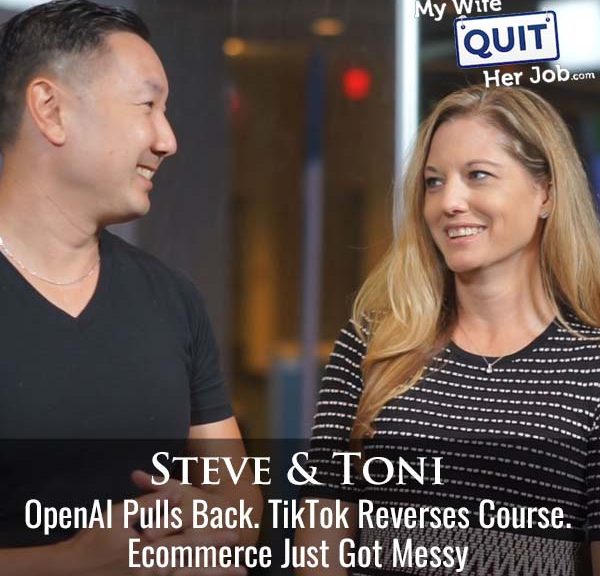
Micro drama apps are short vertical video apps that release 60-episode series in three-minute clips, then charge viewers a stream of tiny micropayments (often 10 to 50 cents per episode) to unlock each cliffhanger. The category pulled in over $7 billion in China last year and is now spreading through American TikTok feeds through apps like Real Shorts and Drama Box. For ecommerce sellers and info-product creators, the model matters because it validates a new addictive spend pattern that is easier to trigger than one big course purchase or one big cart checkout.
In episode 632 of the My Wife Quit Her Job podcast, I sat down with my co-host Toni to break down how these apps work, why viewers routinely spend $30 to $40 without noticing, and how the same psychology can sell physical products, sponsored placements, or short lessons priced in tokens.
This post covers the micro drama app business model, the exact behavioral tricks that make it work, product-placement and sponsorship opportunities for brands, and a Shopify-based playbook for ecommerce and info sellers who want to test a token-priced content funnel.
Key takeaways
- Micro drama apps generated over $7 billion in China in 2025, led by Drama Box (over $120 million in a single recent quarter) and Real Shorts.
- Episodes run about three minutes, end on cliffhangers, and are unlocked with virtual tokens bought in $5 packs, which decouples the spend from real dollars.
- Production cost is low (often a couple hundred thousand dollars per series), but total viewer spend commonly reaches $30 to $40 per completed drama.
- The distribution loop is TikTok clip as ad, app install, token purchase, episode-by-episode micropayments.
- Ecommerce brands can slot in through product placement inside a hit drama, sponsored episodes, or by using the format themselves to sell physical products and info products.
- Info creators can replicate the model with a Shopify store, gift cards renamed as tokens, and one lesson priced per token per product.
What are micro drama apps and how do they work?
Micro drama apps are mobile apps that stream serialized vertical video shows, typically 60 to 100 episodes of about three minutes each, that end every episode on a cliffhanger and require in-app micropayments to keep watching. The dramas themselves are cheap, cheesy, and formulaic (secret princesses, kung fu revenge arcs, ugly-duckling makeovers), aimed largely at women 35 and up but also pulling in nostalgia viewers for genre content like kung fu.
The apps get discovered on TikTok. A brand posts free clips as an ad, viewers get hooked, and the only way to see the rest of the story is to install the app and start paying. Real Shorts and Drama Box are two of the biggest platforms driving that TikTok-to-app pipeline in the US right now.
Once inside the app, viewers do not pay in dollars. They buy virtual coins or tokens, usually in $5 bundles, then spend those tokens on individual episodes. That token layer is the single most important design choice in the whole model.
How much do micro drama apps make and who are the biggest players?
Chinese micro drama apps generated over $7 billion in revenue in 2025, and the category is early enough in the US that no single US winner has emerged, but Drama Box reported over $120 million in a single recent quarter and Real Shorts is scaling fast on TikTok. Individual series cost roughly a couple hundred thousand dollars to produce, so unit economics are attractive even at modest install and ARPU numbers.
The reason the numbers keep climbing is spend behavior, not production cost. Viewers who set out to watch “one more episode” of a 60-episode kung fu drama routinely spend $30 to $40 per series through a stream of nickel and quarter transactions. The US market usually lags China by 12 to 24 months on this kind of consumer pattern, which is why the model is worth studying now instead of after it lands.
Why the micropayment token model is so effective
The token model works because it separates the moment of spending from the moment of watching. When a viewer buys $5 of tokens, the pain of paying happens once. After that, every 10-cent or 50-cent episode unlock feels like using credits, not like handing over money.
This is the exact same pattern that Roblox and Candy Crush use, and it is why kids can rack up $72 in a single sitting without noticing. It is also why Pokemon Go players who would balk at an $80 game will happily spend hundreds of dollars on $0.99 add-ons over time.
Three-minute episodes reinforce the pattern. Each unlock is small, the cliffhanger creates immediate urgency, and the “just one more” impulse is answered by a fast, low-friction charge. The result is a slot-machine loop where the viewer is many transactions deep before they check the total.
How product placement and sponsorship work in micro dramas
Once a micro drama gets a large enough audience, its creators can sell in-story product placement and full-episode sponsorships, giving brands a second revenue stream layered on top of viewer micropayments. A skin cream in a makeover scene, a beverage in a kung fu training montage, or a hero prop with a “buy” pop-over are all in play as brands start to work the format.
Right now there is no reliable in-app buy button, because the point of the app is to keep users inside the paid-episode loop. In practice most conversion happens on the free TikTok clip layer, where sellers can send viewers to a product page, a TikTok Shop listing, or an app install with a different call to action per clip.
Expect that to change quickly. Micro drama apps have every incentive to add native shopping links so they can take a cut of product sales the way they already take a cut of episode unlocks.
Can ecommerce sellers use micro dramas as a paid ad channel?
Micro dramas are viable for ecommerce brands today mostly as a product-placement or full-episode sponsorship channel, not as a self-serve ad platform like Meta or TikTok Ads. If you sell a physical product where a hero moment on-screen would drive intent (beauty, wellness, kitchen, novelty), sponsoring an episode inside a hit drama can put your product in front of a very engaged, in-flow audience.
The category should slot into a diversified ad mix over the next couple of years the same way influencer sponsorships did, becoming another accepted channel alongside Google, Meta, TikTok, and paid influencer content. Brands that already have creative built for vertical short-form video are best positioned to plug in early.
Two cautions. First, measurement is still rough, because the app itself often does not have a buy button, so you have to attribute lift indirectly (branded search, post-purchase surveys, promo codes). Second, US subscription fatigue is real, and micro drama apps compound it, so read audience receptivity before betting a large budget.
How info product creators can copy the micro drama playbook
Info creators can borrow the micro drama model by breaking a course into 60-second to three-minute nuggets, giving the first few away on TikTok, and charging tokens to unlock each of the rest. Instead of selling one $500 course, you sell hundreds of $0.50 to $1 micro-lessons out of a token wallet.
Toni and I sketched this out live on the episode as our own next experiment. The mechanics are simpler than they sound because you do not need a bespoke app.
Step 1: Break your course into 60-second cliffhanger nuggets
Cut your existing course or expertise into single-tip units of 60 seconds to three minutes each, and end every clip mid-thought so the viewer has to unlock the next one to get the payoff. This is the same structural discipline micro drama writers use, and it is how you get the “just one more” impulse into an info-product feed.
Toni and I already have a six-day free mini course on ecommerce that could be re-cut this way. The 10 videos become dozens of short cliffhangers, each targeting one specific search query or one specific pain point.
Step 2: Give the first 5 nuggets away free on TikTok
Post the first block of nuggets as free TikToks, ordered as a logical progression, and use them as your discovery layer. Free clips are your ad; they need to teach real value so viewers trust that the paid nuggets are worth token spend.
The clips should tag the topic aggressively (ecommerce, product launches, ads) so the algorithm can push them at buyer-intent viewers. Aim for one hero clip that does most of the heavy lifting and pin it.
Step 3: Send viewers to a Shopify store with tokens instead of dollars
Stand up a plain Shopify store where every product is a single lesson video and prices are shown in tokens, using Shopify gift cards renamed as tokens to handle the wallet layer. Customers buy tokens in $5 increments, then spend them one lesson at a time.
Every payment processor and every membership plugin can do this today. WordPress with a membership plugin works, Shopify with gift cards works, even a lightweight custom build with Stripe works. The token relabeling is the important part, because it is what decouples spending from watching.
Step 4: Layer sponsorships once your audience is large enough
Once the token audience is real, sell full-episode sponsorships to ecommerce brands the way podcasts sell mid-roll ads, and take a flat $500 to $1,000 per sponsored lesson. This doubles revenue per view without asking your audience to pay more.
The audience is pre-qualified (buyer-intent info consumers), so a relevant tool, service, or physical product can convert well from a single dedicated placement. Keep sponsorships in-story so they inherit the same low-friction attention the paid lesson does.
Will viewers get annoyed at being nickel-and-dimed for information?
Some will, but small unit price and clear value neutralize most of the complaints. A viewer who feels ripped off by a 50-cent lesson has 50 cents at stake, which is well below the threshold that drives refund requests or bad reviews. Compare that to a $97 course, where the same “is this any good?” question becomes a real purchase-decision blocker.
The framing that keeps this on the right side is that every nugget has to be genuinely useful. If the free TikToks are strong and the paid nuggets deliver a real tip each, the token model reads as a fair pay-as-you-go tier, not as a manipulation.
At Seller Summit, attendees regularly tell me that one tip they picked up at the event paid for the $800 ticket. If that same tip lands from a 10-cent nugget, no one is asking for their dime back.
Micro drama apps vs traditional content monetization
| Model | Typical spend per user | Payment moment | Content chunk | Distribution |
|---|---|---|---|---|
| Micro drama app (tokens) | $30 to $40 per series | Once, at token purchase | 3-minute episode | TikTok clip to app install |
| Streaming subscription (Netflix) | $180 per year | Monthly recurring | Full episode or movie | App and web direct |
| Course (one-time) | $97 to $2,000+ | Once, upfront | Full curriculum | Landing page, webinar, ads |
| Membership site | $20 to $50 per month | Monthly recurring | Growing library | Content marketing, email |
| YouTube monetization | Nothing direct from viewer | Advertiser-paid CPMs | Long-form video | YouTube search and recs |
Frequently asked questions
What is a micro drama app?
A micro drama app is a mobile app that streams serialized vertical video shows in three-minute episodes, ending each one on a cliffhanger and unlocking the next one with an in-app micropayment. Real Shorts and Drama Box are two of the largest examples.
How much money do micro drama apps make?
Micro drama apps generated over $7 billion in revenue in China in 2025, and Drama Box alone reported more than $120 million in a single recent quarter. Individual viewers routinely spend $30 to $40 to finish one 60-episode series.
Why do people spend so much on micro drama apps?
Viewers buy virtual tokens in $5 packs, then unlock episodes at 10 to 50 cents each, which separates the moment of spending from the moment of watching. Combined with three-minute cliffhangers, the loop mirrors the pattern that drives spend in Candy Crush, Roblox, and Pokemon Go.
Can ecommerce brands advertise inside micro dramas?
Yes, through product placement inside a hit drama or full-episode sponsorships, similar to how brands work with influencer channels today. Self-serve ad units inside the apps are not yet mainstream, so most brand deals are negotiated directly with the drama’s creators or platform.
How can I build my own micro drama style funnel for my own content?
Cut your content into 60-second to three-minute cliffhanger nuggets, give the first few away free on TikTok, and send viewers to a Shopify store (or membership plugin) where every product is one lesson priced in tokens rather than dollars. Use Shopify gift cards to handle the token wallet.
Will viewers complain about paying for every episode or lesson?
Some will, but at 10 to 50 cents per unlock the complaint volume stays low, because the individual amount is well under the threshold that drives refund requests. The bigger risk is content quality, so every paid nugget has to deliver a real payoff.
Is the micro drama app trend coming to the United States?
It is already here. Real Shorts and Drama Box are running on US app stores, most micro drama ads on American TikTok feeds point to one of them, and Drama Box’s $120 million quarter is largely US-driven.
I Need Your Help
If you enjoyed listening to this podcast, then please support me with a review on Apple Podcasts. It's easy and takes 1 minute! Just click here to head to Apple Podcasts and leave an honest rating and review of the podcast. Every review helps!
Ready To Get Serious About Starting An Online Business?
If you are really considering starting your own online business, then you have to check out my free mini course on How To Create A Niche Online Store In 5 Easy Steps.
In this 6 day mini course, I reveal the steps that my wife and I took to earn 100 thousand dollars in the span of just a year. Best of all, it's absolutely free!