Audio

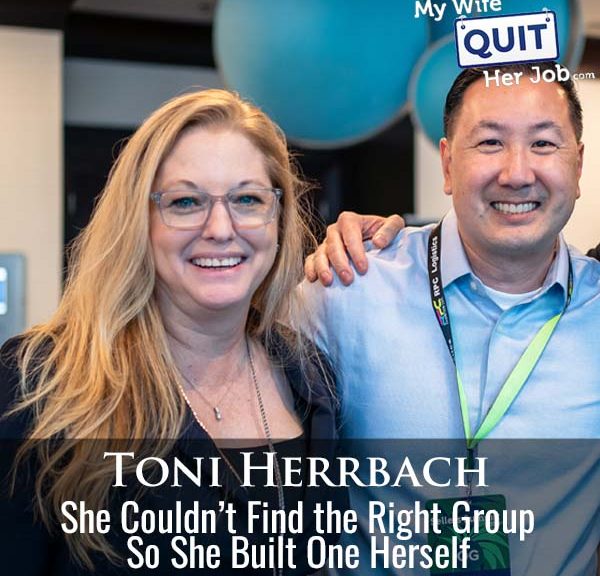
600: She Couldn’t Find Her Tribe So She Built One From Scratch. Here’s How With Toni Herrbach

600: She Couldn’t Find the Right Group So She Built One Herself With Toni Herrbach

The fastest way to plan a paid community launch in 2026 is to use ChatGPT as a strategist rather than a writer. My co-host Toni Herrbach and her partner Liz Saunders spent months noodling on a mastermind for female founders and got stuck on positioning. One six-hour flight of ChatGPT prompting later, they had five content pillars, a 30-day video calendar, three price-point ladders with sales positioning, a lead-magnet quiz, TikTok scripts, and an actual sales-page draft.

The tool that turned six months of “we should” into a launchable business was not a course, a consultant, or a template. It was a chat window used the right way. The rest of this post walks through exactly what they did, the prompts that produced the biggest breakthroughs, the platform decision (Circle vs Discord vs Slack), the pricing math, and the community-management pitfalls Toni and I have both hit the hard way.

Key takeaways

  • ChatGPT is best used as a strategist, not a writer. Feed it your ideas and let it organize, structure, and pressure-test them.
  • A single prompt with brand, audience, goal, tone, and an uploaded lead magnet produced Toni’s five content pillars, cadence, and 30-day calendar in one session.
  • Community platform pick: Circle for non-technical founders ($85/month base), Discord for coding-friendly builders, Slack ruled out on per-user pricing.
  • Price-point strategy for a new paid community: start at $9/month, use $27 and $47 tiers as pricing anchors, plan the price-raise messaging upfront.
  • Quiz lead magnets convert because they trade an email for immediate self-knowledge. Toni’s Type A quiz was five questions and auto-tagged subscribers by result.
  • Community moderation is the single hardest and most important job. One bad member can decay the whole group.
  • Paid communities beat email and social for reach because deliverability and algorithm reach keep degrading.

Why use ChatGPT to plan a business (not just write for it)

ChatGPT’s highest-value use case for a founder is strategic organization: taking six months of scattered ideas and turning them into a sequenced plan you can actually execute. That is different from using it to write blog posts, and it is the use case Toni and Liz landed on that finally unblocked their launch.

The unlock is that ChatGPT can hold your business context in a single conversation and iterate against it. Feed it who you are, what you want to build, who it is for, and any existing assets (a lead magnet, a workbook, a rough draft), and every subsequent prompt gets answered in that context.

Toni’s session covered five distinct workstreams in one afternoon: positioning, content pillars, cadence, pricing tiers, lead magnet design, TikTok scripts, a long-form video script, and sales-page copy. Doing that with a human strategist would have cost thousands and taken a month.

The exact ChatGPT prompt that produced the launch plan

The prompt that broke the logjam was specific about brand, audience, goal, format, and the sticking point. Here is what Toni actually typed:

“I’m starting a new business. It’s called Type A and the purpose is to help female founders reach their goals and live a happier, more fulfilling life. We created a lead magnet to help them achieve their goals, but want to make video content long form and short form to build an audience. We are struggling to figure out what we should be making the videos about. Can you help? I will upload the workbook to make it easier on you.”

She then uploaded the 90-day goal-setting workbook Type A uses as a lead magnet. ChatGPT responded with the brand summary, the audience (“ambitious female founders”), the tone (“empowering, strategic, authentic”), and five content pillars: mindset and personal growth, goal setting and productivity, business strategy for female founders, fulfillment and lifestyle, and personal stories/behind-the-scenes.

The follow-up prompts that built out the rest of the plan: “Can you give me a 30-day video content calendar?” then “How do we make money from this?” then “What price points would work for a paid community with weekly accountability?” then “If I start at $9 but want to raise the price, how do I position that?” then “Write my sales page and welcome email sequence.”

Choosing a paid community platform: Circle vs Discord vs Slack

Circle wins for non-technical founders, Discord wins for teams willing to code, and Slack is ruled out on cost. That is the shortlist Toni evaluated, and here is how each stacks up for a paid community launching from scratch:

PlatformBase costBest forTradeoff
Circle~$85/month (base)Non-technical founders who want polished UX out of the boxLess customizable, no custom bots
DiscordFree (server is free, bots and add-ons vary)Founders with technical chops who want bots, custom moderation, voice roomsSteep learning curve for members; setup requires time
SlackPer-active-user pricingSmall internal teams with predictable headcountCost scales linearly with community size, kills the economics
Facebook GroupsFreeCommunities already deeply invested in FacebookAlgorithm hides posts, spam is relentless, younger members do not use it

The core insight from Liz’s experience: she originally set up Fluencer Fruit’s community in Discord, hit a month of friction, and moved to Circle a couple of weeks later. Discord can do more, but “can do more” only helps if the person setting it up is comfortable coding bots and configuring channels.

How to price a paid community from scratch

Start at $9 a month and use higher tiers ($27 and $47) as pricing anchors. Toni and Liz took ChatGPT through the pricing exercise and it delivered the numbers along with positioning copy for each tier: for $9, “less than a fancy coffee and a croissant”; for $27, adds specific accountability rituals; for $47, adds hot-seat coaching or 1-on-1 elements.

The math is favorable at $9/month even with a small membership base. Circle’s ~$85 base plan is covered by 10 members. Everything above that is contribution to the founders’ time, which matters because a real community takes real hours to moderate.

The critical extra step Toni built into the plan: ask ChatGPT how to raise prices later. The moment you launch at $9, you need a message ready for the eventual bump (“early founding members lock in $9 forever, new members pay $19”) so you are not paralyzed six months in.

The Type A quiz: how to build a quiz lead magnet with AI

A five-question quiz that assigns each respondent an archetype is one of the highest-converting lead magnets on the internet because it trades an email for immediate self-knowledge. Toni’s quiz assigns each respondent one of three Type A archetypes:

  • The Over-Planner. Color-coded calendar, no momentum. Uses planning to avoid taking messy action.
  • The Avoider. Busy on everything except the thing that matters. Jumps task-to-task hoping it will work out.
  • The Hustler. Always busy, rarely fulfilled. Moves fast, burns out, never pauses to evaluate.

The build path was faster than expected. Toni prompted ChatGPT for a lead-magnet idea, ChatGPT suggested the quiz, then offered “do you want me to build it for you?” ChatGPT drafted the five questions and scoring; Liz built the actual quiz page. Once someone submits, they get their archetype instantly, their email is tagged in ConvertKit with their archetype, and the tag follows them into the community so the archetype appears next to their profile.

The bigger point for any store owner or course creator: a quiz used to require a Typeform subscription, a designer, and an integration project. It is now a few hours of prompting and a small amount of connective glue.

Content pillars and cadence for a new community

The content cadence ChatGPT produced for Type A is a defensible baseline for any new community: one long-form piece per week, three to five short-form pieces per week, one weekly newsletter, one monthly webinar. This is what the industry roughly considers standard, and it is a reasonable place to start until you have data on what your audience actually engages with.

The specific split by pillar for Type A:

  • Mindset and personal growth. Confidence, imposter syndrome, decision-making under uncertainty.
  • Goal setting and productivity. Direct tie to the 90-day goal-setting workbook lead magnet.
  • Business strategy for female founders. Specifics that acknowledge the different context female founders operate in.
  • Fulfillment and lifestyle. The harmony question, family responsibility loads, energy management.
  • Personal stories and behind-the-scenes. “Watch me build this” documentation of the community launch itself.

The behind-the-scenes pillar is worth calling out. Documenting the build of the community in public serves two purposes: it produces content and it demonstrates trust because the audience sees the actual work being done.

The TikTok script ChatGPT wrote (first draft, unedited)

Here is the first draft ChatGPT produced for a TikTok promoting Type A’s $9 community, with no editing:

“Why you feel stuck even though your to-do list is full. If you’re a type A woman with 47 things on your to-do list and still feel stuck, here’s why. You don’t have a clarity problem, you have a focus problem. Most high achieving women make plans like CEOs, but execute like burned-out interns. Because without clear priority structure and accountability, your brain stays in chaos mode. What you actually need is one weekly check-in, one goal at a time, one group of women who get it. That’s why I built Type A Circle, a $9 a month community with weekly office hours for women like you. One goal, one priority, big momentum. Links in the bio if you’re ready to stop spinning and start winning.”

That is publish-ready copy from a first draft. The reason it works: ChatGPT had the full brand context, the audience avatar, the price, the format, and the call-to-action already in the conversation. Prompt engineering is really just setup engineering.

Why paid communities beat email and social for reach

Paid communities are becoming the most reliable owned distribution channel because email deliverability is degrading, SMS inbox reach is fragmenting, and Facebook groups have been eaten by algorithm suppression and spam. If someone joins a Discord or Circle server and installs the app, notifications reach them directly.

The loyalty math is stronger too. Someone who has already paid $9 a month is dramatically more likely to buy your next product, join your next event, or upgrade to a higher tier than someone who signed up for your free email list. The trust is pre-established.

The trade-off is time. A real community requires active moderation, active facilitation, and someone who wakes up thinking about member experience. Toni and Liz set a revenue floor of $1M for their private mastermind tier for exactly this reason: below that, the hours you spend on the community steal from higher-return work.

How to moderate a paid community without letting it decay

Community moderation is the hardest job in the whole build, and one bad member can decay the entire experience. Toni and Liz removed a beta mastermind member early on when it was clear she was not a fit (“great person, wrong for this group”) and refunded her money. That kind of early enforcement is what preserves the culture.

My own experience is the cautionary tale. My old My Wife Quit Her Job Facebook group grew to about 15,000 members, then decayed into a spam fest as promoters flooded it. Even with every single post requiring approval today, the group is functionally dead because the culture is gone.

The rules that seem to hold up:

  • Write community guidelines before launch. Include what gets you removed.
  • Enforce them from member one. Refund and remove misfits early, not after they have posted 50 times.
  • Never rely on volunteer moderation as the group scales. Budget for a paid moderator once you cross a few hundred members.
  • Use AI to help screen for promotional content. A bot that reads every message and flags likely spam is now trivial to build.

What is the best AI tool for founders: ChatGPT vs Claude?

Toni used ChatGPT and Liz used Claude for the same session, and the practical takeaway was that it did not matter much. Both did the strategic-organization job well. Pick whichever interface you prefer, and pick one so your business context accumulates in a single tool.

The larger point: the return on getting good at prompting one AI tool with real business context is dramatically higher than switching between three. Depth of context beats breadth of tooling for founder work.

Frequently asked questions

How do I use ChatGPT to plan a business launch?

Use ChatGPT as a strategist rather than a writer. Start with a single prompt that includes your brand, audience, goal, tone, and any existing assets (upload your lead magnet or workbook). Then iterate through positioning, content pillars, cadence, pricing, lead magnets, and sales copy across the same conversation so ChatGPT keeps your business context.

What platform is best for a paid community: Circle, Discord, or Slack?

Circle is best for non-technical founders because it delivers polished UX out of the box (~$85/month base). Discord is best for founders comfortable coding bots and configuring channels. Slack is generally too expensive at scale because it charges per active user.

What price should I charge for a new paid community?

Start at $9 a month and use $27 and $47 tiers as anchors above it. $9 is low enough to remove friction on first purchase and only 10 members covers a Circle base plan. Plan the price-increase message before launch so you are not stuck at $9 forever.

What is the best lead magnet for a paid community?

A five-question quiz that assigns each respondent an archetype is one of the highest-converting lead magnets available. It trades an email for immediate self-knowledge, tags the subscriber by result for downstream personalization, and gives your community a shared vocabulary (archetypes) from day one.

How much content should a new paid community publish per week?

Roughly one long-form piece per week, three to five short-form pieces per week, one weekly newsletter, and one monthly webinar. That is the ChatGPT-recommended cadence and matches what most established creators run. Adjust down if it is not sustainable; do not adjust up until you have real engagement data.

Why is community moderation so important?

One bad member can decay the entire community’s culture and drive out the members you most want to keep. Write guidelines before launch, remove misfits early with a refund rather than after they post 50 times, and budget for paid moderation once you cross a few hundred members.

Are Facebook groups still a viable paid community platform?

Facebook groups are functionally dead for most paid communities. Algorithmic suppression hides posts, spam is relentless, and younger audiences do not use Facebook. Even with every post requiring approval, the reach and engagement math no longer works. Circle, Discord, and Slack (for small groups) are the practical alternatives.

What is Type A Mastermind?

Type A Mastermind is Toni Herrbach and Liz Saunders’ new paid community for female founders. It combines weekly accountability, a private community, and a monthly rhythm designed around the Type A archetype. You can take the Type A quiz to see which archetype you are (Over-Planner, Avoider, or Hustler) at typeamastermind.com.

I Need Your Help

If you enjoyed listening to this podcast, then please support me with a review on Apple Podcasts. It's easy and takes 1 minute! Just click here to head to Apple Podcasts and leave an honest rating and review of the podcast. Every review helps!

Ready To Get Serious About Starting An Online Business?


If you are really considering starting your own online business, then you have to check out my free mini course on How To Create A Niche Online Store In 5 Easy Steps.

In this 6 day mini course, I reveal the steps that my wife and I took to earn 100 thousand dollars in the span of just a year. Best of all, it's absolutely free!

599: Ranking In The Age Of Chatgpt: What Google Isn’t Telling You With Jeff Oxford

599: Ranking in the Age of ChatGPT: What Google Isn’t Telling You With Jeff Oxford

The short answer to “how do I do SEO in the age of ChatGPT” is that the fundamentals still work, but the payoff has moved. Google still drives roughly 98% of search share in 2025 and most of the organic revenue for e-commerce, so classic optimization on category pages, backlinks, and topical authority still pays. What has changed is that informational blog traffic has collapsed under AI Overviews (down 34-36% per Ahrefs and TechCrunch), and a new prize has opened up: getting your products and brand cited inside ChatGPT, Perplexity, and Google AI mode.

I got into this on the podcast with Jeff Oxford, who runs the e-commerce SEO agency 180 Marketing and spoke at my Sellers Summit conference this year. Jeff has been auditing what actually gets cited by LLMs across his e-commerce client base, and his answer is not what most SEO blogs are telling you. The rest of this post walks through what still works, what to stop doing, the specific content formats that get pulled into AI answers, and how to future-proof an e-commerce site for a search world that no longer runs on 10 blue links.

Below is the full breakdown from the episode, plus the tactical playbook for ranking a product page today.

Key takeaways

  • Google search is still the dominant traffic driver for e-commerce as of 2025. ChatGPT is taking maybe 1-2% of query share but growing fast.
  • Informational SEO is effectively dead for standalone bloggers. 99% of keywords that trigger AI Overviews are informational, and click-through on those pages is down 34-36%.
  • Transactional and commercial keywords (buy linen napkins, best protein powder for beginners) still convert. AI Overviews rarely appear on them.
  • The two content types worth creating on an e-commerce site today are a buyer’s guide (best-of roundup) and a glossary. Both feed topical authority and get cited by LLMs.
  • Backlinks still correlate strongly with Google rankings. For LLM citations, the signal shifts from links to brand mentions on sources ChatGPT already trusts.
  • LLMs favor Wikipedia-style writing: matter-of-fact, definitional, one idea per section. Storytelling reads great for humans and gets skipped by extractors.
  • Author entities matter more. Links from a real named person with a Google knowledge panel carry more weight than links from faceless blogs.

What is the current state of SEO in 2025?

The current state of SEO is that Google is still the 800-pound gorilla for e-commerce traffic, but AI Overviews and ChatGPT have gutted the informational side of the funnel. Jeff has looked at analytics across dozens of e-commerce accounts and organic search is still the number one driver by a large margin. Referrals from AI assistants are growing, but from a tiny base.

The split matters. Google itself is fine for transactional queries. The category that got killed is standalone content publishing, where a blog would rank for “how to X” and monetize with AdSense or affiliate links.

Directionally, ChatGPT usage keeps rising, referral traffic from LLMs is trending up, and Google is publicly testing AI mode. The question is not whether search changes, it is how much and how fast.

How much traffic have AI Overviews killed for publishers?

AI Overviews have cut click-through to publisher pages by 34-36% on affected queries. Ahrefs measured a 34% drop when an AI Overview appears on a results page, and a TechCrunch report cited a 36% overall traffic decline for publishers driven by Google AI features. Those two numbers are the same story from two directions.

The damage is concentrated. In an Ahrefs study of roughly one million keywords, 99% of the queries that trigger AI Overviews were informational (how does X work, what is X). Transactional queries like “buy linen napkins” almost never trigger an AI Overview.

Practical read for an e-commerce site: your product and category pages are largely safe. Your top-of-funnel blog posts probably are not.

Should e-commerce stores still blog?

Most e-commerce stores should stop blogging for traffic and instead publish two things: a buyer’s guide and a glossary. Jeff estimates that on 80% of the e-commerce sites he audits, blogging is not a positive-ROI exercise anymore.

The exception is content that sits in the research phase of the funnel. “Best protein powder for beginners” or “linen vs cotton napkins for a dinner party” still converts because the searcher is close to a purchase. Even those get AI Overviews sometimes, so you want the content to double as citation bait for LLMs.

Top-of-funnel definitional content (“what is protein powder”) is dead weight. If nobody clicks and nobody buys, ranking number one for it is worth zero.

What content formats get cited by ChatGPT and AI Overviews?

Three content formats consistently get pulled into ChatGPT answers and Google AI Overviews: specific “best of” roundups, glossaries, and Wikipedia-style definitional pages. All three share the same trait, which is that they are easy for a language model to extract cleanly.

Jeff’s case study on glossaries is the most striking one from the episode. His SEO director in Maine built a website for a kids’ dance studio with a deeply detailed glossary covering positions, styles, tempo, rhythm, and dance terminology. The site has a domain rating under 1 and zero backlinks.

Within seven days of launch, that glossary was cited in Google AI Overviews and pulled as a ChatGPT source for dance terms. Comprehensive, well-structured, matter-of-fact content beat pure domain authority.

For a product roundup, the same rule applies with a specificity twist. “Best protein powder” is a battle you lose. “Best protein powder for beginner male age 37” is the shape of a real ChatGPT prompt, and that is what gets pulled.

How should I write content so LLMs will cite it?

To get cited by LLMs, write in Wikipedia style: definitional, one fact per sentence, tightly structured, easy to chunk. LLMs are not evaluating writing quality the way a human editor does. They are looking for cleanly extractable claims that pair a subject with a specific attribute.

That means storytelling and anecdote-heavy writing, which reads well for humans and builds brand affinity, actually hurts extraction. If your product review starts with a 400-word origin story before it gets to the specs, an LLM will skip the story and often skip the review.

The trick is to layer both. Lead each section with the extractable answer in one clean sentence, then add the narrative context underneath for the reader. That way the machine gets its chunk and the human gets your voice.

Do backlinks still matter for Google in 2025?

Backlinks still matter a great deal for Google rankings in 2025. A recent Ahrefs study found that backlinks to a page remain one of the highest-correlated ranking factors, and Jeff sees the same pattern across every competitive e-commerce niche he audits.

The nuance is where the link points and where it lives. Relevance beats domain rating: a link from a real weightlifting blog to a protein-powder page outperforms a link from a high-DR generic site. And user-experience signals like time on site and bounce rate only kick in after you already rank on page one.

The order of operations is unchanged. Links get you into the competition. UX, price, and product win among the competitors.

Do backlinks matter for ChatGPT and AI Overviews?

Backlinks matter far less for ChatGPT and AI Overviews than they do for Google. LLMs weight the thoroughness and structure of content much more heavily than the link graph. The dance-studio glossary that ranked in AI Overviews within seven days had zero backlinks.

What replaces the backlink for AI is the brand mention. If your product name appears in a source that ChatGPT already trusts (Forbes, Bodybuilding.com, a well-known niche publication), the mention itself feeds the citation. The sentiment and context around the mention matter more than whether it is hyperlinked.

The practical move is to reverse-engineer the sources. Search your target query in ChatGPT, note which publications get cited, and pitch those specific publications to include your product.

Google SEO vs LLM citation: how the tactics differ

ElementGoogle SEOLLM citation (ChatGPT, Perplexity, AI Overviews)
Primary signalBacklinks, on-page keyword optimization, technical healthThoroughness, structure, brand mentions on trusted sources
Winning content typeCategory pages, product pages, transactional keywordsSpecific buyer’s guides, glossaries, definitional roundups
Ideal writing styleReads for humans, well-optimizedWikipedia-style, one clean fact per sentence
Link valueHigh. Backlinks are still a top-correlated ranking factorLow. Brand mentions and content depth outweigh links
Author signalGrowing. Google trusts named authors with knowledge panelsMeaningful. Named entities help models recognize expertise
MeasurabilitySearch Console, rank trackers, referral trafficManual prompt audits. Same prompt returns different answers each time
Where the money is (2025)Still the vast majority of e-commerce organic revenue1-2% of search share and growing. Long-term bet

Step-by-step: how to rank a product category page in 2025

The playbook below is the one Jeff walks new e-commerce clients through when they want to rank a competitive category term. Using “protein powder” as the example, here is the sequence.

Step 1: Pick the right page type by looking at what Google already ranks

Search the target keyword in Google and inspect the top 10 results. If Google is showing category pages, push a category page. If it is showing product pages, push a product page. Do not fight the intent.

For “protein powder,” Google mostly ranks category pages, so a category page is what to optimize.

Step 2: Put the keyword in the title tag, meta description, and H1

Lead the title tag with the keyword phrase because Google weights the first words most heavily. The meta description is not a direct ranking factor, treat it as ad copy: mention the keyword once (Google bolds it), include a unique selling point, and add a call to action to lift click-through.

The H1 on the page should contain the keyword in a natural, readable phrase.

Step 3: Add a few hundred words of user-first content to the category page

Write two to three paragraphs that answer the real questions a buyer would have before purchasing. Jeff’s prompt for this in ChatGPT is: “What are common questions someone might have before purchasing protein powder? Now create a category description that answers all these questions in an easy way a beginner would understand.”

Keep it above the fold as a two- or three-line preview with a “read more” link, then expand to the full text. That preserves the visual space for products.

Step 4: Include related keywords Google associates with the term

Search the target keyword in Google Image Search and note the pill filters at the top. For protein powder those are muscle, whey, chocolate, weight gain, nutrition, body, vanilla, gym. Weave the applicable ones into the category copy so Google sees full topical coverage.

Step 5: Interlink homepage, blog posts, and products to the category page

Add an internal link from the homepage to the category. Any blog posts (past or future) that are relevant should link in with descriptive anchor text. Product pages should link back up to the category through breadcrumbs.

Internal linking is one of the most under-used levers in e-commerce SEO. It is free and it works.

Step 6: Build backlinks from real, relevant, non-spam sites

Send free product to real bloggers in your niche for review. Guest-post on sites where the top pages and top keywords in Ahrefs match the site’s stated topic (a common test to catch fake-authority sites that inflate traffic with spam queries).

Jeff’s agency built an internal tool that pulls domain rating, year-over-year traffic (to catch Google penalties), takes a screenshot, feeds it to AI for a visual scam check, and compares top pages against the site’s declared focus. Most agencies skip this screening and buy garbage links.

Step 7: Add a buyer’s guide and a glossary elsewhere on the site

Once the category page is optimized, publish one or two specific buyer’s guides (“Best protein powders for beginners,” “Best whey protein for cutting”) and a glossary of industry terms. These build topical authority for Google and function as citation bait for LLMs.

This is the only content besides category and product pages Jeff recommends creating today.

Should I hire a PR firm for brand mentions instead of backlinks?

Hiring a PR firm can be worth it for e-commerce brands in high-search-volume niches where the sources cited by ChatGPT are large publications (Forbes, Bodybuilding.com, major consumer sites) that SEO agencies cannot access. Most SEO shops do not have the pitching relationships to land placements on top-tier publications, and PR firms do.

The economics only work when your keyword volume is real. If your top terms get a few thousand searches a month, PR pays back. If your terms get a few hundred, the math does not.

The upside is that a placement earned through PR feeds both games at once: Google still values the backlink, and ChatGPT reads the brand mention as a trust signal.

Google AI mode: how will it change SEO?

Google AI mode is currently a rollout test that turns the Google homepage into a ChatGPT-style conversational interface. It is not yet the default and Google has not committed to whether it will be. The next 12 months are the tell.

The catch nobody talks about is cost. Serving an AI-generated result reportedly takes about 10 times the processing cost of serving a traditional 10-blue-link result. Google’s ad revenue model, which contributes over half of the company’s income, has no proven monetization path in AI mode yet.

Google is not going to eat that gap forever. Expect shopping ads and sponsored placements to appear inside AI mode long before it becomes the default.

The role of video content and YouTube in SEO and AI

Video’s direct effect on traditional SEO is minimal. Embedding a video on a page can lift time on site and drop bounce rate, which are secondary ranking signals, and that is about the extent of the SEO benefit.

The bigger role for video is as training and retrieval fodder for AI. Google trains Gemini heavily on the YouTube corpus, and ChatGPT pulls transcripts and captions when they are indexed. A YouTube video with a clean transcript can end up cited in an LLM answer.

If you already produce video, transcribe it, publish the transcript on your site, and let it double as extractable content.

How to future-proof an e-commerce site for AI-driven search

Future-proofing an e-commerce site for AI-driven search comes down to four moves. Invest in UI/UX because Google is weighing engagement signals more heavily every year. Build brand: press mentions, named authors, a real About page, and a Google knowledge panel for the founder if possible.

Publish the two content types LLMs cite (buyer’s guides and a glossary) instead of general blog posts. Pursue mentions on the specific publications that get quoted in ChatGPT for your target queries, not generic outreach.

The through-line is that the work looks like SEO but the payoff is bigger. Every one of these moves also feeds LLM citations, which is where the traffic is heading.

Frequently asked questions

Is SEO dead in the age of ChatGPT?

SEO is alive for e-commerce and largely dead for standalone informational bloggers. Google still drives the vast majority of e-commerce organic traffic, and transactional keywords (buy X, best X for Y) rarely trigger AI Overviews. The parts of SEO that convert are still healthy.

How much do AI Overviews reduce click-through rate?

AI Overviews reduce click-through to organic results by about 34-36% on the affected queries. Ahrefs measured a 34% drop and TechCrunch reported a 36% overall traffic decline for publishers. Roughly 99% of the affected queries are informational, not transactional.

What content should an e-commerce store publish in 2025?

An e-commerce store should publish optimized category and product pages, one or two specific buyer’s guides (best X for Y), and a glossary of industry terms. General blog content is no longer worth the effort for most e-commerce sites, per Jeff Oxford’s audits of 80% of his client base.

Do backlinks still matter for ranking in Google?

Backlinks still matter and remain one of the highest-correlated ranking factors in Ahrefs’ 2025 studies. The nuance is relevance: a link from a niche-relevant site outweighs a link from a higher-authority generic site. UX signals like time on site only kick in after you rank on page one.

How do I get my products cited in ChatGPT?

Search your target query in ChatGPT, note which publications and roundups get cited, and pitch your product to those specific sources. Publishing your own specific buyer’s guide and a glossary on your site also increases the chance of direct citation. Wikipedia-style, definitional writing gets extracted more reliably than storytelling.

Is a glossary really worth building for SEO?

A glossary is worth building because it feeds topical authority for Google and gets cited by LLMs at a disproportionately high rate. Jeff’s example of a brand-new dance-studio site with a domain rating under 1 that appeared in AI Overviews within seven days of launching a glossary illustrates how strong the signal is. AI is very good at defining terms, so a glossary is a low-risk use of AI-assisted content creation.

How do I track whether my content is cited by ChatGPT?

Tracking LLM citations is genuinely hard because the same prompt returns different answers each time, and answers are personalized to the user’s chat history. Tools claiming to measure “LLM visibility” exist, but the honest method is a manual prompt audit: run 20-50 priority prompts across ChatGPT, Perplexity, Claude, and Google AI Overviews on a schedule and log what shows up.

Where can I get help from Jeff Oxford?

Jeff runs 180 Marketing, an SEO agency specializing in e-commerce, at 180marketing.com. He can also be reached directly at jeff@180marketing.com. He spoke at the 2025 Sellers Summit and works with e-commerce brands on both traditional SEO and LLM citation strategy.

I Need Your Help

If you enjoyed listening to this podcast, then please support me with a review on Apple Podcasts. It's easy and takes 1 minute! Just click here to head to Apple Podcasts and leave an honest rating and review of the podcast. Every review helps!

Ready To Get Serious About Starting An Online Business?


If you are really considering starting your own online business, then you have to check out my free mini course on How To Create A Niche Online Store In 5 Easy Steps.

In this 6 day mini course, I reveal the steps that my wife and I took to earn 100 thousand dollars in the span of just a year. Best of all, it's absolutely free!

598: I Turned My Course, Blog, And Podcast Into An AI Bot – Here’s The Tech Behind It

598: I Turned My Course, Blog, And Podcast Into A Superbot—Here’s The Tech Behind It

The fastest way to build a custom AI chatbot trained on your own course, blog, and podcast is to use retrieval-augmented generation (RAG), and it is dramatically simpler than most people assume. In this episode, I walk co-host Toni Herrbach through Stevebot, the assistant I just built for my 14-year-old e-commerce course, which now has more than 450 active video lessons. The build took roughly three days end to end and combines OpenAI’s Whisper for transcription, a chunk-and-tag pipeline for prep, an embedding-based vector search for retrieval, and GPT for the final answer.

The point of this post is to demystify the stack. What most people picture when they say “train an AI on my content” is a giant upload to ChatGPT. That is not how it works and would not work at scale. What actually works is RAG: you break your content into small chunks, turn each chunk into math, and when a student asks a question, you find the closest-matching chunks and only feed those to the language model to summarize an answer.

Below is the exact workflow I used, the mistakes I made, the anti-hallucination guardrail I set, and how a non-coder can build a small version of this for a store or a course.

Key takeaways

  • The right architecture for a content-trained AI chatbot is RAG (retrieval-augmented generation), not “upload everything to ChatGPT.” Context windows and cost make the naive approach impossible.
  • Use OpenAI’s Whisper model to generate transcripts. It is open-sourced and free to run locally on a decent GPU, or roughly $0.006 per minute of audio via OpenAI’s API.
  • Chunk transcripts into ~500-word blocks, then tag each chunk with a topic label, video title, and URL. That metadata is what lets the bot link students to the source video.
  • Course lessons are the easiest content to train on because each lesson covers one topic. Podcasts are the hardest because guests jump between 10 topics per episode.
  • Non-coders can build a version with Make.com: watch a Dropbox folder, send audio to OpenAI Whisper, save transcript, embed, and query. Whisper API cost is fractions of a cent per token.
  • The anti-hallucination guardrail is a strict system prompt: “If the answer is not in the retrieved chunks, say I don’t know.” This is the single most important line in the whole system.
  • Best use cases beyond a course: product-recommendation bots for e-commerce stores, blog and podcast search that returns exact-timestamp answers, and internal knowledge bots that log every question so you can build content around real gaps.

What is RAG and why is it the right architecture for a content-trained chatbot?

RAG (retrieval-augmented generation) is the standard architecture for training an AI on your own content because it sidesteps the context-window limit that makes a straight upload impossible. Every LLM has a maximum amount of text it can consider at once. A 450-video course is millions of tokens of transcripts, orders of magnitude more than any current context window.

The RAG workflow works in three steps at query time. The user’s question is converted into a numeric vector (an embedding), that vector is compared to every chunk of your content to find the closest matches, and only those matching chunks (usually five to ten) are sent to the LLM along with the question. The model summarizes an answer using just those chunks.

The elegant part is that the LLM does not “know” your content in any trained sense. It reads only the small slice retrieved for each question. That is what keeps cost low, keeps answers accurate, and lets you cite the source video every time.

The full stack behind Stevebot, step by step

The stack has six moving parts and each one solves a specific problem in the pipeline. Here they are in order.

Step 1: Isolate the active source content

The first move is separating what to train on from what to ignore. My course has close to 800 videos including obsolete and pruned ones, but only about 450 are currently active. I wrote a short WordPress routine to pull only the active posts and download those video files into a single directory.

Do this filter step up front. Feeding stale content into a RAG system will make the bot confidently answer questions with instructions you retired two years ago.

Step 2: Generate transcripts with OpenAI Whisper

OpenAI open-sourced its Whisper speech-to-text model, and it is the best free option for bulk transcription. You can run it locally if you have a reasonable GPU (mine is finishing at roughly three minutes per video, so with a better card it would be an overnight job for 450 videos). Or you can hit the Whisper API for about $0.006 per minute of audio.

For non-coders, the cleanest no-code path is Make.com. Point a Make scenario at a Dropbox folder, have it send new audio files to the OpenAI Whisper endpoint, and drop the transcripts back into a second Dropbox folder. That is the workflow I recommend to anyone facing Facebook’s new 30-day live-video retention limit who needs to grab transcripts from downloaded live videos in bulk.

The free-tier alternative for small volumes (under 50 videos) is Riverside.fm, which offers free transcription with a manual drag-and-drop upload.

Step 3: Chunk each transcript into ~500-word blocks

A 20-minute video transcript is too long to embed as one unit. You need to break it into chunks of roughly 500 words each. That size is a widely used starting point because it stays well inside the context window at query time while keeping enough surrounding text for the meaning to survive.

Course videos are easy to chunk because each lesson already covers one topic for 10 to 15 minutes. Podcasts are the hardest content type in a RAG system precisely because the topic drifts every few minutes. A guest interview with 10 topics can produce chunks that mix two half-thoughts, and the retrieval quality suffers.

For podcast-style content, use AI to preprocess. Ask the LLM to segment the transcript by topic before you chunk, and you get much cleaner blocks.

Step 4: Tag each chunk with topic, title, and URL

Every chunk needs three pieces of metadata attached: a short topic label, the original video title, and the video URL. The metadata rides along with the chunk into the vector database.

This is what makes the bot useful for a course. When a matching chunk is retrieved to answer a question, the URL and title come with it, and the bot can tell the student “here is the answer, and here is the specific lesson to watch for the full context.”

Without metadata, you just have a fancy search that returns text with no way for a student to go deeper.

Step 5: Embed the chunks and store them in a vector database

Each chunk gets converted into a vector (a long list of numbers that represents its meaning) using an embedding model. OpenAI’s text-embedding-3-small is the current default: cheap, fast, and accurate for most use cases.

Store the embeddings in a vector database. For small projects, a local file or a lightweight option like Chroma or SQLite with a vector extension works. For production, hosted options like Pinecone or Supabase’s vector extension scale further.

Step 6: Wire up the query flow with an anti-hallucination guardrail

At query time, the user’s question gets embedded the same way, the vector database returns the top-N most similar chunks, and those chunks plus the question get sent to GPT with a strict system prompt.

The single most important line in that system prompt is the anti-hallucination guardrail: “If the answer is not in the retrieved chunks, say ‘I don’t know the answer to that question.'” Without that instruction, the model will fill gaps with plausible-sounding fiction, which is a nightmare for a course meant to teach real strategies.

I also log every question, every answer, and the user’s ID. That log is going to tell me exactly which lessons I need to create next.

Comparison: RAG chatbot build options

ApproachSkill requiredSetup costMonthly runtime costBest for
Custom-coded RAG (Python + OpenAI + vector DB)Comfortable with Python and APIsDays to weeks of your own timeFractions of a cent per query. Pennies to dollars totalCourse creators, agencies, custom product bots
Make.com + OpenAI (no-code)None. Drag-and-drop automationA few hours per workflowMake.com plan plus OpenAI usage. Usually under $50/month at small scaleBloggers, solo store owners, VA-run workflows
Off-the-shelf hosted bot (Chatbase, Fini, Kommunicate)None. Point at your site or upload filesMinutes to hours$20-$500/month depending on tier and trafficAnyone who wants a plug-and-play bot on a website today
Enterprise/custom agency buildYou outsource everything$5,000-$50,000 one-time$200-$2,000/monthLarger e-commerce brands, SaaS companies, professional services

How much does a RAG chatbot actually cost to run?

A RAG chatbot costs a few cents to a few dollars per month at hobby scale, and $50 to a few hundred dollars per month at real-course or storefront scale. The heavy cost is one-time setup work, not ongoing usage.

Here is the rough per-query math. Embedding the user’s question with text-embedding-3-small runs about $0.00002 per query. Sending 5 retrieved chunks (~2,500 tokens) plus the question through GPT-4o mini costs roughly $0.001 to $0.003 per answer. For 10,000 queries per month, that is somewhere between $10 and $30 in raw model spend.

The one-time cost is the transcription. Whisper API is about $0.006 per minute of audio, so 450 videos averaging 12 minutes each is roughly $32 total. Running Whisper locally on your own GPU is free.

What is the biggest mistake when building a RAG chatbot?

The biggest mistake is skipping the chunking and tagging step and dumping raw transcripts straight into a vector database. You get retrievals that pull the wrong slice of text, answers that miss the point, and no way to link users to the source lesson.

The second biggest mistake is skipping the anti-hallucination guardrail in the system prompt. Without an explicit “if you do not know, say so” instruction, models will invent shipping policies, promise features that do not exist, or misquote your course. That kills trust.

The third mistake is choosing podcasts as your first content type to train on. Multi-topic conversational content is the worst starting point for RAG. Start with course lessons, blog posts, or product descriptions where each unit already covers one topic.

Using RAG for e-commerce: a product recommendation bot for a Shopify store

The same RAG pattern makes a strong product-recommendation bot for a Shopify store. Feed in every product description, all your policy pages, and (this is the key move) a generated list of use cases and occasions for each product.

For Bumblebee Linens, my e-commerce store, I am doing exactly this for our nearly 1,000 handkerchiefs. AI generates the occasions each style fits (wedding, Valentine’s Day, baby shower, baptism, corporate gift, and so on), and those tagged use cases get embedded alongside the product data. When a customer asks “I need something for a baby shower,” the bot pulls the exact styles tagged for that occasion.

Two guardrails matter here. First, make it obvious the customer is talking to a bot, not a human. Second, sandbox the answers: never let the bot quote prices, shipping fees, or policies unless they come directly from a retrieved chunk. A hallucinated “shipping is always free” costs real money.

Can I build this without knowing how to code?

You can build a small RAG chatbot without writing code by using Make.com plus a hosted vector database. The tradeoff is that no-code builds run out of runway at scale (a few thousand chunks) and give you less control over prompt tuning.

The realistic path for most non-coders is a hosted service like Chatbase, Fini, or Kommunicate. Point the tool at your website or upload your files, pick a plan, and you have a working bot in an hour. Costs range from about $20 a month for a starter to $500 a month for higher-traffic tiers.

The value of building it yourself is control and cost. Once the pipeline is wired up, ongoing model spend is pennies. A hosted service marks up that cost significantly.

How do I keep a RAG chatbot current as I add new content?

You retrain a RAG bot by rerunning the chunk-embed-store pipeline on any new content and appending the new vectors to your database. There is no full-model retraining involved. The database gets updated, not the LLM itself.

In the current version of Stevebot, this is a manual step that takes about 10 minutes per new lesson (transcribe, chunk, tag, embed, upload). The goal is to automate it: drop a video into a folder, and a workflow triggers transcription, chunking, and vector upload with no human touch.

Automating retraining is worth the extra day of setup if you publish weekly. If you publish monthly, running it by hand is fine.

Frequently asked questions

What is a RAG chatbot?

A RAG (retrieval-augmented generation) chatbot is an AI assistant that answers questions using a small, relevant slice of your own content rather than the LLM’s general training data. At query time, the system retrieves the most relevant chunks of your knowledge base and passes them to the model, which composes an answer citing those sources.

How much does it cost to build a custom AI chatbot from my content?

Building a custom RAG chatbot costs roughly $10 to $50 in one-time transcription and setup if you have a few hundred videos, and $10 to $200 per month in ongoing model and hosting costs depending on traffic. Non-coders using a hosted service like Chatbase pay $20 to $500 per month with no setup work.

What is the best way to transcribe hundreds of videos for AI training?

The best way to bulk-transcribe videos is OpenAI’s Whisper model, either self-hosted for free on a machine with a decent GPU or via the Whisper API at about $0.006 per minute. For no-code workflows, use Make.com to send Dropbox files to the Whisper API and save the transcripts back to Dropbox.

Why can’t I just upload my whole course to ChatGPT?

You cannot upload a whole course to ChatGPT because every LLM has a context-window limit measured in tokens, and a 450-video course is millions of tokens (orders of magnitude larger than any current context window). Even if you could, the cost of resending all that content on every query would be prohibitive. RAG solves both problems by sending only the ~2,500 most relevant tokens per query.

How do I stop a RAG chatbot from hallucinating?

Add a strict instruction in the system prompt telling the model to say “I don’t know” if the answer is not in the retrieved chunks, and make the model quote or cite the retrieved chunk when answering. Combine that with strong retrieval (well-chunked, well-tagged content) and hallucinations drop dramatically. The system prompt is the single most important defense.

How do I chunk transcripts for a RAG chatbot?

Chunk transcripts into blocks of roughly 500 words with a short overlap between adjacent chunks so no sentence gets cut in half. For content that stays on one topic per block (course lessons, product pages), simple length-based chunking works well. For multi-topic content like podcasts, use AI to preprocess and segment the transcript by topic before chunking.

Can a RAG chatbot work for an e-commerce store?

A RAG chatbot works well for an e-commerce store as a product-recommendation and support tool. Feed in product descriptions, policy pages, and AI-generated occasion tags for each product, then let customers ask questions like “what should I get for a baby shower.” The main guardrail is preventing the bot from inventing shipping or pricing information.

What are the best off-the-shelf tools if I do not want to build my own?

The most common hosted RAG chatbot tools are Chatbase, Fini, Kommunicate, and Voiceflow, all of which let you upload files or point at a website and get a working bot in about an hour. Pricing ranges from $20 to $500 per month depending on message volume and features. These trade cost for convenience compared to a custom Python build.

I Need Your Help

If you enjoyed listening to this podcast, then please support me with a review on Apple Podcasts. It's easy and takes 1 minute! Just click here to head to Apple Podcasts and leave an honest rating and review of the podcast. Every review helps!

Ready To Get Serious About Starting An Online Business?


If you are really considering starting your own online business, then you have to check out my free mini course on How To Create A Niche Online Store In 5 Easy Steps.

In this 6 day mini course, I reveal the steps that my wife and I took to earn 100 thousand dollars in the span of just a year. Best of all, it's absolutely free!

597: YouTube Just Declared WAR on TikTok Shop – Here’s What Sellers Need to Know With Brett Curry

597: YouTube Just Declared WAR on TikTok Shop – Here’s What Sellers Need to Know

YouTube’s answer to TikTok Shop is two separate products that most e-commerce brands should be testing right now: shoppable YouTube ads (paid pre-roll and in-stream that shows your product feed next to the video) and YouTube Affiliate (an open-beta program that lets creators tag your products in organic videos and earn commission on sales). YouTube also runs bigger than Netflix on connected TVs and is the most under-attributed ad channel of the major platforms, which is why the Haus incrementality study of 74 top DTC brands found YouTube consistently drives far more real revenue than its in-platform ROAS suggests.

I sat down with Brett Curry, founder of OMG Commerce and a seven-time Sellers Summit speaker, to unpack all of it: how the ad math actually works, the Haus study numbers, the exact YouTube Affiliate setup inside Google Merchant Center, the creator-payout mechanics, the minimum daily budgets that make each campaign type viable, and the ideal customer profile for a brand that wants to scale on YouTube. Brett runs YouTube for eight- and nine-figure DTC brands, so the tactics are field-tested.

Below is the practical breakdown: shoppable ads vs YouTube Affiliate vs TikTok Shop, what to spend, what to measure, and how to know it is working when a Connected TV viewer never clicks.

Key takeaways

  • YouTube is the number-one streaming platform on Connected TVs, bigger than Hulu, Disney+, Peacock, and Prime Video combined. Netflix is number two.
  • Incremental ROAS (IROAS) is the metric that matters for YouTube, not in-platform ROAS. In-platform ROAS undercounts because Connected TV impressions do not produce clicks.
  • The Haus Analytics study of 190 incrementality tests across 74 DTC brands (AG1, Ridge, and others) found YouTube drives far more real revenue than its in-platform numbers show. Those brands spent roughly 30% of their Meta budget on YouTube.
  • Three lift studies to run continuously on YouTube: brand lift (survey-based awareness), search lift (branded-search volume after impression), and conversion lift (holdout-group purchase difference).
  • YouTube Affiliate is a new open beta inside Google Merchant Center. Creators tag your products in their organic videos, product cards appear next to the video, and the creator earns a commission you set.
  • To use YouTube Affiliate you must run one of four approved affiliate integrations: the Shopify Google & YouTube app, Impact, Rakuten, or CJ (formerly Commission Junction).
  • Minimum daily spend for a conversion-focused YouTube campaign is roughly $300 to $1,000 per day to feed the algorithm enough data. View-based campaigns can start at $20 to $100 per day.
  • Ideal YouTube advertiser profile: high LTV or high AOV product, subscription or repeat purchase potential, and a product that lends itself to visual storytelling.

What are shoppable YouTube ads and how do they work?

Shoppable YouTube ads are pre-roll or in-stream video ads that display a product feed from Google Merchant Center directly next to the video, so viewers can click through to buy without leaving YouTube. They can be skippable or non-skippable, run on any device (mobile, desktop, or Connected TV), and pull relevant products from your Merchant Center feed based on the video content.

Two flavors matter for e-commerce. The first is a straight brand-produced ad with your product feed attached. The second uses existing creator content: you take a video a creator made about your product and turn it into a paid ad with the shoppable feed layered on.

Every shoppable YouTube ad needs a live Merchant Center feed to function. If you already run Google Shopping or Performance Max, that feed already exists.

What is incremental ROAS (IROAS) and why does it matter for YouTube?

Incremental ROAS (IROAS) is the return on ad spend from sales you would not have gotten anyway. Regular ROAS counts every conversion that follows an ad impression. IROAS only counts the conversions your ad actually caused, measured against a matched control group that did not see the ad.

The distinction is the whole game for YouTube. A big chunk of YouTube consumption happens on Connected TVs where nobody clicks, which means in-platform ROAS systematically understates results. In the Haus Analytics study Brett cited, YouTube’s real incremental impact was consistently multiples of what the platform reported.

Compare that to branded search. Turn off your branded-search Google ads and revenue barely moves because those users would have found you anyway. Branded search has low IROAS. YouTube is the opposite: it drives net-new demand that shows up in direct traffic, branded search, and Amazon.

The three YouTube lift studies to run continuously

Google offers three incrementality studies that any brand advertising on YouTube should run on a rolling basis. Together they answer the question “is this ad spend actually working” when standard click attribution cannot.

Brand lift (survey-based awareness)

Brand lift replaces some pre-roll ad slots with a short survey (“have you seen an ad for Brand X this month?”) and measures whether users exposed to your ad recognize the brand or express purchase intent at higher rates than an unexposed control group. It is most useful for large brands measuring awareness. For smaller DTC brands, it is a nice-to-have, not a must-have.

Search lift (branded-search volume)

Search lift compares branded-search volume between users who saw your ad and users who did not. This is Brett’s favorite YouTube metric because it captures the behavior a viewer actually takes after seeing an ad on Connected TV: they go search for the brand later. A meaningful search lift is one of the clearest signals that your creative is landing.

Conversion lift (holdout-group purchase difference)

Conversion lift is the closest thing to a true IROAS number. Google holds out a control group from seeing your ad and compares purchase rates between the two groups. This is how OMG Commerce measured that their YouTube campaign for Arctic Coolers (a Yeti competitor) drove a 15-25% lift in Walmart sales that they never would have seen in YouTube’s own reporting.

What is YouTube Affiliate and how is it different from TikTok Shop?

YouTube Affiliate is an open-beta program inside Google Merchant Center that lets YouTube creators tag your products in their organic videos. When a viewer clicks the tagged product and buys, the creator earns a commission you set (typically 15-30%). It is Google’s structural answer to TikTok Shop.

The mechanical difference from TikTok Shop is who owns the checkout. TikTok Shop keeps the transaction in-app and TikTok handles the money end-to-end. YouTube Affiliate sends the buyer to your Shopify store, you own the customer data, and you (through an approved affiliate platform) pay the commission. That is a win for brand equity and email list building, but it means creators face a slightly less frictionless flow.

The other structural difference is virality. TikTok Shop videos can spike from zero to viral in a week and die a week later. YouTube content compounds: a good product review can gain views for two years after it publishes. Different content, different economics.

YouTube Shoppable Ads vs YouTube Affiliate vs TikTok Shop: a comparison

FeatureYouTube Shoppable AdsYouTube AffiliateTikTok Shop
Content typePaid ads (yours or licensed creator content)Organic creator videos with tagged productsOrganic creator videos, live streams, paid ads
Who pays creatorN/A (agency fee for licensed content)You do, via approved affiliate integrationTikTok handles it end-to-end
Checkout locationYour Shopify storeYour Shopify storeIn-app on TikTok
Customer data ownershipYou own itYou own itTikTok owns it
Required integrationMerchant Center feedShopify Google & YouTube app, Impact, Rakuten, or CJTikTok Shop Seller Center
Creator outreachManual (agency-run)Manual: search inside Merchant Center portal, then reach out externallyIn-app messaging to thousands of creators
Best content length15 seconds to 3 minutes5-20 minutes long-form or shortsUnder 60 seconds
Viral timelineN/A (paid)Compounds over months and yearsPeaks in days, dies in weeks
Connected TV reachYes (bigger than Netflix)Yes, but click attribution is broken on CTVMobile-first, minimal CTV
Best-fit productHigh LTV, high AOV, visual storyAny niche with a passionate creator communityImpulse-friendly, under $50, video-native

How to set up YouTube Affiliate step by step

Getting a brand onto YouTube Affiliate takes about an hour if you already run Google Shopping. Here is the exact sequence.

Step 1: Confirm your Google Merchant Center feed is live

You need an active product feed in Google Merchant Center. If you are already running Google Shopping or Performance Max ads, this is done. If not, set up the feed first, then come back.

Step 2: Connect an approved affiliate integration

YouTube Affiliate requires one of exactly four approved integrations: the Shopify Google & YouTube app, Impact, Rakuten, or CJ (Commission Junction). If you are on Shopify and do not already use one of the affiliate networks, the free Google & YouTube app is the fastest path. Third-party feed tools like Data Feed Watch or Feedonomics still work for shopping, but you must add one of the four affiliate integrations on top for the affiliate program.

Step 3: Opt into the YouTube Affiliate open beta in Merchant Center

Inside Merchant Center, navigate to the YouTube Affiliate section and enable the program. Set your default commission rate. Brett recommends starting at 15-20% for most physical products and going higher (up to 30% or more) for creators you specifically want to court.

Step 4: Publish a promotion to attract creators

Merchant Center has a “promote your offer” form that pushes your commission and brand pitch to relevant creators inside the YouTube Affiliate portal. Double your standard commission for a limited window if you want faster pickup.

Step 5: Search the creator directory and build a target list

Inside the YouTube Affiliate portal you can filter creators by niche, minimum views in the last 30 days, and subscriber count. Save target lists and, for your top tier, apply a higher commission rate. Then reach out to those creators through their YouTube channel because the platform does not yet support in-app messaging (this is the biggest gap versus TikTok Shop and Google’s product team is aware).

Step 6: Turn winning creator videos into paid ads

Once a few creator videos start driving sales organically, license those clips and turn them into paid shoppable YouTube ads. This is the same playbook that works on TikTok Shop and it multiplies the return on the creators you already know are converting.

What YouTube results look like: real case studies from OMG Commerce

The numbers below come directly from Brett’s client work at OMG Commerce and give a sense of what to expect at each budget tier.

A sleep-space DTC brand ran YouTube Affiliate for about six months with minimal active promotion. Creators found the brand and started tagging products organically. Result: roughly 20 million organic views, $20,000+ in sales, about $4,000-$6,000 paid in commissions, and an effective CPM around 13-15 cents (a normal paid YouTube CPM tops out around $18). That is essentially free reach for a brand that fits the creator community.

A pickleball paddle brand used a small-budget view-focused ad strategy: $20-$100 per day targeting pickleball tutorial channels and paddle-review channels with the founder’s own review content. No direct conversions expected. The goal was branded-search lift and awareness inside a passionate niche, and that is what it delivered.

A haircare brand scaled YouTube ads to nearly $1 million per month in spend. Their internal data-science team calculated that for every direct-to-consumer sale attributed to YouTube, Amazon captured roughly two additional sales. The DTC-only ROAS looked mediocre; the real multi-channel ROAS was strong.

Arctic Coolers ran a YouTube campaign aimed at Walmart sell-through. Conversion-lift study showed a 15-25% incremental lift in Walmart sales driven by the YouTube ads. None of that revenue showed up in YouTube’s default reporting.

How much do you need to spend to make YouTube ads work?

The minimum viable spend depends entirely on the campaign type. View-based awareness campaigns work at $20-$100 per day. Conversion-focused campaigns need $300-$1,000 per day to give Google’s algorithm enough conversion data to optimize.

Set expectations up front. Give any YouTube campaign at least three months before deciding. In-platform metrics you can trust from week one are view rate (aim for 20%+ on mobile, 40-50%+ on Connected TV), click-through rate, and post-view engagement (did they subscribe or watch more of your content). The revenue signal shows up in branded search, direct traffic, and Amazon sales, not YouTube’s ROAS column.

Cost-per-conversion inside YouTube typically runs $50-$100 in-platform. Real IROAS is usually meaningfully better because of the untracked Connected TV impressions.

Who is the ideal customer for YouTube advertising?

The ideal YouTube advertiser has one of two economics working for them: high lifetime value (subscription, repeat purchase, consumable) or high average order value (higher-consideration, higher-ticket product). YouTube ads rarely produce sub-$50 cost-per-conversion, so a $20 one-time-purchase product will struggle to make the math work unless the volume is huge.

Native deodorant is the exception that proves the rule. Native is a $12 consumable, but the repeat-purchase LTV is so strong that OMG Commerce ran YouTube for them for six years and helped drive their Target, Walmart, and CVS retail sell-through.

The other requirement is visual storytelling potential. If your product does not lend itself to interesting video (specialty B2B software, most commodity supplies), YouTube is harder. If it does (apparel, tools, cooking, fitness, beauty, personal care, outdoor), YouTube is a durable channel.

Frequently asked questions

What are shoppable YouTube ads?

Shoppable YouTube ads are video ads with a live product feed from Google Merchant Center displayed directly next to the video. Viewers on mobile see products below the video; on desktop, they appear to the side. Clicks go straight to your product page for checkout. They require an active Merchant Center feed.

How is YouTube Affiliate different from TikTok Shop?

YouTube Affiliate sends buyers to your own Shopify store and you own the customer data, while TikTok Shop keeps checkout inside the app and TikTok owns the buyer relationship. Both let creators tag products in organic videos, but TikTok handles creator payouts end-to-end while YouTube Affiliate requires you to use one of four approved affiliate integrations (Shopify Google & YouTube app, Impact, Rakuten, or CJ).

What is a good commission rate on YouTube Affiliate?

A good starting commission rate on YouTube Affiliate is 15-20% for physical products, matching common influencer-marketing norms. Bump it to 25-30%+ for top-tier creators you actively want to court. Brett’s practical framing: if you accept a 2.5x ROAS on Meta (a 40% acquisition cost), a 20% commission to a converting affiliate is a bargain by comparison.

Do I need a Google Merchant Center feed for YouTube Affiliate?

Yes, YouTube Affiliate requires a live Google Merchant Center product feed. If you already run Google Shopping or Performance Max ads, this is already set up. If not, create the feed first (usually via the Shopify Google & YouTube app or a feed tool like Data Feed Watch).

What is incremental ROAS (IROAS)?

Incremental ROAS is the return on ad spend counted only for sales you would not have gotten anyway, measured against a matched control group that did not see the ad. It differs from regular ROAS, which credits every conversion that follows an ad view. IROAS is the honest measure of an ad’s true impact and matters most on channels like YouTube where click attribution understates results.

How much do I need to spend to test YouTube ads?

A view-based YouTube awareness test can start at $20-$100 per day and needs about three months to produce useful branded-search lift data. A conversion-focused campaign needs $300-$1,000 per day to give the algorithm enough conversion signal to optimize. Under those budgets, conversion-focused YouTube campaigns often fail to learn.

Can shoppable YouTube ads convert on Connected TV?

Shoppable YouTube ads on Connected TV rarely produce clicks because most TV remotes make it awkward to click a product card. QR codes and send-to-phone options exist but few viewers use them. The conversion mechanism on Connected TV is branded search and direct traffic later, which is why IROAS matters so much for CTV YouTube spend.

What kind of product performs best on YouTube ads?

The best-performing products on YouTube ads have high lifetime value (subscription, repeat purchase, consumable), high average order value (higher-consideration items), or both. The product also needs to lend itself to visual storytelling. Native deodorant works despite the low unit price because repeat-purchase LTV is very strong.

Where can I get help with YouTube ads and YouTube Affiliate?

Brett Curry runs OMG Commerce at omgcommerce.com, a full-service e-commerce agency handling YouTube ads, Google Shopping, Performance Max, and Amazon advertising for eight- and nine-figure DTC brands. He also posts regularly on LinkedIn.

I Need Your Help

If you enjoyed listening to this podcast, then please support me with a review on Apple Podcasts. It's easy and takes 1 minute! Just click here to head to Apple Podcasts and leave an honest rating and review of the podcast. Every review helps!

Ready To Get Serious About Starting An Online Business?


If you are really considering starting your own online business, then you have to check out my free mini course on How To Create A Niche Online Store In 5 Easy Steps.

In this 6 day mini course, I reveal the steps that my wife and I took to earn 100 thousand dollars in the span of just a year. Best of all, it's absolutely free!

596: Why Building a Community Might Be the Most Important Thing You Do This Year

596: Why Building a Community Might Be the Most Important Thing You Do This Year

Building an online community in 2025 is now one of the highest-leverage moves an online business can make because email deliverability is shrinking, SMS reach is worse, and social feeds keep suppressing organic posts. The right platform for most creators is one of four: Discord (best for tech-comfortable owners who want extensibility for free), Circle ($100+/month, best for polished paid communities), School (Circle competitor with strong locked-content previews), or Facebook Groups (free, high reach on paper, dying in practice). I just launched a Discord community for my course, and my co-host Toni Herrbach is launching a paid Circle community for female founders at $9/month.

We walked through the whole build on this episode. Which platform to pick and why, what to charge (free vs $1 vs $9 vs $200/month), how to moderate spam without living inside the app, how to onboard new members without spooking existing ones, and the specific mistakes both of us have already made in the first week. Toni and I have been in and around paid communities for a decade (Andrew Youderian’s ECF, Ezra/Molly’s ad group, Tiffany Ivanovsky’s 70K-member fashion community, and Jen Garza’s 100K keto community), so this is not theoretical.

Below is the practical breakdown: platform-by-platform pros and cons, the pricing psychology, the moderation stack, and the sequence to launch a community without setting yourself on fire.

Key takeaways

  • Community is now more important than email and SMS because deliverability and algorithmic reach keep degrading. A community is the only owned channel where people actually show up.
  • Discord is the best free platform for tech-comfortable owners. Its API and bots let you automate moderation, sentiment analysis, and payment webhooks. Downside: dark UI, learning curve, chat-only threading.
  • Circle ($99+/month) is the best paid platform for polished, non-technical communities. Locked-content previews, gamification, and video are built in. Downside: best features (like a YouTube profile field) live on the $200+/month tier.
  • Facebook Groups are functionally dead for engagement. Reach was nerfed years ago to sell ads, search is broken, and groups get banned with no recourse. The one free advantage is that everyone already has Facebook.
  • Charging $1 to $9/month dramatically reduces spam and low-effort members. It is the single strongest anti-spam mechanism outside of technical moderation.
  • Paid course members must have a separate space from free-tier members. Mixing them makes advanced members feel their expertise is being wasted on basics.
  • Moderation cost is the number one thing new community builders underestimate. Plan for daily attention from you, a raised-up member moderator, or an overseas VA before you scale past 100 members.

Why is building a community important in 2025?

Building a community is important in 2025 because email open rates and SMS delivery are both trending down, and every social platform now suppresses posts to sell ads. A community is the only channel where members opt in to check the app and see what you posted. That is the whole reason to build one.

The math is stark. Meta’s group reach was cut years ago in favor of ads. Email deliverability now fluctuates weekly with Gmail and Yahoo policy changes. SMS response rates have dropped as consumers get spammed by campaigns.

A community sidesteps all of that. Members log in because they want the information, not because the algorithm decided to show it to them.

Discord vs Circle vs School vs Facebook Groups: which platform should I use?

The right community platform depends on your budget, technical comfort, and audience. Discord is free and infinitely extensible if you can code (or use ChatGPT to code). Circle and School are paid but polished, best for non-technical owners with a paid community. Facebook Groups are free but functionally broken.

Here is the head-to-head comparison.

FeatureDiscordCircleSchoolFacebook Groups
CostFree$99-$399+/month$99+/monthFree
Extensibility (bots, API)Excellent. Full API, custom bots, webhooksLimited. Zapier and native integrations onlyLimitedVery limited
SearchGood within channelsGoodGoodNotoriously poor
ThreadingChat-based; threads exist but weakForum-style threadsForum-style threadsPost-and-comment
Payment integrationDIY via Stripe API or third partyBuilt inBuilt inNone
Locked-content preview (upsell)Manual setupBuilt in on higher tiersBuilt in and strongN/A
Best forTech-comfortable owners, paid course members, free tiersPolished paid communities, non-technical ownersCourse + community combos with strong upsell pathsCasual free-tier chats where reach is not the goal
Biggest weaknessDark UI, learning curve, chat modelBest features locked behind $200+/month tierFewer integrations than CircleReach is dead. Groups get banned. Search is broken

Why I picked Discord for my course community

I picked Discord for my course community because of extensibility and price. The Discord API is deep, the bot ecosystem is mature, and I can write custom moderation code that pipes messages into an OpenAI sentiment analysis and auto-suspends bad actors. No other free platform gives you that level of control.

The secondary reason is that Discord is mainstream enough that two thirds of my office-hours attendees already had the app installed on their phones. That is the friction test: if members already have the platform, adoption goes up.

The tradeoffs are real. The UI is dark by default (an eye-strain issue for some readers), Discord uses a chat model rather than forum threads, and there is a learning curve for members who have never used it. Two out of the first 45 members hit a signup issue in the first week (one was email deliverability on their end, one we never solved).

Why Facebook Groups are functionally dead for engagement

Facebook Groups are functionally dead for engagement because Facebook cut group post reach years ago to force pages to buy ads. Posts no longer show up reliably in members’ feeds. Search inside a group is bad enough that you cannot reliably find a thread you were tagged in three days ago.

The reach kill is what actually broke groups. My old My Wife Quit Her Job Facebook group hit 15,000 members and effectively died the moment Meta throttled feed distribution. Members were still there, but nobody saw the posts.

The other hidden cost is platform risk. Groups get banned without warning and without recourse. If your community is your business, you cannot afford that risk on a platform you do not own.

Should a new community be free or paid?

A new community should almost always charge at least $1 to $9 per month because the payment barrier is the single strongest spam filter you have. Free communities attract every self-promoter with an offer. Even $5 per month clears out 90% of that.

The exception is when the community is already bundled inside a paid course or product. In that case, the community is a retention and success benefit, and free access makes sense (that is how my Discord launched: free for existing course members only).

The other reason to charge is skin in the game. Members who pay are more likely to follow the community rules because they do not want to lose access. A $9/month member behaves better than a free member. A $99/month member behaves better than a $9 one.

How much should I charge for a community?

Pricing depends on the value the community delivers. Toni’s female-founder community launched at $9/month, which is deliberately low as a vetting tool ($9 clears out most spammers without gatekeeping serious members). Andrew Youderian’s ECF is a couple hundred dollars per month and delivers deep operator-level access.

The pricing ladder to keep in mind: $9/month (low-friction entry, high volume, still filters out spam), $27-$47/month (mid-tier, most established paid communities), $200+/month (Ezra Firestone’s Molly Pittman ad group used this tier, expert-led with strong access expectations).

The pricing anti-pattern to avoid is promising a specific expert will be present and then having someone else run the community. That is where paid communities lose their reputation. Always sell the community as a group experience, not as one person’s regular attendance.

How to structure a community from day one

Structure a community with paid members separated from free members from day one. Every mature community owner I know has hit the problem of new-member basic questions annoying long-time paid members whose expertise deserves higher-level conversation.

The three-tier model that works:

  • Free/low-cost tier: Open discussion, general questions, entry-level content. Acts as a filter and a lead source.
  • Paid member tier: Locked space for course/product buyers. Higher-level questions, direct owner access on a schedule, hot-seat sessions.
  • High-tier mastermind: Weekly or monthly live calls, direct 1:1 or small-group time with the owner, expensive.

Give each tier its own channel or space so conversations do not bleed. Circle and School handle this natively. On Discord, use permission roles to lock channels to specific member roles.

How do I moderate a community without losing my life?

Moderating a community at scale requires a stack of three things: automated tooling, raised-up member moderators, and (past a few hundred members) a paid VA. Doing it all yourself is the number one reason community builders burn out and let quality collapse.

Automated moderation with AI and bots

On Discord, pipe messages into an OpenAI API call for sentiment and intent analysis. Auto-flag posts with promotional intent, offensive content, or spam patterns. Auto-suspend repeat offenders. The Discord API and bot ecosystem make this straightforward if you can code or work with someone who can.

On Circle and School, use built-in moderation queues plus native content-filter rules. The tradeoff is less customization.

Raise up community members as moderators

In any community with weekly office hours or hot seats, five to ten members will emerge who love the space and would happily moderate for free or in exchange for perks. Ask them. Give them a mod role, clear rules, and a private channel to check in with you.

I know exactly which of my course members I would ask when I open the Discord more broadly. Long-time active members are always the best mods because they know the culture.

Hire an overseas VA for daily monitoring

Once a community grows past 100-200 members, one person needs to check it every few hours during business hours. That is not the founder’s job. An overseas VA at $5-$15/hour can handle content moderation for a few hundred dollars a month.

Discord vs Circle: which one is really easier to run?

Circle is easier to run if you are non-technical because payment processing, member management, moderation queues, and locked-content previews are all built in. Discord is easier to run if you can code because you can automate more, integrate deeper, and never hit a feature paywall.

Neither platform is intuitive from day one. Discord has a real learning curve (bots, roles, channels, permissions). Circle’s UI is smoother but the best features live on higher pricing tiers ($200+ for basic things like a YouTube profile field, which is nuts).

The honest test: are you willing to spend a week learning the platform’s quirks and building automations? If yes, Discord wins on cost and flexibility. If no, Circle wins on time-to-launch.

How do I keep the community active every day?

Active communities require daily seeding for the first three to six months. That means the owner (or a dedicated community manager) starts a conversation, asks a question, shares a link, or replies to threads every single day. Communities are like fires. They go out fast when nobody adds fuel.

The playbook that works: post one topical prompt per day (news, question, hot take), reply to every question within 24 hours, and run a weekly live session (office hours, hot seat, or Q&A) that anchors the week. Andrew Youderian ran daily posts in the early days of ECF and still shows up regularly years later.

For business communities specifically, tie prompts to current events (tariffs, platform changes, algorithm updates) because members already care and will engage without prompting.

What kills a community?

Communities die from four things: spam saturation, over-reliance on the founder, feature bloat, and mixing incompatible member tiers. Every one of those is preventable with basic hygiene.

Spam saturation happens when moderation is under-resourced. Fix: charge $5+/month or invest in AI moderation from day one.

Founder over-reliance shows up when the pitch is “the founder will answer your questions” and then the founder is not there. Fix: always sell the community as a group experience.

Feature bloat happens when the owner adds every requested channel until the space becomes noise. Fix: consolidate ruthlessly. Fewer channels, higher signal.

Mixing tiers happens when free members drown out paid ones. Fix: separate spaces from day one.

Frequently asked questions

What is the best platform for building a community in 2025?

The best platform for building a community in 2025 depends on your technical comfort. Discord is best for owners who want free hosting plus deep extensibility via bots and API. Circle is best for non-technical owners running a polished paid community. School is a strong Circle alternative with better locked-content previews. Facebook Groups are the wrong answer in almost every case because reach was killed years ago.

How much should I charge for a paid community?

A new paid community should typically launch at $9-$47/month for a broad-audience group, $99-$297/month for a niche professional community, and $200+/month for an expert-led mastermind. Any monthly payment above $1 dramatically cuts spam and low-effort members, and $9/month is the widely used low-friction entry point.

Do I need Discord instead of Circle or School to build a community?

You do not need Discord unless you want the extensibility of custom bots and automations. Circle and School handle the entire community stack (payments, member management, moderation, content) for a monthly fee, which is worth it for non-technical owners. Discord is free and infinitely flexible, but the learning curve and moderation build are real work.

Are Facebook Groups still worth using for a community?

Facebook Groups are rarely worth using for a serious community in 2025 because Meta throttled group reach years ago to sell ads, search is broken, and groups get banned without recourse. The one narrow case is a large existing audience that already lives on Facebook and will not migrate anywhere else. Even then, treat the group as one channel among several, not your primary community.

How do I stop spam in a community?

Stop community spam with three stacked defenses: charge at least $5-$9/month to filter out low-effort members, use automated moderation (Discord bots plus an OpenAI sentiment call, or Circle/School built-in filters), and have a human moderator (you, a raised-up member, or an overseas VA) checking the space several times a day.

How much time does running a community take?

Running a community takes at least 30-60 minutes a day in the first six months if you are the primary owner. That includes daily prompt posts, reply-to-questions rounds, and moderation queue review. Expect one full day per week for weekly live sessions and community strategy.

Can I use ChatGPT to moderate a community?

You can use ChatGPT (via the OpenAI API) to automate the sentiment analysis and content classification part of community moderation, which handles roughly 80% of the routine work. Discord bots can pipe messages into the API, flag promotional or offensive content, and auto-suspend repeat offenders. Human review still matters for edge cases, disputes, and cultural judgment.

Should I open my community to non-paying members?

Opening a community to non-paying members works if you separate the spaces so paying members never have to answer basic questions from beginners. The free tier is best used as a lead-generation funnel with limited access, while the paid tier gives full access, direct owner time, and higher-level conversations. Never mix them in the same channel.

I Need Your Help

If you enjoyed listening to this podcast, then please support me with a review on Apple Podcasts. It's easy and takes 1 minute! Just click here to head to Apple Podcasts and leave an honest rating and review of the podcast. Every review helps!

Ready To Get Serious About Starting An Online Business?


If you are really considering starting your own online business, then you have to check out my free mini course on How To Create A Niche Online Store In 5 Easy Steps.

In this 6 day mini course, I reveal the steps that my wife and I took to earn 100 thousand dollars in the span of just a year. Best of all, it's absolutely free!

595: How To Launch A 75k/month Tiktok Shop With 0 Followers

595: How To Launch A 75k/month Tiktok Shop With 0 Followers

The way to launch a TikTok Shop and grow it to $75,000 a month with zero followers is to skip the “go viral” fantasy entirely, jumpstart your first sales with a paid shopper network, then flood the affiliate program with product samples and run GMV Max ads on almost every video that comes back. On this episode of the My Wife Quit Her Job podcast, I sat down with Ian Page, founder of Bullseye Sellers, who has taken this exact system from $0 to $75K/month for one client and scaled 38 shops on the platform.

TikTok Shop is now on a run rate of over $50 billion in GMV this year and converts about 4.5x higher than traditional social media, which is why sellers are pouring in. The catch is that TikTok caps your affiliate outreach at 2,000 creators a week until you cross a $2,000 GMV threshold, and your first shop score is a doom loop where zero sales means zero creator responses which means zero reviews. Ian’s team has built a repeatable escape hatch that gets clients to profit in about six months.

Below is the full playbook: how much you need in the bank before you start, which products qualify, how the paid-shopper cold start works, and why running $5 ads on unproven videos beats hunting for the next viral hit.

Key takeaways

  • TikTok Shop has a cold-start “catch 22.” With zero sales you can only invite 2,000 creators a week, and none of them will respond because you have no reviews. Ian’s fix is a paid shopper network that buys full-price units to cross the $2,000 GMV threshold in the first 30 days.
  • Do not attempt TikTok Shop until you are a seven-figure Amazon seller, or you have outside capital. Ian budgets $6K to $7K a month for six months if you self-manage, and $10K to $12K a month if you hire an agency. That money is at risk.
  • The $75K/month sales figure is not the point. That client averages 5 to 8 million monthly impressions, and 50 to 70 percent of buyers with intent leave TikTok to buy the same product on Amazon. The Amazon halo is the real prize.
  • Brand-focused products win. If your box, listing and shop all look like a coherent brand, buyers who leave TikTok can find you on Amazon. Generic products lose the sale to a competitor.
  • Stop chasing viral. Send 200 samples a week, expect 160 videos back, and put $5 to $10 in GMV Max ads on every video that clears a low quality bar. TikTok’s ad AI finds the buyer for you.
  • Affiliate commission is 15 to 20 percent for organic videos and negotiable down to about 5 percent for paid Spark ads. This is how you fit an ad budget into the P&L.

What is TikTok Shop and why does it convert so well?

TikTok Shop is TikTok’s native in-app marketplace where creators can tag products in videos and viewers check out without leaving the app, and it is growing so fast because the buyer sees the product in use before they know they are shopping. TikTok is projecting over $50 billion in GMV this year, and Ian says the platform converts about 4.5x higher than traditional social media because the buying moment is impulse, not intent.

That impulse is the fundamental difference from Amazon. On Amazon, someone is already searching for what you sell, and you win or lose against the two competitors on either side of your listing. On TikTok, there are no competitors in the frame. The only thing that exists at the moment of purchase is your video and the buyer.

The impulse also explains why brand loyalty on TikTok is weaker than on Amazon. Ian’s take is that a TikTok buyer might remember your brand three months later if they need something related, but they are unlikely to hunt you down the way an Amazon customer would. That is fine if your product is a one-time buy, and it matters a lot if your growth model depends on repeat orders.

How much does it cost to launch a TikTok Shop?

Ian’s rule of thumb is $6,000 to $7,000 a month for six months if you run it yourself, and $10,000 to $12,000 a month if you hire an agency. That is $36,000 to $72,000 you should be prepared to lose, similar to a Meta ads test budget. If you cannot afford to burn that cash, you will bail the first time you see a 1.2 ROAS and never make it to profitability.

The cost splits three ways: samples sent to affiliates, ad spend on videos those affiliates make, and agency retainer if you use one. Bullseye’s retainer is $4K a month, which means the remaining $6K in the $10K package goes to product samples and ads. Sampling is the single biggest variable and the reason a bootstrapped seller usually fails.

Ian will not take a client under seven figures on Amazon unless they have outside capital, and the reason is simple. A quarter-million-a-year seller does not have the margin to seed hundreds of samples a month, absorb 15 to 20 percent affiliate commissions, and still keep enough inventory to stay in stock on Amazon. Trying to be a “master of none” across Amazon, TikTok, Meta and Google is how sellers go broke.

Which products actually work on TikTok Shop?

The products that work on TikTok Shop are branded, ideally consumable, and easy for a shopper to find on Amazon after they see the video. Ian filters every prospect on those three criteria before he agrees to take them on. Everything else is a stretch.

The brand test is the strictest one. A generic charger with an unbranded box is a Swiss cheese product on TikTok, because 60 to 70 percent of viewers with buying intent will leave the app to search Amazon, and if they cannot identify your listing they will buy a competitor. A branded box, branded packaging, and a coherent shop of related SKUs all pass the test. A random assortment of unrelated products does not.

High-LTV consumables are the strongest category because you can afford the cost stack. Supplements, skincare, haircare and other repeat-order products let you absorb the 15 to 20 percent affiliate commission and TikTok fees knowing that a first sale will drive one or two follow-on orders at a much better margin. That is how Ian’s biggest client, an eczema skincare brand, went from banned to $75K/month.

One-time buys can still work if the ROAS math is strong on the first sale. Ian’s bath toy client had a viral video in April with a $1.50 cost per order on a $12 product. They sold out on Amazon and did not care about repeat purchases because every single sale was already profitable.

What products should you avoid on TikTok Shop?

Weight loss, catch-all medical claims, and any category the FTC watches closely are the fastest way to get your shop taken down. Affiliates make wild claims, TikTok assigns strikes to both the creator and the shop, and you end up wearing violations you did not personally commit.

The workaround is to educate affiliates before you send samples, giving them a written list of the exact phrases they can and cannot say. Ian’s supplement clients use phrases like “here are signs you may have parasites” instead of “guaranteed to kill parasites,” and for weight loss they talk about pant sizes and dress fit instead of pounds. Anything vague enough to imply the outcome without promising it.

How the TikTok Shop cold start actually works

TikTok caps a brand new shop at outreach to 2,000 creators a week and blocks any outreach at all until you make your first sale. Those first 2,000 creators will ghost you because you have no reviews and no sales history, so most new shops sit at $0 for weeks and eventually give up. Ian calls this the definition of a catch-22.

The escape route is a paid shopper network. Bullseye’s sister company Sella Co pre-buys a couple hundred units of your product at full retail price and ships them to real shoppers, who then leave reviews. That gets you past the $2,000 GMV threshold in the first 30 days, unlocks the tier above (which triples your weekly outreach limit), and gives new affiliates the social proof they need to say yes.

This is the old Amazon review-jumpstart playbook that Amazon spent years killing, and TikTok’s corporate team openly encourages it. Ian says he is now getting inbound leads from TikTok employees inside the internal Lark channel asking him to walk other sellers through the cold start solution. TikTok wants sellers to succeed early because their whole model depends on it.

The TikTok Shop outreach thresholds you need to know

  • $0 in sales: Zero outreach allowed. You cannot invite any affiliates until you have at least one sale.
  • $1 to $2,000 in sales: 2,000 creators per week. Most of them ghost you.
  • $2,000 to $50,000 in sales: About 7,000 creators per week (over 3x the entry tier).
  • $50,000 and above: Unlimited outreach.

The whole cold-start strategy exists to get you from the first bucket to the third as fast as possible. Everything after that is just running the same affiliate and ads playbook at scale.

Why sending 200 samples a week beats chasing one viral video

Ian’s team sends about 200 product samples per week per client, gets about 160 videos back (an 80 percent post rate), and puts $5 to $10 in GMV Max ads on almost every video that clears a low quality bar. The bar is “mentions the brand name, covers the features and benefits, and identifies a problem the product solves.” That is it.

The reason this works and the “only run ads on the best videos” strategy fails is that TikTok’s ad AI is a couple of years ahead of Amazon’s at matching a creator’s video to the right buyer. Ian’s team tested the intuitive approach first (wait for organic performance, then boost the winners) and had almost nothing to run ads on. Switching to “put a little money on everything” turned the same sample budget into consistent sales.

Jay Hunter, the CRO of Mary Ruth Organics, told Ian on a webinar that Mary Ruth’s went from $0 in January 2024 to a projected $70 million on TikTok Shop in 16 months by ratcheting up sampling and getting less picky about who they sent to. Jay’s only threshold is an 80 percent post rate. He does not care about the affiliate’s follower count or GMV history.

Why the “just be everywhere” strategy wins on TikTok

The reason the sample-everything, boost-everything approach works is that TikTok buyers need to see your product roughly 8 to 10 times before they buy. If you fund 160 videos a week with small ad spend, your brand appears everywhere in your target avatar’s feed, and by the tenth impression they convert. It is the Alex Hormozi “just be everywhere” playbook applied to a paid social feed.

You cannot do this on Amazon because the platform only serves your ad to a shopper who is already searching. On TikTok, you can manufacture the feed. That is the whole reason TikTok Shop exists as a category unto itself.

How the halo effect on Amazon works

For Ian’s biggest client, $75K a month on TikTok Shop drives 5 to 8 million monthly impressions, and their Amazon listing for the same product is now doing 3x the revenue it did before TikTok. About 50 to 70 percent of TikTok viewers with buying intent will leave the app and buy on Amazon instead, because prime delivery is more convenient than checking out on TikTok.

Bullseye ran a shopper survey to quantify where the buyers actually end up:

  • Amazon: 62 percent of intent buyers
  • TikTok Shop checkout: about 27 percent
  • Brand website: 11 percent

That is why the profit math on TikTok itself does not have to be beautiful. Ian’s eczema client makes about $10,000 a month on $75,000 in TikTok revenue (a thin contribution margin), and the real return is a tripled Amazon listing and a 25 percent DTC lift. If you evaluate TikTok Shop as a standalone P&L you will kill it before the halo shows up.

The corollary is that if you do not have an Amazon listing to catch the spillover, TikTok Shop by itself is a much weaker business. This is the opposite of the usual “diversify off Amazon” pitch. TikTok Shop makes your Amazon business better; it rarely replaces it.

How the paid GMV Max ad model works with affiliate commission

Affiliates get 15 to 20 percent commission on organic videos they post, which is high for physical product. To fund a paid ad budget, Ian negotiates the commission down to about 5 percent in exchange for a Spark code, which authorizes the shop to run ads on the affiliate’s content.

The math looks like this on a single video:

  • Organic post: 15 to 20 percent commission, no ad spend, revenue driven only by whatever organic reach TikTok gives it.
  • Paid Spark ad: 5 percent commission plus $5 to $10 initial ad budget, revenue driven by GMV Max targeting to the right avatar.

Because you only pay per click and TikTok’s cost per click often runs $1.25 to $1.50 (versus about $0.75 on Amazon), a few conversions on a paid video cover the ad spend and the commission and still leave contribution margin. The AI is what makes this cheap, because it finds the right shopper for the video even when the video has terrible organic reach.

Why chasing viral videos is the wrong strategy

Chasing viral is the wrong strategy on TikTok Shop because you cannot manufacture virality, and the videos that do go viral tend to be entertainment (a funny dog clip), not product explanations. Ian has run 38 client shops and can count on one hand the number of videos that have actually gone viral. Most of his real revenue is from ordinary videos running $5 GMV Max ads.

Jay Hunter’s guidance to Ian was blunter: if you try to reverse-engineer a viral formula and force affiliates to copy it, you will end up with worse performing videos. The magic is in the specific angle the creator invents. Give them a product brief with the do’s and don’ts and let them run.

The one thing that does matter is the six-second watch time threshold. If viewers drop off before six seconds, TikTok will not push the video further, so a hook in the first three seconds is the one instruction Ian gives every creator. “My name is Joe, let me tell you about…” is too slow. Start on the payoff.

How long until a TikTok Shop is profitable?

The expected time to profit on a TikTok Shop with a competent operator is six months, and self-managed sellers often take eight or more. That six-month window assumes you have the capital to keep sampling, keep running small GMV Max budgets on every video, and stay in stock while the affiliate flywheel warms up.

The reason so many shops fail is the same reason most YouTube channels fail. Sellers ship 100 samples, get back a few weak videos, spend $500 on ads, see no sales, and quit. Anyone who has run a content platform for a year knows the first three months look like nothing is working. TikTok Shop is the same shape as that.

Once you cross $50K a month, outreach limits go away and the model becomes self-sustaining. The affiliate flywheel starts feeding itself, top creators come to you asking for samples, and Spark codes stack up faster than you can spend on ads.

Frequently asked questions

How much does it cost to launch a TikTok Shop?

Plan on $6,000 to $7,000 a month for six months if you self-manage, or $10,000 to $12,000 a month if you hire an agency. That covers product samples, ad spend, and (with an agency) the retainer. Treat it like a Meta ads test budget: money you can lose.

How long does it take to make money on TikTok Shop?

With a competent operator, expect roughly six months to reach profitability. Self-managed sellers often need eight months or longer. The first 30 days are about crossing the $2,000 GMV threshold so TikTok unlocks more affiliate outreach.

Do you need followers to sell on TikTok Shop?

No. Sales on TikTok Shop are driven by affiliate creators making videos with your product, not by your own follower count. Ian’s largest client started at zero followers and is now doing $75,000 a month.

What is the TikTok Shop cold start problem?

The cold start problem is that TikTok blocks affiliate outreach until you make a sale, then caps outreach at 2,000 creators a week until you cross $2,000 in sales. New shops with no reviews cannot get creators to accept samples, so most stall out. The fix is to buy your first sales through a paid shopper network to cross the threshold and generate reviews.

What products sell best on TikTok Shop?

Branded, high-LTV consumables sell best: supplements, skincare, haircare and similar repeat-order categories. The branding requirement matters because 50 to 70 percent of buyers leave TikTok to buy on Amazon, and they need to be able to identify your listing.

What is the average affiliate commission on TikTok Shop?

Organic affiliate commissions are 15 to 20 percent of sale price. That drops to about 5 percent for videos where the shop runs paid Spark ads using the affiliate’s content, which is how brands fit an ad budget into the P&L.

How much of a TikTok Shop’s value is the Amazon halo effect?

For Ian’s eczema skincare client, TikTok Shop drives about $10,000 a month in direct profit on $75K in sales, and roughly 3x growth on the Amazon listing plus a 25 percent lift on DTC. About 62 percent of buyers with intent leave TikTok to check out on Amazon, so the halo is usually the larger prize.

Can you get banned from TikTok Shop for what an affiliate says?

Yes. If an affiliate makes a false claim, both the creator and the shop receive a strike under TikTok’s 24-point system. Ian says the fix is to educate affiliates in advance with a written list of allowed and prohibited phrases, particularly for supplements, weight loss, and other FTC-regulated categories.

I Need Your Help

If you enjoyed listening to this podcast, then please support me with a review on Apple Podcasts. It's easy and takes 1 minute! Just click here to head to Apple Podcasts and leave an honest rating and review of the podcast. Every review helps!

Ready To Get Serious About Starting An Online Business?


If you are really considering starting your own online business, then you have to check out my free mini course on How To Create A Niche Online Store In 5 Easy Steps.

In this 6 day mini course, I reveal the steps that my wife and I took to earn 100 thousand dollars in the span of just a year. Best of all, it's absolutely free!

594: This Amazon Feature Looks Helpful – But It’s Stealing Your Customers

593: This Amazon Feature Looks Helpful — But It’s Stealing Your Customers

Amazon Buy With Prime adds a Prime badge and one-click checkout to your Shopify store, lifts conversions about 25 percent according to Amazon’s own data, and hands the customer email, retargeting pixel, and buyer behavior to Amazon in exchange. On this solo episode of the My Wife Quit Her Job podcast, I broke down the exact math on what Buy With Prime costs, what data you give up, and the narrow situations where it still makes sense.

The short version: for any DTC brand whose growth depends on repeat purchases, email marketing, or retargeting, Buy With Prime breaks the engine. You get a masked email like abc123@marketplace.amazon.com, your Facebook and Google pixels never fire, and Amazon quietly collects data on your best products so it can eventually clone them.

Below is the full breakdown: what the fee stack actually looks like on a typical $50 order, why the masked email is the single most damaging tradeoff, when the tool is worth using anyway, and the specific customer economics that show why repeat buyers matter more than your best-day conversion rate.

Key takeaways

  • Amazon claims Buy With Prime lifts conversions about 25 percent, and Amazon has never disclosed how the customer data it collects flows back into its own private-label program.
  • Fees stack up: 3 percent Buy With Prime platform fee, roughly $5.38 in FBA fulfillment for a standard-size item, and 2.4 percent plus $0.30 payment processing. On a $50 product, that is about $8.38 in fees per order.
  • The customer email you receive is masked (something like abc123@marketplace.amazon.com), so you cannot email, upsell, or run abandoned-cart flows to those buyers.
  • Because checkout happens on Amazon servers, your Facebook, Google, and TikTok pixels never fire. That kills retargeting, lookalike audiences, and attribution.
  • In my own Shopify store, Bumblebee Linens, 12 percent of customers repeat and generate 36 percent of revenue. The top 10 percent generate nearly 50 percent. Buy With Prime removes your ability to earn those follow-on sales.
  • FBA fulfillment fees have risen about 96 percent since 2020. The fee stack that hurts today gets worse every year.
  • The narrow use case: cold-traffic impulse buys under $30 with margin to spare, where you never expected a second purchase anyway.

What is Amazon Buy With Prime and how does it work on Shopify?

Amazon Buy With Prime is a checkout button you can add to your Shopify product pages that lets Prime members buy with their Amazon account and get two-day Prime shipping fulfilled from Amazon’s warehouses. Shoppers see a Prime badge on the page, click through, and check out with the payment method and address already saved in their Amazon profile.

For the brand owner, it looks like a free trust upgrade. You do not have to run the warehouse, you do not have to earn the shipping-speed trust yourself, and Amazon claims a roughly 25 percent conversion lift from just placing the badge. On the surface it is a plug-in that trades a few percentage points of margin for a bigger checkout button.

The tradeoff underneath is that Buy With Prime is not really an add-on to your Shopify checkout. It is a parallel checkout that pulls the customer out of your funnel entirely. Once they click Buy With Prime, the order is Amazon’s transaction, not yours.

How much does Amazon Buy With Prime cost per order?

Buy With Prime charges three fees on top of your product cost: a 3 percent platform fee on the order subtotal, a fulfillment fee of roughly $5 to $6 per unit for standard-size items, and payment processing of 2.4 percent plus $0.30 per transaction. On a $50 product, that stack works out to about $8.38 per order.

Here is the math for a typical $50 order:

  • Buy With Prime platform fee (3%): $1.50
  • FBA fulfillment fee (standard size): ~$5.38
  • Payment processing (2.4% + $0.30): ~$1.50
  • Total fees per order: ~$8.38

For comparison, Shopify Payments and Stripe charge about 2.1 percent plus $0.30 on my own store, so the payment processing piece alone is 0.3 points more expensive than what I would otherwise pay. The fulfillment fee is the biggest line item and it keeps climbing. Amazon’s FBA fees have risen roughly 96 percent since 2020.

If you run a typical DTC margin of 30 to 40 percent, Buy With Prime eats 25 to 30 percent of your profit on every order it touches. That is before ad spend, before your team, before rent, before the ongoing cost of finding the next customer.

Why the masked email destroys your DTC business

The single most damaging tradeoff with Buy With Prime is the masked email. Amazon does not give you the customer’s real address. You receive a forwarding stub like abc123@marketplace.amazon.com, and every attempt to email that customer goes through Amazon’s system, if it goes through at all.

For DTC brands, email is the entire retention engine. Every abandoned-cart reminder, restock alert, VIP early-access drop, coupon, and new product launch runs on email. A customer without a real email address is a one-time transaction with no follow-up, no second sale, and no way to move them into a loyalty flow.

The retargeting side is just as bad. Because Buy With Prime moves the checkout onto Amazon servers, your Facebook, Google, and TikTok pixels never fire on the purchase event. No conversion attribution, no lookalike audiences, no post-purchase upsell campaign, no retargeting the buyer for the next product in your line. All of it is gone.

The repeat-customer math that Buy With Prime breaks

Repeat customers are how a real Shopify brand becomes profitable, and Buy With Prime removes your ability to earn them. In my own store, Bumblebee Linens, we sell personalized wedding handkerchiefs. It is one of the lowest repeat-rate categories in ecommerce because most people only get married once.

Even in that hostile category, our numbers look like this:

  • Repeat customer rate: 12 percent
  • Revenue from that 12 percent: 36 percent of total revenue
  • Revenue from top 10 percent of customers: nearly 50 percent of total sales

For most product categories, repeat rates run much higher (skincare, supplements, apparel, home goods all beat wedding accessories by a wide margin). The pattern is the same everywhere: a small slice of your buyers drives most of your revenue, and you can only reach them if you own the email, own the pixel, and own the follow-up.

If Buy With Prime is fulfilling 40 percent of your orders, you are losing your ability to earn 40 percent of your future repeat revenue. That is the actual cost. The 3 percent fee is the sticker; the missing 40 percent of your loyalty base is the real invoice.

How Amazon uses Buy With Prime data against sellers

Every Buy With Prime checkout tells Amazon which products are selling on your store, at what price, to which customer segments, and how fast. Amazon has a documented track record of using that kind of data to launch private-label competitors, undercut on price, and buy ad placements on the original seller’s own listing.

A friend of mine used to sell emu oil on Amazon and built a solid business until Amazon launched its own emu oil, undercut her price by 30 percent, and started running Amazon Basics ads directly on her product page. Her revenue tanked almost overnight. This is not a rare story. Amazon has done the same to luggage brands, battery brands, fashion labels, and household goods, sometimes at eight-figure scale.

Buy With Prime hands Amazon that data voluntarily, from off-Amazon sales you paid to acquire. You are running the market research for their next private-label launch, and you are the one paying for the traffic. The Prime badge is the wrapper on a surveillance product.

When Amazon Buy With Prime actually makes sense

Buy With Prime makes sense on cold-traffic impulse buys under $30 where you never expected a second purchase, and where your margin can absorb the roughly $8 fee stack. If the product is one-and-done, giftable, and being sold to a shopper who has never heard of your brand, the Prime badge earns its cost by closing sales that would otherwise abandon.

It also works fine as a short-term tool if you are already fulfilling through FBA for your Amazon marketplace listings and your unit economics already carry those fees. In that case, Buy With Prime is one more surface for the same inventory pool, and the incremental margin hit is smaller than it looks on paper.

Where it stops working is anywhere retention matters. If your business runs on subscription, email flows, abandoned-cart recovery, post-purchase upsells, loyalty programs, or a lifetime-value model, Buy With Prime breaks the engine that makes those things profitable. Your discount codes, subscription apps, and post-purchase upsell apps are all bypassed because the customer is not going through Shopify checkout anymore.

Buy With Prime vs Shopify Payments at a glance

FactorBuy With PrimeShopify Payments
Platform fee3% of subtotal0%
Payment processing2.4% + $0.30~2.1% + $0.30 (US, higher plans)
FulfillmentFBA (~$5.38 standard)Your choice
Customer emailMasked (@marketplace.amazon.com)Real email
Ad pixels fireNoYes
RetargetingNot possibleYes
Subscription/upsell appsBypassedFully supported
Data shared with AmazonYes (product, price, buyer)No

The bigger picture: Amazon does not want to help your Shopify store

Amazon does not want to help your Shopify store; it wants to become your Shopify store. Buy With Prime is the same move Amazon has made repeatedly across categories over the past decade. Get inside the seller’s operation, learn the demand curve, then launch a competing product and take the margin.

I have been running Bumblebee Linens for 18 years, and Amazon is a deliberate minority of our revenue for exactly this reason. Every channel that owns the customer relationship is worth more than a channel that owns just the transaction. The moment you cede the customer, you lose the ability to compete for their next purchase.

The rule I use is simple: whoever owns the customer owns the future. If Buy With Prime helps you close cold-traffic impulse sales without touching your retention engine, use it strategically. If it starts eating your best customers or your best products, you are training your replacement.

Frequently asked questions

What is Amazon Buy With Prime?

Amazon Buy With Prime is a checkout button that Shopify (and other) stores can add to product pages, letting Prime members buy with their Amazon account and get two-day Prime shipping fulfilled from Amazon’s warehouses. Amazon handles fulfillment, payment, and returns, and the customer’s data stays with Amazon.

How much does Buy With Prime cost per order?

Buy With Prime charges a 3 percent platform fee on the subtotal, plus FBA fulfillment (about $5 to $6 for standard-size items), plus payment processing of 2.4 percent plus $0.30. On a $50 order that works out to roughly $8.38 in total fees.

Does Buy With Prime give you the customer’s email?

No. Buy With Prime returns a masked email like abc123@marketplace.amazon.com that routes messages through Amazon. You cannot send marketing email, run abandoned-cart flows, or export the address to a CRM.

Do Facebook and Google pixels work with Buy With Prime?

No. Because Buy With Prime moves the checkout onto Amazon servers, your Facebook, Google, and TikTok pixels do not fire on the purchase event. That breaks conversion tracking, retargeting, and lookalike audiences for those buyers.

When does Buy With Prime actually make sense?

Buy With Prime makes sense on cold-traffic impulse buys under $30, when the product is one-and-done, giftable, and your margin can absorb roughly $8 in fees. It is a bad fit if your business relies on repeat purchases, email marketing, subscriptions, or loyalty programs.

Will Buy With Prime hurt my Amazon private-label risk?

Possibly. Amazon has a documented pattern of launching private-label competitors after seeing sales data for successful third-party products, and Buy With Prime gives Amazon direct visibility into your off-Amazon sales. If you sell a product Amazon could easily clone, Buy With Prime raises that risk.

Does Buy With Prime work with Shopify subscription and upsell apps?

No. Because Buy With Prime bypasses Shopify’s checkout, discount codes, subscription plugins, post-purchase upsells, and cross-sell apps are all skipped. Any tech stack you built on top of Shopify’s checkout does not apply to Buy With Prime orders.

I Need Your Help

If you enjoyed listening to this podcast, then please support me with a review on Apple Podcasts. It's easy and takes 1 minute! Just click here to head to Apple Podcasts and leave an honest rating and review of the podcast. Every review helps!

Ready To Get Serious About Starting An Online Business?


If you are really considering starting your own online business, then you have to check out my free mini course on How To Create A Niche Online Store In 5 Easy Steps.

In this 6 day mini course, I reveal the steps that my wife and I took to earn 100 thousand dollars in the span of just a year. Best of all, it's absolutely free!

593: Why So Many Entrepreneurs Hit A Wall And How to Break Through

594: Why So Many Entrepreneurs Hit A Wall—And How to Break Through

When an entrepreneur hits a wall, the fastest way out is not to make a big business decision from inside the rut. It is to say the rut out loud to someone you trust, break your routine with something physically hard, then commit to a small daily practice that gives you a sense of forward motion. On this episode of the My Wife Quit Her Job podcast, my co-host Toni and I got honest about our own recent walls (my 50th birthday, her holiday season low, our shared worry about AI) and walked through the five steps that actually pulled us out.

The through-line is that big life-and-business decisions made from a stuck place tend to be bad ones. The order matters: reset your body and your circle first, then pick the direction. Below is the exact sequence we used, in the order we used it, plus what to do when you cannot even pick a direction to start.

Here is the 5-step framework we walk through: admit the rut to a trusted friend, do one thing radically outside your comfort zone, break your current routine, build a new small routine you actually want, then pick a direction from that clearer state.

Key takeaways

  • Most entrepreneurs get stuck even when the business is working. Toni skipped this year’s Seller Summit because attendees told her they felt they had nothing to offer. That is a bigger pattern than most people realize.
  • Step one is saying the rut out loud to a trusted friend, mastermind, or family member. Toni admitted at dinner in Vegas that she did not want to be on the trip, and the honest conversation lifted the weight instantly.
  • Step two is doing one thing radically outside your comfort zone (a cold plunge, a month without alcohol, a walk every night). It bypasses the “I can’t decide anything big” paralysis and proves to your own brain that you can move.
  • Step three is breaking a routine you already dislike. Most people are not operating in a way they want to operate.
  • Step four is building a new small routine that fits your energy pattern, not a guru’s. Toni does hard thinking 7 to 11 a.m. and workouts at 2:30. If you are not an early bird, do not force it.
  • Exercise is the shared superweapon. Steve’s 400-meter sprints and Toni’s cold plunges do the same thing: reset the brain into a clear-headed state where decisions get easier.
  • The 5-people rule matters. If everyone in your circle is fine with you staying stuck, you will stay stuck. The people who show up for Seller Summit when they feel worst are the ones who need it most.

Why do entrepreneurs hit a wall even when the business is working?

Entrepreneurs hit a wall even when the business is working because success removes the external pressure that used to force forward motion, and the internal drivers (identity, purpose, “what’s next”) stop being handled by the day-to-day grind. I turned 50 this year, my kids are one, three, and four years out of the house, and my brain is spending about 60 percent of its cycles on them instead of the business. That is a rut waiting to happen.

Toni has the same shape from a different angle. Her business is fine, her income is fine, and she still spent Christmas week feeling like another year had passed without her reaching her potential. The holidays hit her every year around New Year’s, when everyone else is doing goal-setting and she is thinking everything sucks.

The pattern shows up in real numbers, too. Toni ran Seller Summit this year and heard from people who did not attend because they felt they had “nothing to offer” or “weren’t ready to make changes.” That is not a scheduling problem. That is a group of successful ecommerce operators quietly stuck at the same time.

Step 1: Admit the rut out loud to a trusted friend

The single biggest breakthrough for Toni was telling her friends Adam and Liz at dinner in Vegas that she did not want to be on the trip and did not know what direction her life or business should go. The moment she said it, the pressure lifted. Pretending everything was great was the thing making everything feel worse.

The rule is that this only works with a trusted circle. It has to be a close friend, a mastermind, or a family member who knows you well and wants you to succeed. Dumping the same conversation on a random neighbor or a work acquaintance is worse than staying silent. Trust is the mechanism.

For men and for people from cultures where you shove everything down and keep going, saying it out loud is the hardest part of the whole framework. Steve’s version: as an Asian guy, he does not naturally talk through things, he looks for solutions. Toni’s counter: outside perspective from people who know you is often the fastest way to see the solution that is already in front of you.

Step 2: Do one thing radically outside your comfort zone

When you cannot pick a direction because everything feels overwhelming, do one small thing that is physically outside your comfort zone: a cold plunge, a month without alcohol if you drink casually, a mile-a-night walk if you never exercise. That single act breaks the “I can’t decide anything” loop by proving to your own brain that you can move.

Toni did a cold plunge in Vegas after avoiding cold water her entire life. She and Liz stayed in for 45 seconds the first time, hit the hot tub, then went back in for five minutes. The physiological reset was real, and the accomplishment reset was bigger. She spent the next month pulling business levers she had been avoiding because the whole “I can’t do this” story had cracked.

The reason this works better than “pick a direction and go” is that big directional bets have long consequences. Quitting Amazon on a bad day is a real risk. Doing a cold plunge is a five-minute risk. The cold plunge builds the confidence you use to make the bigger call later.

What “out of your comfort zone” can look like

  • Take a cold shower every morning for 30 days.
  • Give up alcohol for a month if you drink casually.
  • Walk a mile every night if you never exercise.
  • Put the phone across the room after 9 p.m. and read a book instead.
  • Go to bed 30 minutes earlier and wake 30 minutes earlier.

Difficulty is not the point. Difference is. It just has to be a change that jars your system out of the current default.

Step 3: Break the routine you already dislike

Before you build a good routine, break the bad one you are already in. Most people are not operating in a way they actually want to operate, and defending “my routine” is often defending the exact loop that put you in the rut.

The signs that your current routine is the problem are usually obvious in hindsight: you are on your phone until you fall asleep, you skip meals or eat the same low-effort food, you never move, you wake up already tired, and your work hours somehow expand to fill the day without producing much. Any one of those on repeat is a rut with a schedule.

Breaking it does not require a dramatic overhaul. Change one anchor: the phone at night, the wake-up time, the first hour of the day, the workout. One anchor moved is enough to make the rest of the day feel different.

Step 4: Build a new small routine that fits your energy pattern

Once the old routine is broken, build a new small one that matches when you are actually productive, not what a productivity book told you to do. If you are not an early bird, do not force yourself to be one. Schedule your day around when your brain works best.

Toni is at her sharpest between 7 and 11 a.m., so she does all the hard thinking, writing, and problem-solving in that window and puts workouts at 2:30 p.m. She can will herself to the gym in the afternoon; she cannot will her brain to be creative after 2 p.m. Once she stopped fighting her chronotype, her output went up.

Steve’s version is a weekly rhythm: content on one day, lesson planning on another, office hours on a set day, and one day per week just for thinking. Without that container, everything spreads out and nothing gets finished. The specific schedule matters less than having any repeatable one you own.

Step 5: Pick a direction from the clearer state, not from the rut

Only after the first four steps should you make the actual directional call. The whole point of the sequence is that decisions made from a rested, moving, honest state are better than decisions made from a stuck one. When Toni came out of the cold plunge with Liz, they mapped out four business ideas in five minutes for a project the two of them had been circling for 12 years. That did not happen sitting on the couch.

Steve’s rule for himself is “when in doubt, pick any direction and go.” Toni pushes back on that (she is a sticker, and one bad long-hold decision hurts for years). The synthesis is that big directional bets should be small tests first. Walk the mile, do the cold plunge, block off the thinking day, then commit to the version of the direction that survives contact with a rested version of you.

Why exercise is the shared superweapon

Exercise is the single lever both Toni and I keep coming back to because it does the “cold plunge” job every single day. It resets the brain into a clear-headed state where decisions get easier, and it delivers a small daily win that compounds into the confidence you need for bigger changes.

Steve’s current routine is 10 x 400-meter sprints with a 90-second walk between each, driven by ultimate frisbee games against 30-year-olds who were kicking his butt. External pressure (getting embarrassed on the field, high cholesterol at the annual physical) is often what gets a stuck entrepreneur to move. If motivation is not showing up, look for a real external forcing function.

Toni’s clearest thinking happens on the downhill portion of a 0.8-mile trail run near her house. The pain of the uphill is exactly what buys the clarity on the way down. Most people are not willing to pay that price often enough. The ones who do tend to be the “grounded, assured” people we all know, and the common thread among them (surprisingly) is a breathing practice or a physical routine, not a spreadsheet.

The 5-people rule that keeps you unstuck

You are the average of the five people you spend the most time with, so if everyone in your circle is fine with you staying stuck, you will stay stuck. Liz’s closing keynote at Seller Summit built on this idea, and it is why Toni pushed hard on the people who skipped this year’s event because they felt they had nothing to offer.

The audit is quick. List the five people you spend the most time with (in person, on the phone, on Slack, in your mastermind). For each name, ask whether that person actively pushes you to be better, tolerates you being stuck, or actively drags you down. If more than one falls in the second or third bucket, that is where the rut is being maintained.

The fix is not always to remove people. It is to add better ones. A live event, a paid mastermind, a coach, or even a weekly walk with one high-agency friend can rebalance the average without any breakups required. This is why in-person conferences work when you feel worst: they force you into a room of people who are all trying to move forward.

When the rut is bigger than a cold plunge

None of this is meant to minimize a real depressive episode or a serious mental health issue. If you have been stuck for months, cannot get out of bed, cannot enjoy things you used to love, or are having darker thoughts, please see a licensed therapist or your doctor. A cold plunge is not treatment.

The framework in this episode is for the “successful person quietly stuck” version of the rut. That is a real and common thing, and the five-step sequence works well for it. The larger version needs a professional in the loop.

Frequently asked questions

Why do successful entrepreneurs still feel stuck?

Successful entrepreneurs often feel stuck because the external pressure that drove them in the growth phase is gone, and the internal drivers (identity, purpose, what’s next) do not automatically fill the gap. It is common around big age milestones, empty-nesting, or after a business plateau.

What is the fastest way to break out of an entrepreneur rut?

The fastest first step is to admit the rut out loud to a trusted friend or mastermind, then do one small thing physically outside your comfort zone (a cold plunge, a month without alcohol, a daily walk). That combination breaks the “I can’t decide anything” loop faster than any planning exercise.

Does a cold plunge actually help you get unstuck?

Yes, though the mechanism is as much psychological as physiological. Doing something you thought you could not do proves to your own brain that you can move, which unlocks other decisions that felt too big before. Exercise, a cold shower, or any physical challenge does the same job.

What if I can’t pick a direction for my business?

If you cannot pick a direction, stop trying to pick one and instead change something small and physical in your daily routine (a wake time, a workout, phone off at 9 p.m.). Decisions made from a rested, moving state are far better than decisions made from a stuck one, so build the state first and the direction second.

How do I build a routine that actually sticks?

Build a routine around your natural energy pattern instead of copying a guru’s schedule. Identify the four-hour window where you do your best thinking and protect it; schedule workouts and low-cognition tasks around it. Most stuck routines fail because they fight the person’s actual chronotype.

Should I go to a business event when I feel stuck or should I skip it?

Go. The people who skip live events because they feel they have nothing to offer are the ones who benefit most from being in a room of forward-moving peers. Sitting out reinforces the rut; showing up rebalances your five-people average.

What is the 5 people rule for entrepreneurs?

The 5 people rule says you are the average of the five people you spend the most time with, so who is in your circle largely determines your trajectory. To use it, list your five and honestly assess whether each pushes you forward, tolerates you being stuck, or drags you down, then add better people rather than trying to remove existing ones.

I Need Your Help

If you enjoyed listening to this podcast, then please support me with a review on Apple Podcasts. It's easy and takes 1 minute! Just click here to head to Apple Podcasts and leave an honest rating and review of the podcast. Every review helps!

Ready To Get Serious About Starting An Online Business?


If you are really considering starting your own online business, then you have to check out my free mini course on How To Create A Niche Online Store In 5 Easy Steps.

In this 6 day mini course, I reveal the steps that my wife and I took to earn 100 thousand dollars in the span of just a year. Best of all, it's absolutely free!

592: How To Find High-Margin Products Without Spending a Dollar Upfront With Izabella Ritz

592: How To Find High-Margin Products Without Spending a Dollar Upfront With Izabella Ritz

The way to find high-margin Amazon products in 2026 is to skip the “cheap and generic” approach entirely, use AI to surface underserved niches where the market is unhappy with existing offers, then redesign the product around a real customer persona and sell it at a price that reflects the upgrade. On this episode of the My Wife Quit Her Job podcast, I sat down with Izabella Ritz, founder of Ritz Momentum, who launched a $89 plate into a $100,000 opening month against competitors selling the same category at $39.

Izabella’s system inverts the old “chase best-seller rank” playbook. She hunts for niches with low conversion rates (meaning the market is not satisfied with what is available), then uses VOC.ai to mine tens of thousands of reviews, ChatGPT to build customer personas, and simulated persona polls to test three product variations before ever placing a supplier order. Total upfront inventory spend before validation: zero.

Here is the 4-step workflow we walk through: prompt AI to surface non-saturated niches, mine reviews to build a customer persona, reverse-engineer the product and test mockups in a simulated ChatGPT poll, then validate cost of goods with a sourcing agent before you order samples.

Key takeaways

  • Chase margin, not BSR. Izabella targets a 4x markup from cost of goods (not landed cost) and looks for niches where a redesigned version can sell at 2x to 2.5x the current market price.
  • Low conversion rate is a buy signal. A conversion rate below 1.5 percent on Amazon Product Opportunity Explorer means the market is leaving Amazon because it is unhappy with the existing offers. That is exactly the niche you want.
  • Under 10 real competitors on your primary keyword is Izabella’s rough threshold, adjusted for total search volume. Aim for at least $100,000/year in aggregate demand with weak existing offers.
  • VOC.ai scrapes 15,000 to 20,000 Amazon reviews in about 90 seconds. Feed the export to ChatGPT and ask it to build a customer persona. Most sellers still skip this step.
  • Simulate a PickFu poll in ChatGPT for free by asking it to test three designs against your customer persona (or 100 clones of it). Once a design wins the simulated poll, spend real money on PickFu to confirm.
  • Avoid complex molds as a beginner. Clay, wood, glass, metal, and sewn products all give you design flexibility without mold cost, tooling risk, or the difficulty of moving a mold between factories.
  • Set expectations at break-even in 6 to 8 months, not profit. Any client who wants “cash back tonight and 100 percent margins” is the wrong client.

Why cheap generic Amazon products stopped working

Cheap generic Amazon products stopped working because Amazon is squeezing fees on both sides of every sale, and any race-to-the-bottom SKU now has to fight tariffs, ad costs, and better-branded competitors on the same keyword. Izabella has never believed in low-ticket products, even in 2015 when the entire “throw it up and see what sticks” playbook still worked.

Her first product back then was a silicone wine glass with a $5 cost of goods that she sold at $39.99 and profited $14,000 in month one. The wine glass worked because it was a novelty at a price the market was willing to pay for a functional upgrade. It did not work because it was cheap.

Today the same approach fails almost immediately. The niches with the most listings are the ones being squeezed on ads and margin, and Amazon’s private-label program often shows up as another competitor once your product proves demand. The path forward is to be in categories where the current offers are weak enough that a real redesign can justify a real price.

What is a high-margin Amazon product?

A high-margin Amazon product is one where the market is willing to pay 2x to 2.5x the going category price because you have solved a real complaint the existing sellers ignored, at a cost structure that gives you at least a 4x markup from cost of goods. Izabella’s plate example sold at $89 in a category where the average was $39, because the redesigned product was wider, deeper, dishwasher-safe, and hand-painted in a matching four-piece set that people bought as gifts.

The 4x cost-of-goods rule is her operational floor for evaluating a product before development. She assesses the cost stack (cost of goods, freight, current and expected tariffs, FBA fees, ad spend) and only moves forward if the potential retail price supports the 4x. If a sourcing agent gives her a ballpark that breaks the math, she drops the idea before spending on validation.

Tariff volatility is the reason she now cites “4x from cost of goods” instead of “4x from landed cost.” She actively hedges by picking materials and suppliers where the landed cost stays predictable, and by re-testing the margin math when tariff policy shifts.

How Izabella finds non-saturated Amazon niches with AI

Izabella starts every product search with a structured ChatGPT prompt that hard-codes the client’s constraints: budget, target retail price, target cost of goods, categories to avoid, and the profile of the ideal buyer. She runs the prompt first without deep search to get ideas, then re-runs with deep search enabled so ChatGPT provides real links she can verify.

A representative prompt looks like this:

Find me non-saturated niche products I can upgrade and redesign the way my target customer would want to buy. Target retail: $89. Target cost of goods: $15 to $20. Total launch budget: $40,000. Avoid electronics, apparel, and consumables. For each idea, give me the approximate revenue per month, top 3 customer complaints from Amazon reviews, and a source link.

The old workflow (upload SmartScout data sets to ChatGPT and filter) still works but is slower. Prompt-driven idea generation with deep search gets to the same shortlist in a fraction of the time, and it forces ChatGPT to return verifiable sources instead of making up numbers.

Once she has 5 to 10 candidate ideas, she scores each on three thresholds before moving to the review-mining step: fewer than about 10 real competing sellers on the primary keyword, aggregate search volume that supports at least $100,000/year in category revenue, and a conversion rate on Amazon Product Opportunity Explorer below 1.5 percent.

Why a low conversion rate is a buy signal

A low conversion rate on a keyword means the market is not satisfied with the products currently for sale, so shoppers are searching, clicking, and then leaving Amazon to buy elsewhere. Izabella specifically hunts for conversion rates under 1.5 percent on Amazon Product Opportunity Explorer because that is the strongest signal that a redesigned product can capture the demand that is already there.

The mental model is that you do not want to create demand for a new product. You want to satisfy demand that exists but is being underserved. If shoppers are searching for “deep plates gift set” and leaving without buying, you know exactly what to build. If they are searching and converting at 8 percent, the market is already fine and your redesigned version has to fight for share.

This is also why “viral” products from TikTok or Instagram often become excellent Amazon niches. If an influencer creates demand for a category and the existing Amazon offers are mediocre, you can hire an influencer to drive the same demand into your better-designed listing. Izabella’s team looks for products that have been promoted by creators and still show weak Amazon conversion, since that is a repeatable formula.

How to mine Amazon reviews with VOC.ai and ChatGPT

The way to build a real customer persona from Amazon reviews is to scrape 15,000 to 20,000 reviews with VOC.ai (voc.ai) in about 90 seconds, export the report, and feed it to ChatGPT with a prompt asking for a primary customer persona based on the aggregated complaints and praises. Reading reviews by hand takes days and produces worse output.

The prompt Izabella uses is simple: “Based on this review export, create a detailed customer persona for the buyer of this product. Include demographics, purchase occasion, top three complaints about existing products, and top three benefits they would happily pay more for.” That last piece is the one most sellers skip.

The persona is not the goal. It is the input for the next step, which is reverse-engineering the product. Once you know your buyer wants a “wider, deeper, dishwasher-safe, giftable” version of what already exists, you can write a design brief for a supplier that describes the improvements in concrete manufacturing terms.

The customer-persona-first design brief

  • Do not ask ChatGPT to make a mockup on the first pass. It is bad at product design from a cold prompt.
  • Ask ChatGPT to write a detailed design task for your graphic or product designer, referencing the persona’s specific complaints.
  • Once the design task is written, feed it to ChatGPT (or Midjourney) to generate a rough mockup you can iterate on.
  • Simplify the product first, then add one feature at a time. AI mockups fail on complex products from a single prompt.

Two or three variations are ideal here. Even if 50 percent of your audience prefers one design, the other 25/25 split often supports a second SKU that captures the remaining demand.

How to simulate a PickFu poll in ChatGPT (for free)

You can simulate a PickFu poll inside ChatGPT by feeding it your customer persona and asking it to role-play 100 similar personas voting between your three candidate designs. Izabella built this workflow because clients balked at the cost of running everything through PickFu, and the simulated poll gets you 80 percent of the way there for free.

The prompt looks like this: “Simulate 100 buyer personas that match the profile below. Show each persona a description of Design A, Design B, and Design C. For each, log which design they would buy and their top reason. Then aggregate the votes and give me the top 3 improvements I should make to the losing designs.”

The key rule is do not prime ChatGPT to prefer your favorite design. If you tell it which one you want to win, it will tell you what you want to hear. The whole point is to get honest signal, so present the three designs neutrally and let the simulated votes come in.

Once a simulated poll reveals a clear winner or a specific design flaw, you take the refined mockups to a real PickFu poll for the final validation with actual human respondents. This two-stage process (free simulation first, paid validation second) is how Izabella keeps development cost low for pre-launch clients.

The 4x cost-of-goods pricing rule

Izabella’s operational pricing floor is 4x the cost of goods (not landed cost), because that markup gives her enough room to absorb tariffs, FBA fees, ad spend, and the affiliate commission on any launch strategy she uses. For the plate that sold at $89, that meant a cost of goods somewhere in the $18 to $22 range.

The pricing test itself happened in a poll (PickFu or Product Pinion, she does not remember which) that showed the same product at multiple price points. $89.99 won against the category average of $39 because the design justified it and the redesigned product read as a gift, not a commodity. Without the poll she would not have known the ceiling.

The rule I use for my own students is the same shape: never chase the cheapest option. If Amazon is squeezing everyone on ads and margin, the only way to make ecommerce work is to sell products where the price supports the fee stack. Cheap generic products in commoditized categories are the fastest way to lose money.

Which materials work for beginner Amazon sellers?

The best materials for beginner Amazon sellers are clay, wood, glass, metal, and sewn textiles, because none of them require the complex plastic molds that trap you into a specific factory. Molds are territorial (they cost thousands, they last a limited number of runs, and they are painful to move between suppliers if something goes wrong), so avoiding them at the start removes the biggest single supply-chain risk.

Metal products need cutting, not molds, so any product that can be laser-cut, stamped, or bent from sheet metal is workable. Wood and clay are hand-worked. Glass usually uses simple hot-forming rather than injection molds. Sewn products just need patterns and a competent factory.

If you must go plastic, at least understand the mold grade you are buying. Cheap molds die after a few thousand runs and cost you the same tooling investment all over again. This is one of those “beginner-only” rules; experienced sellers with capital can absolutely make injection-molded products work, but the learning curve costs money.

How long until an AI-designed Amazon product is profitable?

Break-even on a new Amazon product built this way is 6 to 8 months from launch, and profit typically comes after that. Any expectation of same-month cash back is the wrong mindset for the category, and Izabella will not take on a client who insists on it.

The reason for the 6 to 8 month runway is that Amazon launches now require review generation, PPC ramp-up, and enough time for the algorithm to trust the listing before organic sales meaningfully contribute. Even a great product with a great listing needs those months to warm up.

Once you cross break-even the math changes fast. A well-margined product in an underserved niche can hit six or seven figures a year because the whole reason you targeted the niche was a shortage of good competitors. The plate that launched at $100,000 in month one was possible only because the pre-launch work had already validated demand, price, and design.

Frequently asked questions

How do I find high-margin Amazon products in 2026?

Prompt ChatGPT (with deep search) to surface niche products with under 10 real competing sellers on the primary keyword and a conversion rate below 1.5 percent on Amazon Product Opportunity Explorer. Then use VOC.ai to mine 15,000+ reviews in the niche and redesign the product around the top complaints. Only move forward if the target retail supports a 4x markup from cost of goods.

What conversion rate signals a good Amazon niche?

A conversion rate below 1.5 percent on Amazon Product Opportunity Explorer is a strong buy signal. It means shoppers are searching and clicking but not buying, which usually indicates the market is unhappy with existing offers. A redesigned product built from review feedback can capture that demand.

What margin should I target on Amazon in 2026?

Aim for 4x from cost of goods, not landed cost. That markup gives you enough room to absorb current and future tariffs, FBA fees, ad spend, and any affiliate or influencer commissions you use to launch. Tariff volatility makes anything tighter than 4x risky.

Can ChatGPT actually design an Amazon product?

ChatGPT can write a detailed design brief for your product designer and generate rough mockups, but it should not be your final product designer. The workflow is: build a customer persona from review data, ask ChatGPT to write a design task addressing the persona’s complaints, then generate mockups you can iterate on with a human designer before manufacturing.

How do I simulate a PickFu poll in ChatGPT?

Give ChatGPT your customer persona and ask it to role-play 100 similar personas voting between your three candidate designs. Present each design neutrally without hinting at your preference, and ask ChatGPT to log each vote and the reason. Use the results to refine your designs before running a paid PickFu poll for final validation.

What products should Amazon beginners avoid?

Avoid products that require complex injection molds, consumables in oversaturated categories (like vitamins), and any category dominated by Amazon private-label competitors. Stick with clay, wood, glass, metal, or sewn products where a redesign does not require large tooling investment or long factory lock-in.

How long until a new Amazon product is profitable?

Expect break-even at 6 to 8 months from launch, with real profit after that. Anyone selling a “cash back tonight” pitch is misreading the current Amazon landscape. Between review generation, PPC ramp-up, and algorithm trust, even a validated product needs time to warm up.

I Need Your Help

If you enjoyed listening to this podcast, then please support me with a review on Apple Podcasts. It's easy and takes 1 minute! Just click here to head to Apple Podcasts and leave an honest rating and review of the podcast. Every review helps!

Ready To Get Serious About Starting An Online Business?


If you are really considering starting your own online business, then you have to check out my free mini course on How To Create A Niche Online Store In 5 Easy Steps.

In this 6 day mini course, I reveal the steps that my wife and I took to earn 100 thousand dollars in the span of just a year. Best of all, it's absolutely free!

591: What the Top 1% of Ecom Founders Revealed at Sellers Summit 2025

591: What the Top 1% of Ecom Founders Revealed at Sellers Summit 2025

Sellers Summit 2025 was our most focused year yet. Toni Herrbach and I sat down right after the event closed to break down what the top 1% of ecommerce founders actually taught on stage, and the through-line was clear. AI is now baked into every serious workflow, YouTube and TikTok Shop are the new social storefronts, and the operators who are still growing through tariff chaos are the ones running tight systems around ads, SEO, community, and content.

This recap covers the biggest takeaways from every keynote and breakout session at Sellers Summit 2025, including Neil Patel on the state of ecommerce, Andrea Vahl on Meta ads, Brett Curry on shoppable YouTube, Jeff Oxford on SEO in the AI era, Chris Schaeffer on content, Sally Wilson on community, Isabella Ritz on AI-driven Amazon product research, Elvis Greer on the new Klaviyo, and Liz Saunders on the non-linear road to a successful exit.

Below is the session-by-session breakdown, plus the sponsor and vendor takeaways attendees told us were worth their ticket on their own.

Key takeaways from Sellers Summit 2025

  • AI shopping is here: OpenAI added shopping inside ChatGPT and Shopify enabled checkout from ChatGPT the week before the event, so SEO now flows into AI answer engines.
  • YouTube is the next social storefront: shoppable YouTube ads and a working (but still under-used) YouTube affiliate program mean early movers can grab reach before it saturates.
  • Community drives repeat revenue: Sally Wilson’s cross-stitch business runs on a customer community with live events, and it triggered at least three attendees to start Facebook groups the same day.
  • AI product research beats gut feel: Isabella Ritz’s Amazon workflow combines AI ideation with real Jungle Scout and Helium 10 demand data before ever launching.
  • Klaviyo is now more than email: new features push it closer to a Salesforce for ecommerce, with a product team on site taking feature requests in real time.
  • Inventory-backed financing changes the risk math: Capec lends against inventory as collateral, aligning lender and seller incentives.
  • The exit conversation is candid again: Quiet Light’s talk covered the real reasons deals fall through at the finish line and how to avoid them years before you sell.

What is Sellers Summit and who attends?

Sellers Summit is the small, tactics-first ecommerce conference I have run for the past 8 years. It caps intentionally so that speakers and attendees can actually meet each other, which is why every keynote this year ended in a mob of one-on-one questions in the hallway.

The room is mostly seven- and eight-figure Amazon, Shopify, and DTC operators, plus a growing number of six-figure sellers moving up. This year we sold the checkout page for 2026 tickets before the last session even ended, which tells you what returning attendees think of the ROI.

Neil Patel’s state-of-ecommerce keynote

Neil Patel’s keynote at Sellers Summit 2025 was a full snapshot of where online commerce actually stands right now, backed by fresh statistics on channel share, traffic sources, and buyer behavior. He tied nearly every subject on our agenda into one narrative, which made it a perfect opener.

The moment that stuck with the audience was his willingness to fix a paying customer’s complaint live on stage. Charles pulled him aside before the talk to say he was disappointed with a Neil Patel Digital engagement, and Neil texted his VP on the walk to the stage to escalate it.

He also stayed after his session to work a Chick-fil-A style line of about 40 people. It delayed the next session so much that the room next door was empty, which is the fair warning if you book a slot directly after Neil next year.

Andrea Vahl on Meta ads that convert (and go viral in the comments)

Andrea Vahl’s Meta ads session at Sellers Summit 2025 was a live dashboard walk-through of the metrics that actually matter, not the vanity numbers most Facebook gurus teach. She anonymized client data and showed real spend, real return, and the diagnostic questions she asks when something breaks.

The talk’s viral hack was how she engineers ads that show up with a thousand comments on them, the ones you scroll past and wonder why they look so hot. She walked through the exact trigger, which most sellers assumed was organic and were not deliberately using.

Multiple attendees told us Andrea’s talk alone was worth their ticket, which is the same feedback we heard last year on my own Meta ads session.

Brett Curry on shoppable YouTube ads and the YouTube affiliate program

Brett Curry’s Sellers Summit 2025 session made the case that YouTube is the next real social storefront for ecommerce, with two under-used levers. Shoppable YouTube lets your products sit alongside the video with in-stream checkout, and YouTube’s affiliate program is live but still nowhere near TikTok Shop’s saturation.

Brett spent most of the room’s time on what makes a YouTube ad actually work. He held up real ads and asked the audience to shout out why each one performed or flopped, and the pattern was that low-production, direct-response creative repeatedly beat glossy brand spots.

His running example was Arctic Coolers, a Yeti competitor whose YouTube channel does the “compare us to the incumbent” move subtly in almost every ad. Their channel is a working teardown of what a small team can produce today.

Jeff Oxford on SEO in the age of AI search

Jeff Oxford’s Sellers Summit 2025 SEO session argued that traditional SEO effort still pays because AI search engines pull from the same signals Google and Bing already rank. OpenAI’s search stack leans heavily on Bing’s index, so the ranking work you do for classic search flows straight into ChatGPT and other AI answer engines.

The timing was pointed. The week before Sellers Summit, OpenAI announced shopping inside ChatGPT, and Shopify enabled checkout directly from ChatGPT.

That means a shopper can type “best waterproof hiking daypack” into ChatGPT, click a product, and complete the order without ever visiting the store’s site. The stores that show up in those answers are the ones with the cleanest product data, the strongest topical authority, and the right structured markup.

Jeff’s superpower is turning the SEO black box into a picture you can hold in your head, which is why he keeps coming back.

Chris Schaeffer on the content system that a solopreneur can actually run

Chris Schaeffer’s Sellers Summit 2025 talk, “The Ultimate Content Shortcut,” was about how the different pieces of a content plan reinforce each other so a small team can actually execute all of them. His argument is that email, social, ads, SEO, and YouTube only compound when they are wired together as one system.

He mapped how a single piece of anchor content can feed short-form clips, email flows, ad creative, and organic search, so you are not building five parallel content teams. That framing is what makes it feasible for a one- or two-person brand.

Chris is the person you can ask a question about almost any channel and get a specific answer, which is why we invite him back.

Sally Wilson on building a customer community that drives repeat sales

Sally Wilson’s Sellers Summit 2025 session was the community-building playbook behind her cross-stitch business, where once a customer joins the community they buy over and over. She sells cross-stitch supplies and kits, and her community handles the retention.

The mechanics are Facebook group plus live events plus a clear cadence of member-only moments. Setting up the group is the easy part; the strategy for pulling members in and giving them a reason to keep showing up is what she taught.

At least three attendees launched Facebook groups the same day her talk ended, which is a fair signal of how actionable it was.

Isabella Ritz on AI-driven Amazon product research

Isabella Ritz’s Sellers Summit 2025 session laid out a repeatable system for finding and validating untapped Amazon product opportunities, and it was one of two talks people specifically told us was worth their ticket. Her method combines AI ideation with real demand data from Jungle Scout or Helium 10 before committing capital.

The framing matters right now because tariff uncertainty pushed a lot of sellers into a wait-and-see mode. Some of my own strongest growth periods came during moments of macro uncertainty, so pausing product launches entirely is usually the wrong response.

Isabella uses AI to generate and improve product concepts, then filters those against actual keyword volume, competitor listings, and margin math from the standard research tools. She merges AI’s speed with hard data, which is what keeps the shortlist honest.

Klaviyo’s new features and why Elvis Greer’s talk went deep on execution

Klaviyo’s Sellers Summit 2025 talk, delivered by Elvis Greer, walked through the newer features that push the platform closer to a Salesforce for ecommerce. The session focused on how to actually use the new tools, since a lot of attendees knew the features existed but had never turned them on.

What made the session useful was that Klaviyo brought product team members on-site who took live questions and stayed at the booth for one-on-one help all event. When one attendee said the interface was hard to navigate, the Klaviyo team asked for specifics and committed to bringing the feedback to development.

That posture is why sellers keep sticking with Klaviyo even when a feature feels clunky. The team hears complaints, acts on them, and ships fixes.

Quiet Light on selling your ecommerce business and the mistakes that kill deals

Quiet Light’s Sellers Summit 2025 session was a candid state of ecommerce M&A: whether it is a good time to sell, whether it is a good time to buy, and the practical mistakes owners make that blow up otherwise-closed deals at the finish line. Most brokerages would soften that assessment; Quiet Light did not.

The talk was pitched at sellers but doubles as a starting-a-business checklist, because most of the deal-killing mistakes are decisions people made in year one that come back at exit. Setting up your books, contracts, IP, and supplier relationships correctly early is what makes the business sellable later.

Their team was available at their booth for the full event to review businesses one-on-one, which is a big part of why several of our attendees are now in active exit conversations with them.

Pam Kale on freight forwarding through the tariff shock

Pam Kale of RPC was mobbed at Sellers Summit 2025 because the tariff situation had almost every product seller in the room re-doing their landed cost math. Pam eats, sleeps, and breathes freight forwarding, and she works to get people the best deal even when they are not her customers.

She is the resource sellers keep coming back to because she treats getting you unstuck as the goal, not booking your next container. That’s a rare posture in a category where most vendors optimize for their own quota.

Stephen Weigler on ecommerce legal (with free 30-minute booking slots on-site)

Stephen Weigler ran his usual play at Sellers Summit 2025, which is opening his calendar so attendees can book free 30-minute legal consultations across the entire event. His normal rate is roughly $500 an hour, so his booth was fully booked from day one.

This year he left lunch to keep an appointment, so we brought his lunch down to the booth. If you want to talk to Stephen in person, book his first day. By day two he is usually unreachable.

Capec on inventory-backed financing for ecommerce sellers

Capec was the funding sponsor I originally said no to, because most ecommerce lending is predatory. What changed my mind was the collateral structure.

Capec lends against your inventory rather than a personal or blanket business guarantee, which flips the incentive. Their upside depends on your sellthrough, which means they actually help you succeed instead of hoping you fail so they can collect.

B, who runs Capec, is a Sellers Summit alumna herself and pitched me on sponsoring after attending as a seller. That’s usually a good signal that a vendor understands who is in the room.

Liz Saunders and the non-linear path from Amazon seller to successful exit

Liz Saunders closed Sellers Summit 2025 with a keynote about how the road to a successful exit is almost never straight. She started as an Amazon seller, ran registration for the first Sellers Summits, launched Fluencer Fruit (one of the earliest Amazon influencer software companies), had a successful exit, and became chief of staff at Jungle Scout.

Her point to the room was that every unrelated-looking step in her career fed the next one. That framing hit hard this year because a lot of the audience walked in demoralized by tariffs, and her talk gave them permission to keep moving through the messy middle.

She’s also, on the side, going viral on TikTok right now, which she frames as her “playground.” That doubling-up on a creative outlet, even one that has nothing to do with your business, is a pattern several of our speakers keep coming back to.

Bernie Thompson, Isabella’s husband Ivan, and the AI charter-school pitch exercise

Sellers Summit 2025 also had a group pitch exercise led by Bernie Thompson, who is one of those people who seems to know everything about everything without being conceited about it. Attendees broke into small groups, workshopped an AI-first business idea, and one team member presented it to the room.

The winning pitch came from Ivan, Isabella Ritz’s husband, who proposed a charter school taught by AI agents run by a co-founder plus two people. He opened with “who’s happy with their kid’s public school education right now?” which is a nice cold-open every founder should steal.

How to buy the Sellers Summit 2025 recordings

Every session from Sellers Summit 2025 (except the black-hat secret session) was recorded and is available as a virtual pass at sellerssummit.com. If you attended in person, all recordings are included with your ticket automatically.

The virtual pass is what I would buy if I could not attend live, because a single tactical session (like Andrea’s Meta ads talk or Isabella’s product-research system) can pay for it several times over.

Frequently asked questions

Who spoke at Sellers Summit 2025?

Sellers Summit 2025 speakers included Neil Patel on the state of ecommerce, Andrea Vahl on Meta ads, Brett Curry on shoppable YouTube, Jeff Oxford on SEO in the AI era, Chris Schaeffer on content systems, Sally Wilson on community, Isabella Ritz on AI-driven Amazon product research, Elvis Greer of Klaviyo on new features, Quiet Light on M&A, Pam Kale of RPC on freight, Stephen Weigler on legal, Bernie Thompson on AI business ideation, and Liz Saunders as the closing keynote.

When will Sellers Summit 2026 tickets go on sale?

The checkout page for Sellers Summit 2026 is already live at sellerssummit.com, and by the time this episode aired attendees could grab a ticket. Dates and venue are being finalized, which is the piece I refuse to announce until hotel contracts are signed.

How can I watch the Sellers Summit 2025 sessions if I did not attend?

The Sellers Summit 2025 recordings are on sale at sellerssummit.com under the virtual pass. Editing typically takes a few weeks after the event, so you can buy now and get access as soon as they are delivered.

What was the biggest theme at Sellers Summit 2025?

The biggest theme at Sellers Summit 2025 was that AI is now embedded in every serious ecommerce workflow, from product research to SEO to ads to customer service, and the winners are the operators using it to move faster inside a tight system rather than as a shiny new toy.

Is Sellers Summit worth the ticket for a smaller seller?

Sellers Summit is worth the ticket for smaller sellers because one talk that hits your business can pay for the ticket several times over, and the room is small enough that you can actually meet the speakers and sponsors one-on-one. Our friend Kelly implemented my Meta ads talk from the prior year and qualified for a mastermind seven months later off the back of it.

Does the Sellers Summit virtual pass include every session?

The Sellers Summit virtual pass includes every recorded session from the event, which is nearly everything except the black-hat secret session (which is deliberately live-only). If you want that one, you have to come next year.

I Need Your Help

If you enjoyed listening to this podcast, then please support me with a review on Apple Podcasts. It's easy and takes 1 minute! Just click here to head to Apple Podcasts and leave an honest rating and review of the podcast. Every review helps!

Ready To Get Serious About Starting An Online Business?


If you are really considering starting your own online business, then you have to check out my free mini course on How To Create A Niche Online Store In 5 Easy Steps.

In this 6 day mini course, I reveal the steps that my wife and I took to earn 100 thousand dollars in the span of just a year. Best of all, it's absolutely free!

590: Why People Dumber Than You Are Millionaires (And What You Must Do Now!)

590: Why People Dumber Than You Are Millionaires (And What You Must Do Now!)

Smart people don’t get rich because being smart is what stops them from starting. High-IQ earners overestimate risk, refuse to look stupid, and get paralyzed by how much they still do not know, while people they consider “dumber” just take action and stumble into success. That is the pattern I have watched play out in my own life, in the roughly 500 entrepreneurs I have interviewed on this podcast, and in the data (a Swedish study found the top 5% of earners are slightly less intelligent than those just below them on the ladder).

This episode is a solo story pulled from a conversation I had 20 years ago with a high-school classmate who was widely considered the dumbest kid in our grade and who ended up owning multiple apartment buildings and a construction company while I was still working a $100k engineering job.

Below is the full framework: the three limiting beliefs that keep smart people broke, why “dumb” people are structurally advantaged, and the mindset shift that finally got me to start building.

Key takeaways on why smart people struggle to build wealth

  • Being smart is protective in the wrong direction: high-IQ earners are wired to preserve their reputation, so they avoid the visible risk that building wealth requires.
  • The top 5% of earners are slightly less intelligent than the tier just below them (Swedish register data on cognitive ability vs. income).
  • Smart people overestimate risk because their brains simulate every failure mode; “dumb” people underestimate risk and just start.
  • The Dunning-Kruger effect works in reverse for experts: they know how much they don’t know, and it freezes them.
  • You need a concrete “why” for the money (in my case, being present with my kids) before you can unlock full earning potential.
  • Most successful founders I have interviewed had no plan at the start; they were, in a phrase, too dumb to quit.

Why “dumb” people get rich: the classmate story

Roughly 20 years ago I ran into a high-school classmate at home over the summer, and he was not known as the brightest guy in school. This is the classmate who, when we asked whether his 700 SAT score was verbal or math, answered “yup.”

I assumed he was at a dead-end minimum-wage job. He owned multiple apartment buildings and his own construction company, and I was making $100k as an electrical engineer at the time and felt like a pauper by comparison.

The moment reframed my worldview. My assumption that you had to be smart to make big money was wrong, and the data agrees: a Swedish study found the top 5% of earners are slightly less intelligent than the tier just below them on the income ladder.

Reason 1: Smart people rationalize that they do not need much money

Smart people with decent-paying jobs talk themselves out of building wealth because their current life already looks fine. They have a salary, a yearly vacation, a car, and can afford to eat out sometimes, so they see no reason to rock the boat.

That was my thought process as an engineer for almost a decade. I woke up, went to work, came home, ate dinner, watched TV, repeat, and I called it a life while living like a zombie on the same daily loop.

The shift came when my wife got pregnant with our first child and I realized money is the mechanism for the freedom I actually wanted. Once I had a real reason for the income (being present with my kids and coaching their sports teams), I could finally unlock the earning potential I had been suppressing.

The question to ask yourself

If money were not a constraint, what would you actually be doing with your time? Your answer defines the finish line, and until you have one, you have no reason to endure the discomfort of building.

Reason 2: Smart people are afraid of looking stupid

Smart people avoid entrepreneurship because failing publicly threatens the identity they have built around being smart. Everyone expects them to succeed at whatever they try, so trying anything hard means gambling their reputation.

I lived this in high school. As “one of the smart kids,” I stuck to things I already knew I was good at and refused to try anything new, because failing at anything would put a dent in the image.

“Dumb” people carry no such tax. They are already underestimated, which gives them two structural advantages that smart people cannot buy.

Advantage 1: Being underestimated is a motivator

Being written off puts a chip on your shoulder to prove everyone wrong, and that chip is one of the most durable motivators in business. You will keep working after the fun runs out because the story of “they were wrong about me” has real emotional force.

Advantage 2: There is nothing to lose

If the world has already written you off, failing at a business changes nothing about your reputation. You are the eighth seed in the NBA playoffs; nobody expects you to win, so you have nothing but upside.

Smart people are the top seed with a target on their back. Every attempt outside their comfort zone risks the “smart” label they have spent decades earning.

Reason 3: Smart people overestimate risk (and engineers are the worst offenders)

Smart people talk themselves out of starting because they run failure simulations in their heads before making a move. They demand every answer before day one, which is exactly the posture that keeps them from ever getting to day one.

The most problematic students in my Profitable Online Store course are engineers. I am one, so I say this with love: engineers over-analyze because their training rewards it, and that same reflex turns them into pessimists about a business decision.

Blame evolution. In the stone age, being cautious kept you alive because misjudging a predator killed you, so pessimism was rewarded genetically. Today, no one dies from a bad ecommerce launch; the downside is losing some money, some dignity, or moving back in with your parents for a while.

The pre-order story

An acquaintance came to me for help starting an ecommerce store with no money, not even enough to buy a sample. He took pre-orders from customers, collected the money, and used it to buy a bulk shipment from Alibaba sight unseen.

So many things could have gone wrong. The shipment could have arrived late, arrived broken, or not arrived at all. It worked, and he made multiple six figures in profit in year one.

The point: people are terrible at estimating the probability of the worst case actually happening, and smart people are the worst offenders because their imagination is what makes them “smart.” The worst case almost never materializes.

Reason 4: Smart people think they do not know enough

Smart people freeze because they are painfully aware of how much they do not know, and that awareness stops them from acting. This is the Dunning-Kruger effect running in reverse: low-competence people overestimate their skill (which gets them into the ring), and high-competence people underestimate it (which keeps them out).

I have a friend who is an elite engineer and has led development on apps most of us use daily. He is terrified of running his own company because the gap between his engineering depth and his business knowledge feels too wide to cross.

Meanwhile a “dumb” person walks in thinking “how hard could this be?” and takes action while the expert is still second-guessing on the sidelines. External factors, luck, and iteration handle a lot of what strategy is supposed to.

The mindset shift that finally worked for me

The single mindset shift that unlocked my earnings was accepting that no successful founder actually knows what they are doing at the start. I used to assume the gurus I followed had a plan; after interviewing more than 500 entrepreneurs on this podcast, I can tell you almost none of them did.

They went with the flow and solved problems as those problems appeared. The reason they succeeded is because they were too dumb to quit.

I started an online store selling handkerchiefs because I thought “how hard could this be? Buy low, sell high.” I was wrong about how easy it would be, sold nothing for three months, got teased by my friends for having a Stanford master’s and selling handkerchiefs, and felt like an idiot for most of year one.

We hit six figures in year one and seven figures a few years later. Suddenly I looked like a genius, which I am not. I just kept going.

The one-line rule to remember

You cannot win if you do not start, and you cannot lose if you do not quit. That single line covers every business I have built: this online store, this blog, this podcast, this YouTube channel, all of it.

What high-earners actually have in common (the research)

Wealth research consistently finds that the biggest wealth-building levers are behavioral, not cognitive. Thomas Stanley’s work on self-made millionaires (The Millionaire Next Door) documented that most first-generation millionaires are ordinary income earners who saved aggressively, invested consistently, and lived below their means.

Cognitive ability plateaus as a wealth predictor once you clear a modest threshold. Angela Duckworth’s research on grit found that persistence over years, not raw talent, is what separates high-achievers in most fields.

The takeaway aligns with what the podcast interviews suggest: durable action beats analytical horsepower, and the founders who compound wealth are the ones who kept showing up when it stopped being fun.

Frequently asked questions

Why do smart people struggle to get rich?

Smart people struggle to get rich because they overestimate risk, avoid activities where they might look stupid, and are painfully aware of how much they do not know, so they analyze instead of acting. People with less to lose reputation-wise take action faster and stumble into success while the expert is still planning.

Are less intelligent people actually more likely to be wealthy?

A Swedish register study of cognitive ability and income found that the top 5% of earners are slightly less intelligent than the tier just below them, and there is a plateau where extra IQ stops predicting extra income. Behavioral traits (persistence, risk tolerance, willingness to be judged) explain more of high-end wealth than raw IQ.

What is the Dunning-Kruger effect and how does it relate to money?

The Dunning-Kruger effect is a cognitive bias where people with low ability overestimate their competence, and people with high ability underestimate theirs. In business, low-competence people take action because they think it will be easy, while experts hesitate because they know exactly what they do not know, and the action-takers accumulate real experience while the experts stay stuck.

Do I need a business plan to start an online business?

You do not need a formal business plan to start an online business, and most of the 500-plus entrepreneurs I have interviewed on this podcast did not have one. What you need is a starting product, a way to reach a first customer, and the willingness to iterate based on what actually happens once real people are buying (or not buying).

How did Steve Chou go from engineer to seven-figure ecommerce owner?

Steve Chou started an online handkerchief store on the side while working as an electrical engineer, mostly because he wanted his wife to stay home with their newborn. The store made no sales for the first three months, hit six figures in year one, and grew to seven figures over the following years, driven less by any grand plan and more by refusing to quit.

What’s the single most important mindset for building wealth?

The single most important mindset for building wealth is being willing to start something you might fail at publicly and stick with it long enough to look silly for a while. Every founder who eventually looks like a genius spent an early stretch looking like an idiot; the ones who quit at that point are the ones you never hear about.

I Need Your Help

If you enjoyed listening to this podcast, then please support me with a review on Apple Podcasts. It's easy and takes 1 minute! Just click here to head to Apple Podcasts and leave an honest rating and review of the podcast. Every review helps!

Ready To Get Serious About Starting An Online Business?


If you are really considering starting your own online business, then you have to check out my free mini course on How To Create A Niche Online Store In 5 Easy Steps.

In this 6 day mini course, I reveal the steps that my wife and I took to earn 100 thousand dollars in the span of just a year. Best of all, it's absolutely free!

589: Still Not on Camera? Here’s What It’s Costing Your Business in 2025

589: Still Not on Camera? Here's What It's Costing Your Business in 2025

If you sell online and you are still not making video, you are handing your brand-affinity margin to competitors who are. Toni Herrbach and I recorded this episode on YouTube’s 20-year anniversary to walk through why an ecommerce YouTube channel is now a core growth channel in 2025, what a realistic timeline looks like, how to get on camera when you feel like the wrong face for the brand, and how to convert viewers into email subscribers and buyers.

The through-line: YouTube’s algorithm is now merit-based (watch time trumps subscribers), so a new channel can catch up faster than it could a decade ago, but you still need to commit to a multi-year timeline. My biggest regret in business is walking away from my YouTube channel in 2008 when almost anything posted got traction.

Below we cover the growth patterns we have watched in our own channels and our students’, on-camera angles for founders who feel awkward on video, editing shortcuts, and the specific email-capture and webinar tactics that turn views into revenue.

Key takeaways on YouTube for ecommerce brands

  • YouTube is now merit-based: watch time outweighs subscriber count, so a new brand channel can break through faster than it could a decade ago.
  • Realistic timeline: expect 12-18 months of low-view consistency before a video pops; give any new channel a three-year runway before judging it.
  • Repurpose your existing blog posts into YouTube scripts with AI (we use Claude), which is how Toni’s client got to 1,000-2,000 views per video within three months.
  • You do not need Gen Z energy; middle-aged founders sell effectively on YouTube by picking an angle that fits their audience (storytelling, behind-the-scenes, spouse dynamics, on-camera product use).
  • Long-form webinars on YouTube can pull average view time from ~4 minutes to 15-20 minutes and boost the whole channel because the algorithm favors live.
  • Lead magnets tied to specific videos are the most reliable way to convert YouTube views into email subscribers who eventually buy.
  • Call out real customers by name in videos: they share the video with everyone they know, and other customers buy specifically hoping to get called out next.

Why ecommerce brands need a YouTube channel in 2025

Ecommerce brands need a YouTube channel in 2025 because product listings and ads alone no longer create brand loyalty; buyers now decide based on who is behind the store. My wife regularly buys products she does not even love just because she wants to support the creator, which is now the norm rather than the exception.

The Chinese-knockoff problem makes this worse. If your only differentiation is packaging, images, and ads, a lookalike will undercut you.

Video builds the “know, like, and trust” signal that pricing and product photography no longer can, and it is currently the fastest way to build it. Anything digital (courses, memberships, coaching) is video-mandatory at this point; physical-product brands are catching up quickly.

How the YouTube algorithm changed (and why that helps a new brand)

The YouTube algorithm shifted from a subscriber-weighted model to a watch-time-weighted model, and TikTok pushed that shift faster. In the old model, if you had a big subscriber base, almost anything you posted would perform; today a great video can outperform a channel with 10x your subscribers.

That is good news for new channels. You do not need to accumulate a huge audience before you can compete; you need videos people actually finish.

The pattern we see is that YouTube runs a proving period. You will get modest views for a year to 18 months, then one video pops, and once that happens the algorithm gives your next uploads a lift because it now trusts the channel.

What that looks like in real numbers

On my own channel, I sat at 1,000 views per video or less for nearly a year, then one hit 20,000, then the next one after I crossed the 100,000-view mark hit a million. Kevin, one of our students, put out consistent content for 18 months on his tech channel, then a long-form video went viral a few weeks ago and doubled his subscriber count off that single video.

Toni’s client channel (only 3.5 months old at recording) is already doing 1,000-2,000 views per video, which is well ahead of where most first-year channels sit. The difference: they built the channel on top of an existing blog with a real content strategy from day one.

The realistic timeline for a new YouTube channel

The realistic timeline for a new YouTube channel is 12-18 months of consistent uploading before you should expect a video to pop, and three years before you should judge whether the channel is working. Anyone who tells you they went viral in 90 days is the outlier your algorithm feeds you because outliers get clicks.

99% of channels grow slowly, and the ones that quit in month six never find out what would have happened in month 12. My rule for anything I start: give it a three-year timeframe before I evaluate.

Tay from Financial Tortoise says the same thing publicly. His first 12-18 months were 100 to 500 views per video, then it broke.

How to repurpose your blog into YouTube scripts (with AI)

If you already have a blog, the fastest way to fill a new YouTube channel is to turn your top-performing blog posts into video scripts with AI. Toni’s client channel does exactly this: they feed her most popular blog posts into Claude, generate scripts, and film them.

Do not try to script from scratch. You already have the ideas that resonated with your audience in writing, so use AI to compress them into a spoken format.

When I started, I did the truly lazy version: I literally read my blog posts on camera. It got me on the consistent posting cadence, and I refined the intros and pacing over time.

How to get on camera when you feel like the wrong face for your brand

The founder-face problem (a middle-aged man selling women’s linens, hair accessories, or homeschool curriculum) is solvable with the right angle, not by hiring a face. Hiring a spokesperson is genuinely risky: Ezra Firestone’s brand ambassador passed away suddenly and he was scrambling for a replacement, and Tiffany Ivanovsky at Houseoffleming has repeatedly trained live-sellers who then quit to start their own competing stores.

Pick an angle that fits your audience instead. Below are the angles we have seen work for founders who did not think they belonged on camera.

Angle 1: Customer stories

For Bumblebee Linens, I reach out to customers who ordered commemorative handkerchiefs and linens and turn their stories (weddings, friendships, memorials) into content. Customers fill out a story form; AI fills in the gaps and produces a polished narrative I can voice over.

This works for any brand that sells for special occasions. The customer is the star; the founder is the narrator.

Angle 2: Behind-the-scenes and spouse dynamics

Real-life-running-a-business content is trending, and the audience-avatar match matters less than authenticity. Short-form “what is it like working with your spouse in this business” answers, off-the-cuff, edit-light, are perfect for founders who do not want to script.

Bumblebee’s plan: I will ask a question, my wife will answer, and we will publish the exchange with minimal editing.

Angle 3: Wear the product / use the product on camera

Paul Ivanovsky (Tiffany’s husband) sells women’s clothing on live video by literally putting on the dresses and cardigans and being funny about it. It works because it is entertaining first and product-adjacent second, so lonely late-night viewers stayed on the stream the way they would stay on a TV show.

Paul figured out something else that mattered: he calls viewers by name, compliments them, and treats the stream like a companion moment. Some of his customers have spent six figures on their non-luxury clothing because of that dynamic.

Angle 4: Call out real customers by name

Bring up a specific order on video with the customer’s permission and shout them out. “This one is an embroidered handkerchief for Rachel’s wedding, best of luck.”

Called-out customers share the video with everyone they know, which boosts virality. Other customers place orders specifically hoping to get called out in a future video, which is a self-sustaining flywheel.

Angle 5: Watch the process

If you have production equipment (embroidery machine, packing line, bottling line), people will watch it work. Toni went to the Yuengling bottling factory tour and could have watched the bottling line all day; you can capture your version at your workshop with a phone.

The equipment and editing hurdle (and how to skip it)

The single biggest excuse for not starting a YouTube channel is “I do not know what camera to buy or how to edit,” and the fix is to hire someone once, set up a permanent studio in your office, and never touch the gear again. Toni’s client hired Leslie Samuel for a two-day in-person YouTube bootcamp; he installed the studio, set the camera exactly where it needed to be, and taught her the AI-scripting workflow.

Her studio is now permanent. She walks in, hits record, and walks out.

For editing, there are three real options:

  • Edit yourself until you are ready to pay someone to take it over (the honest path most creators walk).
  • Hire an editor from day one if you can afford it.
  • Do the Rob Berger method: barely edit at all. Rob has ~300k views per video without traditional editing, but this works best for talking-head channels rather than product brands.

For your own workflow: I have Brian set up my shoots. Can I do it myself? Yes.

Do I want to? No. Delegating the tech is often the difference between shipping and not shipping.

How to get emails and sales from your ecommerce YouTube channel

The most reliable way to convert YouTube viewers into email subscribers is a lead magnet tied to the specific topic of each video. Toni’s client made a video about phonics and teaching kids to read, then paired it with a downloadable sight-word game as the lead magnet, which puts the viewer directly on the email list.

For impulse-purchase products, link straight to the product from the video description (Beardbrand’s Eric Bandholz has done this for years). For considered purchases (curriculum, coaching, high-ticket physical goods), the lead-magnet route works better because buyers need multiple touchpoints before purchasing.

Segment your YouTube-sourced subscribers separately from your other list sources. A lot of YouTube traffic comes from recommended-video views by people who have never heard of your brand, so they need a different intro email sequence that establishes credibility (credentials, why-us, what-makes-this-different).

Use long-form webinars to boost watch time on YouTube

Running live webinars on your YouTube channel is one of the fastest ways to lift the whole channel’s watch time. When Toni’s client ran a one-hour homeschool-through-high-school webinar with about 100 live attendees, the average view time on that video was 15-20 minutes, versus a normal channel average of about 4.5 minutes, and it pulled the channel’s overall averages up.

YouTube favors live streams, so a webinar helps you twice: the algorithm boost during the live event, and the tail from the recorded version.

If you decide to unlist the recording afterwards (my usual play, so I can give the same presentation again next month), you get the algorithm benefit without the archive competing with your next live. Do not unlist too quickly if the video is still pulling views; the client’s homeschooling-high-school webinar is still driving traffic weeks later because the topic has broad, evergreen concern behind it.

Webinar topics that work for ecommerce

Any product that requires instruction is a webinar candidate. Meg at Sunburst Bottle sells hermit crab food; a webinar on “how to set up a hermit crab tank” would keep viewers engaged for the full hour and naturally reference her products.

Toni’s client already speaks at 10 homeschool conventions a year and delivers the same talks each time, so we mapped those talks into a webinar every two months with almost zero incremental prep. If you or a subject-matter expert on your team already has speaking material, that is your webinar backlog.

Frequently asked questions

Does my ecommerce brand really need a YouTube channel?

An ecommerce brand needs a YouTube channel in 2025 because loyalty and repeat purchases now depend on customers connecting to a person, not a product page or ad. Ads and packaging alone can no longer differentiate you from Chinese knockoffs, and video is currently the fastest way to build the know-like-trust factor that drives repeat buying.

How long does it take to grow a new YouTube channel?

Expect 12-18 months of consistent uploading before a video pops, and give the channel three years before judging whether it is working. Steve Chou’s channel sat at 1,000 views per video for nearly a year before its first breakout, and student Kevin uploaded for 18 months before a long-form video doubled his subscriber count in a single upload.

What if I do not want to be on camera as the founder?

You have several proven angles: tell customer stories, do behind-the-scenes with your spouse or team, use or wear the product on camera, call out real customers by name, or film your production process. Hiring a spokesperson is risky (ambassadors leave or pass away and the brand is stranded), so pick an on-camera angle that fits your audience instead.

Can I turn my existing blog posts into YouTube videos with AI?

Yes, and this is the fastest way to fill a new channel if you already have a blog: feed your top-performing posts into an AI tool like Claude, have it generate a spoken-style script, and film. Toni’s client channel is built almost entirely from repurposed blog content, and it hit 1,000-2,000 views per video within 3.5 months of launch.

How do I get emails from my YouTube viewers?

Attach a topical lead magnet to each video (a checklist, mini-guide, game, or worksheet directly related to the video’s subject) and offer it in the description and pinned comment. Segment YouTube-sourced subscribers so you can send them a credential-heavy intro sequence, since most YouTube viewers arrive via recommended videos with no prior brand awareness.

Should I do long-form or short-form video for ecommerce?

Long-form YouTube is still the strongest single lever because it builds watch time and durable search traffic, and short-form supplements it well. If you are starting from zero, prioritize weekly long-form videos and layer in shorts as a low-effort awareness channel.

Do YouTube live streams and webinars help ecommerce brands?

Live streams and webinars help ecommerce brands because YouTube’s algorithm favors live content and because the recorded version boosts your channel’s average view time (from ~4 minutes to 15-20 minutes on one client’s webinar). Pair them with instructional topics tied to your products (setup guides, buying guides, education) so the audience has a reason to stay for the full hour.

I Need Your Help

If you enjoyed listening to this podcast, then please support me with a review on Apple Podcasts. It's easy and takes 1 minute! Just click here to head to Apple Podcasts and leave an honest rating and review of the podcast. Every review helps!

Ready To Get Serious About Starting An Online Business?


If you are really considering starting your own online business, then you have to check out my free mini course on How To Create A Niche Online Store In 5 Easy Steps.

In this 6 day mini course, I reveal the steps that my wife and I took to earn 100 thousand dollars in the span of just a year. Best of all, it's absolutely free!

588: Tariffs, Trade Wars, and Billion-Dollar Consequences

588: Tariffs, Trade Wars, and Billion-Dollar Consequences

The 2025 China tariff shock (rates that spiked as high as 125-145%) has upended sourcing math for every ecommerce brand that touches Chinese manufacturing. Toni Herrbach and I recorded this episode in the middle of that chaos to walk through what is actually happening on the ground: how the tariffs apply to containers already on the water, how sellers are pricing without spooking customers, why Chinese factories are leaking desperate TikToks, and why the smallest sellers may actually be the most agile through this.

The short answer: sellers with high margins and existing customer bases have a runway, sellers already at 50-60% margins are getting crushed by the doubling of landed cost, and new sellers starting from zero right now paradoxically have the most flexibility because they can pick a country of origin without any legacy tooling or supplier relationships to unwind.

Below is the full playbook we covered: container-in-transit rules, how we are quietly raising prices at Bumblebee Linens, what the Chinese-factory TikTok flood actually signals, and why Steve believes every listener needs a side income right now regardless of tariffs.

Key takeaways on the 2025 China tariffs

  • Original reciprocal-tariff order had a “goods on the water” exemption; the later 125% and 145% rates did not have publicly documented equivalent exemptions at the time of recording, so containers in transit are the immediate margin risk.
  • A 50% margin business becomes a 0% margin business when landed cost doubles, which is why sellers with thin margins are refusing shipments or delaying orders.
  • Sellers with 600+ SKUs (like Bumblebee Linens) can raise prices slowly across categories without customer backlash; single-SKU brands have to rip the bandaid off.
  • Chinese textile factories are hurting: down-jacket containers cancelled mid-production, vendors sending unusually urgent “place your order now” messages.
  • Reshoring to the US is not a 30-day fix: even a Tesla-scale factory takes 3 years to stand up, and most Americans do not want to live next to the manufacturing plants that would result.
  • India is currently positioned as the next-China because they signaled willingness to negotiate rather than retaliate, but no country is a safe multi-year bet without a tariff roadmap.
  • Chinese factories are flooding TikTok with “luxury dupe” content aimed at Hermes, Gucci, and Ferragamo, which is chaotic short-term marketing but a long-term IP-trust catastrophe for Chinese manufacturing.
  • New ecommerce sellers actually have more flexibility right now than entrenched ones, because they can source from India, the US, or Europe from day one.

Do tariffs apply to containers already on the water?

The original round of reciprocal tariffs included an “on the water” exemption: if your container shipped before the tariff took effect, the old rate applied. That clause was documented for the first round.

The later escalations (the 125% and 145% headline rates) did not have publicly documented equivalent exemptions at the time of this recording, so if you have a container that shipped after those went live, you should assume the new rate applies until your customs broker tells you otherwise. Do not guess; ask your broker in writing.

How the tariffs are hitting real ecommerce sellers right now

Sellers with margins in the 50-60% range are getting crushed because doubling the landed cost of goods erases the margin entirely. A mutual friend, Brandon, has a container of shoes on the water with roughly 50% margins; at a 125% tariff his options are take the shipment and lose money, break even at best, or refuse the shipment and eat the deposit.

Sellers with fatter margins (Bumblebee Linens is in this bucket) can absorb the hit and make less money for a while without going upside down. Sellers who already diversified sourcing after the first Trump tariff cycle (we moved production to India, the US, and parts of Europe) are the least exposed today.

The pattern in our community: sellers are delaying orders, putting down deposits and pausing production, or actively refusing shipments where the math no longer works.

What Chinese factories are doing (and what the TikTok leaks mean)

Chinese factories are visibly hurting: leaked TikToks show empty production floors, cancelled orders, and workers sitting idle. There is a factory full of finished down jackets that the buyer walked away from mid-production, which is the kind of loss that a factory cannot absorb without cutting workers.

Vendor messages to sellers have shifted noticeably. The tone is more urgent, more “place your order now,” which is the opposite of the usual “we can slot you in next quarter.”

The macro pressure matters. The US consumes roughly a third of global goods; if that demand drops sharply and quickly, the factories that invested heavily in machinery still have to service the debt on that machinery whether the lines run or not.

The luxury-dupe TikTok flood

The most visible Chinese response has been a wave of TikToks from purported factory owners claiming they manufacture bags for Hermes, Gucci, Ferragamo, and other luxury brands, then linking to direct-purchase versions at ~10% of the retail price. Some links go through TikTok Shop directly; more go through QR codes or bio links that route off-platform.

Short term this feels like a clever counter-punch. Long term it may be the single dumbest move Chinese manufacturing has made, because every brand watching this unfold is now permanently deciding never to give their IP to a Chinese factory again.

The buyer analysis matters too. People carrying a real $35,000 Birkin do it for status; they will not carry a knockoff. The people buying the dupes were never going to buy the real bag, so the direct revenue hit to Hermes is minor.

The reputational hit to Chinese manufacturing broadly is what matters. Even if past IP violations happened quietly on Amazon, this round is loud and public, and it accelerates the diversification decisions large brands were already contemplating.

How to raise prices without spooking your ecommerce customers

The two schools of thought on raising prices in a tariff shock are the slow-roll and the bandaid-rip. Neither is wrong; it depends on your SKU count and customer base.

At Bumblebee Linens we have roughly 600 SKUs, so we are raising prices gradually across different categories week by week. It is the “restaurant portion sizes shrink and the plate gets bigger” method, and most customers will not notice individual increases when they are staggered.

If you have 10-20 SKUs, the slow-roll does not have enough cover to hide behind and you should rip the bandaid. Send the “prices going up on X date, this is your last chance to buy at current pricing” email that a lot of stores are already sending, then raise prices cleanly.

What car manufacturers are doing (and the lesson for ecommerce)

Ford and Hyundai are running “employee pricing” campaigns during the tariff shock, which drops sticker prices even as tariffs push wholesale costs up. The move is a headline win.

The pricing giveaway is being paid for on the back end. Ford dropped its 2% financing and raised the interest rate; Hyundai bundled free EV charger installation while adjusting other terms.

Toyota’s dealers, meanwhile, are holding MSRP steady while adding roughly $6,000 in “market adjustment” fees at the actual sale, which is a stealth tariff pass-through. The lesson for ecommerce: choose your visible price lever carefully, because customers price-anchor on what they see (sticker/MSRP) and are less sensitive to what is bundled around it (financing, shipping, fees).

Reshoring is not a 30-day fix

Standing up domestic manufacturing to replace Chinese production takes 1-3 years minimum, so “just make it in America” is not a tariff mitigation strategy for existing sellers. The Tesla Austin gigafactory took roughly 3 years from ground-break to production; that is what “fast” looks like for a well-funded operator.

Small ecommerce brands cannot throw up a factory in Wyoming to backfill a China supplier. Even if capital were unlimited, you still need permits, staffed labor pools, and neighbors willing to live next to a paper plant or textile mill (I live near a paper plant; it smells like a chemistry accident 24/7).

The realistic pivot for existing sellers is a country substitution: India is the current favorite because they signaled willingness to negotiate rather than retaliate. Vietnam is a mixed bet because Chinese factories poured huge investment into Vietnamese production and any Vietnam-specific tariff (the tabled rate was ~46%) instantly wipes those investments.

Why new ecommerce sellers may actually be more agile in a tariff shock

New ecommerce sellers can source from any country from day one, which is a structural advantage over sellers with 5-year vendor relationships and molds locked into a single Chinese factory. Toni’s workshop this month compared identical products sourced from China, the US, and India, and the numbers on a fresh product decision look very different than they do on a mid-life SKU with existing tooling.

Existing sellers pay switching costs. They have molds owned by the Chinese factory, product designs iterated over years, quality standards their current supplier hits reliably, and container schedules that are already booked. New sellers pay none of that.

Even with tariffs, China is still often cheaper than the US by roughly 2x on comparable products (Toni ran the numbers in the workshop). India lands close to China’s tariffed price on many categories, though direct comparisons are hard because the exact same product often does not exist in the Indian supplier base.

Should ecommerce sellers just lay low and wait?

Laying low is not really an option when tariffs are the sudden shock and there is no roadmap on how long they will last. Without visibility on future rates, planning is essentially guessing.

If you shift production to India today and India tariffs spike in 90 days, you have wasted the pivot. If you sit on your hands and China rates fall in 90 days, you have wasted the runway.

The move I would make: keep your existing supplier warm, put a small parallel order into a second country to establish the relationship and quality benchmark, and hold cash. Do not commit to a full production shift until Washington publishes a durable rate schedule that lasts more than a quarter.

The bigger picture: AI is a bigger threat to your income than tariffs

Every listener should have a side income right now regardless of the tariff story, because AI is quietly displacing more jobs than trade policy is. Silicon Valley engineers report their companies have effectively stopped hiring new engineers; H&M is already using AI-generated models for clothing; Canva is releasing production tools next month that will hollow out large parts of graphic-design roles.

The gig economy is next. Waymo is now live in multiple US cities and expanding to Japan, which is a slow-moving replacement of Uber, Lyft, Uber Eats, and eventually DoorDash drivers.

You do not need ecommerce specifically. You need something on the side that you own, so that when your primary income source is disrupted (by trade policy, by AI, or by a company decision you do not control), you have optionality.

Frequently asked questions

Do the 2025 China tariffs apply to my container already on the water?

The first round of reciprocal tariffs had a documented “on the water” exemption, but the later 125% and 145% escalations did not have publicly documented equivalent exemptions at the time of this episode. Ask your customs broker in writing before assuming which rate applies, because the situation has been changing weekly.

How are ecommerce sellers pricing through the tariff shock?

Sellers with hundreds of SKUs are staggering price increases across categories over weeks or months (the “boil the frog” method) so no single change spooks customers. Sellers with fewer SKUs are ripping the bandaid off with a “prices going up on X date” email and raising all prices at once.

Is it a good time to start an ecommerce business with tariffs this high?

Starting an ecommerce business during a tariff shock is easier in one way (you can source from India, the US, or Europe from day one with no legacy supplier relationships) and harder in another (macro uncertainty makes any long-term commitment risky). Existing sellers with locked-in China production and thin margins are worse off than a new seller with sourcing flexibility and no sunk costs.

Where should I source instead of China right now?

India is currently the strongest alternative because they signaled willingness to negotiate rather than retaliate, and their manufacturing base can cover a lot of ecommerce categories. Vietnam is a viable but riskier option because Chinese factories invested heavily in Vietnamese production and any Vietnam-specific tariff can wipe those investments overnight.

Why are Chinese factories flooding TikTok with luxury-brand dupes?

Chinese factories are using TikTok content that claims to expose luxury manufacturing origins and links to direct-purchase dupes at roughly 10% of the retail price. Short term it drives sales and puts pressure on Western luxury brands; long term it is arguably self-destructive for Chinese manufacturing because it signals to every brand still sourcing from China that IP is not respected, accelerating diversification.

Should small ecommerce brands try to move production to the US?

Small brands generally cannot move production to the US quickly, because reshoring a real manufacturing line takes 1-3 years even for well-funded operators (Tesla’s Austin gigafactory took roughly 3 years). A country substitution to India, Vietnam, or Mexico is a faster pivot than trying to stand up domestic manufacturing.

Are US ecommerce sellers in a better position than Chinese factories through this?

US ecommerce sellers are in a better structural position because we have multiple sourcing countries to choose from, while Chinese factories dependent on US demand cannot easily redirect production to other buyers. The US buys roughly a third of the world’s goods, and no other market will absorb a factory’s capacity of, say, 100,000 lightsabers if the US stops.

I Need Your Help

If you enjoyed listening to this podcast, then please support me with a review on Apple Podcasts. It's easy and takes 1 minute! Just click here to head to Apple Podcasts and leave an honest rating and review of the podcast. Every review helps!

Ready To Get Serious About Starting An Online Business?


If you are really considering starting your own online business, then you have to check out my free mini course on How To Create A Niche Online Store In 5 Easy Steps.

In this 6 day mini course, I reveal the steps that my wife and I took to earn 100 thousand dollars in the span of just a year. Best of all, it's absolutely free!

587: More Efficiency, Less Waste: How To Streamline Your Business In 2025

587: More Efficiency, Less Waste: How To Unleash Doge Strategies in Your Business

The single fastest way to cut business costs in 2025 is to audit every recurring subscription you pay for, cancel or downgrade anything you have not actively used in the last 90 days, and replace mid-tier SaaS tools with either a one-time-fee alternative or a short block of AI-generated code. In this episode of the My Wife Quit Her Job podcast, I sit down with my co-host Toni Anderson to walk through the exact “DOGE” exercise we ran on our own businesses, where we killed a $147/year page builder we had not opened in five years, moved a $1,000/month Shopify loyalty app to a $200/month alternative, and automated a Bumblebee Linens monogramming workflow that was quietly eating hours a day.

The framing is not political. We use “DOGE” to mean the same discipline any leaner economy forces on you: cut waste, kill the single points of failure, and stop paying monthly ransom for tools you no longer need.

Below you will find the exact framework we followed, the specific subscriptions we cut, the ones we deliberately kept, and how AI is now cheap enough that most $50/month Shopify apps can be replaced by a $0 script.

Key takeaways

  • Audit every recurring subscription against usage. If you have not opened it in 90 days and it is not seasonal, cancel it.
  • Cancelling a paid page builder like Beaver Builder does not delete your existing pages. You lose updates, not content.
  • Most $50/month Shopify apps for simple sales logic or loyalty programs can be replaced by liquid code that Claude or ChatGPT will write for you in an afternoon.
  • Loyalty apps get expensive fast. Smile.io’s Plus tier is $1,000/month; Appstle delivers similar functionality for under $200/month.
  • Archive the exact installer version of every desktop app you rely on. Upgrading is a bigger risk than staying still 90% of the time.
  • Prefer one-time-fee or lifetime plans over monthly. Jungle Scout now sells a lifetime plan around $800 that pays for itself in under two years.
  • Watch your credit card notifications, not just the monthly bill. Set a Google Calendar reminder before every annual renewal.

What does it mean to “DOGE” your business?

To DOGE your business means running a top-to-bottom audit of every recurring expense, workflow, and manual task, then cutting or automating anything that is not actively earning its keep. The word is borrowed from the government cost-cutting initiative in the news, but the discipline is old: trim the fat, remove single points of failure, and stop paying for capacity you do not use.

For an ecommerce operator that usually splits into three buckets: software subscriptions, unused domains and accounts, and manual workflows that a script could handle. Each one leaks a small amount every month, and stacked together they can easily represent 10% to 20% of your operating overhead.

The goal is not to become a martyr about tooling. Canva at $12/month is worth every cent if you use it every day. The point is to force each recurring charge to justify itself, and to remove the “well, I might need it someday” tax you have been quietly paying for years.

Why is now the right time to cut business costs?

Now is the right time to cut business costs because the ecommerce economy is softening and many Amazon sellers are already feeling it. Ad costs are up, consumer spending is more cautious, and a lot of brands that grew fat during the 2020-2022 boom are carrying subscription stacks that were built for a much bigger top line.

Toni and I run the Sellers Summit and talk to a couple hundred ecommerce owners a year. The conversations in early 2025 sound noticeably more defensive than a year ago. When revenue is flat and margins are thin, every $200/month tool you can kill drops straight to the bottom line.

There is also a bigger tailwind. AI has cratered the cost of custom code, which means the pricing power of mid-tier SaaS apps has quietly collapsed. Features that used to justify $50/month in 2020 can now be replicated in an afternoon by asking Claude or ChatGPT for the code.

How to audit your business subscriptions

To audit your business subscriptions, export the last 12 months of your business credit card statements, list every recurring charge in a spreadsheet, and score each one from 1 to 10 on how badly you actually need it. Then match that score against the monthly cost. Anything scoring 3 or lower goes on the chopping block, regardless of price.

I do this at tax time every year and I always find at least one embarrassment. Last year I discovered I had been paying $19/month for a Google Workspace account for a business I no longer ran. That is a year and a half of $19 sitting there, roughly $400 for literally nothing.

The other easy find is expired free trials that quietly converted. I now set a Google Calendar reminder for the exact date I have to decide whether to keep or kill any annual renewal. Trust the reminder, not your memory.

A quarterly review beats an annual one. If you have not opened a tool in three months and it is not seasonal, add it to a watch list. If it hits six months of non-use, cancel without debate.

Which SaaS subscriptions should you cancel first?

You should cancel first any subscription that meets one of three conditions: you have not logged in for 90+ days, you are paying for capacity or features you never use, or a free or one-time-fee alternative exists that would cover 90% of your use case. Software subscriptions decay in value silently, and vendors rarely email to tell you that you have downgraded your own usage.

Here are the cuts Toni and I made recently, with the reasoning:

  • Beaver Builder page builder ($147/year). Toni had been paying it for five years past her last actual use, on the mistaken assumption that cancelling would break her existing pages. It does not. You lose future updates, but every page you built stays live.
  • OnlineJobs.ph ($70/month) after hiring. Toni forgot to cancel and paid four extra months on a workflow she was finished with. Set a calendar reminder the day you sign up.
  • Google Workspace for a defunct business ($19/month). Mine. Dead account, dead email address, live billing.
  • Jungle Scout ($500/year). I am on the fence, and probably will cancel. I am not selling on Amazon in the next two years, and Influencer Fruit covers most of what I actually need for the Amazon Influencer side.
  • Smile.io loyalty program ($1,000/month at the Plus tier). Toni’s client is moving to Appstle at under $200/month, which does everything the $1,000 Smile tier does. That is $9,600/year back in the P&L for the same functionality.
  • Old email marketing tools for low-usage lists. If you are broadcasting to a small list with two or three autoresponders, you probably do not need a $200/month enterprise sender.

Which subscriptions are actually worth paying for?

The subscriptions worth paying for are the ones you use every day, that meaningfully compress your time, and where the price is small relative to the value you get. Canva at roughly $12/month is the canonical example: it does the work of a junior graphic designer, exports cleanly to Google Drive or Dropbox, and costs less than one hour of freelance design per month.

I still pay for plenty of things. The rule is that the tool has to be in the daily or weekly workflow of someone in the business. Anything that only gets touched “when we get to it” fails the test.

A useful gut check: if the tool disappeared tomorrow, would you notice within a week? If the answer is no, it is a candidate to cut. If the answer is “we would grind to a halt within a day,” it is critical and probably underpriced for what it does.

How AI has changed the SaaS math for ecommerce

AI has changed the SaaS math because features that used to justify a $50/month Shopify app can now be built in an afternoon by asking Claude or ChatGPT to write the liquid code, and pasting it into your theme. The economics of most mid-tier plugins assumed you could not code. That assumption is dissolving.

A recent example from one of my students: she wanted to run a “buy one get one at a discount” promotion, and was ready to pay $50/month ($600/year) for a Shopify app that supported it. That kind of promotion logic is roughly 40 lines of liquid code. Claude will write it for free.

The rule of thumb I use now: if a SaaS tool is doing something simple and self-contained, price the AI alternative. Either write the code yourself, or pay a developer $500 to $1,000 once to set it up. You have almost always paid back the investment within 18 to 24 months versus a monthly subscription.

The prediction Toni and I both agreed on: within two years, most ecommerce owners will be able to write these small automations themselves. The people who start practicing that muscle now will have a real cost advantage over the ones who keep swiping the card every month.

Where to automate manual workflows in your ecommerce business

The best place to automate manual workflows is anywhere a human is copying data between two systems, renaming files, or performing the same 10 clicks every day. Shadow this stuff for a day before you decide what to automate. You will almost always find waste you did not know existed.

I did this at Bumblebee Linens recently. When an order comes in for a monogrammed or personalized item, someone had been manually renaming each file so the embroidery machine could display a readable label, then re-typing the personalization about 20% of the time when our conversion script failed silently. Hours a day, invisible to me because I am not in the shop day to day.

The fix was a rewrite of that conversion script using free open source tools, replacing a $300/month piece of automation software the vendor had recently jacked up in price. Same output, zero recurring cost.

The single-point-of-failure problem hiding in your business

The single-point-of-failure problem is the machine, account, subscription, or person whose disappearance would take your business down for days. In our case, one aging PC at Bumblebee Linens is still running 2012-era design software the vendor no longer supports. If that PC dies, we cannot create monogram designs, which means we cannot ship personalized orders.

Auditing for these is not the same exercise as cutting costs, but it belongs in the same review. For every mission-critical workflow, ask: what happens if this piece of software, this vendor, this contractor, this one employee is gone tomorrow?

For desktop apps I now archive the exact installer version I am running, offline, on a hard drive I control. When I updated a piece of software at Bumblebee recently, all my automation stopped working with no way to revert. Having the old installer saved would have made that recoverable in an hour.

The lifetime plan vs monthly subscription decision

The right call is almost always a lifetime plan or an annual plan over monthly, as long as you have used the tool consistently for at least six months and the annual saving is 15% or more. The mental block is fear of getting stuck with something you end up not liking, but the data on your own behavior usually refutes it. If you are still paying for a tool 24 months in, you were never going to cancel.

Jungle Scout now offers a lifetime plan around $800, versus roughly $500/year on their regular subscription. If you plan to keep using it, you break even in under two years and pay zero for the rest of the business’s life.

The risk people worry about is the vendor going out of business inside five years. Run the math: even in that worst case, you have paid less than five years of monthly. And if the tool truly is mission critical to you, that risk should push you to have a backup solution regardless.

How to shrink your cloud storage bill without deleting everything

The way to shrink a cloud storage bill without deleting everything is to identify the top 20% of files by size (usually photos and videos), then move that 20% to a hard drive you own instead of paying to keep it in Google Drive or Dropbox. You can ask Claude or ChatGPT to write a Google Drive script that lists every file over one megabyte and lets you review before deleting.

The reason storage upgrades feel inevitable is that the audit itself feels overwhelming. Ninety-five percent of the volume in a full Google Drive is usually a small number of large media files. Once you see that list, the decision to offload becomes obvious.

The other move is to be honest about what you actually need to keep. Final versions of videos, yes. Raw footage from three years ago that nobody is going to touch again, probably not, but a $60 external drive is still cheaper than years of storage upgrades.

Frequently asked questions

How much should I be spending on software subscriptions as a percentage of revenue?

There is no single right number, but a healthy ecommerce operator typically keeps recurring software costs under 3% to 5% of gross revenue. If you are above that, you are almost certainly paying for capacity you do not use. The exercise in this episode assumes most established stores have 10% to 20% of that spend that could be cut without hurting operations.

Will cancelling a page builder like Beaver Builder break my existing pages?

No. Cancelling a page builder subscription leaves every existing page live on your site. You lose access to future updates, new modules, and vendor support, but your published content keeps working exactly as it did the day you cancelled. This applies to Beaver Builder, Elementor Pro, and most WordPress page builders.

Is it safe to replace a Shopify app with AI-generated code?

For simple, self-contained features (a single promotion type, a basic discount, custom display logic) it is very safe, as long as you test in a Shopify development store first and keep a backup of your theme before pasting anything in. For anything touching payments, checkout, or customer data, either have a real developer review the code or stick with a vetted app.

What ecommerce loyalty program is cheaper than Smile.io?

Appstle is the alternative Toni’s client is moving to. Appstle’s top tier is under $200/month and covers roughly the same functionality as Smile.io’s Plus tier at $1,000/month. Yotpo Loyalty and Rise.ai are two other alternatives worth pricing if you are on a Smile plan above the $49/month starter tier.

Should I upgrade my software or stick with the version I have?

Stick with the version you have unless a specific bug, security issue, or missing feature is actively costing you time or money. Roughly 90% of the time an upgrade introduces new problems for a workflow that was already working. Always archive the current installer before upgrading so you can revert.

How do I stop forgetting to cancel free trials?

The two habits that solve this: prefer free trials that do not require a credit card, and set a Google Calendar reminder for two days before the trial ends. Turn on your credit card’s per-charge push notifications on your phone so any surprise recurring charge shows up in real time, not at end-of-month.

What is the fastest way to find subscriptions I forgot about?

The fastest way is to open your business credit card statement, export the last 12 months, and search for any recurring charge under $50 that repeats monthly. Small charges are the ones your brain filters out, and they are where the forgotten Google Workspace accounts, expired trials, and abandoned SaaS tools always hide.

I Need Your Help

If you enjoyed listening to this podcast, then please support me with a review on Apple Podcasts. It's easy and takes 1 minute! Just click here to head to Apple Podcasts and leave an honest rating and review of the podcast. Every review helps!

Ready To Get Serious About Starting An Online Business?


If you are really considering starting your own online business, then you have to check out my free mini course on How To Create A Niche Online Store In 5 Easy Steps.

In this 6 day mini course, I reveal the steps that my wife and I took to earn 100 thousand dollars in the span of just a year. Best of all, it's absolutely free!

586: AI Just Replaced Your Entire Marketing And Graphic Design Team. Here’s What’s Happening

586: AI Just Replaced Your Entire Marketing And Graphic Design Team. Here’s What’s Happening

AI image generation is replacing graphic designers and marketing agencies for the middle 80% of the market, and the tipping point was the March 2025 release of OpenAI’s GPT-4o native image generation plus Google Gemini Flash 2.0. In this episode of the My Wife Quit Her Job podcast, my co-host Toni Anderson and I break down what the new tools can actually do, which parts of the graphic design job are safe, and how ecommerce owners can use AI to slash their creative budgets today.

The short version is that a competent ecommerce operator can now recreate a Facebook ad they admire, restyle it with their own product and copy, and iterate on the layout in about the time it takes to brief a designer. If you know what you want, you can produce production-quality assets without a Canva template or a designer on retainer.

Below you will find the specific workflow we walked through, the tools that matter (ChatGPT/GPT-4o, Google Gemini Flash 2.0, Midjourney, Kling), which creative jobs are safe, and where you still need a real human.

Key takeaways

  • OpenAI’s GPT-4o image generation (March 2025) is the first mainstream tool that can reliably restyle an existing ad, keep your product, and render legible on-brand text.
  • Google Gemini Flash 2.0 is faster than GPT-4o for edits and is well suited to iterating on an existing image (change the model’s expression, swap the background).
  • You can produce professional-looking Facebook ads by uploading a reference ad plus your product, then prompting for the same style with your value props.
  • Top-tier graphic designers are safe. The middle 80% of the industry (self-taught Canva users, mediocre freelancers) is being priced out.
  • New product photography is largely optional. Kling can animate stills, GPT-4o can insert your product into styled scenes, and H&M is already publicly using AI models.
  • Never trust an AI-generated statistic without a source. Claude will fabricate hooks like “80% of parents are frustrated teaching their kids to read” and admit it made the number up when questioned.
  • The long-run risk: as AI destroys the incentive to publish original content on the open web, the models will run out of fresh training data. Expect a pendulum swing back toward paywalled, human-verified sources.

What new AI image generation tools are disrupting graphic design?

The tools disrupting graphic design in 2025 are OpenAI’s GPT-4o native image generation (released late March 2025), Google Gemini Flash 2.0, and Midjourney’s ongoing releases, with Kling handling the video-animation side. Each has a different sweet spot, and using them together is what makes the workflow work.

GPT-4o is the biggest step change because it can generate legible on-image text, follow a reference image’s style, and swap in your own product without you having to art-direct pixel by pixel. Midjourney still produces the most striking artistic imagery, and Kling can animate a still photo (including old family photos, product shots, or cartoon frames) with unnerving realism.

The trade-off right now is speed. GPT-4o image generation was averaging about five minutes per image during the launch surge as OpenAI scaled capacity, versus roughly 30 seconds on Midjourney and Gemini Flash. That will normalize the way ChatGPT’s early speeds did.

How to create a Facebook ad with GPT-4o (real workflow)

To create a Facebook ad with GPT-4o, download a competitor ad you admire from the Facebook Ads Library, upload it to ChatGPT along with your product image, and prompt: “Use this style with my product. Here are my value props. I have been featured in these publications. Match the layout and font hierarchy.” GPT-4o will handle the composition, drop in credible logos, and produce a first draft you can iterate on.

I ran exactly this workflow for a Bumblebee Linens ad using a competitor’s format. I gave it the Brides, Martha Stewart Weddings, and Real Simple logos as our featured-in credentials, and it went out, grabbed matching versions of those logos, and placed them in the layout with proper font hierarchy. The first draft was 80% there.

For the last mile I opened Photoshop and nudged a couple of misaligned text blocks and changed the call-to-action button color. That is a five-minute fix, not a $250 designer round trip. As GPT-4o gets faster you will iterate inside ChatGPT itself instead.

Which graphic designers are actually at risk from AI?

The graphic designers at risk are the middle of the market: self-taught Canva users who never trained as designers, mediocre freelancers, and in-house corporate designers whose main job is executing on someone else’s brief. Top-tier creative directors and illustrators who can articulate strategy, evoke emotion, and translate an abstract concept into a distinctive visual are still safe, at least for now.

The reason the middle is exposed is simple. Most business-level design work is derivative by nature, iterating on formats and templates that already exist. That is exactly where AI is strongest, because it is trained on the entire public canon of ads, packaging, and layouts.

The reason the top is safe is that the best designers do not just execute. They interrogate the brief, spot the strategic gap, and produce work you did not know to ask for. AI cannot originate; it can only recombine what has been done.

For illustrators specifically, the AI upside is time. Hand-drawn illustration takes hours per asset. If AI can compress an illustrator’s throughput from weeks to days, the good ones will get more work, not less, because they can take on projects that were previously uneconomical.

When should you still hire a real graphic designer?

You should still hire a real graphic designer for anything that requires strategy over execution: brand identity systems, lifestyle photography direction, packaging that has to communicate emotion, and campaigns where the creative has to be genuinely original rather than derivative. If your brand’s advantage is a distinctive point of view, do not outsource that view to a tool that recombines everyone else’s work.

Lifestyle product photography is the clearest example. AI can produce a good clean product shot and can insert your product into an existing style. It cannot decide which three lifestyle scenarios will actually make a customer want to buy, or which pages of your brand story matter most to show.

Anything that involves human relationships around design (working with an influencer program, art-directing a photo shoot with a real model, building a brand system across dozens of touchpoints) is still a human job. That is not a matter of AI capability. It is a matter of the coordination and taste being the actual value.

How to use AI to replace product photography for ecommerce

To use AI to replace product photography, take a phone-quality photo of your product on a clean background, upload it to GPT-4o or a specialized product-photo tool, and prompt it to place your product in the environment you want (kitchen counter, on-model shot, styled flatlay). For apparel, either use an AI model to wear the garment or take a photo of yourself in the pose and use a masking tool to swap the person while keeping the product intact.

For animated ad assets, upload the still to Kling and prompt for the motion you want. Kling can take a static product shot or even an old family photo and produce a scarily realistic animation, which is why the industry is moving fast toward AI video ads.

H&M announced in March 2025 that they will begin using AI-generated models in their marketing, one of the first major apparel brands to say it out loud. Expect Zara, Shein, and every fast-fashion brand to follow. For small ecommerce sellers this is straightforwardly good news: you no longer need to hire a model or ship product to a photographer for basic on-model shots.

Where AI still gets it wrong (and how to catch it)

AI still gets it wrong most reliably on facts, statistics, and any claim that sounds authoritative. When Toni’s client asked Claude for a hook for a video about teaching kids to read, Claude produced “80% of parents are frustrated teaching their kids to read.” When she asked for the source, Claude admitted it had made the number up.

Never publish an AI-generated statistic without a verifiable citation. If the AI cannot produce a source URL that resolves, treat the number as if it does not exist. This applies to hooks, ad copy, blog intros, and anything that presents itself as data.

The other failure mode is taste. AI will confidently produce color pairings that clash, font choices that undercut the message, and layouts that feel technically fine but read as generic. If you do not have design intuition, AI will not give it to you. It will just make your lack of intuition faster to ship.

Why the AI training data problem will eventually reverse this trend

The training data problem is that GPT-4, Claude, and every major model already crawled the useful open web, and the next generation is increasingly being trained on regurgitated AI output, which degrades quality. Reports around GPT-5’s development suggested OpenAI was running low on fresh, high-quality human text, and that model quality can degrade when training data becomes recursively AI-generated.

Here is why this matters for ecommerce operators: right now AI can copy any Facebook ad, any product page, any landing page style because those things exist in the crawl. As original human creators disappear from the open web (blogs shutting down, YouTubers moving behind paywalls, brands locking creative behind login walls), the supply of new training material dries up.

The prediction Toni and I both landed on: within a few years, the truly novel, verifiable content will be paywalled, licensed to AI companies for a fee, or restricted to closed communities. Right now we are in the disruption phase. The counter-swing is coming.

Comparison of AI tools for ecommerce marketing (2025)

ToolBest forTypical speedApprox. costWeakness
ChatGPT (GPT-4o image gen)Ad restyling, on-image text, product mockups1-5 min per image$20/mo (Plus)Slow during peak load
Google Gemini Flash 2.0Fast edits, changing model expression, background swap~30 secondsFree / API pricingLess strong on multi-element composition
MidjourneyDistinctive artistic imagery, brand hero shots~30 seconds$10-60/moWeaker at on-image text and product accuracy
KlingAnimating stills into short video1-3 min per clipFreemium + creditsLonger clips can drift off-model
ClaudeAd copy, script rewriting, prompt engineeringInstant$20/mo (Pro)Will fabricate stats if you do not ask for sources

Where humans still have the advantage over AI in ecommerce

Humans still have the advantage in relationship-driven marketing, most notably influencer seeding, community building, and customer service that requires empathy. Our friend Andrea recently launched a new product in the crafting space, mailed samples to a large list of relevant influencers with no strings attached. The resulting organic posts drove real sales and a flood of inbound requests from other influencers who saw the seeding.

That process cannot be automated. It is language nuance, personal follow-up, the taste to pick the right recipients, and the patience to send free product with no expectation of return. Chinese sellers using AI to flood TikTok Shop cannot replicate the relationship layer, which is exactly where a small US brand can still win.

The takeaway: use AI to compress everything that is derivative (photos, ad variants, layout iteration, copy first drafts), and reinvest every hour it saves into the relationship and originality work that AI still cannot do.

Frequently asked questions

Is AI image generation actually good enough to replace a graphic designer for Facebook ads?

For most small and mid-sized ecommerce brands, yes. GPT-4o can produce a Facebook ad that looks professional, includes legible on-image text, credible logo placements, and a coherent visual style, using nothing more than a reference ad and your product image. You will still want a human eye on the final polish, but the base workflow no longer requires a designer.

Which is better for ecommerce, ChatGPT GPT-4o or Google Gemini Flash 2.0?

Use both. GPT-4o is stronger for generating a first-draft ad from scratch with legible text and complex layout. Gemini Flash 2.0 is faster and better for quick edits on an existing image, like changing a model’s expression, swapping a background, or trying color variants.

Can I use AI models instead of photographing real people in my clothing?

Yes, and H&M publicly announced in March 2025 that they will be using AI models in their marketing. For a small ecommerce brand you can use GPT-4o or a specialized apparel tool to render your garment on an AI model, or photograph yourself in the pose and mask-swap the person while keeping the product intact.

Will AI make product photographers obsolete?

Basic clean-background product shots and simple lifestyle scenes are already being automated, and most new small ecommerce brands do not need to hire a photographer at all. What survives is high-end brand and campaign photography, where the value is the creative direction, the physical staging, and the ability to produce a distinctive image that AI cannot recombine from the training set.

How do I stop AI from fabricating statistics in my content?

Never accept a number from Claude, ChatGPT, or Gemini without asking for a source URL and confirming the URL resolves to the claimed data. If the model cannot cite it, treat the stat as invented. Use the “deep research” mode of your model for anything that will be published, and cross-check against a primary source.

What is the best AI tool to animate a still photo for an ad?

Kling is the current standout for animating still images into short video clips. Upload the still, prompt for the motion you want (a model turning to camera, a product being lifted, a cartoon frame coming to life), and Kling will produce a short animated version. Runway and Sora are the two main alternatives.

What happens to AI image tools when the training data runs out?

Quality plateaus, or in some scenarios degrades, because models trained partly on other models’ output start amplifying their own errors. The likely outcome over the next few years is a pendulum swing: original human content moves behind paywalls or into licensing deals with AI companies, and the freely-crawlable web becomes a lower-quality signal. Ecommerce brands that own their own creative assets and customer relationships come out ahead.

I Need Your Help

If you enjoyed listening to this podcast, then please support me with a review on Apple Podcasts. It's easy and takes 1 minute! Just click here to head to Apple Podcasts and leave an honest rating and review of the podcast. Every review helps!

Ready To Get Serious About Starting An Online Business?


If you are really considering starting your own online business, then you have to check out my free mini course on How To Create A Niche Online Store In 5 Easy Steps.

In this 6 day mini course, I reveal the steps that my wife and I took to earn 100 thousand dollars in the span of just a year. Best of all, it's absolutely free!

585: What’s Actually Working in Email Marketing Right Now (Real Examples)

585: What The Best Email Marketers Are Doing Right Now

The email newsletter strategies actually working in 2025 are curated, high-value content newsletters (Morning Brew, Growth in Reverse), hyperlocal city newsletters that sell ads to regional businesses, and boomer-targeted newsletters most creators are ignoring. In this episode of the My Wife Quit Her Job podcast, my co-host Toni Anderson breaks down what she brought back from an email newsletter summit in Austin, including a genuine playbook from 6AM City’s Ryan for making a local newsletter profitable in six months.

The through-line across every session was that great content is still the only durable growth engine. Chanel Basilio grew Growth in Reverse to 40,000+ subscribers in about two years primarily through people sharing her posts, and Jay Klaus’s talk hammered home that social platforms are distribution, and your newsletter is the actual business.

Below you will find the specific newsletter models generating money right now, how to grow a list to 50,000 subscribers, four ways to monetize, and the ignored audience where the biggest opportunity is hiding.

Key takeaways

  • Local city newsletters are one of the highest-ROI newsletter models. 6AM City targets a break-even at six months with a two-editor, one-sales-rep team.
  • Content quality is the primary growth lever. Chanel Basilio hit 40k+ subscribers on Growth in Reverse in ~2 years driven almost entirely by organic sharing.
  • Realistic timeline to 50,000 subscribers based on the creators Chanel profiled: 7% got there in 6 months, 14% in 12 months, 33% in 2 to 3 years.
  • Great newsletter content usually does one of four things: makes you money, saves you money, saves you time, makes you laugh, or teaches you something.
  • The four monetization models are affiliate links, native ad slots, ad blasts, and driving subscribers to your own paid product.
  • Amazon Associates does not allow affiliate links in email newsletters. Many event attendees did not know this.
  • The under-served audience is baby boomers. They open every email, they have disposable income, and almost no young creator is writing for them.

What kind of email newsletter can you actually make money with in 2025?

The four newsletter models with clear paths to real revenue in 2025 are local city newsletters (ads to regional businesses), curated industry digests (Morning Brew, The Points Guy), deep-dive research newsletters (Growth in Reverse), and boomer-audience niche newsletters. Each has a different growth engine and revenue model, but every one of them shares the same foundation: content someone actually looks forward to receiving.

Toni came back from the summit with a specific bias toward local newsletters and boomer newsletters, because both have real advertiser demand and neither is saturated. The B2B research newsletter model (Chanel, Jay Klaus, Steph Smith) is more competitive but also has the highest ceiling.

What is dead: ecommerce broadcast blasts as your only email strategy, and any newsletter that is a light rewrite of a YouTube video description. Those still exist. They do not grow anymore.

How to start a local newsletter (the 6AM City playbook)

To start a profitable local newsletter, target a mid-sized metro (population 200k to 1.5M) where the same regional advertisers (hospital systems, grocery chains, universities) can buy ads in your paper and in two or three neighboring newsletters. Staff it with two editors and one salesperson, and design the P&L for break-even by month six. This is the model Ryan runs at 6AM City, which now operates dozens of local newsletters across the US.

The content is intentionally feel-good: new restaurant openings, farmers’ market times, local sports, weekend event guides, community stories. It is what the local newspaper’s Thursday events section used to be, delivered by email. Print is in structural decline, so there is unmet demand and no local competitor for most cities.

The advertiser math is the important part. It is easier to close 10 customers at $10,000/month than 100 customers at $1,000/month. Targeting regional healthcare systems, grocery chains, and multi-location professional services lets you run a real business on 10 to 20 anchor advertisers.

You do not have to attend the events yourself. Ryan called this one of the biggest mistakes his team made early. Attendees will happily send you their photos and event notes. Your job is curation and distribution, not journalism.

How to grow a newsletter from zero to 50,000 subscribers

The realistic timeline to 50,000 subscribers, based on the creator interviews Chanel Basilio has run on Growth in Reverse, is 6 to 36 months, and only 7% of creators hit that milestone in the first six months. The 33% majority took two to three years of consistent publishing before crossing 50k.

The distribution of outcomes she shared:

  • 7% of creators hit 50k subscribers within 6 months
  • 14% hit it within 12 months
  • 17% hit it within 24 months
  • 33% (the largest group) hit it in 2 to 3 years

The single most-cited growth lever across every successful creator was “insanely valuable content that people cannot help sharing.” If your open replies do not include lines like “I feel like I’m stealing from you” or “I cannot believe this is free,” you have a content problem, not a distribution problem.

The second-most-cited lever was cross-promotion with other newsletters at a similar size. A 5,000-subscriber newsletter cannot get a 100,000-subscriber newsletter to swap. But two newsletters both under 10,000 subscribers can swap all day long, and it compounds.

Platform tools also matter. Kit (formerly ConvertKit) and Beehiiv both now offer built-in referral and recommendation features (Kit’s Creator Network, Beehiiv Boosts) that make organic sharing measurably easier to convert into subscribers.

What makes newsletter content go viral (the 5 hooks that work)

Great newsletter content that gets shared almost always does one of five things: makes the reader money, saves them money, saves them time, makes them laugh, or teaches them something that leaves them feeling smarter. Every high-growth newsletter Toni saw at the summit hit at least one of these, and most hit two.

The examples that map cleanly:

  • Make money: Growth in Reverse (how creators built their businesses), Milk Road (crypto)
  • Save money: The Points Guy (travel points and miles), Dave Ramsey’s newsletter
  • Save time: Morning Brew (all the news you need in 5 minutes)
  • Make them laugh: The Hustle (before it changed hands), most creator personal newsletters
  • Teach them something: Steph Smith’s writing, most B2B industry deep-dives

The unifying idea is that a promotional broadcast is not content. If your newsletter is a repost of your YouTube video’s description or a “here’s our new product” email, there is nothing for the reader to share, and no reason to stay subscribed.

How to monetize an email newsletter (4 models compared)

ModelBest forTypical revenueRisk / caveat
Affiliate linksAny content newsletter with buying intentHighly variable, often 20-40% of totalAmazon Associates prohibits affiliate links in email newsletters
Native ad slots (in-newsletter)Newsletters with 5k+ engaged subscribers$25-$100 per 1,000 opens (CPM), on 3-6 month contractsBest-fit advertisers only. Kit, Beehiiv, and Ezoic can help fill
Dedicated ad blast (sponsored send)Large lists with tight topical fit3-10x a native slotWrong fit will burn unsubscribes. Reserve for perfectly-matched offers
Driving subscribers to your own productCourse creators, ecommerce owners, service providersHighest per-subscriber value if the product is rightRequires the product to actually be there

Rates on native ad slots are typically driven by open count rather than subscriber count. If you sell a slot for $500 and 10,000 people open the issue, that is $50 CPM against opens, which is competitive with mid-tier podcast and YouTube inventory.

For very small newsletters (under 5,000 subscribers), affiliate revenue almost always outperforms ad revenue on a per-hour basis. You keep 100% of the margin and you do not have to negotiate with an advertiser for every slot.

Why baby boomers are the most under-served newsletter audience

Baby boomers are the highest-value under-served newsletter audience because they open nearly every email they receive, they have disposable income (US households age 65+ hold roughly half of all US household wealth per Federal Reserve data), and almost no young creator is writing for them. Multiple people Toni met at the summit were quietly running profitable newsletters aimed specifically at retirees.

The examples that came up at the summit were a travel-for-retirees newsletter and a news-and-lifestyle digest for the 65+ crowd. Both were doing better than most of the trendy creator newsletters at the event, because their subscribers actually read every email and actually click the ads.

The pattern: most newsletter creators are in their 20s and 30s, and they instinctively write for their own demographic. Boomers get zero attention from that talent pool. If you have a genuine reason to serve that audience (a parent’s hobby, an industry that skews older, a health or retirement niche), the runway is wide open.

Why owning your email list matters more than any social platform

You should treat your email list as the platform and every social channel as distribution, because email is the only channel you can carry with you if a platform de-ranks, bans, or changes its algorithm overnight. This was the core of Jay Klaus’s talk at the summit and it lines up with everything we have seen over 15+ years of running online businesses.

Between TikTok, Instagram, X, Threads, LinkedIn, Bluesky, and YouTube Shorts, pick one (at most two) that matches your content style. Use them purely to drive subscribers into your newsletter, and evaluate every social post by whether it grew your list. If it did not, the post did not do its job.

The math Toni ran on brand deals versus her own product illustrates the same point: a $5,000 brand deal that takes 20 hours of back-and-forth pays $250/hour. A $5,000 webinar to her own email list takes about 5 hours end to end and pays $1,000/hour. Owning the audience makes every hour worth 4x more.

How AI is changing newsletter curation in 2025

AI is changing newsletter curation by making it possible to monitor hundreds of primary sources (government publications, industry sites, forums, YouTube transcripts) and surface the day’s or week’s most-relevant items in minutes instead of hours. This was the core of Steph Smith’s talk at the summit, and it does not mean using AI to write your newsletter; it means using AI as a research assistant that lets a solo publisher cover a beat a small team used to be needed for.

The workflow Steph outlined: feed a curated list of high-quality source URLs to Claude or ChatGPT, have it summarize and cluster the day’s activity, then write the connective narrative and commentary yourself. Automation for the boring part, human judgment on what actually matters.

The mistake to avoid is letting AI write the whole thing. AI-drafted newsletters are trivially detectable, they hallucinate, and they read generic. Every publisher who tried it and stuck with it also lost engagement.

How to pick the right newsletter platform (Kit, Beehiiv, ConvertKit alternatives)

For a content newsletter under 10,000 subscribers, both Kit (formerly ConvertKit) and Beehiiv are strong choices, and the specific pick usually comes down to whether you want Kit’s Creator Network for cross-promotion or Beehiiv’s Boosts marketplace for paid subscriber acquisition. Both offer built-in referral programs, native ad slot marketplaces, and simple monetization tools.

Substack is the right choice if your business model is paid subscriptions from day one and you want the discovery bump from Substack’s recommendation graph. It is the wrong choice if you plan to eventually run your own ads or move your list to another platform.

Ezoic is worth knowing about as an ad-network alternative for newsletters. They fill inventory the way an ad exchange does for websites, which removes the sales work but takes a meaningful revenue cut.

Frequently asked questions

How long does it take to grow an email newsletter to 50,000 subscribers?

Based on the interviews Chanel Basilio has run on Growth in Reverse, only 7% of creators hit 50,000 subscribers within 6 months, and the largest group (33%) took 2 to 3 years. Plan for a 24- to 36-month timeline if you are starting from zero and relying primarily on organic growth.

Can I put Amazon affiliate links in my email newsletter?

No. Amazon Associates explicitly prohibits Amazon affiliate links inside email newsletters, and they can (and do) terminate accounts that do it at scale. You can link to your own website or landing page that then contains the Amazon affiliate link.

What is the most profitable type of email newsletter to start in 2025?

Local city newsletters have the fastest and clearest path to profit because you can sell ads to regional businesses (hospital systems, grocery chains, universities) that all have real ad budgets and want geographic targeting. 6AM City’s model targets break-even by month six with a small team.

How much can I charge for an ad in my newsletter?

Newsletter ad rates are usually priced against open count rather than subscriber count, typically in the $25 to $100 CPM (cost per 1,000 opens) range for a native in-newsletter slot. A newsletter with 10,000 opens per issue can typically charge $250 to $1,000 per slot, with sponsored blasts commanding 3x to 10x that number.

Should I use Kit, Beehiiv, or Substack for a new newsletter?

For a content newsletter aiming to be free with ad or affiliate revenue, Kit or Beehiiv are the strongest picks in 2025, with Beehiiv slightly ahead on built-in growth tools and Kit slightly ahead on the Creator Network. Substack is the right choice only if paid subscriptions are your day-one business model.

How many times per week should I email my newsletter list?

Once a week is the sweet spot for most content newsletters, especially research-driven ones like Growth in Reverse. Morning Brew and other digest-style newsletters send daily but require a full-time team. If you are running the newsletter as a side hustle, weekly is a proven, sustainable cadence.

What newsletter audience is the most under-served in 2025?

Baby boomers (roughly age 60 and up) are the most under-served newsletter audience, because they open nearly every email, hold most household wealth, and receive very little content built for them by young creators. Niches inside that audience (travel, retirement planning, health, hobbies, local community) have wide-open opportunity.

I Need Your Help

If you enjoyed listening to this podcast, then please support me with a review on Apple Podcasts. It's easy and takes 1 minute! Just click here to head to Apple Podcasts and leave an honest rating and review of the podcast. Every review helps!

Ready To Get Serious About Starting An Online Business?


If you are really considering starting your own online business, then you have to check out my free mini course on How To Create A Niche Online Store In 5 Easy Steps.

In this 6 day mini course, I reveal the steps that my wife and I took to earn 100 thousand dollars in the span of just a year. Best of all, it's absolutely free!