Podcast: Download (Duration: 47:05 — 54.2MB)
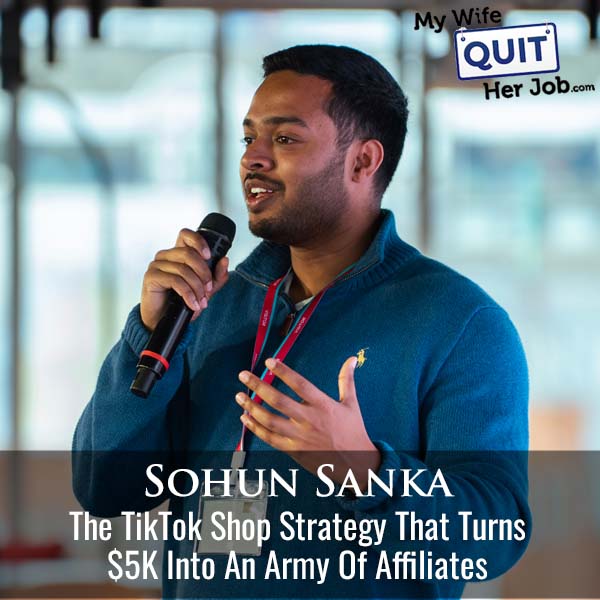
In this episode, I sit down with Sohun Sanka, head of growth marketing at Reacher, who has helped brands drive over half a billion dollars in revenue through TikTok Shop creator communities. We dig into the real math behind making TikTok Shop work, from margins and affiliate commissions to why the top 0.4% of creators drive nearly all the sales and what to do about it.
Enjoy the episode!
Get My Free Mini Course On How To Start A Successful Ecommerce Store
If you are interested in starting an ecommerce business, I put together a comprehensive package of resources that will help you launch your own online store from complete scratch. Be sure to grab it before you leave!
What You’ll Learn
- How To Kickstart TikTok Shop With A $5k Playbook
- Building A Hungry Affiliate Squad That Actually Sells
- Scaling Profits With Simple Tracking And Incentives
Sponsors
SellersSummit.com – The Sellers Summit is the ecommerce conference that I’ve run for the past 9 years. It’s small and intimate and you’ll learn a ton! Click Here To Grab A Ticket.
The Family First Entrepreneur – Purchase my Wall Street Journal Bestselling book and receive $690 in free bonuses! Click here to redeem the bonuses
Transcript
Welcome back to the podcast, the show where I cover all the latest strategies and current events related to e-commerce and online business. In this episode, I sit down with Sohan Senka, head of growth marketing at Reacher, who has helped brands drive over a half a billion dollars in revenue through TikTok Shop. We dig into the real math behind making TikTok Shop work, from margins and affiliate commissions to why the top 0.4 % of creators drive nearly all the sales and what to do about it. But before we begin, I just want to take a second to mention that I have a free e-commerce community
00:29
that I’m incredibly proud of and would love for you to be a part of. It is a place where real sellers come together to share wins, troubleshoot problems, and support each other through the ups and downs of building an online business. You can join completely free at mywifequitterjob.com slash community and I would love to see you there. That’s mywifequitterjob.com slash community. Now on to the show.
00:57
Welcome to the MyWifeQuitterJob podcast. Today, I’m thrilled to have Sohan Sanka on the show. Now, I got a chance to hang out with Sohan at Kevin King’s Market Masters event, and I’m really glad that we met. He is the head of growth marketing over at Reacher app, where he helps e-commerce sellers launch on the TikTok shop and manage creator relationships. And in his career, he’s taught sellers how to drive over a billion dollars in revenue by leveraging creators and affiliates across TikTok.
01:25
And he also runs a podcast called Zero Sum Game as well. Now in this episode, someone is going to teach us how to grow and scale on the TikTok shop platform. And with that, welcome to the show. Thank you. Great to be here. So I don’t know if you’ve recovered from, from Kevin’s event yet. It was pretty intense. I was up like, I’m an old man now. So it always takes me a while to recover from these events.
01:50
Oh, it’s, it’s tough. mean, I’ve reset my sleep schedule to just be like up at 530 in the morning and in bed by nine. So even going to these events sometimes takes me out of it, but the Terry blacks, you know, helped me recover quite a bit. So that’s my favorite part. so on most of my listeners probably do not know who you are. How did you get started in e-commerce and specifically tick tock shop? Yeah. So
02:15
My background is quite a generalist background. So I started in paid media doing Facebook ads actually, and then worked at a marketing agency where I built a UGC vertical influencer affiliate vertical for Amazon and then landed in a TikTok shop managed service. So I built that out from the operator side, working with brands that are more SMB level and then all the way up to like, you know, billion dollar ARR brands as well. And then at that point I was seeing
02:44
AI growing a lot and seeing the creator economy grow a lot. And I was like, wouldn’t it be cool to be at the intersect of like both of these things and take my TikTok shop ideas and like create technology that could solve things holistically, rather than like hacking through things like the marketer way, you know? And so that’s how I got into the software space. ah And now I’m working at Reacher, taking that perspective where
03:10
you know, having been on the customer side or having been on the operator side, and then having been on the software side, helping bridge the gap between current day problems and future solutions. So this is comes at a good time because Amazon is squeezing both sellers and buyers more than ever before. And I know at least in my community, a lot of sellers are looking for alternative platforms. Just in your experience, where does TikTok shop kind of fall in the overall strategy of ecommerce right now?
03:40
Yeah, so in terms of like, if we’re looking at things from an omni-channel perspective, I would say TikTok Shop is a great channel for new customer acquisition and cost effective awareness. I don’t think it’s going to have the same overall like purchasing power and scale as Amazon, Amazon being the preferred checkout destination. And I think with D2C, there’s just all kinds of Shopify apps and solutions where you can really get a true like CAC to LTV model and do a lot of work with
04:10
getting more LTV out of your customers and driving repurchase rate, right? But in terms of scaling up with organic creative, testing new ideas and iterating faster to then funnel into paid, working and building a creator community, I see TikTok Shop as an amplifier uh to the holistic business there. Yeah, I’ve heard reports that when you get something viral on TikTok, like everything goes up across the board and especially brand searches on Google, right? Yep, totally.
04:39
So let’s get the audience excited about TikTok Shop first. And I know you work with a lot of brands. Let’s just talk about some big wins first. Yeah, I mean, big wins for TikTok Shop or big wins for Reacher? the brands that you’ve worked with with TikTok Shop, yeah. Yeah, so at Reacher, we’ve been around for like mainly two years and we’ve enabled people to drive over half a billion in revenue alone.
05:06
biggest wins. One thing recently was a case study with Goalie where we sort of created uh a unique solution for them where we put them on their own. Sorry. Goalie Health. Yeah, they have the gummies and they have a few other products, right? So we put them on their own compute where they could send 20k messages per day. Think like 10 automations running. And what this allowed them to do was run weekly challenges across like hundred thousand creators.
05:34
and just test different angles and run these like creative sprints where they could really just ramp up traffic content and get everything out there doing big tent pole events. And so that was absolutely huge. And we’ve been trying to replicate that. So as people grow their creator communities, they don’t have to hire and bring on more teammates, right? And they’re able to still keep testing very quickly. So what types of products would you say are good with TikTok Shop?
06:02
and ones that probably should not be on the platform. Yeah, so traditionally what was working around a year and a half ago was products in like a 30 to $50 MSRP or strike through price on TikTok shop, right? That way there was still like room left in the operating margin after you paid out commissions, after you blend in your GMV max, right? After you put in a promotion on there uh and you could get, they had what was called like a free shipping subsidy.
06:31
Now it’s like co-funded shipping. So orders over $30 got a shipping incentive, right? So you had room there to give back in your promotions and commissions to creators. Now what we’re seeing is that that AOV is increasing. know, people are launching more things like bundles for higher price point products, like ice cream makers, for instance, that might be 200 bucks. People are getting way more into live selling and they’re doing giveaways and they’re really getting creative with how they’re selling these products. So that range of price point,
07:00
is opening quite a bit. I would say your product still does need to have a differentiator. It does have to have a story. I will say products that are organically talked about by creators like that you can find via social listening tools, right? If there’s like certain trends around summer with making ice cream, I don’t know why I keep using that example, right? But ice cream recipes, right? And you know, this is a great time where people are looking for ice cream makers.
07:25
You can contact those creators and get more buzz around a viral trend and then launch thereafter. if your product is not very differentiated, if no one’s talking about it, if it’s very like it’s on the premium end and you know, you don’t really have any angle besides like we’re eco-friendly, like that might be a tougher uphill battle for you. Walk me through. So you just gave an example of like a $50 product. What are the margins that are expected to just make this work?
07:54
on a $50. Yeah. Yeah. So it depends on your goal. I would look at your like blended, blended LTV and what your goal is with having TikTok shop as a channel for some brands who want to have TikTok shop as a profitable channel. Maybe you want to hit, let’s say I’m making this up like a 30 % operating margin, right? What comes out of those costs are TikTok has an in-platform fee, like a referral fee where they take 6 % off of every sale. And then you have your creator commission.
08:22
That can be variable, right? You have your general commission and then you have your VIP commissions that you give to other creators. And then I like to also- give me a range on the affiliate payout that you’ve seen? Yeah, so it depends on the product category, but let’s say 20%, 20 % on a $50 product is $10 in commission. Okay. So let’s assume $10 in commission. Let’s assume a $10 limited cost, right? So that’s cogs plus shipping. Right. That’s about $20 there.
08:51
Right? And then if you also want to have a coupon for maybe another 20 % off or 15 % off, I’m making this up some number that gets you like $25. Now you’re sending it like a, you know, 50%. And then if you want to blend in your ads fee, so GMV max does things on an ROI calculation, not a ROAS calculation. So they’re blending everything together there. So you have to be very careful and leave a little bit of cushion in your margin for those kinds of things.
09:21
I just wanted to take a moment to tell you about a free resource that I offer on my website that you may not be aware of. If you are interested in starting your own online store, I put together a comprehensive six day mini course on how to get started in ecommerce that you should all check out. It contains both video and text based tutorials that go over the entire process of finding products to sell all the way to getting your first sales online. Now this course is free and can be attained at mywifequitterjob.com slash free.
09:50
just sign up right there on the front page via email and I’ll send you the course right away. Once again, that’s mywifequitterjob.com slash free. Now back to the show. No, I was just gonna say, so it looks like at least a four or five X margin, gross margin product. Yeah. Okay. If you’re running it well, think as you’re getting, as you’re launching, you need to be on the upper end of that range to be competitive within the category. Okay. You can build.
10:19
incentive structures from your remaining margin to hit scale and incentivize your creator communities during the earlier days. I wouldn’t try to hit like a 33 % operating margin. I would try to like slim your margin. If you’re not working with an agency and blending in their fee, right, I would try to like slim your margin down to like 15 % just to scale up and do whatever you can to get to like 100k uh in GMV, right? And then from there, affiliates will look at your product as a product that’s likely to sell.
10:49
and they’ll wanna work with them. And then you can sort of taper that margin back a little bit on your commissions, your promotions, um because what you don’t realize is affiliates go through a product selection process similar to how Amazon sellers use like Jungle Scout and all these other tools, like look at search volume and ranking, and they’re evaluating your product as an opportunity cost of their time. So you have to essentially burn cash and get as close as you can.
11:15
to making your product look like a dark horse where it’s fast growing, but it’s not so competitive. you know, like let’s say a goalie, right? Where like any affiliate knows there’s already top affiliates there just like taking all the attention, right? And taking all the GMB max budget. That makes sense. From a product perspective too, are you seeing that almost, or most of your clients are selling something that has repeat purchase value, like consumables. Can you make like a one and done work on TikTok shop? Yeah.
11:44
100%. I think even if you’re selling like subscription, uh, personally, like as a marketer, I wouldn’t launch, I’d rather capture that purchase on DTC just because I get more data into the customer demographics, the purchase history. I have like way more tools I can use with like email and SMS to like drive up that repeat purchase. Right now product subscription on TikTok shop is also just not very customizable. You can’t select the variant you want people to purchase on.
12:12
It’s just like general towards like the listing. ah But yeah, one and done products do work really well. would say if you’re like, let’s say you’re running an organic first strategy where you’re posting a lot on TikTok organic and you have a lot of buzz there for sure. know, run a product there, use that awareness to skyrocket sales and then think about capturing the excess on Amazon. Okay, right. So you’re depending on the halo effect in this case, right? Not necessarily the product profits from like the TikTok shop sale.
12:41
At the beginning, at the beginning, yes. I mean, like it’s just a battle of like, you have to get your product into the eyes and recognized by the ecosystem first. And that involves just not being profitable a bit at the beginning or being break even is a better word to say. So walk me through the process of building and managing affiliates and let’s assume that we’re starting from scratch at first. Okay. So I understand you need to hit a certain threshold to even be able to message affiliates.
13:11
Right. Yep. And then what are the steps after that? Yeah. So after you get over hurdles, there’s like various hurdles based off of GMV. Let’s say you get over $2,000 in the last 30 days. Okay. There’s a lot of different ways to get there. You can use like Celico launch pad. You can use like join brands, TikTok, shop blasts, and have creators buy off your initial listing to skyrocket that value. You could have an employee purchase those. Right. So let’s say you get after that. The first thing
13:41
I would be doing is just putting together a creative testing plan and figuring out who you’re messaging to. Let’s say you’re a brand that is on Amazon, right? Maybe reading through like all your Amazon reviews and figuring out what customers are saying about your product, looking through your demographics and figuring out who is like a persona we’d want to talk to, right? Keeping that in the back of your head, right? And then the first thing I like to do is start very top of funnel.
14:07
I know that’s like very counterintuitive, because most people would be like, hey, let’s just go target our most valuable customer segment on TikTok Shop immediately, and then just try to angle on to them because we know it works. But fundamentally with TikTok Shop, it’s not the same as Amazon, where people have a certain degree of consideration, where they’re searching for products and then evaluating the cost benefit between different competitors, right? People are just scrolling, aiming to be entertained. But what we know is that if someone sees
14:37
your broad top of funnel content. Let’s say we’re talking about electrolyte powder, for example, right? And you’re creating broad top of funnel content around the conspiracies of dehydration. And that gets people entertained. If you start serving the more broad content around dehydration, then maybe you can angle that later, you know, on your third video to like dehydration for woman, you know what mean? Or a woman who are breastfeeding and then there’s some stuff in our electrolyte powder that helps them replenish their nutrients or stay consistent there.
15:06
and then sell them later on the third to fourth piece, right? So we want to target affiliates who can just help get awareness first and start getting an audience sort of interested in our content. So interesting. So you’re saying for like your first of affiliates, you’re not even trying to sell your product. You’re just trying to awareness around the topic. Yeah, because your product doesn’t have that much units sold. doesn’t have that many reviews. There’s not much really credibility behind. And so I think
15:34
it seems a little premature to like just ask for the sale early on, you know? Why would affiliates want to do that then? Because they are probably thinking that they’re not going to get that many sales, right? Totally. It definitely does make sense. Like I would say you can work with creators on a retainer basis, build a relationship up with them first and start with like a smaller creator community, right? Because you do, if you really want to have an army of like thousands of affiliates selling for you,
16:02
They have to like, it’s like a catch 22. They have to see some affiliates really engaged and really taken care of in the community and really starting to see some upside before they even commit to you. So I would start from there and focus on like motivating people through awareness and engagement, giving out some sort of cash reward or incentive system. And you know, you’ll make that backup on the backend when you look at your blended LTV in terms of like how cost effective that awareness is.
16:29
how many new customer segment eyeballs you’re getting on your products and that might pay a over onto Amazon too. Interesting. Okay. So you’re, you’re basically paying your initial affiliates to post content in the beginning because you don’t have any credibility or numbers in the beginning. Right? Yeah, I would, I would recommend so, and you can still seed out samples and you should always be like seeding out samples to find new creators, but your ideal creator that you want to work with when you just start off on TikTok shop is probably not going to work with you, want to work with you.
16:59
unless you have such a unique product that really connects to them, right? So I read somewhere that there’s only a very small fraction of a percent of people, maybe even less than a percent of affiliates actually drive real sales and most of them just don’t even make any money. Is that accurate? Yeah, I actually just made a post on this recently where we analyzed 3.3 million creators and I transed them out by GMB. So I’m happy to share those.
17:27
numbers with you right now. Just let me pull it up. Yeah, it always, it always, uh, cause you won’t believe when I get on calls with sellers, they’re like, let me just reach out to creators who make 10,000 GMV. I’m like, dude, it’s like 0.06%. Um, is it really? Okay. Here’s the stats, right? So 16 % of creators make over a dollar in sales and then 4.6 creators make over a hundred dollars in sales.
17:56
2.3 % of creators drive over 500 in sales. 1.6 % of creators make over a thousand in sales. 0.4 % drive over 10K in GMV. And then 0.09 % drive over 50,000 in GMV. And this is done on a like last 30 day basis, looking at the entirety of the creator pool. Okay, see that doesn’t sound
18:25
favorable to me so on. means like there’s like a elite pool of affiliates, right? That are driving most of it. So that implies, at least to me, that you need to tap into those guys in order to make any money on this platform with TikTok Shop. Well, I think that’s sort of like a, like there’s two ways of looking at it, right? So I think one thing, especially talking to Amazon sellers is like looking at the long-term ROI versus the short-term ROI.
18:53
When I see a distribution like that, that tells me that there are tons of neglected, hungry creators who are willing to work for me at twice as hard with like maybe a fifth of the price that like the top GMB ones would make, right? So if I turn them into my loyalists and I turn them into real ambassadors and I create systems that reward awareness, that reward participation in my community, I should have a very scalable model six to eight months down the line.
19:21
where can just keep adding newer and hungrier creators into there. And that’s really the vision that I see working best for brands and agencies who are trying to layer in community as part of their strategy there. Granted, you might not get short-term ROI upfront, but if you go and try to poach the affiliate that has the highest GMV and they’re getting flat fee offers, they’re in 10 creator marketplaces, they wanna work with the goalies, the Nellows and everything like, realistically,
19:49
how much would you pay to coach them versus how much would you pay to nurture long time ambassadors? I still think it would be cheaper to invest in long time ambassadors than poach those creators. oh So that makes the problem a little harder. So how do you find these people then that could potentially become long term gold mines later on because they’re not in the beginning, right? Yeah. So I would say for that
20:16
You should do some preliminary product research. would say before you even launch your product on TikTok shop, you should try to figure out are people talking about problems around my product? Are there other products doing well, right? Doing basic research using a tool like Caladata or FastMos or Reacher, right? And you’re beginning to see like, it’s sort of like a social listening slash competitive analysis for TikTok shop, right? Is there market potential? And then based off of that,
20:43
I would find creators that are just most relevant to your brand and problem. think looking at relevance first over GMV and performance is the biggest point. If someone’s making a lot of views and they’re in a relevant niche, you can coach them on how to sell your product well with your historical data, right? And so I would be looking for a ton of those dark horses there based off of rising products, creators, and things like that. And then you plug in a tool like Reacher where we can send like 10,000 outreaches a day.
21:12
and you play the volume game and you funnel it into your community. That’s how it would go about the outreach and acquisition. So what you just said kind of contradicts, it doesn’t contradict, but like if you’re going through and looking for these creators, that implies that you need to find like in order to blast 10,000, you need to find 10,000, right? So- Sure. You can use like filters and like look at like we have our entire database labeled for example, right? Where it’s like, let’s say-
21:41
I’m making this up. want to find creators in like the health category who post 80 % of the time when they’re sent products and they make over a hundred dollars in sales. I can start there, right? Or I can use an AI powered search to see what kinds of keywords people are using. Like let’s say I’m a health gummy and I’m looking for creators that are always talking about inflammation. I could type in keywords like inflammation, or I can look at things like maybe like gut problems or bloat, right?
22:10
and then I can find creators that are talking about that and then shortlist and then automate to the culmination of all those shortlists together. So there are ways to like speed up that process and go broad. And then for the highest response rate, what I would do is in your hook, say, hey, we’re offering a retainer opportunity, right? So you can still layer in the quality of the offer with the quantity of the outreach just to maximize during that uphill battle of starting your TikTok shop journey.
22:39
So when you’re doing this search, it sounds like you’re trying to target affiliates that don’t have a huge audience yet, right? According to your strategy, right? Yeah, so, oh God. I was gonna say, can you give me like a typical outreach email that you might send? Yeah, so what I would do one is lead in straight with your offer. Like I would wanna almost see like something in the preview of the inbox.
23:05
that says like retainer opportunity before it cuts off in the dot dot dot. Okay. That gets me to open. And then after that hook where I outline the offer where it’s like retainer amount or let’s say you’re a brand that ran like a $70,000 contest last month. You do something where it’s like, we gave out 70,000 in cash and prizes to our community last month. We’d love to give you free product commission and an opportunity to take a share. Our top affiliate made $10,000. You know, um, something like that, right? Just
23:35
give them the dream outcome, sell them on working with you, and then showcase your brand as a product that’s likely to sell. So affiliates can see the number of sales on your product card when you reach out to them, which is basically just this card that shows your product or price point you didn’t sell, right? And then I would showcase if you’re a brand that’s like an eight figure brand, I’d be like, by the way, we just crossed 10 million in sales.
24:01
We’re growing 50 % year over year. Our products absolutely crush it for X, Y, and Z reason. That comes in after. So it’s your offer, then it’s your credibility. Like why should people even be listening to you? Why should they work with you, right? And then you can have like a little bit of background. Frankly, I don’t think affiliates care. I think they operate more as like salespeople, especially when you’re starting the relationship, little background. And then I like to add a personalized signature where it’s like, hey, dash Sohan.
24:30
founder of blah blah gummies, you know what I mean? Something like that, right? That’s like my overall message structure that I like to use. Of course, there’s like a ton of variations and ways you can A-B test and multivariate test this, but for cold start sellers, I would stick to that structure. So given that it sounds like 90 something percent of people aren’t making any money at all, do you need to bribe them with a retainer or are you finding that most people will just accept a free product?
24:58
Yeah, so it depends. When you filter that number by post rate, the percentage of those that get those products, it’s even smaller. But I would still say like 1.6 % of like 3.3 million is still way more samples than you’re ever gonna send anyways, right? So I think looking at the percentage can be a little misleading. think looking at the cumulative number starting from there would be your best way to go.
25:26
I guess that would really depend on like how much product someone really has on hand or, how aggressive their strategy is going to be. Can you talk about the post-rate number? Like, what do you look for? Yeah. So I typically look for 70 % plus. Um, you can filter by a good rule of thumb is actually to filter by 50 % plus. And then based off of the people who actually request a sample, you can do like a loose 70 % where it’s like, if they’re 50%, but they sell 10,000 in GMB.
25:55
Am I gonna say no to them? Like probably not. Of not, but that’s 0.06 of the population there, right? 0.06, but you’d be surprised where it’s like, if you filter by post-rate and by GMV, then that pool gets even smaller. So it’s more of like an and or situation, right? Where it’s like, if I have my post-rate filter a little bit lower, I leave more room for the people that have high GMV and lower post-rate. And so I would go 50 % plus. If you’re getting this pool of like,
26:25
smaller GMV creators coming in, then maybe you’re more strict on 70 % plus post rate and you accept 60 % of the applicants that come in, right, based on that. Again, I’m making this data up. No, of course, yeah, no, I know. We don’t really have a concrete example here, but post rate is the percentage of people who actually post a video after receiving a sample. Is that accurate? Yes. Okay. 50 % seems really low. I didn’t realize that the numbers…
26:51
there’s a large fraction of people who actually get something and don’t post anything. That just seems wrong to me almost. Well, it’s similar to product seeding. I would say if you’re doing general product seeding campaigns, getting a 50 % post rate is not bad. ah Again, these are based off of like industry averages of people just being like, hey, I sent a very AI powered message to you and I’m selling the everyday product you already see him and I’m making no effort to make a connection with you at all or not.
27:19
not jumping on a call with you, not making it relevant to what you do as a creator. And, you know, some people might just forget to post because they’re not as disconnected with the brand. It’s happened to me. I’ve requested some samples through my affiliate account and I forgot to post and I spend like every day helping sellers get their post rate up. So sometimes it’s also just an honest mistake where they missed that 13 day window and they might need a reminder later or might not have a connection with the brand.
27:46
Okay, so can you walk me through the percentages and let’s just keep it simple. For let’s say you message out 100 people, what percentage of people typically respond to that template that you just gave? Yeah, I would use like one to 3 % for cold starts. The rule of thumb also is like, let’s say maybe like, and then maybe let’s say like 50 % of those one to 3 % actually request a sample. Okay.
28:13
So we’re talking like 10 samples out of 100. And then how many of those you said 70%. So maybe seven, you’re getting seven videos when you mentioned a hundred videos. Sorry, a people. Okay. Yeah. And then 10 to 15 % of those videos generate ROI on the first go around. That’s usually the rule of thumb. Okay. So you might get one less than one from messaging out hundred people. Okay.
28:40
All right, so let’s just talk numbers here. Let’s say you’re a brand owner and for the most part, my audience is mainly seven and a figure people. So what’s my budget for this? Like what should I be willing to give away and spend in order to see this through the right way and actually eventually make a profit? Yeah, so budget on a monthly basis or off of like a project basis for launching your TikTok shop on like three to four months or something like
29:07
Well, one, I want the timeframe and then what the budget might be. Assuming like a Gali or whatever, know, it’s a compliment business. Yeah. And are these people trying to build a creator community as well? I think the goal is for them to create an army of affiliates that sell for them. Got it. Okay. That makes sense. So I would say like, let’s take a budget of like $5,000 for month one, right? Okay. Let’s just, let’s just say that. So I’m assuming like,
29:35
for sampling, I send out 500 samples, I’m gonna assume that’s a $10 landed cost, right? So if we know that I send out 5,000 samples, let’s say 250 posts, and then let’s say 15 % of those actually post, and then 10 to 15 % are ROI generating videos, you’re ending up spending around $200 per ROI producing video, right? Which doesn’t seem like
30:05
a lot more or less, I would say going with a hybrid approach and getting retainers in here, where let’s say you’re doing $200 for like 20 videos posted, right? And there are TikTok shop creators who will do that and marketplaces that will help you get that level of volume. I would say that’s a better way to go. So let’s say $5,000, $200 per 15 videos. I think that’s like about
30:33
375 pieces of content, if you divide the math up um there, 375 pieces of content. And if all these creators are in a community where they’re posting multiple times, you then have the advantage to tell them, hey, this didn’t work from post one, try this in post two, or hey, post two and three are great, keep that hook, but try this different selling point for a new audience. So I can squeeze way more juice.
31:02
per each piece of content that I know is guaranteed to be posted from a retainer and test more angles. I’m gonna stop there and just make sure. Yeah, no, okay, here’s my disconnect with this. Let’s say I post something and it doesn’t do that well. I’m not gonna post again, right? But if I pay you 200 bucks for a retainer. I’m sorry, I see. What is it? Can you define the retainer? it?
31:28
constitute multiple videos or just one? Yes. So I owe for TikTok shop affiliates. It’s always bulk just because it’s different than influencer marketing where an influencer marketing, you’re trying to capture a percentage of their audience. But on TikTok shop about 80 % of users and this is from a survey done by power digital state of the media report, right? About 80 % of the users spend their time on the discover page. So it’s all about creating quality content to attract new users. Right? And so with that,
31:57
we’re gonna need multiple iterations to get there. So I always do retainers on like a 15 or 20 video basis. Because that leaves me enough room for volume and testing more angles and running challenges and things like that. That’s tough. So I’m a TikTok creator myself. I don’t have a huge presence, like 120,000 or something like that. Like if you someone offered to pay me 200 bucks to do 10 TikToks, hell no, right?
32:25
unless I’m seeing some sort of affiliates with that. are you paying that retainer to only the people who are only the ROI positive guys or are you doing it right off the bat up front? I would do it right off the bat up front. Okay. Because you’re not going to know if your first batch of creators produces any sort of ROI, right? But you have to take some sort of risk. And I would argue the number of videos you get guaranteed to get
32:52
is still higher than seeding $5,000 in product, right? Or 500 samples. um So just on like a per video basis, the risk is lower. So I would start there. And it does feel like a lot lower than traditional influencer, but you got to understand these people are posting dozens of TikToks a week. Like they’re always selling, they’re always flooding the content or flooding the algorithm with more content. So they have a different perspective on what volume really means.
33:22
Interesting. Okay. So let’s assume that you get someone to create multiple ones and what are the expectations on like what’s considered a good video? Yeah, that’s like a very, that’s a very complicated question because I don’t have TikTok’s algorithm in front of me. I think there’s like basic video hygiene where it’s like, are you filming in the correct location? Well, don’t mean that. mean from like an ROI perspective.
33:52
from an ROI perspective, I mean, it’s pretty much, if it’s just from an ROI perspective, it’s like what generates sales. uh I would say, it depends on how much you’re paying the creator and commission, how much ads you’re running, right? But I would say there’s two things. Like one, you need to test multiple different angles and testing through multiple different angles has a value in itself, right? Because if you get that one video that creates ROI and you take losses on the first,
34:22
let’s say eight to nine videos with incentives, sampling costs, and GMB max budget. That video can scale like a 3.5 ROI and GMB max and make up for all your losses. Or then you can run that video to meta ads, right? And then you make up the incremental ROAS versus your existing creative there. So like, that’s how I would look at it rather than like, hey, what is the ROI on a video by video basis? Cause otherwise you’re not going to hit the volume you really need to like scale up.
34:50
and invest in the creators. And if you’re too focused on the ROI per video, it’s gonna make creators feel like you don’t really want a relationship with them and you’re just using them for short-term ROI, right? Are you running GMV ads on everything that comes out? Yeah, so GMV Max automatically picks up every single video with the TikTok shop link if the creator has their authorization turned on. It’s different than like a Spark ad where people put like, give the string of characters and letters
35:20
with a certain period of time that they’ve authorized that to do. So it’ll automatically pull it in and it tests like 500 or so creatives a week, maybe plus depending if you’re in some alpha program there. And then from there, it cycles through it fairly quickly. It prioritizes ones that have generated a dollar in sales, AKA have sales potential from TikTok standpoint, and then keeps putting more budget on there.
35:46
I know it’s really hard to give numbers on these hypothetical case studies, but what is considered a good return on a GMV ad that you run? So you can actually set the ROI target on your GMV max campaign before you start it up. this is where your margins and your omni-channel strategy sort of comes into play. If you want to start at like a 1.8 ROI or two ROI after you pay all of your in-platform selling costs and your sampling costs on an individual video,
36:16
You’re essentially breaking even or taking a loss there, but you’re willing to scale up and flood with content because you want to just get volume and you know that you can get credibility and then scale that up to like a 3.5 or maybe a three where you know you are taking home some profit and you’ve lowered your commission. You blended in your GMB max. We’re like, you’re blended in your GMB max budget into your unit economics calculation where that is starting to make sense. So 1.8.
36:45
to like 3.5 later on. Okay. I guess what I’m trying to get at is, brands doing this just for the halo effect and just breaking even on TikTok? Is that the general strategy or is it actually to, I know everyone wants to make money on TikTok, but in order to implement this, I imagine there’s like a tipping point where you get a ton of affiliates and everything just kind of happens by itself organically. Are people just shooting for that point at no mean, you know, at a loss and just
37:13
hoping for the halo effect? Like uh what’s the main strategy that you use when you work with brands? Yeah, so at a certain point, you have to measure the ROI of your community, right? Let’s say everyone’s trying to get to this goal of having a thousand affiliates on standby who produce 10,000 pieces of content a month, right? Right. You have to spend to get there, to spend in investing in the wrong affiliates and sending out products, right? And eventually if you’re able to create this model,
37:42
where I only need to send out one product and like, let’s say I have a consumables product, right? Where I need to replenish that on a certain frequency, right? If I’m able to send one product and get more videos from each creator and then on average, my creators convert at like 10 % off of like the 15 videos they make. And that makes up for all my costs. And I don’t need to spend a lot of money on CAC, like seeding products, running commissions and promotions to get new customers. that’s the point where I want to get to.
38:11
And then even if you don’t have LTV, you know that every single dollar you spend in creator community gets five to $7 out. Like that’s where you want to be. And people can for sure make money on TikTok shop. Is it going to be like the same level of like, Hey, I’m willing to spend the entirety of my MSRP to acquire a customer. Cause I know they’re going to purchase five to six times on meta. Like, is it going to be that level of a calculation and that nuance? No, but does community still work?
38:38
in the long run if people get there and can they make money on TikTok shop? 100%. Okay. Let’s shift gears a little bit and just talk about like all the management here. I mean, you’ve been throwing out some big numbers like messaging, 20,000 affiliates. What, like, is this all automated? Like I know your platform does this. How do you manage all those creators? Yeah. So there’s automations during outreach, but then there’s also like a CRM, right?
39:05
Let’s say you message a creator and you approve them for a sample. We’ll read within TikTok shop seller center for which skew that order has been processed. And you can automate personalized creative briefs to go out for that skew. And you can vary it this across the entire catalog you’re sampling without a human delineating between which product we’re seeing to which creator, right? So that’s already a ton of time saved.
39:31
And then once that sample has arrived, again, we’re reading that status in TikTok shop seller center. We can automate reminder messages, just nudging them to post, you know, throwing an extra incentives if we need to re-motivate someone. And then once they actually post, we can segment based off of GMV. So if we want to find every creator that generates over a hundred dollars and send them an invite to our discord, you know, with a exclusive community offer, we can automate the recruitment.
40:00
of those creators into our community as well. So we’re pretty much automating the end to end and we’re really moving marketers time to focus more on analyzing the holistic data, looking at our creatives and figuring out which ones are working and not. Is this creator profile profitable for us after running community for two to three months? Like how am I doing? How are my top creators doing? Let me go down calls to them. We’re reorganizing marketing marketers time from just general affiliate management.
40:28
to those sorts of tasks there. I see. So you’re automating the majority of everything and then maybe like your top guys, you’ll invite to your discord community and then communicate with them one-on-one there. Right? Yeah. So top guys at the beginning, discord sure. And then as your community grows bigger, all the top affiliates are kind of going to be like princesses. Like they’re going to want an individual text. They’re to want you to like take them out for dinner. You know what I mean? But, but yeah, you should spend the majority of your time talking to those people and doing things that
40:57
AI and automation like, you know, can’t really replace like I would say, VA’s for recruitment is really like no longer needed. know, I assume that majority of these people will hit reply, right? So when they hit reply to an outreach message, for example, uh is it just a canned message back? Yeah, so this is one area where it depends on how you do your outreach. Are you familiar with like the target collab versus open collab?
41:24
sort of nuances there? not actually. Yeah. Okay. He wouldn’t mind to find that. Yeah, of course. So basically there’s different ways you can reach out to affiliates. One is just a message where you send them a chat through seller messages, right? And then they have to go find your product on what’s called a product marketplace and then request a general commission. This is typically affiliates least variable one to do because they have a quantity of sample requests they can use per month. Right. And the general commission is usually the lowest commission offered.
41:54
And then there’s what’s called a target collaboration, which is usually a higher commission rate than what’s available in the public. And this actually doesn’t start a chat with the creator. It’s sort of like a one way email where you can just click the skew you want to uh earn commission on and then request a sample. So that doesn’t actually open up a chat with the creator and that’s the creator’s preferred type of invitation type. Okay. And then thereafter you can.
42:21
Enable a follow-up message to go out with that within Reacher to improve response rate on both ends But we have an AI chat bot with knowledge base right where it’s like hey would love to learn more details about this offer if you have a stored response to that boom, right? What is the typical time my sample is gonna arrive once you guys? uh Approve me boom you can incorporate that right and you can keep adding the most frequently occurring questions into that
42:47
And then you can automate like 80 % of your responses and give 20 % to a customer support rep who also handles your customer messages on the platform too. Okay. And from the creator perspective, let’s say you have an audience, but you don’t have never done this before. How do you get noticed as a creator? So you’re assuming a creator is not a TikTok shop affiliate or they are a new TikTok shop, a new TikTok shop affiliate. Yeah. Yeah. So typically if you’re a creator,
43:17
and you’re not getting noticed right now, there’s a lot of different ways to go about it. You can sign up for one of many creator marketplaces where people are putting out jobs kind of like an upwork, right? You can apply into there and then take like a discounted retainer to get your scale and volume up and create this portfolio and try your shot to get your first preliminary sales. So you can get picked up by an outreach tool where they’re filtering by sales and post-sales, right?
43:46
just to fill that data up. And then another way is just DMing the products that are sort of like up and comers, right? If I look for the top selling products and I’m a low selling creator, am I gonna get accepted into that? You know, probably not. But if I went down to like the up and comer products or the newer products where I really resonate with them and I request a sample, they’re gonna be more likely to accept. And then the last way is like, just buy the product you wanna promote.
44:14
or go to creator events. Like, I don’t know if you went to the goalie or not the goalie, sorry, there’s TikTok shop health summit, right? And every creator was just going through and I talked to one of them. They were getting samples from each booth and they were just like, oh, like all these top selling brands would never approve me for sample requests. So I just have like a hundred products here. I’m actually going to go and create content on. So there’s a lot of ways to get involved there. All right. So uh for this last part, I just want you to walk me through like what you are app.
44:44
actually covers and what it helps you handle. Yeah. Yeah. So basically we’re a TikTok shop partner. We’re an end to end creator matchmaking system, right? We’ll help you connect to over 3.3 million creators in TikTok shops database. And then we’ll help you automate every step of the way from outreach into the crater, responding to the crater, sending a personalized creative brief, reminding creators. And then once they actually post a video or engage with your brand,
45:13
we can set up all kinds of community activations, right? We can collect their spark codes and get ads authorization, get usage rights for their content, and then get their phone numbers and emails if you want around like SMS campaigns, text message, or email campaigns and other things like that, right? And then really we help integrate with Discord. We have Discord APIs. So if you want to send push announcements to Discord or automate creative briefs to go in there sort of like a newsletter, we’ll help there too. um
45:42
And where we’re looking at heading towards is really around more agentic workflows where we’ll analyze what’s working in the industry and what’s working with your content. And we’ll have things like creative agents that help summarize the top 10 % of hooks and selling points that are working and draft new creative briefs and take inspiration from what’s working in the ecosystem. So you can focus on measuring the feedback loops between your ads manager and GMB max, right? And then the top 10 % of your creators on a rolling basis.
46:12
Okay, well cool. So on thank you so much for coming on the show. If people want to check out the app or get a hold of you, if they have any questions, where can they reach you? Yeah, you can uh find me on LinkedIn, fairly active on there, try to post every day. And then we also have a link on our website that says book a call. That’ll feed right to me or our co-founder, Boris calendar. And you can get ahold of us fairly easily. Sounds good. Well, thanks again for coming on the show. Appreciate your time. Thank you.
46:42
Hope you enjoyed this episode. If you’re looking to learn more about how to sell on TikTok Shop, make sure you follow Sohan on LinkedIn. For more information and resources, go over to mywifequitterjob.com slash episode 644. And once again, if you’re interested in starting your own e-commerce store, head on over to mywifequitterjob.com and sign up for my free six day mini course. Just type in your email and I’ll send you the course right away. Thanks for listening.
I Need Your Help
If you enjoyed listening to this podcast, then please support me with a review on Apple Podcasts. It's easy and takes 1 minute! Just click here to head to Apple Podcasts and leave an honest rating and review of the podcast. Every review helps!
Ready To Get Serious About Starting An Online Business?
If you are really considering starting your own online business, then you have to check out my free mini course on How To Create A Niche Online Store In 5 Easy Steps.
In this 6 day mini course, I reveal the steps that my wife and I took to earn 100 thousand dollars in the span of just a year. Best of all, it's absolutely free!