
Podcast: Download (Duration: 51:25 — 59.1MB)
Run Amazon PPC to learn who your buyers are rather than to make money directly. Brian Johnson uses sponsored products primarily as research, because the search term report is the only place Amazon reveals the language shoppers actually use.
Organic sales typically run four to five times his advertising sales. The point of the ad spend is discovering which search terms convert, then optimizing listings around them.
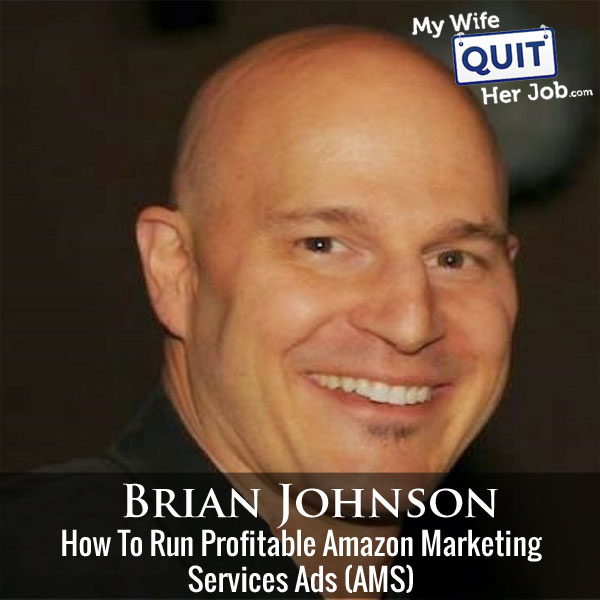
Brian founded PPC Scope and teaches Sponsored Products Academy. He manages campaigns across accounts with hundreds of products.
This episode covers the campaign structure he uses, the click through rate thresholds that signal audience mismatch, why he floods campaigns with thousands of keywords at launch, and how the display ad formats compare.
A note on timing: this is a 2017 conversation. Amazon Marketing Services has since been renamed Amazon Advertising, and Vendor Express was discontinued in 2018, so the access route described here no longer applies.
Get My Free Mini Course On How To Start A Successful Ecommerce Store
If you are interested in starting an ecommerce business, I put together a comprehensive package of resources that will help you launch your own online store from complete scratch. Be sure to grab it before you leave!
Table of Contents
Key takeaways
- Advertising is research, since the search term report is the only view into buyer language Amazon provides.
- Organic sales run four to five times advertising sales, so PPC data serves listing optimization.
- Separate campaigns by target audience, then separate each product into its own ad group.
- Create three ad groups per product, one for each match type, for finer analytics control.
- Flood manual campaigns with hundreds or thousands of keywords, since Amazon will only serve a fraction.
- Target above 0.3% click through rate at campaign level, and below 0.2% signals audience mismatch.
- Know your break-even ACOS before optimizing, which most sellers have never calculated.
- Do keyword research before your product goes live, to avoid wasting the launch honeymoon window.
Why run Amazon PPC if organic drives most sales?
Because advertising is the only place Amazon shows you what shoppers actually search. That search term data is what you use to optimize listings for organic ranking.
The ratio makes the case. Brian sees organic sales at four to five times his advertising sales.
Sponsored products contribute perhaps 15% to 20% of total units during a launch. Turning on ads does not put you on page one by itself.
That contribution can still matter at the margin. It may carry you to page two or page one against weak competition, letting you hold position.
Some keywords justify permanent overspending. A listing sitting between competitors five and seven needs sustained volume to avoid slipping to position eight.
How should you structure Amazon PPC campaigns?
One campaign per target audience, one ad group per product, and three ad groups per product split by match type. That segmentation is what makes optimization possible.
Group products by audience rather than count. Ten variations targeting the same buyers with overlapping search terms belong in one campaign.
Ten genuinely different audiences need ten campaigns. Different search terms and keywords mean different targeting.
Product-level ad groups let you act on divergence. A search term converting well for one variation and poorly for another needs opposite treatment.
Negative keywords apply at the product level as a result. You can kill a term for the variation it fails on while amplifying it where it works.
Match type separation adds another control layer. Brian notes Amazon’s match type strategy differs meaningfully from Google’s.
How do automatic and manual campaigns work together?
Run automatic in the background at a low bid while doing your own keyword research in manual. Brian no longer waits on automatic campaigns for direction.
Automatic serves a specific purpose. Amazon shows your ad to relevant audiences and against competitor search terms, which it does reasonably well.
Start it higher to gauge the market. Seventy-five cents establishes what popular search terms cost in your category.
Then reduce it substantially. Within two to four weeks he drops automatic to 30 or 50 cents, well below manual spend.
Converting search terms get promoted. Anything that converts in automatic moves to manual and gets tested across all products and match types.
He describes the process as constantly gutting the automatic campaign. It keeps running for discovery while manual does the work.
Why flood your campaigns with thousands of keywords?
Because Amazon will only serve a small subset and you cannot predict which. Giving 50,000 keywords might produce ads on 50 of them per product.
The inefficiency is unavoidable. No tool, including Amazon’s own, tells you in advance which keywords will get impressions.
Research escalates through three stages. Amazon’s own suggested keywords give 10 to 20, standard keyword tools give a few hundred, and competitor reverse-engineering tools give substantially more.
Duplication across match types is fine. You are presenting Amazon with options rather than building a clean list.
What click through rate should Amazon ads get?
Above 0.3% at campaign level as a minimum, with 4.4% at keyword level as the target. Below 0.2% means you have lost audience relevance.
Amazon enforces its own floor. Sponsored product keywords must maintain roughly 0.07% click through over an extended period to keep running.
Headline search ads demand ten times that. The threshold there is about 0.7%, and Amazon shuts off keywords that fall below it.
Low click through with strong conversion does happen. Some niches funnel shoppers toward one or two very generic high-competition terms.
Variation-heavy categories perform worst. Clothing, phone cases, and anything with many colors or styles pushes shoppers into browsing rather than deciding.
Should you optimize for ACOS or profitability?
Profitability, though ACOS works as a proxy once you know your break-even point. Most sellers have never calculated their net margin per product.
The prerequisite is knowing your numbers. Your break-even percentage before advertising determines your break-even ACOS.
Brian calculates full profitability per keyword. That is more precise than ACOS alone.
Objectives shift over a product’s life. Launch means deliberately overspending for velocity, and later stages mean breaking even or targeting profit.
He personally targets break-even. Moving maximum units while collecting audience data serves the organic goal.
How do you launch a new product with PPC?
Prepare campaigns before the product is live, then run aggressively from day one. Brian builds shell campaigns while waiting on stock.
Keyword research takes days at his volume. Collecting thousands of keywords cannot start after launch without wasting time.
The honeymoon window is the reason. Early sales velocity matters for a new listing, and days spent researching are days lost.
Objectives change as position improves. Once he holds a higher rank, he shifts from velocity to audience research, still overspending but less extremely.
Understanding the target audience comes first. Knowing who buys shapes listing content, external promotion, and where to concentrate ad spend.
What are the Amazon ad placements beyond sponsored products?
Headline search banners across the top of results, and product display ads below the add-to-cart button on detail pages. Both offered more creative control than sponsored products.
Headline search runs cheaper. Where sponsored products might cost a dollar per click, headline search bids ran 20 to 30 cents.
The creative flexibility is the advantage. You choose images, write roughly 50 characters of title copy, and can be more promotional than a product listing title allows.
The tradeoff is an extra click. Shoppers land on a brand or search results page rather than a product detail page.
Low costs offset the conversion loss. Brian found return on ad spend frequently better despite the additional step.
Product display ads underperform. A shopper already reading a competitor’s detail page has been partly convinced, so your ad reads as a distraction unless the offer is stronger.
They also demand far more setup. That effort is itself a moat, since fewer sellers bother.
Should you use headline search ads exclusively?
No. Brian is direct that abandoning sponsored products blinds you to your audience.
Headline search does not report search terms. Only sponsored products shows the language shoppers use.
Run them together. Sponsored products supplies the intelligence, and the other formats add placement.
Multiple placements compound at launch. Organic position plus two sponsored placements plus headline search gives four points of visibility on page one.
Frequently asked questions
How should you structure Amazon PPC campaigns?
One campaign per target audience, one ad group per product, and three ad groups per product split by match type. That granularity lets you optimize keywords per variation.
What is a good click through rate on Amazon ads?
Above 0.3% at campaign level, targeting 4.4% at keyword level. Below 0.2% suggests your ads are reaching the wrong audience.
Should you use automatic or manual Amazon campaigns?
Both. Run automatic at a low bid for discovery against competitor terms, and do your own keyword research in manual rather than waiting on automatic results.
How many keywords should you add to an Amazon campaign?
Hundreds to thousands. Amazon serves only a small fraction and gives no way to predict which, so breadth is the only reliable approach.
Should you target ACOS or profitability?
Profitability, once you know your break-even ACOS. Calculate your net margin per product before optimizing anything.
Should you lose money on Amazon ads at launch?
Usually yes. Deliberate overspending buys sales velocity and audience data, which is what improves organic ranking.
How much of Amazon sales come from advertising?
For Brian, organic runs four to five times advertising sales. Sponsored products contributed roughly 15% to 20% of units during a launch.
When should you start Amazon keyword research?
Before your product is live. Building campaigns in advance avoids losing days of the launch window to research.