
Podcast: Download (Duration: 55:10 — 63.4MB)
Launching a brand new store with Facebook ads starts by running engagement campaigns to season your creative with likes, comments, and shares before you ever optimize for a conversion. Nobody buys from an ad with ten likes and no comments, so Steve Weiss spends the first few days and a small budget purely accumulating social proof.
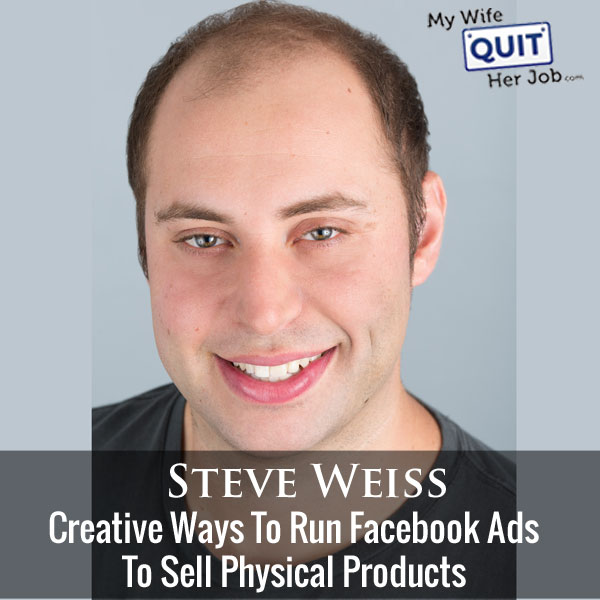
Steve runs MuteSix, a customer acquisition agency that markets over 70 ecommerce brands and ranked 341 on the Inc. 5000 in 2017. He has run Facebook ads since the platform’s sponsored flyer days, when he used them to fill his own stand-up comedy shows.
This episode follows a real launch: Butter Cloth, a stretchy dress shirt brand that went from no website and no audience data to roughly 300 to 400 orders in its first month. It covers the creative process, the discount testing that followed, Messenger cart recovery, and how to think about attribution when Facebook is your only channel.
Get My Free Mini Course On How To Start A Successful Ecommerce Store
If you are interested in starting an ecommerce business, I put together a comprehensive package of resources that will help you launch your own online store from complete scratch. Be sure to grab it before you leave!
Table of Contents
Key takeaways
- Season your creative with engagement campaigns first. Ten shares, twenty likes and five to ten comments is enough before switching to conversions.
- Take the post ID from your winning engaged post and duplicate it across every ad set, so all of them inherit the accumulated social proof.
- Read the comments on your engagement ads. The questions people ask become the copy for your next round of creative.
- Average order value needs to be above $30 for Facebook economics to work, regardless of individual product prices.
- Butter Cloth tested 10%, then 30%, then settled at 20% discount, since 30% lost money and 10% killed conversion.
- Target a 3% on-site conversion rate, since a high conversion rate lets you bid more aggressively for traffic.
- Expect roughly break even in month one. The return is reviews, audience data, conversion intel, and product feedback.
- Test attribution by switching Facebook off and watching whether your other channels drop with it.
How is Facebook advertising different for physical products?
Physical products sell on image and immediate value, while digital products require a longer sales process across a landing page, case studies, and multiple content steps. The psychology differs completely.
Ecommerce shoppers on Facebook are in discovery mode. They are browsing for gifts and unique items, moving through multiple SKUs and dynamic product ads rather than reading a long-form pitch.
Scarcity is the physical product advantage. You genuinely have a limited number of shirts, which supports urgency in a way that “only six spots left” on a digital product does not.
What average order value do you need for Facebook ads?
Your average order value needs to be above $30 for the economics to work. Below that it becomes extremely difficult to run Facebook profitably.
The distinction Steve draws matters. Individual SKUs can be $10 or $15, and the average across an order needs to clear $30, which means bundling and cross-sells are legitimate ways to get there.
Product uniqueness matters less than three other things. The product should solve a problem, you need a way to harness audiences for lookalike building, and you need a mechanism that drives urgency.
How do you create Facebook ad creative for a new product?
Hold the physical product and shoot content with it yourself, because you cannot market something you have not handled. That is Steve’s first step on every new brand.
For Butter Cloth, the goal was disrupting the scroll with something incongruous. They filmed someone doing push-ups, running, and playing basketball in a dress shirt, since nobody expects to see that.
The raw footage was four videos of roughly 30 seconds each, and none of them ran as ads. The team cut them into six segments highlighting different aspects: lifestyle shots, the shirt itself, and the fabric.
Editing is where the value is. The finished ad shows the fabric, explains why it is comfortable, and includes the movement footage, which is a different product than any single clip.
Keep the ad copy short. If the visual shows the shirt stretching, the caption does not need to say the shirt stretches.
How do you target when you have no customer data?
Combine interest targeting against competitor brands, geographic targeting, and open audiences. With a brand new site there is nothing else available.
Butter Cloth layered interest targeting on men who like comparable brands, aiming for an audience above a million people. Geography narrowed it further to warm-weather markets like California and Florida where a lightweight dress shirt makes sense right now.
Open audiences got tested alongside. The point at this stage is generating data rather than expecting Facebook to optimize toward conversions it has never seen.
What does it mean to season your creative?
Seasoning means running engagement and video view campaigns first, so your ads accumulate likes, comments, and shares before anyone is asked to buy. People do not purchase from ads with no visible engagement.
Steve’s threshold is modest: roughly ten shares, twenty likes, or five to ten comments. That takes a few days and a small budget.
The critical mechanic is the post ID. Once one video accumulates real engagement, you take that specific post and duplicate it across every other ad set, so all of them inherit the social proof rather than starting from zero.
That is what lifts click-through and conversion rate simultaneously. You are marketing from a position of strength rather than introducing an unknown brand cold.
Comments are also research. Butter Cloth read the questions people asked about shrinkage and materials and built the next round of creative around those answers.
Should you look at Facebook relevance scores?
Steve does not weight relevance score heavily, having seen campaigns with scores of one or two produce excellent cost per acquisition. He treats it as a rough barometer rather than a decision input.
Judge performance against your actual conversion objective instead. Whether the ad converts on the objective you set is the question that matters.
Click-through rate gets similar treatment. Facebook charges on impressions rather than clicks, so a modest click-through rate paired with real conversions is fine.
What conversion objective should you start with?
Start with purchases and manual bidding, then move up the funnel if Facebook cannot spend your budget. If purchases will not deliver volume, shift to add to cart, then to view content.
After that, experiment with optimized bidding and impression optimization. Steve’s position is that you should constantly test objectives and bidding strategies, since what works today may not work next month.
The on-site conversion rate target is 3%. A high conversion rate is what earns you permission to bid more aggressively for traffic.
How much should you discount when launching a new brand?
Butter Cloth tested 10%, then 30%, then landed on 20%. The 30% discount produced conversions and lost money, and dropping back to 10% killed the conversion rate.
Discounting during launch has a real strategic purpose. It gets product into hands, generates reviews, and produces the audience data you need, all of which you cannot buy any other way.
The danger is training your customers. Once people learn you discount regularly, they wait for the next sale rather than buying at full price, and pulling discounts back after a heavy launch generates real resentment.
Plan the exit before you start. Butter Cloth’s strategy for the following quarter was moving away from discounting entirely.
Should Facebook traffic go to a landing page or your store?
Link directly to your Shopify store first, and only build a custom landing page if that fails. Butter Cloth sent traffic straight to a multi-SKU catalog of about 12 products.
Conversion improvements came from cart and checkout plugins rather than from a bespoke landing page. That is a much faster path to test.
The custom sales process is what you build when direct linking underperforms. Starting there adds work before you know whether you need it.
How do you recover abandoned carts with Facebook Messenger?
Place a Messenger opt-in checkbox on the cart page and an email capture on exit intent, treating them as separate mechanisms for separate moments. Butter Cloth used Shop Message for the Messenger side.
The separation is deliberate. Asking for a Messenger connection when someone is leaving the site entirely feels strange, and asking on the cart page during an active checkout feels natural.
Messenger sequences work like email drips and cost nothing to send. Steve writes them with emojis and casual phrasing so they read like a message from a person rather than a brand broadcast.
Volume limits shape the strategy. You can send one message per 24-hour period, and a reply opens the window for another the next day, so every send has to count.
He runs both channels together, typically Messenger first and email a day later. Messenger felt more personal at the time precisely because so few brands were using it.
Note that Facebook has since substantially tightened Messenger marketing policies, so the promotional sequences described here are no longer permitted in the same form.
What discount should retargeting offers use?
Steve moved away from simply repeating the acquisition discount toward structurally different offers. Buy one get one at half price tested better than a flat 30% off the whole order.
The reasoning is economics rather than psychology. A deeper flat discount converted well and did not pay, while a bundle offer preserves margin on the first unit.
Dynamic product ads only make sense once your audience is large enough to serve impressions. For a new brand, Messenger and email carry the retargeting load until then.
What should you expect from month one of a new brand launch?
Expect roughly break even, and count the return in things other than profit. Butter Cloth sold 300 to 400 orders in its first month at close to break even on a $100 shirt.
Steve names four returns. Reviews come first, since a new product with no reviews cannot convert well. Audience data comes second, including pixel data and emails.
Conversion intelligence is third: which offers work, which video content works, and what the customer’s actual pain points are. Product feedback is fourth, learned from why people return items.
Break even on cold traffic to an unknown brand at a $100 price point is a genuine win. It demonstrates the model works before you have any of the advantages that come later.
When should you scale Facebook ad spend?
Scale when three conditions align: the whole-site economics work, ancillary audience data is growing, and your inventory can support it. Facebook’s own reported numbers are only one input.
Whole-site economics matter more than platform attribution. If Facebook is your only traffic channel and the site is returning 5x on Facebook spend, Facebook is under-crediting itself.
Email list growth alongside break-even sales justifies scaling even without a profit signal. You are buying an asset.
Inventory is the constraint people forget. Blowing through stock you cannot replace is a worse outcome than scaling slowly.
How do you attribute sales to Facebook?
Turn Facebook off and watch what happens to your other channels. If search, direct, and overall sales all drop, Facebook is generating lift that its own reporting does not capture.
Channel count determines how much credit to assign. With Facebook as your only paid channel, attribution is straightforward, and with podcast, search, TV, and radio running simultaneously it is not.
Post-purchase surveys are the third input Steve recommends and most sellers skip. Simply asking customers where they heard about you produces data no platform provides.
Last-click attribution does not work for Facebook. Nobody scales Facebook on last click, so refusing to grant a one-day click or seven-day view window means you should not be advertising there at all.
First-click has the same problem in reverse. If the first click came from Google and Facebook reports the conversion, you still cannot untangle which one caused it.
What happens when competitors can see your ads?
Ad transparency means your discount offers become visible to everyone, including loyal customers who never received them. Steve expected that to change how brands segment their messaging.
The specific risk is customer resentment. A repeat buyer who visits your page and sees a 30% acquisition discount they were never offered has a legitimate complaint.
The competitive intelligence side cuts both ways. Every agency will study competitor ad libraries, and every competitor will study yours.
This did come to pass. Facebook’s Ad Library is now public, which means discount strategy has to account for being visible to your entire customer base rather than only the segment you targeted.
Frequently asked questions
How do you start Facebook ads with no audience data?
Layer interest targeting against competitor brands with geographic targeting, run engagement campaigns first to season your creative, then switch to conversion objectives once the ads have visible social proof.
What is seasoning creative on Facebook?
Running engagement or video view campaigns to accumulate likes, comments, and shares before optimizing for conversions. Roughly ten shares and five to ten comments is enough to start.
How do you keep social proof across multiple ad sets?
Use the post ID of the engaged post rather than creating new ads. Duplicating that specific post across ad sets carries all the accumulated engagement with it.
What average order value do you need for Facebook ads?
Above $30. Individual products can cost less, and the average order needs to clear that threshold for the economics to work.
How much should you discount at launch?
Test a range rather than guessing. Butter Cloth found 30% unprofitable and 10% insufficient, settling at 20%.
Should you send Facebook traffic to a landing page?
Link directly to your store first and add a custom landing page only if that underperforms. Cart and checkout optimization usually produces gains faster.
Should a new brand expect profit in month one?
No. Break even is a reasonable outcome, and the real return is reviews, audience data, conversion intelligence, and product feedback.
How do you know if Facebook deserves credit for a sale?
Turn Facebook off and measure whether your other channels decline with it. Add post-purchase surveys asking customers where they heard about you.