Audio

456: Inside The Crazy World Of Traditional Book Publishing With Michael Drew

456: Inside The Crazy World Of Traditional Book Publishing With Michael Drew

Traditional book publishing is not the sales-driven meritocracy most authors think it is. On this episode of the My Wife Quit Her Job podcast, I sat down with Michael Drew, founder of PromoteABook.com, who has launched 124 consecutive titles onto the national bestseller list. Michael walked me through the real economics behind a traditionally published book: the retailer keeps roughly half the cover price, printing eats another 15%, the publisher pays for shelf space out of what remains, and the author is left with a $1 to $3 royalty on a $20 hardcover.

Even more surprising, the New York Times bestseller list is not a real sales chart. It is an editorial list with a documented set of standards, and Michael has reverse-engineered those standards over 24 years to hit them consistently.

Here is exactly how the industry works today, why publishers no longer market books, and what a first-time author has to bring to the table to have a real shot at a bestseller list.

Key takeaways

  • The number of new books published each year has exploded from 76,000 in 1999 to 1,076,000 in 2022, roughly 600,000 of them in print, but retail bookstores still only have room for about 20,000 to 30,000 new titles a year.
  • On a $20 hardcover, the retailer keeps about $10, printing costs about $3, co-op (paid shelf space) averages another $3, and the author gets around $2, leaving the publisher with roughly $2 per unit before overhead.
  • New York publishers’ 20,000 titles a year now average about 500 copies sold per book. Across all 1,076,000 titles, the average is closer to 100 copies per title, sold.
  • The New York Times bestseller list is an editorial list with five documented standards: retail distribution of at least 10,000 copies, roughly 20,000 pre-sold print units, 10,000+ ebook sales, deep online social proof (hundreds of blogs, podcasts, and vlogs), and traditional media in 100+ markets across TV, radio, and print.
  • The Wall Street Journal is a more valuable list than the New York Times for business, wealth, and money titles. USA Today is more valuable for diet, health, and mass-market nonfiction, because the readers of those lists are the buyers of those books.

Why publishers no longer market books

Publishers no longer market books because the per-unit economics leave them with roughly $2 of gross margin on a $20 hardcover, which is not enough to fund a marketing campaign. The publisher’s job today is distribution and rights sales. Marketing is the author’s job.

Michael broke down the flow of a $20 hardcover: the retailer keeps 50 to 55% ($10 to $11), printing runs about $3 a unit for hardcover, co-op (paid shelf placement) averages another $3, and the author royalty is $2 to $3. The publisher clears roughly $2 before any overhead, warehousing, shipping, or returns.

“There’s really no budget left for them to spend on marketing, PR, and advertising,” Michael said on the show. “This is why they require that their authors bring the marketing to the table.”

That is the single most important thing a first-time author needs to accept before signing a book deal. The publisher is a distribution partner and a rights broker, and the marketing platform has to come from you.

How the book publishing industry actually makes money

The book publishing industry makes money on a 95/5 rule: 5% of books make 95% of the money, and publishers use foreign rights, subsidiary rights, and TV or film rights to get as close to breakeven as possible on the other 95%. New York publishers are also almost all owned by multimedia conglomerates that use books as a top-of-funnel for other revenue streams.

Foreign rights are a real business by themselves. A publisher in Portugal might pay $10,000 to $20,000 for the rights to a moderately successful US title, and South Korea, Japan, or India might pay $50,000 for the right book. The author typically gets 30 to 50% of that payment, depending on the contract.

That is how a publisher stays in business on a portfolio of books that mostly sell 500 copies. A single Trump, Biden, or celebrity title that moves 10 million units carries the P&L, foreign rights recoup the losses on the middle of the list, and the front-list co-op on the long tail gets treated as a cost of doing business.

How much do books actually sell today?

The average New York publisher title now sells about 500 copies. Across all 1,076,000 books published in 2022, the average is roughly 100 copies per title. Those numbers are drastically lower than they were 20 years ago, and the reason is supply.

When Michael started publishing in 1999, roughly 76,000 new books were released. In 2022 the number was 1,076,000, split about evenly between print and digital ISBNs. That is more than a 14x increase in supply against a shelf-space pool that has barely grown.

A typical retail bookstore carries about 100,000 titles. Around 70 to 80% of those are backlist (perennials, classics, and last year’s bestsellers), leaving room for 20,000 to 30,000 new titles a year. So of the 600,000 new print titles published in 2022, at most 30,000 got onto a physical retail shelf at all.

What is co-op, and why every publisher pays for shelf space

Co-op is paid shelf-space placement inside a retail bookstore. Every publisher has to offer it on every new title, because every competing publisher does, and without co-op the retailer will not stock the book. Co-op is merchandising, same as an end-cap fee in a grocery store.

The rate card Michael described is roughly:

  • $1 per unit for spine-out placement on a shelf.
  • $2 per unit for face-out placement on a shelf.
  • $3 per unit for end-cap placement.
  • $4 per unit for a table at the front of the store.
  • $5 per unit for a special display or point-of-purchase placement.

Each retailer grades every new book A through F based on the author’s last book sales at that chain, the average sales of the publisher at that chain, the average sales of the category at that chain, and the marketing plan the author is bringing to the table. That grade dictates both the number of copies stocked and the co-op tier offered.

Books are also 100% returnable from the retailer back to the publisher, unlike most other merchandise. So even a fully-stocked front-of-store book can bounce back to the warehouse in 60 to 90 days if the sell-through is not there.

Are ebook sales replacing print books?

Ebook sales are not replacing print books. Ebooks peaked around 30% of book sales and have since fallen back, while about 75% of all book sales still go through brick-and-mortar retailers like Barnes and Noble, Books-A-Million, the 2,000 remaining independents, Walmart, Costco, Target, Sam’s Club, grocery stores, and airport shops.

Amazon is the largest single book retailer at about 16.7% of sales. Barnes and Noble is number two at about 11.1%. Total online sales (Amazon, BN.com, and every other online retailer combined) sit at around 24.6% of the market.

That mix explains why the publisher’s whole system still revolves around physical distribution and co-op. The digital revolution never overtook the shelf in books the way it did in music, and the industry Michael described is still fundamentally a brick-and-mortar business.

The 5 New York Times bestseller list standards, in order

The New York Times bestseller list is an editorial list, not a real sales chart. In fine print at the bottom of the list, the Times states that it can include or exclude any book at its editorial discretion.

Michael has reverse-engineered five standards from 24 years of campaigns that, when hit together, essentially guarantee inclusion. Miss one and you drop into the editorial gray zone.

Here are the five standards, in the order Michael runs them for a campaign:

Standard 1: 10,000+ copies of retail distribution

The book has to be physically stocked in at least 10,000 copies across the reporting retailers before the campaign starts. Without that footprint, the Times has no way to validate why sales are being reported, so the launch is dead on arrival regardless of how many pre-orders you have.

Standard 2: Roughly 20,000 pre-sold print units

Michael targets 20,000 pre-sold print units, split and released strategically to the reporting retailers within a single week. He does not use a legal publisher embargo (retailers hate embargoes because they cannot bank the cash). Instead he has the author hold the orders and controls a synchronized release across Amazon, Barnes and Noble, Books-A-Million, and the other reporting chains.

Standard 3: 10,000+ ebook sales in the launch window

The Times killed its standalone ebook list in February 2017 and folded ebook sales into the qualifying standards for the main list. Michael runs promotions across Kindle, Kobo, and Nook to hit 10,000 or more ebook units during the same launch window as the print push.

Standard 4: Deep online social proof

The Times launched a spidering technology in 2017 that scans the open web for evidence of legitimate reader interest around a launching book. Michael aims for 350 blog posts, 90 vlogs, and 90 podcasts in the release month, plus social media activity that drives roughly 50,000 consumer engagements (likes, shares, comments) across Facebook, Twitter, and LinkedIn.

Standard 5: Traditional media in 100+ markets

The Times still wants old-media coverage: 100 markets on TV, 100 markets on radio, and 100 markets in print. Syndication makes TV and radio achievable with a strong PR firm and a single national booking. Print is harder because newspaper syndication has largely collapsed, so publicists use matte releases and other tactics to fill the 100 print markets.

Which bestseller list is best for your book?

The best bestseller list for your book depends on who reads that list. For fiction, the New York Times is the top prize.

For business and money titles, the Wall Street Journal reaches the buyers who can hire you or bulk-buy your book. For diet, health, and broad nonfiction, USA Today reaches the mass consumer audience.

New York Times

The most prestigious industry list overall and the gold standard for fiction. But Michael’s data shows New York Times readers are largely literary readers, so a business or health book that hits the list often sees little direct sales lift from the placement itself.

Wall Street Journal

The single most valuable list for business, money, wealth, and business-adjacent personal development titles like Secrets of the Millionaire Mind. A #1 Wall Street Journal position on a business book beats a mid-list New York Times slot, because the WSJ audience actually buys and gifts business books at scale.

USA Today

The most valuable list for diet, health, cookbook, and broad-consumer nonfiction. USA Today has the widest general-consumer footprint of the three national lists, so a #1 in a mass-market category can beat a mid-list New York Times position on the same book.

Regional lists

The LA Times, Chicago Tribune, and Publishers Weekly all run lists that carry weight in their regional or industry pockets. Useful if your platform is heavily concentrated in that market, less useful nationally.

Comparison: cost and floor to hit each major bestseller list

  • New York Times: 10,000+ retail copies stocked, 20,000 pre-sold print units, 10,000+ ebook sales, 350 blogs plus 90 vlogs plus 90 podcasts, and 100-market TV/radio/print coverage. Best fit for literary fiction and cross-category nonfiction.
  • Wall Street Journal: Lower absolute unit threshold than NYT but more concentrated in business channels. Best fit for business, money, wealth, and business-adjacent personal development.
  • USA Today: Purely a sales list (no editorial gate), so the play is aggregate first-week volume across all formats. Best fit for diet, health, cookbooks, and mass-market nonfiction.

What a first-time author should actually do

A first-time author should focus on maximizing distribution and marketing on the first book, because a first title can actually earn more retail distribution than a second book if the marketing plan is strong. Retailers have no track record to hold against you, so a credible platform and campaign can win aggressive placement.

Michael’s advice: throw everything at the launch. Overdeliver on 80%+ of everything you promise the publisher and the retailers. Your first book’s performance is what dictates the distribution the retail buyers will give your next book, and the one after that.

Do not plan a New York Times campaign on book one. Michael’s Times bestsellers usually run their first NYT campaign on their third, fourth, or fifth book, over a three to ten year runway of building platform and audience while shipping earlier titles. The point of the first few books is to build the machine that makes a Times campaign possible later.

Why gifting a book almost guarantees it will not be read

Gifting a book almost guarantees it will not be read, because the currency a reader spends on a book is not $20 of price, it is four to eight hours of time. That decision only gets made when the reader has already decided they want to read that specific book.

“Unless they had already predetermined they wanted to read that book, the probability of them reading that book is very, very remote,” Michael said. He calls this the “shelf help” problem: bookshelves lined with unread self-help and business books that were gifted with the best intentions.

Books also do not compete only with other books. They compete with every sporting event, TV show, movie, video game, YouTube video, and church service that the reader could spend those same four to eight hours on. That is the actual bar you have to clear to earn a read.

Frequently asked questions

How much does an author earn per book sold?

An author earns about $2 to $3 in royalty per hardcover unit sold on a $20 to $25 retail price, and typically half that on a paperback. On a $20 hardcover, the retailer keeps roughly $10, printing costs about $3, co-op takes another $3, the author gets $2 to $3, and the publisher clears about $2 before overhead.

Is the New York Times bestseller list based on real sales?

The New York Times bestseller list is not a real sales chart. It is an editorial list, and the Times states in the fine print that it can include or exclude any book at its editorial discretion. Books that hit all five of the Times’ published standards (retail distribution, sales volume, ebook sales, online social proof, and traditional media coverage) qualify technically, and books that miss a standard drop into an editorial decision.

How many books does a typical traditionally published book sell?

A typical traditionally published book from a New York publisher now sells about 500 copies. Across all 1,076,000 titles published in 2022, the average is closer to 100 copies per book. The 5% of titles that hit real velocity carry roughly 95% of all industry revenue.

Why do publishers not market books anymore?

Publishers do not market books anymore because they only clear about $2 of margin per unit on a $20 hardcover, which is not enough to fund a real marketing campaign. Publishers act like venture capitalists: they underwrite printing, distribution, and co-op, and expect the author to bring the marketing platform, PR, and audience to drive sell-through at the retailer.

What is co-op in book publishing?

Co-op in book publishing is paid shelf-space placement inside a retail bookstore, ranging from about $1 per unit for spine-out placement to $5 per unit for a special point-of-purchase display. Every publisher pays co-op on every new title because every competing publisher does, so without it the book will not be stocked.

Should a first-time author target the New York Times list?

A first-time author should almost never target the New York Times list on book one. Michael’s clients typically run their first NYT campaign on their third, fourth, or fifth book, over a 3 to 10 year platform-building runway. The first few books exist to build the audience, media, and retail track record that a Times campaign requires.

Are ebooks replacing print books?

Ebooks are not replacing print books. Ebook share of total book sales peaked around 30% and has since fallen back, while roughly 75% of all books are still sold through physical brick-and-mortar retailers. Amazon is the single largest retailer at about 16.7% of sales, and total online sales sit near 24.6% of the market.

I Need Your Help

If you enjoyed listening to this podcast, then please support me with a review on Apple Podcasts. It's easy and takes 1 minute! Just click here to head to Apple Podcasts and leave an honest rating and review of the podcast. Every review helps!

Ready To Get Serious About Starting An Online Business?


If you are really considering starting your own online business, then you have to check out my free mini course on How To Create A Niche Online Store In 5 Easy Steps.

In this 6 day mini course, I reveal the steps that my wife and I took to earn 100 thousand dollars in the span of just a year. Best of all, it's absolutely free!

455: If I Only Knew: 5 Life-Changing Insights About Business I’d Tell My Younger Self – Family First Friday

455: If I Only Knew: 5 Life-Changing Insights About Business I'd Tell My Younger Self

If I could go back and give my younger self five business lessons before I started Bumblebee Linens and MyWifeQuitHerJob.com, they would be these: 99% of entrepreneurship advice is wrong for anyone with a family, start before you feel ready, do not build a business around what you love, everything is a commodity so sell to emotion, and a side hustle is not actually risky. Those five ideas are the frame I have used to build a seven-figure ecommerce store and a top-25 marketing podcast while working roughly 20 hours a week and being home for my kids every night.

This is the very first Family First Friday solo episode of the My Wife Quit Her Job podcast, where I share the mindset shifts behind The Family First Entrepreneur. Every one of these lessons came from either doing it wrong myself or watching one of the 450+ entrepreneurs I have interviewed do it wrong at a bigger scale.

Here are the five lessons in order, plus what I would do differently on each one if I were starting today.

Key takeaways

  • 99% of entrepreneurship advice is aimed at single, unattached men with no family responsibilities. Follow it and you will win the business but lose the reason you started it in the first place.
  • You will feel ready to launch about six months after you have already started. Start before you feel ready, because the first few steps are also the least risky.
  • Do not build a business around what you love. Most of running a business is sales, marketing, customer service, and inventory, none of which is a passion for anyone.
  • Everything is a commodity, so sell to emotion. Drew Whitman’s Life Force 8 explains why customers buy: survival, enjoyment, fear, sex, status, comfort, protecting loved ones, and social approval.
  • A side hustle is not risky if you keep the day job, spend small, and iterate. My wife and I started Bumblebee Linens with $630 and now do over $1 million a year in revenue.

Lesson 1: 99% of entrepreneurship advice is wrong for anyone with a family

Most entrepreneurship advice is wrong for anyone with a family because it is written by single, unattached men who have no one to feed but themselves. The “grind 80 hours a week” mantra works for someone with no dependents. It destroys someone with kids, a spouse, and a mortgage.

I have interviewed more than 450 successful entrepreneurs on this podcast, and privately many of them will admit they never see their family, they are burned out, and they are running on fumes. One billionaire I interviewed said his single biggest life regret is that his business destroyed his marriage, and he would trade all of the money to be back with his family.

You can be financially free without being a stranger to your kids. You can make real money and still have the time to enjoy it. The tradeoff most business media assumes is not actually the tradeoff, if you build the business around a set of family-first principles from day one.

Lesson 2: Start your business before you feel ready

Start your business before you feel ready, because you will feel ready roughly six months after you have already started. Nobody feels ready on day one, and waiting for the feeling is what kills most first businesses before they ever launch.

I wanted to start MyWifeQuitHerJob.com for years before I actually did. Two things blocked me: I was intimidated by WordPress (yes, engineers can be intimidated by tech too), and I told myself I hated writing.

When I finally installed WordPress, the setup took a couple of hours, not two years. The next day I wrote my first post and realized blog posts do not have to be long or eloquent to be useful.

When my wife and I started Bumblebee Linens, we knew nothing about ecommerce, nothing about advertising, and nothing about selling online. We made over $100,000 in profit in year one anyway.

The first steps of any business (installing the software, listing the product, taking the first order) are the least risky steps in the entire journey. Delaying those steps is what makes people feel like starting a business is dangerous.

Lesson 3: Do not build a business around what you love

Do not build a business around what you love, because most of what you actually do every day as a business owner is not the thing you love, and turning a passion into a business is the fastest way to grow to resent it. I sell linens, but my day is spent on sales, marketing, inventory, and customer service. The same list would exist if I sold computers, supplements, or garage doors.

My wife loved to embroider blankets and pillowcases as a hobby. The moment we started doing custom embroidery for paying customers, she started hating it. That is what commercialization does to a hobby, and it happens to nearly every passion-turned-business I have watched.

Focus on the purpose of your business instead of the passion. For us the purpose was replacing my wife’s income so she could stay home with the kids. Every decision (which product, which channel, which price) had to pass through that filter, and that clarity is what kept us going through the boring parts.

Lesson 4: Everything is a commodity, so sell to emotion

Everything you sell is essentially a commodity, so the winning move is to sell to emotion, not novelty. Almost nobody invents a genuinely new product. Everyone else is selling variations of things that already exist, and the brands that win are the ones that trigger the strongest emotional response in the buyer.

Drew Whitman calls the eight core drivers behind almost every purchase the Life Force 8. If you appeal to any one of them, you can sell almost anything.

The Life Force 8

  • Survival, enjoyment of life, and life extension. Health, safety, longevity products.
  • Enjoyment of food and beverages. Restaurants, snacks, gourmet ingredients, coffee.
  • Freedom from fear, pain, and danger. Insurance, security, medical.
  • Sexual companionship. Beauty, dating, fashion, grooming.
  • Comfortable living conditions. Home, furniture, appliances, HVAC.
  • To be superior, winning, keeping up with the Joneses. Luxury goods, education, status.
  • Care and protection of loved ones. Children’s products, pet products, family safety.
  • Social approval. Fashion, cars, personal brand.

How brands actually use the Life Force 8

Look at the brands whose ads work. Dr Squatch sells bar soap, but every commercial sells sex. Old Herbal Essences commercials implied an orgasm from shampoo, and Old Spice dares men to be manlier.

Every one of those is a direct pull on a Life Force 8 driver, and it is why those brands scale in categories crowded with identical-on-paper competitors.

Stop obsessing over finding a unique niche. Start obsessing over which of the eight emotions your product legitimately triggers, and how to communicate that emotion at every touchpoint from ad to landing page to unboxing. The product is less important than the feeling it evokes.

Lesson 5: Starting a side hustle is not actually risky

Starting a side hustle is not actually risky if you keep your day job, invest small amounts, and iterate. The image of the entrepreneur as a bet-the-farm gambler is a media stereotype. Every successful business owner I have interviewed has been the opposite: methodical, conservative, and willing to make small mistakes to learn.

My wife and I started Bumblebee Linens with $630, and we both kept our full-time jobs. We made tiny bets: order 50 handkerchiefs, test a price point, tweak the listing, order 100 more, and we had room for lots of little mistakes because none of them were fatal.

That store now does over $1 million a year in revenue, and neither of us has held a regular job in years. That is not because we took a giant risk. It is because we took a lot of small ones, kept the safety net of a paycheck while we tested, and only pulled the ripcord on the day job when the business could support us.

How these five business lessons fit together

These five lessons all point at the same conclusion: build a business that fits your life, not one that consumes it. Ignore the grind advice, start before you are ready, pick a business by purpose (not passion), sell to emotion instead of chasing novelty, and de-risk the whole thing with a side-hustle timeline. Do all five together and you can build a real income without giving up the years and the relationships you started the business to protect.

Frequently asked questions

Is most entrepreneurship advice bad for people with families?

Most mainstream entrepreneurship advice is bad for people with families because it is written by single founders with no dependents, and it assumes you can trade 80 hours a week for equity. If you have kids or a spouse, follow that advice and you will win the business at the cost of the life you started the business to build.

Should you quit your job to start a business?

Do not quit your job to start a business. Keep the day-job income and paycheck while you build a side hustle with small, calculated experiments. Only leave the day job once the business income can reliably replace your salary, because the safety net of a paycheck is what lets you take the small risks that actually grow a company.

Do you have to be passionate about your business to succeed?

You do not have to be passionate about your business to succeed. Most of running any business is sales, marketing, inventory, and customer service, none of which is anyone’s passion. Focus instead on the purpose the business serves in your life, such as replacing a spouse’s income or funding a specific lifestyle.

How much money do you need to start a side hustle?

You can start a side hustle for a few hundred to a few thousand dollars. My wife and I launched Bumblebee Linens with $630 and grew it into a seven-figure business. Small starting capital forces small, calculated experiments, which is exactly what builds a durable business instead of blowing up early on one big bet.

What is the Life Force 8 in marketing?

The Life Force 8, coined by Drew Whitman, is the list of eight core human desires that drive almost every purchase: survival, food and drink, freedom from fear, sex, comfortable living, superiority and status, protection of loved ones, and social approval. Products that appeal directly to at least one Life Force 8 driver consistently outsell products marketed on features alone.

Is it too late to start a business now?

It is not too late to start a business now. The single biggest reason most people never start is that they wait to feel ready, and that feeling never arrives before you launch. Start the smallest possible version of the business you can imagine this week and you will feel ready roughly six months after the first sale.

I Need Your Help

If you enjoyed listening to this podcast, then please support me with a review on Apple Podcasts. It's easy and takes 1 minute! Just click here to head to Apple Podcasts and leave an honest rating and review of the podcast. Every review helps!

Ready To Get Serious About Starting An Online Business?


If you are really considering starting your own online business, then you have to check out my free mini course on How To Create A Niche Online Store In 5 Easy Steps.

In this 6 day mini course, I reveal the steps that my wife and I took to earn 100 thousand dollars in the span of just a year. Best of all, it's absolutely free!

454: From 0 To Millions: His Inc 500 Business Turned A Simple Idea Into A Multi-Million Dollar Empire W/ Mike Barnhill

454: From Zero To Millions: This Inc 500 ID Badge Business Turned A Simple Idea Into A Multi-million Dollar Empire With Mike Barnhill

Mike Barnhill and his brother Patrick turned a “boring” ID badge business called Specialist ID into an Inc 500 multi-million dollar empire by picking a saturated commodity, deciding to be the best in the world at that one thing, and going wide on every marketplace that would list badges. Roughly 70% of Specialist ID’s revenue now comes from Amazon, the rest from their Shopify site, Etsy, eBay, and Walmart, with thousands of SKUs, in-house assembly of custom bundles, and a reorder rate roughly double the industry average.

On this episode of the My Wife Quit Her Job podcast, Mike walked me through how they went from a failed recording studio in a garage to a Florida warehouse full of auto-baggers and a full US-based customer service team. The playbook is a good template for anyone building an ecommerce brand in a category everyone else considers commoditized.

Here is exactly how Specialist ID got started, how they scaled to eight figures in a category no one else wanted to touch, and how they used a Good to Great mindset and a Blue Ocean playbook to keep innovating past their competition.

Key takeaways

  • Specialist ID picked ID badges because it was the one product they were already selling well on eBay and, after reading Good to Great, they realized it was the one product they could be best in the world at.
  • Amazon is roughly 65 to 70% of Specialist ID’s revenue, with the remainder split across their Shopify site, Etsy, eBay, and Walmart at about 1 to 3% each. They deliberately built the brand to be ubiquitous.
  • Their Amazon reorder rate is about double the office-supplies industry average, driven by white-glove customer service inspired by Tony Hsieh’s Delivering Happiness.
  • They pivoted twice during the pandemic. First, they scraped Indeed and Monster to build hot-pink “badge buddies” for hospitals hiring travel nurses. Then they bought up every double-ended lanyard in the US and rebranded them as mask lanyards, which produced their two biggest months in company history.
  • Etsy has been Specialist ID’s best source of high-value repeat customers, because crafters and nurse-side-hustlers use their blank badge reels as raw material and often graduate into big wholesale accounts.

How Specialist ID started selling ID badges on eBay

Specialist ID started because Mike and Patrick Barnhill needed to keep the lights on at a failed recording studio their estranged father had funded with a one-time $20,000 “dream fund.” When the studio did not draw paying artists, they turned to eBay and started selling pro-audio gear from a wholesaler’s catalog to cover the rent.

The breakout product came from a leftover supplier relationship of Patrick’s: retractable badge reels at 99 cents plus $2.99 shipping. The listings sold on repeat, week after week, at a scale nothing else in their catalog matched.

The turning point was reading Jim Collins’ Good to Great. The book’s “hedgehog” principle (be the best in the world at one thing) pushed them to drop the pro-audio experiment and go all-in on badge holders. That single decision is what turned an eBay side hustle into an Inc 500 company.

Why Specialist ID went all-in on a “boring” commodity product

Specialist ID went all-in on badge holders because it was a commodity nobody was trying to be the best at, and being the best in a boring category is a much easier fight than being the best in a hot one. Mike and Patrick decided they could not out-compete established brands in pro-audio, but they could absolutely become the Nike of badge holders.

That framing did two useful things. It gave them permission to obsess over a category that outsiders considered dull, and it gave them a clear yardstick for every product, packaging, and customer-service decision.

Later, at one of my Seller Summit events, an attendee handed Mike a copy of W. Chan Kim’s Blue Ocean Strategy. That book layered the second key idea on top: any market you win eventually gets saturated, so a durable brand has to keep innovating into product gaps customers are asking for.

That combination (best in the world at one thing, plus continuous product innovation) is the operating system Specialist ID still runs on.

Where Specialist ID actually sells: Amazon, Shopify, Etsy, eBay, and Walmart

Specialist ID sells across five channels, and the mix looks like this in order of revenue contribution:

  • Amazon: 65 to 70% of revenue. Not planned, just where the opportunity kept showing up as they went into private label in 2014.
  • Own website (Shopify, migrated from Volusion): the bulk of the remainder. Used for bulk orders, quotes, and Fortune 500 clients that Amazon cannot service well.
  • Etsy: roughly 1 to 3%. Small share, but produces the highest-loyalty customers, including nurse-crafters who later become large wholesale accounts.
  • eBay: roughly 1 to 3%. The original channel, still running as a low-cost feeder into other properties.
  • Walmart: roughly 1 to 3%. A small pilot with about five products on Walmart Fulfillment Services (WFS), quietly experimenting rather than pushing hard.

The key insight from that mix is that the “boring” plays (Etsy, eBay, Walmart) each punch above their revenue weight because they source completely different customer types. Every channel is a different lead magnet into the brand, and the customer-service team already exists to handle them.

How Specialist ID scaled Amazon private label in 2014

Specialist ID scaled Amazon private label in 2014 by studying Scott Voelker’s ecommerce content and applying his playbook to badge holders. They took products that already had proven demand, then wrapped them in keyword-optimized listings, better photography, and bundle formats (5-packs, 10-packs, key-ring combos) that no one else was offering.

Mike’s specific edge is Amazon keyword hunting. He mines auto-complete phrases and long-tail searches to find queries with real demand and no relevant listing, then Specialist ID builds a product to fill that exact gap. That is how they layered a private-label catalog with thousands of SKUs on top of the original resale business.

The economics of private label also solved their biggest early pain: getting undercut on price when everyone else sold the same wholesale catalog on Amazon. Owning the SKU meant owning the buy box, the reviews, and the margin.

How Specialist ID grew during COVID with two fast pivots

Specialist ID grew during COVID with two fast pivots that landed them on the Inc 500 in 2021. The first pivot targeted travel nurses, and the second pivot invented the mask lanyard category. Both moves used existing supplier relationships and existing product inventory, so they cost almost nothing to test.

Pivot 1: Custom badge buddies for hospitals hiring travel nurses

Mike scraped Indeed and Monster for hospital job titles that were actively hiring during COVID. Every title (LPN, RN, respiratory therapist) got its own badge buddy listing, in every color hospitals color-code by role, with hot pink as a default best-seller. Those listings went up on Amazon and Etsy in bulk, and the sales came in immediately because travel nurses were buying their own badge gear before shifts.

Pivot 2: Mask lanyards from existing double-ended lanyards

Specialist ID had already designed a double-ended napkin holder for events, complete with photography. When masks became mandatory, Mike realized the same double-ended lanyard could hold a mask. They bought up every double-ended lanyard in US inventory, relaunched them as mask lanyards, and posted them on Amazon.

Day one: about 20 sets sold. Within weeks: their two biggest revenue months in company history.

They then extended the line with school-color variants, kid-safe breakaway versions, and MRI/metal-detector-friendly versions for hospital and airport workers. Every innovation shipped ahead of the copycats, then the copycats caught up, then Specialist ID innovated again.

How Specialist ID keeps customers coming back

Specialist ID keeps customers coming back with a Delivering Happiness style customer service culture that will happily lose money on a single order to keep a customer for life. Their Amazon reorder rate is about double the office-supplies industry average, driven by two US-based full-time customer service reps and a dedicated B2B sales rep who works the phone list of past buyers.

Their operating principle is simple: if a customer has a problem, do whatever it takes (even overnight shipping at a loss) to make them happy today, even if they were unhappy yesterday. The financial cost of that policy is small compared with what a lost lifetime relationship costs, and Mike said it also lets him actually sleep at night.

The reorder rate compounds because ID badges are true consumables. A broken reel means a nurse cannot work a shift, and buyers do not want to re-research the category every time. Once Specialist ID earns the first order and the first great support experience, they usually own the recurring line item.

What Specialist ID makes in-house vs. outsources

Specialist ID does a large share of packaging, bundling, and simple assembly in-house, using auto-baggers and a dedicated “packaging and branding” team at their Miami warehouse. In-house work covers custom bundles, key-ring assembly, branded barcodes, badge buddy printing, and any new product they want to test before committing to overseas tooling.

The manufacturing itself is outsourced globally to vetted “Nike-tier” factories in Taiwan, China, Vietnam, and the US. If a factory does not meet their standard on quality or ethics, they pass, no matter the price advantage.

That split (make it in the warehouse until you know it sells, then place the overseas PO) is what lets them keep innovating without blowing capital on speculative inventory. It is also what let them move so fast during COVID.

How Specialist ID sources product ideas from customers

Specialist ID sources many of its best product ideas directly from customers, particularly Etsy buyers who message the store with specific vendor tips. Mike described one recurring pattern: a nurse-crafter will say she knows the vendor who makes a specialty item, does not want to place a 10,000-unit minimum order herself, and offers to buy the first 500 units if Specialist ID commits to the initial 10,000.

That kind of tip does three useful things at once. It surfaces a validated product idea from someone who already knows the market, it de-risks the first inventory buy with a guaranteed anchor order, and it turns a small B2C customer into a real product partner.

Very few ecommerce brands build a listening loop that specific. Most treat customer messages as support tickets to close, not as R&D. Specialist ID treats them as free product research from the people who use the product every day.

Comparison: Specialist ID’s marketplaces by role in the business

  • Amazon. The engine. 65 to 70% of revenue. Best for one-off B2C and small B2B orders where keyword optimization does the selling.
  • Own website (Shopify). The margin play. Best for bulk quotes, Fortune 500 accounts, and custom color mixes Amazon cannot handle.
  • Etsy. The loyalty channel. Best for finding crafter and side-hustler buyers who convert into long-term wholesale relationships.
  • eBay. The feeder. Best for volume-testing new SKUs at low risk and pulling residual demand into the website.
  • Walmart. The experiment. Best for products that get crushed on Amazon by cheap-and-cheerful competition; Walmart is less saturated on many mid-priced SKUs.

What a new ecommerce seller can copy from Specialist ID

A new ecommerce seller can copy four specific things from Specialist ID: pick one boring commodity you can be the best at, be present on every marketplace your buyer might check, treat customer service as a marketing budget (not an expense line), and mine keyword and job-market data for product ideas nobody else is building for. None of that requires a novel product. All of it requires focus.

The bigger lesson is that “saturated” is often just code for “nobody is trying hard.” Badge holders had thousands of listings by the time Mike and Patrick got serious, and they still built an Inc 500 business by out-caring, out-listing, and out-innovating every other seller in the category.

Frequently asked questions

What does Specialist ID sell?

Specialist ID sells ID badge holders, retractable badge reels, lanyards, badge buddies (color-coded hospital role identifiers), custom-printed badge accessories, and related credential products. Their catalog runs into the thousands of SKUs across Amazon, their Shopify site, Etsy, eBay, and Walmart.

How much of Specialist ID’s revenue comes from Amazon?

About 65 to 70% of Specialist ID’s revenue comes from Amazon, consistently across the last several years. It was not planned. Amazon private label just kept out-scaling the other channels as they layered on more listings starting in 2014.

How do you compete in a saturated ecommerce category?

To compete in a saturated ecommerce category, be the best in the world at one narrow slice of it (Good to Great “hedgehog” principle), keep innovating into product gaps competitors have not filled yet (Blue Ocean Strategy), sell on every marketplace your buyer might check, and use white-glove customer service to earn a reorder rate above the category average.

Is Etsy worth it for ecommerce sellers who are not handmade?

Etsy is worth it for ecommerce sellers who are not handmade if you sell supplies to Etsy’s crafter and maker community. Etsy officially allows suppliers to sell to resellers, and Specialist ID says some of their best long-term wholesale customers first found them on Etsy as small crafters years earlier.

How did Specialist ID grow during COVID?

Specialist ID grew during COVID with two fast pivots. First, they scraped Indeed and Monster for hospital job titles and built role-specific “badge buddies” for travel nurses in every color hospitals code by. Second, they bought up every double-ended lanyard in US inventory and rebranded them as mask lanyards, which produced the two biggest revenue months in company history.

Should you list the same product on Amazon, Etsy, eBay, and Walmart?

You should list the same product on Amazon, Etsy, eBay, and Walmart if you have a customer service team already handling volume. Each channel reaches different buyer types, keyword tweaks per platform are cheap, and Specialist ID reports that products that flop on Amazon often sell well on Walmart because Walmart is less saturated in many mid-priced categories.

I Need Your Help

If you enjoyed listening to this podcast, then please support me with a review on Apple Podcasts. It's easy and takes 1 minute! Just click here to head to Apple Podcasts and leave an honest rating and review of the podcast. Every review helps!

Ready To Get Serious About Starting An Online Business?


If you are really considering starting your own online business, then you have to check out my free mini course on How To Create A Niche Online Store In 5 Easy Steps.

In this 6 day mini course, I reveal the steps that my wife and I took to earn 100 thousand dollars in the span of just a year. Best of all, it's absolutely free!

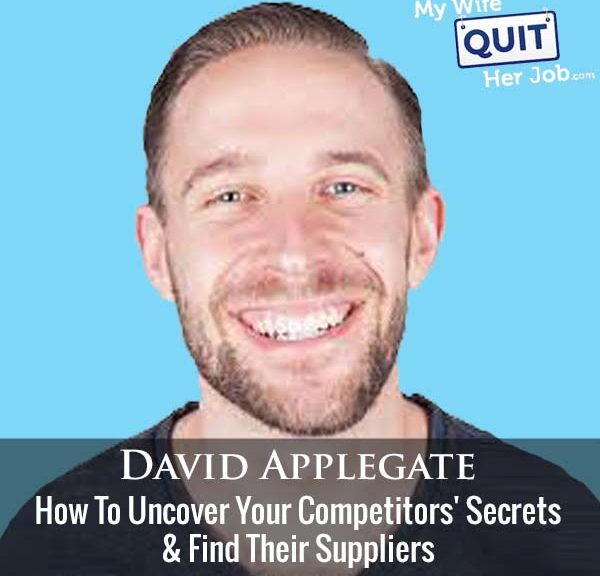
453: How To Uncover Your Competitors’ Secrets And Find Good Suppliers With David Applegate Of ImportYeti

453: How To Uncover Your Competitors' Secrets And Find Their Suppliers With David Applegate

You can find the exact factories your competitors are using by searching US import records for free at ImportYeti.com. Every ocean shipment into the United States is public record via US Customs’ Bill of Lading data, and ImportYeti packages that data so you can search a brand like IKEA or a scrappy Amazon competitor and see who actually makes their products, in what volumes, and how consistently.

In this episode of the My Wife Quit Her Job podcast, I sat down with David Applegate, the founder of ImportYeti and a longtime ecommerce seller behind Wrestling Mart. David built ImportYeti during the pandemic to solve his own sourcing problems, and the tool has since become the go-to free alternative to paid services like Panjiva and ImportGenius.

Below is how ImportYeti works, how David pitches suppliers so they actually want him as a client, and the sourcing and product-launch playbook he uses inside his own ecommerce brand.

Key takeaways

  • US Customs publishes every ocean shipment’s Bill of Lading data, and ImportYeti is a free search interface on top of that data. You can look up any US-importing brand and see their vendors, volumes, and product categories.
  • ImportYeti’s value over the raw dataset is deduplication and visualization. Searching “IKEA” returns one merged IKEA entity, not 500 fragmented ones, and vendor volumes and consistency are charted for you.
  • Use ImportYeti alongside Alibaba, not instead of it. Alibaba finds you a large pool of suppliers; ImportYeti tells you which of those suppliers actually specialize in your product and move real volume.
  • The way you introduce yourself to a factory decides your price. Emails that lead with “I’m an Amazon seller, tell me your MOQ and price” get treated as unproven and expensive; emails that lead with the product spec, a company name, and a call request get partnered pricing.
  • Never start on Amazon. David calls Amazon-only businesses “manufacturer arbitrage” and says brand fundamentals (built through community sales, a Shopify store, or retail) are what let you survive when competitors undercut you.
  • Copycatting by your factory is rare in practice. In hundreds of seller conversations, David says only about 1 in 100 has actually had a manufacturer clone their product and sell it directly.

What is ImportYeti and how does it work?

ImportYeti is a free search engine on top of the US Customs Bill of Lading dataset, which records every ocean shipment entering the United States. You type in a brand, product, or supplier name, and ImportYeti shows you which factories shipped to that brand, how much they shipped, and the consistency of the relationship over time.

David built the tool in March 2020 to solve his own problem. He was sourcing specialty wrestling products for Wrestling Mart, and existing paid tools required real data-science chops to make sense of the raw bill-of-lading data.

He wanted something a non-analyst seller could open, search a competitor, and act on. That’s the design goal ImportYeti still ships against today.

How is ImportYeti different from the raw import dataset?

ImportYeti’s edge over the raw Customs data is entity deduplication and vendor-volume visualization. In the raw dataset, a search for “IKEA” returns hundreds of fragmented IKEA entities, and you have to manually stitch them together and then tabulate each vendor’s shipments to see the real picture.

ImportYeti merges those entities so IKEA returns as one company. Its vendor table is charted with the volumes each supplier moves, so you can eyeball who is IKEA’s biggest, most consistent partner in your product category without any spreadsheet work.

That matters because consistency is the real signal. A vendor shipping to a big brand month after month for years is different from a one-off shipment, and the raw data hides that distinction.

How should you use ImportYeti alongside Alibaba?

Use ImportYeti and Alibaba together, not as substitutes for each other. Alibaba is great for surfacing a large pool of manufacturers who claim they can make your product; ImportYeti is where you verify which of those manufacturers actually specialize in it and ship real volume.

David’s example: Wrestling Mart sells both wrestling shoes and shoelaces. If Wrestling Mart listed itself on Alibaba, it would claim both, even though its shoe competency is far stronger than its shoelace competency. Import records show which category actually accounts for 70% of a supplier’s volume.

A supplier that specializes in your product category typically means higher quality, better cost structure from economies of scale, a workforce trained on that specific process, and lower raw-material costs. That is the vendor you want.

How do you find your competitors’ suppliers on ImportYeti?

To find a competitor’s supplier on ImportYeti, search their US-importing entity name (usually the corporate LLC or Inc, not the DBA), open their vendor table, and sort by shipment volume in your product category. The top three to five vendors with consistent multi-year shipments are your shortlist.

Then flip the search: type each vendor name into ImportYeti and look at their full customer list. You are looking for vendors whose customer base skews toward brands you respect, hits ESG or industry certifications, and shows the vendor specializing in your product type instead of dabbling in it.

If a factory already meets the quality bar of a big brand you admire, they can meet yours.

How to pitch a factory so they actually want you as a client

Factories give their best prices to buyers who look like real, low-hassle partners, and the first email is where that impression is made. Most sellers torch the pitch in the first two sentences by leading with “I’m an Amazon seller, tell me your MOQ and price.”

That email tells a factory two things they hate: you are unproven (they receive hundreds of Amazon-seller emails a month), and you are going to grind them on price and order the minimum. No factory gives that person a good quote.

The better opening names your company, states the exact product and specs, cites why the factory came recommended, and asks for a call with sales or the CEO. It positions the buyer as someone who has done the homework and wants a relationship, not a quote.

The bad email (what most sellers send)

“Hi, my name is Billy. I’m an Amazon seller. I want to import your coffee mugs. Tell me your MOQ and price.”

The good email (David’s script)

“Hi, my name is David Applegate. I’m the purchasing director at Wrestling Mart, the world’s largest specialty wrestling store.”

“I’m trying to import product ABCD from you. We’re looking for these specifications, and you guys came highly recommended. I’d love to set up a call with your CEO or sales manager so we can better understand your capabilities and see if we might be the right strategic alliance.”

What to do if you can’t credibly claim any of that

Be honest without positioning yourself poorly. “I’m a newer ecommerce brand, we’re investigating bringing these products to market, and I’d like to build a relationship” beats the MOQ-and-price email every time.

Never ask questions the factory expects you to already know. David’s trick: message a few vendors from a burner email first, learn the product terminology and material specs, then contact your real targets from a position of competence.

ImportYeti vs Panjiva vs ImportGenius: how they compare

All three tools sit on top of the same US Customs Bill of Lading dataset, but they package it very differently and price accordingly.

ToolPriceData sourceBest for
ImportYetiFree (core search)US ocean import recordsEcommerce sellers who want a fast, visual competitor and vendor lookup with entity deduplication
Panjiva (S&P Global)Enterprise (custom, typically thousands per year)Global trade data across many countriesEnterprise supply-chain and market-intelligence teams
ImportGeniusPaid subscription, starts around $99/monthUS and select global import recordsSourcing analysts who need bulk exports and API access

For a first-time or growing ecommerce brand, ImportYeti covers most of the workflow at zero cost. Paid tools become worth the spend once you need bulk exports, non-US shipment data, or API access.

How David picks a supplier once ImportYeti has surfaced the shortlist

David treats hard filters and relationship feel as separate stages. First he applies qualifiers: does the vendor specialize in this product, will Wrestling Mart be a big fish in their pond, are they in the right region, do they have stable long-term customer relationships?

Anyone who clears those filters advances to the relationship round. From two or three finalists he opens a real conversation, not a mass-email blast to 30 vendors.

The relationship round is where he judges partnership fit. He wants a factory that wants his business back, because that mutual interest is what protects him from quality issues, copycatting, and price hikes when the market moves.

Will your factory copy your product and sell it themselves?

In David’s experience, factory copycatting is rare in practice. Across hundreds of ecommerce sellers he has talked to, only about 1 in 100 has actually had a manufacturer clone their product and sell it on Amazon directly.

Two things keep it rare. First, once you have built a real relationship with the factory, the math on burning that partnership rarely pencils out compared to the ongoing order flow.

Second, most quality manufacturers do not have the organizational competency to sell on Amazon, because manufacturing and marketplace selling are completely different skill sets.

David’s five-step product launch playbook

David uses the same product-launch loop for every new SKU inside Wrestling Mart. It is worth walking through as a sequence, because the order matters. First understand it end to end, then work each step.

Here is the five-step launch sequence: participate in a community you actually belong to, spot a product gap you personally feel, test the idea with 30 people from that community, identify your three biggest risk areas, then prove the riskiest one before writing a check.

Step 1: Live inside a community that could be a market

Start with communities you actually belong to, because the product ideas that stand out are the ones you spot from the inside. David rattles off inks, fountain pens, guitars, and wrestling gear as spaces he lives in, and each is somewhere he could credibly launch a product without doing outside research.

The problem with generic idea lists is what he calls “same-room ideation.” When 40 college students in one classroom brainstorm business ideas, every idea is a hangover breakfast, a party cleanup service, or a book-lending app, because that is the only reality they know.

Your unique product ideas come from spaces that most sellers do not live in.

Step 2: Spot a specific gap you personally feel

Look for the products you personally wish existed inside that community. David loves certain shades of red ink and specific fountain pen holders that he cannot find on the market, and those are exactly the ideas he would develop.

If you cannot name a product gap you feel yourself, you are not deep enough in the community yet. Give it more time before you launch anything.

Step 3: Test the idea with 30 people, not a survey

Once you have a candidate product, buy 30 people from that community a coffee and get a 10-minute call. Ask about their current buying habits, walk them through what you are considering, and then ask the hard question: “If I ran a $20 preorder today, would you pay?”

A yes on the preorder question is the strongest interest signal you can get without shipping product. Passive survey responses (“that sounds cool”) do not count.

Step 4: Identify your three biggest risk areas

Every product has three risks: demand risk (will people buy it), distribution risk (can you get in front of them), and execution risk (can you actually make it). Score each one against your own honest track record.

For an ink brand, David figures execution and distribution are low risk for him because he knows manufacturers and can market on forums. Demand is the unknown, so demand is where he spends validation time.

Step 5: Prove the riskiest area before you commit money

Whichever risk scored highest is the one you validate before any real spend. For David’s ink example, that means the 30 preorder calls happen before he ever talks to a factory.

Import Yeti itself was built this way. David shipped a deliberately terrible first version, watched people tear it apart, and used the fact that they cared enough to complain as proof that demand was real.

Why you should not start your ecommerce business on Amazon

David’s controversial take is that starting your ecommerce business on Amazon is a mistake, because Amazon-only sellers are running “manufacturer arbitrage,” not a business. You are buying the same widget as everyone else, listing it at 1% less, and waiting for the next seller to undercut you.

Amazon is a great distribution channel and a phenomenal warehousing layer, but it does not teach you core business fundamentals: how to build a brand, how to talk to customers, and how to market outside PPC. Sellers whose entire marketing strategy is Amazon PPC are one algorithm change away from zero.

Better sequence: prove demand in the community first, then Shopify, then layer Amazon on top as an accelerant once the brand exists.

How to charge premium prices instead of racing to the bottom

David charges premium prices at Wrestling Mart, and his reasoning is that low-cost is one of the hardest strategies to execute unless you have a real cost advantage. Copying everyone else’s manufacturer and pricing 10% lower is not a strategy, it is a countdown to zero margin.

Consumers who are buying on value do not know the price of what they are buying. David cannot tell you what he paid for his Iroshizuku Ama-iro ink, because he wanted the color and would have paid $9, $15, $19, or $29 for it.

Premium pricing also makes advertising, customer service, and returns easier. When margin is fat, you can afford to give products away to unhappy customers, and that goodwill compounds.

The eBay cigar cutter cautionary tale

David’s first ecommerce product was cigar cutters he sold on eBay in the 1990s as a teenager. He was buying them for 50 cents, listing them at $9.99 with $3 shipping, and selling 20 a day.

Then a competitor listed at $9.50 and his sales went to zero. David dropped to $8.99 and got the sales back. That cycle repeated every few days for four months, until he was selling cigar cutters at $1.99 with free shipping and losing 50 cents on every unit.

That is the endgame of every commodity race to the bottom, and David says the same dynamic is now playing out on Amazon in categories like exercise rings, where 195 near-identical listings all trace back to two factories.

Frequently asked questions

Is ImportYeti actually free to use?

Yes. The core ImportYeti product, including brand search, vendor lookups, and shipment volume visualizations, is free and, according to David, always will be. You can search unlimited companies at ImportYeti.com without a paid account.

What data does ImportYeti pull from?

ImportYeti pulls from US Customs Bill of Lading records, which are the shipping manifests every ocean container entering the United States is required to file. This is public data, but ImportYeti deduplicates entities and visualizes vendor volumes on top of it, which saves you the data-science work.

Can I find suppliers for products that ship by air on ImportYeti?

No. ImportYeti is limited to ocean freight, because air freight manifests are not part of the public Bill of Lading dataset. Most physical-product ecommerce imports ship by ocean, so this covers the majority of use cases, but very small or high-value air-shipped goods will not appear.

How do I message a factory I found on ImportYeti?

Introduce your company, name the exact product and specs you want to import, mention why the factory came recommended (their record on ImportYeti counts), and ask for a call with sales or the CEO. Never lead with “tell me your MOQ and price” and never say “I’m an Amazon seller” as your opener.

Will my factory copy my product and sell it themselves?

In David’s experience, roughly 1 in 100 sellers he has talked to has actually had this happen. The relationship you build with your factory, and the fact that most quality manufacturers do not have the skill set to run an Amazon business, keep the risk small.

Should I start selling on Amazon or on my own Shopify store?

David recommends neither as your literal first step. Start by validating demand in the community your product serves (Reddit, forums, Facebook groups, Discord, in-person meetups), take preorders via a PayPal link, then launch on Shopify, then add Amazon as an accelerant once the brand is real.

What are the best alternatives to ImportYeti?

The two main paid alternatives are Panjiva (owned by S&P Global, enterprise pricing) and ImportGenius (subscription starting around $99/month). Both cover similar US import data plus some global coverage; ImportYeti covers the ecommerce-seller use case for free.

I Need Your Help

If you enjoyed listening to this podcast, then please support me with a review on Apple Podcasts. It's easy and takes 1 minute! Just click here to head to Apple Podcasts and leave an honest rating and review of the podcast. Every review helps!

Ready To Get Serious About Starting An Online Business?


If you are really considering starting your own online business, then you have to check out my free mini course on How To Create A Niche Online Store In 5 Easy Steps.

In this 6 day mini course, I reveal the steps that my wife and I took to earn 100 thousand dollars in the span of just a year. Best of all, it's absolutely free!

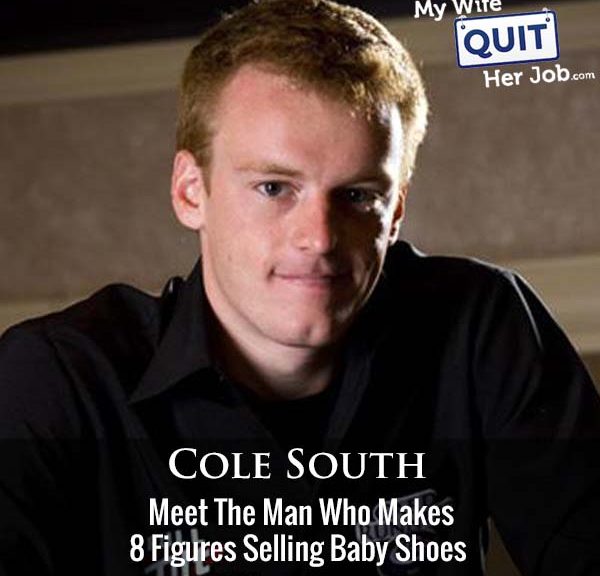
452: Meet The Man Who Makes 8 Figures Selling Baby Shoes With Cole South

452:  Meet The Man Who Makes 8 Figures Selling Baby Shoes With Cole South

To build an 8-figure baby shoe brand, sell into an underserved mid-market price band, launch on Amazon with a few thousand units and grow into wholesale and DTC once product-market fit is proven, and moat the business with high SKU complexity (dozens of styles times six sizes) that a copycat cannot spin up on Alibaba over a weekend. That is the playbook Cole South used at Bird Rock Baby, and it is now 60% Amazon, 40% DTC and wholesale, with 500+ boutique retailers.

In this episode of the My Wife Quit Her Job podcast, I talked with Cole South, a former professional poker player who co-founded Bird Rock Baby (baby moccasins) and Gold BJJ (jiu-jitsu uniforms), and is now building an ecommerce software tool called Synchronize. Cole runs the whole operation out of a 5,500 sq ft San Diego warehouse with a team of five.

Below is the full playbook: how Cole spotted the mid-market gap, how he sources shoes in China, how he manages inventory across three sales channels in a Google Sheet, and how he built retail into a real distribution channel.

Key takeaways

  • The market gap that started Bird Rock Baby was a mid-price baby shoe. Existing options were either $65 luxury shoes (too expensive for kids who lose them at the playground) or $6 AliExpress drop-ships (unsafe). Bird Rock landed in the middle.
  • Launch quantities were roughly 2,000 pairs total (four colors, four sizes) on the first order. Cole says over-ordering the first run is worth it because stock-outs wreck your forecasting for months.
  • The first year was 99% Amazon, from a January 2016 launch. Two organic sales on day one convinced Cole and his partner they had product-market fit, and they quit poker to go full time.
  • Bird Rock now moves through 500+ small boutique retailers, sourced via personalized outbound plus the Faire wholesale marketplace. Minimum wholesale order is $250 at a 50% discount off retail.
  • Cole runs 60% Amazon / 40% DTC and wholesale out of a 5,500 sq ft warehouse with 5 people. He picked in-house over 3PL because Bird Rock has ~50 styles x 6 sizes and most 3PLs handle SKU complexity poorly.
  • The return rate on baby shoes is 15-20%, roughly half of which is resellable. Plan margins around that: aim for at least 4x markup on cost of goods to have a healthy ecommerce business.
  • A 3-6 month PR agency campaign is underrated. Bird Rock’s PR run drove high-authority backlinks (Motherly, pregnancy publications) that lifted the site’s Google rankings and gave collection pages like “baby moccasins” a #1 slot.

How did Cole South pick baby moccasins as a product?

Cole picked baby moccasins because his business partner had two young kids, his partner’s wife was frustrated with the two-tier baby shoe market, and Amazon keyword tools confirmed real search demand for “leather baby shoes” and “baby moccasins.” The gap was a mid-market, safety-tested, American-backed baby shoe between the $65 luxury tier and the $6 AliExpress tier.

That framing matters. Cole did not pick baby shoes because they were easy or because they had low competition. He picked them because he could see a specific customer complaint the existing market was not solving.

He also picked a product he and his partner would personally buy, which is a repeating pattern in every Bird Rock decision that came after.

What did it cost to start Bird Rock Baby?

Bird Rock Baby started with about $5,000 to $10,000 in initial capital between Cole and his business partner to open the LLC and place the first inventory order. As the business grew, Cole loaned it more money to finance additional inventory, and eventually the company qualified for financing from Amazon Lending and Chase.

The initial inventory order was roughly 2,000 pairs total, spread across four colors and four sizes (about 16 SKUs). That is far more than a “test order,” and Cole’s reasoning is worth internalizing: stock-outs on your first product destroy your sales-velocity data and make every subsequent order guesswork.

Over-order on run one, learn from the sell-through per SKU, then place tighter orders after that.

Where does Bird Rock Baby manufacture its shoes?

Bird Rock manufactures all of its baby shoes in China with a single factory it has worked with since day one, sourced originally through Alibaba. The company has also evaluated Mexican shoe factories as a China-alternative strategy given rising US-China tensions, but has kept its main relationship in China because of the depth of the partnership.

For sizing, Cole customized the factory’s off-the-shelf design in three ways so that Bird Rock’s sizing chart followed a standard US template instead of a Chinese chart. Standardized sizing lowered the return rate and improved the buying experience.

Minimum order quantities at that factory started around 500 units per SKU. Baby-shoe MOQs are relatively small compared to adult footwear, which is why the category is accessible to a bootstrapped brand.

How Cole ranked #1 on Amazon and Google for baby moccasins

Bird Rock ranks #1 in Google for “how to size baby shoes” and #1 for the collection query “baby moccasins,” through a combination of on-page SEO on the collection pages and a 6-month PR agency campaign that landed high-authority backlinks. Amazon ranking came from launching in 2016, riding the platform’s organic tailwinds, and building enough review volume in year one to defend the top slots.

The buying-guide content is deliberately close to purchase intent. “How to size baby shoes” is the question every new parent asks right before they buy. Content further from that decision (sleep tips, feeding tips) does not convert as well and is not part of the strategy.

The collection pages themselves are the highest converter, and PR-driven backlinks are what pushed those pages to the top of search.

Should you hire a PR agency for your ecommerce brand?

Cole recommends a 3-6 month PR agency campaign for an established ecommerce brand, framed as brand-awareness and asset building, not performance marketing. Judging PR by “did it drive $5,500 in sales this month to cover the $3,000 retainer” is the wrong scorecard and will make the channel look like a failure.

The correct scorecard is press features you can reuse forever as social proof (Motherly, pregnancy magazine, mom-focused outlets) and dofollow backlinks from high-authority sites that boost your SEO. A 3-6 month burst usually captures the best of an agency’s rolodex before diminishing returns set in.

Long-term retention of a PR agency is rarely worth it for a small business.

Bird Rock’s Amazon vs DTC vs wholesale channel mix

Bird Rock runs three sales channels roughly independently, each with its own owner and workflow, and the mix has shifted meaningfully over time.

ChannelShare of revenueOwnerNotes
Amazon~60%ColeFulfilled via FBA. Ad spend has roughly doubled to 10-12% of Amazon revenue vs 6-7% three years ago.
DTC (Shopify)~30% (part of the 40% non-Amazon mix)ColeFacebook ads pulled back after iOS privacy changes wrecked profitability. Now leans on SEO, Google Ads, email, and word of mouth.
Wholesale~10% (500+ boutiques)Cole’s wifePersonalized outbound + Faire marketplace. $250 min order, 50% off retail.

Running each channel siloed means nobody feels responsible for everything, and it gives the business real diversification if one channel breaks (as Facebook effectively did in 2022).

How Bird Rock manages inventory in a Google Sheet across 3 sales channels

Bird Rock manages inventory in a single Google Sheet that acts as the master dashboard for FBA stock, San Diego warehouse stock, in-production units, and trailing sales velocity across Amazon, Shopify, and wholesale. The team tried multiple hosted inventory tools every six months for years, and every time they ended up back in the sheet.

The problem with off-the-shelf inventory tools is SKU-and-channel complexity. With 50+ styles, 6 sizes, 2 warehouses (FBA + San Diego), and 3 sales channels, most tools become 800 checkboxes and still miss the specific quirks of a real ecommerce business.

The manual step that broke the sheet workflow was daily exports. An employee pulled Amazon and Shopify reports every morning and pasted them into data tabs, and even careful people occasionally filtered the wrong date range or pasted into the wrong tab. Underordering a hot SKU by three weeks of sales is expensive.

Cole solved this by hiring a developer to build custom Google Sheets functions like `=Amazon_Inventory(“MySKU”)` and `=Shopify_Sold_Units(“MySKU”, 30)` that continuously refresh live data from a database his team hosts. That internal tool became the seed for his SaaS product, Synchronize.

Why Bird Rock chose a 5,500 sq ft warehouse over a 3PL

Bird Rock runs its own 5,500 sq ft warehouse in San Diego with a team of 5, because the SKU complexity (~50 styles x 6 sizes) makes the brand a bad customer for most 3PLs. In-house also gives the team full control over wholesale, which involves boxing custom multi-SKU orders that 3PLs handled poorly.

Cole’s staffing philosophy is a small squad of A-players. In his experience, the productivity gap between an A-player and a C-player in a warehouse is closer to 10x than 2x, and a C-player pulls the whole operation backwards.

Because Amazon is FBA-fulfilled and 60% of the business, the on-site team only fulfills the other 40%. That gives them meaningful bandwidth headroom, which prevents burnout and lets them absorb Black Friday volume without hiring temps who never get up to speed in time.

How Bird Rock protects its wholesale channel from getting undercut

Bird Rock protects its wholesale channel by only accepting physical brick-and-mortar retailers, requiring wholesalers to agree upfront that they will not sell on Amazon, and being loose on MAP (minimum advertised price) enforcement while strict on the two big rules.

The two hard rules for a Bird Rock wholesale partner: no selling on Amazon (they would piggyback the brand’s listings), and no bidding on branded Google Ads terms. Everything else is negotiable, because most boutique owners are not internet-savvy enough to be a real threat to the brand’s DTC pricing.

If a partner does try to list on Amazon, Bird Rock is brand registered and trademarked, and the ultimate lever is cutting off supply. That conversation almost never has to happen a second time.

Why Cole stopped launching new Amazon products and focused on one hero SKU

Cole stopped launching new Amazon products because his existing baby moccasin has such clear product-market fit that expanding line breadth would dilute focus and slow down the growth of the core product. Bird Rock’s market penetration in baby shoes is still small, so pushing the same ball faster is a better use of energy than launching a diaper backpack.

This runs against the standard Amazon growth advice of “launch more SKUs once you’ve cracked the formula.” Cole’s take: launching new products is the hardest way to grow. It is easier to lift the AOV, repeat rate, and channel mix on a product you already know converts.

That philosophy is exactly why Bird Rock’s ad spend, retail push, and SEO all point at the same hero product.

The moat: why SKU complexity beats “easy” ecommerce products

Bird Rock’s real moat is SKU complexity, which acts as a barrier to entry for lazy competitors. A copycat cannot open an Alibaba account, spend $10,000, and immediately match 50 styles across 6 sizes with standardized sizing and safety testing.

Contrast that with a garlic press or a phone stand. If any AliExpress hunter can source your product in a weekend, you will have hundreds of competitors before quarter end, and your margins collapse.

The Bird Rock parallel on the Gold BJJ side is embroidery. Custom-embroidering 150 jiu-jitsu uniforms with a school’s academy logo, turned around in a week, is something an overseas seller with no US footprint cannot easily replicate. Complexity is protection.

Frequently asked questions

How much does it cost to start a baby shoe business?

Bird Rock started with roughly $5,000 to $10,000 in initial capital for the LLC and first inventory order, and grew from there via founder loans and later Amazon Lending. A realistic first inventory order of about 2,000 pairs across 16 SKUs at Chinese factory MOQs of 500 units per SKU sits in that range.

Where does Bird Rock Baby manufacture its shoes?

Bird Rock manufactures all of its baby moccasins in China at a single factory it has worked with since 2016, sourced originally through Alibaba. It has also evaluated Mexican shoe factories as a diversification hedge but keeps its main relationship in China.

What is the return rate on baby shoes?

Cole says his return rate on baby moccasins is 15-20%, which is lower than adult apparel but still high enough to model into your margins. Roughly half of returned pairs are resellable.

What margin should you target on ecommerce products?

Cole targets at least a 4x markup on cost of goods as a bare minimum to run a healthy ecommerce business. On the wholesale side specifically, if retail is $30 and wholesale is $15, you still want a 50% margin on the wholesale price itself.

Should you use a 3PL or run your own warehouse for a multi-SKU ecommerce business?

Most 3PLs handle small-and-light single-SKU brands well but struggle with high SKU counts across many warehouses and channels. Bird Rock’s ~50 styles x 6 sizes across FBA plus its own warehouse across three sales channels made 3PLs a poor fit, so it runs its own 5,500 sq ft San Diego warehouse with 5 people.

Is Amazon still a good place to launch an ecommerce business in 2026?

Cole says Amazon was a great launch pad in 2016 and is much harder today, with ad costs roughly doubling and knockoff sellers a permanent fixture. Building a defensible brand on Amazon in the current climate requires either high SKU complexity, real product innovation, or an existing off-Amazon audience to seed reviews and rank.

Should you hire a PR agency for your ecommerce store?

Yes, but only for a 3-6 month burst and only if you judge it as brand-awareness and SEO backlinks, not direct-response revenue. Beyond six months, most agencies have burned through their best contacts for your niche and returns diminish.

I Need Your Help

If you enjoyed listening to this podcast, then please support me with a review on Apple Podcasts. It's easy and takes 1 minute! Just click here to head to Apple Podcasts and leave an honest rating and review of the podcast. Every review helps!

Ready To Get Serious About Starting An Online Business?


If you are really considering starting your own online business, then you have to check out my free mini course on How To Create A Niche Online Store In 5 Easy Steps.

In this 6 day mini course, I reveal the steps that my wife and I took to earn 100 thousand dollars in the span of just a year. Best of all, it's absolutely free!

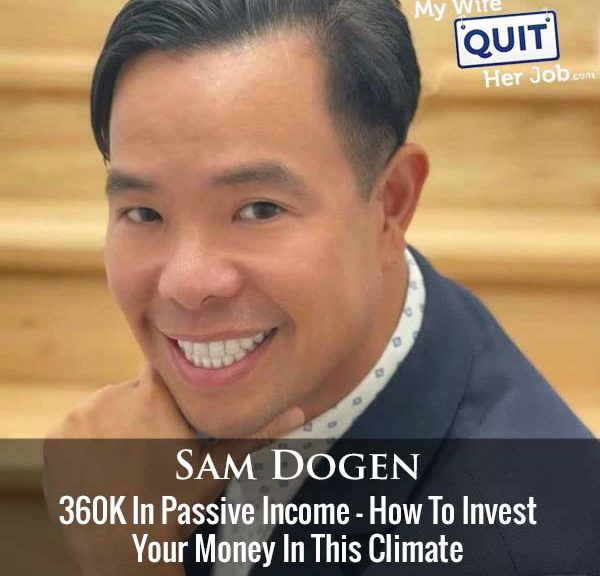
451: $360K/Yr In Passive Income – Where To Invest Your Money Today With Sam Dogen

451: 360K In Passive Income - How To Invest Your Money In This Climate With Sam Dogen

Sam Dogen of Financial Samurai generated roughly $380,000 in passive income in 2022, targeting $400,000, by shifting his tax-advantaged accounts into short-duration US Treasury bills yielding above 5%, keeping a base of rental real estate and stock dividends, and using his blog and book royalties as active supplementary income. His core message this cycle: “T-bill and chill” while the Fed is still raising rates, then aggressively bid on real estate as the market retrenches.

In this episode of the My Wife Quit Her Job podcast, I sat down with Sam, the longtime writer behind FinancialSamurai.com and author of the Wall Street Journal bestseller “Buy This, Not That.” Sam engineered his own layoff from Goldman Sachs / Credit Suisse in 2012 at age 34 with about $80,000 in passive income and a large severance, and has been managing the family portfolio ever since.

Below is Sam’s rate-cycle playbook, the 70/30 probability framework he uses for major life decisions, why he treats content brand equity as insurance against ChatGPT-style search disruption, and the passive income math that lets a Bay Area family of four cover the bills without a W-2.

Key takeaways

  • Passive income of ~$380K in 2022, target $400K. Composition: rental real estate, stock dividends, short-duration US Treasury bills, and interest-bearing CDs/money markets.
  • “T-bill and chill” is Sam’s cycle call. 1-year Treasury bills were yielding ~5.125% at the time of recording, risk-free and exempt from state and local tax, so his tax-advantaged accounts are heavily rotated into 3-month to 1-year Treasuries.
  • Stock allocation trimmed from 35% of net worth to 30% at end of 2022. A 50% market drawdown from that allocation would cost 15% of net worth, which he considers his comfort floor.
  • Real estate is his aggressive 2023 play. Anyone listing a home while mortgage rates are near 6.75% is likely a motivated seller, so Sam recommends “spraying and praying” DocuSign offers 10-15% below 2022 peaks.
  • The 70/30 framework says: if you believe you have a 70%+ probability of being right on a major life decision, act. Waiting for 90%+ certainty is how you miss the job, the relationship, and the business you should have started.
  • The 2023 happiness-vs-income research updated Kahneman’s famous $75,000 ceiling. New number: happiness continues to rise through roughly $500,000 in household income, not $75K.
  • Sam wrote “Buy This, Not That” during the 2020 pandemic after being rejected by 25 literary agents in 2011. His self-published “How to Engineer Your Layoff” e-book still generates $40K-$50K per year at ~97.5% margin.

How Sam Dogen built $380K in passive income

Sam built his passive income stack over 20+ years by saving aggressively while working in investment banking, then rotating into a mix of rental real estate, dividend stocks, Treasury bills, and CDs. In 2022 the stack produced approximately $380,000, and his target for 2023 was $400,000.

The composition matters. Real estate is the largest anchor, dividend stocks and index funds are the growth engine, and short-duration Treasuries are the current tactical overweight because the risk-free yield is finally above 5%.

Sam’s operating rule is that a base of passive income equal to comfortable middle-class expenses (he estimates $300,000-$350,000 for a Bay Area family of four in 2023) is enough. Beyond that, active work should be optional and joyful.

What does “T-bill and chill” mean and how does it work?

“T-bill and chill” means parking cash in short-duration US Treasury bills (3-month to 1-year maturities) that are yielding above 5% risk-free, and waiting out the current economic cycle instead of chasing equity or crypto returns. At the time of recording, 1-year T-bills were yielding roughly 5.125% and paid no state or local income tax.

Sam’s math: on $10 million, that is $520,000 in risk-free annual income; on $20 million, it clears $1 million. Even if your investable assets are $10K instead of $10M, the framework is the same. Any asset (stocks, real estate, crypto) must clear the risk-free rate for the risk to be worth taking, and right now that hurdle is high.

How to buy Treasury bills

You can buy Treasury bills two ways: directly at TreasuryDirect.gov, or through any major online brokerage account’s fixed-income tab (Fidelity, Schwab, Vanguard, and E-Trade all support this). Inside the brokerage flow, pick “Treasury” from the bond list, pick a maturity, and click buy. Minimum purchase is $1,000.

Why Treasuries beat a money market fund

A money market fund pays interest that is taxable at the federal, state, and local level. Treasury bond interest is exempt from state and local tax. If your marginal state income tax is 5% or higher, the tax-adjusted yield on Treasuries can beat a money market fund by 50-75 basis points at current rates.

Should you buy real estate in 2023-2024?

Sam’s answer is yes, aggressively, but only on discounted properties from motivated sellers. His logic: anyone who lists their home while mortgage rates are at 6.75% and demand has tailed off is more likely to be selling because of divorce, job loss, or relocation than because they think it is a good market for them, and desperate sellers accept lower offers.

He recommends a “spray and pray” DocuSign strategy: use your agent to submit offers 10-15% below 2022 peaks on any property you would happily own, and wait for one to hit. The window closes once the Fed pivots and mortgage rates come down, which he expected to happen in 2024.

Longer term, Sam is bullish on real estate as an inflation hedge and a demographic play, and treats it as the single best asset class for the average person over a multi-decade horizon.

Sam’s 70/30 probability framework for big life decisions

Sam’s 70/30 framework says that if you believe you have a 70% or greater probability of being right on a major decision (a job, a marriage, a startup, a big purchase), you should act instead of waiting for perfect certainty. Waiting for 90-100% is how most people miss the window.

The other 30% is not failure. It is the tuition you pay to learn, as long as the downside is not catastrophic. The book “Buy This, Not That” is built around applying this frame to public vs private school, kids or no kids, marry or not, join a startup or stay corporate, and start a business or stay employed.

The pre-mortem drill Sam runs with his son on the drive to school shows the frame in action. They start at a 90% probability of arriving on time, then adjust up or down as unknown variables appear (a downed tree, less Friday traffic), and reassess in real time.

How to apply the 70/30 framework to starting an ecommerce business

Applying the 70/30 framework to starting an ecommerce business means writing down four things before you commit: your current income stability and severance potential, your feasibility research (talked to 5+ operators in the space), your runway to fail (how many years before you concede), and your fallback (can you get your day job back).

Sam’s honest caveat: you will never actually hit exactly 70%. The number is a feeling backed by real due diligence, and the moment you feel you have crossed it, the correct move is action, not more research. Analysis paralysis is expensive.

The corollary: side-hustling on nights and weekends before quitting your day job massively raises your probability of success by extending your runway indefinitely. That is the setup Sam used with Financial Samurai from 2009-2012 before negotiating his severance.

Why engineers over-analyze and under-launch

In my (Steve Chou’s) 20+ years teaching an ecommerce class, engineers consistently underperform less-analytical students at launching businesses, because they are trained to look for certainty that does not exist in early-stage entrepreneurship. The students who succeed most often are the ones who say “screw it, we’re going to try” and iterate from live customer feedback.

Sam’s counter, and I agree with it, is that thinking and planning are free. Pre-mortem planning surfaces the checklist you will need when the car accident happens, and it costs nothing to do. The failure mode is not planning; it is planning as a substitute for launching.

The winning combination: do the pre-mortem thoroughly, then take the leap when you cross the 70% line, then iterate.

How Financial Samurai monetizes without generic AI-style content

Financial Samurai monetizes primarily through affiliate income from a small number of investment partners Sam actually uses (Empower / Personal Capital, Fundrise-style platforms, etc.), plus book royalties, plus a podcast. Sam deliberately writes every post himself in an opinionated, first-person voice, which is the opposite of the SEO-optimized freelance content strategy that dominates the personal finance niche.

His reasoning: hiring freelance writers to produce generic affiliate-heavy content is a business that ChatGPT can now replicate at zero cost, so its long-term moat is weakening. First-person, opinionated content grounded in Sam’s real portfolio decisions is something a language model cannot replicate, because the underlying life isn’t a language model’s to draw from.

He calls this a “free call option.” Because his site is built on his voice, he can add SEO freelance content on top later if he ever wants to; a generic-content site cannot bolt his voice on retroactively.

Will ChatGPT and AI search kill the affiliate business model?

Sam expects the affiliate model to get disrupted for marginal players (generic content sites with no brand), while established personal brands survive and increasingly monetize via “ambassadorship” deals instead of per-click affiliate splits. His analogy: a tennis player’s endorsement income scales with their brand equity (Roger Federer over Novak Djokovic), and the same dynamic will apply to content creators.

The predicted shift: Empower or a similar brand tells its top 10 affiliate creators, “We are done paying per referral; here is $1 million as a brand ambassador for the year.” That is a very different economic model than the click-attributed affiliate flow that runs the industry today.

Whether Bing Chat or ChatGPT actually dents Google’s ~90% search share is a separate question. Sam is skeptical, given how long Bing has spent stuck at 2-3% share, but agrees the click-through economics of blue-link search are under real pressure.

What “stealth wealth” means and why Sam practices it

Stealth wealth means quietly accumulating assets, financial independence, and optionality without signaling any of it externally. In practice that looks like modest cars, quiet social posts, and a lifestyle that stays below what your income could support, so your net worth stays private from neighbors, employers, and kids’ schools.

Sam’s motivation is a mix of privacy, personal safety, and social insulation. Wealthy people he knows in San Francisco, including friends with $500 million to $1 billion in net worth, deal with the same worries as everyone else, plus 5,000 employees, board dynamics, and privacy issues normal families never face.

For most people, stealth wealth is also the antidote to lifestyle inflation. If your neighbors do not know what you earn, you have no social pressure to spend to match.

The $500,000 happiness ceiling (updated Kahneman research)

A 2023 update to Daniel Kahneman’s famous 2010 study found that happiness continues to rise with income up to roughly $500,000 per household, not the $75,000 figure the 2010 paper reported. The old $75K number was suspicious, and it appears to have been influenced by benchmarking against median private-university salaries at the time.

The takeaway: more money does buy more happiness, but the returns compress as you go higher, and the marginal utility of a fifth million versus a fourth million is very different from the marginal utility of a $50K raise on a $75K salary. Ask yourself what the extra income actually buys before you sacrifice the time to earn it.

Frequently asked questions

How do you buy Treasury bills as an individual investor?

You can buy Treasury bills at TreasuryDirect.gov or through any major online brokerage account’s fixed-income tab (Fidelity, Schwab, Vanguard, E-Trade). Minimum purchase is $1,000. Choose the maturity (3-month, 6-month, 1-year), click buy, and the bond settles into your account.

Are Treasury bills better than a high-yield savings account?

At current rates, short-duration Treasury bills often beat high-yield savings and money market funds on a tax-adjusted basis, because Treasury interest is exempt from state and local income tax. In a 5%-plus state income tax bracket, that exemption is worth 25-50 basis points, so a 5.1% T-bill yield can beat a 4.5% money-market yield after tax.

What is the “70/30 framework” and how do you use it?

The 70/30 framework says that if you have done real due diligence and believe you have a 70% or greater probability of being right on a major life or investment decision, you should act. The other 30% is the acceptable margin of error, and its purpose is to keep you from waiting for a 100% certainty that never arrives.

How much passive income do you need to retire in the Bay Area?

Sam estimates that $300,000-$350,000 per year in passive income supports a comfortable middle-class lifestyle for a Bay Area family of four in 2023, adjusting for inflation. This budget assumes a paid-off or low-mortgage home; the ceiling scales with location, family size, and lifestyle.

Is real estate a good investment in 2023-2024?

Sam is bullish on buying selectively in 2023 and 2024, targeting sellers who list into a slow market (a signal of motivation), offering 10-15% below 2022 peaks, and holding for the long term. Long-term drivers (inflation, population growth) favor real estate as a wealth-building asset for average investors.

What is “T-bill and chill”?

“T-bill and chill” is a shorthand for parking cash in 3-month to 1-year US Treasury bills that yield above 5% risk-free, and waiting out an uncertain economic cycle instead of chasing equity or speculative returns. It is a tactical positioning call for a specific rate environment, not a permanent portfolio.

Does ChatGPT kill affiliate blogging?

ChatGPT is a real threat to generic, high-volume affiliate content sites that compete on speed and volume instead of voice. First-person, opinionated brands with real portfolio proof are much harder to replicate and are likely to survive and shift toward ambassadorship-style brand deals instead of per-click affiliate revenue.

I Need Your Help

If you enjoyed listening to this podcast, then please support me with a review on Apple Podcasts. It's easy and takes 1 minute! Just click here to head to Apple Podcasts and leave an honest rating and review of the podcast. Every review helps!

Ready To Get Serious About Starting An Online Business?


If you are really considering starting your own online business, then you have to check out my free mini course on How To Create A Niche Online Store In 5 Easy Steps.

In this 6 day mini course, I reveal the steps that my wife and I took to earn 100 thousand dollars in the span of just a year. Best of all, it's absolutely free!

450: Insider Tips On Finding The Best Factories And The Lowest Prices For Your Products With Kian Golzari

450: Insider Tips On Finding The Best Factories And The Lowest Prices For Your Products With Kian Golzari

To source products from China like a pro, search Alibaba by manufacturer (not product), filter for Verified suppliers with Trade Assurance and ISO 9001 / BSCI certifications, use the first word of each factory’s name to identify the region that specializes in your product (Wenzhou for eyewear, Shenzhen for electronics, Xiamen for backpacks), and open every relationship with a leverage-rich pitch that tells the supplier why partnering with you is worth their best price. That is the playbook Kian Golzari has used across 500+ Chinese factories to source products for the NBA, the Olympics, the UN, and Kobe Bryant.

In this episode of the My Wife Quit Her Job podcast, I talked with Kian, one of the world’s most experienced product sourcers, founder of the sourcing service TitanSourcing.com, and creator of the YouTube channel Sourcing with Kian. Kian grew up around Chinese manufacturing (his father’s UK outdoor brand Highlander went into China 35 years ago), moved to Ningbo in 2010, and has personally sourced over 2,500 products.

Below is the full playbook: how to vet a factory on Alibaba, how to write a supplier pitch that gets a real reply, how to negotiate prices using the RMB exchange rate, how to protect your product without a bulletproof NDA, and how to structure mold-cost deals so you can switch suppliers later.

Key takeaways

  • Search Alibaba by manufacturer, never by product. Filter for Verified suppliers + Trade Assurance + relevant certifications (ISO 9001, ISO 14001, BSCI, SEDEX) before you ever look at price.
  • The first word in a Chinese factory’s name is its city. Scan the manufacturer list for the most repeated city (e.g. Wenzhou for glasses, Shenzhen for electronics) and prioritize factories in that region.
  • Verify factory age using the “years established” field inside the profile, not the “years on Alibaba” tag. A 25-year-old rockstar factory can show “1 year” on Alibaba because they only recently listed.
  • Prices on Alibaba are placeholders. Never accept the listed price. Send a spec sheet with your exact materials, dimensions, and Pantone colors and get a real quote back.
  • Small factories (25-50 workers) are the best fit for a low-MOQ custom project. Large factories (500+ workers) become worthwhile once your monthly order size is at their scale.
  • The exchange-rate hack: pull the USD/RMB chart on XE.com and quantify how much extra profit the factory has captured since your last PO. That is your negotiation number, and it should be asked for at the time of payment, not weeks earlier.
  • Real product protection is a mold + a patent + an exclusivity agreement, not an NNN. Kian only signs NNNs for genuinely innovative products; for everything else, relationship and a mold-with-embossed-logo do the work.

Step 1: Search Alibaba by manufacturer, not by product

The right way to start on Alibaba is to open the manufacturer search (not the product search), type your product, and filter before you look at a single price. Sorting by price on the product tab is what leads to the “blue-light glasses for $1.80 that look identical to blue-light glasses for $7.90” trap, and the $1.80 factory is almost always the wrong one.

Filter for three things up front: Verified Supplier (a third party has validated their factory info), Trade Assurance (Alibaba refunds you if the order doesn’t match the spec), and factory or product certifications relevant to your category.

Only once those filters are applied do you start reading profiles. Price is the last variable, and it is a variable you negotiate later, not a variable you sort by.

Step 2: Understand the factory and product certifications that matter

The certifications you should recognize on an Alibaba profile fall into two buckets: factory-level (audits of the facility itself) and product-level (compliance for a specific SKU or category).

CertificationWhat it meansWhy you care
ISO 9001Quality management system auditThe factory has documented quality control processes. Signals maturity.
ISO 14001Environmental management standardThe factory has been audited on environmental practices. Required by many Western retailers.
BSCI (Business Social Compliance Initiative)Labor and social compliance auditThird-party verification that labor practices meet minimum standards.
SEDEX / SMETAEthical trade auditCommon alternative to BSCI. Required by many EU and UK retailers.
Product-level (CPSIA, CE, Prop 65, etc.)Category-specific complianceProduct must pass for sale in the target market. Ask factory for test reports.

Absence of these certifications does not automatically mean the factory is bad; it can mean they never applied because they don’t sell to big-brand retailers. But presence of them is a strong positive signal, and if you plan to sell into Walmart, Target, or Disney later, you will need them anyway.

Step 3: Use the factory name to identify the right region

Chinese factory names almost always start with their city (Wenzhou Optics, Shenzhen Electronics, Xiamen Backpack Co). Scroll your filtered manufacturer list and note which city name repeats the most. That is the region that specializes in your product because of raw-material access, skilled labor, and supply-chain density.

A rough cheat sheet of what tends to concentrate where:

  • Shenzhen and the Pearl River Delta: electronics, consumer tech, hardware
  • Wenzhou: eyewear, shoes, lighters, small metal goods
  • Yiwu: small commodities, gifts, accessories
  • Ningbo and Hangzhou: home goods, textiles, sporting goods
  • Xiamen: bags, backpacks
  • Fuzhou: shoes, footwear
  • Guangzhou: apparel, leather goods

Kian’s rule: if the region you find on Alibaba matches this specialization map, you are in the right pool. If it doesn’t, keep digging.

Step 4: Verify factory age using “years established”, not “years on Alibaba”

The number next to a factory name on Alibaba is “years on Alibaba,” not “years in business.” Great old factories that only sold at the Canton Fair may show “1 year” on their Alibaba tag even though they have been operating for 25 years.

To see the real age, click into the factory profile and open the “Company Information” section. The “Year Established” field (with a blue verified tick) is the true founding date. Kian’s cutoff: at least 5 years established, because that is enough time to have exported to enough countries and developed real production experience.

Also check the machinery list in the profile. A footwear factory with five in-house flex-test machines is a factory that can pre-test 10,000 walking cycles before your shipment leaves, which is a very different quality operation from one that outsources every test.

Step 5: Right-size the factory to your order

Match factory size to your order size. A 500-worker factory will treat a 300-unit custom order as an annoyance and either quote a price that discourages you or deliver it poorly. A 25-50 worker factory will treat that same 300-unit order as a chance to win a new customer.

The corollary is a mistake Kian sees constantly: sellers outgrow their factory and never renegotiate. If your monthly order has grown from 300 units to 2,000 units, the smaller factory is now under-resourced for your volume, and a mid-size factory would give you better price, better lead time, and better production techniques.

Every 12-18 months, re-shop your top three specs. Send the same tech pack to three top-five factories and see what comes back. Do not switch on price alone; sample first, and use the quote as leverage with your existing factory.

Step 6: Write a supplier pitch that gets a real reply

The average Alibaba supplier receives 50-100 inquiries a week, and 90% of them are one-line “what’s your MOQ and price?” messages that get a canned reply and go straight to the bottom of the pile. To get to the top, your first message must qualify you as a real customer worth investing in.

The elements of a winning first message

  • Who you are (company name and brand history, even if small)
  • What you’ve built before (Amazon SKUs, Shopify revenue, influencer relationships)
  • Why you chose them specifically (their certifications, their trade-show presence, their machinery, their region specialization)
  • The exact spec sheet: materials, dimensions, Pantone colors, packaging, testing requirements
  • Your intent to visit the factory in person once travel allows

The mention of an in-person visit is Kian’s honesty enforcement mechanism. A factory that thinks you are actually going to walk in will not inflate its worker count from 100 to 500 to impress you.

If you have no prior brands, lean on domain expertise: “I’ve been a yoga instructor for 14 years, I run a studio, and I’ve been giving customer feedback on this exact product category for years.” Product expertise plus a real spec sheet reads as a qualified buyer, regardless of company size.

How to negotiate lower prices using the XE.com exchange-rate hack

Kian’s favorite one-move price hack: pull the USD/RMB chart on XE.com and calculate how much extra profit your factory has captured since your last PO because of exchange-rate movement. That number is your requested discount.

At the time of the recording, the dollar had moved from ~6.3 RMB in April to ~7.2-7.3 RMB in November, roughly a 12-13% swing in the factory’s favor. A $100K PO in April was worth ~630K RMB to them; the same PO in November was worth ~720K RMB. That is $12-13K of extra profit they captured without lifting a finger.

Bring that chart and ask for a matching discount. Even after they push back with “raw materials went up,” you’ll typically settle at 5-6% off, which is a meaningful margin lift on the same purchase.

Timing rule: negotiate at the moment of payment, not weeks before

Always negotiate at the moment you actually have to wire the deposit or final balance. If you agree on a discount 30 days ahead of production, the factory has 30 days to invent reasons why the discount shrunk (power outages, raw material spikes, currency reversal). Locking the deal into the invoice at payment time removes those escape hatches.

How to validate a factory-claimed price increase

When your factory pushes a price increase, validate it with three or four other factories in the same region on the same raw material. If they all confirm the same increase, the ask is legitimate and you accept it. If none of them mention the increase, you push back and let your factory know you are getting different data from their peers.

The same drill works for labor cost increases. Every province in China has different labor dynamics, so ask factories in the same province specifically. Kian’s rule is simple: never accept a price increase you have not independently validated.

How to protect your product without a bulletproof NDA

Real product protection sits in three layers, not in an NNN contract. NNN agreements (“non-disclosure, non-use, non-circumvention”) are worth the paper they are printed on only if you are willing to hire a Chinese lawyer and sue over a $10,000 order, which almost no one does.

The three real layers of protection

  • Mold. Any custom-tooled part requires a $500-$50,000 mold. That mold cost is a barrier to entry for copycats.
  • Patent. A design patent (~$4,000) or utility patent (~$15,000) is the only legal protection with real teeth. Only worth it for genuinely innovative products.
  • Exclusivity agreement. Ask your supplier for market or regional exclusivity, tied to a volume commitment. Start with 6 months of US exclusivity at a specific unit target.

Kian’s soft-power move for products that don’t warrant a patent: tell the factory you have a patent (even if you don’t). They almost never verify, and the belief that a patent exists discourages them from developing it for someone else.

The “logo in the mold” defensive trick

When you invest in a custom mold, insist your logo is embossed (raised) into the mold, not debossed (recessed). Debossed logos can be filled in and re-used for competitors; embossed logos physically prevent the same mold from producing an unbranded copy.

That single spec detail turns your mold into a piece of defensive IP. If the factory ever tries to sell your product to another buyer, your logo shows up on every unit, and the copy is unsellable without new tooling.

How to structure a mold-cost deal so you can switch suppliers later

If you pay the mold cost outright, switching factories later means eating the mold cost twice. Kian’s preferred structure is to pay the mold upfront and get it refunded via order volume, so you can walk if the relationship sours.

Kian’s mold refund ladder

  • 25% of the mold cost refunded after 5,000 units ordered
  • 50% refunded after 10,000 units
  • 100% refunded after 20,000 units

The refund isn’t actually a wire back. It’s a credit against your next PO invoice. Once the ladder is complete, the mold is effectively free, and if you ever want to move production elsewhere, you can, because you have zero sunk cost in the tooling with the current factory.

An alternative first ask: propose a 50/50 mold split with the supplier (“I’ll pay $5K, you pay $5K”). A confident factory will often say yes, and you have instantly cut your mold cost in half.

How to find good factories outside of Alibaba

Alibaba is Kian’s starting point, but not his only one. Two other high-value sources when Alibaba’s pool is thin or you need suppliers your competitors don’t already know about:

  1. ImportYeti.com. Search a market-leader competitor and see their real US import records: which factories they use, HS codes, shipment volumes, and cadence. Many of these factories are not on Alibaba.
  2. Industry trade-show exhibitor lists. Every category has a major trade show (Outdoor Retailer for outdoor gear, Interbike for cycling, etc.). Pull the exhibitor list from the show’s website, filter for Chinese company names, and contact them directly.

Both methods surface suppliers your competitors on Alibaba have not seen, which is where genuine sourcing advantages come from.

Are Chinese factory workers being treated unfairly?

Kian’s direct answer from 500+ factory visits: he has seen roughly one factory with real labor concerns. The stereotype of Chinese manufacturing as sweatshop labor is largely outdated in 2023.

The economics have shifted. As China’s middle class grew, service-industry jobs (Starbucks, KFC, retail, restaurants) opened up in coastal cities and became the more attractive option for young workers. Factories moved inland and had to raise wages to compete, and today a Chinese factory worker often earns more than a Chinese Starbucks barista.

To verify labor conditions on a specific factory, ask for BSCI or SEDEX audit reports (labor-focused compliance audits) and confirm the audit address matches the factory’s Alibaba profile address. Both requirements matter; a mismatched address means the certificate belongs to a different facility.

Frequently asked questions

Do I need to speak Chinese to source from China?

No. Chinese factory sales assistants are trained in English, and factory bosses who don’t speak English typically communicate through them. A Chinese translator or agent is not required to run first contact through order placement.

What certifications should a Chinese factory have?

At a minimum, look for ISO 9001 (quality management) and either BSCI or SEDEX (labor and social compliance). ISO 14001 (environmental) is a plus. For product-level compliance, the factory should hold or be able to obtain the test reports required for your target market (CPSIA for US children’s products, CE for EU electronics, Prop 65 for California).

How do I use Alibaba’s factory profile to spot a middleman or trading company?

Compare the claimed machine count against the shipment volumes and worker count. A “factory” that ships 250,000 sewn units per order but only lists 25 sewing machines is outsourcing to smaller factories. Ask directly if they subcontract; honest suppliers will confirm.

How can I get a lower price on Alibaba?

Use the XE.com USD/RMB exchange-rate move since your last PO to quantify the factory’s currency gain, then ask for a matching discount at the time of your next payment. Also validate any factory-claimed price increases with 3-4 other suppliers in the same region before accepting.

What is an NNN agreement and is it worth signing?

An NNN is a non-disclosure, non-use, non-circumvention agreement. Kian only signs NNNs for genuinely innovative products because enforcement in China is impractical for a small ecommerce brand. Real protection comes from molds, patents, and exclusivity agreements, plus a strong relationship with the factory.

Should I use a small factory or a large factory for my first order?

For a low-volume custom first order (a few hundred to a few thousand units), a small factory (25-50 workers) is a better fit because they want new customers and are more flexible on MOQs and custom specs. Move to a larger factory once your monthly volume matches their production scale.

How do I switch factories if my mold is stuck at the old one?

Structure your mold deal so the cost is refunded via order volume (25% back at 5K units, 50% at 10K, 100% at 20K). Once refunded, the mold is effectively free, and moving production elsewhere costs nothing but new tooling at the new factory. Also emboss your logo into the mold so it cannot be re-used for competitors.

What are the best alternatives to Alibaba for finding Chinese suppliers?

The two strongest alternatives are ImportYeti.com (search competitor US import records for their real factories) and industry trade-show exhibitor lists (filter for Chinese companies and contact them directly). Both surface factories your competitors on Alibaba do not already know about.

I Need Your Help

If you enjoyed listening to this podcast, then please support me with a review on Apple Podcasts. It's easy and takes 1 minute! Just click here to head to Apple Podcasts and leave an honest rating and review of the podcast. Every review helps!

Ready To Get Serious About Starting An Online Business?


If you are really considering starting your own online business, then you have to check out my free mini course on How To Create A Niche Online Store In 5 Easy Steps.

In this 6 day mini course, I reveal the steps that my wife and I took to earn 100 thousand dollars in the span of just a year. Best of all, it's absolutely free!

449: Amazon Is Silently Stealing From You And How To Get Your Money Back With Yoni Mazor

449: Amazon Is Silently Stealing From You And How To Get Your Money Back With Yoni Mazor

Today, I have a very special guest back on the show, Yoni Mazor. Yoni is the founder of Getida, where he helps Amazon sellers recover their money.

Amazon screws up all the time without telling you and we’re going to discuss all the ways that you are losing money right now as a seller and what you can do about it.

What You’ll Learn

  • How to get your money back from Amazon
  • Amazon’s most common mistakes
  • What to look out for on your Amazon reports

Other Resources And Books

Sponsors

Postscript.io – Postscript.io is the SMS marketing platform that I personally use for my ecommerce store. Postscript specializes in ecommerce and is by far the simplest and easiest text message marketing platform that I’ve used and it’s reasonably priced. Click here and try Postscript for FREE.
Postscript Logo

SellersSummit.com – Sellers Summit is the conference I run every year that caters to ecommerce sellers all over the world. Click here and grab your ticket.
Sellers Summit

BigCommerce.com – If you are interested in starting your own online store, then I highly recommend BigCommerce. Out of the box, it already comes with full functionality and you do not need to install additional plugins. Click here to get 1 month free
BigCommerce WordPress Plugin

Transcript

00:00
You’re listening to the My Wife, Could Her Job podcast, the place where I bring on successful bootstrap business owners and dig deep into what strategies they use to grow their businesses. Today I have a very special guest back on the show, Yoni Mazur. And Yoni is the founder of Getita, where he helps Amazon sellers recover their money. And the truth of the matter is that Amazon screws up all the time, and we’re gonna discuss all the ways that you are losing money on Amazon right now as a seller and what you can do about it. But before we begin, I wanna let you know that tickets for the 2023 Seller Summit

00:29
are on sale over at SellersSummit.com and the price goes up on April 1st. It is the conference that I hold every year that specifically targets e-commerce entrepreneurs selling physical products online. And you all know me well enough by now to know that my event has zero fluff. Every speaker I invite is deep in the trenches of their e-commerce business and not high-level guys who are overseeing their companies at 50,000 feet. Every year we cut off ticket sales at around 200 people and it’s a very intimate event.

00:56
Everyone eats together and everyone parties together every single night. I love smaller events and tickets always sell out far in advance. And if you are an e-commerce entrepreneur making over 250k or $1 million per year, we also offer a special mastermind experience where we break up into small groups, put ourselves in a room, and then help each other with our businesses. The Seller Summit is going to be held in Fort Lauderdale, Florida from May 23rd to May 25th. Go to SellersSummit.com.

01:24
That’s S-E-L-L-E-R-S-S-U-M-M-I-T.com. I also want to thank Postscript for sponsoring this episode. Now, if you run an e-commerce business of any kind, you know how important it is to own your own customer contact list. And this is why I focus a significant amount of my efforts on SMS marketing. SMS, or text message marketing, is already a top five revenue source for my e-commerce store, and I couldn’t have done it without Postscript, which is my text message provider. Now, why did I choose Postscript?

01:51
It’s because they specialize in e-commerce and e-commerce is their primary focus. Not only is it easy to use, but you can quickly segment your audience based on your exact sales data and implement automated flows like an abandoned cart at the push of a button. Not only that, but it’s price well too and SMS is the perfect way to engage with your customers. So head on over to postscript.io slash Steve and try it for free. That’s P O S T S C R I P T dot I O slash Steve. And then finally, I wanted to mention my other podcast.

02:19
that I released with my partner Tony. And unlike this one, where I interview successful entrepreneurs in e-commerce, the Profitable Audience podcast covers all things related to content creation and building an audience. No topic is off the table and we tell like how it is in a run entertaining way. So be sure to check out the Profitable Audience podcast on your favorite podcast app. Now onto the show.

02:46
Welcome to the My Wife Clutter Job podcast. Today I’m thrilled to have Yoni Amazor on the show. Yoni is the founder of Getita and he’s helped thousands of e-commerce entrepreneurs get their money back from Amazon. He also spoke at my last e-commerce conference, the Seller Summit. And I would say if you’ve ever sold on Amazon before, you know that inventory often just magically disappears from their warehouse. In addition, Amazon makes a lot of mistakes which can inflate your storage fees unless you are paying strict attention. So,

03:15
in today’s episode. What we’re gonna do is we’re gonna discuss how to finally get your money back from Amazon and get what you are owed. And with that, welcome to the show, Yoni. How you doing? You’re good. Thank you so much for having me. Hello, everybody. I’m honored to be here. So Yoni, I’m just curious. I’ve always been curious. How do you get into this line of work? Because it’s not like the sexiest type of work, I should say. 100 % Is that insulting? I didn’t mean to insult No, it’s great. You actually hit the nail on the head. We actually often we laugh about it. We say, we took the

03:44
the most unsexy thing you can think of in business and try to create a fun environment or make it exciting. So when you think about geteeda, you actually get excited because you realize the ones who know us, if you don’t know hopefully after this episode you know a little bit more, but you’re kind of thrilled because it means that money’s coming your way. So once again, taking the most unsexy, like the gray, cost accounting, boring stuff you can think of, but package it into an opportunity. So yeah, you actually…

04:12
one of the only few that actually hit the nail on the head and realizing that. But this is kind of the dimension and where we live in. So when you, if you want me to get started, kind of give you the… Did you start it because you kept losing all this money on Amazon? Yes, 100%. As they say, I think there’s a cliche that says, Necessity is the father of event or something like that. yeah, essentially we created Getida or the solution of Getida, which is maximizing the FBA reimbursements and refunds for ourselves because

04:42
About 10 years ago, we started selling online. When I say we, myself and my co-founder, Max Boran, we’re still partners until today. We started selling on eBay back in the day, about 10 years ago. And then at 2013, we started selling on Amazon. And the business grew very, quickly from zero to 20 million in FBA sales. And then we became a part of a larger group. Together as a group, we’re doing about $100 million in FBA sales. So what happened was that we had so much data to process.

05:09
right, to reconcile all the FBA transactions that our spreadsheets were breaking, right? So that kind of pushed us to create technology so we can really process the data at scale on a daily basis but also have a dedicated team to keep focusing on solving the issue. Because on an annual level, we discovered that the discrepancy rate is between 1 to 3 % from our revenue. So when we’re doing like $1 million a year on FBA, 1 to 3 % was like $10,000 to $30,000 that we had to recover.

05:39
But when you’re doing 100 million, it becomes very material. It’s like between one to three million. So we had to create the solution for ourselves to make sure that it works well at that scale. So we did that. That was kind of the premise of it. That was the reason why it was created, this capability. And then we’re kind of friendly people. So we told a few of our friends from the industry that we have these capabilities. So they told us, help us. We’ll pay you. And that was the early genesis of Getida as a business back in 2015.

06:04
And then over the years, it was just kind of growing organically because the value proposition is very appealing because it’s free to join. There’s no subscription. We’re purely performance-based. So only if we get your recovery, then we charge a fee. So it was growing organically for a few years. And then we made a strategic decision to cash out of retail so we can really focus on the sellers and make sure that they really get the number one priority. And the moment we did that, all of our energy, focus, motivation, creativity was focused on one direction.

06:34
And from that point I would say we kind of took leadership on the niche. It’s still a niche. It’s not the main function of selling on Amazon. But it’s definitely a function you should know of, you should be educated about, and realize it’s an opportunity for you to recover funds that you never imagined that are yours. And hopefully once you are flush with these funds, you’re able to reinvest it in the business. Spend more on PPC, or source a new product, or launch a new product. So that’s kind of the premise that we have here in the industry.

07:00
So I’m in contact with lots of sellers, both DTC and Amazon. I know this has been kind of a hard year for Amazon and sellers. You guys are unique and you have kind of like this high level overview of the entire Amazon landscape. What are you seeing and like what trends are you noticing right now? Right, so I would say there’s a few things. It’s a lot to unpack, but I’ll touch the main components. So the pandemic gave a push to the e-commerce industry, gave it, you know, it was a boom era.

07:27
It propelled us maybe five to 10 years into the future. But now we’re kind of having the hangover. It’s like a pendulum swing. It swung our way, which is great. It gave us a lift. It gave us a tailwind, but now it’s giving us the headwinds. the entire market, Amazon itself, is growing, but not as quickly. So if it was growing 20%, 30 % a year, this year it’s going 7 or 8%. So in other words, thinkers are slowing down. The growth is being slowing down, which is all of sudden people are like, whoa, we’re doing horrible. What’s going on?

07:56
I know it’s because we got propelled and now we’re of slowing down. It’s almost like I had a good party. There’s a hangover, right? You’re gonna have a little bit of a dizziness, but hopefully you still have good memories. In other words, you made some good profits in these past two years, but now it’s time to kind of decompress, realize, okay, things were in our favor. Now there’s a regular friction. Let’s become more efficient. And another interesting scenario is that during the height of the pandemic, there was an inventory shortage. It’s really hard to get inventory.

08:23
factories were shut down, global supply chains were shut down or really, really slow, the ports, the cost of shipping containers exploded. because of that, and then the demand was growing. So it was really, really a choking position. So a lot of the sellers felt like they can’t maximize the revenue and the profit with this momentum. So they start ordering more and more in bulk here. So they did it for a while, it worked okay. And then they order in bulk here. In other words, like a snowball where now they’re peaked at

08:53
up in their position where they order a lot of inventory and all of sudden, boom, the demand decreases. So in other words, now they have the pendulum swing where it’s, you know, instead of being short of supply, they’re overstocked in supply. So they have an inventory glut. So their money, their cash is tied up to this inventory. So that’s kind of the pinch and pain that they’re feeling. So how do you get rid of it? What do do? So this is something that I can see that a lot of the sellers are experiencing. So to recap, things are growing, but not as quickly.

09:21
They’re slowing down. A lot of them are stuck with inventory glut. And this Q4 Christmas is going to be a very, very interesting junction that will hopefully give them the opportunity to cash in most of their positions. It might be even critical because if they’re just going to drag their balance sheet with all this inventory and not cash out of it, they might just go belly up. So I don’t want to see that happening. So hopefully, shop. Whoever’s listening to this shop, shop well. And hopefully, the discounts will be good and aggressive.

09:50
Because they have to, even if they take a loss, but it’s better to have cash in your pocket with the loss and just put that money into good money or just sit on the money, it’s fine. But we’re all together on this. What’s ironic is we had the opposite problem. So the container prices were shooting up to 20,000. So we actually ended up buying less because it’s like ridiculous, right? Because our items are cheap and the cost of shipping would have like exceeded like the product cost. So we waited. So this past year we actually…

10:19
we’re out of inventory, whereas last year was like the greatest year ever. So yeah, we have the opposite problem. So we’re not sitting on a lot of inventory. But for the people that are sitting on a lot of inventory, what are you seeing them like, where are they storing it? Because I know that Amazon, at least for us, they’ve been limiting, they’ve reduced storage requirements. Yeah, so yeah, so that’s another type of pinch. So if you already had inventory there, or you’re about to send more inventory, think of the past two, three weeks.

10:48
one clear day, a lot of sellers are waking up and their FBA storage limits have just been cut to half. So if you’re able to store 200,000 units, now you can only store 100,000 units and you’re about to stock up for the holidays. Nothing, mean, except trying to open cases and crying to Amazon and complaining and trying to maybe have them consider increasing it. There’s not a turnkey solution that I heard of or understand. you’re stuck in that position, I do apologize.

11:16
But the alternatives are just to keep dripping into FBA. So have a good 3PL partner that’s able to kind of keep dripping your inventory on time demand to FBA because you already have, hopefully, your products within the United States ready for Christmas and everything. And as the holidays get, or I’ll put it this way, if you’re about to stock out and you do, just make sure have FBM, Fulfilled By Merchant Backup, with your 3PL.

11:41
You know, all of a you’re have a great day, you never expect it, so kind of shift around your whole calculations and projections. So always have an FBA listing skew that’s set up on FBA, and a secondary skew, always. It should be probably a golden rule no matter in which time of the season. But a secondary skew which is on FBA fulfilled by merchants, so you never stock out or lose rank or anything like that. That should be the default setting, but especially in the holidays, just to make sure that you don’t lose on the momentum.

12:10
And of course, if you have this inventory limitations with FBA, that’s part of the solution. So hopefully works out for some of you guys. looking forward beyond this holiday season, what are you seeing for 2023? Yeah, just hopefully an opportunity to get out of the turbulence. It has been a very turbulent years for e-commerce with the slowdown of growth. The economy, the macroeconomics has been very difficult. Inflation is kind of all around, right?

12:39
A lot of the cheap or easy money that was around is no longer there. So if you’re taking loans or taking debt to finance your business, it’s costing you more. Market’s more competitive, so you’re making less margin. The whole exit boom, you’d have all these aggregators that raise billions of dollars from a lot of institutions in the past few years, and they were kind of fighting to buy Amazon-born brands and businesses so they could make an exit that also slowed down. You if it started from a 2x multiple two and a half years ago,

13:08
it mushrooms all the way to seven or eight multiples. Today it’s lying on the three, three and a half, maybe four percent multiples aggregate on average. Of course, you have always the ones that might get a 15x and the one that will get a half an x. It depends on the health of the business and how strategic it is to the buyer. But the opportunity to get out at a premium on Marfa is shrinking. So this is the turbulence of 2022. know, 2023 will be hopefully with all these layers from the micro to the macro, including the economy to just get out of it.

13:38
So we could touch macro a little bit. If the Federal Reserve lowers interest rates again and money becomes cheaper, businesses and Amazon sellers hopefully will be more risk averse and they’re going to invest more in their business. And hopefully if they do well, they’re going to grow and stimulate the whole market. It’s all kind of tied up together. But for now, it’s just going to be hopefully the bounce back or the rebound from the turbulence. Yeah, I mean, we’re not done raising yet. Just the question is when it’s going to end. But I don’t see them reducing it.

14:07
anytime soon. Yeah, they might stay on it for a few quarters or if they, because they’re saying, you know, they use a sledgehammer, you know, to cool off the economy. And I heard something about how in the 80s they did the same thing, but in the 80s, they facing 14 or 15 straight years of inflation. So they really had to kind of pull the big hammers and really raise interest really quickly and dramatically. But here you had only a time of maybe less than a year, maybe 15 months of inflation. Right?

14:35
that was creeping up. So if you use the hammer too hard and you cool off the economy in such a way where it’s just gonna be too hard to bounce back, it might be very challenging because you can already see it at the big tech firms. Meta is laying off, Twitter’s laying off employees. So these are high paid employees that we’re giving a lot of booms to lot of communities around the country and that helps the whole economy and all the wheels of it turn around from the local shopping malls to buying stuff on Amazon.

15:02
So you don’t want to hurt it too much. They’re doing it because inflation is still high and the employment rate is still low, meaning unemployment is low. So people have their jobs. So if all of a sudden you hit it too hard and from 3 % unemployment, it’s going to go to 7 or 8%, then you’re stuck in a big recession. It might take years and years to get out of that. So they might have to all of sudden really drop the rates really quickly to stimulate the economy. So you don’t want things to be too aggressive. And it’s very hard with macro because it takes

15:30
to three quarters to see the impact. we’re in this turbulence in transition. So it’s going to go out into 2023. It’s going be interesting to see. I know for myself, I’m anticipating the worst. I know you’re cautiously optimistic. So I’m just buckling down, removing as many expenses as I can. We actually just bought a warehouse, so we’re in control of all that now. And just trying to eke out whatever profits that you can. to ask, sorry, where’d you buy the other warehouse? In the West Coast, East Coast?

16:01
West Coast, yeah. ironically, our landlord was going to raise our rent 28%. One shot. then we were just like, forget this, we’ll just buy one. How big is it in square foot? It’s 3,000 square feet. Yeah, it’s expensive out here. But that’s like a story in itself. We ended up paying cash for it because there were multiple bids. Apparently, warehouse space around here.

16:28
at that size is actually pretty scarce. So while office space is like really crashing, the warehouse space actually is still stable. 3,000 foot is like a sweet spot. It really is for the small business entrepreneur, you know, doing stuff. It’s really high demand in the country, would assume California even more, because all the ports are coming in. So it’s a big hub for imports. Because it’s so competitive, cash was the king. So it helped you get the bid. Yeah.

16:59
So I want to switch gears. We get emails from you guys all the time about lost inventory. Would you say the problem is getting worse or better? That’s a good question. I think it balances out. There’s lots of variables here. It depends on what kind of products you’re selling. If you’re selling something that’s fragile, glassware or stuff like that, it’s more prone to get damaged. But if you’re selling cloth stuff like mittens for the oven, they don’t really get the…

17:29
damage. So we have less issues. It also depends on the way your factory or 3PL sends it to Amazon, how well it’s padded or how organized they are. But also on the other side, the receiving side, Amazon’s teams, they may be really good on the California side, but they could be not as efficient or organized on the Kentucky side. So in short, it’s very, it’s lots of variables to say this or that. But like I said earlier, the spectrum is between 1 to 3%.

17:58
So for every 100 units… Let’s talk about best practices. You just rattle off a number of things, right? So packing, if your thing is fragile. The other one was not including multiple skews or how you package it. Can you kind of elaborate on that? Yeah, so first of all, when you tell Amazon I’m shipping a thousand units, make sure you’re really shipping a thousand and not more, not less, because that can skew everything. Because if you tell them you ship a thousand and you ship 1,100, they’re going to receive a thousand.

18:29
And that 100 that you shipped and you over shipped, you might have no data, no way to tell them, hey, what about the extra 100 I shipped? They where? We only expected 1,000. We scanned in 1,000. Your 100 is gone. That can be a simple mistake that your 3PL is doing, your factory, whoever. So just keep it very, very strict on the quantities. For better or worse, if you’re over shipping, make sure you don’t do that because that can hurt you. If you over ship with 100 units, that can be material, depends on your price point.

18:58
But of course, don’t try to game the system. you’re telling them that you’re going to ship them 1,000, you’re only going to ship 900. And there’s going to be 100 units missing. You’re going to say, hey, where’s my missing units? And try to basically get a recovery for that. It might work a few times, but eventually Amazon will strike you out. So keep it honest. Keep it very firm. There is a scan. mean, back in the day, I don’t sell on Amazon anymore. But back in the day, we used to use a software called, what was it?

19:26
think it was called Scan Power, if I’m not mistaken. It’s like $25 a month. basically, when you create the, you can give it to your 3PL or your factory. When they kind of scan the units into the boxes, it tells them, it gives them red light when to stop. So you don’t overship. So if every box is supposed to have 50 units or whatever, when you hit 51, boom, it kind of flags the red light. Or on the opposite, if you were supposed to have 50 units in the box or the whole shipment, and you only kind of marked in 49, it’s not going to let you continue until you add the missing one.

19:55
So I guess in short, make sure you have the right systems in place to make sure that everything is very accurate on the unit level, you’re telling and reporting to Amazon that you will ship them. For better or worse, just be very accurate and honest. And of course, if you’re selling fragile stuff, make sure not to be cheap and stingy. Make sure that it’s a good shape because, okay, even if it got received by Amazon, even though it was damaged, it got received and it’s selling. What about the consumer? They’re going to get a damaged product. You don’t want that. Then it goes to negative review.

20:20
And then your ranking goes down, then it’s a whole spiral on the wrong direction. But even if it’s not a fragile product, but the packaging is very cheap and it can crumble. So imagine you get that the product is fine, but the box itself is all crumbled. It’s not a good experience. This is discord with the experience of the consumers. So use high-end materials. Don’t be cheap. Invest in your product. Invest in the experience of your consumers. It’s just going to reduce all the handling afterwards and all the reconciliation.

20:48
and hopefully put you at the lower edge of the spectrum of discrepancies because 1 to 3 % in other words means for every 100 units you ship into Amazon, 1 to 3 units is going to experience some sort of an issue or discrepancy throughout its lifetime or its life cycle and their fulfillment centers. And in nutshell, here’s the laundry list of the issues. It could get lost. It could get damaged. It could get destroyed. It could disappear. Or it could get overcharged with fees. So right now, we kind of touched more on the damage side of things.

21:16
or the loss because you’re not reporting properly or they just simply didn’t scan it properly or there was a little chaos in the wire so it got lost. So if we want to change gears, can also talk about if it gets overcharged with fees.

21:31
My first book, The Family First Entrepreneur, How to Achieve Financial Freedom Without Sacrificing What Matters Most, is now available for pre-order at your favorite retailer. I actually just spent three straight days of eight hours each recording the audiobook, and as I was reading it, I couldn’t help but think to myself, this is a pretty darn good book, and I can’t wait to share it with you. I wrote this book because 99 % of the business and entrepreneurship advice out there is wrong. They all preach

21:58
that you need to work 80 hours a week and hustle your butt off just to get ahead. Well, I’m calling BS on this. If you follow this advice, then you’ll end up sacrificing your time and your freedom for the promise of riches. Work yourself to the bone and lose what precious time you had to spend with your loved ones. On this podcast, which I’ve run since 2014, I’ve interviewed over 450 successful entrepreneurs who are absolutely killing it with their multi-million dollar businesses. But what you don’t hear about publicly is that they don’t see their family much.

22:28
or that they are totally burned out or stressed out. You don’t hear about the huge sacrifices that they had to make in order to get there. So in this book, I will share with you an alternative to the hustle culture nonsense we so often hear about in relation to achieving financial success. Because you can in fact achieve financial success without being a stranger to your kids. You can make good money and have the freedom to enjoy it. And you don’t have to work 80 hours a week and be a slave to your business just to make it all work. So if you’re tired,

22:58
of hearing from a bunch of single men or women, or 20-something kids who drive fancy cars and brag about how hard they work or how much they make, I will give you a different perspective from a father who makes both business and family work. Join me in my book launch and get access to a bunch of freebies, which include a six-week challenge where I will literally help you find your next side hustle. I’m also including my three-day workshop on print-on-demand and a two-day workshop on how to make passive income with content.

23:27
Go to mywifequitterjob.com slash book and I’ll send you the bonuses right away. That’s mywifequitterjob.com slash book. Now back to the show.

23:39
I want to go to both places actually. So first off, let’s just at a high level, where are the most common places where Amazon owes you money? Inbound. Inbound is a major, major thing. So once again, when you a thousand, there’s always these interesting discrepancies. That’s definitely the entry line. That’s like the entry level issue that most sellers understand that happens. You know, I ship a thousand and they receive a hundred and ninety, they realize, oh, that can happen. Okay. But the secondary ones are when units get lost or damaged,

24:09
Inside Amazon’s fulfillment centers after they got received that’s where sellers don’t realize they’re like, okay I know if I ship out thousand units they receive 190. I need to reconcile it. I’ll get my money and it’s done fine That’s just the beginning In the warehouses that could get lost or damaged also between the warehouses Amazon might ship your products from Kentucky to California California to Nevada to give one or two a day prime shipping Same things happen units get lost or damaged from the fulfillment centers to the consumers units can get lost or damaged consumers back to

24:38
the fulfillment centers with all the returns and refunds, same thing, and the fulfillment centers back to you guys, the sellers, if you do FBA removal orders. So all these logistics friction points, you have these units that get lost or damaged, and Amazon allows the sellers to go back 18 months on all the data and all the transactions to really reconcile the mathematics properly to see if there’s an opportunity or any discrepancy that you’re eligible to get a recovery. So that’s definitely the secondary layer that would say that it’s out there available for sellers.

25:08
How do you figure this stuff out? Like, there’s a lot of moving parts there, right? Inventory moving all over the place. And you know how much you’ve sent in, but presumably you’re sending in, because you’re trickling in inventory into Amazon FBA across multiple shipments as your stuff sells now, right? You can’t like ship the entire container, unless you do lot of inventory, a lot of sales, I guess. But what reports do you pull and how do you sort all this stuff out by hand? It’s a beautiful question because this is like an Amazon classic.

25:38
Right now Amazon is actually in the midst of a transition. So I can tell you what the reports of the old school days, and this was the truth for a few years, maybe the past seven, eight years, but now they’re transitioning to a brand new set of reports. So let me actually step back a little bit. The way to reconcile it through reports, data analytics. Like straightforward mathematics, data analytics, crossing data together in the report. So one unit came from here and then went to there and then…

26:05
It’s really messy. It’s really like we started the episode. We said it’s very unsexy. Very unsexy. I’ll give you old version. Today there’s a new version. But back in the day, had to basically download the, if you go to Sell Essential, you go to Reports, Fulfillment. And then you go to Inventory Adjustment Reports. And that report or that data set, you find all the code, all the entries that has a code of loss or damage. Each one has a different separate code. So that’s the first layer. find a unit that got lost. Great.

26:36
Then you take a secondary report where it’s called, I think it’s Inventory Event Detail Report. You take that, and then you see if in that report the unit got found. If it got found, you stop. You’re not eligible for a claim. But if it got lost in the first report, the second report never got found, you go to the third report. And the third report is reimbursement report. You’ve got to see if they already automatically gave you reimbursement. And if they did, you stop. You don’t file a claim. But in the first report, it got lost. In the second report, you see it never got found. In the third report, you see it never got

27:06
reimburse, boom, minus one, eligible for a case, you open a case, they’re gonna reconcile, and of course if you’re eligible, they’re gonna give you the reimbursement. That’s in a high-level nutshell, the logic of it. But the thing is, is Amazon doesn’t always admit that they’ve lost or destroyed something, right? Which means you have to do your own calculations, don’t you? Yeah, so they’re telling you, if you look at their terms of use, terms of service, they’re telling you, here’s all the reports you need to do, we are gonna automatically reimburse you.

27:36
for anything that we think it’s eligible, you, the onus, it’s your responsibility to still grab these reports and see if we missed out on anything. And if we did, open a claim, we’ll take care of you. And they do. most sellers, 80 % of sellers are not even aware that they need to do this. And the 20 % that are aware, they don’t know exactly how to do it or they try to do it. And it’s a struggle because, once again, this is not the business. The business is sourcing products, launching it.

28:04
advertising and marketing it, building a brand, all these beautiful stuff. And you’re not in the archaeology business, because this is like digging into the past, So this is where we live and that’s where we excel. I always laugh about this. say, if you want to talk to me about sports, I know nothing. I want to talk about reimbursements, I can talk all day. But yeah, so that’s a logic, that’s a data set that they give you, and you have to of crunch it out. And that’s it. So they open a case, and then they’ll kind of do their own mathematics.

28:32
And if your mathematics is good and your minus 1 is really minus 1, they’re going to make it 0 by giving you a plus 1. So typically, that means a reimbursement. I’m just talking the auditing language. Hopefully, What documentation do they ask for when you file So right now, the logic that I gave you is for loss and damage units inside their fulfillment center. So you don’t need any documents because it’s their data. The documents are typically needed.

28:58
for the first level, when you actually ship your products to the fulfillment centers, the inbound shipments or inbound receiving, when they receive their products. So back in the day, if you ship 1,000 units, they receive 190, 10 units are missing. You were able to go to Seller Central and find the shipment. Actually, I’m going to tell you how to do right now, so hopefully it’s helpful for you guys. So you visit Seller Central. You go to inventory, manage FBA shipments, and then you look over the shipments and you see the ones that are under received.

29:25
You go into them, and then over there, you’ll see inside the shipment, the units that are minus with the red. And then you have three options. One of the options is please research. That’s what you want to do. Back in the day, that was enough. You do please research, and they research, and if they see it’s lost, they give it a reimbursement. It was pretty turnkey. But in the past two, three years, they made it more sophisticated. So they are requiring documents. And if you don’t have these documents, you’re not going be able to

29:51
create investigation and they’re not going be able to research the issue for you. typically they might ask for two types of documentations. One of them is called Poo, proof of ownership, P-O-O. And then that means there can be two options. One option could be an invoice. They want to see that you really own the product, so you your invoice. But that’s typically for the resellers. Is that the invoice from your factory? So exactly. You’re touching the point. So you’re jumping the gun. If you’re a reseller.

30:19
You have a supplier, distributor, whatever they give you, boom. But if you’re a private label seller with brand registry, this is like a aha moment for many sellers if they’re listening. You don’t need to give an invoice. You’re exempt. So instead of an invoice, you can give them a packing slip. And a packing slip is a simple document that says, hey, this is my company information. This is the shipment information. I ship this. And you sign on the bottom, that’s it. So it’s a declaration of ownership.

30:46
Because you’re the brand, which means you’re the factory, which means there’s no invoice. It just doesn’t work that way. You’re the producer. So as a producer, it just says, this is me, this is my product. I declare that they’re mine, which they are. And I give you that document. It’s called proof of ownership. So it can be two formats. Typically, the invoice is more for the resellers. The package slip is more for the brands out there with brand registry. But of course, if you have a factory, you can give them that invoice if you want. Not a problem. You can do it.

31:14
But just clunkier. You have to go in, and this and that. Giving them a packing slip is just much easier. And by the way, in our platform, Getira, it’s not only a solution, it’s a platform. And in the platform, we have baked-in tools that help you with all this workflow, all this document flow. It will tell you which shipments need which documents. And if you need a packing slip, we have a tool that can help you generate that in a click. So you don’t have to go back and scramble. It’s right there for you. We have a patent on it. So it of saves you a tremendous amount of time. You or your VA, your virtual assistant.

31:44
And also it’s formatted in a way that Amazon and Stanford is going on. It’s the way they like to see it. And hopefully it will save you all the time and make sure that you get the refunds in the maximum impact. So that’s the first document, Poo, proof of ownership. So just to be clear, this proof of ownership document, this is different than the package slip you use to ship the goods to Amazon. Is that correct? Yeah, so if you created a package slip when you ship your products to Amazon and they’re inside the box, that’s great.

32:10
That’s not going to help you reconcile the shipment because the one investigating it can’t see it. So they’re going to ask you for the document on a digital format, a PDF or a JPEG, whatever. So if you have that already, give it to them. All good. If you don’t have it, you to go back and set it up. You can do it. But if you’re a member, if you’re using Getira in our platform, you can do it within the platform very easily. And it’s kind of a…

32:32
You know, it’s turnkey. So it’s essentially the same document that was in the box. Yeah, same thing. Yeah. Same, you know, company information. This is shipment information. This will ship and here’s a signature. Yes. A classic package that you see with any wholesale distributing, you know, a transaction, you know, regular business for sure. So that’s the first layer of documents. And then the second one is POD, proof of delivery. Okay. Now I’m going to help out. I’m going to unpackage this a little bit. If using Amazon’s partner carrier,

33:00
In other words, you buy your shipment and your tracking inside Sale Essential, you don’t need it. OK, why they have the tracking? They already have all the data. They know it got delivered. But if you’re outside carriers, which are not in Amazon’s partner carrier, that’s when they’re going ask you for a POD, a proof of delivery. So whoever you’re using, whatever third party carrier, a freight carrier, whatever it is, freight forwarder, make sure they have POD documents. They have tracking, they have POD documents, proof of delivery documents, because if they don’t, you’re not going be able to reconcile a shipment, even if it’s worth

33:29
hundred million dollars and use the cheapest know free forwarder that basically doesn’t have any proof of dog delivery documents nothing nothing at all Amazon’s not gonna reconcile your shipment is not gonna give you any help so that’s also kind of a point that we discussed earlier how that common though because Amazon’s rates are so cheap yeah I mean so statistically speaking it would get here I see that about 80 % of our users in our platform they use Amazon’s partner carrier it makes things very easy and turnkey and it’s very competitive

33:57
But the other 20%, for whatever reason, they don’t. I think they might have access to larger accounts or that has like legacy prices or stuff like that. Or they do it directly from China, from the factory at a super bundled deal. I don’t know. It is what it is. But because of that, they’re outside Amazon’s network. they typically do have actually POD proof of delivery. Some of them don’t. And they got stuck and they took major losses. So we recommend them going forward.

34:24
just how to use Amazon’s partner carrier. So pay that extra premium because you’re trying to maybe save a few dollars, but then you’ll be able to reconcile your shipments properly. Or if using outside of Amazon’s carriers, make sure they’re reputable and they have enough of a healthy setup so they can give you a proof of delivery, which is a simple document. So hey, here’s a shipment. Amazon, we delivered it. Sign it. And typically has Amazon’s signature on it with the logo. And you’re good to go. But if they’re just dumping your container at Amazon’s Performance Center and leaving,

34:53
without getting a proof of delivery, you have an issue because whatever, they’re not professional, they’re not in appetite. So it’s something to look out for. Okay. I would think that that first order tracking is fairly straightforward, right? Because something’s getting there. You know how many units you shipped. You know how many are gone into inventory. It’s the destroyed inventory that gets a little hairy, right? Because if they report destroyed inventory, but the numbers still don’t match up, that’s when you need to step in. That’s the pain point.

35:24
Once again, the way we said is that every seller and every product has a different life and different struggles. So yeah, if your products are more prone to being destroyed, that’s a pain point. But some of them never really have that issue. It’s more about being lost because of their carriers, their factories, Amazon. So wherever your pain point is within the spectrum, make sure that you have the right setup to reconcile properly. And of course, if you’re old and you’re eligible to get a recovery, you’re to go.

35:52
You patch it up and move forward. That’s kind of the attitude we have about it. Yeah. Let’s talk about other savings outside of just Amazon losing inventory. I know I’ve had experiences where like my box mentions were right on the border and then they rounded up and then all of sudden I was oversized and I didn’t even catch it for a long time. What are your recommendations on?

36:16
along those lines in terms of saving money. Yeah, so now we’re switching gears from the logistics discrepancies, all the laws damage, all the stuff that really is all physical. Now we’re transitioning to the financial, right? Right. So what does this mean? So here’s the premise. Your ace in your product on Amazon has weight in dimensions, right? And then based on these weight in dimensions, that data, Amazon will charge you a fee because they’re tiered into weight in dimension. So the larger and heavier the product is,

36:45
with weight and dimensions, the more they’re going to charge you in fees. That’s kind of the basic rule of logistics anyway. Same thing applies with FBA and Amazon. So what happens is that if Amazon has, for whatever reason, the incorrect data on your product, they can start overcharging you with fees on the fulfillment fees, but also on the storage fees, on the monthly storage fees, long-term storage fees, stuff like that. So it’s very, very important that, A, that you always kind of keep track and an eye on the fees and what Amazon thinks your weight and dimensions are because

37:15
It could be that, I’m going to give a simple example, but there’s many others. It could be that after a weeks or after a few months, Amazon will change the data. And then they’re going to start overcharging it with fees. So I’ll give you an example. Let’s say you’re selling a handbag. And the handbag, you sold it, and then it got returned by a customer. And the customer added the strap into the handbag. So now that strap is adding 30, 40 inches to the dimensions of the product. So Amazon has this big machine called Cubic Scan Machine that every once in a while, they scan your products through that machine.

37:44
that machine will scan your handbag with the strap that’s adding another 30, 40 inches. Now it’s going to recalculate the dimensions. from that point on, it’s going to start overcharging you. And that’s a discrepancy, right? A financial discrepancy where they’re overcharging you with fees financially because of incorrect data. So what we recommend is, of course, obviously, now this type of recovery is limited to 90 days. So for the whole year, let’s Amazon

38:11
charge you, $100,000 in fees extra, fulfillment fees and storage fees because of this discrepancy, because of the incorrect data. But in the last 90 days, they only overcharge you $30,000. That’s where you’re going to get back, $30,000 for the last 90 days. So the $70,000 for the rest of the year, you’re not going to get back. So education is key with this. So first of all, you got to know the game. Now that you know the game, set up yourself properly for the game. And run an audit at least every quarter, every three months, because if they overcharge you for whatever reason.

38:39
You’re ready to go. You’re ready to open the case. They’re going to remeasure, see, we’re sorry. And then they’re going to go back and give you that recovery. And of course, if this is too much of a headache, you know where to begin. There’s service and solutions out there to help with this. We happen to be one of them. But just set yourself up. Whoever is watching and listening, just make sure you have a good setup for this because unexpectedly, it can really drain your profits. I’ll give another example, actually. You might be attacked or being targeted by a competitor. I sell the same thing as you, So if I want to hurt you financially speaking,

39:10
I can just take your ASIN, I’m my seller central, I can list the product, I will never offer it. But all I do is change the data. I say, instead of three ounces, it’s 30 pounds. Instead of being six inches, it’s 60 inches. And from that point on, the system absorbs that data, and they start recalculating your fees, and they start overcharging you. So we’ve seen customers and sellers that have been attacked this way. But the competitors say, you and I sell head to head, and then you’re not savvy enough, and I make all this profit. You’re being drained with fees.

39:37
and you’re making less or no profit or even losing money and then you kind of get out of the race and you don’t know what hate you because you only reconciled your books once a year for your tax return. Right? you can’t… How does that work? Sorry, walk me through that. So let’s say we sell widget A. You create a listing for widget A but you use… No, no, I take your ASIN. Your widget A has an ASIN. So I take that ASIN. Just like a reseller, know, resellers… Oh, like you piggyback on a listing. Exactly. Yeah, I’m like a reseller. You I can go, I can always go to, you know, an Adidas listing.

40:06
on Amazon to take that Adidas Asyn and change the information there. Right? So that’s what they do maliciously. The ones who can do it. Obviously there’s more nuance to it. It can be restricted by category, this and that. But let’s say me and you are in the same category head to head. Obviously I have access to all the categories and stuff like that. And your brand does it’s not really restricted. I can do that. So the ones who could, they actually do. And that’s how you in a very sophisticated way you attack financially attacking competitors and drain them out. Is there a bulk way to check all this stuff?

40:37
Yeah, so if you go… is it literally just going down each of your Ascent and checking the dimensions? I mean, it depends on your catalog and how many Ascent you got. If you have like, I don’t know, 5 to 10 Ascent, you just go to Cell Central and you should be able to see the fees right away. So let’s say all your products are the same, one of the dimensions and they’re all supposed to be charged $4.12 and all of you go over your inventory and see, this one is being charged $7.80. That’s an anomaly. That’s one crass way to do it. Very, kind of bare knuckles. But if you want to be more professional about it, once again, you visit Cell Central.

41:07
reports, fulfillment, and then over the fee section over there, I think it’s called fee preview, I believe, and they’ll give you a preview of all the fees that Amazon’s supposed to charge you across all your ASINs, especially if you have a large catalog with a lot of ASINs. And over there, you can match the weight and dimensions they think your products are with your own weight and dimensions chart from you or your factory, whoever it is. if this is like, you know, news to you and hazy, you never kind of thought about these dimensions, yeah, this is part of stuff you’re supposed to be savvy enough about.

41:35
selling on Amazon to make sure you you’re you stayed in the right position. That’s just one way. Another way is if you want guys for free, it’s not gonna cost you anything. I don’t want to plug myself in but just register to get gettita it’s free of charge. You get access to the platform over there we have a pick and pack module and over there you’re gonna have all the data. It’s just there you’re gonna see every ASIN and skew that you have and all the data of the winning dimensions what Amazon thinks they are it’s just gonna be right there for you. you’re gonna be so instead of going to sell essential and scrambling with all the data

42:03
Is there a few who can take action based on that? So just free data there.

42:08
What is your take on Amazon’s announcements that accelerate with their warehousing and distribution? Have you heard anything about it? Yeah, so I think it’s called AWD, Amazon Warehouse and Distribution, right? So this is a new format. I think it’s okay. I think it’s good. Basically, let me give you the backstory as far as I understand it. Once again, going back to the pandemic, the boom, Amazon has tremendously increased their warehouse capacity and everything like that.

42:36
And now that there’s less demand, they have all this empty space and all these warehouses. So you’ve got to figure out a way to monetize that. So what do do? You say, hey, let’s create this program where you ship your products to us in bulk, containers, and then we’ll charge you different rates and different fees than just a regular FBA. So in other words, they’re entering the 3PL game where you ship huge amounts of

43:02
of inventory to them there and then they hold it and then they can drip it to FBA or send it to wherever. Let’s say you’re selling wholesale to JCPenney or Macy’s, they can ship that also. Once again, like any regular 3PL. That’s how they’re packaging the solution. So you basically turn to Amazon for your 3PL, know, third-party logistics needs for your, in general, for your entire business. So they’re trying to compete with any other regular 3PL, but it’s a bit more optimized towards your FBA and especially, I think,

43:31
you should be able to set up like a pool system. So whenever your FBA is running out of stock, they drip it from AWD to FBA. It might be even the same warehouse, so it makes it easily available. So you can synchronize that. The pricing, I’m not too sure, but hopefully it’ll be competitive enough so sellers can get better results or better rates from regular 3PLs. It’s very interesting. Like you said, they announced it in Amazon Accelerated in September. We’re recording this in November, so this is eight weeks into the mix since they announced.

44:01
I don’t know. what I do know is that they had this program before for many of the Chinese factories that sell on Amazon US. They had this kind of global, AGL, Amazon Global Logistics kind of environment with AWD where they were able to ship in bulk a lot of inventory to Amazon’s firm centers and then drip it into FBA and then regular stuff that they needed to do. I think they realized they can roll that out and open that up and see how that helps them with their excess warehouse.

44:29
Maybe they should have sold you 3,000 square foot for a good price. Yeah, I’m sure all the same headaches with FBA are going to exist with AWD also in terms of lost inventory and all that stuff as well. Yeah, there’s going to be another layer that we’re going to have to see how it all transitions and alleviates and pin if there’s going to make things more confusing. Correct. All right, Yoni.

44:55
Where can people find you and learn more about your unsexy business that most people would never want to do? Yeah, so I’m pretty active on Facebook and LinkedIn to be honest. Just look up Yoni Mazor, which is Y-O-N-I-M-A-Z-O-R. I’ll give you guys also my direct email. So any questions, thoughts, ideas about anything eCommerce, feel free to reach out. I’m pretty open. It’s YoniM at gatila.com, which is Y-O-N-I-M.

45:23
at gettida.com, which is getida.com. That’s pretty much where I’m available. Of course, visit the website. We have a friendly chat, you know, team in the chat if you need some human interaction. We have a nice team as well. And I’ll just make a plug here. I mean, this isn’t something that you want to be worrying about with your business. I mean, there’s so many things to be worrying about on Amazon and your own DDC store.

45:49
When I said unsexy, I meant it like these are things that like we hate doing. So it’s it’s kind like a no brainer. It ends up feeling like free money actually. That comes back because you wouldn’t have done the work. Yeah, somebody told me that some analogy where you know how sometimes you pick up your old jacket from the know, the your closet from you you haven’t worn like six years. And then in the side of the pocket, there’s like $100 bill there, you know, it’s like, oh man, free money, even though it’s your money.

46:16
But all of sudden, let’s have a nice lunch or dinner or something like that. So to make it short, there’s an opportunity to look back 18 months and recover funds for you guys that you never expected that it’s there. Now you heard this episode, so you know all about it. Take action. Hopefully some of the stuff we told you here can help you. But if it’s too much for you, too complicated, reach out for solutions. They’ll be happy to help. And take that money that you recover. Just fuel your business. it. Thanks for coming on, Yoni. Appreciate it. Thank you,

46:46
Hope you enjoy that episode. Now Yoni was kind enough to give $400 in free reimbursements to anyone listening to this episode. To redeem the bonus, go to gettida.com and use promo code MYWIFEQUITTERJOB to get 400 bucks. It’s like free money. For more information about this episode, go to mywifequitterjob.com slash episode 449. And once again, I want to thank Postscript, which is my SMS marketing platform of choice for e-commerce. With a few clicks of a button,

47:13
You can easily segment and send targeted text messages to your client base. SMS is the next big own marketing platform and you can sign up for free over at postscript.io slash div. That’s P-O-S-T-S-E-R-I-P-T dot I-O slash div. I also want to hang out with you in person in Fort Lauderdale, Florida. So grab a ticket to Seller Summit and let’s meet up. Go to sellersummit.com. That’s S-E-L-L-E-R-S-S-U-M-M-I-T dot com. Now I talk about how I use these tools on my blog

47:42
And if you are interested in starting your own eCommerce store, head on over to mywifecooderjob.com and sign up for my free six day mini course. Just type in your email and it’ll send you the course right away. Thanks for listening.

I Need Your Help

If you enjoyed listening to this podcast, then please support me with a review on Apple Podcasts. It's easy and takes 1 minute! Just click here to head to Apple Podcasts and leave an honest rating and review of the podcast. Every review helps!

Ready To Get Serious About Starting An Online Business?


If you are really considering starting your own online business, then you have to check out my free mini course on How To Create A Niche Online Store In 5 Easy Steps.

In this 6 day mini course, I reveal the steps that my wife and I took to earn 100 thousand dollars in the span of just a year. Best of all, it's absolutely free!

448: The Future of Ecommerce Product Sourcing: What You Need to Know With Nathan Resnick

448: The Future of Ecommerce Product Sourcing: What You Need to Know With Nathan Resnick

Today I’m excited to have Nathan Resnick back on the show. Nathan is the founder of Sourcify, which is a company that helps you find manufacturers to produce your products.

The sourcing landscape has changed dramatically since COVID, so Nathan is going to give us a run down of the sourcing environment in China and how you should negotiate with suppliers today.

What You’ll Learn

  • The future of ecommerce product sourcing
  • How the sourcing environment has changed since COVID-19
  • The current state of freight forwarding

Other Resources And Books

Sponsors

Postscript.io – Postscript.io is the SMS marketing platform that I personally use for my ecommerce store. Postscript specializes in ecommerce and is by far the simplest and easiest text message marketing platform that I’ve used and it’s reasonably priced. Click here and try Postscript for FREE.
Postscript Logo

SellersSummit.com – Sellers Summit is the conference I run every year that caters to ecommerce sellers all over the world. Click here and grab your ticket.
Sellers Summit

BigCommerce.com – If you are interested in starting your own online store, then I highly recommend BigCommerce. Out of the box, it already comes with full functionality and you do not need to install additional plugins. Click here to get 1 month free
BigCommerce WordPress Plugin

Transcript

00:00
You’re listening to the My Wife Could Her Job podcast, the place where I bring on successful bootstrap business owners and delve deeply into the strategies they use to grow their businesses. And today I have my good friend Nathan Resnick back on the show. And Nathan is the founder of Sourceify, a company that helps other companies source products from all over the world. And with all the chatter about companies moving away from China into other countries, I invited Nathan to come back to talk about the current state of sourcing and freight forwarding. But before we begin,

00:27
I want to let you know that tickets for the 2023 Seller Summit are on sale at sellersummit.com. And it is a conference that I hold every year that specifically targets e-commerce entrepreneurs selling physical products online. Now you all know me well enough by now to know that my event has zero fluff. Every speaker I invite is deep into the trenches of their e-commerce business and not high-level guys who are overseeing their companies at 50,000 feet. Every year we cut off ticket sales at around 200 people and we all eat together. We party together every single night.

00:56
and I personally love smaller events and tickets always sell out far in advance. Now, if you’re an e-commerce entrepreneur making over 250K or $1 million per year, we also offer a special mastermind experience where we break up into small groups, put ourselves in a room, cater in lunch, and then help each other with our businesses. The Seller Summit is going to be held in Fort Lauderdale, Florida from May 23rd to May 25th. That’s S-E-L-L-E-R-S-S-U-M-M-I-T.com. I also want to thank Postscript for sponsoring this episode.

01:25
Postscript is my SMS or text messaging provider that I use for ecommerce and it’s crushing it for me. I never thought that people would want marketing text messages, but it works. In fact, my tiny SMS list is performing on par with my email list, which is easily 10x bigger. Postscript specializes in text message marketing for ecommerce and you can segment your audience just like email. It’s an inexpensive solution, converts like crazy, and you can try it for free over at postscript.io slash d.

01:52
That’s P-O-S-T-S-C-I-P-T dot I-O slash Steve. And finally, I wanted to mention my other podcast that I released with my partner Tony. And unlike this one, where I interviewed successful entrepreneurs in e-commerce, the Profitable Audience podcast covers all things related to content creation and building an audience. No topic is off the table and we tell it like how it is in a raw and entertaining way. So be sure to check out the Profitable Audience podcast on your favorite podcast app. Now onto the show.

02:25
Welcome to the My Wife, Quit Her Job podcast. Today I’m really excited to have Nathan Resnick back on the show. And Nathan is someone who I met at the Hustle Conference in San Francisco a long time ago. He’s actually spoken at my annual e-commerce conference, the Seller Summit, and he’s often on television to talk about product sourcing in China. Anyway, Nathan is the founder of Sourceify, which is a company that helps you find manufacturers to produce your products. And we haven’t heard from Nathan on this podcast since episode 199.

02:54
A lot has changed since COVID and the lockdowns in the sourcing environment. And that’s what we’re gonna talk about today. So welcome back, show Nathan, how you doing today? Steve, thanks for having me on. You caught me on a day I’m not on, know, CNN or CNBC. I know it’s rare. It’s pretty high, but you know, for you, I’ll do anything. So really excited to dive in and appreciate you having me on. So what’s funny is I texted Nathan and he got, I got a reply right away and then, but he didn’t schedule.

03:24
And then I had to reply and said, Hey, this is Steve from CNN. I want to do a story on it. He replied right away and scheduled a little snobby now with his, uh, know, press mentions, but, uh, so, so it’s been a while. I’m happy to have you back. Uh, it seems like since the pandemic, a lot of changes have happened in your life. Like one, you got jacked and TV all the time. So I’m curious, how are you getting all these TV gigs? Is it just because you’re on their list? you know, honestly,

03:52
The first gig was CNBC. It was inbound. We were talking, we had written a blog post about, you know, the impact of COVID on the supply chain in China. And this was, you know, really like early 2020. I was actually in Japan in January of 2020, like right before COVID, like as the lockdowns were kind of starting to happen. And we wrote this blog post and I posted about it on LinkedIn and like woke up the next morning with one of the producers.

04:21
reaching out to me and saying, hey, would you be open to coming on TV to talk about what’s going on with COVID-19 in China and how that might affect the world? And honestly, the producer and both I didn’t know how quickly it would spread, right? I I thought it was going to be maybe this thing that would have an impact in China for two or three months, not something that would really change the course of e-commerce.

04:49
so many supply chains globally. Well, so I want to talk about the environment right now over there just for sourcing. Yeah, I would say overall it’s back to normal, fortunately. And I think really what we should highlight is just that freight rates are back to normal, right? Because the past, what, 18 months or so, freight rates just went through the roof. mean, you went from paying $3,000 to $4,000 or so a container to, I think, last.

05:19
Yeah, last year I think we had one container where we paid like 21,000 or something. Like it was insane. And like, it was almost unbelievable. And I was talking with our team and I was just like, how is this even like, like, I couldn’t even fathom paying that much for a container, right? It was just unbelievable. And so, you know, I think really the biggest news is that, you know, container prices are now back to normal and they seem to have stabilized.

05:45
And for the most part, would say factory work is back to normal as well. Yeah, and one thing that’s happening though for me, and I’m sure with a lot of people is they’re really jacking up their prices. So what are you seeing on that front? I think the increase in price stems from two things. Number one, and this is kind of the common things that factories will always say, right? Like labor has increased in price and materials have increased in price. I think labor.

06:14
you know, gone up a little bit. You know, it’s really hard to actually get the breakdown of labor per product for, you know, any production run in terms of like if you’re producing, you know, 100,000 units, like what’s the actual labor cost for each unit in that 100,000, you know, 100,000 unit production run. So labor has gone up a bit just because, you know, I think in general, you know, people in China, they, you know, don’t…

06:39
want to work in a factory if they don’t have to, right? I mean, still that is the biggest manufacturing hub in the world. But at the same time, you know, through COVID people have realized, you know, maybe I want to be closer with my family and that’s more important to me. And I’m willing to take, you know, you know, smaller or lower wage job to be closer to family because, know, traditionally in China, people would be at these factories for

07:03
you know, most of the year and go back to see their family for the holidays. Right. And so I think that’s shifted. So I think, it is a bit harder for these factories to employ. And number two, you know, materials, I think, you know, just look at inflation, right, and the cost of, you know, even gas, right? Like that’s gone up quite a bit, as we’ve seen and fluctuated quite a bit. And so I think, you know, materials in general to produce your product has gone up a bit. But, you know,

07:30
I don’t know how much. We’re like 15%, 10, 15%. Yeah, so it is pretty significant. 10, 15%. It is significant. And yeah, I mean, I would say, you know, to counterbalance that, I mean, you can try to negotiate in different ways. I mean, I don’t know if you have payment terms with your factories or if you’ve gone out and tried to, you

07:53
source from different factories. have now. Let’s talk about that actually. So what do you do if your factory, let’s say your factory has jacked up their prices like 25%. What do you do? So if it’s substantial, mean, I think substantial is anything above 10%. It’s substantial. And especially to like once the sales rep or once, you know, whoever you work with at that factory realizes like, okay, you know, we got them 10%. Can we get them 15%, you know, maybe 20? You know, it’s substantial. And so then

08:21
you what I would do is basically start, you know, a process to try to see what another factory would price your product at. So, you know, go out, you’ve got to send the product to them. You obviously can’t ask that factory to send the product to them. That’s a red flag for sure. But people still do that, Steve. Like it’s crazy to me, but people will still say, you know, hey, yeah, I got my factory to send it to this other factory. And it’s just like, number one.

08:48
It’s just like a red flag and such so damaging to the factory relationship that you work so hard to establish. It’s a small community I found like at least they all know each other. Yeah. Yeah. So you have to be really careful of that because you know, number one, they all know each other, especially if it’s a very specialized product, right? So if you have a product that is, you know, very meticulous or very unique, you know, there’s only going to be a certain amount of factories that can produce that. And oftentimes they’re going to be based in the same city or same area.

09:18
And so, I would make the process stem from whoever on your team is handling sourcing, whether it you or your supply chain lead, and make sure it stems from them and not from anyone in Asia, and send a factory that you’ve been able to do diligence, whether if you’ve gotten audit reports from them, you’ve looked at their business license and records, and send them your specs and a sample and ask them to price it out.

09:48
see where they come back at, Because you definitely want to create that competitive nature between your factory and other factories. And I think that’s what happens where a lot of people kind of overlook because they’re so focused in growing their business. And as their business grows, they get these little price increases from their factory and they don’t realize like, wow, I’m producing more product, but I’m paying 15 % more than I was when I first started. Like, how does that make sense?

10:15
When you’re starting your business, maybe you’re producing a thousand units and then now you’ve scaled to mid six or seven figures or higher and you’re producing a hundred thousand units. You 100X your volume and somehow your price went up 15%. It doesn’t really make much sense. You look at just the factory dynamic in your relationship with them and definitely you have to value that. Everyone knows that business in China revolves around relationships.

10:45
but you also need to make sure that you’re producing your product for a competitive rate. so I would say anytime a factory starts to increase your price, I would start a sourcing process and really try to do your best to make sure that your existing factory isn’t involved in that. And if they do find out, I would be honest with them and just say, hey, it’s gotten more expensive for us to acquire customers here. We now are having trouble.

11:14
making a profit with this price increase that you’ve put on our unit costs. And so, you know, now we’re really in limbo trying to lower our costs so we can actually make some money, right? So I always try to steer towards honesty with the factories and just tell them, look, you know, it’s gotten more expensive for us to run our business too. Yeah. You know, you mentioned payment terms earlier. That doesn’t really solve the problem.

11:41
It helps with cash flow. Well, what I was going to say is if you’ve gotten a scale and if you have payment terms with your factory, like let’s say it’s net 30 or, know, typically when you’re starting, you’re, you know, putting 30 % down and 70%, you know, upon shipment or before shipment. And so if you have gotten a point where you have payment terms, you know, maybe you can try to lower your unit price by, you know, to get like getting worse payment terms for yourself actually. saying, you know, hey,

12:10
I’ll pay more of a deposit upfront if I can pay 5 % less in unit costs. If you can make your upfront deposit 50 % instead of 30%, well then you alleviate some of the cash flow challenges that a factory faces. And so maybe they’re willing to give you a better price on your product. So the payment terms that I’m mentioning are, if you have payment terms already, you could try to negotiate those in a way that

12:38
is not necessarily good for your business but could lower your unit cost. And then nowadays there are so many inventory finance software solutions that can help finance your inventory so you don’t have to pay for your goods for net 30 or net 60, whatever it may be. So I think you could even look at solutions that are software based here in America that could help you finance inventory.

13:04
What always makes me a little suspicious is whenever we push back on the price, we can usually get it down like single digit percentages. do you always have to haggle? mean, it just seems like once you’ve been doing business. Yeah, you’ve been there, right? I feel like you haggle for everything over there. You go to the market, you go for, it’s just part of the culture and negotiation process there. And I think too, you look at the way that you’re

13:34
factory workers, like the sales reps there grew up, like they were haggling for fruits and veggies and groceries a lot of times and all this stuff. And so I think it’s just part of the way they negotiate in terms of the haggle culture. And that’s really kind of how it goes. I yeah, it is extremely difficult to get your prices lower and even moving the needle a few percentage points like you’ve done.

14:01
is a step in the right direction. But to get a factory to cut your unit costs by 10 % is really hard. I think the only way you do that is you come to them and say, look, I want to be really honest with you and say, when you increased our prices, the last order by 15%, I was in a challenging situation.

14:24
you know, it cut into our margins where we weren’t really going to make money off this product. And so I went to another factory and they quoted me, you know, 10 % less than what we’re producing for. And I’ve done a test production run with them. You know, they’ve already produced three or 5,000 units or whatever it be of my product. And I know they can produce the same quality product for a much better price. You know, I really value and trust and, you know,

14:51
enjoy working with you and I really want to grow long term with your factory but our business just can’t take on this price increase that you’ve put on our business. And so I just try to be as honest and transparent with them as possible and you know I feel like the hacker culture there kind of it kind of sucks in some ways. You know it’s just how it goes there in terms of negotiations but you know for me I always try to take a very honest and just transparent approach and say look you know

15:20
this price increase that you put on our business just makes it so we aren’t making money on this product. And to a sense, that’s true, right? Because every time you have to pay more for your product or every time you have to pay more to get your product to your customer, that cuts into your margins. at the end of the day, you know, everyone’s in Right? Yeah. Yeah. And everyone, you know, is in business to make money. And if you raise prices, well, does that mean you’re not going to sell as much? You know, there’s so many implications.

15:49
on both sides of the table, but I always try to stand towards transparency and honesty.

15:59
My first book, The Family First Entrepreneur, How to Achieve Financial Freedom Without Sacrificing What Matters Most, is now available for pre-order at your favorite retailer. I actually just spent three straight days of eight hours each recording the audiobook, and as I was reading it, I couldn’t help but think to myself, this is a pretty darn good book, and I can’t wait to share it with you. I wrote this book because 99 % of the business and entrepreneurship advice out there is wrong. They all preach

16:27
that you need to work 80 hours a week and hustle your butt off just to get ahead. Well, I’m calling BS on this. If you follow this advice, then you’ll end up sacrificing your time and your freedom for the promise of riches. Work yourself to the bone and lose what precious time you had to spend with your loved ones. On this podcast, which I’ve run since 2014, I’ve interviewed over 450 successful entrepreneurs who are absolutely killing it with their multi-million dollar businesses. But what you don’t hear about publicly is that they don’t see their family much.

16:57
or that they are totally burned out or stressed out. You don’t hear about the huge sacrifices that they had to make in order to get there. So in this book, I will share with you an alternative to the hustle culture nonsense we so often hear about in relation to achieving financial success. Because you can in fact achieve financial success without being a stranger to your kids. You can make good money and have the freedom to enjoy it. And you don’t have to work 80 hours a week and be a slave to your business just to make it all work. So if you’re tired,

17:27
of hearing from a bunch of single men or women, or 20-something kids who drive fancy cars and brag about how hard they work or how much they make, I will give you a different perspective from a father who makes both business and family work. Join me in my book launch and get access to a bunch of freebies, which include a six-week challenge where I will literally help you find your next side hustle. I’m also including my three-day workshop on print-on-demand and a two-day workshop on how to make passive income with content.

17:56
Go to mywifequitterjob.com slash book and I’ll send you the bonuses right away. That’s mywifequitterjob.com slash book. Now back to the show.

18:07
Let me ask you this, Nathan. Is China still the best place to source? mean, can we talk about some of the other countries or depending on what the industry is, textiles, electronics, leather, plastics, metalwork, like what are the best places now? Yeah, it’s a really good question. you know, it’s been so interesting to see this trend towards producing outside of China, right? Like I first saw the spike and I’ve been in China since, you know, early 2010.

18:33
That’s when I started importing from China. So it’s been 12 years now, over 12 years now. China is still the world’s manufacturing hub, but I’ve always seen it go through ebbs and flows. Most recently, the big shift was when the tariff wars came to be and tariffs were being increased and everyone was scrambling, we’ve got to get to Vietnam. We got to move our production outside of China. I kid you not, like…

18:59
we got flooded with requests to how do we get production outside of China and you know, there are some really good countries like Vietnam, India, Pakistan that focus on some great products and have some amazing factories. I think really it depends on the products like you’re saying. So, you know, in Vietnam, as an example, to this date, the biggest factory I’ve personally ever been to was in Vietnam and it was like a mini city of 30,000 factory workers that were at a shoe factory.

19:28
that produced for like Clarks, Adidas and big shoe brands. And it was just, it was mind blowing to see honestly, it was crazy. And I feel like in a lot of these other countries, the factories that have the right audits, like if you’re selling into a big box retailer, the factories that have the right audits, they’re typically positioned to work with much larger brands. The factories that are more kind of mom and pop, that are small, medium size where a lot of factories

19:58
in China are that work with e-commerce brands, they might not have the right audits or certificates to produce your product. so that’s something just to be mindful of in general when looking outside of China. And then think number two is, generally speaking, it’s harder to find a factory that’s reliable outside of China, partially because Alibaba is just a great starting place to find a factory in China. They’ve expanded a lot outside of China now too.

20:28
Same with global sources and all those other marketplaces. I’ve met with their teams in Vietnam multiple times and they really are pushing to expand and they have been expanding there the past few years. But I just think the quality of factories in general is not as high unless you’re producing Fortune 1000 level production runs. But I do think there’s been a shift. A lot of Chinese factories have opened their own facilities and

20:57
Vietnam and Cambodia. But it always goes through different waves. I one wave that I think will continue to trend that’s interesting to me is Mexico. You know, it’s just so close and there’s a lot of good cut and sew there. You know, there’s a lot of good bags and backpacks and leather and even some electronics. So it’s just been really interesting to see that hub grow. And I’ve been spending more more time down there.

21:24
Even from a fulfillment standpoint, if you’re listening and you have a Shopify brand that ships mostly direct to consumer, you should really look into Section 321. It’s going to, in general, save you quite a bit of money. You want to describe what that is for everyone listening? Yeah. Yeah. So Section 321 is this really cool, useful law that brands like Taylor Guitars and major Fortune 1000 brands utilize where they basically import their products

21:53
into Mexico and then they warehouse them in Mexico and they ship them one by one to their end customer into America and because the value of each shipment is under $800, they don’t pay import tax. They pay tariffs on those goods and so they save just a lot of money not having to pay tariffs. So the question is, how do you find like a 3PL or something over there? Is there like a director?

22:22
Yeah, if you want to reach out to me, I mean, I know a ton of them down there, like there’s Baja fulfillment, there’s, I want to say IBEX fulfillment. There’s quite a few. know even Shipmonk. of IBEX. Okay. Oh, Shipmonk. Yeah, course, Shipmonk. Yeah, and then Shipmonk is another big one that opened a facility down there. So, you know, I think it’s becoming more common practice for e-commerce brands that are, you know, mid-size. you know, if you’re importing a million dollars worth of product, like,

22:52
you’re probably spending quite a bit on duties and tariffs. So it’s worthwhile to check out. That could be an additional low six figures or so in your pocket, right? Yeah. What about finding the manufacturers? Is there a nice directory down there also or no? I wish. I wish there was a nice directory. I think the key is just networking down there, right? I think especially too, even if you start with

23:20
trying to find a fulfillment center down there and then talk to your fulfillment center and say, hey, are there opportunities or options to produce my product in Mexico? It’s all through networking down there and relationships, that’s for sure. And really down there, you’ve got to go explore yourself and look at these facilities yourself. And it’s an easy trip, like you can fly into San Diego and drive across the border. Yeah, exactly. It’s fun too.

23:49
I think there’s a lot of opportunity there. And definitely, think, in general, think production will start to shift more and more outside of China. I think the political nature has always been a little iffy just the past five, 10 years and kind of continues to be a bit shaky. And now, especially, just see kind of what’s going on with the macro environment in terms of the war in Ukraine and what side is China on.

24:17
all of that, it’s, you know, really has, I think, vast implications that a lot of, you know, e-commerce brands need to be, need to look out for. I, I tried looking for suppliers in Mexico and I actually found this sourcing agent who had, you know, lot of connections with tech. They do textiles very well down there. I got a couple of quotes back and it was cheaper than the U S but it was still pretty significantly more expensive than China. And this is just a small sample set, obviously.

24:47
What are the prices that you would expect to see from Mexico for textiles? Yeah, general, think on average, it’s going to be a bit more pricey than China, but your freight costs should be lower. So you’ve got to look at your actual landed costs. So unit price, I think in general, is going to be a bit higher than China. But your landed costs might be somewhat around the same.

25:14
At the end of the day too, just your access and hopefully turnaround time to actually get that product into your warehouse or to your customer should be a lot faster. And so I guess your bet when moving into Mexico is can I pay somewhat the same for this product, but can my lead times be a lot quicker? Instead of having to wait three or six months or whatever it be, depending on your production run in China, can I get this done in Mexico in less than two months?

25:44
And so that should free up a lot of cash as well. So I would look at the whole picture, right? Like at Sourceify, when we look at your supply chain, we look at price, quality, and lead time, right? Whenever you switch factories, you always want to produce a product with the same or higher quality. You want your price to be around the same. But I think in general, we try to look at the landed price versus just the unit cost. And then lead time.

26:10
You know, typically always the rule of thumb is you know, the faster the better as long as quality doesn’t fade. Sometimes hard to quantify that but yeah. Actually, I’m curious, how do you factor that into the calculations? I mean, that’s been really hard to do the past, you know, two and a half, three years with freight rates just being through the roof and now they’ve seemed to stabilize and gone back down. But you know, obviously if you had been producing in Mexico when container rates were, you know, $20,000 like

26:39
your landed costs would be a lot cheaper than they were getting them from China, right? And so I think you’ve got to look at the past three or five years and see, well, how much is it actually going to cost from fulfillment standpoint or freight standpoint to get my product to my end customer? I think you got to look at your strategy as a whole, right? Can you even tie in your 3PL costs if you’re at a scale where you might want to explore section 321? Yeah.

27:09
We always try to look at the whole picture, but I would just look at what’s on average the past two years, what I’ve been paying to get my product to my warehouse and what I’ve been paying to get my product from my warehouse to my customer and just do an average of that and say, okay, if I’m paying 10 % more unit cost or 20 % more unit cost to produce it in Mexico, but my freight costs go down by 50%,

27:38
Net net, you what am I actually looking at? Right? I’ve been in terms of like time though, like if it’s like one month versus three months, that’s a little harder to quantify. I guess it just depends on when you actually need the product, right? Yeah, I it depends on when you need the product and like what cashflow position your business is in. Right? So, you know, if you have a high margin product, then know, cashflow might not be as big a concern. But you know, if your product is, you know, lower margin and most your

28:06
Volume was your sales come during the holiday season like you know might be interesting to look into Mexico and say okay I’m willing to pay you know potentially a bit more but free up a lot of cash So I don’t have cash tied up for my holiday order for six months in China and said only have it tied up for you know two months in Mexico You mentioned It’s all about networking and doing your own legwork like how does someone who’s never sourced from Mexico?

28:33
You mentioned talking to like some of the fulfillment centers down there and see, you know, where you can get things done. what’s another way? Like you can’t just go down to Mexico and just drive randomly, right? So what would you do? The two key ways, Steve, are you got to number one, eat a lot of tacos, number two, drink a lot of cervezas. No wonder they ask you to go on the big news networks. No, I mean, honestly, I would reach out to different sourcing agents down there, different fulfillment centers down there.

29:02
Say you’re interested in producing a product there and almost go through a similar sourcing process as you would in China, but in Mexico. I think because there aren’t really any go-to marketplaces there where you can find a directory of factories, most of your relationships are going to stem from an agent or just someone in between. But at the end of the day, it’s pretty easy for you to go down and just visit the facility and make a trip out of it, right? Maybe try to visit…

29:32
three to five different facilities and enjoy some time on the beach, right? Yeah, yeah. know, tariffs are still a thing. Do you have any insights on whether they’re going to go away? You know, we’ll see, right? There was just the midterm elections yesterday. I mean, we’ll see what the political environment makes of this whole situation. It doesn’t seem like it’s been a big focal point in the elections, kind of in politics right now.

30:02
keep a super strong pulse on politics, but in terms of tariffs, I keep a close eye on that. I think it’s just going to be interesting to see how the relationship between America and China moves forward. I think we’re so intertwined both in terms of China being a manufacturing hub for America and as well as American debt. China owns so much of our debt.

30:32
interesting dynamic to see how our two countries are intertwined. And even during COVID, right, I think one of the biggest lessons and, you know, just takeaways from COVID is, you know, really the medical world and most the world saw how reliant they were on China to produce not only medicine, but you know, all the PPE equipment, right? Like it was crazy for the past two and a half years, you know, getting masks and gloves and all that. I mean, we didn’t

30:59
you know, source any PPE equipment, we decided to stay out of that. But at the end of the day, it was just pretty, I think, eye opening for most of the world to realize like, wow, like China literally produces all of this product. And if they, for whatever reason, decide to, you know, turn off their, you know, manufacturing, then where’s the world going to get this product? And even like, like medicine, right? Like so many of the, you know, pills and all of that, that people

31:28
Take our made overseas or even if they aren’t made overseas a lot of the raw material stems from there as well You know, it’s funny We’ve we’ve placed a couple orders where the shipment actually more actually comes from like Vietnam It’s it’s like owned by the Chinese and they just started their own facilities in other countries. I think to help their customers avoid the tariffs Altogether. Yeah. Yeah, definitely. That’s another trend as well, right? Especially, know in 2018 when there were

31:56
the tariff wars, a lot of Chinese factories tried to open up facilities in Vietnam or Cambodia and a lot of them have been successful at that. So I think definitely, you know, at a large scale, it makes sense. I’m curious. So you placed an order through your factory in China and the shipments then from Vietnam? And the shipment came from a different country. Yeah. And then we were planning on having to pay more customs, but then our customs agent was like, oh yeah, it was much lower.

32:25
It was the first time that it happened. Actually, there’s other sketchy things. That one’s not sketchy, but there’s been other sketchy things when… Well, let’s ask. So, was the country of origin on the bill of landing, was it China or Vietnam? It wasn’t China. It wasn’t China. Yeah. So, part’s not sketchy, but… Well, it is sketchy if those goods were produced in China. Maybe they weren’t produced in China. Well, you should know that if it’s your product, Well, let me tell you something that’s actually kind of sketchy.

32:53
We recently placed like a smaller order, it wasn’t a container. And the sourcing agent, you know, lumped our stuff in with someone else’s container. But then the customs duty that we ended up paying, and we didn’t have visibility into this because they handled the whole thing, ended up being significantly less than what we normally pay. How’s that possible? Yeah, so they probably lumped your goods in with the other good that, you know, we’re probably

33:21
Like a different HS code? Yeah, a different HS code. That was a lot less. So yeah, that happens. It’s definitely not correct, but especially when containers are consolidated where you didn’t have a full container load and it was shipped with another product that has a different HS code. It’s easier for the factory if they’re shipping it and it’s easier for the customs agents to be like, all this is under this code and there you go.

33:50
Yeah, okay, so that’s probably what happened then. If you’re like a small business, let’s say like six or seven figures, smaller business, is China still your best bet? Because you mentioned the other countries, Bangladesh, Pakistan, Vietnam, yeah. I would say, you number one, it depends on your product category. I think if it’s very like, if it’s a technical product, they’re very, you meticulous, like very detailed, like China’s probably gonna be your best bet to start. And I do think and it’s true that China has

34:18
the biggest hub of factories that are small, medium-sized that cater to these six, seven-figure brands. If you take a six or seven-figure footwear brand and go to Vietnam, the factories might not even respond to you just because your order size is too small for them. They don’t mean any disrespect by any means, but their business is catered towards large brands that are producing a million-plus units a year, not 100,000.

34:47
So it’s just a different dynamic I feel like in terms of size of factory. But there are a lot of factories that are small, medium size outside of China. just would be very cautious of the quality control standards that they have because having personally been to lot of factories in Vietnam and the Philippines and all over Southeast Asia, just the process and the factory floor I think in general isn’t quite at the standard that

35:17
of Chinese factories are at. So what would you advise then? So certain countries are better at certain things, right? So you mentioned Vietnam, Pakistan, Bangladesh. What do they specialize in? Like, what are good types of products to source from there specifically? Yeah, yeah, I mean, I would say like, India, as an example, is very good at like

35:40
You know, they can do very good cutting. So they can do a lot of like crafty like furniture type of items too. They can do some good sporting equipment like Pakistan is great for leather and sporting equipment. You know, China is mostly like anything, you know, more technical. Like they can do anything for the most part. Like I know we’re doing like some pretty cool. I’ve gotten a little bit in the golf thing. We’re doing some pretty cool golf clubs there right now. It’s pretty awesome. Sorry, this is in which country?

36:08
China. But I think in general, there’s going to be different types of factories in each country. But what you’ll notice is that most cities have a hub for a certain type of factories, Watch factories all stem from a certain city, like outside Shenzhen, for watches. And you’ll just find that a lot of factories that focus on specific products are going to be based in a similar area.

36:37
And that I think a lot of times stems from a manager at a factory wanting to just go out and start his own factory. And he’s just going to go start it in a similar area because he knows that’s where he can get the raw materials to produce that product. I’m asking specifically about countries outside of China, though. Where would I even start if I wanted to make something in Bangladesh, for example? Yeah, mean, Pakistan is good for sporting goods and leather.

37:06
We’ve done quite a few different production runs of different types of sporting goods and leather equipment there. India is great for anything that’s craft-oriented or furniture. There’s no directory, right? Yeah. Yeah, there’s not a real directory. You can try to search global sources or Alibaba based on that country, but not a ton is going to come up. Really, it’s just a matter of… If you know a similar brand that’s importing out of that country, you could always look at the import records and see if you could

37:36
you know, backtrack that way or number two, you know, find a sourcing agent or, you know, a source over there because I think a lot of the sourcing work in those countries really happens on the ground floor. Okay. I mean, it’s not like I would actually fly to those places. Compared to China where I, know, find an agent or find someone that, you know, you know, over there that can source locally for you. You know, if you have a

38:03
a who has a family member or something like that. I mean, that’s a good starting point. How do you feel about those import records actually? Do you guys end up using those? First of all, describe what you’re talking about and then. Yeah, yeah, so I mean, I think it’s a lot of companies have tried to kind of hide their import records in terms of where they’re actually importing from in today’s world because it has become pretty common for people to backtrack. basically you could.

38:31
look up a brand that is similar to yours and look up their import records on, you know, there’s so many different tools out there nowadays, but you you could basically look up their import records and see who is the exporter of record and see if it’s the factory and, know, then basically search for that factory online. I know, doesn’t Jungle Scout have a tool that does that? Jungle Scout has it now. There’s a free one called Import Yeti. Yeah.

38:58
I think the other ones like Import Genius and Pangeva, you have to pay a lot for those and now it’s, all they’re doing is parsing free data, For Right, exactly. Yeah. mean, at end of the day, it’s free data. They just make it look nice, right? But yeah, that’s another good starting point. If you know a brand that’s importing from one of those countries, probably the first thing I would do is try to look up their import records and see if I can backtrack to find what that factory is.

39:25
And if not, try to find a local agent or someone locally that can help you source from that country. Yeah, okay. So what are you seeing now just in the overall e-commerce landscape right now in terms of sourcing and pricing, just as an aggregate, since you guys have visibility, yeah? Totally, as an aggregate, I would say there has been price increases over the past, let’s call it three years in terms of unit costs, both due to

39:54
labor wages going up and actual raw material going up. Freight rates have now stabilized. You should be paying, I would say, around $4,000 for a container or less. Thankfully, that’s back to normal. I think the future is pretty stable right now. think factories in general are probably seeing less demand this holiday season than the past two years. Even a lot of these big box retailers are over-inventoried, so they have

40:23
just too much stock and so they aren’t producing as much as either. So I would actually say next year and the following two or three years prices should, they shouldn’t go up. If anything, they should come down a little bit because big box retailers have slowed down in terms of what they’re producing and they have too much inventory right now. So on their books, even if you look at Walmart, Publicly Trader, you can look at their balance sheet and see the inventory that they have. It’s pretty drastic, right?

40:51
They aren’t turning inventory as fast as they did the past two years. And so from a macro economic standpoint, they’ve slowed down. so even small, medium-sized factories that most six, seven-figure brands are going to produce with, prices should not go up because demand just isn’t there. And even from an e-commerce brand standpoint, a lot of our customers at Sourceify, their holiday orders weren’t quite as big as last year or even the year before.

41:19
in general just because you know e-commerce just had a crazy uptick during COVID and you know, it’s still growing but just not at the growth rate that it was Yeah, yeah, and then if you do end up getting some price increases you can use some of the techniques I guess that you outlined

41:40
Yeah, I would say that’s a great starting point. Try to see what’s going on. I would be surprised though, in this market if a factory tries to increase your price, mean, it just wouldn’t make sense from a macroeconomic standpoint because demand has slowed down, right? E-commerce is still growing, but at the end of the day, it’s not growing as fast as it was the past two years, right? And so these factories the past two years probably got…

42:08
know, slammed with different sourcing requests. But now they’ve seen a lot of their main customers like yourself, you know, they aren’t producing, you know, as much, you know, this Q4 as they were, you know, last Q4. Yeah. You know, it’s funny is, I think every single business I’ve ever started was during a downturn. I feel like it’s like the best time. Things tend to be cheaper, labor tends to be cheaper, like there’s a whole bunch of layoffs in my area. In theory, it should be much easier to find cheaper workers now. So

42:38
Yeah, is more affordable. I completely agree. mean, I think, you know, in a downturn, it’s a great time to start a business. know, talent in general is more affordable. There’s going to be less competition and advertising is going to be less competitive as well because less people are going to be willing to spend money to run ads. You know, even the big Fortune 500 that, you know, are taking up a lot of ad space aren’t running as many ads either.

43:06
know, CPM rates, know, cost per thousand impressions should go down as well. So it is, you know, a great time to start a business in a downturn because like you said, talent’s more affordable, advertising should be less expensive and, you know, hopefully factory’s not gonna try to, you know, increase your price. Yeah. Cool. And I know they actually, the iOS update kind of hurt a lot of the demand for like the smaller players.

43:33
which should affect order. yeah, overall, I feel pretty bullish, especially if you guys are listening out there and you’re looking to get started. yeah, mean, iOS was crazy, right? Like, yeah, my, we should come back in like a year or two and see, but my bet is Apple is going to create its own advertising product. And that’s why they had the iOS 14 update that messed up tracking, you know, for everyone advertising on Facebook and other ad platforms. So.

44:02
I bet you Steve in the next year or two, Apple will have its own ad platform. And then I’m a little scared like if this whole metaverse takes off and then you know meta takes over all that space, we’re have everyone wearing goggles all the time. That scares me more actually.

44:22
Yeah, Steve, your kids will be playing volleyball in the metaverse. You won’t have to go drive around and take them to all their games, right? It’s not that Park City, Nathan. You can just ski in your goggles, Yeah, exactly. It’s crazy. mean, that’s a whole other thing, right? And maybe all these e-commerce brands will be selling products in the metaverse now. Exactly. Or even digital products, Like virtual products. exactly.

44:51
Yeah, you’ll transition your brand to a virtual brand. Well, Nathan, I appreciate you coming on, man. I know you had to turn down a couple of Fox News, CNN gigs to come on here today. So I appreciate it. But thank you. I’ll see you soon. Let’s do it.

45:11
Hope you enjoyed that episode. Now the truth is, is that 2023 has been a tough year for a lot of companies heading into the recession and you should be able to negotiate with your suppliers. For more information about this episode, go to mywifecluderjob.com slash episode 448. And once again, I want to remind you that my annual e-commerce conference will be held in Fort Lauderdale, Florida on May 23rd to May 25th of 2023. I really want to hang out with you guys in person, so let’s meet up. Go to sellerssummit.com.

45:40
That’s S-E-L-L-E-R-S-S-U-M-M-I-T.com. I also want to thank Postscript, which is my SMS marketing platform of choice for eCommerce. With a few clicks of a button, you can easily segment and send targeted text messages to your client base. SMS is the next big own marketing platform, and you can sign up for free over at postscript.io slash dev. That’s P-O-S-T-S-U-I-P-T dot I-O slash dev. Now I talk about how I these tools on my blog, and if you are interested in starting your own eCommerce store,

46:08
Head on over to mywifequitterjob.com and sign up for my free six day mini course. Just type in your email and I’ll send you the course right away. Thanks for listening.

I Need Your Help

If you enjoyed listening to this podcast, then please support me with a review on Apple Podcasts. It's easy and takes 1 minute! Just click here to head to Apple Podcasts and leave an honest rating and review of the podcast. Every review helps!

Ready To Get Serious About Starting An Online Business?


If you are really considering starting your own online business, then you have to check out my free mini course on How To Create A Niche Online Store In 5 Easy Steps.

In this 6 day mini course, I reveal the steps that my wife and I took to earn 100 thousand dollars in the span of just a year. Best of all, it's absolutely free!

447: $0 – $1M In A Year: How To Sell Products For Doodles With Garrett Yamasaki

447:  How Selling Pet Products For Doodles Made Garrett Yamasaki A Millionaire In One Year

Today, I have a very special guest on the show, Garrett Yamazaki. Garrett initially started out with a blog, making money with ads and affiliate marketing when he decided that he was leaving a lot of money on the table.

So he decided to give private label a try and managed to make over a million dollars in less than a year. In this episode, we’ll learn how he did it.

What You’ll Learn

  • How to make millions selling pet products
  • A blueprint for Garrett’s content machine
  • How to transitioning from creating content to selling your own private label products

Other Resources And Books

Sponsors

Postscript.io – Postscript.io is the SMS marketing platform that I personally use for my ecommerce store. Postscript specializes in ecommerce and is by far the simplest and easiest text message marketing platform that I’ve used and it’s reasonably priced. Click here and try Postscript for FREE.
Postscript Logo

SellersSummit.com – Sellers Summit is the conference I run every year that caters to ecommerce sellers all over the world. Click here and grab your ticket.
Sellers Summit

BigCommerce.com – If you are interested in starting your own online store, then I highly recommend BigCommerce. Out of the box, it already comes with full functionality and you do not need to install additional plugins. Click here to get 1 month free
BigCommerce WordPress Plugin

Transcript

00:00
You’re listening to the My Wife, Could Her Job podcast, the place where I bring on successful bootstrap business owners and dig deep into what strategies they use to grow their businesses. Today I have a very special guest on the show, Garrett Yamazaki. And Garrett is someone who started out blogging and making money as an affiliate and then decided to sell his own private label brands and going the e-commerce route with his pet site, welovedoodles.com, allowed him to make seven figures in just a single year. So in this episode, we’ll learn how he did it. But before we begin,

00:29
I want to let you know that tickets for the 2023 Seller Summit are on sale over at SellersSummit.com. It is the conference that I hold every year that specifically targets e-commerce entrepreneurs selling physical products online. And you all know me well enough by now to know that my event has zero fluff. Every speaker I invite is deep in the trenches of their e-commerce business and not high-level guys who are overseeing their companies at 50,000 feet. Every year we cut off ticket sales at around 200 people and it’s a very intimate event.

00:56
Everyone eats together and everyone parties together every night. And I personally love smaller events and tickets always sell out far in advance. If you are an e-commerce entrepreneur making over 250k or $1 million per year, we also offer a special mastermind experience where we break up into small groups, lock ourselves into a room and help each other with our businesses. The Seller Summit is going to be held in Fort Lauderdale, Florida from May 23rd to May 25th. And if you want to know what some of the talks are about, they are all posted on the sellersummit.com website.

01:27
That’s S-E-L-L-E-R-S-S-U-M-M-I-T.com. I also want to thank Postscript for sponsoring this episode. Now, if you run an e-commerce business of any kind, you know how important it is to own your own customer contact list. And this is why I focus a lot of my efforts on SMS marketing. SMS, or text message marketing, is already a top five revenue source for my e-commerce store, and I couldn’t have done it without Postscript, which is my text message provider. Now, why did I choose Postscript? It’s because they specialize in e-commerce stores, and e-commerce is their primary focus.

01:56
Not only is it easy to use, but you can quickly segment your audience based on your exact sales data and implement automated flows like an abandoned cart at the push of a button. Not only that, but it’s price well too and SMS is the perfect way to engage with your customers. So head on over to postscript.io slash Steve and try it for free. That’s P O S T S T R I P T dot I O slash Steve. And then finally, I wanted to mention my other podcast that I run with my partner, Tony. And unlike this one where I interview successful entrepreneurs in e-commerce,

02:26
the Profitable Audience Podcast covers all things related to content creation and building an audience. No topic is off the table and we tell it like how it is in a raw and entertaining way. So be sure to check out the Profitable Audience Podcast on your favorite podcast app. Now onto the show.

02:47
Welcome to the My Wife, Could Her Job podcast. Today I’m really happy to have Garrett Yamasaki on the show. Now, Garrett is a member of my mastermind group that I’m in and he is killing it online. He runs welovedoodles.com, which is a site that sells pet products for doodles. But here’s what’s amazing about Garrett. He started out with content and making money with ads and as an affiliate marketer on Amazon. But instead of just getting a measly 4 % cut from Amazon, he decided to private label his own products

03:17
and pretty much started making seven figures within a year. Now, incidentally, this is actually one of the best ways to start an e-commerce business. Have an audience beforehand, understand what sells, and then create a product that is guaranteed to sell. Now, in this episode, we’re gonna learn how Garrett created this content machine to sell his product. And this man literally generates over 400,000 words per month and gets over 1 million page views per month. And with that, welcome to the show, Garrett. How you doing today?

03:46
Thanks Steve, thanks for having me. Doing good. So those numbers sound unbelievable. Did I get them correct? Yeah, we’re definitely on track to do probably, yeah, north of 7- the word count. 400,000 words, 1 million visitors per month. Yeah, that’s correct. Some months we can fluctuate between over 500,000, but 400,000 has probably been the average per month. That’s nuts.

04:11
So I gotta ask this upfront, Garrett, do you truly love doodles or was this kind of like a niche you went into just for the opportunity? Yeah, so this whole thing started as a side project back in 2018 when I was actually looking to purchase a dog. And specifically my wife wanted a golden doodle. So that was something that I spent days researching and there was no really authority site and there was no way to really tell whether a breeder was reputable.

04:40
not and so This is what spurred me to make the website as more of a hobby and aside project back then and yeah We have a one golden doodle now. He’s three and a half. So you started this With the without the intention of selling physical products. Is that correct? Yeah, so I’ve always been a web guy. I consider myself an expert in search engine optimization. Okay but that yeah just for fun hobby website that

05:09
to help other people find dogs and then what do know it takes off? Well, so let me ask you this. So when you started it, you said as a hobby, was the intention to make money? The intention was to hopefully make my money back from buying a domain name and paying for hosting, but that was about it. Okay. All right. And then what was your traffic source, not traffic source, what was your income sources before the physical products part?

05:39
Yeah, so the physical products part we just started this year. My primary income has always been through ads and then other private affiliates. And then of course like some marketing and advertising. But majority of the money has always come through ads on AdThrive. Okay. Are you willing to reveal just like for a 1 million visit site, how much would you make on ads like through AdThrive? Yeah, so it definitely depends on what niche you’re in.

06:09
I’m in the dog niche, which is probably middle of the pack. think like finance or other niches will make a lot more. But generally speaking, Ad Drive pays me around $40 for every 1000 page views. Oh, that’s actually pretty high. Yeah, it’s not low, but it’s definitely not high on the higher end. know like some finance guys are making close to 200 per thousand. Yeah, if you’re in the business space, then certainly that’s what you’ll get.

06:38
And then in terms of Amazon affiliate, was that like a large portion of your revenue or was that kind of in the noise? Amazon affiliate was five digits of revenue on the lower end. But yeah, was nothing. It was maybe around 20 % of my revenue. 20 % of your revenue. So when did you decide to make the shift? And how did you know you wanted to make that shift? Because it’s a big jump.

07:07
Yeah, so basically every month when I consolidate my income, you would download the Amazon affiliate report and it would kind of tell you, look, here’s the ASIN in the product that you’re selling. And I noticed that one specific product in particular was generating like 20 % of the sales. So that’s when I kind of had this thing where, oh, Amazon is only paying me 3 % affiliate commission on this product. Why don’t I…

07:37
see if I can source it from Alibaba and then sell, you know, make your margins are gonna be a lot higher. So I think my margins are around 60 % now. So walk me through that process. So you started out with Alibaba and you just did a search for that product. I’m curious as someone who just did this for the first time, how many suppliers did you contact? What was your experience like? Yeah, so I contacted every supplier that was on Alibaba.

08:04
I think anyone who’s used Alibaba probably knows that majority of the people aren’t a manufacturer. only two or three of the companies that I contacted were actually manufacturers and I probably contacted around 10 or 12. And so the ones that I kind of trusted and started messaging back and forth and I ordered samples from and yeah, I kind of just took it from there. But I just wanted to private label a product.

08:33
An existing one or did you make changes to it? So we did make changes to it. In case there was a patent or anything, we did a patent research check but I just wanted to make changes to the handle to the physical molding of the product and that doesn’t cost too much. I think it was like maybe $1,500 so we did make a couple changes before launching the How big was your initial order?

09:01
My initial order, I think was 500 units. Oh, that’s it. Okay. Yeah. And these were like $4 a piece. Cause I’m trying to just think like you’re doing five figures in Amazon affiliate and that translates probably to a ton of units. Certainly more than 500, right? Yeah, certainly more than 500. yeah, I was, yeah. But you only decided to get 500 just to kind of play it safe or? Play it safe. I’ve never done any physical products before. Okay.

09:29
And so I didn’t know what my capability was from selling, but as you can guess, that 500 quickly sold out and then, you know, it says out of stock on Amazon for, it probably said that for like two, three months. Yeah. can get my next shipment in. So how big was your next shipment? It was for 22,500. And of course, after I sold through that, it had the out of stock box again. And then ever since then, my minimum order has always been 5,000. And then

09:59
Now it’s minimum 10,000. 10,000, okay. All right. And then did you ever, I know your experience with Amazon has been pretty smooth thus far, but in terms of just getting reviews, complaints, customer service, has it been pretty smooth for you? FBA, all that stuff? It’s been pretty smooth. Anyone who complains, I just give them a full refund. Yeah. Just because like one negative review will hurt you a lot more than any. Yeah.

10:28
Absolutely. So I just give everybody a refund if they have anything and I’ll ship them a extra product and I’m trying to make them happy. And then right now, right now at least most of your sales come from Amazon, right? Not from your own site and or any other platform. Correct. Yeah. So we had this really big website. It was getting over a million page views. And then in these affiliate articles, like let’s just say like the

10:58
affiliate articles like best dog brush. I would put myself number one in the article and then just have an Amazon link. So people will click the link and buy my product on Amazon. Right. And then you’re still getting the affiliate cut at the same time, right? We are still getting the affiliate cut. Nice. So this is all additive revenue. Yes, correct. Essentially. Nice. Okay. All right. Let’s talk about the interesting stuff now, which is the content machine that you’ve created. Let’s start.

11:25
At the very beginning, I know now you have like a team of writers and editors and that sort of thing. But were you writing all your own content in the beginning? Yeah, for the first six months, I was writing all my own content. So I think back when I started in 2018, I would write in the morning and then I would hit publish by the nighttime after my job was done. So I would try to pump out at least one article per day. And this was like around 1,500 words.

11:51
That’s nuts. You were writing 1,500 articles per day. Can you walk me through like what I know a lot of people who probably have pet blogs don’t get any traffic from Google. What is your keyword research guidelines and process? Yeah, I think my competitive advantage here is that I feel like I’m very good at keyword research. Okay. I target very low competition and relatively low volume.

12:22
Now that my domain is very big, I can target high volume keywords, but in the beginning, we were targeting very low volume keywords and what’s the volume? Low volume was probably anything less than 100 or 200 search. Oh, really? Wow. Okay. You use Ahrefs, right? I use both Ahrefs and Semrush. I probably use more nowadays. Oh, interesting. Can you just real quick, can you comment on I’m an Ahrefs lover, so I’m just curious what advantages SEMrush has over Ahrefs.

12:51
I don’t think it has any particular advantages. I think recently in the last like five months, Ahrefs like up the price and then now it’s like every time you search and yes, you run out of credits like really really quickly. So yes, that’s correct. I’m just doing a basic search. SEMrush is free on everything after you pay the monthly fee, right? Got it. Got it. Okay. So in terms of like the difficulty scores, do you actually even use that number or?

13:20
Difficulty score is just a reference. So of course, like if you see something like in the green, like for Ahrefs, I think it’s like less than 10 and then SEMrush it’s less than 20. It’s going to show up like green where it’s easy to target. That’s more of just a point of reference. I always will Google search the website and see the website results and see who is ranking there. And like you can quickly tell.

13:47
If you use like Moz, DABar, any other apps that you have on your Google searches, it’ll tell you kind of if it’s an authority site or not. What are you looking for in particular? You’re looking at their domain authority or the URL authority when you’re judging whether it’s easy to rank against? I guess it’s a lot of things nowadays, but if you kind of break it down, you search for it. The first thing that you will always check is like domain authority. Like if it’s New York Times and you’re just starting a blog, you’re not going to…

14:16
you’re not going to outrank them regardless of how long the article is. I also look at content length. If it’s a forum like Reddit and it’s like 100 word post, you can easily outrank them. So domain authority doesn’t mean anything in that case. It’s more like comprehensive. And then I also check relevancy because I’m a huge believer in semantic SEO or topical authority.

14:43
you have like a golden doodle blog but you’re talking about like microphones, there’s no relevancy and there’s no topical authority so if I can see like more of a general blog in there it’s very easy to outrank them regardless of how well written their content is. So even if it’s like the New York Times and it’s not topically relevant to the query you’ll still go after it? Sorry for the New York Times I won’t but if it’s like a lower DA blog targeting something that

15:12
Like is not in their domain name or really their authority then I’ll target them but New York Times like There’s a lot of that. Yeah, you can’t outrank them Well, do you still go for even if it’s like just one big like what’s your threshold? Like how many big sites on the front page before you say hey I’m just not gonna go for this if I can’t rank in the top three. I won’t do it. Oh really kind of my okay That was my strategy in the beginning. Yeah nowadays. Okay, I can target a lot

15:39
higher volume keywords just because I have the domain authority. it’s like nowadays I can outrank the New York Times if they’re trying to get in my niche per se. Sure. Okay, well, let’s just talk about the beginning. So you’re going for stuff that’s like in the hundreds in terms of monthly search volume. And then you always do a search and you determine whether the comprehensiveness as well as domain authority of your competition and topical relevancy. Correct. Those are kind of the main criteria.

16:10
And word count, okay. So in terms of word count, it’s not really the words that you’re looking for, right? Are you looking at the comprehensiveness? Yeah, so there’s like a plug. just a byproduct, right? Yeah, word count is kind of just a byproduct, right? Like if we’re talking about, like, let’s say how big is a golden doodle going to get, and then like you can quickly see there’s plugins that you can download and they’ll show you the word count of an article. And if the article is only 500 words,

16:39
then they’re probably not answering the query to the fullest extent. And so that article should probably be closer to 1,500 words. So if you write something longer, more comprehensive, and more thorough, then Google will rank you higher. So that particular example that you just gave sounds like it’d be like a snippet entry, right? Where you just write something kind of short and you go for the snippet. Would you write 1,500 words on that topic that you use as an example? Yeah, I think minimum nowadays, I…

17:09
only do around 1500 words. I guess, it’s probably not the best example because that would be more of a snippet, you know, like longer form research articles. Okay. And in the beginning, were you doing any link building or were you just trying to pump out the content? In the beginning, you don’t need, you honestly don’t need to do any link building if you are doing your keyword research correctly. Okay.

17:37
In beginning I wasn’t, nowadays, yeah, it’s a significant portion, yeah. At least 10 % of what I’m doing nowadays. So in terms of keyword research, so you start out writing stuff, targeting like the simpler stuff, like how do you know when to start increasing the volume and the difficulty of the keywords? Like what are your gradations, know, when you can think you can go for more? So I’m always constantly experimenting. In the beginning you’re always gonna be

18:07
going after low competition keywords but let’s say like after a year of blogging and you’re getting regular traffic you know you’re getting some natural links built to your website you should be always constantly testing difficulty in seeing who you can outrank so like I would always be targeting like a really really hard keyword that’s maybe like a thousand plus just informational article and then still like a medium maybe it’s like five hundred searches and then majority is still always going to be the low volume

18:37
keywords even today but it’s the low volume keyword threshold probably changed to like 300 minimum per month. Really? It’s still that low for you today? Yeah, it’s low because majority of the searches like if you look and do the research everybody is going to click on the number one position I think it’s like top three positions are 93 % right?

19:04
and I always want to be number one. And so that’s kind of what I target, But I would still say 15 % of my articles are really, hard. And then 30 % are medium. But a majority are still these low competition keywords that not many people are writing.

19:28
My first book, The Family First Entrepreneur, How to Achieve Financial Freedom Without Sacrificing What Matters Most, is now available for pre-order at your favorite retailer. I actually just spent three straight days of eight hours each recording the audiobook, and as I was reading it, I couldn’t help but think to myself, this is a pretty darn good book, and I can’t wait to share it with you. I wrote this book because 99 % of the business and entrepreneurship advice out there is wrong. They all preach

19:56
that you need to work 80 hours a week and hustle your butt off just to get ahead. Well, I’m calling BS on this. If you follow this advice, then you’ll end up sacrificing your time and your freedom for the promise of riches. Work yourself to the bone and lose what precious time you had to spend with your loved ones. On this podcast, which I’ve run since 2014, I’ve interviewed over 450 successful entrepreneurs who are absolutely killing it with their multi-million dollar businesses. But what you don’t hear about publicly is that they don’t see their family much.

20:26
or that they are totally burned out or stressed out. You don’t hear about the huge sacrifices that they had to make in order to get there. So in this book, I will share with you an alternative to the hustle culture nonsense we so often hear about in relation to achieving financial success. Because you can in fact achieve financial success without being a stranger to your kids. You can make good money and have the freedom to enjoy it. And you don’t have to work 80 hours a week and be a slave to your business just to make it all work. So if you’re tired,

20:56
of hearing from a bunch of single men or women, or 20-something kids who drive fancy cars and brag about how hard they work or how much they make, I will give you a different perspective from a father who makes both business and family work. Join me in my book launch and get access to a bunch of freebies, which include a six-week challenge where I will literally help you find your next side hustle. I’m also including my three-day workshop on print-on-demand and a two-day workshop on how to make passive income with content.

21:25
Go to mywifequitterjob.com slash book and I’ll send you the bonuses right away. That’s mywifequitterjob.com slash book. Now back to the show.

21:36
And this is for the listeners. How do you avoid getting discouraged? let’s say you’re targeting these simple keywords and you’re still not ranking for them. Like, can you give like some sort of guidelines in the timeframe so that you kind of know whether you’re not doing things correctly? Like when did you start seeing traffic? It’s hard to say because I also started on an expired domain name. I didn’t really have much authority, but you know, if you buy brand new, if you buy a brand new domain name and you start publishing,

22:06
this what people believe is the sandbox and you’re basically stuck in a regardless uh… for probably like three to six months and so i would say that you know if you start blogging and you don’t see any traffic after four months five months you’re probably doing something wrong uh… whether you’re targeting it difficulty score too high air you know but you should definitely see your rankings increase maybe you’ll be like just out of the first page of google right on but you should definitely see changes

22:35
whether it’s a positive or a negative way. So expired domains still work, huh? Yes, and I kind of unintentionally had bought my domain name and I didn’t know it was expired at the time. It was just somebody had previously used it. Interesting. Well, let me ask you this question since we going off on this tangent. Would you recommend, like if you bought an expired domain, looking through the way back machine, finding out which articles they were wrecking for and then recreating that on the new

23:04
Yeah, that’s a good question. I would, if you have the funds to purchase an expired domain name, I would a hundred percent start with an expired domain name today just because I’m not going to be waiting that six months to three to six months to start ranking. So I would a hundred percent start on an expired domain name. There’s pros and cons to both. Well, what are the cons? Yeah. So cons is Google picks it up, right? It wasn’t the original website. It wasn’t the original content. And then, you know, you’re probably,

23:34
at a higher risk of being penalized. Okay. I don’t know if I’ve ever heard of that happening to anyone, but I guess it’d be like a silent penalty, right? You wouldn’t even know. Yeah, it’s more of a silent penalty. I have a few websites that I’ve built and then yeah, they’ve gotten penalties and then there’s ways to mitigate it. Like you can 301 redirect on a new domain name. There’s different things you can do, but you are definitely at a higher risk of

24:04
likely being penalized versus starting by penalty you mean like not a penalty in Search Console, right? Oh like it wasn’t getting any traction. Sorry, not a penalty in Search Console but a penalty in the algorithm updates. Got it. usually does two per year this year they’ve done so many algorithm updates. I know, it’s like every month now I feel. Okay, you still recommend doing it that way though? If you have the funds I would definitely start on an expired domain. With an expired domain, okay.

24:34
So you’re pumping out these articles one per day, which in my opinion is kind of unsustainable. So at what point did you start getting help? So everything, my motto has always been everything that I make, I’ll put back into a blog, put back into the blog because it’s kind of, it was just a side project at this time. I didn’t need the funds. I was kind of working in tech. So everything that I made, I put back in and I noticed that I started making a decent amount of money virtually like five to six months after. Then I was like, okay.

25:03
What’s a good amount of money, like early on? I think it was making like $100 a month. I mean that’s not that much, like to a lot of people just starting a blog and you know you’re monetizing with like Ezoic or some really bottom of the barrel ad agency. Yeah. Like $100 per month was pretty good. Okay. So then I would just, I just invested all that money back and a lot of my own money too just because I saw the potential and started hiring writers. And so I originally started hiring writers off Upwork and

25:33
pro blogger. But a hundred bucks is not enough to fund that right? So we’re talking just like maybe supplementing like one article a week you mean? Yeah definitely. So I was still writing my own. Yeah I was writing for several months and then this would supplement my publishing schedule so maybe we can get instead of one article per day just me writing you know we can get like 1.5 articles or like every other day I can publish one from a writer too. And then you were publishing your own meaning like you were writing and editing it right?

26:03
I was writing and editing it. editing, wow. Okay, and then do you use images in your posts? Do you think it matters? Yeah, images matter, yeah. Okay. I use images as just like placeholders to keep the flow going. Do you actually, do you have like a special image strategy for your publication? I wouldn’t say it’s a special strategy, but we have a featured image. I think it has to be over 1,250 pixels wide in order to be shown in the image thing.

26:32
But then we have images throughout the article with where we can kind of plug keywords in as well, like the alt text and things like that for SEO purposes. Here’s a question for you. I’ve I always do that as a best practice, but the traffic from images never seemed to be substantial for me. Is that like a significant traffic source for you? It’s not a significant traffic source for me. Probably like 2%.

26:59
2%, 1%, 2 % and that’s basically people looking, you know, they type in a query like maybe they want to see like black golden doodle, right? And then they’ll go to images first. Maybe they’ll click on my images, but that’s the only traffic, but it’s not more of a traffic source as it is to help your article rank. Interesting. Okay. Yeah, that makes sense. That makes sense. I know for your stuff, it’s much more graphical. For my stuff, business doesn’t really have imagery associated with it. Yeah.

27:28
as much. okay, so you’re moving along, every money, every like scent that you make, you kind of reinvest back in your business. What was your so your first hire was probably like a writer? Definitely a writer. Yeah. So your first several are going to be a writer. And then when did you start getting an editor? So I got an editor when I realized that I couldn’t publish the articles myself, like it needed more

27:57
additional. So I would say that I probably didn’t hire an editor as the next hire. So you’re going to hire a set of writers first. And then think the next thing that makes logical sense is you’re going to hire a virtual assistant just because they are very low cost and you can tell them what to do, like upload images, like internal link. And then maybe the next step is you hire an editor after you realize that you can’t start publishing articles or you have a backlog of articles.

28:26
and then the editor will kind of proofread, add text where needed and kind of optimize the article using… You mentioned backlog, I’m just curious what your publishing frequency is. Do you publish more than once a day? Yeah, for the portfolio of my websites, we’re definitely publishing more than once per day. Per website, you’re publishing more than once per day? Yeah, we’re definitely publishing more than once per day. think we’re probably publishing 150 articles per month throughout my whole portfolio of websites.

28:56
Wow, It’s probably about five per day. least five per day. Okay. I mean, amount technically doesn’t matter, right? I mean, there’s no penalty for publishing like 100 a day if you could. Is that what you’re Yeah, there’s no penalty for publishing more. Yeah, but they have been cracking down on like AI content, which I don’t use. Well, that’s another rabbit hole. Do you use any AI content? I don’t believe that I use any AI content, but I mean, we have like 30 writers and we go through a lot of agencies, you know, and we’re testing.

29:26
Mainly the easy check is plagiarism check, but AI is a lot harder to check nowadays. So we definitely read it over and then my editor will flag anything that kind of looks suspicious. But AI content isn’t super complex right now. Here’s a question for you. How do you calculate like the ROI on a writer? Because I know a lot of people listening to this. They’re like, huh, I don’t know if I can afford to write a writer. How do I know whether it’s worth the money? Yeah, that’s a tough question. So

29:53
I kind of just do the back of the hand math here and you know if one, it honestly depends how much you’re paying the writers too. I’d say like in the beginning I would search out writers who were lower pay and then I would just train them and work with them a lot and a lot of times they’re overseas but nowadays like a lot of my writers are stay at home moms in the Midwest so those are like my top writers and kind of less training but we pay them a little bit more but in terms of like inter-

30:22
return on investment, you kind have to look at how much you’re paying the writers and then how much you’re going to get in ad money or different affiliate articles. So like if we go back to the thousand page views and I’m kind of getting roughly $40 for it through ad drive, then you kind of just backtrack and say like, okay well if I can get to the top three search results in SEMrush traffic, usually if it’s like $200 a month we’re targeting, it’s usually almost double or triple so you’ll see $400 to $600 searches per month.

30:52
And then of course, there’s going to be these other like long tail keywords that you’re to rank for us, not just that one keyword. Sure. Yeah. If you end up targeting something like 200 search volume keyword on Semrash, you’re probably going to be getting closer to like 500 or a thousand per month. And then, you know, we plan to stay there for multiple months, usually like six months before we have to go get an editor to edit the article. So I know like six times 40 is like 240 bucks and we’re paying

31:22
a lot less than $204 per article. Right. Maybe it’s closer to $200. Are you willing to provide a range of what you pay per word? Yeah, it varies to be completely honest. I when we first started, it was pretty low, but these people were overseas, like this was probably above their minimum wage. I think I was paying .02 per word, so about $20 per thousand words for overseas writer. And we got a ton of applicants, so.

31:50
I knew we weren’t super lowballing, but nowadays, this was like three, four years ago, but nowadays we’re paying about .045 to .05 per word. These are easy to edit. I shouldn’t have to spend any time editing the articles. We can get the virtual assistant and then the editor can basically hit publish. But before, a lot of the lower cost writers

32:19
I would be spending like at least an hour on the article before I could publish it. it took, you’re just trading off kind of time for money. Sure. Yeah. Actually that’s amazing. Even today, I still can’t hit publish right away without reading it. Well, maybe it’s cause I guess I massage it to my own voice also, but yeah. In terms of, so you’re not running ads on your affiliate articles, right? Or do you selectively turn those on and off?

32:47
I am not, but I have also heard from several people that it doesn’t affect the conversion rate at all on the affiliate articles. I personally do not. then, AdDriving has told me, like, if you turn it on, you can be making a few thousand more per month. But I also don’t want to sabotage my conversion rate on the Amazon side since it’s already more than the few thousand that AdDriving is going to pay me. So how do you make sure you get to the top three spots? So you write your article and let’s say like,

33:16
I don’t know, six months goes by and maybe you’re on the front page, right? Is there anything that you do to get it to those top three spots? Yeah, so that’s mainly link building and it’s kind of more of a grey hat or a black hat. Yes, let’s talk about grey hat and black hat. That’s the fun stuff. Do you have a methodology or do you hire that stuff out? So I hire that stuff out just because in the beginning I used to do it myself and then you you’re sending a hundred emails per day and you get

33:45
Response rate of like one or two percent. It’s kind of disheartening Yeah, so nowadays I outsource it and I know that people have a lot more tools that scrape and Send and then they can make new emails over and over again that are more like with a higher open rate and a less like mark spam So now how important is it? Do you think to do the link building part? So oftentimes like I’ll write a post and I can get to the front page but to get it to like the top there’s a little bit of luck and

34:15
I can never tell what actually made it happen. Do you have a strategy for that to getting the top three spots? Yeah, so think first and foremost, you have to have good content. So if your content is like AI or it’s written by a not so great writer, it’s probably never going to rank, like regardless of how many links you send to it. So just make sure the content is good. And then second is link building.

34:40
So you should always check on who’s ahead of you still. So if you’re on the first page of Google and let’s say you’re position five or six, if there’s a big player in the space, like New York Times, it’s probably pointless to spend a lot of money on backlinks because you likely won’t outrank them. But if it’s another one with a similar domain authority, good topical relevancy, then the links are what make the difference.

35:07
And in terms of choosing what to generate backlinks for, you just literally go through article by article and say, hey, do I even have a chance to overtake the next person in line? If so, then build links to it. Kind of. I know that I explained it to you and some of the other people in the mastermind group on SEO testing, where it will tell you trend and where that link ranks and for what keywords. And so

35:32
you know if something is in like the it’s just off the first page of google or maybe it’s like position eight or nine then all still links to it uh… and i’ll just google that keywords usually like ten or twenty keywords and see who’s like ahead of me on the list and if i can outrank

35:52
Do you think that you can get by today without link building? do think you can definitely get by. There’s several people that I’ve talked to, even on Ad Drive, that basically don’t do any link building and kind of get more natural links. But I think I am a strong believer that backlinks make a huge difference. If you’re building the correct

36:17
Can you just give the listeners an idea of how much a link costs? I know it varies depending on who they’re coming from, but just a range would be great. Yeah, sure. think it depends on a lot of things, domain authority, but the primary source is traffic. So I don’t care about domain authority when I’m building links. I care more about if the website is getting traffic and if it’s relevant to my niche. So if I’m in the dog space, I only want links that are in the pet space.

36:45
And you know, they have to be getting minimum a thousand traffic. I think on the low end… thousand as in the article pointing to you or the domain? That domain has to be getting a minimum one thousand traffic. Okay. Right. Yeah, and so… Yeah, I would say if you’re building links yourself and you’re doing manual outreach, probably a thousand traffic website is probably going to be like a hundred bucks. But if you’re going through a link building agency, it’s going to be a lot more.

37:14
I think it’s like one probably like 150. You can expect to pay less than 150 for a thousand traffic website. Here’s a question that I’ve had for a while because I don’t do this but do you monitor the links to make sure they stay there? Yeah, I do. And then I definitely have a whole spreadsheet of all the links that I’ve built and then you know I have a virtual assistant go through it. Oh and verify that they’re still there? like three times a year to make sure that the backlink is still there.

37:43
I’d say like in the majority it’s 95 % of the time the backlink is still there. Yeah. Yeah. Okay. Well, that’s good to know. you do anything else besides SEO? Do you do social media or YouTube or anything? Is it just pure SEO? We have a YouTube nowadays, but that’s kind of just a passive $500 a month. It’s not very big and we just outsource the videos. We have an Instagram, we have a TikTok, but

38:12
and we have a Facebook, but I’ve never really spent a significant amount of time monetizing any of those channels. Okay. And then, uh, I mean, just, you mentioned 500,000 words a month. That’s like insane to me. How much of your time are you writing anymore yourself or no? Nowadays, since I’m so focused on e-commerce, I don’t write at all, but for certain articles I used to try to write.

38:39
at least like maybe like one per week and it’s probably less than that but uh-huh yeah i don’t write any did you feel like you had to write every day in the beginning just to like jump start the thing yeah because it’s i know your work ethic is pretty insane if anything you’ll outwork everybody right yeah but for most normal people like what would you say the minimum frequency would be i would say that you should try to at least publish

39:09
Like my sister just started a blog and she’s actually gotten so much traffic to it but I told her like, look, you have to publish at least like two times per week. And I think that’s kind of like the minimum cadence and then if you don’t want your, if you just want your blog to stay stable and not go down, you have to publish at least like once per month. yeah, I would say minimum two times per week if you’re like in the growth phase. Okay. And doing all the analysis and everything. What is your, okay, so you have your physical products going.

39:39
And how are you going to grow that? Are you going to launch additional products or are you going to expand to additional marketplaces? What is the future of your e-commerce journey like? Yeah, so we’re just going to be launching a lot more products. So I think we only have four products today and like three of them have just been launched in the last three months. So the plan is to launch at least 10 products next year.

40:08
and expand internationally and expand to different marketplaces outside of Amazon. And also we’re building, we have a Shopify site, it’s not a WooCommerce website, but it’s not that good. So we’re switching over to Shopify and we’re going to be pointing the links instead of Amazon to hopefully our Shopify store and check the conversion rate from our Shopify store on Amazon. And to find these new products, are you using the same method of looking at your affiliates or

40:38
Are you going to be more deliberate about the types of articles that you write to figure out what sells? Yeah, I would say that when you download your Amazon affiliate report and it tells you exactly the number of units that you’re selling per month, that list I’ve pretty much exhausted. I still reference it a lot. And so the next six products that we’re launching is coming from that list because I know that if I put myself number one, it’s going to sell regardless.

41:05
next products after that, like the next five products after that, we’re going to be targeting things that we don’t necessarily have traffic to today. But that’s why I have my content team writing the articles. So by the time I release those products next year, I will already be ranking and I can put myself in the articles or right. All let me ask you some philosophical questions now. So if you were to start all over from the beginning, kind of knowing what you know about how powerful Amazon is and whatnot.

41:33
Would you start with content first no matter what? I think that’s the only way I know because that’s the way that I’ve done it. And I would say that if you have a huge website and you’re getting a lot of traffic and you launch a product and it’s going to sell a lot on Amazon, you get maybe not the best sellers box, but the Amazon choice box, I think it is. It automatically pops up for even the new products that I launch, it was like number one best seller.

42:01
in the number one new release tag, just because the people buy it from your website, has a really high conversion rate. So I think that traffic is really important to get before you launch a product, but you can definitely be profitable without getting I’m just wondering, time frame-wise, how much traffic did you have before you launched your Amazon product? It was over a million page views. Over a million, okay.

42:30
Like something that has always been in the back of my mind and I think I probably started it when my blog was getting 600,000 page views per month. But then obviously like sourcing from China, getting a sample, making like even the slightest revisions, it’s gonna take like a year to launch. So by the time that year passed and I launched the product, my blog was over a million page views per month. Well, let me ask you this, like for the people listening, let’s say they want to start with content, what’s the threshold when you…

42:59
might consider going the physical product route. What’s your threshold? You can probably do both in parallel. So like if you just start a website, and this is of course if you have the funds, think FBA costs a lot more money to start. Actually, what was your initial investment for those 500 units? All in. Maybe like 2500. Not too like for shipping and everything. It really wasn’t that expensive. It was maybe 2500 but…

43:26
I’m just kind of thinking through, like, you’re going to have to run PPC, like, you’re not going to get traffic immediately. So it’s going to be a lot. You’re going to have to pay for the traffic somehow. So PPC, Google Ads, and whatnot. So it’s definitely going ask you that. Since you have, like, this funnel of traffic going to your listings, do you run PPC? I do run PPC, correct. Yeah, and I actually run a lot of PPC because I have the same kind of business model where

43:54
everything I make from Amazon, I’m happy to put back in and that hasn’t been the case since it exploded so much. But yeah, I run a lot of PPC and maybe that’s 30 % of my sales now. Right. And so the way you operate is you just pay yourself a salary and then just put everything else back in. I just started paying. I just quit my job less than a year ago. So December 31st, 2021. So it’s not even been a year yet. Okay. And

44:24
Yeah, since I quit my job, I do pay myself a salary now, equivalent to what I was making previously. And then every other dime tries to go back in the business. So is the end game then to sell it or is this like a passion project that you plan on maintaining indefinitely? This is something that I’ve always talked to myself too about and it’s basically like whenever I feel like I can’t grow anymore, that’s probably when I will sell.

44:53
I feel like I can still grow to 3x. Oh definitely. Yeah, from where you are for sure. Yeah. Yeah, so it’s probably like a three to five year time. And in terms of content, are you trying to pump out more than 500,000? Like are you still hiring writers and… Yeah, we’re always hiring writers and editors and probably like one more virtual assistant. Yeah, just because like I know SEO so well that…

45:23
And that’s always been my fundamental strategy here for all my portfolio websites now. So we always try to publish a large amount of content and get traffic that way. see. So, I mean, it’s at one million now, but I mean, you’re going to try to double, triple traffic by just continuing to scale, the number of writers you have, editors and that sort of thing. Yeah, we’re still trying to go traffic on my main site, but I would say that potential wise, probably a lot of my other

45:53
pet websites or even I have a lot of other niches like Baby and Lucid Dreaming that have a lot more potential too so we publish throughout like this whole portfolio of websites but the idea is yeah you should be growing traffic.

46:10
Do you repurpose any content or is it just written? So I’m not, we have criteria for our writers and obviously we don’t want them to just like rewrite an article and needs to be like original and we kind of give them a template and outline with the headings with the frequently asked questions and so they can kind of just fill it in. We try not to have them just like rewrite articles but I’m sure it happens every once in a while. I meant repurpose on like Twitter or you know other short form like TikToks.

46:40
that sort of thing. think we repurpose like social media stuff like for pictures being reposted and stuff like that. it sounds like that’s not like a major part of your strategy. Most of it’s from Google. Yeah, it’s all organic traffic has been the strategy from the start. Pinterest has been pretty good. Yeah. But that’s only still like a small portion. Yeah, small portion of traffic. Garrett, this has been an amazing conversation. It’s actually rare that I get to talk like SEO with someone who

47:08
who does it so well on that scale. I can’t imagine managing 30 writers, editors, and actually the stress of Google updates, if most of my traffic is coming from there, would kind of stress me out a little bit. But you’ve managed it really well. That’s why you have multiple websites. So like if one gets penalized, then hopefully your others go up or, you know, it’s not like all eggs in one basket. Yeah. So if people want to check out your Doodle site,

47:38
or if they have any questions about SEO, because I know you do little bit of consulting also, where can people find you? Yeah, you can just message me through, the website is welovedoodles.com and then yeah, you can probably just find the email on there or email me. Cool. think it’s like info at welovedoodles.com. Nice. Well, Garrett, appreciate your time, Yeah, thanks, Steve. Appreciate it and I’ll see you in the next Mastermind.

48:07
Hope you enjoyed that episode. Garrett’s story just goes to show that SEO is not dead and that pure SEO is a viable strategy even in an extremely saturated niche like dogs. For more information about this episode, go to mywivecoderjob.com slash episode 447. And once again, I want to thank Postscript, which is my SMS marketing platform of choice for e-commerce. With a few clicks of a button, you can easily segment and send targeted text messages to your client base. SMS is the next big own marketing platform and you can sign up for free.

48:36
over at postscript.io slash Steve. That’s P-O-S-T-S-E-R-I-P-T dot I-O slash Steve. I also want to hang out with you in person this year in Fort Lauderdale, Florida. So grab a ticket to Seller Summit and let’s meet up. Go to sellersummit.com. That’s S-E-L-L-E-R-S-S-U-M-M-I-T dot com. Now I talk about how I use these tools on my blog, and if you are interested in starting your own eCommerce store, head on over to mywifequitterjob.com.

49:04
and sign up for my free 6 day mini course. Just type in your email and they’ll send you the course right away. Thanks for listening.

I Need Your Help

If you enjoyed listening to this podcast, then please support me with a review on Apple Podcasts. It's easy and takes 1 minute! Just click here to head to Apple Podcasts and leave an honest rating and review of the podcast. Every review helps!

Ready To Get Serious About Starting An Online Business?


If you are really considering starting your own online business, then you have to check out my free mini course on How To Create A Niche Online Store In 5 Easy Steps.

In this 6 day mini course, I reveal the steps that my wife and I took to earn 100 thousand dollars in the span of just a year. Best of all, it's absolutely free!

446: AI, Massive Job Cuts, The Recession And How To Protect Yourself

446: AI, Massive Job Cuts, The Recession And How To Protect Yourself

In this episode, I discuss my thoughts on AI, the big layoffs in the tech industry and the recession.

I’ll also reveal an important project that I’ve been working on that could change your life and your way of thinking.

Enjoy!

What You’ll Learn

  • Why your job is not as safe as it seems
  • How to achieve financial freedom
  • Why hustle entrepreneurship is not the answer

Other Resources And Books

Sponsors

Postscript.io – Postscript.io is the SMS marketing platform that I personally use for my ecommerce store. Postscript specializes in ecommerce and is by far the simplest and easiest text message marketing platform that I’ve used and it’s reasonably priced. Click here and try Postscript for FREE.
Postscript Logo

SellersSummit.com – Sellers Summit is the conference I run every year that caters to ecommerce sellers all over the world. Click here and grab your ticket.
Sellers Summit

BigCommerce.com – If you are interested in starting your own online store, then I highly recommend BigCommerce. Out of the box, it already comes with full functionality and you do not need to install additional plugins. Click here to get 1 month free
BigCommerce WordPress Plugin

Transcript

00:00
You’re listening to the My Wife Could Her Job podcast, the place where I bring on successful bootstrap business owners and delve deeply into the strategies they use to grow their businesses. Today, I’m doing a solo episode to talk about my thoughts on the current economy, what’s happening with jobs, artificial intelligence, and an important project that I’m working on, which will change your life and your way of thinking. Enjoy the show. But before we begin, I want to let you know that tickets for the 2023 Seller Summit are now on sale over at sellersummit.com. It is the conference that I hold every year.

00:30
that specifically targets e-commerce entrepreneurs selling physical products online. And you all probably know me well enough by now to know that my event has zero fluff. Every speaker I invite is deep in the trenches of their e-commerce business and not high-level guys who are overseeing their companies at 50,000 feet. Every year, we cut off ticket sales around 200 people, and we all eat together and we hang out together every single night. I love smaller events and tickets always sell out far in advance. Now, if you are an e-commerce entrepreneur making over 250K,

00:58
or $1 million per year. We also offer a special mastermind experience where we break up into small groups, lock ourselves in a room, cater in lunch, and help each other with our businesses. Right now, the mastermind tickets are almost sold out. The Seller Summit is going to be held in Fort Lauderdale, from May 23rd to May 25th. And for more information, go to SellersSummit.com. That’s S-E-L-L-E-R-S-S-U-M-M-I-T.com. I also want to thank Postscript for sponsoring this episode.

01:26
Postscript is my SMS or text messaging provider that I use for ecommerce and it’s crushing it for me. I never thought that people would want marketing text messages, but it works. In fact, my tiny SMS list is performing on par with my email list, which is easily 10x bigger. Postscript specializes in text message marketing for ecommerce and you can second meet your audience just like email. It’s an inexpensive solution, converts like crazy, and you can try it for free over at postscript.io slash d.

01:52
That’s P-O-S-T-S-U-I-P-T dot I-O slash Steve. And then finally, I wanted to mention my other podcast that I run with my partner, Tony. And unlike this one, where I interview successful entrepreneurs in e-commerce, the Profitable Audience podcast covers all things related to content creation and building an audience. No topic is off the table and we tell it like how it is in a run and entertaining way. So be sure to check out the Profitable Audience podcast on your favorite podcast app. Now onto the show.

02:26
Welcome to the My Wife Could Her Job podcast. Today I’m doing a solo episode to tell you my thoughts about the economy and an important project that I’m working on that could change your life and your way of thinking. Now you’ve all probably been following the news. People are losing their jobs left and right, right now. And in the midst of mass layoffs from Google, Apple, Amazon, and all these top companies around the world, people have come to the abrupt realization that their day jobs simply are not safe. Here’s a sad story.

02:55
Couple weeks ago, a friend and I had a long conversation about the skyrocketing costs of going to college, and his daughter just started going to college in the fall, and he was barely going to be able to scrape by with the large quarterly tuition payments. And then bam, one morning, he showed up to work and noticed that the door to his office was locked, and then he was promptly escorted out of the building. His steady paycheck instantly vanished just like that, and he went from earning a healthy salary with benefits

03:25
to zero income. Now this guy is very smart and any company would be lucky to have him but because there were recently tens of thousands of people laid off in my area, it’s probably going to be tough to find another job right this second. Anyway, right now he’s debating whether to tell his daughter or even consider pulling her out of school and it’s an extremely difficult situation. Now the reality of any day job is that you can be released at any time.

03:51
and you are at the mercy of your boss when it comes time to get evaluated for raises and bonuses. I remember when I was working, I was actually getting raises of between 2 and 4%. Now, I don’t know if you’ve been following all the news with ChatGPT and artificial intelligence, but I’ve been following everything very closely. There are a flood of apps out there available right now that can help you write posts, create videos, create audio, create Excel spreadsheets, create appointments,

04:20
write code, design hardware, everything. And I can almost guarantee you that millions of jobs will be lost in the next two or three years. And to be honest, I’m actually even considering letting go of a couple of writers on my team because ChatGPT is that good. I was having a conversation with an old coworker the other day who I used to design hardware with. And he had a project and he decided to give ChatGPT a try to create computer hardware.

04:49
We’re not talking about software here, we’re talking about hardware. And within minutes, AI was able to code a small block that he needed for his design that was bug-free and worked right out of the box. So literally no job is safe. Not even if you’re a tech worker. If ChatGPT can write software and design hardware, the sky is the limit. And this is just the beginning of the technology. Now I was just looking up some statistics the other day, and here’s what I found.

05:19
Not only are your jobs not safe or guaranteed, but 84 % of millennials have experienced burnout at their jobs. 50 % of employees consider themselves disengaged from their work. And almost half of Americans fear being laid off this year. Now, if these stats scare you, then you are not alone. Most people, including myself, have been led to believe that entrepreneurship is only for the chosen few. People with connections,

05:48
money, or creative people. But that is simply not the case. And you probably don’t believe me right at this point if you’re not running a business, but all it takes is a dream and the motivation to get off your butt. In fact, the best way for me to prove this to you is to tell you a story, my story. Now the year was 2007, and my wife and I, were victims of a dreaded condition known as complacency. Now if you’ve never heard of this terrible condition before,

06:17
It is a disease that leads to spending 10 hours a day at a job that you don’t particularly like. It is an illness that stops you from pursuing your personal goals and aspirations because you can never find the time. It is a debilitating condition that causes you to trudge through each day, doing the daily grind as life quickly passes you by. Back in 2007, my wife and I used to get up early in the morning, go to work, eat dinner, sleep, and then wake up the next day to repeat the cycle.

06:46
Days quickly fade into weeks, weeks dissolved into months, and months soon became years of the exact same routine. And even though we both made a pretty good salary from our day jobs, we were coasting our way through life like lifeless zombies. We weren’t challenging ourselves, we weren’t trying new things, and we stayed within our comfort zone when making important decisions. We basically had no sense of purpose, and we were unmotivated and stagnant. Now, it sounds harsh, but my wife and I, were just

07:16
kind of going through the motions and living a pretty conventional life. Now, even though we had a good amount of free time, we always ended up wasting it on empty activities. So, for example, our day back then consisted of working from 9 to 6.30 p.m., eating dinner, and then watching television until it time to go to bed. And days and weeks went by quickly, and we didn’t really have anything to show for it. And even when I try really hard today, I’m actually unable to recall any specific memories

07:45
during that period of my life. In fact, the only thing I remember is that I watched a hell of a lot of TV and that my wife was terribly unhappy with her day job. In fact, the only memory that stands out in my mind was how much she dreaded having to go to work each and every day and every morning she would kiss me goodbye and then say, okay, honey, I’m off to the hell hole. I call my job now. Now it was particularly painful for me because I had to watch her drag herself out of bed and witness her suffer every single.

08:16
Now, even though she changed companies several times during her career, she never felt fulfilled working at any of her jobs. And what’s ironic is that my wife and I often talked about achieving financial freedom and being our own boss, but we never got around to it. We talked about starting a side hustle on many occasions, but we never took any action until this happened. My wife became pregnant. Now, I still don’t fully comprehend how peeing on a stick could stir up so many emotions.

08:44
But my wife and I became excited and terrified at the same time. And for one thing, I got a sudden injection of motivation and enthusiasm. All of a sudden, I felt like I needed to get off my butt and become a better person. I felt like I needed to be more responsible and take charge of my life. I felt like I needed to get my act together and provide for my family. Now, as millions of thoughts swirled through my head, my primary concern became financial security and we needed a bigger house. We needed to live in a better school district.

09:13
We needed to start a college education fund. We needed an emergency fund so large that we could survive even if I lost my job or I got laid off. As for my wife, she wanted to quit her job so she could stay at home and take care of our kid full time. She didn’t want to miss a single minute of her baby’s childhood. And the only problem was that with the additional expense of having a child, she didn’t want to place a major crimp on our lifestyle or our finances. As a result, we needed to find another way to make money and replace her six figure salary.

09:42
And hence our online store, Bumblebee Linens, was born. Now even though things started out slowly, our store managed to replace my wife’s salary of $100,000 within one year. And having our own business allowed her to stay at home and take care of our child while running our store at the same time. And the best part, with my wife, didn’t have to put in nearly as many hours as her day job to make significantly more money, and she was much happier too. And today, my wife and I run two

10:10
million dollar businesses working about 20 hours a week with plenty of time for family and friends. I coach my kids basketball and volleyball teams and help with homework and my wife volunteers at my kids schools. And in fact, my wife ran the entrepreneurship program for my daughter’s school last year. Now looking back, we started Bumble Bee Linens for only $630. We didn’t know anything about e-commerce. We didn’t know anything about business. And we didn’t know anything about websites. And it’s taken me about three years.

10:40
but I documented my entire journey, all my strategies, philosophies, everything into my book called The Family First Entrepreneur. How to achieve financial freedom without sacrificing what matters most. Now, what sets apart my book and my philosophies from all the other business books you’ve probably seen and read? Well, first off, this is a book about entrepreneurship, but not the kind that they tell you about in business school or that you often hear about online. Now, if you can relate to my wife and I story,

11:09
You probably don’t seek to become world famous or ridiculously rich. You might not say no to these things, but we probably have similar priorities. You basically want a good life and the freedom to enjoy it. But here’s the problem with 99 % of the business and entrepreneurship advice out there. They all preach that you need to work 80 hours a week and hustle your butt off to get ahead. In fact, a popular saying is that entrepreneurs are willing to work 80 hours a week to avoid working 40 hours a week for someone else.

11:38
While I’m calling BS on this, if you follow this advice, then you’ll end up sacrificing your time and your freedom for the promises of riches, work yourself to the bone, and lose what precious time you had to spend with your loved ones. Now on my podcast, which I’ve run since 2014, I’ve interviewed over 450 successful entrepreneurs who are just killing it with their multi-million dollar businesses. But what you don’t hear about publicly when I hit the stop record button is that they don’t see their family much.

12:08
or that they’re totally burned out or stressed out. You don’t hear about the huge sacrifices that they had to make in order to get there. Now the other day, Noah Kagan interviewed a billionaire on his YouTube channel. And what was that billionaire’s biggest regret? It’s that his first business cost him his wife. They got a divorce because he put his business first. And if he had to do it all over again, he changed that chapter of his life. Here’s the thing. Once you understand how to make money,

12:37
You can do it anytime you want, which will allow you to prioritize other things, like your loved ones and your family. Now in my book, I’ll share with you an alternative to the hustle culture nonsense we so often hear about in relation to achieving financial success. Because you can, in fact, achieve financial success without being a stranger to your kids. You can make good money and have the freedom to enjoy it, and you definitely don’t have to work 80 hours a week and be a slave to your business just to make it all work.

13:07
Now here’s the thing that I’ve noticed about online gurus and entrepreneurial advice. It is mostly given by single men or women who only have to take care of themselves. They got nothing else to worry about. But a lot of people have families and other responsibilities. So if you’re tired of hearing from a bunch of single men or women or 20-something kids who drive fancy cars and brag about how hard they work or how much they make, I will give you a different perspective.

13:36
from a father who makes both business and family work. Now my book is available for pre-order right now anywhere you can buy a book. Or if you want to learn more about the book, you can go to thefamilyfirstentrepreneur.com. Now this book doesn’t come out until May, but I’m including a bunch of free bonuses that you can access immediately that will help you create your own side hustle right away. So first off, I’m going to be giving a special six week family first side hustle challenge

14:06
or I will personally help you make your first $1,000 online. And as part of this six-week challenge, I will be giving live presentations and answering your questions in a private Facebook group for six weeks on how to achieve financial freedom with a family-first side hustle. By the end of this challenge, you will learn how to evaluate your side hustle options, how to create a profitable offer, product, or service to sell on the side, how to put up your own website on a budget, how to make your first $1,000 online,

14:36
and how to free up your schedule so you can actually spend more time with your loved ones. I’m also giving you two full-blown workshops that will teach you how to make money with two side hustles that literally cost you only $3 to start. Now, I call these business models gateway drugs because they will allow you to make money on the side that will eventually lead you to a much bigger business. And it’s all about baby steps here. Okay, so the first workshop is my three-day print-on-demand workshop. If you are interested,

15:06
inserting a profitable and flexible side hustle without holding inventory, then Print On Demand is the perfect solution for you. Print On Demand is where you sell products that are only printed or produced after you’ve received an order. And in this workshop, we will cover all the essential steps and techniques needed to successfully launch your own Print On Demand shop, from product sourcing and design to marketing and fulfillment. Now, the beauty of Print On Demand is that you can get started for very little money. And this workshop will include step-by-step instructions

15:35
on how to launch your own print-on-demand website for just $3 a month. And by the end of the workshop, you will have a great-looking website with your own domain. You will learn how to create your own print-on-demand products for free, understand how to convert sales, and how to generate traffic. The second workshop is my two-day workshop on how to make passive income with content. Now, my blog over at mywifequarterjob.com makes over a million dollars per year. My YouTube channel makes over $300,000 per year.

16:04
And this podcast that you guys are listening to right now makes over 100k per year. In this workshop, you’ll learn how to make passive income with content, whether it be blogging, YouTube or podcasting, by selling digital products, memberships, coaching, affiliate marketing, advertising and more. By the end of this workshop, you will have a website and a strategy for generating passive income with the content of your choice. You will have a great looking website with your own domain. You will learn how to create content

16:33
and how to monetize your content. And finally, I’m taking this show on the road and we’ll be throwing book parties across the US depending on where you live based on the book pre-order form entries. I would love to meet all of you in person and maybe even sign a book or two. Once you fill out the pre-order form and sign up for my email list, I will let you know where the parties will be and when. You will also be automatically entered into a special pre-launch giveaway where I’ll be giving away free course memberships, one-on-one consults,

17:03
tickets to my e-commerce conference and more. I will also be doing a book signing at my annual e-commerce conference called the Seller Summit. Now the ticket prices are actually going up next week, so if you want to come and hang out in person, grab your ticket right now over at sellersummit.com. Anyway, if you know me, and if you listen to my podcast or follow me for any length of time, you know that I always pay it forward. And for this book, The Family First Entrepreneur, it is not going to be any different.

17:33
Pre-order the book now over at thefamilyfirstentrepreneur.com. Hope you enjoyed that episode. And I was pretty serious. Because of AI and the economy, I think there are going to be a lot more jobs lost in the coming years, and everyone should have a backup plan or a side hustle. And my book will help you get started. For more information about this episode, go to mywebquitterjob.com slash episode 446. And once again, I want to remind you that my annual e-commerce conference will be held in Fort Lauderdale, Florida on May 23rd to the 25th.

18:03
I really want to hang out with you guys in person, so let’s meet up. Go to SellersSummit.com. That’s S-E-L-L-E-R-S-S-U-M-M-I-T.com. I also want to thank Postscript, which is my SMS marketing platform of choice for ecommerce. With a few clicks of a button, you can easily segment and send targeted text messages to your client base. SMS is the next big own marketing platform, and you can sign up for free over at postscript.io slash Steve. That’s P-O-S-T-S-E-R-I-P-T dot I-O slash Steve.

18:32
Now I talk about how I these tools on my blog, and if you are interested in starting your own ecommerce store, head on over to MyWifeCooderJob.com and sign up for my free 6-day mini course. Just type in your email and send in the course right away. Thanks for listening.

I Need Your Help

If you enjoyed listening to this podcast, then please support me with a review on Apple Podcasts. It's easy and takes 1 minute! Just click here to head to Apple Podcasts and leave an honest rating and review of the podcast. Every review helps!

Ready To Get Serious About Starting An Online Business?


If you are really considering starting your own online business, then you have to check out my free mini course on How To Create A Niche Online Store In 5 Easy Steps.

In this 6 day mini course, I reveal the steps that my wife and I took to earn 100 thousand dollars in the span of just a year. Best of all, it's absolutely free!

445: The 10 Year Plan To Achieve Financial Freedom With Jodie Cook

Jodie Cook

Today, I’m thrilled to have Jodie Cook on the show. Jodie is an entrepreneur and author from Birmingham, UK. She was featured in Forbes Europe’s 30 under 30 list of social entrepreneurs in 2017, and she is also an international powerlifter for Great Britain.

In this episode, she’s going to teach us how we can all retire within ten years.

My apologies for my audio on this one. I had the wrong mic selected when recording (rookie mistake).

What You’ll Learn

  • How did Jodie become an entrepreneur and founded a social media agency
  • How powerlifting and entrepreneurship fit together
  • Jodie’s plan for everyone to retire in 10 years

Other Resources And Books

Sponsors

Postscript.io – Postscript.io is the SMS marketing platform that I personally use for my ecommerce store. Postscript specializes in ecommerce and is by far the simplest and easiest text message marketing platform that I’ve used and it’s reasonably priced. Click here and try Postscript for FREE.
Postscript Logo

SellersSummit.com – Sellers Summit is the conference I run every year that caters to ecommerce sellers all over the world. Click here and grab your ticket.
Sellers Summit

BigCommerce.com – If you are interested in starting your own online store, then I highly recommend BigCommerce. Out of the box, it already comes with full functionality and you do not need to install additional plugins. Click here to get 1 month free
BigCommerce WordPress Plugin

Transcript

00:01
You’re listening to the My Wife, Quater Job podcast, the place where I bring on successful bootstrap business owners and dig deep into what strategies they use to grow their businesses. Today, I have a very special guest on the show, Jody Cook. Now, had never met Jody prior to this interview, but as you’ll soon see in the podcast, we hit it off instantly. Jody is an international power lifter for Great Britain that happens to be an entrepreneur as well, and she’s going to teach us how to formulate a plan to retire in just 10 years. But before we begin, I want to let you know that tickets for the 2023 Seller Summit

00:30
are on sale over at SellersSummit.com. It is the conference that I hold every year that specifically targets e-commerce entrepreneurs selling physical products online. And you all know me well enough by now to know that my event has zero fluff. Every speaker I invite is deep in the trenches of their e-commerce business and not high-level guys who are overseeing their companies at 50,000 feet. Every year we cut off ticket sales at around 200 people and it’s a very intimate event. Everyone eats together, everyone parties together every night.

00:56
and I personally love smaller events and tickets always sell out far in advance. Now, if you’re an e-commerce entrepreneur making over 250K or $1 million per year, we also offer a special mastermind experience where we break up into small groups, lock ourselves in a room and help each other with our businesses. The Seller Summit is going to be held in Fort Lauderdale, Florida from May 23rd to May 25th. Go to SellersSummit.com. That’s S-E-L-L-E-R-S-S-U-M-M-I-T.com. I also want to thank Postscript for sponsoring this episode.

01:24
Now if you run an e-commerce business of any kind, you know how important it to own your own customer contact list. And this is why I’m focusing a significant amount of my efforts on SMS marketing. SMS, or text message marketing, is already a top five brand new source for my e-commerce store, and I couldn’t have done that without Postscript, which is my text message provider. Now why did I choose Postscript? It’s basically specialized in e-commerce stores, and e-commerce is their primary focus. Not only is it easy to use, but you can quickly segment your audience based on your exact sales data,

01:52
and implement automated flows like an abandoned cart at the push of a button. Not only that, but it’s price well too and SMS is the perfect way to engage with your customers. So head on over to postscript.io slash Steve and try it for free. That’s P O S T S C I P T dot I O slash Steve. And then finally, I wanted to mention my other podcast that I released with my partner, Tony. And unlike this podcast where I interview successful entrepreneurs in e-commerce, the profitable audience podcast covers all things related to content creation and building an audience.

02:21
No topic is off the table and we tell it like how it is in a raw and entertaining way. So be sure to check out the profitable audience podcast on your favorite podcast app. Now onto the show.

02:38
Welcome to the My Wife Could Her Job podcast. Today I’m thrilled to have Jodie Cook on the show. Now Jodie and I have never met, but my friend Joe Valley highly recommended her for the podcast and I always listen to Joe. Jodie is an entrepreneur and author from Birmingham, UK. She was featured in Forbes Europe’s 30 under 30 list of social entrepreneurs in 2017. And she is also an international power lifter for Great Britain. Now she’s written many books, which include the 10 year career and Stop Acting Like You’ll Live Forever.

03:06
And she started a social media agency back in 2011, which she sold in 2021. Anyway, in this episode, Jodie is going to teach us how we can all retire within 10 years. And with that, welcome to show Jodie, how you doing today? I’m great. That was the best podcast intro in the whole world. Thank you so much. Well, you know, what’s funny is the first question that came to mind when I was kind of reading up on your bio is how does powerlifting and entrepreneurship go together?

03:33
Yeah, good question. I get asked that a lot because it seems kind of confusing and also because I’m quite small and I don’t really look like what you think a power lift is going to look like so often people get very confused. In the photos I saw though, I mean you’re pretty muscular so… Yeah, I’m jacked.

03:56
But I’m also quite cute as well, so you just can’t really tell. But I quite like that. I guess on that theme, I quite like that if someone underestimates you, you’ve got all this stuff under your belt that you’re actually like, no, I can do this and I can do that. And it gives you this quiet sense of confidence where you don’t really have anything to prove, but you know that you could probably knock someone out. And that’s cool. Yeah. So did the powerlifting start first or did the agency start first? The agency started first.

04:25
I was a runner. I used to do half marathons, 10Ks and 5Ks. And then I picked up a book called How to Run. And in that book, it was by Paula Radcliffe, who used to hold the world record for the marathon, the women’s marathon. And she said that you should start lifting weights because that will improve your running. So that’s what I did. And then very similar to how entrepreneurs see almost anything in their lives. I couldn’t just have lifting weights as a hobby.

04:52
it had to have goals and progress and metrics. So what began with just learning how to squat and just going to the gym and just doing it came, oh, I want to improve. And then, oh, I wonder what people are doing competitions. And then I entered my first competition and then I loved it so much. I loved being on stage. I love lifting in front of an audience. And I loved that whole, everyone’s supporting you and it’s a really cool environment. And then I just got the bug from there. So I’ve been competing about six years. I do two competitions a year, all being well. And the first,

05:21
Half of the year it’s a national and the second half of the year it’s an international. Amazing, amazing. And I know you sold your agency in 2021. Can you just kind of tell me what you did for that agency and actually ultimately why you decided to sell it? Yeah, definitely. So I started it in 2011 when I was 22. I was fresh out of university, fresh out of a graduate scheme. And I didn’t really know what I wanted to do. I just knew that I vaguely wanted to start a business and I knew that I wanted to…

05:50
travel while having that business. So it was a social media agency. It was super easy to start because there were no startup costs required. It was just me and my laptop going and meeting people. And looking back then, I was so naive. I was so green. I didn’t know what I was doing at all, but I just went along to networking events and I stood up and I said, hello, I’m Jodie. I’m a social media manager. Come and talk to me. And then people did. And so I started picking up clients based on just

06:17
the pure enthusiasm that I had for their companies. And then I found that once I had one client, it was easy to get two and then three and then four. And then I had a real agency and it wasn’t just me. So it got to about three years in and I realized that I’d set up the agency in order to travel and I hadn’t taken a holiday in three years. And I was completely trapped in my hometown and it was completely the opposite of what I wanted to do. So that’s when I set about

06:47
turning this agency into a lifestyle business. And so that’s when I started traveling for about four months in every year, started competing properly in powerlifting, started writing all the books and tried to do this whole, can you run and grow a business while you’re also really enjoying your life? Because I just refuse to believe that you have to choose one or the other. And I’m never going to accept that that’s the case. I’m always going to be trying to do both. Yeah. And then social media, are you talking about like Instagram and Facebook or?

07:18
Yeah, so back in 2011, it was the kind of social media landscape was so different to how it is now because rather than representing a client in a specific industry on a specific platform, we were just representing them on social media. So for many of our clients that we had, we were setting up their Twitter account and we were convincing them why they should use it, which is crazy. Like that would never happen now. Right. Yeah.

07:42
And then just curious before we get into the guts, how do you feel about the social media landscape today? Yeah, it’s big. It’s big. It’s a confusing place. just so much opportunity. And I think if I was starting from scratch, I would definitely really, really niche down. I would look after dentists on Instagram or dentists of a certain size in a certain location. I would niche down so hard because I feel like that’s what you have to do now. It’s not just OK to be a generalist. You have to…

08:12
Like a social media manager used to be one job that did everything and now it’s like, you good at creating good Twitter threads? Are you good at making LinkedIn posts? Are you good at creating reels? It’s just so many different roles. So yeah, it would be a very different agency had we started today. And then what platform are you the most bullish on?

08:33
Which platform am I the most bullish on? I think I like running experiments and that’s the phase I’m in at the moment. Kind of in that glorious post-exit life, figuring out what I’m going to do next, promoting a book and running experiments on different platforms and seeing if I like it and not carrying on if I don’t and carrying on if I do. Cool. All right, so let’s get into the meat of it because you make this bold

09:03
claim that you can retire in 10 years. How does that work?

09:10
So for me, it was running my business through a series of different stages that at the time I didn’t realise I was doing in a certain order until I looked back and I asked other people who had not needed to work within 10 years and I found that their journeys all followed a very similar pattern and it’s in the book, it’s the 10 year career framework. So it’s four stages, it’s execute, systemise, scrutinise, exit.

09:38
And I know it sounds super, super oversimplified when it’s just those four different words, but what many business owners do is they get into the execute phase, they start their business, they do all the pushing, all the delivering, all the being everywhere, all the kind of being really busy, and then they stay there forever. And I know that when I was starting out, especially, I met so many people who were having just the same year again and again and again and not letting go of stuff and not getting to the second and third and fourth phases.

10:08
So getting from execute to systemize pretty much involves writing down every single thing that happens in your business and then creating a SOP, a process, and giving it to someone else to do, or outsourcing it, or not doing it, or making sure that you are not the one that’s the bottleneck to it. And it’s really, really tough. How do you, okay, so let’s start over. So what were the four steps again? Execute, systemize. Execute, systemize, okay.

10:35
And so I agree with you. Actually, I’m in a mastermind group with many entrepreneurs. And on the surface, when you see their numbers and everything, they’re doing fantastic. But in the close circles of my mastermind, there is a good number of them that are miserable, or not actually making that much profit, or just kind of working themselves to death and doing well at the same time. I guess the question for you is, how do you know whether you’re stuck in that?

11:05
loop. Like you mentioned, you were not able to take any vacations. how did you how did it even occur to you that that was a problem? I think the main thing I realized I was doing was I was answering the same questions more than once. Okay. And I was being used as Google. And I was being relied on and everything had to go by me. And on one hand, if you’re if you want this feeling of being needed, and if your ego is kind of running the show,

11:34
you can mistake that as being a really, really good thing. But I realized that that was just going to keep us playing so small forever unless I just did something about it. OK. And so I imagine you were doing a lot of client work and you probably will get a lot of the same questions from different clients, right? So how did you fix that problem with your business? So the client side of things was kind of

12:01
simple compared to the sales side of things. So the client side of things pretty much involved making sure I was upskilling the account manager to look after all client stuff. And if at any point it was like, oh, we need Jodie to be in this meeting or we need to speak to Jodie first, I wouldn’t just go in the meeting. was very, very difficult to get me into one because I’d keep asking questions and saying, well, hang on, you’re the account manager, what’s going on? Why do they need me? And then we’d get to the problem and it would be a training problem or it be a confidence problem or it just be a…

12:29
an easy problem and they didn’t want to do the meeting on their own or something like that. that was a process of getting me out of the client side of things. I feel like the hardest thing was getting me out of the sales side of things. Because I think if a business owner is doing sales calls, depending on what kind of business it is, but for an agency especially, I found that clients that I signed up would kind of cling on to me and then they’d expect me to be doing all the work at the same time.

12:57
So my solution was to take myself out of sales entirely and make it that I didn’t have any direct contact with them at all. But that was tough, that was super tough because getting someone else to take on your leads and to go and chat to them involves so much trust. You’re not there, you can’t be there, so you have to be able to train them properly beforehand and then figure out what’s going wrong when maybe they don’t even know. What was the name of your agency actually?

13:25
It was called JC Social Media. it was even named after me. Right. Yeah. Exactly. And I named it at a networking event while they were going around the room and everyone had to stand up and say 60 seconds about their business. And it was getting to be my turn. And I realized I didn’t have a business name. And I thought that’s really stupid because everyone else has got a business name. I’m going to look like I’m super green and new. And so I realized that in the room,

13:54
the business names were following a pattern. So we had ML accountancy, had JS technical services, we had JP entertainment and I oh, there’s a pattern here. And I just thought, JC social media. it took two minutes to think of that. And then I stood up and said it and that was the inception of the company name. That’s hilarious. The thing is with agencies and I’ve never run one before, but I’ve used agencies before is that like the person I’m talking to in the sales, especially if it’s the owner, like usually I’m

14:22
depending on their expertise. And there is this assumption that they’re going to be overseeing everything, maybe not necessarily doing the work, but they’re overseeing everything. When in fact, like I think, and you can correct me if I’m wrong, the agency model only works if you find workers that you pay less than yourself. Is that accurate? Okay. Yeah, definitely. And I guess simple analogy is just farming and hunting. Right. And the salespeople are the hunters, but they’re not the farmers at all. And they’re maybe very small agencies are, but not until…

14:51
not once they get to any size. Yeah, so in that aspect, by taking yourself out of it, did that hurt sales then? Yeah, in the short term, it definitely would have done because it had to. I think probably every decision hurts something in the start and then you grow past it. But especially with going from execute to systemize, if you outsource something first or you get someone in your team to do it, at first, they probably do it differently.

15:20
and it’s really easy to mistake different for wrong. And then as soon as you mistake it for wrong, you just get like involved, do start doing the thing again, and then they never have the trust and they never have the autonomy to do it themselves. And then you’re screwed. But the ego is just like, yay, I’m needed. I need to be here. Everyone needs me. I’m the best at doing everything. And it’s just not true. Okay, so we’ve had this problem in the past. And so I’m curious how you overcame that.

15:51
Because I guess my wife and I have big egos, I guess. But you know, especially if you see someone doing things not quite like the way you would do it, it’s really hard to just let them go, even if you know it’s wrong. Yeah. way they’re doing it. I guess I tried to be a coach rather than a manager as much as possible. So it was trying to get them to come to the solution by asking them what they think it was, even though…

16:15
I knew the solution and they weren’t coming up with it, but keep asking them, so what do you think? And what would happen if we did that? And what would happen next? And then keep going with that until they get there. And then you know that they’re owning the solution rather than you’ve just given it to them. And then at that point as well, we were creating this whole manual, big SOPs thing. So as far as possible, I’d get other people to create their SOPs. Walk me through that because creating SOPs is boring.

16:44
So boring, yeah, no one loves doing it. I found it just a really necessary evil. when I decided that I wanted to go travel and I booked a trip to Australia for five weeks, it was three months in the future, because I was like, I need to just give myself some deadline where I absolutely have to systemize my agency, otherwise I’m never going to do this. And then I just took a spreadsheet and then…

17:09
column A wrote a list of every single process that happened in my business. Every single, it was like so granular and there was like 60 different lines. And then I just wrote a who does it now and that was mainly me. And then I wrote who’s gonna do it next and that was the person or the software or the role that I was gonna hire. And then I put a date when I wanted to do it by and that just became my plan. And it’s like, it’s probably a very oversimplified version of what.

17:34
what went on, but it started from that spreadsheet. I just, every day I went to the spreadsheet, okay, who do I need to train now? Who do I need to trust now? Who do I need to outsource and then work through it and then got on the plane. And that was it. I mean, for sales, I would imagine it was the hardest thing, right? Probably. Sales was the hardest thing. That was the thing I did first because I thought it would make the most difference. And I spoke to so many different people. I tried to think about

18:05
each call as if I was the client and I tried to have a conversation with them purely in the shoes of a client of ours and thought what would they think, what would they think of this person and that was the main decision that I based it on. Okay and then what was your role after all that, after systematizing everything, what were you doing in the business? Yeah that’s well that’s interesting because I was very, I was very keen on traveling, I was very keen on doing stuff that was life but then within the business

18:34
I still like working, I really like working on fun projects, that’s why, you don’t suddenly stop doing it once your business is systemised. But I like to think of it as I would get in and do projects rather than do something that was ongoing. So in my head I never wanted to do something that required my upkeep of it all the time or anything with like a daily task or a weekly task. It was all about, this is a project that I’ve just dreamt up or it seems like the right thing to do within the company. So I’d go in, do that, get other people to help me out and then leave them to…

19:03
manage it and then get on to the next one because it was all about those yeah it was project based rather than ongoing based. We’re alike because the first like 75 % is like the most fun but the maintenance part isn’t Yes, yes, yeah I think exactly like that I’m just the idea of having to log in and do the same thing every single day I just I can’t think of anything worse but creating it bringing it into the world that’s amazing that’s the best part of of just running a business in general and what I found for me is that

19:31
When I sold my business, I didn’t have to do an earn out, which is like it doesn’t really happen within agencies. But it was because of that. It was because I didn’t have any ongoing stuff that relied on me. So there was just nothing for me to do there going forward. I would imagine that played a huge role when you decided to sell, right? Because obviously you can’t really sell if you’re the face of the business. Was that something that you planned for ahead of time or did that systematizing all that stuff happen way before you were planning on selling? Yeah, the systemizing happened a long time before. It happened before I went traveling. And then there was about five years of

20:01
traveling for four months in every year. And then COVID hit, we shrunk 25%, we grew back to normal and then grew another 20 % in four months. And it was after those four months that I was like, now’s the time to sell. But I hadn’t even considered the outside of things because I didn’t know too much about how to sell a company. But

20:23
The first few offers we got all had earnouts. One had a 18-month earnout, one had a three-year earnout, and I was like, what? This is crazy. It doesn’t make any sense. So then I spoke to the buyer and explained why it didn’t make any sense. Or actually, no, I didn’t explain it. I asked them why they wanted me to do that and what they wanted me to do. And when they told me what they wanted me to do, I was like, well, someone else does that. So with sales, for example, I said, so why do you need me for 18 months? And they said,

20:52
Well, we want you to get sales and go prospecting and do this kind of stuff. And I was like, oh, so do you want me to take this over from my sales team? I don’t get it. I’ve got people looking after this. And then they’re like, oh, yeah, it doesn’t make sense. OK, well, do you want to manage the team? And I was like, oh, so do you want me to take over from my manager to manage the team? Or how do you see this working? I think what we both realized together is that if I did that earn out, it would screw everyone over because they’d just have to

21:22
exit me in another 18 months, whereas they could buy the company, I could exit and then they could take over and they could have everything exactly the way they wanted it anyway. So it made a lot of sense from both sides. My first book, The Family First Entrepreneur is now available for pre-order at your favorite online retailer. Now this is a book about entrepreneurship, but not the kind that they tell you about in business school or that you often hear about online. Now if you can relate to my wife and I story,

21:50
You probably don’t see to become world famous or ridiculously rich. Now you might not say no to these things, but we probably have similar priorities. You want a good life and the freedom to enjoy it. But here’s the problem with 99 % of the business and entrepreneurship advice out there. They all preach that you need to work 80 hours a week and hustle your butt off just to get ahead. And in fact, a popular saying is that entrepreneurs are willing to work 80 hours a week to avoid working 40 hours a week for someone else. Well, I’m calling BS on this. If you follow this advice, then you’ll end up sacrificing your time

22:19
and your freedom for the promise of riches, work yourself to the bone and lose what precious time you had to spend with your loved ones. Now on this podcast, which I’ve run since 2014, I’ve interviewed over 450 successful entrepreneurs who are absolutely killing it with their multi-million dollar businesses. But what you don’t hear about publicly is that they don’t see their family much or that they’re totally burned out or stressed out. You don’t hear about the huge sacrifices that they had to make in order to get there. So in this book,

22:46
I’ll share with you an alternative to the hustle culture nonsense we so often hear about in relation to achieving financial success. You can in fact achieve financial success without being a stranger to your kids. You can make good money and have the freedom to enjoy it, and you don’t have to work 80 hours a week and be a slave to your business just to make it all work. So if you’re tired of hearing from a bunch of single men or women or 20-something kids who drive fancy cars and brag about how hard they work or how much they make, I will give you a different perspective from a father

23:14
who makes both business and family work. So join me in my book launch and get access to a bunch of freebies. Go to mywifequitterjob.com slash book and I’ll send you bonuses, invitations to book parties that I’ll be throwing all over the country and special offers. That’s mywifequitterjob.com slash book. Now back to the show.

23:35
Actually, one question that just came to mind now is like, how do you keep your workers motivated? Because you mentioned before, right, there’s a lot of repetitive work. What were some of the things that you put in place to keep, you know, your agency workers motivated? So, whenever I was hiring someone, I always thought I don’t want to hire someone who I have to babysit in any way. I want to hire people who I would have as a business partner or people who I just know that they’re self-sufficient and they like resourcefulness and they like independence.

24:05
So lots of the questions in interview process all revolved around that. Like whenever you started something on your own, tell me about a project that you ran, tell me about something that you did and you owned and you were really, really proud of it. And I would look for people saying, I did this, I did that. And not people who said, oh, we did that or I had to do that, that was the worst. In an interview, if someone says, oh, I had to do that, it’s like, no, no way. Because you just know that they’re gonna need constant kind of babysitting and handholding. So I was looking for people who…

24:35
were really proud of owning their work and people who weren’t going to look to me to just spoon feed them the whole time. Just curious, were you hiring people within the UK or did you have workers all over the world? Mainly in the UK and then we went fully remote when COVID happened and then that opened up our geography and then we had people from all over after that. Interesting, because I would imagine the pay scale in the UK is higher, right?

25:04
in other places. Yeah, potentially. Yeah, just curious how like all the numbers worked out. because if you’re trying to hire a highly motivated person, like someone that you described, they tend to be more expensive, I guess, unless you unless you hire like, you know, new college grads. Yeah. Or someone younger. Yeah. Sometimes they were new college grads. It depends. It depended. So I think I would say much rather hire someone based on attitude and then train them and all this stuff than the other way around.

25:34
Yeah. And I imagine the SOPs that you put in place kind of train them so you didn’t actually have to personally train them. Yes. Yeah. We were big on… Joanna was my head of client services and she was really funny with the SOP thing because she kind of got to the same stage as me where she wanted people to solve the problems they could on their own and come to her with the ones that they couldn’t because otherwise she’s just…

26:00
she’s wasting everyone’s time and she’s not progressing either or the business isn’t progressing. So if someone came to her with some kind of question that she knew full well was in a manual, it would be, huh, isn’t this, I’m sure this is in a manual, I’m sure it is, did I not put it in there? And then they would go check and then over time what we’d train is this culture of you would just check first, you wouldn’t ask someone a question that you could ask Google or you could ask the manual, you would only ask people the stuff that you couldn’t get from there.

26:28
What was the manual in? Was it like a web page or what? It was an Excel spreadsheet. It was an Excel spreadsheet. Okay. Things were exported into PDFs. Yeah, was like junky. It was basic, but it was there and it was used. I think there were so many different fancy things you could use. mean, Notion would be a good option right now. Yeah. But I don’t think it even matters what it’s made in. I think what matters is that it’s used. Correct. And made, actually. The creation part is the hardest, I think. Yeah.

26:57
But you’re right, just letting them, pointing them to the manual or whatnot is the best way to train someone and just not ask you every little thing. Yeah. All right, so that was okay. So we have execute, we have systematize, what is number three? Scrutinize. Scrutinize, okay, what does that involve? Scrutinize is when you feel like you have this well-oiled machine. You probably have a lot of time on your hands. You don’t yet know whether that’s a good thing or a bad thing, but overall it’s probably a good thing if your business is also growing.

27:27
And this is where you just have a bunch of options. So you could go and exit, you could move to the fourth stage, which is exit. You could get back into execute and you could go again on a different level. So the guy who bought my agency, like agencies were his jam, he just loved them, he wanted to do it, but he wanted a new challenge. So he bought a bunch of agencies and went back into execute, but just on the level above with a bigger, with a bigger thing. Or that’s when you can sit back, play golf, travel the world.

27:57
do nothing, kind of just enjoy life, which is one option as well. Or you might realize that you want a new challenge, but you want it in a different field, in which case you might head down the side project route. I feel really funny about side projects because sometimes I think that starting one while you’re in the execute phase of your business is like the wrong thing to do because your energy is just going all over the place. But if you’ve reached this scrutinized phase and you don’t really feel that passionate about your business, then yeah, by all means start all the side projects then, but don’t…

28:26
have all these different, I don’t know, two grand a month side projects and be kind of kidding yourself that it’s a multiple income stream strategy because it’s probably not because everything’s quite small. I found with myself that if I coast a little too long, things tend to go off the rails. So I can never just completely let go. Were you traveling and powerlifting? I mean, how much time were you going to the business during this phase? So one thing that I put in place was just office hours.

28:55
when I was available to the team and then when I wasn’t in those office hours, I would be working on projects or lifting or traveling or doing something else. it was about, it was like four hours, two days a week or four hours, two, like three days a week in the mornings. Okay. So not, yeah. Not much at all. No, but enough to, enough to kind of stay involved, keep the, keep putting little fires out if I needed to. But I try, so.

29:24
using the fire analogy, I tried to get it so that I would only be needed for bigger fires. Because you’ve always got fires in agencies because it’s like, need stuff, teams need stuff. There’s just, you put them out everywhere. And I think the most frazzled agency owners are those that like, they’re not ready for the fires. They think, oh, once I do this, there’ll be no more. And it’s like, no, there’s always more. There’s always more fires. But I want it to be that the level that I am deployed at is just higher.

29:53
because I want to deal with like, when we’re getting broken into or when something is really, really, when something really bad is happening, not when it’s just something small. guess presumably if you’re not on the sales team anymore, people will not ask to talk to you, they would probably ask to talk to the person that sold to them. Is that accurate? Okay. Yeah. Yeah, exactly. So that was probably a key piece in your freedom. Someone you can trust, people you can trust. Because it’s interesting that you use the word freedom as well because

30:23
Whenever I hear the word freedom, I always think freedom from what to do what? Because I feel like that’s how you define it. And for me, the freedom from what was being tapped on the shoulder, being needed, having to book my diary with different meetings, and just doing work that I’ve kind of had outgrown. And then to do what was to do fun projects and look after the team of partners and powerlifting and travel and everything else.

30:52
So those most trusted people that were running your agency, were they people who you kind of had for a long time that you developed from the ground up or were they people that you brought in who were experienced? A mix. One was my second ever team member. joined, was kind of with us for the last four years until the end. And then, yeah, it was a mix. It was a mix. Okay. So you don’t have any recommendations one way or the other? No, I just think…

31:21
Oh no, I don’t. I think recruitment is the hardest thing to get right ever. And we rely so much on our gut feel. But the main thing that helped me was just having a consistent process for everyone. And also making people really, really jump through hoops. So we didn’t make it easy for someone to get a role with us. on the recruiting side, mean,

31:44
When I was a director, I found that that actually occupied a lot of my time. So were you not involved in the recruiting process as much or? So we built this little inbound recruitment kind of system. So we set up a bunch of different pages, blogs all around how to become a social media manager. And we educated people if they wanted to be a social media manager. And then we collected email addresses. So when we wanted to hire someone, we emailed our list and we got people through that. So it helped it take less time. It still takes time because you still have to…

32:14
filter and do all that kind of stuff. we had people within the team who looked after that. But building an inbound recruitment system was like must have saved us hours and hours. Interesting. So the leads were coming to you. Yeah, because we wanted. Okay. Yeah, we wanted the people who were like, I want to work with you rather than I want to work at any company because then we found people who were very motivated, driven and just were excited for our brand.

32:39
Walk me through that process. Were you ranking in search? Was this on social media or YouTube? How were you putting up the content? Yeah, ranking and search. So I think for a bunch of different companies, they could start creating content around how to make it as an insert job title here and put loads of stuff into it because you know it, you know what makes a good, whatever the job title is, and then be really helpful with it.

33:06
monitor all the search terms, geek out on all the numbers. We had a whole team of geeks, so we really enjoyed that. And then have a way of them hearing about jobs. We had such a, I don’t remember the exact size of our list, but we had such a big list that we almost thought about becoming a recruitment, kind of like having a recruitment service for other people who wanted to hire social media managers. But really we used it for our own benefit. And it was, yeah, it was great. So it was mainly through search then? Yeah, Google search. Oh, okay. So that means you were writing articles, you had writers on staff then, is that?

33:36
Yes, yeah, we had writers on staff and then there was other stuff. So talks at universities, having conversations with universities, they’d send people our way. So we just kind of collected people up. And then when we needed someone, we were saying, when we were saying there was a vacancy available, we knew that we’d have so many applications for it. And we could tell people that it would be a very oversubscribed role without it being not true, which is easy to say. yeah, I felt like we were in a good position with that.

34:06
I’m just curious, the economics of running an agency, how much do you have to bill out compared to how much you pay for your worker? Like, mean, very so wildly. Agencies can be anything from like 0 % to 0%. Okay. I mean, there are probably some, there are probably very, very many running that are only just making their.

34:34
everyone’s salaries and that’s it. There will be loads like that, but that’s possibly their goal. The owner just wants to make a certain salary each year and they’re kind of happy doing that up to about, I mean, 50, 60, at the high end, depending on how much technology you have involved. There were some really cool stories of agencies who’ve created products because they’ve created something that their clients wanted to use. They use their clients as like a testing ground to create the products and then they shut their agency and went to product.

35:03
that’s actually happened to a bunch of my friends. They developed some software in-house that they use to manage all the clients and they’re like, hey, why don’t we just productize this? And they ended up selling, they ended up keeping their favorite clients and then they fired all the rest and then started selling the software. Yeah. Because for me, know that I don’t think an agency would be what I’d start now, but I think as a example of how you can learn how to play businesses, I think, yeah, it’s pretty solid.

35:30
And then, okay, so scrutinize, we kind of got off track a little bit. So scrutinize really, like my definition of scrutinize is to like analyze the expenses and like increase my margins. For you, it seemed like more of like reflecting on what you want to do, whether you want to go all in again, versus take on other projects. Yeah, it could have margins and it could have monthly income and it could have the cash side in it, because that might be a big part of your decision as to what you want to do.

35:56
But in your case, you wanted to sell, did COVID have anything to do with that? Yes. So because when COVID hit, because we lost a quarter of our client base in one week, and that was kind of scary. And it made me realize that you can write an SOP for absolutely everything, probably except a global pandemic. It’s kind of hard to preempt that. And it’s kind of hard to say like, oh, if all our clients leave, here’s what you do. Like, I just, didn’t have one for that.

36:24
So I was very, very back involved at that point. And it was rallying the team, it was saying, okay, what do we do? It was coming up with a plan. It was pretty much working out how we just meet, continue to meet people, even though we’re not physically in front of everyone, because we’ve been very based on physical networking up until that point. And then when we managed to grow and then grow again, my scrutinized thinking was like…

36:50
Am I the person to take this company through to the next level given that I feel like the people in it are capable of this new level? And I realized that I didn’t actually want to do that at all. But I felt like going back to my lifestyle business would be would be not giving them the potential. I felt like I was their ceiling now. And I wanted to remove myself as their ceiling. And I also maybe selfishly didn’t want to get tapped on the shoulder in that way again. Yeah. What’s funny is though you sold without a

37:18
a plan for what you want to do in the future? Or did you just want to become an author, right? Oh, yeah, I thought I wanted to become an author. I thought that was my thing. And then I realized that when I sold and I started writing more stuff, because I’d already that’s when I finished writing 10 year career, which is the book that’s out now, I thought I’d want to just write and write and carry on. But then I realized that without the material without the being in the trenches, the running of business, you kind of run out and

37:46
I know that I really love running a business. It just wasn’t that business. I’m definitely in the, it’s definitely my plan to start a new one and not be a writer all the time. But I like writing as a kind of outlet for all the mess in my head from running a business. Yeah. So I, I’m just curious now. So the agency model you didn’t like for, for me personally, I don’t like the agency model because it’s, it’s all people based, right? And you have to do a lot of talking and I’m an engineer at heart.

38:15
that I prefer just to kind of like stare at screen or whatnot. What were your cons, I guess, for the agency model for you personally? You’re more extroverted, I feel. Yeah, yeah. So cons for the agency model. Yeah, the fact that it’s all people, the fact that your clients are building relationships with the people so therefore they hold a lot of power. feel like, yeah, that’s probably a con. But also it’s kind of a pro if you keep people for a long time. If you can…

38:44
If you can do great work and keep your relationship with a client, then you will keep them longer and then you will grow. What are the cons? I think sometimes clients don’t know what you want, what they want, therefore, clients don’t know what they want, so therefore, you’re trying to work it out and you’re trying to tell them what you think they want, but then if someone else can in a more compelling way tell them what they want and sell them that instead, you’re in the competing business all the time and you don’t really want to be doing that. Right.

39:13
When I had my first ever job, my boss there, it was a print and promotion company. So we would sell branded mugs and plates and corporate clothing to various different companies. And he was always just convinced that there was an easier way to make money. He was like, this cannot be how I’m destined to make money. And he was always looking for it. And sometimes I felt like a bit like that with

39:40
my agency because you’ve got everyone around looking for this sexy way to make money and this way of like digitizing, productizing and I was there in the slow lane doing all right. So sometimes it’s like those unsexy boring kind of businesses that are flying under the radar that no one’s really thinking about that are doing pretty well and the owner’s pretty happy. I have many friends who’ve run successful agencies that sold but I think one thing that would kill me

40:08
is the fact that you’re doing all this work for a client and you can do a great job, but then they get to reap the benefits of your work, right? In the long term. Yeah. If you have an ego, don’t run an agency because you don’t get credit for all the stuff, but then you do it. But you know, you know that you contributed, you know that you made their business what it was. And maybe that can be enough, but if it’s not enough, it’s, yeah, you need to be a brand that has an agency. Yeah.

40:36
Okay, so tell me this, Jodie, what’s next? Who knows? I mean, I love running experiments. I like just testing stuff out to see what I you experimenting with right now? So at the moment, there’s a giant spreadsheet called ideas. Everything’s a spreadsheet, but it’s all the different business ideas that me and my husband come up with that we talk about, we kind of make little business plans about, we put them all in separate lines.

41:02
We don’t buy any domain names. That’s a massive rule. just don’t because it’s so easy to get really excited by the domain name. You can create the brand on Looker. You can create the page on Shopify. You could set the brand up within like half an hour, but we don’t want to do that. We want to go ahead with the one that we cannot stop thinking about. So at the moment there’s 28 different ideas on there, but yeah, you’ll be the first to know when we go forward with one. Have you always been a husband, wife team or in business?

41:31
So we’ve been together since we were 18, but we didn’t start working together until we were 24 or so. And then we just joined forces and that coincided with when we wanted to go traveling. So yeah, we work together now. Nice. I’m a husband and wife team. It hasn’t always been smooth, I’ll tell you. You know, when you have two cooks in the kitchen, but now the way we’ve managed to, we separate out the duties. So like my wife’s in control of this domain. I have no say over it and I’m in control of my domain. Is that how you guys?

42:00
Yeah, well, mean, both our last names is Cook, so we actually are two cooks in the kitchen. Yeah, I mean, we’re very good at different things. So it’s helped quite a lot. Analyzing both of our personalities, both of our strengths, both of our weaknesses and being okay to not try and do stuff that you’re just not good at, give it to them instead and then vice versa. I feel like the self-awareness has just helped us loads when we work together. I’m going to ask you some selfish questions now.

42:30
I noticed you had a book on how to raise entrepreneurial kids. Teach me. Oh, okay, cool. So yeah, that book came about because I sent out a journal request asking for people to tell me how they were raised to be entrepreneurial or how they were raised to how they were raising entrepreneurial kids. And I thought I would get two responses. I got 500. Wow. Okay. So then I was like, oh, this needs to be a book. And I don’t have kids. I kind of was raised.

42:59
with entrepreneurial parents. So I was kind of a kid in the story, but I hooked up with Daniel Priestley, who has three kids under the age of six, and we wrote the book together. So it’s split into like 46 different ways, but kind of the best few. One of them is practice what you preach, be the entrepreneur real excited, doing what they say they’re gonna do, having high integrity, being an amazing person, just as a role model. That’s like by far the most powerful.

43:23
all the others pale into insignificance compared to you just being amazing and being someone that they want to be like. One of the others I love is called doubling down. So some parent in the book that we interviewed described it as if his kid is interested in dinosaurs, they are going to double down on dinosaurs. They’re going to go to dinosaur museums. They’re going to have pencil cases. They’re going to have, you know, bedspreads. It’s going to be like dinosaur everything and they’re going to geek out. They’re going to learn everything because that is how that kid will learn mastery.

43:53
And once they learn mastery and once they learn how to be obsessed with something, they can apply that to any different field and it won’t matter. They just know how to have deep interest.

44:03
So how do you foster that? So, okay, so my kids, my daughter has started, she’s on her second business now. The problem is, is like, there’s all this stuff that I want her to do to market it, but I don’t wanna push her to do it. But I wanna kind of have her discover it on her own. But then there’s school and then there’s sports, there’s so many things going on, it’s tough. Yeah, well, how my parents used to do it was if we ever signed up for something or if we ever committed.

44:30
doing something. We were in, we were committed, there was no getting out. You can’t mispractice, you’ve said you’re to do it. If you want to quit, you can quit at any time, but you have to either in or out. So we didn’t really have any grey areas with what we were committed to. And I feel like that maybe helped us from flitting around all over the place. And you sound like a very self motivated person that just goes all in, like the whole powerlifting thing. You know, it’s one thing to lift weights so you can run a little better. It’s another thing to start entering competitions on behalf of your country.

45:00
Right? Yeah. Yeah. It got a bit too far. And then one of the other ones that I’ve just thought about from the book is about labels, because labels are so powerful. And one of the examples is that if you call a kid clumsy or if you call them shy or if you call them any of these words that just get banded around, they’ll wear it like a badge and they’ll act like it even more so. So a child that you call clumsy will be more clumsy. They will fall over more because they identify with it.

45:28
And it’s the same with shy. So when you think about the labels that you administer, like when I was little, it was always like, you’re strong, you’re confident, you’re all these different things. And I thought, yeah, I am. And then I acted like that. So it’s about being mindful of which labels that you give to other people, which I think is true of grownups as well as kids. I mean, grownups are just kids is what I discovered. Because I teach this class and I have one-on-ones occasionally. And yeah.

45:54
Like it’s almost like talking to my kids sometimes when I’m helping them on their path and that sort of thing. So you’re absolutely right. I mean, I behave like a kid all the time too. Yeah, me too. Yeah, so I’m like, okay, that’s good. I like that labels comment because I noticed that she’s already had some internal labels that she’s given to herself that aren’t true that we’ve been trying to kind of dispel. Like shyness is one of those ones as well. thanks for the tips.

46:23
I’ll use them. Jodie, it was a pleasure talking to you. Where can people find your book, which is coming out in the US? Oh, my book is at 10yearcareer.com or it’s available on Amazon and everywhere that sells books. And why 10 years? I forgot to ask. So I think 10 years is such a good timeframe because it stops you trying to get short term wins, which I don’t feel ever really work in business.

46:51
But it’s a long enough time frame. It’s a short enough time frame that you don’t waste time and you’re not gonna just have the same year again and again. You’re gonna be going towards progress and trying to evolve in some way. And then my journey was 10 years and then lots of the entrepreneurs I’ve spoken to who managed to do this in 10 years. That’s the time frame. It works. Oh yeah, okay. Wait, you started in 2011. Oh yeah, you’re right. It has just been around 10 years.

47:18
Okay. Yeah, there’s also a companion course as well that comes with the book. And we’ve got a bunch of different case studies as well from entrepreneurs who’ve exited and they followed that four-step structure and that’s exactly how they did it. And yeah, 10 years, magic. You don’t consider yourself retired though, do you? No, but more because the label sounds really old and it doesn’t really fit. But I don’t really know that. I think that’s one of the things that I found when exiting. I didn’t really know what…

47:46
my label was because was I powerlifter, was I writer, was I retired? I don’t know. I’m still figuring out. People always ask me that question and I say, I’m never going to retire. Yeah, I’m like, I’m going to be doing this stuff forever. Or something. Yeah, I think that’s the massive paradox of all of it. It’s like you want to not have to do it, but you’re to do it anyway because you absolutely love it. And my personal view is like if you retire, like I think of retire as like

48:13
playing golf and like sitting on the beach, I think your brain is going to atrophy. It’s like a muscle, right, that you constantly have to use. So. Yeah. Yeah, I agree. And also when you sell, don’t just stop being, you don’t stop being you, you don’t stop having all the energy. It’s just that you haven’t got a business to apply it to anymore. So yeah, there’s a, there’s probably a better outlet for that than golf. Or a better word for that than retirement. should say. Yeah. Let’s make it. If anyone’s got any ideas of the, of the better word for retirement.

48:42
then yeah, by all means. So Jenny, I love your energy and yeah, I’ll link up the book and the show notes in case you guys are curious, but I highly recommend it. Thank you so much. Thank you for having me. Thanks, Steve.

48:58
Hope you enjoyed that episode. I love Jody’s drive and personality and you should definitely check out her book, The 10-Year Career, which is available right now. For more information about this episode, go to mywifequitterjob.com slash episode 443. And once again, I want to thank Postscript, which is my SMS marketing platform of choice for e-commerce. With a few clicks of a button, you can easily segment and send targeted text messages to your client base. SMS is Nick’s big own marketing platform and you can sign up for free over at postscript.io slash Steve.

49:26
That’s P-O-S-T-S-E-R-I-P-T dot I-O slash Steve. I also want to hang out with you in person this year in Fort Lauderdale, Florida. So grab a ticket to Seller Summit and let’s meet up. Go to SellersSummit.com. That’s S-E-L-L-E-R-S-S-U-M-M-I-T dot com. Now I talk about how I these tools on my blog and if you are interested in starting your own eCommerce store, head on over to MyWifeQuarterJob.com and sign up for my free six day mini course. Just type in your email and I’ll send you the course right away. Thanks for listening.

I Need Your Help

If you enjoyed listening to this podcast, then please support me with a review on Apple Podcasts. It's easy and takes 1 minute! Just click here to head to Apple Podcasts and leave an honest rating and review of the podcast. Every review helps!

Ready To Get Serious About Starting An Online Business?


If you are really considering starting your own online business, then you have to check out my free mini course on How To Create A Niche Online Store In 5 Easy Steps.

In this 6 day mini course, I reveal the steps that my wife and I took to earn 100 thousand dollars in the span of just a year. Best of all, it's absolutely free!

444: The One Mindset Hack That Guarantees Success With Michael Hyatt

444: The One Mindset Hack That Almost Guarantees Success With Michael Hyatt

Today, I have a very special guest on the show, Michael Hyatt. Michael has scaled multiple companies over the years, including a $250M publishing company with 700+ employees. 

He is also the author of several New York Times, Wall Street Journal, and USA Today bestselling books, including Platform, Living Forward, Your Best Year Ever, Free to Focus, and his newest book, Mind Your Mindset.

In this episode, we discuss subtle mindset shifts that guarantee success.

What You’ll Learn

  • The key to breaking through your mental barriers
  • The 3 step process for minding your mindset
  • How to reframe the narrative in your head

Other Resources And Books

Sponsors

Postscript.io – Postscript.io is the SMS marketing platform that I personally use for my ecommerce store. Postscript specializes in ecommerce and is by far the simplest and easiest text message marketing platform that I’ve used and it’s reasonably priced. Click here and try Postscript for FREE.
Postscript Logo

SellersSummit.com – Sellers Summit is the conference I run every year that caters to ecommerce sellers all over the world. Click here and grab your ticket.
Sellers Summit

BigCommerce.com – If you are interested in starting your own online store, then I highly recommend BigCommerce. Out of the box, it already comes with full functionality and you do not need to install additional plugins. Click here to get 1 month free
BigCommerce WordPress Plugin

Transcript

00:00
You’re listening to the My Wife, Quit or Job podcast, the place where I bring on successful bootstrap business owners and dig deep into what strategies they use to grow their businesses. Today I have a very special guest on the show, Michael Hyatt. And as many of you know, Michael is a New York Times bestselling author and he actually used to run a multi-million dollar publishing company as well. So I was lucky to chat with him, especially on the eve of launching my brand new book, The Family First Entrepreneur. But don’t worry, we’re not talking about publishing books today. Instead, we’re gonna talk about something way more important and that’s how to get out of the way of your own mind.

00:29
This is a great episode, trust me. But before we begin, I want to you know that tickets for the 2023 Seller Summit are now on sale over at SellersSummit.com. In fact, the price is going up this Wednesday. It is the conference that I hold every year that specifically targets e-commerce entrepreneurs selling physical products online. And you probably know me well enough to know that my event has zero fluff. Every speaker I invite is deep in the trenches of their e-commerce business and not high level guys who are overseeing their companies at 50,000 feet. Every year we cut off ticket sales at around 200 people and it’s a very intimate event.

01:00
Everyone eats together and everyone parties together every single night. Personally, I love smaller events and tickets always sell out far in advance. Now, if you’re an e-commerce entrepreneur making over 250K or $1 million per year, we also offer a special mastermind experience where we break up into small groups, lock ourselves in a room and help each other with our businesses. The Seller Summit is going to be held in Fort Lauderdale, Florida from May 23rd to May 25th. Go to sellersummit.com for more information. I also want to thank Postscript for sponsoring this episode.

01:28
Now if you run an ecommerce business of any kind, you know how important it is to own your own customer contact list. And this is why I focus a significant amount of my efforts on SMS marketing. SMS, or text message marketing, is already a top 5-room resource for my ecommerce store, and I couldn’t have done that without Postscript, which is my text message provider. Now, why did I choose Postscript? It’s because they specialize in ecommerce stores, and ecommerce is their primary focus. Not only is it easy to use, but you can quickly segment your audience based on your exact sales data,

01:56
and implement automated flows like an abandoned cart at the push of a button. Not only that, but it’s price well too and SMS is the perfect way to engage with your audience. So head on over to postcook.io slash Steve and try for free. That’s P-O-S-T-S-E-R-I-P-T dot I-O slash Steve. And then finally, I wanted to mention my other podcast that I released with my partner Tony. And unlike this one, where I interview successful entrepreneurs in e-commerce, the Profitable Audience podcast covers all things related to content creation and building an audience.

02:24
No topic is off the table and we tell it like how it is in a raw and entertaining way. So be sure to check out the profitable audience podcast on your favorite podcast app. Now onto the show.

02:39
Welcome to the My Wife, Quirter Job podcast. Today I’m thrilled to have Michael Hyatt on the show. Michael is the founder of Full Focus, formerly Michael Hyatt & Co. And what I personally love about his company is that he works with his daughter, which is actually one of my dreams. He has scaled multiple companies over the years, including a $250 million publishing company with over 700 employees. His companies have been featured in the Inc 5000 list of one of the fastest growing companies in America.

03:07
for many years in a row and he was actually named one of Inc’s best workplaces. He’s also the author of several books that have made the New York Times, Wall Street Journal bestseller list and the USA Today bestselling books, including Platform, Living Forward, Your Best Year Ever, Free to Focus and his latest book, Mind Your Mindset. Now I could go on and on about Michael, but that would probably take the entire duration of the podcast. There’s a lot we can learn, but today what we’re gonna do is we’re gonna focus on mindset.

03:36
and the key to breaking through your mental barriers. And with that, welcome to show, Michael. How you doing? Thanks, Steve. Appreciate you having me on. Yeah, I mean, it’s my honor. And I have to ask this upfront before I forget to ask, how are you so lucky to be working with your daughter in your business? Like, how did you get her to be actually interested in what you do for a living? That’s a great question. I’m not sure anybody’s ever asked me that specific question, but we’ve worked together for a long time. So.

04:04
The first time we ever worked together on an actual project. Well, I take this back. When she was eight years old and I was in the book publishing industry, she went with me to the book trade show. And so she went to all my author meetings, all my vendor meetings, a little bit of everything. And she was so poised and did such a great job. So then I’d started taking her to things. And I have five daughters. So Megan is the oldest and my youngest daughter, Marissa also works for the company. But,

04:33
I just basically included them in my work. So when she was 17, at that time I was a literary agent and I had an author, one of my clients who was out on a book tour. This was back in the days when we literally traveled to different cities. And in this case, it was a big tour bus and we would go, we went to 15 different cities and she was with me and at 17, she was responsible for all merchandise sales. So it was a big job and she did great, but you know,

05:02
We’ve just all gotten along great. all my daughters, in fact, all my daughters live within 30 minutes of me. Three of them, including Megan, but the three of them that have kids, and I have 10 grandkids, they all live within five minutes of me. So we’re pretty close-knit family. Yeah, I mean, that’s the dream right there. I’m very tight with my family, and that’s one of the reasons why I went into business in the first place, so I could spend more time with them.

05:30
I think it’s amazing that you guys work together. I’m not sure if my daughter has any interest in what I do, but I’m hoping to kind of steer her that way, because I would love to have what you have. Well, I think you got to kind of set it up. You know, you’ve got to include her in things so she can get familiar with it. Talk to her a lot about why it matters and what’s important about it. And it’s funny how so much of that is caught, not taught.

05:55
Definitely. I’ve actually tried to include her in a lot of things. We filmed a lot of videos together. It’s been a good time. That’s good. Good, good. I want to start with a quick story. I’ve been teaching an online class about e-commerce for over a decade now. And for the longest time, I thought that the most important aspect of the class was to teach the strategy because that’s kind of how I was brought up. Like, tell me what to do and I’ll suck it up and I’ll do it. But over the years, I’ve chatted one-on-one with many students in my class.

06:26
And I’ve come to realize that what’s holding them back is what is in their heads. And I’m curious, you’ve worked with many high powered CEOs and executives, and I want to make the listeners first feel like they’re at home. Can you just give me some examples of your own personal experiences where either you or one of your clients have been in their heads?

06:45
Yeah, well, I think the first time this came home to roost for me was I had an executive coach by the name of Eileen. And back during the great recession, this would have been about 2009, August of 2009, she flew in to spend the day with me and she came in once a month for a full day. And it was about 75 % psychotherapy and about 25 % business coaching. But she plopped out in the chair, opened her notepad and she said, so tell me how it lasts.

07:14
month with and this would have been July of 2009 that she was talking about. And I said, well, it didn’t go that great. She said, well, what happened? I said, well, we missed the top line. Our revenue numbers by about 10%. We missed our profit number so bad that we lost money. And she said, well, gosh, that is kind of shocking because when I sat here last month, you were so upbeat, so confident that you were not only going to hit the budget, but that you had a pretty good chance of beating the budget.

07:44
What happened? And I said, well, you know, we’re in the middle of a big recession. know, inflation is high, foot traffic at retail is down, consumer confidence is down. So the economy, like that was the first reason I gave her. And I’d been rehearsing these, what I would look back on now as excuses for my board, because I was going to have to meet with them to report on the same numbers. And so she was kind of serving as a proxy for that. I said, the second reason is the book publishing industry itself,

08:14
is an enormous turmoil because we’re in the midst of this digital conversion and nobody knows where it’s going to end up, but it’s created a lot of chaos in our industry. Third, social media has changed everything we thought we knew about marketing and we haven’t quite figured out how to use it to sell books yet, but nothing that we used to do seems to be working like it used to work. So I said, that’s why those three reasons.

08:41
And she just kind of paused for a second and she said, okay, but what was it about your leadership that caused this result? Which really took me back. I was kind of offended, definitely felt defensive. And I said to her, said, this has nothing to do with my leadership. This has everything to do with the economy, my industry, the state of marketing. She said, okay, I get that those are factors, but what is it about your leadership? Well,

09:11
She quickly saw that I wasn’t getting it. So she said, let me ask the question another way. If you could go back 30 days and you knew then what you know now, would you have done anything differently? And I said, yes. She said, like what? I said, well, I would have met with my sales team every day just to make sure that they were on track and we were pacing to at least hit the budget if not exceeded. She said, okay, great. What else? I said, I would have gone on that sales call to Walmart.

09:39
Because I think that just having my presence there as a CEO would have caused them to buy more books and would have been a better result. She said, great, what else? So I gave her, I don’t know, three to five things. And she kind of smiled and she said, so what you’re telling me is that it was about your leadership. And she was exactly right. Because I saw the problem as out there. Beyond my control, I was just a victim. All this stuff was happening to me.

10:09
What she helped me realize, Steve, is that the problem was in here between my ears. It was the way I was thinking about the problem and that I had way more agency, but I’d given it away. And so in the one sense, when I took ownership of the results, the good news was that now I got my agency back and all of a sudden I had the power. Like I could do something differently. And we went on to do something very different that next month.

10:37
The bad news was it took away my excuses. But I saw the distinction between sort of the problems out there and the problems in here in my thinking. I love that because my dad was just like your coach. Like we lost a volleyball game once and he was like, why did you lose? And I’m like, ah, I’m not tall enough. You know, I deflected it towards like just things I couldn’t change. And he was like, well, you can jump, can’t you? You can work on your jump, can’t you?

11:07
I didn’t see you practicing after school. And my dad did this with every time I did better at a test, that’s what he would say to me to the point where I just stopped making excuses after a while. So I know a lot of people out there listening have limiting beliefs. And the question is, how do you get over it? And is there a process for doing so? Because it’s not really like a switch that you can just.

11:33
Well, there is. And in this book, Mind Your Mindset, which I did write with my oldest daughter, Megan, the CEO of Full Focus, we talk about a three-step process. And so the first step of the process is basically to identify the story that you’re telling yourself. Now, the subtitle of the book is the science that shows success starts with your thinking. So we did a deep dive into the brain science.

12:04
showing how our brains work. And one of the things that we discovered early on is that our brains cannot exist without constantly pursuing meaning. In other words, there are things that happen to us, and then there’s the interpretation that our brain provides of what that means. So what happened? And then the interpretation. Those are two totally different things.

12:32
So for example, I heard a story a couple of weeks ago about two identical twins, grew up in the same family. They had alcoholic parents, both of them. And they asked the successful brother, who was very, very successful from a financial standpoint and almost every aspect of his life, said, well, what do you attribute your success to? And he thought for a second, he said, well, I grew up in a family of alcoholics.

13:01
And I didn’t want to end up like that. So I worked my butt off to avoid that. And he said that it was kind of inevitable, you know, just the background I had, the circumstances I had, it was kind of inevitable that I would succeed. So they asked the second brother who was basically broke, almost homeless, had not made anything of himself. They said, why aren’t you successful? And he said, well, what would you expect? My parents were alcoholics.

13:31
It was inevitable that I would turn out like them. So the facts were the same. They both grew up in a family of alcoholics, but the meaning that they assigned to that fact or those sets of facts were completely different. And so I think making the distinction, and this is in that first step of identify the story, is that our brains are compelled to create stories.

14:00
We have these cells in our brains. It’s almost like if you go into a container store, you know, where they sell all different size boxes to store different kinds of things. Your brain is like that. There are brain cells that store the names of people that store locations that store historical facts and all that. But as those different neurons connect through synapses and begin to fire, and this is Hebb’s law.

14:28
is the neurons that fire together, wire together, and that’s the brain knitting together a story from these facts. The problem is, is that once you get that story, it’s easy to confuse the story with the truth. Because whenever you have the trigger, something that reminds you of that story, your brain automatically sends the signal down that neural pathway, and the challenge is to create a different neural pathway.

14:56
And we certainly don’t need to do this with every story because some stories are actually very helpful. But one of the things we realized in the brain science too is that up to 20 % of our memories are false, as in they didn’t happen. Up to 70 % of our memories are distorted in some significant way. whenever we find ourselves frustrated, stuck, not getting the results we want,

15:23
We need to identify the story. We need to ask ourselves the question, wait a second, what is the story I’m telling myself right now? And in the book, we talk about this, if there’s a villain in the book, it’s somebody we call the narrator. And this is, it’s a personification of our thinking process, but it’s like we have this person who lives inside our head and is offering nonstop color commentary.

15:52
on everything that happens. Now the brain’s goal, the reason the brain does this, is the brain’s number one job is to keep us safe. And so it’s constantly taking the experiences of the past and trying to predict the future and keep us safe. But the narrator is talking nonstop, much like if you watch a football game, you there’s what’s happening on the field, those are the facts. And then there’s the commentators, usually at least two, sometimes three.

16:21
who are talking nonstop about what it all means and where it’s going. And that’s the narrator. But it’s difficult to think about our thinking. And yet, as you pointed out, like that’s the major thing that changes the results. Because our thinking and our stories are what cause us to select the strategies that we select. And those strategies are what delivers the results we get.

16:50
So if we want better results, extraordinary results, biggie sized results, the best way to do that is to change our thinking, to change the story. But first we got to identify it. I have a perfect example of this. When I first started in business, I used to be an electrical engineer. And I remember the first thing I tried to sell, I wasn’t very good at it. And what I told myself is, I’m just an engineer. I program and I write code all day.

17:19
This isn’t my thing and that’s why it failed. Is that an example of what you’re talking about? Identifying the narrative. Yeah, it’s perfect. Like here’s another example. I use this in the book. I went to an industry trade show and there was the CEO of one of the larger companies in our industry who was about to speak, about to deliver a keynote. And so our language reveals our thinking. The words that we use reveal what we’re thinking. So as a business coach, which is our primary business at Full Focus,

17:48
I’m listening very intently and very carefully to the language that my clients use when they’re talking about a problem or talking about their role or what they’re capable of or whatever. So this keynote speaker stands up and he says, hey, I’m not a very gifted speaker. And he kind of laughed. And then he spent the next hour approving it. So he rambled. There was no organization. It was terrible. I looked around the room and probably 80 % of the people had their nose in their phone. They just weren’t paying attention.

18:18
because he had it in his thought that he wasn’t a very good speaker, he wasn’t a gifted speaker. So, you know, honestly, why even try? You know, if you really believe that, kind like your engineer story, if you believe that you’re only X, then you may not even try. My youngest daughter, Marissa, who works for our company too, she will often say when somebody says like that, you know, I’m not a very gifted speaker, she would say, well, if you say so, our words shape

18:47
our thinking, and our thinking shapes our words. There’s this reciprocal relationship between our language and our thinking. So part of this identifying the story, step one in the process is to pay attention to our language and particularly pay attention to the language that the narrator inside of our head hears. We may never give voice to it and yet may just be rattling around our head, but what are the exact sentences that the narrator uses for years?

19:18
I had the narrator saying to me, you know, you’re not very good with money. Watch out. You’re not very good with money. Are you sure you want to do that? Because you’re not very good with money. That all went back to an experience where I had a business that went bankrupt back in early nineties. And I had a friend a couple of years later that said to me on an airplane, he said to me, as he kind of listened to some of my story, he said, wow, it sounds to me like you’re not very good with money.

19:48
And it didn’t occur to me to question that as, as though it were an opinion. I respected him as a mentor and I just ingested that as though it were the truth. And guess what? For the next 10 years, I set out to prove the truth of that statement. You know, I made bad financial decisions. I wasn’t very good with money and it wasn’t until I began to change that story. And frankly was meeting Dave Ramsey and

20:18
having a session with him, they began to change my story about money, which changed my actions, which led to different results. But it all begins with identifying that story.

20:30
My first book, The Family First Entrepreneur, is now available for pre-order at your favorite online retailer. Now this is a book about entrepreneurship, but not the kind that they tell you about in business school or that you often hear about online. Now if you can relate to my wife and I story, you probably don’t seek to become world famous or ridiculously rich. Now you might not say no to these things, but we probably have similar priorities. You want a good life and the freedom to enjoy it. But here’s the problem with 99 % of the business and entrepreneurship advice out there.

20:59
They all preach that you need to work 80 hours a week and hustle your butt off just to get ahead. And in fact, a popular saying is that entrepreneurs are willing to work 80 hours a week to avoid working 40 hours a week for someone else. Well, I’m calling BS on this. If you follow this advice, then you’ll end up sacrificing your time and your freedom for the promise of riches, work yourself to the bone and lose what precious time you had to spend with your loved ones. Now on this podcast, which I’ve run since 2014, I’ve interviewed over 450 successful entrepreneurs

21:26
who are absolutely killing it with their multi-million dollar businesses. But what you don’t hear about publicly is that they don’t see their family much or that they’re totally burned out or stressed out. You don’t hear about the huge sacrifices that they had to make in order to get there. So in this book, I’ll share with you an alternative to the hustle culture nonsense we so often hear about in relation to achieving financial success. You can in fact achieve financial success without being a stranger to your kids. You can make good money and have the freedom to enjoy it.

21:55
and you don’t have to work 80 hours a week and be a slave to your business just to make it all work. So if you’re tired of hearing from a bunch of single men or women or 20 something kids who drive fancy cars and brag about how hard they work or how much they make, I will give you a different perspective from a father who makes both business and family work. So join me in my book launch and get access to a bunch of freebies. Go to mywifecooderjob.com slash book and I’ll send you bonuses, invitations to book parties that I’ll be throwing all over the country and special offers.

22:24
MyWifeQuitterJob.com slash book. Now back to the show.

22:30
Just want to tell all the listeners out there, especially the ones who are in my class, the number one narrative that I get is I’m not tech savvy enough to do this. I get that too. Yeah. And I point them to like 99 % of the students who put up beautiful websites. I mean, it can be done. No one’s tech savvy from the start. would say 99 % of the people are not tech savvy, but you can learn. And that’s what it takes. Same thing with money. Same thing with nearly everything. You know, you can learn it. And that’s a much more empowering thought to have.

22:59
You know, instead of me saying I’m not very good with money or I’m not very tech savvy, I could say I’m learning to become tech savvy or I’m learning to be good with money. And that was the thing that dawned on me is like literally almost anything could be learned. And the only difference between, you know, me and some financial guru is the financial guru spend a lot of time and probably made a lot of mistakes to get where he is. But we’ve got to identify that, that story. It’s easy to think about, you know, the thoughts that other people have.

23:29
about other people. It’s easy to sometimes see what other people are thinking and see how that’s not serving them. But it’s more difficult to see our own thinking. But that’s where we have to begin. Seems like we actually have to just take a make a conscious effort to maybe write these down then. Right? Yes. Okay. Well, literally we have to and this is step two in the process that we outline in the book, Mind Your Mindset, is we have to interrogate the story.

23:57
In other words, we have to ask ourselves the question, is this true? And so we get, we go through several questions in the book about how to interrogate the story and how to just challenge that narrative because so often it’s not true or it’s not accurate. And again, I think we just have to realize that a story is a story. It’s not the truth. That’s hard for a lot of people to get. And a lot of people become defensive when you start to interrogate their story.

24:26
because that story, again, it’s designed to keep them safe. So I had a story about myself that also involves my executive coach, Eileen, but this is another incident. Sounds like a great coach, the way. Yeah, she was amazing. So we were talking about introversion and extroversion. I don’t know how we got into the conversation, but we were talking about the Myers-Briggs assessment, and I was an introvert on Myers-Briggs.

24:55
And so she said, well, what does that mean to you? And I said, well, it means that I really don’t like people. You know, I’m much more, I really much more enjoy being alone and people wear me out and I don’t like to meet new people. I’d much rather stay with the same people. And she said, okay, she said, well, you’re the CEO of a public company where you have to meet a lot of new people. So how does that construct of introversion serving you?

25:25
And first of all, it never occurred to me until that moment that that was a story I was telling myself. Now, could you objectively verify it? Possibly. But what she helped me to see is that I could change the story to get different results. Because she said to me, are there ever situations where extraversion would actually serve you better? And I thought, wow, yes, definitely.

25:54
Like when I’m public speaking, you know, if I could actually meet the audience, I go out into the crowd and shake hands and talk to people before I spoke, I would probably, they would be more sympathetic to what I had to say. And she said, well, why don’t you try it? Cause maybe most of this is just a way of thinking. She said, do you think you could think like an extrovert? And I said, well, I probably could. She said, well, what would that be like? And I said, well, I’d have to be telling myself,

26:23
that I enjoy meeting new people, that I’m curious about their lives, that I wanna learn about new people. She said, perfect, give it a try. And so what I realized is that, and I would still self identify as an introvert, but I can turn that on or off. Sometimes it serves me, sometimes it doesn’t. But again, it’s a story primarily and it’s flexible. And so we gotta interrogate the story.

26:53
and not see that as something fixed that we can’t change because we use this all the time. know, people try to lose weight. They say, well, I can’t lose weight because I’m big boned or, you know, I, I’d like to have a better marriage, but I’m married to a narcissist. You know, that the problem is always out there somewhere instead of in, in here. And there are objective facts that we can’t change, but we have a lot more control than we think, but we got to interrogate the story. That’s step two.

27:22
I recall a story in your book where you had to give a speech and you were tired and not looking forward to it. And you were like, I just have to get this over with or something like that. And then was it your coach who, who? No, that, that was, that was a great story about sort of the connection between language and how that can affect our thinking. But, yeah, I just had literally boarded the plane. sat down. We were still at the gate. My phone rings and it’s one of my best friends. And he said, Hey, what’s up?

27:51
And I said, well, I’m sitting on a plane because I have to go to San Diego to give a speech. And he kind of paused and then he kind of started laughing. said, he said, first of all, dude, you’re going to San Diego, best climate on the planet, awesome fish tacos. And he said, and you’re, you’re, you’re speaking to like a thousand people. And this has been your dream for years. And he said, you don’t have to do anything. Nobody’s holding a gun to your head. He said, you.

28:21
get to do that. And that was the difference. One little tweak between the word have to and get to is a total mind shift. And so ever since then, whenever I have to do anything, you know, I wake up in the morning and maybe there’s some things that are not particularly my favorite, but I just say I get to. And that changes kind of the way that I’m thinking. Because again, there’s this reciprocal relationship.

28:48
between our thinking and our speaking. And if we can learn to listen to our own language, we can kind of catch ourselves and self-correct in our thinking. But if you can’t do that yourself, and it’s hard at the beginning, give the people that are around you, whether it’s your family or the people that you work with, give them permission to just check your language. Tell them what you’re trying to do and just say, like, if you hear me expressing a limiting belief,

29:15
or saying something that’s not serving what I’m trying to create in the world, call me out. And that’s very helpful. It’s the same thing with me. For the longest time, I hated lifting weights. But then now I tell myself, well, you’re going to feel a lot better about yourself. And then I start looking forward to it because I think about how it makes me feel after I’m done with the workout. Yes. And so now I look forward to doing it. It’s weird. Just whatever story you’re telling yourself.

29:45
really makes a huge difference in your attitude. It so does. And that kind of leads us to step three, which is to imagine a better story. And I had an experience, it wasn’t about working out, although I’ve had that same thoughts. I don’t particularly enjoy working out. I did it this morning, but for me, it’s I get to listen to a book or a podcast. And so it’s my opportunity and I love learning. So it’s my opportunity to learn.

30:14
But I had another public speaking story where, um, I used to dread public speaking. And I thought, like most people do that if I get up on the stage, I’m going to die. You know, it’s like the number one or number two fears that, uh, most people say, you know, they’re more afraid of that than death generally. So

30:36
One of the things I noticed was that whenever I had to step up on stage and speak for something, I would dread it. I would not look forward to it. And I would be really nervous. So my hands would start sweating profusely and I hated to shake hands with somebody before I spoke because I felt like it sort of betrayed, you know, my fear. And then I would sweat like under my arms so that this not proud to admit this, but I would wear two t-shirts under a dress shirt.

31:05
hoping that I didn’t sweat through the t-shirts and give myself away. And my voice would get kind of shaky and all this stuff. But for me, imagining a better story was getting the focus off me and focusing on the audience and saying, what are their needs? What do they hope to hear today? How can I be of service? And then when I would get those nervous feelings, which I do to this very day, I would say, oh,

31:35
That’s how my body prepares itself for peak performance. Because all those effects I was experiencing were the result of adrenaline. And adrenaline is one of the most powerful drugs on the planet. It gives you superpowers. You think faster, you think sharper, you’re hyper-focused, you’re very alert, your brain does better on adrenaline. You don’t want it for long periods of time, but…

32:04
You know, if you’re running from a T-Rex or you’re getting up to speak, it’s very helpful. So imagine a bigger, better story is to kind of reframe, you know, what you’re experiencing, what your thinking is to something that’s going to better serve you. And I, and I find that when I repeat that mantra of, this is how my body prepares itself for peak performance. That that really does. It causes me to relax. I’ll still have the butterflies and all that, but I welcome them. I want that adrenaline.

32:32
Cause I know I’m gonna perform better if I’ve got it. Interesting. I mean, I had a similar fright with public speaking and now when I’m up there, I actually really enjoy it because I feel powerful up there. Yeah. But it took me a while to get to that point. I’m not sure if I changed any narratives, but I love just seeing people smile or laugh at something I said and it’s kind of addictive. Well, it is. And one of the things I noticed that I love too is when I’m up on stage,

33:01
Stories will occur to me that I didn’t think of when I was preparing. And I’m always trying to manage that against the clock. Right? I don’t want to tell so much that I go over time, but I’m also hyper-focused on the audience. And I feel like, you know, like you were talking about people smiling and all that. I almost feel like I can read their minds. I’m like really trying to look in their eyes and really try to connect with them personally and emotionally. But I feel like there’s almost a intuitive superpower. And a lot of speakers report this that they have in the moment.

33:29
they know whether stuff’s connecting or not. If you don’t, you know, that’s something to work on. But I think for most people that speak, they see that. Yeah. I know for me, when it comes to changing the narrative, it always helps to just talk to someone who’s already done what you’re trying to do. Because I know for me, at least, I have limiting thoughts where, oh, I could never do that. Right? I could never make my…

33:57
create a seven figure business without like a large staff or whatever but then I met someone who did it and then all of a sudden I was like oh okay well this guy does did it then that means I can

34:08
Yeah, that’s, that’s powerful, Steve in chapter nine of mind, your mindset. talk about the importance of community and who you hang out with matters because thinking is contagious. And this is why corporate culture is such a difficult thing to fix because once the thinking is negative, it becomes contagious. And then everybody’s thinking that way. And it’s hard to turn.

34:38
things around, who you hang with matters. Jim Rohn says, we’ve all heard this, that you’re the average of the five people you spend the most time with. And I don’t know if that’s empirically verifiable or not, but I think the principle is absolutely true. And, you know, one of the things you can do if you want to change your story is hang out, be intentional about your friendships, about your associations, and hang out with people that think different than you.

35:08
Like if you want to make a lot of money, if you want to make more money than you’re making now, hang out. doesn’t mean you have to avoid all broke people. Some of those people you can’t afford to avoid because they’re in your family. But if you want to make more money, for example, hang out with people that are making a lot of money and just see how they think. If you want to be a better public speaker, hang out with professional speakers. How do they think? I promise you, if you take a guy like Elon Musk,

35:38
or Mark Cuban or some other billionaire, it’s not that they’re that much smarter than you, although both of them are wicked smart. It’s not that they have a better Rolodex or network of contacts than you do, although they probably have that too. But the most fundamental thing is that they think differently than you do. The way they think about money, for Elon Musk, I’m sure, and I’ve heard a lot of rich people say this, hey, it’s just another zero.

36:08
more money, just a way of keeping score. But if you could do something that generates 100,000 for your business, why couldn’t you do a million dollars or $10 million or $100 million? I mean, what’s the difference? Most of it is in our thinking, how we think about the issue. I’m actually really glad I’m talking to you, because I currently actually have this limiting belief right now. I told you earlier before we hit record that my book is coming out May 16th. And I have this mental block.

36:37
about hitting the New York Times bestseller list. And right now I’m, like I’ve been trying to rewrite this narrative, like, because I’ve talked to various book launch coaches and they’re like, ah, you know, it’s like single digit percentage or whatnot. And what people have been telling me is like, you’re just not gonna hit it. You’re just not gonna hit it. And I’ve been trying to rewrite that narrative. And I know you’ve hit it multiple times, right? What was the narrative that you told yourself?

37:04
Well, that’s an interesting question because let’s just kind of deconstruct this. First of all, there are the facts. And the facts are that there more books being published than ever before. Another fact, and I’m now speaking as a publishing professional that’s been in the book publishing industry for decades, is that the most difficult list to make is the New York Times because it’s not a simple matter of sales.

37:34
Like there’s this thing called book scan and basically they scan the number of books that are sold at retail. And that’s what USA Today uses. That’s what Publishers Weekly uses. That’s what the Wall Street Journal uses. And so the top selling nonfiction book in any given week is going to be number one. The second top selling is going to be number two and so forth. So that’s kind of internal logic that we understand and makes sense. The New York Times.

38:04
has a more complex algorithm and nobody knows what it is. And you can have a book that sells tens of thousands of copies in a week and doesn’t make the list because the people at the New York Times decide that it’s not worthy for whatever reason. Okay, so those are the facts. Now, the story that you might be tempted to delay on that is that there’s no way I can make it. You know, it’s not even worth trying.

38:35
And the story I’ve chosen to tell myself is that while it’s not guaranteed, there’s a lot that I can do to influence it. So I may not make it, you know, at the end of the day, there’s somebody else pulling the lever about that. That truly is an outside thing. But internally, I can give myself a fighting chance. But if I’m telling myself a story that says there’s no way, I won’t even try.

39:04
But the cool thing about the New York Times list is that even if you don’t make it, just the effort of trying will probably get you on every other list. So here’s a question, we talk about this in the book, but here’s a question that’s a better question to ask yourself whenever you feel like something’s impossible. What would have to be true for me to hit the New York Times list? And so you might think, for example, one of the best things I could do is get endorsements.

39:33
because that’s kind of the thing that the average reader uses as a proxy for knowing whether or not to spend their money on the book. So I spent a lot of time doing that. This particular book, I had Tony Robbins and Don Maxwell and Dave Ramsey and about 50 different people endorse it because I’m trying to get myself a fighting chance to get onto the New York Times list. Then you might say to yourself, okay, I know I’ve got to get visibility and I need to get

40:01
Entree into as many on audiences as I can so I’m gonna get on as I’m gonna book as many podcast interviews as I can and So maybe set yourself a goal you say I’m gonna do a hundred podcast interviews And I’m just gonna go crazy on that because that’s gonna introduce me to people. don’t currently have a relationship with So, know, I’m create a an amazing sales page I’m gonna create pre publication bonuses so that people are really incentivized

40:30
to come buy the book before it launches, and then maybe even have a different set of bonuses during launch week, whatever. But that kind of question, what would have to be true, that sets into motion a completely different way of thinking and a completely different way of acting that better doesn’t guarantee, but it makes it more likely that you’re going to hit the list than if you didn’t do anything. Makes sense? Absolutely. Basically, put your best foot forward.

41:00
whatever happens happens. And this is actually what my dad used to tell me to. So that’s the attitude I’m taking with it right now. I’m going to do everything in my power, whatever happens happens. And I really appreciated your endorsement of my book as well. I really appreciated that. You’re welcome. And I mean, I have your book right here. I recommend that everyone go out and pick it up. I, as I mentioned before, anyone who’s listening here, I’ve just come to realize, and maybe this is because I’m an engineer.

41:29
But I used to just think that the facts and the strategies would get you where you want to be. But really, just after just talking with so many students in my class, it’s all in their heads. Like there’s, you’re smart enough to do whatever you want to do. It’s just a matter of telling yourself the right thing. So you actually take action on it. Totally. I mean, I meet so many people that are so smart, have so much life experience, have so much to say.

41:59
But the only thing that’s keeping them from doing that is the story that’s in their head. And I think speaking of engineering, we’ve got to be engineers of our own thinking. And this is one of the things that really separates humans from every other species is we have the ability, so far as we know, we’re the only species that has the ability to think about our thinking. And that self-awareness is a big gift.

42:29
but we’ve got to cultivate it. And the more we do it, the better we get at it. So I would just recommend to people, if you’re feeling stuck, if you’re feeling frustrated, if you’re not making the progress you want, sit down with a blank piece of paper. And literally, the first thing I would do is start writing the sentences that are in my head as I think about that problem. And then you can objectify it. And sometimes when you just get it out on paper, you go, well, that’s stupid or whatever. And you just like dismiss it.

42:58
And you never think those thoughts again, because once you externalized them, it became obvious that they weren’t serving you. In some cases though, we get them on paper and we go, well, yeah, that looks true. And we have to interrogate it. And again, that’s step two in the book. But then you can also begin to re-engineer those sentences. And like if my thinking is, I’m not very good with money and that’s a sentence that’s in my head.

43:26
What if I transformed that, modified it to, know, every day I’m learning more and more about money.

43:35
And that becomes the thing that you use to reprogram your thinking. I think engineering, computer science, those are good metaphors for what we’re trying to do. Because from a brain science perspective, what we’re trying to do is to take those neural pathways that our brain created to keep us safe, and we’re trying to rewire our brain so that there are new neural pathways. So that whenever we’re confronted with that, those same set of facts,

44:03
that instead of just going down that neural pathway that’s cut in our brain, we decided to take the road less traveled until we can wear a path and that becomes our natural thinking, something that’s more empowering. It’s funny for the people who tell me that they’re not tech savvy. I just tell them that being tech savvy is really about following directions and just learning where to click the mouse. It’s all it is, right? And not giving up after the first

44:33
Try. Exactly. Keep hacking. So Michael, where can people get your book and are there any pre-launch bonus goodies that you got? There are and go to mindyourmindsetbook.com and what you’re going to find there is a couple of different goodies. First of all, if you buy the book from any retailer and we have links to them all on that page mindyourmindsetbook.com

45:02
If you go there, go to a retailer, let’s say Amazon, then come back with your receipt to claim your bonuses. You’re going to get the audio book. So don’t buy the audio book. You’ll get the audio book from us for free. You also get a self coaching tool that’s amazing. So that enables you to go through that three step process and deconstruct your thinking in a little worksheet format so that you can solve the problem.

45:32
And then there’s a third thing that I can’t remember that you get. Oh, it’s a reading guide to the book. So those are the bonuses. Okay, nice. And it’s on sale right now. Is that correct? It is. Yep. And then I’ve always just been curious since your service is over at Full Focus, what do you offer there as well? Yeah, there’s two. We have a lot of things that we offer, but we consider ourselves and describe ourselves as a goal achievement.

46:02
So we help particularly leaders, achievers, small business owners achieve their goals. That’s different than goal setting, goal achievement, goal setting, two different things. But half of our business is a business coaching program called Business Accelerator. And you can find out more about that at businessaccelerator.com. And we have about 400 plus business owners that are in that program that we coach. have about 30 coaches on staff that work with them.

46:32
And then the other half of our business, like that’s the major, that is probably 40 % of our business. Then 40 % of our business is our full focus planner, which is a physical planner designed to help you accomplish your goals. takes all the stuff that I write about in goal setting, and then it helps people apply it and also be more productive. So it’s also got links. know, the other 20 % of our business is my books and we have a lot of courses that are built.

47:02
around those books that take a deeper dive. Nice. Well, Michael, I really appreciate you coming on. Yeah, I really appreciate your time. This is an honor to have you. Thanks, Steve. Thanks for having me on.

47:17
Hope you enjoyed that episode. Now it took me years to realize that being successful in business is mostly mental and I hope that the strategies in this episode help you out. more information about this episode, go to mywifequitterjob.com slash episode 444. Once again, I want to thank Postscript, which is my SMS marketing platform of choice for e-commerce. With a few clicks of a button, you can easily segment and send targeted text messages to your client base. SMS is the next big own marketing platform and you can sign up for free over at postscript.io slash Steve.

47:46
That’s P-O-S-T-S-E-R-I-P-T dot I-O slash Steve. I also want to hang out with you this year in person in Fort Lauderdale, Florida. So grab a ticket to Seller Summit and let’s meet up. Go to SellerSummit.com. That’s S-E-L-L-E-R-S-S-U-M-M-I-T dot com. Now I talk about how I these tools on my blog, and if you are interested in starting your own eCommerce store, head on over to mywifequitterjob.com and sign up for my free six day mini course. Just type in your email and I’ll send you the course right away. Thanks for listening.

I Need Your Help

If you enjoyed listening to this podcast, then please support me with a review on Apple Podcasts. It's easy and takes 1 minute! Just click here to head to Apple Podcasts and leave an honest rating and review of the podcast. Every review helps!

Ready To Get Serious About Starting An Online Business?


If you are really considering starting your own online business, then you have to check out my free mini course on How To Create A Niche Online Store In 5 Easy Steps.

In this 6 day mini course, I reveal the steps that my wife and I took to earn 100 thousand dollars in the span of just a year. Best of all, it's absolutely free!

443: The Single Most Impactful Thing I Did To Grow My Businesses With Steve Chou

443: The Single Most Impactful Thing I Did To Grow My Businesses With Steve Chou

In this episode, I share with you the one, single most impactful thing that I did that allowed my online store to hit seven figures, my blog to grow to over a million dollars per year, and my YouTube channel to make over $300,000 per year.

The tip in this episode is, in my opinion, the most important thing that you can do to propel your business forward. 

What You’ll Learn

  • How to achieve financial freedom
  • My best strategy on how to grow your business
  • How to find your peeps

Other Resources And Books

Sponsors

Postscript.io – Postscript.io is the SMS marketing platform that I personally use for my ecommerce store. Postscript specializes in ecommerce and is by far the simplest and easiest text message marketing platform that I’ve used and it’s reasonably priced. Click here and try Postscript for FREE.
Postscript Logo

SellersSummit.com – Sellers Summit is the conference I run every year that caters to ecommerce sellers all over the world. Click here and grab your ticket.
Sellers Summit

BigCommerce.com – If you are interested in starting your own online store, then I highly recommend BigCommerce. Out of the box, it already comes with full functionality and you do not need to install additional plugins. Click here to get 1 month free
BigCommerce WordPress Plugin

Transcript

00:00
You’re listening to the My Wife Could Her Job podcast, the place where I bring on successful bootstrap business owners and delve deeply into the strategies they use to grow their businesses. And today I’m doing a solo episode to talk about the single most impactful thing that I ever did to grow my businesses. And this is something that you all can do right now as well. But before we begin, I want to let you know that tickets for the 2023 Seller Summit are now on sale over at sellersummit.com. It is a conference that I hold every year that specifically targets e-commerce entrepreneurs selling physical products online.

00:29
Now this event has zero fluff. Every speaker I invite is deep in the trenches of their e-commerce business and not high level guys who are overseeing their companies at 50,000 feet. Every year we cut off ticket sales at around 200 people and we all eat together, we all party together every night, and I personally love smaller events and tickets always sell out far in advance. By the way, tickets are going up in price in just a week as well. Now if you’re an e-commerce entrepreneur making over 250K or $1 million per year, we also offer a special mastermind experience.

00:58
where we break up into small groups, lock ourselves in a room, and help each other with your businesses. The Seller Summit is going to be held in Fort Lauderdale, Florida from May 23rd to May 25th. And as I mentioned before, tickets are going up in price next week. I also want to thank Postscript for sponsoring this episode. Postscript is my SMS or text messaging provider that I use for e-commerce, and it’s crushing it for me. I never thought that people would want marketing text messages, but it works. In fact, my tiny SMS list is performing on par with my email list, which is easily 10x bigger.

01:28
Anyway, Postscript specializes in text message marketing for e-commerce and you can segment your audience just like email. It’s an inexpensive solution, converts like crazy, and you can try it for free over at postscript.io slash Steve. That’s P-O-S-T-S-E-R-I-P-T dot I-O slash Steve. And finally, I wanted to mention my other podcast that I released with my partner Tony. And unlike this one, where I interview successful entrepreneurs in e-commerce, the Profitable Audience podcast covers all things related to content creation and building an audience.

01:56
No topic is off the table and we tell it like how it is in a raw and entertaining way. So be sure to check out the Profitable Audience Podcast on your favorite podcast app. Now onto the show.

02:12
Welcome to the My Wife Quitter Job podcast. In this episode, I’m gonna share with you the one single most impactful thing that I did, kind of by accident, I have to admit, that allowed my online store over at bumblebulinus.com to hit seven figures, my blog over at mywifequitterjob.com to grow over a million dollars per year, and my YouTube channel to make over $300,000 per year. Now this is, my opinion, the most important thing that you can do to propel your business forward.

02:39
In fact, what I’m going to tell you today in this episode doesn’t just apply to business. It pretty much applies to everything in life, whether you want to make more money or to achieve financial freedom. So to begin this episode, I’m going to tell you three separate stories about my own experiences and then kind of tie it all together for you at the end so that you can do the same. Now, as I mentioned before, discovering this for myself was an accident, but it doesn’t have to be an accident for you. So the first story I’m going to tell

03:09
happened around a decade ago. My e-commerce store was doing multiple six figures in revenue, but I think at the time I was kind of at a plateau. The prior couple of years, I was growing in the double and triple digits, but things started to stagnate and we weren’t growing as fast. Meanwhile, at this time, my wife and I, were arguing a lot more because we were both trying to juggle running a business and taking care of two very young kids. And if I remember correctly at the time,

03:38
we were kind of at an in-between phase of our business where we were reluctant to hire more people because we didn’t feel like we made enough to justify hiring more people. But at the same time, we probably need to hire more people. Anyway, my buddy, Andrew Udarian, invited me to Montana for a mastermind group meeting along with nine other entrepreneurs. And many of these entrepreneurs actually have been on the podcast. Now, in case you guys don’t know what a mastermind is, it’s basically where a group of people

04:07
Entrepreneurs in this case get together and help each other with their businesses and typically you go around the room and Everyone takes turns asking questions they have on how they can prove their business and whoever’s turn it is to ask questions Is in what is called the hot seat? Anyway, when it was my turn to get on the hot seat, I proudly showed everyone my website Told them how much I was making and asked for feedback now at the time. I actually thought I was doing pretty well

04:35
So I actually wasn’t expecting much negative feedback. Maybe a couple tidbits here and there, but I was basically expecting praise and for people to tell me how good of a job I was doing. So I was appalled when everyone in the room took turns ripping my website to total shreds. By the way, the rules of the mastermind in general is that you give the honest truth and you don’t hold back. And trust me on this, no one held back that day. Here were some of the comments I got.

05:03
This website looks like it was designed in the 90s. You need to redesign your website right now. You run an online course that teaches this stuff? I would not take your class if I saw your website. And then another fellow mastermind told me, hey Steve, these are the types of sites I like to buy, fix up, and then resell at a massive profit. Now hearing these comments, I’m not gonna lie. They really hurt my pride. And I tried my best not to be defensive, but man.

05:32
Was it painful to hear every single person in the room basically destroy my business? Anyway, as soon as I got back from the mastermind, I immediately contacted my designer, whipped up a quick mock-up in Photoshop based on the feedback in the group, and started cranking on the redesign. And my process for the implementation was pretty straightforward. Basically went through, plowed through each and every page myself, laid it out roughly how I wanted it to look based on the feedback from the mastermind.

06:01
and had a designer pick up the pieces to make it look better. And I budgeted about six weeks to get the redesign done with me contributing about 40 hours of my own time. And basically every single page on the site was completely redone. And overall, the project ended up taking seven weeks and cost me about $1,800. But immediately I saw the results. My desktop conversion rates increased by 46%. My mobile conversion rates increased by 21%.

06:28
and my tablet conversion rates increased by 25%. And just in case you guys don’t understand the jargon, the conversion rate is basically the percentage chance that a customer makes a purchase when they land on your site. And with these changes, my sales went up nearly 30%. And I remember that year, my online store had the best year of growth that had experienced in a while. And it was all thanks to getting beat up in a mastermind meeting.

06:55
All right, so hold on to that story because I’m gonna tie everything together at the end, I promise. Okay, so this next story was with my friend Lars and you probably recognize him. He’s been on the podcast a couple of times and he was instantly a member of that same Montana mastermind. Now this was a few years later after that mastermind. Lars and I, we’re good friends now, we keep in touch. And since that meeting, I can’t remember the exact year when this happened, but I’m guessing it was 2015.

07:24
And one day out of the blue, he messages me and tells me, hey, yo, Steve, you got to get on Amazon right now. And I remember my first reaction was, hey, know, Bumblebee Lynn is doing just fine. Why would I want to complicate my life with another platform or another marketplace? And Lars was like, you know, right now it’s super easy. Think of Amazon. It’s almost like an ATM machine. You just feed it products and money comes out.

07:52
And at the time, we were already making enough. We replaced my wife’s salary. It was all good. We were still growing pretty well. So I didn’t do anything. I didn’t do anything for months. And to be honest, I had major problems motivating myself to start selling on Amazon. Like I mentioned before, we were already doing pretty well, growing in the double digits. I didn’t really see a strong need to sell on a platform where I didn’t have any control.

08:19
And back then, Amazon wasn’t nearly as cutthroat as it is today. Anyway, so months passed. Lars noticed that I hadn’t done anything yet. So that’s when he decided to go on the offensive. Every single week, he started sending me emails politely reminding me to list my items on Amazon. Then he started telling me how much money he was making off of just a small set of products. And then I kept dragging my feet. And when that didn’t do the trick,

08:47
He started telling me about all these cool strategies that he was using to make his Amazon listings more visible, strategies that very few people were using. And he might’ve mentioned that this would been excellent material for my online store course because at the time I wasn’t covering Amazon. Here’s the thing about these conversations. Lars had nothing to gain from urging me to get on Amazon. He was just looking out for me. Anyway, after weeks of hounding, I finally broke down and decided to list a couple of items on Amazon on a whim.

09:17
and the results were immediate. Within eight days, we sold out of our initial inventory of 60 units as a completely brand new seller and sales continued to rise. In our very first month of selling on Amazon, we made almost $3,000 selling just three products. A month later, we were doing over 5K a month, and today Amazon represents about 15 to 20 % of our business revenue. Now, while these numbers are still a relatively small fraction of what we make with our own online store, it’s definitely on the radar screen. And what’s surprising,

09:47
is that our online store sales are up for the exact same products that we have on Amazon. Clearly there’s a halo effect going on here. Anyway, it just goes to show that sometimes you need a bit of external pressure to get yourself off your butt, which is why it’s extremely important to associate yourself with like-minded people on your entrepreneurship journey. All right, one more story and I promise to tie everything together. This last story involves my friend Grant Baldwin. Grant runs a speakerlab.com where he teaches other people how to do public speaking.

10:16
And what he does for a living isn’t important. What is important is how he helped double my revenue. Now I want to say the year was 2015. Again, my memory is a little fuzzy, but that year I think I made around $400,000 a year selling my online course. And for all of you who don’t know this, I run a class that teaches people how to sell online over at profitableonlinestore.com. Anyway, I was chatting with Grant one day and our conversation started gravitating towards business.

10:43
So we shared with each other how much we were making and how, and basically our business strategies. How are we selling our courses? And at the time, again, I was super proud of how I was selling my online course on autopilot. Sales were coming in every day on autopilot through my email mini course. And many of you guys listening are probably on this mini course. In case you aren’t, go over to mywaifkudojob.com slash free. Anyway, I kind of boasted that my free six day mini course was better than some people’s paid classes.

11:13
And Grant, you know, he patiently listened to my story, congratulated me for my sales numbers that year, and then he dropped an atomic bomb. He was making 5X what I was making, selling a more obscure course that cost nearly 50 % less than mine did. And his email list was much smaller than mine as well. Right. So how did he do it? He was giving live webinars or presentations every single week and making like 30 to 50 K a pop.

11:41
every time he presented something online and I was flabbergasted. Not only did Grant tell me his numbers, but he emailed me his spreadsheets outlining exactly how much revenue each webinar made and how we tweaked his presentations each time to improve his conversion rate. And when he told me this, he basically gave me his entire playbook. And when he gave all this to me, I was intrigued, but I was also terrified at the same time because at the time,

12:12
I was deathly afraid of giving live presentations online. I was afraid that I’d hit the live button, go live with nothing to say. In fact, I still sometimes feel that way today. But once again, like Lars, Grant emailed me to check up on me. And it wasn’t anything major, like it’s not like he called me or anything. He just dropped a quick text, like, hey Steve, did you go live yet? Or, hey Steve, try this, I guarantee you it’ll work. And you know,

12:41
Again, I dragged my feet. And so I think that final text that broke the camel’s back was he sent a text that said, hey, Steve, I just made 35K in 60 minutes. Do you want 35K in 60 minutes? And it finally worked. Now, as an engineer, I wanted to be prepared. So I watched all of Grant’s webinars and other presentations from top influencers online. Basically, I studied in excruciating detail over 15 webinars in the span of a week.

13:08
and picked and chose which elements to incorporate into my own performance. And I also consulted with my friend Tony, who you all pretty much know, who was instrumental in helping me get my performance down pat. Now, everyone has a different style and a different strategy. Some people talk about themselves for 45 minutes, building up their authority and credibility, and only provide 15 minutes of useful content. Other people talk about their success stories for the bulk of their talk and tease their audience in a whine to learn more about how they did it.

13:38
And some people just give one long motivational speech, get the crowd super excited about their program. And to be honest with you, all these strategies work, but you know, I’m not good at any of that stuff. I hate talking about myself. I’m not good at teasing people about offers and I’m not exactly a motivational speaker here. So for my webinar, I decided to just give away as much information as possible in a 60 minute span. And it didn’t hold back at all and taught some of my best strategies in my talk. And it worked.

14:08
In the course of just 90 minutes, I made over $60,000 in my very first webinar. And once I added webinars into my mix, I hit the million dollar mark with my business just one year later. So you’re probably thinking to yourself right now, where can you meet your Andrew Udarian, your Lars Hunley or your Grant Baldwin? Now I met each and every one of these people at a live event. And here’s the thing, chances are your local friends are not doing the same things as you want to do.

14:38
When I started my online store, none of my friends were in e-commerce. All of my close friends here in California are doctors, lawyers, engineers, and they couldn’t relate to anything that I was doing at all. So I I felt kind of lonely. But when you attend a conference, everyone is doing the same thing as you. And when you get that experience, it’s magical. All of a sudden, you don’t feel crazy anymore. All of a sudden, you can talk freely about marketing and sales without worrying about boring anyone.

15:07
And this is exactly the reason why I started my own event, The Seller Summit, back in 2016, and I’ve been running it ever since. Seller Summit’s a conference that I hold every year that specifically targets e-commerce entrepreneurs selling physical products online. And you’ve been listening to my podcast long enough now to know that I don’t tolerate any fluff. Unlike other events that focus on inspirational stories and high-level BS, mine is a curriculum-based conference where you leave with practical and actionable strategies specifically for an e-commerce business.

15:36
I also keep my events small and intimate because, you know, personally, I hate large events. If you’re anything like me, you probably feel massive anxiety walking into a large group of people you don’t know, but it’s not like that in my event. Every year we cut off ticket sales at 200 people and we always sell out way in advance. Now remember that first mastermind where I grew my online store by 30 %? Well, we also run masterminds at seller summit as well. We split up into groups of 10, lock ourselves in a room and cater in food and just let the magic happen.

16:07
Anyway, I don’t want to turn this episode into a sales pitch for Seller Summit, but I do want to say that meeting other like-minded entrepreneurs face to face is guaranteed to change your life. I have friends and attendees like Natalie Mounter, who met her mastermind group at Seller Summit 2017, and she’s been meeting with them ever since, and they’re now all good friends. I met Lars, Andrew, and Grant, and my business partner, Tony, at events, and to be upfront, I would not be where I am today without them.

16:37
There’s this cliche that you’re the sum of your five closest friends and cliches exist for a reason because they’re 100 % true. In any case, my next event is in Fort Lauderdale, Florida on May 23rd to the 25th over at SellersSummit.com. Let’s hang out in person and I can 100 % guarantee you that you’ll learn a lot and you’ll make a bunch of new friends who may become your future Andrew Udarians, your future Lars Hunleys or your future Grant Baldwins.

17:05
Hope you enjoyed that episode and I was serious. Starting any business is a lonely process and having others around you doing the same things as you is liberating. For more information about this episode, go to mywebcoderjob.com slash episode 443. And once again, I want to remind you that my annual e-commerce conference will be held in Fort Lauderdale, Florida on May 23rd to May 25th of 2023. I really want to hang out with you in person this year, so let’s meet up. Go to sellersummit.com. That’s S-E-L-L-E-R-S-S-U-M-M-I-T.com.

17:35
I also want to thank Postscript, which is my SMS marketing platform of choice for ecommerce. With a few clicks of a button, you can easily segment and send targeted text messages to your client base. SMS is the next big own marketing platform, and you can sign up for free over at postscript.io slash dv. That’s P-O-S-T-S-E-R-I-P-T dot I-O slash dv. Now, I talk about how I these tools on my blog, and if you are interested in starting your own ecommerce store, head on over to mywifequitterjob.com and sign up for my free six day mini course.

18:03
Just type in your email and it’ll send the course right away. Thanks for listening.

I Need Your Help

If you enjoyed listening to this podcast, then please support me with a review on Apple Podcasts. It's easy and takes 1 minute! Just click here to head to Apple Podcasts and leave an honest rating and review of the podcast. Every review helps!

Ready To Get Serious About Starting An Online Business?


If you are really considering starting your own online business, then you have to check out my free mini course on How To Create A Niche Online Store In 5 Easy Steps.

In this 6 day mini course, I reveal the steps that my wife and I took to earn 100 thousand dollars in the span of just a year. Best of all, it's absolutely free!

442: How To Make $50M In Your First Year Selling Eyelashes With Ann McFerran

442: How To Make $50 Million Dollars In Your First Year Selling Eyelashes With Ann McFerran

Today I am thrilled to have Ann McFerran on the show. Ann is the founder of Glamnetic, a company that makes magnetic eyelashes.

But this is no ordinary eyelash company.  Ann grew her brand to over 50 million dollars in revenue in one year and she started this in her bedroom. In this episode, she reveals how she did it.

What You’ll Learn

  • How Ann came up with the idea for magnetic eyelashes
  • How Ann made 50 million dollars in her first year
  • How Ann advertised her brand and built a following
  • How to find suppliers to manufacture your product

Other Resources And Books

Sponsors

Postscript.io – Postscript.io is the SMS marketing platform that I personally use for my ecommerce store. Postscript specializes in ecommerce and is by far the simplest and easiest text message marketing platform that I’ve used and it’s reasonably priced. Click here and try Postscript for FREE.
Postscript Logo

SellersSummit.com – Sellers Summit is the conference I run every year that caters to ecommerce sellers all over the world. Click here and grab your ticket.
Sellers Summit

BigCommerce.com – If you are interested in starting your own online store, then I highly recommend BigCommerce. Out of the box, it already comes with full functionality and you do not need to install additional plugins. Click here to get 1 month free
BigCommerce WordPress Plugin

Transcript

00:00
You’re listening to the My Wife Could Her Job podcast, the place where I bring on successful bootstrap business owners and delve deeply into the strategies they use to grow their businesses. Today, I have my friend Anne McFerrin on the show and Anne is the founder of Glamnetic, which is a company that sells magnetic eyelashes. And she grew this company to over $50 million in just a couple of years. She’s funny, totally down to earth. And you’ll learn exactly how she did it. But before we begin, I want to let you know that tickets for the 2023 Seller Summit are now on sale over at sellersummit.com. It is the conference that I hold every year.

00:29
that specifically targets e-commerce entrepreneurs selling physical products online. And you all probably know me well enough now to know that my event has zero fluff. Every speaker I invite is deep in the trenches of their e-commerce business and not high-level guys who are overseeing their companies at 50,000 feet. Every year, we cut off ticket sales at around 200 people and everyone eats together and everyone parties together every night. I personally love smaller events and tickets always sell out far in advance. Now, if you’re an e-commerce entrepreneur making over 250K or $1 million per year,

00:59
We also offer a special mastermind experience where we break up into small groups, lock ourselves in a room, and help each other with our businesses. The Seller Summit is going to be held in Fort Lauderdale, Florida from May 23rd May 25th. To get your ticket, go to SellersSummit.com. That’s S-E-L-L-E-R-S-S-U-M-M-I-T.com. I also want to thank Postscript for sponsoring this episode. Postscript is my SMS or text messaging provider that I use for e-commerce, and it’s crushing it for me. I never thought that people would want marketing text messages, but it works.

01:28
In fact, my tiny SMS list is performing on par with my email list, which is easily 10x bigger. Anyway, Postscript specializes in text message marketing for e-commerce, and you can segment your audience just like email. It’s an inexpensive solution, converts like crazy, and you can try it for free over at postscript.io slash Steve. That’s P-O-S-T-S-U-I-P-T dot I-O slash Steve. And then finally, I wanted to mention my other podcast that I released with my partner Tony. And unlike this one, where I interview successful entrepreneurs in e-commerce,

01:57
The Profitable Audience Podcast covers all things related to content creation and building an audience. No topics off the table and we tell it like how it is in a raw and entertaining way. So be sure to check out the Profitable Audience Podcast on your favorite podcast app. Now onto the show.

02:18
Welcome to the My Wife, Quit Her Job podcast. Today I’m thrilled to have Anne McFerrin on the show. Anne is the founder of Glamnetic, a company that makes magnetic eyelashes. Now, as a dude, I’m not really into eyelashes, but, I actually had never heard of Glamnetic before I talked to my wife. And when I told my wife that Anne was coming on, she literally flipped out. Now, I hope that my wife doesn’t get mad at me, but we’ve actually spent a lot of money on eyelashes over the years.

02:45
including getting these crazy extensions where they literally glue individual hairs to every single lash. And then if my wife were ever to cry or take a shower, her eyes would like sting like crazy. And she’s tried red light therapy, we’ve purchased countless extensions, and magnetic eyelashes apparently are the solution to all problems. Anne grew her magnetic eyelash brand to over $50 million in revenue and yes,

03:11
She started this in her bedroom in just a year and was doing seven figures per month. And today we’re gonna learn exactly how she did it. So welcome to the show, How are you doing? Hi, thanks for having me, Steve. Yeah, so all those stories are true. My wife spends a lot of money on eyelashes. It’s pretty ridiculous. Yeah, I would say eyelashes are one of the most expensive, I mean, they’re the most desirable thing, but also one of the most expensive parts of like the entire face, just because it…

03:40
It’s very tedious to do. know, typically people go in for lash extensions, like you said, with a lash check and they spend like hundreds of dollars and they have to like literally lay there for an hour and a half. It’s really not pleasant. And then your lashes and your natural lashes end up falling off with it. So we really tried to figure out a solution and strip lashes are the other thing that you can do, but it’s like glue is really, really difficult to work with. So that’s why I was like there, there’s like gap here in the market for.

04:08
easy to apply strip lashes, but that are not necessarily glued on. So it’s funny is like with with my eye, my wife, like, after a while, they start falling out, right? And all of sudden, they’re like patchy, there’s like this huge gap. And she’s got to like do a comb over. Yeah. Anyway, I am thank you for putting on your eyelashes. Your eyes look beautiful today. And what’s funny, I was actually going to pick up some glam netics to surprise you with them. But my wife thought that was a little creepy. So I didn’t do it. Anyway.

04:37
How did you come up with the idea? Was it out of your own personal need or did you find like a gap in the market? Yeah, it was a combination of both. So I’ve been wearing lashes my entire life, like basically since I was 17, like 16. And because I was the only Asian person in school, so everyone’s eyes was like super big. And I was like, want my eyes to look like that. And really like the only beauty products that would do that was lashes.

05:07
but they were really difficult to apply was the problem. But I learned, or I taught myself how to do it. And then literally every single day, like I, well, you will not see me without lashes on. It was kind of an insecurity of mine to like just not have lashes on. And then basically fast forwarding, you know, I’m, I have a lot of friends who are interested in wearing lashes and I always have to like help them apply theirs because they wouldn’t know like for an event, for anything. And I was like, this is really problematic. Why do people not understand how to do this?

05:37
Around the same time, there’s this like wave of awareness around magnetic lashes. So the type that would, but they were the original like first prototype, which was the type that sandwiched your lashes in between two layers of magnets. So it was like the top layer had like three magnets and the bottom layer had three magnets, like maybe three magnets max, like not more than that, maybe like two. And I bought them and tried them and they just, I literally could not get them on for the life of me. And I was like, there’s no way this is.

06:05
But I really liked the idea of magnetic instead of glue. I was like, okay, we’re going somewhere away from glue at least. This is the only invention that I see away from glue. I was like, how do we make this better? And so I started, I guess something clicked in my head where I was like, what if I take glam magnetic, like glam lashes and make them magnetic? So turn them into glam magnetic lashes. That’s actually where the name.

06:34
Glamnetic came from. And I just took basically a full strip of lashes that were like super full and fluffy. And then I told, I just started contacting factories and I was like, you guys need to glue like five magnets on it. You would not see magnetic lashes out there with more than three magnets at the time. So five was like a lot, right? people were like, the factories I asked, they were like, really five? Like that’s a lot.

07:01
And I would get all these samples back that looked so wonky, the glue’s not even dry, like falling off. And I got basically hundreds of samples from different factories and maybe two, you know, at the end of that, when that took like a lot of months, two came back and they were actually like high quality. So I started moving forward with that. And I was like, instead of having a layer sandwiching effect, I need to figure out something else. And I had seen a couple of brands do

07:30
Magnetic liner, but they were not done. Well, like it was in a pot form It was in like this sort of pot form and you have to dip a brush and then like try to apply it and then it would be like a really sad but I Understand exactly what you’re talking about It was a really weak hold so I was like this is not working so then I just sort of went back to the drawing table and I was like ideally as a consumer I would love to have a liquid a liquid version of that and so then I just again started

07:58
figuring out like, I mean, I taught myself sourcing, product sourcing, and then I just asked a bunch of factories to try to make this. And that’s sort of how we came upon the final prototype. And it just took a year, took over a year. I was doing it part time while I was also painting, like at night I was communicating overseas. So I was just staying up late, super late at night, like communicating on WhatsApp and you know.

08:27
I have to ask this though. You’re Asian and how did you not end up as like a scientist, an engineer, a lawyer or a doctor? I’m an engineer. I had to give up that part of my career like five years ago, but it was tough. know, funny part was I actually almost became a doctor. I went to UCLA for Psychobiology, which is like a pre-med degree that would like, you know, then you take the MCAT and then you go into. Okay, yep.

08:56
Oh, it was a, yeah, it was basically pre-med. So I graduated and I was like, ah, this is not for me. I’m much more of a creative, you know, I was like left-handed. My mom was sort of like an artist and I love painting. So I thought my calling was being an artist. I took like a couple art classes at UCLA and the classes at UCLA are insane because the professors there, you know, had shown up like the Hammer Museum and all this stuff. And so I was thinking, oh my God, like,

09:25
this is my calling because I just had so much fun in the classes and also really excelled there. And I just had a really natural gift towards visual arts. And then I sold one of my first commissions before I even graduated for $5,000. And I thought, this is it. LA is it for art. And I’m in the right place. And why not try? And so I gave it a good try for four to five years.

09:53
And your parents were cool with that? They were supportive. They were just saying, you know, as long as you can pay the bills and you can pay off your student loans and all this stuff, because I paid college 100%, which I did. I got a part-time job at a laser removal clinic while I also doing that. So I was doing a bunch of stuff. And then, you know, it kind of took off when I realized like

10:20
a format that like people loved. And so I started doing paint like pet commissions, because everyone like wants their dog painted. So I just had like a bunch of them lined up. But then I was like, literally at home all day paintings, and my back started to hurt. And I was like, I’m slaving away, you know, and, then how did you become an artist to a business person, though? It doesn’t like what is the path there? Yeah, so I kind of started with me just realizing that this is kind of a really lonely venture, like, I didn’t really talk to anybody all day, unless I had somebody at

10:50
over at the studio, my studio, aka my bedroom. So I was like, I’m just like literally sitting at home all day. That’s the only way I can be productive was like being in front of a painting or a canvas. And I was like, this is really lonely. And I don’t see myself doing this for like another 40 years. And if I don’t see like a long-term path and also a way that I can accumulate like money at a faster rate, this is not sustainable.

11:18
And then I started meeting a lot of people that were doing e-commerce because they my clients buying my paintings. So I was like, and I started talking to them and I was like, the lifestyle that they had was amazing. They like, you know, can take meetings from home sometimes. Like everything’s kind of virtual and you see like consistent revenue coming in on a daily basis. And I thought about it too, because one of the things I loved about being an artist was being able to

11:45
create something and then making people emotional and affecting their lives in a way. And I wanted to figure out how I can do that on a mass scale. can’t do it just literally like eight hours per painting, one by one. can affect thousands of people if I’m creating a product, putting my creativity into it and then mass producing it infinitely. So to me, it just seemed a no brainer that that was the business that I needed to put my effort, because I could put my effort and time into anything.

12:14
potentially do well. why not do it do it to something that had better ROI and long term scalability and like long term lasting effects affecting more people. was like, just was no. Then I came up with that idea. And I was like, I could not sleep. I like had to do it. Well, let’s talk about the early years. So you mentioned it took you a year to get manufactured. Where did you find your suppliers? Did you like look on Alibaba? Or did you fly to China? How did you do it?

12:41
Yeah, I mean, went, I just Googled honestly, like suppliers for lashes, magnetic lashes in particular. And yeah, Alibaba popped up and I looked on there and I was like, well, there’s like so many suppliers on here. And every one of them did not have what I wanted. So the only way that I could do it was I needed to find a supplier that can do magnetic and also do like strip, like glam lashes. And so I would

13:11
find those suppliers and figure out I’ll be like, okay, you guys mix this method with this method. Because they were you designer, or do you just kind of verbally tell them like, this is what I’m trying to do? Can you guys make a prototype? Yeah, I would draw I would provide them with a drawing. Because I was artists too. So it’s like, I would just draw it. Oh, yeah, that’s right. Yeah, yeah, that helps. Yeah, exactly. But it wasn’t too hard to I mean, it’s just like, literally take the lash, put the put the magnet on it and just make sure and then like it needed to have a magnet, like case that had

13:41
So designing the case was also important. so, yeah, when we came out with it, it just blew people away, I think, because it just wasn’t on the market. What was preventing the existing magnetic lash makers from just putting more magnets on? Or is there a lot more to it? They just didn’t think about it. Okay. They just didn’t. I don’t know why. was thinking that. was like, this is so obvious to me. to them, obvious, I mean, it wasn’t because they’re not selling it.

14:11
I really come from the perspective as a consumer, as a lifelong consumer and an expert in my own right of lashes. then also like being younger, I think. I think a lot of these founders were a little older. And so I was like understanding trends, I think a lot better. And I’m in LA, so it’s just like you kind of understand that a lot more. And then all my friends are using it. So I got a lot of different feedback from them. That was really helpful.

14:40
Presumably you didn’t have much money when you first started this. So what was like your first order? Like what was the minimum order quantity? Yeah, it was like 100 lashes. Oh, that’s it. Okay. Yeah, it was like a very small amount per and we did like five we did five styles. So okay. And yeah, they all started with the letter L. But they were bigger. So I was I was

15:03
I was sort of going towards what I liked, which was more glam full lashes. And then later on, I did realize that people prefer natural. So then I started launching more natural stuff. yeah, initially, I went out the gate with medium to long lash styles. But because the technology, the application methodology was so innovative, I think that’s why it sold out. then, once that sold out was when I re-

15:33
we bought like a bigger order, you know? Yeah, of course. Yeah. Do remember how much you spent like per unit on like that first order? Yeah, it was like around $3, $3, $4. $3 per. Okay, so really small. You didn’t need a lot of money at all. Yeah, the last one, then you have to buy the liner separately. So was like, yeah, but it was it just took some time to scale, you know, and you mean like, you, I wanted to go in because we it’s like fully self funded. So like, I didn’t raise any money.

16:03
wanted to go in just being sure that we were gonna sell. I didn’t wanna be stuck with a lot of inventory, put a lot of money out the door. So trying to really do it slow and steady. was like, there’s no rush. My goal initially was like, I’d be happy with $10,000 a month in revenue. That was literally my- That’s how we always start, right? We were happy with 5,000 a month in the beginning also. was was like 10,000 a month in revenue, I’d be happy. Yeah, that was my starting point. So we surpassed out the first month and I was like, whoa.

16:30
Yeah, what’s nice about your lashes, they don’t take up much space. I can’t even imagine ordering a container of lashes, right? You’re probably ordering in these small packages that were just air shipped to you, right? Yeah. And then we used a 3PL, third party fulfillment center, and then they basically stored it and then they shipped it out for me. And it was so funny because I had so very little units, because they’re used to dealing with bigger fish, you know? Yeah.

16:56
Yeah, of course. And I’m over here like, you guys lost two of my lashes. And I was like, I was like calling that girl every day. Like the and she was like so annoyed with me probably because I was like calling because I saw like five missing from the the warehouse. And I was like, where did the five go? Where did you guys take it? Like, you guys steal it? I was. Steal your lashes. Yeah, it was.

17:24
you know, when you only have 100 per lash, was like, you gotta, it’s valuable. Yeah, now it’s like, can’t even, I don’t think we can even keep track of how many we’ve. Yeah. Okay, so walk me through the progression. So you order your first 105 styles, and then those sell out real quick. And then your second order, did you order like significantly more? Yeah, like 500. 500? Yeah. So it really was a gradual progression. of sales was a little faster than I thought. So then it was like, we could stock up a little more.

17:54
And then, and immediately use a 3PL or did you first fulfill out of your own bedroom? I never fulfilled out of my bedroom. just didn’t want to deal with the hassle of packing packages. was like, I need to focus on scaling this marketing this digitally, which I recommend to all founders is just start with a 3PL off the bat because they actually save money because you they have a better shipping rate than if you were to like ship yourself. So it’s like, what’s the point?

18:24
You know? How did you find your first three-pill? Like today there’s a diamond dozen, and it’s pretty hard. They all look the same, Yeah. Well, so basically I took a business partner on, basically, so Kevin Gold. After the first month of sales, I had met him and he was like, oh, I wanna help you with like, you know, all of the backend stuff, infrastructure. And I was like, okay, cool. Like I can basically focus on marketing, creative product, like all this stuff I wanna do.

18:53
And then he had a 3PL he was already working with and the other brand that he owns. he was just like, okay, let’s just use them because we already like using them and they’re good. So we ended up going with Shipmunk. Okay, oh, Shipmunk. Okay, so it’s like a mainstream one. Yeah, I’ve heard of Shipmunk. So in terms of what’s nice about your stuff is it’s so light. Like the 3PL really makes sense for you. Would you have done anything different if your items were larger?

19:22
Um, I still would use a 3p. You still would use a 3p. Yeah, because I mean, you don’t want to even if they’re like if they’re heavier, it’s actually worse. Doesn’t he? You like kind of carry all that over to? Oh, yeah. That’s true. That’s true. Well, how did you decide on your margins? So you were getting these you said for like five bucks. What were they selling for when you first launched? Oh, I mean, 30, $30. I think that’s typical for lashes. Yeah, it’s typical for lashes like

19:51
And we had to pay more because of the magnetic component. They were all good hand sure. They’re all handmade and hand glued. So it’s like they’re more like premium lashes. And so yeah, just hand gluing everything. It just takes so much time. And then like, they’re going in there and hand making it’s not machine made, like, sort of drugstore brand ones. Did you have in mind like, certain margins that you were only willing to sell them at?

20:19
Not necessarily. I think we just went in. I wanted to see what comps were in the marketplace at the time that was like the comps. I didn’t want to go like there were comps that were way more expensive than what we were selling out. Like we were trying to go towards like sort of a lower end, but everyone was going like crazy. Big just because it was such a new product. But also it is a high quality lash. And so and then with factoring in marketing, you have to spend so much on marketing. You have to like

20:47
make sure that you do figure out how to get obviously the highest margin possible, but also be competitive. That’s a really tough thing to crack. When you’re starting a new product, like, what do I charge for this? What moves for you? We actually started off at a higher price and then lowered it a little bit. Interesting. How did you guys do quality control? Yeah. Because they were…

21:16
very minimal orders, would just have it shipped to my place, I would check them, each of the boxes. But then once it started getting to thousands of units, it was a lot harder. It was spot checking. We were like, okay, we’ll check whatever. So you just put them on? I could see these old Chinese ladies putting them on. Yeah, I would tell the factory to send me basically a bunch of… Yeah, I would tell them to just send us…

21:46
their QA videos and so they send me like hundreds of videos of just like them testing out different lashes, making sure the magnets are not falling off and all these things. That was a bigger problem in the beginning. Now it’s pretty streamed. Now it’s probably smooth. that does it overseas right before it even leaves the port. My first book, The Family First Entrepreneur is now available for pre-order at your favorite online retailer. Now this is a book about entrepreneurship.

22:15
but not the kind that they tell you about in business school or that you often hear about online. Now, if you can relate to my wife and I story, you probably don’t see to become world famous or ridiculously rich. Now you might not say no to these things, but we probably have similar priorities. You want a good life and the freedom to enjoy it. But here’s the problem with 99 % of the business and entrepreneurship advice out there. They all preach that you need to work 80 hours a week and hustle your butt off just to get ahead. And in fact, a popular saying is that entrepreneurs are willing to work 80 hours a week

22:43
to avoid working 40 hours a week for someone else. While I’m calling BS on this, if you follow this advice, then you’ll end up sacrificing your time and your freedom for the promise of riches, work yourself to the bone and lose what precious time you had to spend with your loved ones. Now on this podcast, which I’ve run since 2014, I’ve interviewed over 450 successful entrepreneurs who are absolutely killing it with their multi-million dollar businesses. But what you don’t hear about publicly is that they don’t see their family much or that they’re totally burned out or stressed out.

23:13
you don’t hear about the huge sacrifices that they had to make in order to get there. So in this book, I’ll share with you an alternative to the hustle culture nonsense we so often hear about in relation to achieving financial success. You can in fact achieve financial success without being a stranger to your kids. You can make good money and have the freedom to enjoy it. And you don’t have to work 80 hours a week and be a slave to your business just to make it all work. So if you’re tired of hearing from a bunch of single men or women or 20 something kids who drive fancy cars,

23:41
and brag about how hard they work or how much they make, I will give you a different perspective from a father who makes both business and family work. So join me in my book launch and get access to a bunch of freebies. Go to mywifequitterjob.com slash book and I’ll send you bonuses, invitations to book parties that I’ll be throwing all over the country and special offers. That’s mywifequitterjob.com slash book. Now back to the show.

24:07
Yeah, same here. We have someone actually inspect every single piece. It’s actually pretty reasonable. Yeah. Before they’re even shipped. Do you have multiple factories or are you still using the original ones that you started with? No, no. Yeah. Now we have completely shifted. We’re like way more advanced with like the factories that we’re working with. There’s a got bigger criteria like for quality. And then we have somebody go and inspect the factory before we even work with them. They do a full audit report. It’s like and then we have

24:37
Yeah, six different factories we’re talking to in case like one of them doesn’t come through for something we have. You know, we have it somewhere else. And yeah, and then we have the QA company that gets a whole thing. It’s a whole it’s become a whole massive. Yeah. Do you ever have to go over there or no? I could never because it was COVID like they were shut down. That’s right. It’s still shut down. It’s crazy. It’s been it is actually. Yeah, I wanted to go check out the factories, but we actually

25:05
We just hired somebody to go over there who could actually go into the country. So we hired and then we would have her call from the factory and we’d meet the owner and stuff like that. Okay. All right. Let’s talk about the interesting stuff. How did you generate sales? Like your first sales, how did you generate those? Yeah, it was very like guerrilla marketing initially. We were literally, I mean, it was just me on the team when I say we, but initially I just DM’d like every customer that was following us on Instagram.

25:35
And I just, I would be like, Hey, how are you? Thanks for following us. You know, and then I would ask them if they’ve ever heard of magnetic lashes, if they’ve ever tried magnetic lashes, a lot of them that would be like, yes, I’ve heard of it and never tried it, but, or yes, I have tried it, but yours looks different. And, and I would just hear what people had to say about the product. And then I would just ask them if they’d like to try it. I would like, I’ll give you a 20 % off discount code with

26:05
like a custom discount code and I would like make their, like whatever their name was, I would make that in Shopify and give them. How did you start that initial Instagram account? Was it about Glamnetics or was it your own personal account? No, it was a different account. It was actually a meme account initially that I converted over. Like I didn’t know, like I basically wanted to get traffic so I had made a meme account.

26:32
So was good to get traffic in, then I started switching the content over. So like our initial few thousand were like from that. And then I switched it over to memes for like fashion, beauty. was no, it yeah, it was for beauty. was for beauty. Like, okay, got it. And so you were DMing everybody. Interesting. What was your hit rate? Oh, it was pretty high. I was like very

26:57
Really? guess attractive female DMing people would probably work better than like a few doing it, They don’t know who’s DMing. I would say I was the founder, so they would be like excited about that. Okay, got it. Or I would act like I wasn’t the founder because it makes us look bigger if I’m not the founder of messaging. Right. But I would just talk to them about the product and try to understand what they’re looking for and then help guide them. I was sort of like a personal shopper, I guess, for my own products.

27:26
And, but I was literally like on DMs the entire day, like eight hours a day, like just DMing, like every single, cause it was just endless, you know? So I got to learn. And that was enough to sell out your first batch? What was that? That was enough to sell out your first batch, the DMing strategy? Yeah. That’s impressive. Okay. I’ll tell you story about mine. Like when I first started selling,

27:53
if someone abandoned their cart, like I would stalk people and as soon as they abandoned their cart for like 15 minutes, I would call them on the phone because I already got their number and they’d be like, wait, wait, what’s going on here? Why are you calling me? I’m like, oh, I just noticed that, you you didn’t finish your transaction. Is there anything I can help you with? And if I got them on the phone willing to talk to me, I closed them like 90 % of the time. Oh, wow. I can see why your strategy works. Yeah. Yeah, exactly. Because you just, think people just want to feel like they’re

28:21
being, obviously if you’re shopping for anything, they want to feel like you care and like that you care about them and that you have their best interests at heart. so trust, building trust is like really important. And so I think it was a, you were able to do that if you’re like having a one-on-one conversation. I’d send voice memos sometimes like just to make it feel like it was real, you know? So I just, I also, it was a good way for me to understand like what the customer wanted. So I would figure out like, oh,

28:47
I would get feedback on a protress and they’d be like, oh, I had to trim them. And so we started pre-trimming the lashes. Cause that was a big problem. people were like, I don’t know how to trim these. They’re magnetic. So they’re thinking that they can’t trim them because they have magnets on them. So okay, let me pre-trim them. So we were like the first pre-cut lashes. And then I started adding more magnets. So we were the first six magnet lash brand. And then like, yeah, it just got a little.

29:15
you know, each time more dialed in in terms of what the customer needed. Right. Okay. And then that took you so far, maybe like your first and second batch. When did you start doing less, less intensive methods to market? Yeah. So yeah, we started basically, you know, I hired like, I hired someone from Upwork to help with like Facebook ads. Like, okay. So you started running Facebook ads right away. Were you

29:45
profitable? Like, were you making money at that point before you started running ads? Or? Yeah, we were Yeah, we were we were good, like in terms of there’s no there was no overhead because it was just me initially. But then obviously, we started hiring people became a lot more intense, or like very expensive and in marketing as well, like spending, spending all the all the money on ad spend on Facebook was just really like a lot, you know.

30:12
was that your first person that you hired someone from Upwork to run your Facebook ads? Yes, that was that was like literally our first like real employee. Okay, wow. Okay, so you just found someone on Upwork. And then I don’t know if you remember this, but were you trying to just break even? Were you trying to make money? Like, what was your what was your goal with the ads? I mean, we didn’t we didn’t know what we were doing. Like, the the ad buyer knew more, he had more experience and

30:40
So he was sort of like teaching me like how everything works. He had ran for some other companies as well in the past And you to make custom Like ads, know, it’s not it’s not the same thing as organic It’s not the same thing as like a tic-tac or reels. It’s like you have to make custom things So I’m like literally over here like shooting like talking to the camera like hey, like this is how you know, I’m like explaining the product I’m like, yeah, I didn’t know what else to do. So I was like

31:09
I guess I’ll introduce myself in front of the camera. So it’s like, hi, I’m Anne. I’m the founder and CEO of Glamnetic. Do you struggle with lashes? Because magnetic lashes, know, basically, and I’m over here showing them, you just apply the magnetic eyeliner and then you magnetize the lashes. And that’s how you apply our lashes. And people would freak out. Like, I don’t know, like in the comments I believe it. Yeah. But literally it was just a video shot on my phone of just me being like, hi.

31:39
like barely any music in the background, like no music basically, literally like very home shot. those did really well. And I was editing all the videos myself initially and then I hired a video editor again on Upwork. so it was just, and then he was just asking me for like a bunch of assets and he would run them. then, and then yeah, things just started snowballing because the ads started doing well. Like he was able to keep like putting spend behind the ads.

32:08
Your product is perfect. It’s half the population needs it. I have this student in my course that sells these inserts that let you wear high heels longer. And that killed it in Facebook ads. It’s doing something similar to what you’re doing. Just coming on, just telling what the benefits are. Yours is much more visual too. It’s amazing. What is it? It’s high heels? Oh, it’s this thing that you… Are you interested, No, I’m just… It’s just something you add to your shoe so you can wear high heels longer.

32:36
without being painful. Oh, is it called Preheals? Preheals is the spray. I can’t believe I know all this stuff. Preheals is the spray. But yeah, Preheals is another friend actually who started that company. Yeah, there’s a bunch of them now. But yeah. Yeah, yeah. I mean, it’s like you just figure out a problem that’s like a really common problem and you fix it and that’s. Yeah, that’s cool. And then okay, so you started with Facebook ads and were you still doing the DMing at that time or were you just? Yeah.

33:05
I was like, well, this is good revenue to just do DMs, so let’s just keep doing it. But then I started actually getting interns. at first it was- Ingenious, tell me about that actually. would do it. And then I met this girl at UCLA as well, and she was looking for an internship. And I was like, okay, you can help me with this. And then we just started building a whole team.

33:30
of girls that were just helping DM sales and they would have schedules that they would come on and do it and I train them. then while ads are being ran and then I’m working on products. I’m thinking future and I’m trying to figure out how can we continue to scale, how do we continue to improve the products because each time we do a reorder we can improve the product and fix it.

33:56
And so was getting all the feedback from the DM girls and being like, okay, what else can we fix? After a certain point, you run out of things to fix. You’re like, okay, well, I think this is pretty good. yeah, so that’s sort of how I was thinking. And then customer service was a whole nother thing. Like I was doing customer service and I was like, I need to hire someone else to do this because it’s getting crazy. And I want to be able to, I feel bad personally. And so I would literally like voice memo the customer myself and

34:25
run to the post office myself to ship stuff out. I’m like, okay, I’m sorry, I’m going to fix your defective eyeliner. Just all these things and I was freaking out personally a lot. If there was a defect of anything, I would be like, oh shoot, this is… Yeah, and so it was stressful. That part was stressful because I was like, I don’t really want to feel so much emotion from just customer service. And so then we started hiring out for that.

34:54
I just want to know the order of your hiring. So you hired someone to do Facebook ads, but that was sounds like that was a contractor. Your first employees were like interns, it sounds like from from school. Yeah. And then you went to customer service to offload that. And presumably that was probably enough to take you to like a couple million bucks a year or more. So we started Yeah, it was like it was a weird snowballing effect. So we launched July 2019. And then end of July,

35:23
July 31st, so basically August. then like, we just doubled it, like started doubling our revenue every single month. Like, mostly Facebook or it was Facebook and Instagram, like running Facebook and Instagram. I like the talking videos of just me. And so then my face was like running everywhere. And then people are like recognizing me as like the glam. Okay. And then, yeah. And then basically like,

35:50
that Black Friday was when we started doing like major, major numbers, like seven figures. And then seven figures a month. then and then yeah, January and then after the stimulus check it hit it’s just Yeah, triple I think everyone felt that. So I wouldn’t say was like 100 % you know, just I mean, obviously we did really good at marketing and but I think like every brand went up three X

36:18
just that year from like the stimulus checks hitting. Yeah, it was glorious. right. Yeah. Okay, so I talked to was like, Whoa, but like, because that was our first year, it just really blew up. mean, the combination of the product being amazing, and just the marketing really hitting and then literally through these friggin talking videos. Yeah, it’s amazing. I guess it’s like, Hi, I’m

36:48
Like your voice got a little higher when you did that too. Yeah. All right. So were you doing like email? Like how much of your business was repeat business? Yeah. So yeah, and that was a whole nother thing. I was doing also emails, emails, media. was like, I think I need to figure I need to hire someone because it’s getting crazy. So I’m like also trying to like edit the graphics. So then I hired my first employee. Her name was Mia. She was like our first like

37:16
real actual employee, the other people are sort of like, you know, like, oversees. the interns are part time and some of them are volunteers. So it’s like, okay, first real employee like, and so I think she was probably confused. She showed up. She thought I was like, oh, glad that HQ, you know, and it’s literally my bedroom. Oh, get out of town. Okay, so your first hire is working out of your bedroom? Yeah, was literally like right before Black Friday, I hired her.

37:46
And then and then I remember her helping me with like all the assets and stuff because she like wasn’t editor She knew how to use Photoshop and stuff. So she’s like I was teaching her how to edit like Photoshop stuff now. She’s a video editor full-time, but Before yeah, she was like doing everything she was doing that and she was helping me with customer service and I was like teaching her how to do all the stuff but yeah, it was very disheartening because the first three people that I had hired before her they quit like in like the second day or like

38:13
Maybe a weekend and then he’s like, oh, sorry I took another job somewhere else just cuz it was like first of all I couldn’t offer that much page is cuz I like we were just starting off and then also like they were coming into my house and it was like Which is kind of yeah, they’re just like this is weird Like this well, it’s to for you. It’s like a Koreatown. Yeah back house of a house Okay

38:41
This is great, by the way. I love it. I love these stories. Okay. My business partner literally, I remember him seeing where I lived for the first time and he was just like judging me. He was like, and I was like, Well, how did you get Mia to stay then? Where did you find her? Where did she stay? Well, I found her I think it was on. Oh, yeah, the other people I found on Craigslist. I think that was a problem. But I found her on. Yeah, I found her like through a friend. So she was a friend of a friend.

39:11
Okay, referral. Yeah, didn’t. My friend was like, you know, Mia is just graduating. She’s looking for a job like to get just experience and stuff. And because it was a referral, think she felt a little bit more like comfortable, obviously, coming into my house and stuff. But then eventually, we did get an office like maybe two months later. Okay, but it was fun. love that little back house. I my upstairs, it was like a back house of a Koreatown house.

39:39
And it was a two story back house. So it was actually a big, bigger back house. And then I would live downstairs and then upstairs there was like a living room, small living room. And I turned that into like my photo shoot studio. I do photo shoots with her in there. And like I would teach my roommate how to also help us take photos. And then we just, it was very slapdash. You know what I mean? Like we were all figuring it out.

40:05
I can just imagine interviewing for that job. Hey, why don’t you come to my little Korean outhouse? Let’s talk about scaling. So you got to like, it sounds like $10 million that way. Right? And then now you’re at 50 plus, you’ll probably have an incredible Black Friday this year too. Walk me through like the infrastructure you had to put in place. Because it’s very uncomfortable to grow quickly, right? Yeah, I mean,

40:31
It just takes, mean, honestly, past year and a half has been really tough because of the iOS updates. Like I don’t think any brand out there is like doing great. In fact, I think most brands are probably going to file for bankruptcy. Very scary. But yeah, it’s like even just to survive and stay at the same level is really hard.

40:57
you were doing the year that the stimulus checks hit just because that year was just an anomaly. yeah, after the iOS updates, ads just didn’t perform as well as they used to. It’s way more expensive now to acquire customers. think brands are now finally facing the reality of what it’s like to really run a brand and how difficult it is. And I think the employee expectations and…

41:23
expectations for salary are not adjusted to that just because they’re like, oh, inflation. therefore, like, shouldn’t we get paid more? You know what I mean? But in reality, like everyone’s doing worse. So it’s just like a really weird time right now. yeah, mean, have you guys shifted over to like Google? Google probably doesn’t work. mean, that it’s like, think every every platform is hard. It used to be way easier, like literally 10 times easier. Like that’s how

41:53
different it is. Just because overnight of this update, it’s crazy. You would never expect that to just take the toll that it did, but Apple literally single-handedly wiped out, I feel like, a bunch of small businesses. I mean, it’s like the best marketing tactic of all time because they’re like, oh, we care about your privacy, but actually, we’re just wiping out bunch of small businesses.

42:20
Yeah, so I mean this year we just kind of shifted like the last year and a half We shifted our strategy towards retail. Oh, nice. Okay that has its own headaches too, right? Yes, it’s much more intensive logistically. Yes But it’s like at least a lot more guaranteed money than like running ads It’s very it’s very hard to be profitable on running ads. In fact, you can expect to lose money now running ads. It’s it’s actually right

42:47
And then make up for it on the back end, like selling multiple items or something like that on the back end. Like in terms of upsells? Upsells are just once you have that customer, like you sell other stuff now too, right? So just because you’re losing money on the front end getting that customer, like the lifetime value of that customer hopefully is much higher than what you paid for them. Yes. So the problem with a lot of customers nowadays as well is like they’re not necessarily loyal to a brand like from the first purchase. So you got to get them to come

43:17
maybe three, four times and then that’s when they become more loyal. But like the first purchase, people are always like just trying stuff out or whatever, you know? So it’s really hard to get like super brand loyalty unless you get them on the third, third, fourth time. But I would say like typical repurchase rate for most companies is like maybe like we’re above average for that. We’re above average for what it… What are you at actually? I’ll tell you what mine is.

43:47
Yeah, we’re like, I mean, it depends on the cohort, right? So like, I don’t know if you guys look at that, like cohort data. So it really depends on the cohort because like retention for Black Friday customers is way lower than… Oh yeah, of course. Yes. So it’s kind of hard to just say a general number. Yeah. So we, and then we don’t even look at cohort data. I mean, we look at it for Black Friday and stuff, but we just know that that’s not like typical because they’re just in for the sale and then out. Yeah. Cool. I mean, it’s…

44:14
pretty amazing what you’ve done. And I love hearing stories of like how crazy it was. Like, I remember like when we first started out, like there was a customer that was local, we do weddings and she ordered last minute. So I literally drove it out to her wedding. I mean, these are the things that you do in the beginning, right? Like the hustle stuff that people don’t hear about. most fun part of, I literally would go back anytime and relive it again just because it was.

44:42
It was so intense, but yet so fun. I remember I had an emergency situation where I was like, I literally had to order stuff from my factory, like unboxed, unpackaged, because it would take them an additional 12 days to package it. And I was like, don’t have that time, we need it now. And so I literally just invited a bunch of my friends over for pizza. I’m like, can you guys help me package these boxes?

45:11
We literally just had a pizza party and then just were like packaging these boxes together. And it was so funny. Like it was so fun though. But like I would never forget that day. You know what mean? Like we ended up staying until like 2 a.m. to like package these boxes. And I was like, thank God I have cool friends who are like down to help me and be there for me whenever I needed them. So I was like really grateful for that. I was like, note to listeners, if Anne calls you over for dinner.

45:39
You better be ready to pack boxes. I feel like they’re so used to it. know like the other day, like this past weekend, I had to film. I was trying to film a new series on TikTok where I was like asking strangers to test the strength of our press on nails. And I was like having cars run over our press on nails, like different cars. So like having to borrow different friends for different cars. I was like, hey, like, can I use your Tesla today? Can I use your whatever? Like you stay in the car and drive it.

46:08
just you just need to run over this nail. They’re like what? And would you like pepperoni or green peppers? No, that’s cool. That’s so it sounds like you’ve expanded the product line you doing nails lashes liner and all that stuff, which is probably helping the top line as well. Yeah, was really took off. Yeah. Okay. Cool. Let me ask you this. There’s a lot of people listening to this who

46:36
want to probably start a business and they probably don’t like their jobs. Some of them are probably pre-med lawyers and whatnot. So what advice would you tell these people given your experiences? Yeah, I mean, it’s definitely like one of those things where you have to be 100 % all in on it, like, and just feel sort of like that passion, that motivation. I definitely

47:06
I felt this crazy, crazy passion for it. When I had first started, I literally was like, can’t eat, sleep, breathe without thinking about this. And I know that all people are kind of on the fence, like, I’m not sure if I really am into this idea or am I not? I don’t really know. If you’re feeling that way, you should try to find an idea where you feel sort of that same way. Because…

47:33
Otherwise, if you don’t believe in it wholeheartedly, it’s really going to be hard to stay motivated in pushing this product. Because if you don’t believe in the product, no one will. You have to be the biggest ambassador for it, and you have to be the one that’s the most vocal about it. All of my friends and everybody who follows me knows I shout about Glamidic every single day. It’s a marathon, not a sprint as well, although I definitely much treated it

48:00
I treated it like a sprint the first year and a half. And you sort of have to. The first year of starting a business is like the most intense. It requires, it’s like having a newborn child, right? It’s like, just requires way more effort than you ever think that it would require. And so just having the willingness to… I didn’t realize you were a mom. No, I’m not a mom. I’m not a mom. Oh, okay. So you’re one of those types of people that say, oh, it’s like having a kid. Yeah, because I’ve heard it from other people.

48:29
saying it because you have kids and I’m sure you can… So I didn’t mean to make funny. I’m no not ready for that yet. I can’t even take care of myself right now. Yeah so I think just making sure you really tap into that part of yourself and like really like do some soul searching before like you start that hey this is something I’m really like willing to commit like through hard times through the good times and I think also

48:57
Timing is just important as well. It’s I mean, it’s really hard to time it I think we got in and at a really good time, you know starting starting the brand I mean starting it and an economic downturn could be a good thing, but it’s just figuring out ways Besides doing ads like if you can really kill it on organic and you understand content marketing really well that’s where you’re gonna have an advantage right now just because Honestly ads are not doing well. So the only thing that you can really do is try to push

49:26
things through organic and meaning trying to go viral on reels and TikTok. So really understanding how to do that, I think for your brand is going to be a big, big win because also that’s how like retailers are going to spot you. You know, if you go viral organically on TikTok and stuff like that for your product, that’s how like these, all these retailers are going to see you in like retail and like want to work with you like Ulta sauce.

49:52
and they like wanted to reach out. They wanted to work with us, which we didn’t have to reach out, which was great. And it started sort of the snowball effect of us working with Sephora and like, you know, and now they’re like fighting for us to like get exclusives and stuff like that. So I think it’s just, yeah, it’s like one of those things you just kind of have to make sure you’re 100 % in it, focused. And once you have that, that passion, like everything else follows. Like I would say that, like emotion leads everything, you know?

50:20
So having that emotion is really important going into it because otherwise you’re just not gonna put your 100%. You’re gonna make excuses otherwise. You’re not truly feeling it. That’s what, that personally for me, that’s what it is. If I’m like going into something and I’m not 100 % like passionate about it, I’m just gonna make excuses to like not do it. Yep. Actually every successful business I ever started was during a downturn actually. think, I think it’s good to start a business during the downturn. Things are cheaper. That is, Yeah. Labor should be cheaper.

50:48
And yeah, I hear you on the passion in that first year. I remember we’d stayed up nights and weekends just working, but it was fun. I didn’t mind it at all. I would come home working a 10 hour day and then I would sew for two hours. We had an embroidery machine. Oh my God. Yeah. Yeah, was a lot When you love something, I literally was like, I could keep doing this forever. That’s what I felt like. It was like for the first time I felt like a sense of purpose, you know? I never really felt that. Even in painting, I was like,

51:18
I was good at it but I just didn’t feel like this was necessarily my purpose for some reason. here I was like, for some reason I feel like it is, I just feel like I’m making more of an impact. feel like, because I get so many comments from people after the user product, they’re like, you changed my life, I can finally apply lashes. they’re allergic to lash glue and they were never able to use lash glue and now they can use my product. Or people who have alopecia. There was just a lot of life changing…

51:45
moments that people would message me about and I would be like, wow, this is amazing. Like that was one of the best parts of, I think being an econ founder and getting those messages back. It just felt like you’re doing something good, you know? Did you quit altogether to start your thing? Like, did you have any source of income before you started your business? I mean, it was the art. It was the painting, the commissions. basically started, I stopped painting the commissions. just took.

52:13
I mean, took a lot to complete a painting. would do it some like here and there if I really needed the money and stuff, but I was just like, I’m all in, you know? Right, but you had a backup plan. Yeah, always felt like I was gonna be, I literally blew up my account multiple times trading, like I was also doing day trading and stuff like that. Okay, that’s a separate story. before, and it was just tumultuous like.

52:39
emotional roller coaster because I was day trading for a year and a half, a pretty long time. I was trying to take it really serious and try to go all in on it as well. I don’t know how to not go all in on stuff that I’m really into. I started finding day traders in California that could teach me that were really good. I met up with them and I would meet up with them at 5 a.m. and figure out how to trade and stuff like that. It was just really grueling though. I ended up blowing my account a couple times.

53:08
I day traded for year two, I couldn’t sleep at night because I would wake up and mark it open and just like that market open, it determines like your whole mood for the day. It’s so stressful. Like you’re just like, literally a mess. know, like, yeah, I might sleep patterns were messed up. was like, this is literally affecting my health, you know, like it’s just really, it’s really bad. So that’s what I wanted to get away from as well. On top of the art, I was like, everything’s just sort of like a roller coaster.

53:36
So I’m like, need to really figure out how to get stability here. And building a brand really is sort of that. It’s like you are building that foundation and then it’s like, it’s slow and steady, but it’s really freaking hard. But it’s so worth it in my opinion. I wouldn’t do anything else. Just last question, Doug, walk me through your day to day now. Are things much better now? Yeah, I have offloaded. I mean, we have like 90 employees now.

54:05
Wow. Nice. Yeah, it’s a lot. mean, we share a backend with because my business partner has like another brand. And so we share the sort of like ops infrastructure with them. So then it’s sort of like, you know, we’re each paying for half. And so it just makes everything like a lot more efficient. And then so, a lot of those tasks are offloaded. I don’t do customer service anymore. So we have a we also have like leadership team. So like ahead of every department.

54:35
And that’s just helped tremendously. Like basically I’m sort of overseeing strategy on like social and like steering product in the right direction, coming up with new product ideas and then sort of helping them through the development phase of it. But I’m not like in the weeds. Anyway, cool. I’m still very much in the weeds on social though. am now like basically taking over social and shoot and try to shoot. Cause it’s very hard to go viral on TikTok. It’s really hard to like.

55:05
It used to be easy. It’s harder now. Yeah, really hard now to hire someone to just do it and like be smart enough about content, where they’re going to come up with clever stuff to choose. So like, I basically have to take over that job now. And I realized that I just had to really do that because I was trying to figure out who to get in this position. It’s just, it’s way too hard. I would say unless you just are paying someone like 200k a year to like, be really good at that. otherwise, yeah.

55:33
So that’s what I’ve been doing. I’m like literally editing the videos myself and everything. But I do like being in the weeds on things. I like being on the ground. I think it’s fun. I feel like if I’m making sure that whatever I’m doing on the ground is effective and having a big ROI, then it’s worth it for me to do that. I mean, you’re a creative person, so that’s what you should be focusing your efforts on. exactly.

56:00
And where can people find more about your brand and your product? Yes, go on Glamnetik.com. It’s spelled Glam, G-L-A-M, and then netik, N-E-T-I-C dot com. That’s where you guys can find all of our products. ship worldwide. We’re also in Ulta in stores, basically any Ulta and Sephora as well. Our lashes are in Sephora right now. Our nails are not in yet, but.

56:27
Yeah, lashes are in Zafora and then nails and lashes are in Ulta. And then if you want to find my personal, I’m at, I literally kept my old handle from art, from painting. It’s the Modern Artista. Nice. Cool. So at the Modern Artista is my Instagram handle. And then my TikTok is Anne McFerrin, just at Anne McFerrin, MCFE or RAN. Cool. Well, Anne, I appreciate your time.

56:55
It was great. Yes. Thank you so much for having me. It was so fun.

57:02
Hope you enjoy that episode. Now Anne’s story just goes to show that you don’t need to have a business background to make a business succeed. For more information about this episode, go to mywivequitterjob.com slash episode 442. Now once again, I want to remind you that my annual e-commerce conference will be held in Fort Lauderdale, Florida on May 23rd to May 25th of this year. I really want to hang out with you in person, so let’s meet up. Go to sellersummit.com. That’s S-E-L-L-E-R-S-S-U-M-M-I-T.com.

57:31
I also want to thank Postscript, which is my SMS marketing platform of choice for ecommerce. With a few clicks of a button, you can easily segment and send targeted text messages to your client base. SMS is the next big own marketing platform and you can sign up for free over at postscript.io slash Steve. That’s P-O-S-T-S-E-R-I-P-T dot I-O slash Steve. Now we talk about how I these tools on my blog and if you are interested in starting your own ecommerce store, head on over to mywifequitterjob.com and sign up for my free six day mini course. Just type in your email and send the course right away.

58:00
Thanks for listening.

I Need Your Help

If you enjoyed listening to this podcast, then please support me with a review on Apple Podcasts. It's easy and takes 1 minute! Just click here to head to Apple Podcasts and leave an honest rating and review of the podcast. Every review helps!

Ready To Get Serious About Starting An Online Business?


If you are really considering starting your own online business, then you have to check out my free mini course on How To Create A Niche Online Store In 5 Easy Steps.

In this 6 day mini course, I reveal the steps that my wife and I took to earn 100 thousand dollars in the span of just a year. Best of all, it's absolutely free!

441: The Real Reason You Aren’t Making Progress And How To Get Out Of Your Head With Daniel DiPiazza

441: The Real Reason You Aren't Making Progress And How To Get Out Of Your Head With Daniel DiPiazza

Today I have an extra special guest on the show, Daniel DiPiazza. The reason why I love Daniel is that he is such a passionate guy and he’s great to talk to about mindset.

Daniel recently acquired Under30CEO, he owns a site called AlphaMentorship and he launched a new podcast called The New Wave Entrepreneur. He also just released a brand new book called The True Artifact: 33 Lessons on Creativity, Purpose, Life, and Love.

In this episode, we’re going to talk about how to get out of your head and make forward progress with whatever you want to achieve in life.

What You’ll Learn

  • How to grow as an individual and an entrepreneur
  • How to make forward progress with what you aim to achieve
  • How to get past your own mental hurdles

Other Resources And Books

Sponsors

Postscript.io – Postscript.io is the SMS marketing platform that I personally use for my ecommerce store. Postscript specializes in ecommerce and is by far the simplest and easiest text message marketing platform that I’ve used and it’s reasonably priced. Click here and try Postscript for FREE.
Postscript Logo

SellersSummit.com – Sellers Summit is the conference I run every year that caters to ecommerce sellers all over the world. Click here and grab your ticket.
Sellers Summit

BigCommerce.com – If you are interested in starting your own online store, then I highly recommend BigCommerce. Out of the box, it already comes with full functionality and you do not need to install additional plugins. Click here to get 1 month free
BigCommerce WordPress Plugin

Transcript

00:00
You’re listening to the My Wife Could Her Job podcast, the place where I bring on successful bootstrap business owners and dig deep into what strategies they use to grow their businesses. Now today, I have a very special guest on the show, Daniel Dupiazza. Now one of the reasons why I love Daniel is because he’s such a passionate guy and he’s great to talk to if you want to get out of the way of your own head. So in this episode, we’re going to talk about how to get past your own mental hurdles and make forward progress with whatever you want to achieve in life. But before we begin, I want to let you know that tickets for the 2023 Seller Summit

00:29
are now on sale over at SellersSummit.com. It is the conference that I hold every year that specifically targets e-commerce entrepreneurs selling physical products online. And you all probably know me well enough by now to know that my event has zero fluff. Every speaker that I invite is deep in the trenches of their e-commerce business and not high-level guys who are overseeing their companies at 50,000 feet. Every year we cut off ticket sales at around 200 people and it’s a very intimate event. Everyone eats together and everyone parties together every single night.

00:58
And I personally love smaller events and tickets always sell out far in advance. Now, if you’re an e-commerce entrepreneur making over 250k or $1 million per year, we also offer a special mastermind experience where we break up into small groups, lock ourselves in a room, cater in food and help each other with our businesses. Now, the Seller Summit is going to be held in Fort Lauderdale, Florida from May 23rd to May 25th. Go to SellersSummit.com. I also want to thank Postscript for sponsoring this episode. Now, if you run an e-commerce business of any kind,

01:27
You know how important it is to own your own customer contact list. And this is why I focus a significant amount of my efforts on SMS marketing. SMS or text message marketing is already a top five revenue source from my e-commerce store. And I couldn’t have done it without Postscript, which is my text message provider. Now, why did I choose Postscript? It’s because they specialize in e-commerce stores and e-commerce is their primary focus. Not only is it easy to use, but you can quickly segment your audience based on your exact sales data and implement automated flows like an abandoned cart at the push of a button.

01:57
Not only that, but it’s price well too and SMS is the perfect way to engage with your customers. So head on over to postcook.io slash Steve and try it for free. That’s P O S T S C R I P T dot IO slash Steve. And then finally, I want to mention my other podcasts that are released with my partner, Tony. And unlike this one where I interview successful entrepreneurs in e-commerce, the profitable audience podcast covers all things related to content creation and building an audience. No topic is off the table and we tell it like how it is in a raw and entertaining way.

02:26
So be sure to check out the Profitable Audience Podcast on your favorite podcast app. Now onto the show.

02:38
Welcome to the My Wife Quitter Job podcast. Today I have my buddy Daniel De Piazza back on the show. Now, if you do not remember Daniel, I had him on the podcast back on episode 103 and 161, I want to say four years ago, where we talked about how to ditch your average job and start an Epic business, but it’s been a long time since we’ve spoken at length. Last time, Daniel was running Rich 20 something and he had just acquired under 30 CEO.com.

03:05
but he’s moved on to a site called Alpha mentorship.com covering web three O and crypto. And he has a new podcast called the new wave entrepreneur. And he actually just released a brand new book called the true artifact 33 lessons on creativity, purpose and life and love. And the reason why I wanted to have Daniel back on the show is not to talk about crypto, but how to grow as an individual and an entrepreneur and make forward progress with whatever that you aim to achieve. In other words,

03:33
This episode is going to be about how to get out of your mind. So welcome back to the show, Daniel, for the third time. What’s up, man? Thank you, Steve. I appreciate it. So, hey, man, catch me up. I know we’ve already had you on the show twice already. So there’s no need to start from the very beginning, but I am curious what you’ve been up to in the last four years. It seems like Rich 20 something is no more. Well, I’m 34. I’m 34. I mean, it had a shelf life on it. People say, bring Rich 20 back. said, guys, I physically can’t. I can’t. It’s over. Deal with it.

04:05
And most of the stuff from Mitch 20 were things that I started thinking about in my late teens and early 20s. I rode that pony and I got off and I got onto another horse. That’s okay. You can do that. But you know, the way you did it though, I’m just, cause it had a lot of SEO value also. Yeah. was getting all this traffic. It’s gone. don’t I don’t care. Life is ephemeral. Okay. Move on. Okay. Realistically, yes, I could have done it. I could have done it more.

04:31
I have done a better job of migrating all the SEO and doing all that stuff. if you want to know the truth of it, when I started that site, was lucky in a way to have started that at the right time, at the right place. And I’m good at writing, so that’s not a problem. But it was more like I wasn’t really intending to create this big thing. I was just writing for me on a personal level, and it kind of blew up because of the confluence of events. And so…

04:58
I didn’t have a master plan for how I was going to migrate it because I, I, I got a book deal for this thing. And by the time I got the book, I said, Oh God, now I’m responsible for, for managing this thing. And it was never really my intention. And so it wasn’t, I didn’t feel too emotionally scarred to leave it behind. Interesting. There was so much good content on there. And then the book came out of it. Yeah, that’s okay. Okay. I I admire that actually. What should I have done? I mean,

05:25
Would I keep running? Because I thought about this, I played it off my head into my 40s. How would I run it? Like, would get someone else to run it, I guess I could sell it, I guess, but I don’t know, like, you know, I mean, you could just left it up and just let the leads continue to come in, I guess, or sell it even. I don’t know. could. got the main value out of it, which was the email list and the subscribers and I talked to them all the time. So that’s really what I care about. Are you still running under 30 CEO then? No, I sold that in 2019. Oh, okay. Yeah.

05:53
I mean, cause also I turn 30 is that yeah, it’s like, doing this. Like, know, I mean, you’re one career job, but if she gets another job, you’re kind of being disingenuous by running the show, but I’m not going to judge you for it. You know, me, I had to be completely honest. I’m not under 30 and I’m not a rich 20. had to move. Okay. Interesting. All right. So, all right, well let’s move on from that then. So you sell that you, you, you change rich 20 something into alpha mentorship.

06:21
How did that all lead you to like the true artifact and writing a personal development book? I have been writing for my whole life. And when you write online, one of the things about writing online is that you get immediate feedback usually. And that feedback trains you to write certain things because then you get the response like you get a cookie. And so you write the thing that gets you the best response and then you write more of that. And then over time, sometimes you’ll push yourself in the direction of you getting the greatest response.

06:50
And that’s a great way to get SEO and traffic and to build leads. And it’s a great business tactic and it’s, it’s fun too. But what I found over the years is that, you know, if you look at just the idea of rich 20, that was me writing from one avatar of myself, which is just a way of talking about business and a way of talking about motivation in a way. And that’s fun. But as I started to progress over the years, I realized that what I was getting the most praise for.

07:19
and the stuff that I was writing about the most wasn’t the stuff that I was really writing in my personal time, the things that I enjoyed writing the most, the things that were most meaningful to me. And over time, there became a greater gulf, a great gulf between what I was putting out and what I thought was important. And so that’s another reason why I kind of, I felt a need to separate myself from the original brand. And I went to my agent and my publisher over a period of years, like this is between maybe

07:49
2018, 2019, I said, I have these new ideas. These are the things I like to write about. have a deep interest in deep personal development, psychology, spirituality, things like that, things of that nature. they never said no, but they basically said in so many words, we don’t want that. We’re into business. We know business sells. We know how to look at those books and try again. And I said, well, maybe I’ll publish some stuff independently. They said, oh.

08:18
If you publish them independently, that’s going to affect your the next advance that you get because we’re going to judge your independent book sales as a metric of a recent release and we’re going to pay you based on whatever those book sales are. That sounds like a threat almost. It is a threat. But you know, it’s the same in the music industry. That’s why a lot of musicians will release mixtapes, not albums, because mixtapes aren’t counted against their official stats in a lot of ways. So when they go to a big label, you can’t say that you’ve released an official studio album before.

08:48
And that’s just a way of naming it. But, you know, that just got me thinking. I didn’t really have much reason to stay with a publisher or with an agent. And I don’t have any ill will against them. had a good experience working with them for the first time, but it set me off my own way. And over a period of years, I started to develop my own philosophy around life. And what I wrote between 2016 and 2021 ended up becoming the first of what’s going to be a series.

09:15
these very different books that explore these deeper areas of life. And by giving myself the permission to write this work and not have to be dependent on a publisher to put me out or an agent to get me a deal. It’s given me a lot of creative freedom and it’s really opened the floodgates on me. mean, people were asking for a while, why don’t you write Wealthy 30 something or the Rich 20 something follow-up? And I was at a writer’s block, which doesn’t really exist. But I’m like, I can’t think of anything else to say. I’ve already told you this stuff. I don’t have anything else to say.

09:44
But as soon as I gave myself permission to write this next book, which is really just a collection of things that I had been writing personally for myself for about five years, I have behind me 11 books planned out. like, you know, all I can do is just produce them fast enough to be able to fulfill at this point. And so really, that’s how know I’m on the right track. You know, it’s funny, I used to enjoy writing a lot more.

10:10
And then I got slapped by Google and I had to write a certain way to get in the rankings. And now it’s not fun for me anymore. So I’ve actually outsourced the writing of like that stuff. But, but I do write like the, more personal development stuff myself. And I started doing video where you can be a lot more creative, where SEO doesn’t matter as much.

10:31
Totally. Well, you know, Google has pretty getting pretty sick with their SEO now they can they’re like reading lips and doing transcriptions and but yes, yes, you’re right. Exactly. Yeah. But in YouTube land, like SEO doesn’t matter nearly as much. No, no, it’s just what it’s just what catches organically with people. But I admire what you’ve done. It sounds like you’ve, you know, neglected SEO and you’re just writing about what you want, which is awesome. Well, you know, SEO is only one tool. And I think that also I’m looking at more of a long term perspective, when you own your IP. So when you are

11:01
when you’re beholden to like, and this is for any creative, you you have this idea, and especially before the internet, this idea of like having a big publishing house or a big label or big studio, give you the spotlight and that will build your career. And that was how I went into my, the interstages of my career. But what I realized was I don’t actually like, I have my old book here. I don’t, I don’t actually own this. I don’t actually own this IP. So I can’t, I can’t even give it away if I want to. can’t even technically, I’m not even allowed to, you know,

11:30
still use the use the words in my in my promotions for stuff because I don’t even own the publishing to this. I don’t really own it. I own the copyright to it, but I don’t own the publishing to it. And every time this book gets a sale, I barely get anything from it. You know, it’s it’s so it’s not a very good economic model for me. But what I’ve learned over the years is that when you start to develop your own catalog and you own the masters, essentially to that every time you release a new work, your whole catalog gets a bump.

12:00
release one book and if you have nine books that you published before that, every other book usually gets sales because people look through your whole catalog and buy stuff. And so my vision now is creating not just this individual book, this is the new one, but also developing merchandise around it, concerts around it, other products around it, digital things around it that support the philosophy of the book. And then also allow me to extend it into other books as well so that there’s an entire

12:30
universe around it that I own the entirety of, rather than just trying to get a piece of royalty from what the publisher owns the majority of. Interesting. So if you were to start back all over again, would you have self-published your first book then or no? I wouldn’t have changed anything because I think everything has worked out the way it should. But I’m just a little bit smarter now. Right. And I guess that’s where the crypto stuff comes in too with your ecosystem later on. guess ownership.

12:58
Yeah, I don’t even have a direct, I don’t even have the crypto piece of this planned yet. I’m sure we’ll do some NFTs and things like that. mean, right now, my main thing is I just opened up the pre-orders of the hardcover version for this book. The book drops in December and October 25th, but I just opened up a hardcover pre-sale and I’m only releasing 250 of these and they’re signed and limited and numbered and each one comes with two concert tickets. So I’m going to do two concerts in 2023, which will just be me.

13:27
important pieces from the book, bringing in other elements, having a creative fun time with people just for my super fans. And you know, it’s 100 bucks each and people are like, why would I pay $100 for a book? Well, you’re paying for the experience. And it’s just a way of me creating something fun out of my material. And I have complete control over the distribution of it. Love it. Love it. Yeah. So I did get a chance to read a couple chapters. And I just had some questions for you. And I thought because it’s pretty interesting. Sure. I want to talk about

13:55
like the slow boil of three, what the hell does that mean? Slow boil of 3D. Yeah. There’s a disconnect between the you thinking about something and it happening in life, but it doesn’t mean that there’s not progress going on underneath the surface. And some of that comes down to patience. And another part of it comes down to understanding how the nature of reality and how the nature of reality actually functions versus how we wish it would function. Sure. mean, a lot of people don’t make forward progress.

14:24
I would imagine because of this principle. What’s the 3D part of it actually is what I wanted to know. Well, just being in this plane of existence, we exist in a world where it’s like a cause and effect world. There’s action reaction. You could think of it as a Newtonian situation or you could think of it as quantum, but either way, we live in a world where when you do something, there’s a change on the other end. Sometimes you see the change as a result of your actions.

14:54
A lot of times you don’t see the change. Most of the time you don’t see the change. And what we have to realize is that the example that I give in this particular chapter is just that there is a boiling process. you think about like example of chemistry, physical sciences, when you boil water up to what, 100 degrees Celsius is where water boils. Every degree up to that point,

15:22
is a chemical change that’s making a physical change. And through that entire process, you’re getting to the point of the result that you want, which is the water boiling, but you don’t see that bubble. You don’t see that actual boil, the effervescence until you get to the point where you’re at the boiling point and every liquid has different boiling point. But it doesn’t mean that the changes aren’t happening. And if you shut the burner off before that complete chemical and physical change has been created, then you lose all the progress.

15:50
I think that we create that scenario for ourselves a lot in life where we’re stopping and starting, or we’re constantly checking to see if it’s boiling, constantly checking, letting out the heat. And there’s just a way of being aware that when you’re creating through your work, direct, intentional, you know, focus energy on a project or an idea that you have to allow it to create those changes. It’s like, you can’t just think Ferrari and the Ferrari rolls over your foot the next day. Like you have to be able to allow that thing to happen.

16:18
And I think that in the hustle culture, we have forgotten that there’s an element of patience. And there’s also like a mystery of the way that things work, because there’s still this black box element of living in the world where we’d like to think that we know how everything’s working behind the scenes. And it makes our intellect feel good to think that we know, well, when I do this with my business, and I press this button, I do this funnel, this thing’s going to happen. But that’s not always the case. We’re hoping that’s the case.

16:47
But we have to allow for that mystery and we have to allow for that space for the changes to happen. And then we can observe. that’s something that’s important for humans to remember.

16:58
It’s taking me over three years, but my first book, The Family First Entrepreneur will be out in stores on May 16th. Now this is a book about entrepreneurship, but not the kind they tell you about in business school or that you often hear about online. Now I know for a fact that most of you listening to this podcast don’t want to become world famous or ridiculously rich. Now certainly you might not say no to these things, but when you really ask yourself what your priorities are, it’s almost always the same. You want a good life and the freedom to enjoy it. So in this book,

17:27
I’ll share with you an alternative to the hustle culture nonsense we so often hear about in relation to starting a business. You can, in fact, succeed at business without being a stranger to your kids. You can make good money and have the freedom to enjoy it, and you don’t have to work 80 hours a week and be a slave to your business just to make it all work. So if you’re tired of hearing from 20-something kids who drive fancy cars and brag about how hard they work or how much they make, I will give you a different perspective from a father who makes both business and family work.

17:56
So join me in my book launch. Go to mywifequitterjob.com slash book and I’ll send you bonuses, invitations to book parties that I’ll be throwing all over the country and special offers. That’s mywifequitterjob.com slash book. Now back to the show.

18:13
You know, what’s funny is I use that analogy, not the boiling water. I use the melting ice cube, which is, which is more or less the same thing. It’s the reverse. All your efforts are trying to melt the ice cube, but then it doesn’t start melting until the freezing point. Yeah. What’s funny about all this is how do you know how long it’s going to take? And, I get this question a lot, like how long is it going to take for my business to be successful?

18:40
And they always ask me like, what is the secret to do all this stuff? And what I always tell them is like, half the time, like, I don’t know what the hell is going on. I just know in the end, it works. And then in hindsight, you can figure out some of the things that you’ve done. But as you’re doing it, oftentimes, you have no idea what’s working and what’s not. Totally. There’s also really defining what success is at each stage. Like I gave you an example today, was, I was doing like a weightlifting class before this, and I’m getting back into doing

19:07
CrossFit style workout to turn more like Olympic style lifts. And have you ever tried an Olympic style lift before? I have not. Like, you know, they have snatches. Yeah. They have cleans and things like that. They’re pretty hard. And because it’s very technical. It’s like your body is doing these explosive motions. So I was talking to the coach today. I’m like pretty strong on certain lifts because I used to do like power lifting and bodybuilding. And so I have certain motor patterns. It’s really, like the muscles are strong, but it’s also, know, your motor patterns know how to do it. So that’s mostly what it is.

19:37
So like, for instance, I can deadlift over 400, which is a lot for my body weight, but then with a, with a, um, with a clean or something, or with a, with a snatch, which were, which is where I’m like deadlifting up and putting it over my head. I can barely get like 150. It’s really, really heavy for me. And so was talking to the coach and I was like, what is the, what, like, what would be a good, what, what’s considered heavy with this lift for someone of my body weight? What is it? What are we looking for? What’s the goal here? And it’s like, well, you know, at this stage.

20:06
It’s not really even a measure of your strength. It’s mostly a measure of technique because you’re not, um, you’re not even fully activating all the muscles that you will be using neurologically when you get proficient at this exercise, when you get very, very good at it. So I wouldn’t think of it as strength. I think of it as more of just getting your technique down and that got me thinking. It’s like, how am I measuring success here? Cause if I measure success based on my dead lift, then I think that this is a very weak lift. If I measure success based on the fact that

20:33
I can actually complete all the movements of this lift, then I would say, well, that was a very successful lift. And just the way that you frame success versus failure changes how you feel about it. I was also thinking too, like when you’re doing these exercises, just from a physical, like an exercise perspective, failure is something that you seek out because you have to know where your limitation is. Like today I did, I went up to failure on snatches and I was like, oh yeah, like

21:02
my failure point is at X weight, but I wasn’t upset that I failed. had to know that was my failure point. So I can judge next time. Did I hit it? Did I go past it? Did I fall below it? The failure just becomes a marker and a milestone rather than like an emotionally charged significant event. Yeah, I like that. I mean, there’s this phrase that I heard recently was your happiness is the status quo minus your expectations, right?

21:32
So I guess in your so how would people who are struggling right now listening to this with their business? How do you set the proper failure points? And how do you how do you stay focused through that entire time until like the water starts boiling? Well, I would say the one thing is one of the things I think that in some ways personal development and business advice gets wrong is I this is a Tony Robbins thing, the idea of modeling.

21:59
see a model your success off of other people who have been successful. But sometimes I find that that’s a poor heuristic for success because you’re comparing yourself to someone else. And I get why you’d want to do that because you’re looking to get the same results as them. But the mantra in the Tony Robbins school has always been, someone else has done it, you can do it. That’s, think, only partially true because you have to consider there are so many factors in someone else’s

22:28
whole experience of life, who they are, where they’re born, what their background is, their mind state is, all these different factors that go into them creating a certain result. So if you’re trying to copy just what they’re doing, you can’t copy who they are. And so sometimes we, I think we sometimes miss the mark by trying to compare our success or our milestones or our markers to other people’s when really we need to, we can set our goals, set our attention for our goal. And we can even,

22:58
look at best practices and follow a path to a point, but there has to be an awareness of at the end of the day, you’re going to have to do it your way, which means that you’re going to have to define success based on where you are now. If you’re just starting, then you wouldn’t judge your success based on someone who’s been doing it for a lot longer, for someone who has a different skill set, from someone who has a different life experience. You’d have to be able to

23:26
have the presence of mind to say, okay, I’m going to follow some of these instructions, some of these rule books, but ultimately every success is a completely unique success. There’s no one who copies someone else and says, oh, you know, I did it just like them and I got the same result. even when I was first getting my teeth, cutting my teeth, you know, I was working with this guy named Ramit and Ramit runs this company called I will teach you to be rich. And so I learned a lot of copywriting from him and from his work.

23:54
but I’m not Rameet, I don’t wanna be Rameet. And it was a detriment for me to try to fit too deeply into that mold because I would put myself into a model that wasn’t unique to me. So I was modeling my success after that and I was modeling my ideas after that. And there’s a certain point where you can take what you’ve learned and you can adapt it and you can adapt what someone else has done.

24:22
But ultimately, you always have to create your own unique thing. And I think that’s something where beginning entrepreneurs go wrong. I think they’re going to completely be able to copy someone else or use someone else as a measuring stick when you really have to find it on your own. And that’s scary because ultimately there is no map and no one wants to hear that. You know, it’s funny is any time I’ve personally tried to copy someone else directly, it’s actually never worked for me. Never works. And in fact, I remember when I

24:48
when I was working my day job, I used to think that all of my bosses had all the answers until one day I figured out like everyone is just winging it. Yeah, actually. Yeah. And you just got to figure out the way you do it. I guess the next question, the follow up question is how do you figure out what what you’re good at, what your hidden strengths are to to make the necessary adaptations? The best way to do that is to think about the things that come naturally to you that do not come naturally to others.

25:15
or things that are fun for you that are certainly not fun for others. So there are a lot of people who are, like I have friends who are accountants and they really like numbers. And I say, what is wrong with you? Like you enjoy this? Why? But in a business, having a strong number sense and a strong accounting sense is a great skill to have. And you can lean into that. You can create a leaner business and a smarter business, a more efficient business. Whereas they would say, I hate writing. I hate it with a passion and I run from it. And I say, oh, this is my playground.

25:44
And so you have to lean into those strengths, but you also have to think about the things that are so natural to you that you take them for granted. And I wrote about this in the book as well, these gifts and these talents that you take for granted, these are the things, these are like the forgotten children. These are the things that we stuff in a corner and we don’t respect these talents because they seem so easy to us. And those are the things that you need to be paying attention to. And a lot of times they won’t be things that I’ve got, sometimes they’ll be things I’ve gotten praise. Other times there are things that maybe people have

26:14
have even ridiculed you for, but you have to be able to identify those. And some people don’t want to identify them their whole lives, you know? Give me some examples. Like, how do you figure this out? Okay. Because you’re not thinking of them clearly because you probably do them every day and don’t even realize you don’t like okay, and some of of it will come through a lot of trial and error. So it’s not like you just like I just meditated for 20 minutes and figured it out. You know, it will come through trial and error. So like I’ll give you an example in my life. I have learned over

26:41
Okay, first of all, I’ll say you can try some things that are like different personal assessments. So there’s lots of ways to look at yourself. So if you’ve heard of Myers-Briggs before, that’s an example. I don’t put too much stock into any personal assessment, but there are ways of knowing yourself. Myers-Briggs, Enneagram, there’s something called human design. These are all different ways. And if you study those things, you realize there is validity to some of these things. Getting off on a slight tangent, one of my clients gave me a bracelet.

27:11
because I said I was an ENTP. I battled between ENTJ and ENTP. Someone got me an ENTP bracelet. Literally, it had the letters ENTP and I thought, I’m not going to wear this because I’m not going to brand myself as a certain personality. I want to get myself licensed to change if I want. I want to be introverted if I want to be introverted that day. So I never think of them as cast in stone. Like my friend Manish, he thinks that’s cast in stone, baby. He’s like, ENTJs, that’s who you are. You’ll never change. I’m like, I don’t believe that.

27:41
Um, we’re talking about Manisha Ramees, brother. Yeah. Okay. Nice. Okay. The cooler Senti, the cooler. Um, and so, so you can learn, you can use personality tests to learn a bit about yourself. Um, but ultimately it comes down to looking how, looking at how your life experience goes and, and, and paying attention to who you are. So in my life, what I’ve realized is that like a few things, one,

28:10
I, my biggest, my greatest wealth is my, are my relationships. So like, I am good at business to a certain extent. Like I know how to do, I can do e-commerce and I’m decent with numbers and you know, I’m pretty good at branding. Like all that stuff I have a, a proficiency in, but where I really excel is in relationships. So there are tons of people who I can call to help me with something. I know how to connect people to get them to work together. I’m really good.

28:38
at interpersonal stuff, know, interviews or talking on camera or things like that, things of that nature. Some of that’s come from skill training, others I can look back at my past, my childhood and say, I was doing this since I was a kid. You know, I was the kid who in fourth grade was eating a school lunch, decided I didn’t like it and set up a petition across the entire elementary school and got like 300 signatures and then took it to the principal’s Very interpersonal.

29:06
And I said, we demand, we don’t like these green hot dogs. They’re clearly spoiled. We don’t like them. And it’s just like things like that. I think back and said, oh, that’s a very highly, entirely indicative of someone who has interpersonal skills. Another thing too would be like, I’ve always been skilled at writing. I can look at my career as a student and say, my best grades and my most enjoyment has always been out of writing. And then it makes sense that when I,

29:35
graduated to my career, it started through writing. And I can say, okay, I should lean into that. For a while, when I was in that rich 20 phase, and I was just writing for the SEO and writing for the accolades, essentially, writing for that direct lead generation, I kind of got away from expressing the core skill. And even for a while, between like 2018 and 2020, like almost two years, almost maybe even three years,

30:03
I actively stopped writing. Like I didn’t open up my computer and write. didn’t publish anything new really. And I noticed that my business started to go down and my life happiness started to go down big time. Cause I wasn’t focusing on what my core gifts are. And it took a while to acknowledge that because I wanted to be like other people. I wanted to have, you know, skills I saw other people have. And thought, well, if I just had this funnel skill or if I just had, of course you can build these skills.

30:32
But if I just, if I could just do it like this person or that person, that’s when I’ll be successful. But I’m like, yeah, but they can’t do it like me. You know, I gotta be me. And it wasn’t until I really like was able to sit with that, that I was able to pull myself out of my own ass, pull my head on my own ass. And, also just become a lot happier, you know? Here’s the struggle. And I’ve had this too. How do you decide between doing something that works and is moving the legal, let’s say in business?

31:01
versus doing what actually makes you feel alive and creative. Why do they have to be separate? Oftentimes they do, in a way, right? Like my SEO example earlier, right? In order to rank in search, you have to write in such a way that there’s no fluff, you just deliver the answer, right? And that’s how you get traffic. Yes. As soon as you start being a little bit more creative, telling stories, that stuff’s probably not going to rank because you’re confusing Google. But that’s a great way to get traffic.

31:31
Well, it’s almost like, um, like I was writing a sales page. You ever seen this thing called the Hemingway app? You know about this? Yeah. It’s a pretty good app, but this app will tell you to make your shit so dumb. It will tell you to dumb it down. It’ll be like, Oh, this is too high level. The sentence is too long. This is too much of a college level. And I’m like, yeah, but that’s how I talk. And there’s a line between knowing how to make it simple for people, but also saying, I don’t have to who’s making up the Hemingway app. Who’s making up.

32:00
You know, it’s like you have to be able to not be afraid to lose a little bit in order to express yourself. That’s how I feel. And that hasn’t served me the best when it comes to business. So I know that that’s not the best advice if you want to maximize SEO, maximize lifetime value. I just don’t think there’s a better way to do it long-term because otherwise I’m going to hate doing this and not want to do it anyway. know, like even with this most recent book, one of the things that’s been frustrating for me is that

32:29
I don’t get as good of a response off of talking about

32:34
Carl Jung is I, as I do about starting a hundred thousand dollars side hustle, you know, and I know that and I my business around the hundred thousand dollars side hustle. So I understand why people they’re not there for that, but I’ve also been saying to my audience, said, guys, listen, I still do business programming and we can talk about that, but shouldn’t we all be evolving here? Shouldn’t we want to talk about new stuff? Like you can’t expect me to do this, the same shtick for my entire life. And I don’t expect you to do that too. I’ve gotten so much value from learning.

33:02
deeply about myself and it all trickles down to business. So let’s talk about some of that stuff too, because otherwise why are we doing this? You know, and I, it’s been frustrating to me because I’ll like write a post where I’m explaining the fabric of the universe and I’ll get like 32 likes and then I’ll put up a meme and I’ll get a thousand. I’m like, I fucking hate you guys. You know, I love you. Thank you for being here. And I fucking hate you because I know that you’re here because, and I tested, I know that you’re here because I put up a tons of likes and shares and engagement.

33:32
The next one I put up is like something from the deepest reservoir of my mind and my heart. And it will get like 20 likes. And I’m like, I know that you scrolled right past this. Wake up. is what I mean by the trade-offs, Daniel. Yeah, I know. Yeah. Okay. So my next question is, let’s say you’re doing something that you really love and being creative. Like, how do you stay focused until the water starts boiling? Or do you just know that at some point, all this stuff is going to resonate and all come together?

34:02
I don’t think you ever know that. The best thing I can say is we’re all going to die and how are you going to feel? Are you going to give a crap about your SEO on your deathbed? I don’t know. mean, I know you got to make money and everything, but I also just feel like, okay, when I look at the best… So a lot of times art and business are seen as separate, but that’s not always the case.

34:30
And I think that you can use your business skills intelligently to support yourself as a creative, you know? So you have like, like one of the things, one of the examples I’ll give is like recently I was in this bookstore, this is a bookstore in Portland called Powell’s, which is supposedly the biggest independent bookstore in the world. And I wouldn’t, I wouldn’t be surprised if they were telling the truth because it’s freaking huge. I love it. I love it. It’s like brain orgasm. God, I love it. And I’ll go through that. And one of the things I love looking at is, um, I don’t know if you read, do you read

34:59
pleasure? you read anything with pleasure? do, yes. You’re one of the few these days. I read for pleasure a lot and even fiction, not just how-to books, but even fiction. And if you go to the science fiction or the fantasy section of a book, of a bookstore, what you’ll find is that a lot of these writers, have tons of books, dude. They have tons. Like, you know, I just mentioned George R.R. Martin earlier and all these different, you know, all these different sci-fi novelists, even Stephen King.

35:27
and they just produce so much work. And that tells me a couple of things. One, it really shows me the value of consistency over time because they’re just dropping, dropping, dropping, dropping, dropping. It also shows me that like they’re writing these books are so long, especially a lot of these fantasy and sci-fi books that obviously they have editors, but they’re not like…

35:52
They’re not thinking, oh, I just, should take this out. This doesn’t quite, this isn’t working. Like maybe some of that, but they’re releasing a lot of material and they’re not being as discerning. They’re not like trying to get the perfect book. They’re just releasing it. And it also shows me too, that the value of their work isn’t in one individual piece. It’s in the collection. It’s in the collection of their intellectual property, which I think also still applies in a business sense. Now they might not be the, the, the business minds that you would look to.

36:22
But what inspired me about, you know, looking through these sections of the bookstores, you see that there’s a lot of value in the consistent production of work over time. And you can’t always see that value with each individual release. And so I think it’s less about just hoping that it all works out in the end and just knowing that the snowball over time does gradually build. And once you’re kind of locked into what your genius is,

36:50
Then I think it’s less about worrying whether it’s going to be successful and more about pouring as much of your direct intention into that work as you can, because direct intention is like a prism. And when all the light goes into the prism, it creates a very strong and powerful force where you might not have, you you don’t, you’re not going to be Tim Ferriss. You don’t want to be Tim Ferriss and you’re not going to repeat what he did again. But you can see the direct intention of his work over time has created things that even he couldn’t have imagined.

37:19
But what has happened is his energy has created an entire universe of his own. And I think you can do that in your own way too. And so you have to have faith that the intention is what’s creating over time that value. And people will start to see your stuff. If what you’re doing sucks, if you’re not really playing in your zone of genius and you’re not being consistent with it, you can’t expect to see that success. But once you truly lock into it, I have no doubt that once I’m on book 10 of my self-released stuff, it’s going to be popping, baby.

37:48
But it just takes a minute to get to that point. Yeah. You know, one thing I always tell people who’ve sounded from my class is that you got to be willing to put at least three to five years commitment into this before you even get started. And then I also say when it comes to content, it’s like a stock that can only go up, right? Yeah. One piece people might not see, but over time, as you build your portfolio, one piece will resonate with someone and then word of mouth will spread. So it’s just a matter of keeping at it.

38:16
People, so another thing too is like going back to the, why aren’t you guys liking my stuff on social media? Cause I’m just having a little Kanye West moment this week. The people don’t have to necessarily engage with it to be retaining it. You know, even just this morning, I got someone from just one of my people who read myself for like almost 10 years from South Africa. And he wrote me like a multi-page email on these things that I had done that.

38:43
deeply affected him from like 2018. And I remember when you did this story where you would go up on your rooftop in LA and you would show the sun and you would talk about how we’re all coming from this great universal energy. And that really affected me. it’s done this, this, this, this, this in my life. And he might not have ever left a comment or engaged with that social media posts, but I was putting it out there. He was receiving it. So you never, that’s what I’m saying with the slow boil. Things are happening and there’s a cause and effect to everything, but you can’t always see it.

39:09
And just the interaction on social media, think is a poor barometer. I’m coaching myself right now. It’s a poor barometer of if it’s being received. Yeah, absolutely. Okay, so what are the important questions you got to ask yourself then if you’re on the right track? Number one, does it feel good? Because if it doesn’t feel good, you’re not going to keep doing it. Number two, is it something that you can see doing for an extended period of time?

39:36
Um, because I think that you have to be able to change with the times, grow and evolve. Uh, number three. And obviously you want to have, I will prioritize audience response over algorithmic response. So what I mean by that is like, if you put out a piece of content on any platform, it’s not necessarily as important how many people engage with it as the people who do do engage with it, what they’re saying. Um, to a certain extent, you can’t control.

40:05
how many people are exposed to your work because the platforms have their own design. And you can learn how to play with those designs so that you can have a better chance of going viral, better chance of spreading. But that’s a different skillset than having it resonate. Because you can have something that goes viral but doesn’t really create a strong relationship with the audience. And you can have something that creates a strong relationship but that doesn’t actually spread. And I would go for the relationship over the spreading because, I mean, TikTok is a great example.

40:34
platform is built for virality, but it’s not really built for relationship. can make relationship out of it, but it’s not built for that. Whereas I feel like our earlier forms of social media were built more for relationship than virality because virality wasn’t as big of a thing then. So you’ll have like an email list, which is not going to go viral necessarily because emails don’t really go viral like that, but it will create a deeper relationship or a podcast. Podcasts don’t really go viral. can. Um, it’s kind of more of a steady, steady build. So that I would prioritize.

41:03
the engagement with the people who do care about your work. And when I talked to Seth Godin about this years ago, because I had a peace goal viral for the first time in 2012. And I emailed Seth, I was like, Seth, how do I do this again? Like, how do I make it happen again? said, no, no, no, young grasshopper, you’re asking the wrong question. The question you want to ask is how do you write something so impactful that a person who reads it can’t go to sleep tonight without telling at least one other person? And that to me was like the aha moment. I’m like, oh, I just have to write it like I’m talking to a friend.

41:30
or produce like I’m talking to friends, speak on the video like I’m talking to a friend. And if someone gets that message, then they’ll do the work for me of making it go wherever it needs to go. I don’t need to try to game it. Right. Here’s been my philosophy because I kind of started out this interview by asking you how you kind of balance the two things. And it sounds like, you know, your priorities are what you said. For me, it’s like you have to go algorithmic in order to even get the your ideas out in front of people. But

41:58
I’ve decided that SEO is just not a good way to build like a lasting audience. People just want answers, right? But if you can get them on your email list, that’s when you can get actually more creative with your work. And then I mentioned YouTube as another outlet and the podcast as well. So I tend to play in both pots. So looking at the priorities that you just specified, I think I would have an equal balance between algorithmic versus people’s responses because if they don’t, if they’re not going to see in the first place, they’re not going to get a chance to respond. Yeah.

42:28
Well, and I would also say, uh, find your game and play it well. So like you might find someone like, uh, you know, James clear and he’s been very good at, um, creating both visibility and relationship with his audience over the years. James, his original strategy, I don’t know what it is now, but his original strategy wasn’t as much SEO as it was syndication. It was like getting his pieces on different platforms. He was like the master of that. And so I guess that is SEO, but it’s like SEO on other people’s platforms. And, um,

42:57
That’s more relationships, I would say. That is relationships though. Whenever I publish something on Entrepreneur or Fortune or Forbes, they’d always be like, you can’t publish your exact same piece. I’m like, James Clear just did it. He just published his exact same piece. What’s the difference? They said, well, he’s bald and he looks better. said, okay. So I don’t know. But that’s an example of, I don’t really see James as writing for the algorithm. I see him as writing exactly what he wants to write. But he has a strategy for visibility.

43:26
So yeah, you can, like for me, you my strategy with the, for visibility right now, I already have the benefit of having built an audience. It’s not the world’s biggest audience, but it is an audience. So I’m less concerned with trying to get more people right now. I want to just develop the relationship with the ones that I have on a deeper level. And over the next 10 years, I’ll continue to work on bringing more people in. my hope for this,

43:53
Maybe it’s a hope and a prayer, but my hope for this is that as I continue to put out more books, it will start to do some of its own work, you know, because I, man, like I started up a TikTok and I just can’t, like, I just can’t. I can’t, I mean, I’m going to, but I’m an older millennial now. I’m not a Gen Z and I just, I’ve already built my platform and I know it sounds stubborn and maybe I’m sounding old right now, but I can’t do it again.

44:22
can’t put up another channel right now. It’s just the amount of effort it takes. And I’m glad effort, you know, maybe I’ll have to do it anyway. Well, let me ask you this. If your goal is to get the ideas out, why are you selling this book and not just putting all this stuff out to the masses? I am actually. when the book drops on October 25th, it’s going to be completely free for digital and audio versions. Okay. I’m just doing the limited edition pre-order of the hardcover. And I actually have a whole sequence, which I’ll even share with you. have

44:52
The so the book is dropping officially on October 25th and we’ll put out like the digital version and the audio. I’m even going to put the audio on like Spotify. I’m going to make it its own podcast and iTunes. You can access it digitally. And then in November, we’re going to do a like a, like a fall collection of merch line related to concepts in the book, imagery and words from the book, which is going to be like sweaters, jackets and different pieces of clothing related to the line. It’s going to be our fall line. When December comes around, we’ll do the official Amazon drop. So it’ll be like,

45:23
Kindle, ebook, the paperback and the audible. And guess what? People are still gonna buy the audible even though it’s on Spotify, because people want it on whatever platform they like it on. so we’ll do that. In January, we’re going to do the digital course version of the book, which is me teaching concepts from the book. In February, we’re gonna do the extended artwork version of the book. So we’re gonna do like a coffee table size version of the book.

45:50
with all AI generated artwork and a different layout for the text, but a bigger version of it, all hardcover. February, we’re gonna do, I think I have planned the spring collection is gonna launch in February. So I think that’s what I have, spring collection for the merchandise. And then March and April, I’m gonna be doing the pre-launch essentially for, or I’ll do like another book preview for the next book in the series, which is called OverSoul. And that will come out in May. And it will be part of the true artifact series.

46:18
So every time I put out a book of this type of genre, will be in the series. And then when you go to Amazon and say, oh, there’s this book and there’s that book. And then there’s merchandise for it and there’s a course for it. And by the time there’s five of these shits out, it’s all, you know, there’s a whole series of it. Right. And I’m sure Amazon will have this button that says buy it all together. Yeah. Even on Amazon now you can create series and I’ll tell you, this is the first book. I did my first book was traditionally published. So I didn’t really have any creative control over it. I couldn’t even.

46:48
They didn’t even pick the cover that I wanted. mean, if you guys can see it, this is the Empire State Building. I’m not from New York and I have no connection to New York. And I said, guys, I don’t want this. don’t, this is not what I’m choosing. They’re like, yeah, but we know what’s going to sell well at Barnes and Noble. So you’re getting this cover. said, great, fuck off. So that happened. And then I did a second book. really, actually have a second book that’s out. This is, this is actually just, I can’t there’s more of a product, but it is a book. I coauthored this with my business partner. This is a,

47:16
strength of seduction, is our fitness brand. We did a book, it’s actually a really nice book. And this is like a book for couples to create intimacy through fitness. so like couples intimacy, exercises, physical stuff. And we actually published this through scribe, which used to be called book in a box. Oh, yeah. Tucker Max is, yeah, actually no longer is affiliated with them. But I did not know that. I don’t think it’s a bad thing. And so we so we paid and got God bless and they did a great job with it. They they pretty much handled it.

47:46
So we technically self-published that and I think we paid like, so, okay, I’ll tell you the numbers. So for my first book deal, I got all in 165 K. was 150 from Penguin and 15 K from Audible to do the book, which like, it sounds kind of like a lot, but it’s not really cause they broke it up over two years. goes to your agent also. 15 % of the agent. And they didn’t do any of the marketing work for me. It’s like, I came in there with the platform already myself and they’re like, great.

48:16
go market it. I’m like, can you help me? Can you get me some stuff? Like, I know that my agent has the same. I know that my agent shares a bunch of different famous clients. Can you get me on Trevor Noah? I know he’s on your roster. Like, what can you do for me? You know, but like, we gave you money, go promote it. I’m like, you should be, that’s for me to, to, produce the work. You guys should be paying to promote this. You guys should be helping me to get it out there. Wasn’t that much of a help. Yeah. So then we did the second book. This is like a 2020, we published this and we did this with Scribe. And I think we paid like,

48:46
40 grand for them to compile it. And they did a great job because I had this book, started writing this. This is like this company, which is a totally different conversation. I came up with this idea for this company in 2010. So it’s an old idea and we refreshed it and we actually did very well with it. We now have like over 42,000 customers and books and we sell DVDs, surprise names, sell DVDs and app and all this stuff. And so we put out this book and I had maybe like 15,000 words of this book already compiled.

49:15
So then Scribe brought in another writer and then we did illustrations. They organized, they put all together. couldn’t have done it without them because I wasn’t going to, it was way too much work to do it myself, but still 40 grand is kind of steep. And I was happy with the product, but then now this is the first book I’ve done where it’s completely on my own. I did the whole design myself. did the whole, I did, I did the editing myself. had some, had a trusted friend to help me with the copy edit, but you know, design, edit.

49:42
production, everything from the interior design to the exterior, to the layout of the pages, all that stuff myself. And I realized it’s not actually that hard to do. It only cost me like, man, it cost me like 1500 bucks to produce and design and publish this whole, not like less than two grand, two grand or less. And I’m like, wow, that was really cost effective. And now, and it’s like, I don’t know if you’ve seen this, but Amazon’s hard covers are.

50:11
Oh yeah, I know, know. I mean, I think they used to be crappier, but this is nice. Cause you know, I have a book from a publishing house that is supposed to be the best in the world. And I’m like, this one’s nicer. So I’m a little confused. And, um, and so now I kind of see what the whole process is. And, uh, and that’s allowed me to have a lot more confidence in my ability to be able to produce it as a high level consistently now. Cause I thought I needed all this help. I thought I needed a publisher. I thought I needed a scribe. I thought I needed this stuff. like, no, no, no, no, no.

50:40
I can do it all. And that’s been like a huge weight off my shoulders. mean, having gone through this entire process recently, I think the main advantage of having a publisher is, that you can get into the bookstore easier, right? But then again, there aren’t that many bookstores anymore. So and that then that makes me very sad as an author. But at the end of the day, I don’t actually think book sales are down. I just think it’s retail bookstores. Yes, think book sales are still doing quite well. And Amazon is just Amazon such an a hole, like they’ll kill

51:10
Barnes and Noble and they put their own bookstores in place of that. And it’s like, Ooh, that’s such a harsh move. But they have nice bookstores. Um, but yeah, I mean, so, so yes, you can get into bookstores earlier, easier. And for the most part, you’re not really going to be able to get on the bestseller lists without having a publisher. But again, it’s like, what’s your metric of success? Because when you have a major book that’s being published, they really are pushing for first week numbers so that they can show.

51:38
from their side that our book has been successful. So for this first book, Rich 20, you know, we put all of our energy into that first week, you know, the lead up before that. And I missed New York times bestseller by one spot. Like we had number, we got number 11 and before, before that year it was top 15. And then the year that I published, was top 10. So then I hit number 11. You know, man, there were things I could have done to.

52:04
Like I was mad at myself for years about like, knew there’s one call I could have made or like one thing I was lazy with and I could have pushed it through. But ultimately that, that ranking, which would have been the equivalent of a sticker on the cover of the book, would it have made a diff, a material difference in anything about where I am now? It would have been nice to say that, but it wouldn’t have made a material difference. And, um, and, and my metric of success was like, what list am I getting? How high am I on Amazon? Uh, you know, but, but now I’m like,

52:32
I don’t really care what my first week numbers are. I’m giving it away for free and I’m selling some, some stuff and I have a whole extended plan and I have a whole, I just told you about a plan all the way through next year. I look at it more like, um, like when an artist releases an album, when they go on tour, they’re on tour for sometimes two years promoting that album, you know, so I have to look at it like that. And so that’s another way of how I’ve changed my metric of success. If people come in and say, well, you know, I got to hit these numbers and you know, I got to hit New York times, best seller, wall street journal. And it’s like,

53:00
that’s someone else’s ranking for your, and also by the way, plenty of people get book ranking the first week and it just drops the next week. So, it’s like, it’s not necessarily the best metric. But it’s a ego metric. It’s a good ego metric and my ego was hurt because I didn’t get it. But I think it’s okay, it wouldn’t have changed my life position now.

53:29
So Daniel, where can people find out more about your book? Well, that’s a great question. See if you can go to the true artifact dot com. This is right now where you can find the preview of the book because the official drop is on 10, 25, 22. When that book releases, you’ll be able to get it for free via my website and via Spotify, Spotify, iTunes, and wherever podcasts are streamed. I’m going to put it out as independent podcast. And on that list, you can sign up for the preview, the promo. And then once you sign up,

53:57
You’ll get access to the whole world of the true artifact, which will be all the things we’re talking about from the different pieces of the IP I’m releasing to things that only VIPs and insiders are going to get. There’s also an account on Instagram at the true artifact. And it’s just the, uh, it’s just the first piece of this puzzle. And I’m not going to let myself go off this podcast without reading a piece from the book. Go for it. I’m going to end because it’s you. And by the way, just so everyone knows this verifies what I was thinking about relationships and

54:27
also probably data. Because the reason you texted me was because I sent out a mass text. That’s true. I sent out a mass text and I almost never push that button. Usually I don’t send out because there’s like a segment. I try not to text my friends with it because I the problem, the thing here is the thing. I accidentally imported my personal phone numbers into my marketing system and I can’t take them all out. So I’ve had to segment my audience versus my friends and people that I know from like business development. And

54:56
But for this, was like, fuck it. I’m just texting everyone. And so this is what came out of that. But I’m going to read you a piece. because you were the first person to respond for immediate appearance from this book, I am going to read you my favorite piece from this book. Sweet. This is called The Gradient of Now. The world moves in a continuous gradient that humans have to break into discrete units to measure.

55:25
But there are no specific points in time or space. There are no specific colors. There are no specific people. We use minutes to break down the endless flow of time into neat little building blocks so that our brains can decipher them. Time’s true form is shaped more like a psychic Mobius strip than a continuous line from the past to the future. The past and the future are interwoven

55:53
and in constant relationship to each other, creating one infinite edge that folds back onto itself. For an event to have happened in the past, it would have needed to occur at a discrete time. But the more you examine time, the more it slips through your fingers like sand. St. Augustine said, I know what time is, but when you ask me, I don’t. Every moment only exists in relation to other moments. We use personal and collective history to create mental hooks

56:23
that compress the vast calculus of time into a manageable file. When exactly does a moment in time begin or end? Is a child born the moment she leaves the birth canal and is breathing oxygen on our side of the womb? Is she born when the sperm fertilizes the egg or when the cells of the egg are created? Maybe she’s born at the exact moment that her father and mother are born because without those events, her existence would be impossible.

56:51
Or was she born when the first single-celled organism finally became multicellular and its ancestor crawled out of the sea? The more closely you look at time, the more you notice there’s nothing to see. There are no boundaries around when events start and stop. There are no discrete units to measure a moment, only a continuous flow in causation of itself. There is only now and now and now.

57:19
The more you look at matter, the more you realize it is not solid. The body we experience as hard and dense is actually more air than land. We’re completely porous on a microscopic level, constituted of trillions of cells surrounded by constellations of empty space. Inside each nucleus, even more particles vibrating with cellular energy. You extend to infinity in both directions. There is no difference between you and the room you are

57:48
Your cells create a field of electrical energy which touches and interacts with everything around you, including other people. There is no separation between anything or anybody. There was only the gradient of infinite change from one moment to the next. Last night, I watched the sky flex and bloom in the mountains of Santa Monica. The sun pulsed an infinite bouquet of colors for two hours as it set over the valley. Every instant, a different color.

58:18
Deep crimson to brilliant blue and green. Every shade, every moment, a barely perceptible variation of the one just a second before. I wonder if our lives are much like the pulsing colors over the night sky. Every moment, no separation, only a gradient of experiences. Only now and now and now. It’s like poetry, It is. You are a great writer. Thank you, sir. Thank you.

58:46
And thank you for that. Thank you for that reading the custom reading. I assume you’re going to be narrating your own audiobook. Oh, yeah, no, I’m gonna get some I’m gonna get some British guy off fiber to do. You know, so weird. It’s like Joe dispenser has an Australian guy do his, his audible work. And I’m like, this doesn’t work. If you know what his voice sounds like, it’s totally throwing me off. Yeah, yeah. Cool. Daniel. Hey, man. Appreciate you coming back on the show. It’s been a while. Thanks to you. been my pleasure.

59:16
Hope you enjoyed that episode. Now I love Daniel’s writing and you should definitely check out his book which is actually out right now. For more information about this episode, go to mywebquitterjob.com slash episode 441. And once again, I want to thank Postscript, which is my SMS marketing platform of choice for e-commerce. With a few clicks of a button, you can easily segment and send targeted text messages to your client base. SMS is next big own marketing platform and you can sign up for free over at postscript.io slash d.

59:43
That’s P-O-S-T-S-U-I-P-T dot I-O slash Steve. I also want to hang out with you in person this year in Fort Lauderdale, Florida. So grab a ticket to Seller Summit and let’s meet up. Go to SellerSummit.com. That’s S-E-L-L-E-R-S-S-U-M-M-I-T dot com. Now I talk about how I use these tools on my blog. And if you are interested in starting your own eCommerce store, head on over to mywifequitterjob.com and sign up for my free six day mini course. Just type in your email and I’ll send you the course right away. Thanks for listening.

I Need Your Help

If you enjoyed listening to this podcast, then please support me with a review on Apple Podcasts. It's easy and takes 1 minute! Just click here to head to Apple Podcasts and leave an honest rating and review of the podcast. Every review helps!

Ready To Get Serious About Starting An Online Business?


If you are really considering starting your own online business, then you have to check out my free mini course on How To Create A Niche Online Store In 5 Easy Steps.

In this 6 day mini course, I reveal the steps that my wife and I took to earn 100 thousand dollars in the span of just a year. Best of all, it's absolutely free!