

Podcast: Download (Duration: 46:28 — 53.5MB)
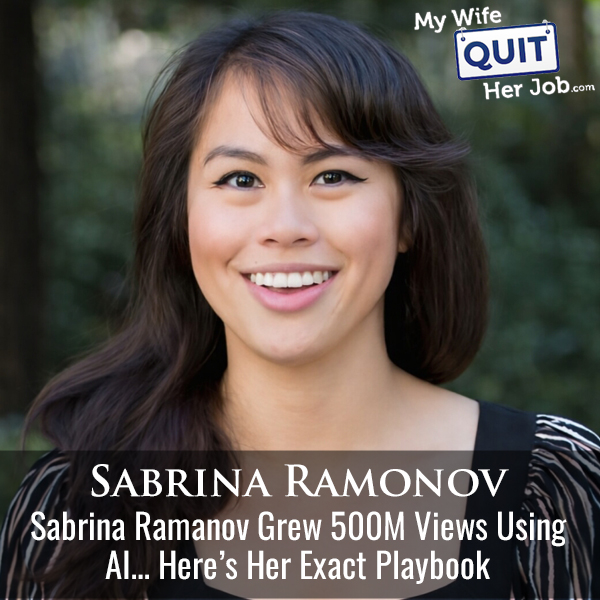
In this episode, I sit down with Sabrina Ramanov, a CS major turned social media entrepreneur who walked away from the traditional career track and built an audience of over a million followers across multiple platforms.
We get into her exact strategy for growing from zero, how each platform is different and where you should actually be spending your time, and why she thinks most people are completely wrong about what it takes to build an audience. Then, we go deep on vibe coding nad how the average person can actually use it effectively.
Try Blotato for free by clicking here
Get My Free Mini Course On How To Start A Successful Ecommerce Store
If you are interested in starting an ecommerce business, I put together a comprehensive package of resources that will help you launch your own online store from complete scratch. Be sure to grab it before you leave!
What You’ll Learn
- How Sabrina Ramanov Used Ai To Scale To 500m Views
- The Exact Content System She Uses
- Simple Ways You Can Vibe Code Your Next App
Sponsors
SellersSummit.com – The Sellers Summit is the ecommerce conference that I’ve run for the past 9 years. It’s small and intimate and you’ll learn a ton! Click Here To Grab A Ticket.
The Family First Entrepreneur – Purchase my Wall Street Journal Bestselling book and receive $690 in free bonuses! Click here to redeem the bonuses
Transcript
Welcome back to the podcast, the show where I cover all the latest strategies and current events related to e-commerce and online business. In this episode, I sit down with Sabrina Ramanov, a CS major turned social media entrepreneur who walked away from the traditional career track and built an audience of over a million followers across multiple platforms. We get into her exact strategy for growing from zero, how each platform is different and where you should actually be spending your time and why she thinks most people are completely wrong about what it takes to build an audience.
00:29
And then we go deep on vibe coding, how the average person can actually use it effectively and how I personally built a Shopify app in a weekend that saved me 300 bucks a month. But before we begin, I want to let you know that tickets for Seller Summit 2026 are now on sale over at sellersummit.com. And if you sell physical products online, this is the event that you should be at. Unlike most events that are filled with high level fluff and inspirational stories, Seller Summit is all about tactical step-by-step strategies you can actually use in your business right away.
00:57
Every speaker I invite is in the trenches, people who are running their own e-commerce stores, managing inventory, dealing with suppliers, and scaling real businesses. No corporate execs and no consultants. Also, I hate large events, so I intentionally keep it small and intimate. We cap attendance at around 200 people, so you can actually have real conversations and connect with everyone in the room. We’ve sold out every single year for the past nine years, and I expect this year to be no different. It’s happening April 21st to 23rd in Fort Lauderdale, Florida.
01:26
And if you’re doing over 250K or $1 million in revenue, we also offer a private mastermind for high level sellers. Right now, tickets are the cheapest they’re ever gonna be. So if you want in, go over to sellersummit.com and grab your ticket. Now on to the show.
01:47
Welcome to the My Wife Quitter Job podcast. Today I’m excited to have Sabrina Ramanov on the show. So Sabrina jumped on my radar screen in just the past year where all of a sudden my entire feed on TikTok was suddenly flooded with her uh content, both AI and non-AI. And you can tell that she’s using her AI avatar because she’s wearing this purple cap. Sabrina is a serial entrepreneur where she started and sold her AI company, Curious, several years ago.
02:17
And since then, she’s been on a mission to teach 1 million people about AI for free. I’m pretty sure she’s exceeded 1 million people at this point. But she also started this new AI company called BlowTato that helps scale your organic social media, which I am actually happily using right now to handle all of my social media posts. And it’s been a game changer for me. In fact, the only negative thing that I had to say about this woman is that she graduated from Cal, but we’ll let that go for today.
02:46
But in this episode, we’re going to talk about vibe coding. We’re going to be talking about scaling out your social media with the power of AI. And with that, welcome to the show. Yeah, thanks so much for having me. Yeah, go Bears. Go Cardinal. OK, so Sabrina, your posts are all over my feed. I saw today, I saw a post from you about skipping out on college to do an apprenticeship or just to create like 12 different projects.
03:12
I’m afraid that I’m going to have to revoke your Asian membership. I knew that was going a little spicy. Well, I know that you went into debt, right? Now going to college. I mean, do you really? I kind of feel the way you do, but I’m not allowed to say that publicly. And the thing is, I do make an exception for the top
03:36
colleges like Berkeley was considered top college. whatever one you went to, I’m just kidding, It’s absolutely insane network. It’s just incredible people you’re surrounded by and opportunities that are incredible. And so there is kind of like a soft spot in my heart for kind of the top universities. But there are many other universities that are charging those price, those same prices. Let’s say I graduated for everybody who knows it was $250,000 in student debt.
04:06
And it was really interesting for me actually when I made the Forbes 30 under 30 list, there was like a private survey of demographics of like who else had graduated with student debt. And it was actually a very tiny, tiny, tiny percentage. And I was like, oh, maybe there’s a correlation between who people who make these lists. And there was a socioeconomic correlation with like how easy some of this stuff is attainable to you if you come from a background of uh where you’re financially well off in the first place.
04:34
And I really love Berkeley because it had that socioeconomic diversity for me. That was like huge, huge. So my co-founder for my first company, and he’s now my husband, George, he transferred into UC Berkeley from a community college in California. And so that was, yeah, that was super cool. Very different worlds we come from. But yeah, I knew that post would be spicy, but I also really believe college, especially today in the age of AI is not really adapting.
04:59
to all of these things you can do now with AI. Most curricula still don’t teach kids how to use AI, not college kids either. And I do think there’s a lot you could learn just by taking initiative and building these projects yourself or apprenticing under somebody that you think is really cool, right? And for a college kid, it could be content creation, influencing, being a YouTuber, it be building apps, whatever it is, just like go apprentice for that type of person and really see how they work, what it takes to succeed.
05:29
in that environment and like try to do it yourself. So I’m a big advocate of just doing that as well, not just studying theoretical stuff in the classroom. I am very pro AI. So I actually have a daughter who’s applying to college right now. And it seems like the schools are almost against it in a way, like they have anti AI too. mean, this is going to be a part of everyone’s lives. So I’ve taken a proactive AI approach with my kids as well. But yeah. And like,
05:57
I made another post on this. I think it’s a shame uh that most schools aren’t teaching kids how to use AI. So kids end up using AI in a cheap way, like just copy pasting and plagiarizing. And then when they graduate, they’re expected to know how to use AI for everything because they’re young. So why don’t they know how to use AI for everything? But they weren’t like trained or educated with this during college. So I think it’s a huge, I think it’s a really big disservice to be honest. I agree with you.
06:26
But uh Sabrina, so it sounds like you had a decent exit from your last company. Why did you decide to create one in the social media space? And what made you want to even reach like a million followers and teach AI in the first place? Well, so when I moved outside of a tech bubble, so I was in Silicon Valley for over a decade. And then when I moved outside of the tech bubble, it became glaringly obvious to me that nobody knows about AI and the things they do know are often driven
06:55
by like fear and anxiety. And that really bothered me when I opened TikTok a year and a half ago and I started creating content, it was like, you’re missing out, also buy these prompt packs for like a thousand dollars. ah It was a combination of like FOMO and ripping people off. And I really did not like that. That did not resonate with me at all. We were just talking about that pay it forward mentality that’s prevalent in Silicon Valley. And I felt like this was my opportunity.
07:22
to pay it forward. I had been in AI since 2013. My first company was also an AI company. We did speech recognition, natural language processing, and I just felt like I was in a position and also enjoyed teaching other people like, hey, here’s all the cool, positive, productive things you can do with AI. It’s just funny because I’m an EE. I have a master’s in EE, and I believe you have a CS major. Social media is not something that I would, wouldn’t be my first instinct, you know, to go into. So that’s why I asked.
07:51
Oh yeah, so I’ve listened to Gary Vee and Hormozi for years, and now I understand what they say. You know, most people are going to listen to this and never take action. There’s this element of fear and honestly insecurity when I started, especially being female on these platforms. I don’t wear makeup, I don’t doll up, I don’t dress up or anything. Really, you are facing a lot of your own insecurities in your mind that first 100 days of posting content. And even for my tech friends,
08:20
They all looked down on TikTok initially. It wasn’t until I started growing on Instagram, they were like, oh, that’s cool. Interesting. Okay. Yeah. So I dealt with all of that, but I just feel like my position is I’m an educator. What is the most efficient way to reach many, many people with exactly what I want to say without having to go through some gatekeeper. And so when I thought about it in that way, was like, well, social media makes the most sense. I can talk about what I want to talk about.
08:48
the algorithm will try to find my audience for me, like people who actually appreciate the stuff that I’m saying, and it’s free. Like anyone can get started. You don’t have to like pay for PR. You don’t have to pay for anything to start posting on social media and teaching folks what you want to teach. Yeah, totally. I actually I get a lot of flack from my Stanford buddies. Like they make fun of me nonstop. But hey, I found my tribe, you know, who wants to listen to me. So yeah.
09:14
So what I wanted to do today, since you’ve been very good at growing your audience, primarily this podcast serves business owners. And I want to get your strategy for building up a social media account from complete scratch for, let’s say, like an e-commerce company or a services-based company, using your strategies. Have you ever wondered how much your business is actually worth?
09:43
Now I sold one of my businesses through Quiet Light and honestly, just getting that initial valuation changed everything for me. Not because of that number itself, but because of what came with it. My advisor walked me through exactly what buyers would be looking for, how I needed to restructure my accounting, what documentation I was missing, the gaps in my financials that might kill a deal before it even starts, and stuff that I really had no idea that mattered when it came to selling a business. And here’s the thing, I wasn’t even ready to sell yet, but knowing what I needed to fix,
10:12
meant that I could actually start preparing and I now had a roadmap. Everyone at Quietlight has built or sold businesses themselves. So when my advisor told me what needed to change, it was actually coming from real experience sitting across from buyers. And by the time I was ready, everything was positioned right and we attracted serious buyers. So if you’ve been thinking about selling someday, even if that day feels way far off, just getting a free valuation from Quietlight will make a huge difference.
10:39
You’ll learn what you need to fix right now so you’re not scrambling later. And if you’re interested, go over to quietlight.com. Yeah, so I can recap at least what’s worked for me and then you can probably take pieces of it. For me, I start with my personal brand and thought leadership. So giving away AI education as highest quality as possible and just giving it all away for free. That builds up my personal brand. And then I sneak in like, hey, check out Bloatato here and there.
11:08
So I’ll make two TikToks a week where I talk with Blotato. In my newsletter at the bottom, it’ll say, hey, I built Blotato for this particular purpose. ah So that organic social media for my brand then funnels a small percentage of my audience who are a good fit to Blotato. They funnel them to the website. And I think just the Blotato website just this year has gotten 1.4 million visitors already. through that funnel. So like my personal brand is probably around
11:37
500 million views. Okay, so but that’s like broad AI education content. And then it’s just a matter of like, you know, inserting it here and there and subtle ways that aren’t pushy and aren’t for me, it’s important like not to be too salesy because I don’t resonate with that. And so I just like insert it in different ways here and there. And that just funnels that initial massive audience at the top of funnels of people who are good fit directly to the website. mean, it works. mean, I fell for that funnel.
12:06
Let’s say you’re selling, so do you recommend that people start with their personal brand first? I think it’s very powerful. I know that a lot of people aren’t willing to do that. I also don’t think it’s necessary for uh anything that’s consumer facing. I see a lot of, for example, like B2C consumer mobile apps on TikTok. Most of those I’m seeing succeeding do not have any face or personal brand at the helm because you want to find some repeatable viral format that you can then hire.
12:35
your UGC army of a hundred creators to then replicate. So if it’s only attached to you, then it’s not necessarily as scalable as having a different type of video that any creator you hire can replicate. So for B2C, I don’t think it’s necessary at all. For B2B though, which is what Blotato is, so Blotato sells to agency owners, people building their brand, their businesses building their brand. For B2B, it’s incredibly powerful. The inbound opportunities you get.
13:03
by putting your face out there, your thought leadership out there, pretty incredible irrespective of whether it generates leads for your business, I think. Like both are incredible. So if you are willing to put yourself out there, I would definitely vote for that for anything B2B context. So you’re pretty well spoken. The videos that we watch now, were you always this eloquent? Did it take practice? Do you have some earlier videos that were just horrific?
13:31
Oh yeah, like I couldn’t watch my earlier videos. Like I cringed, I was so critical of myself. I also felt I was trying different formats. So in the beginning, like you’re trying to find and create your own voice as well. And that’s a very awkward process. So I’d like try to copy someone else’s style and I couldn’t watch it again because I knew it wasn’t me. I wasn’t authentic. Maybe nobody else picks up on these things, but I could pick up on it.
13:59
Articulate, I don’t know. I just try to say something as clearly as possible using simple language. In my mind, it’s much easier to complicate stuff and sound smart than it is to try to actually simplify something, especially knowing that these are very nuanced topics. But to teach somebody, you need to really distill it to the core essence of the material.
14:26
Can I ask how many pieces of content you’re putting out a day? Yeah, yeah. So I actually have my entire social playbook published. So I only make content once a week. And then it starts with a YouTube video in the morning. So that’s my long form. And then I repurpose that into a newsletter and a couple of short form pieces, just kind of announcing, hey, like, here’s my latest YouTube tutorial. And then I take a lunch break and then I film 20 TikTok videos.
14:50
And then when each TikTok video is posted, I have an automation that uses potato to repurpose it to other platforms. I just wanted to take a moment to tell you about a free resource that I offer on my website that you may not be aware of. If you are interested in starting your own online store, I put together a comprehensive six day mini course on how to get started in e-commerce that you should all check out. It contains both video and text based tutorials that go over the entire process of finding products to sell
15:19
all the way to getting your first sales online. Now this course is free and can be attained at mywifequitterjob.com slash free. Just sign up right there on the front page via email and I’ll send you the course right away. Once again, that’s mywifequitterjob.com slash free. Now back to the show. So is that 20 pieces a day? your- Oh no, so that’s per week. So let’s say- Oh per week, okay. So let’s say 21 original pieces of content per week and then that is just repurposed everywhere else.
15:48
Okay, so three pieces a day approximately. ah Would you recommend someone starting out have that frequency? uh Ideally, yes, but I understand like most people don’t have the time. So it’s more a function of like, what can you fit in to the time you have? I do think consistency is the most important thing. So if you can only do one a day, like just go for it and just stick to it for as long as you can.
16:14
It didn’t really become a habit for me until about like 90 to 100 days where I truly felt like it was wrong to not post something. I just felt like it was part of my identity now. Like I just got to post something today, even if it’s just a tweet, one line on LinkedIn and that will count, you know, in my head. But yeah, I noticed most beginners kind of just fall off track. They never actually make it to 100 posts published. Yeah. And to come up with that many pieces of content,
16:43
I imagine you use AI to augment that. Are you eating your own dog food and provide ideas? but I think one of the things people don’t realize is I also source, I use AI to source ideas from stuff I’m already doing. So when I’m coding for Bloatado or answering support tickets for Bloatado, for example, once a week my AI bot goes in there and tries to like look for interesting trends. And that can be a content idea. For example, like a lot of people are asking for a particular feature, like
17:12
uh create carousels with Bloatado. And that was the origin of that particular feature, and that could be a content idea. I also look at things like uh meetings I’m already having. So I don’t have many meetings, but my Bloatado weekly office hours has an AI meeting notes taker, and that is also repurposed into content ideas. my suggestion for most people is to not change what you’re already doing, but just look for opportunities where you can kind of plug in AI to kind of listen.
17:40
extract ideas organically from the stuff you’re already doing. For most people, it’s probably a combination of meetings or maybe emails are kind of the two most obvious places to start and just have an AI flow that’s like, hey, these are like 10 pretty interesting ideas from the stuff you discussed today. And the benefit is like you were authentic and engaged. Like you weren’t trying to force these ideas. They came up naturally in conversation and that’s what makes them like really valuable and interesting.
18:12
I can tell you how I’m using BlowTato. uh So anytime I’m on TikTok or in my emails or seeing an interesting article, I immediately just shove it in BlowTato. And then when it times to create the content, I just put my own spin on whatever that article was. And that has made life just so much easier for me because I don’t have to stare at this blank screen. Yeah, because we get inspired by content ideas all the time. Like I’ll see a LinkedIn post, I’ll have a reaction to it.
18:37
And so like I’ll plug it, I’ll plug the post in Blotato and then I’ll use my voice dictation app. So a lot of people use whisper flow. I use voice sync and then I’ll be like, well, this is what I think. And it’s slightly different. And then Blotato kind of mashes them together, right? Do final edits and then publish it out. And that’s like exactly the core use case it was built for. I know a lot of people ask me for full automation, but in my opinion, most beginner creators should not start with full automation. They should like take
19:05
interesting ideas that they already have or that they see online, add their unique voice and then publish it rather than trying to automate everything from ground zero.
19:17
I’m actually not a fan of full automation at all, because I don’t feel like what’s generated reflects. It’s never exact. I always have to edit. So I’m actually curious. I’ve noticed you’ve used an AI avatar. Do you continue to use the avatar and like, does that flow? I actually only use it when I’m on vacation or out sick and so and always wears a hat. So like my audience knows and it’s transparent and it’s honestly safe. Like there was
19:44
weeks when I lost my voice and it honestly saved me during that two week period. But yeah, there’s still like massaging, like I really care about the script that it’s saying. It’s also difficult to get the avatar’s like enunciation correct and sounding correct. So I’ve sat there for four hours tweaking 11 Labs parameters until I could find something that was 80 % of the time acceptable, right? 80 % of the time. That was like the best I could do. Yeah. Okay. Yeah.
20:14
Yeah, you know, I started replacing my outros in the podcast with 11 Labs just so could play around with it. It’s gotten a lot better. Oh, yeah, yeah, the professional voice clone definitely better. Yeah.
20:26
But for you though, uh I was under the impression that everything was kind of automated. So you’re actually going through and tweaking the output before it gets posted. so I think what I’ve kind of learned, so when I initially started making automation tutorials for Bloatado users, I would have them fully automated because that was like the simplest version that I could do. Because once you have a human in the loop step, it’s like, okay, you write it to Airtable, wait for somebody to approve it, then send it back.
20:55
I didn’t want to introduce that level of complexity in a tutorial. What I’ve learned though on this topic is like people really download these templates and just expect it to work out of the box and like go by. And that I did not anticipate. And so kind of my learning from that moving forward is to have a human in the loop QA step in every single tutorial moving forward. Cause I truly believe that’s like the approach 90%.
21:23
of people should probably take. I’m not a fan of using AI to distance yourself from the creative process. And that’s what a lot of people want it to do. Like they don’t want to deal with the edits and the thinking and finding your voice. But I believe the complete opposite. Like the people who are succeeding using AI are using it to go deeper into the creative process. Like find my blind spots, give me five different perspectives that challenge me. And that’s the way to use AI successfully.
21:54
I’m so happy you said that. That being said, though, we kind of glossed over your flow. So from what I understand, you have AI just kind of browse all the different things that you’re doing and does it put it in air table? Yeah, Yeah, so when it comes to ideation, yeah, bucket number one is what am I already doing today? So it’s looking at meetings, it’s looking at emails, and it’s looking at my GitHub projects, which is where I manage like, bloatado tickets, like feature tickets and buck tickets. Number two is AI news.
22:22
So I use an app called RSS.app where you can pay attention to different Twitter accounts, TikTok accounts, Instagram accounts, and just compile what is the most interesting news. For my particular audience, that tends to be tools that are free or resources that are free, like deeplearning.ai just released a free course on AI governance for agents. That’s interesting. I really like that. I’m going to share that. And also new tools that come out.
22:47
um Like the chat, GPD subreddit sometimes has funny stuff, so I’ll include that in there. And then the third idea, the third source of ideas is actually scraping consumer content and just thinking about the different hooks. just niches completely unrelated to AI. So let’s say dating or relationships, but there I’m looking for just inspiration around like very interesting hooks that I could repurpose for an AI use case.
23:14
So these scrapers, are they code or are using something Yeah, I’m using NADN, but you can definitely code it today with a Vibes Coding tool. So I personally use Cloud Code for coding potato.
23:28
Yeah, okay, so N8N, so you have all these things now, then I imagine that’s like a whole bunch of stuff that you have to sift through. And then do you pick one and then feed that into AI to write your script? I imagine you have like a prompt that you use that sounds like you or what’s your process So it will put it in Airtable. So I have an AI agent where I’ve given it examples of previous content that has gone viral. And so that agent scores, like let’s say it has 200 ideas.
23:57
it’ll like score it based on what it thinks will do well. And then obviously I apply my own judgment as well. Sometimes there are just topics I want to talk about that I think are important to talk about. um Like a lot of people overlooked Brave’s initial research on AI browsers. That was like a while ago. I posted about it on TikTok a while ago, but it really didn’t explode until OpenAI released Atlas last week or two weeks ago. And people were like, wait, this is not safe.
24:27
But that’s a topic that my AI system didn’t find. I randomly found it just reading through social media. I was like, oh, I should talk about this. all I mean there is there’s room for human judgment. There’s certain topics I feel are important. And then, yeah, so basically I’ll take whatever the research was for that topic and then plug it into Blotato. I have a TikTok default script that I like to use. And then it just spits it out.
24:51
Sometimes if I’m like get a little low on views the past week, I’ll spend extra time on the hook. So I have another thing in Bloatado called a viral AI coach where you can up you first record your video and then upload it. So I’ll record like 10 seconds the hook, including a visual hook and then upload it to that viral AI coach to get an additional layer of feedback.
25:15
I didn’t know that existed. lot of people don’t. But once you find it, it’s really awesome, especially for beginners. So you can upload an entire video, but it’s really focused on analyzing the first 20 seconds. So it’ll transcribe it. It’ll analyze it visually for the visual appeal of the hooks. And then it’ll give you a scorecard of how was the first hook, how was the second hook, et cetera. OK.
25:42
You record it first and then you use that. I’m feeling like I need to work on the… Like I want more views this week. I really need to work on the hooks.
25:53
Yeah, my ego is like that too. If I’m low on views, my ego needs that fix. So, okay, so for filming, uh do you just kind of add lip based off of notes or do you have a teleprompter? So I only use a teleprompter if I’m literally reading a list. Otherwise, I can’t remember the list. I don’t normally use a teleprompter. So literally what I’ll do, I don’t have it here, but I just have like a selfie stick that holds my phone up. And then my computer.
26:21
with the notes from Bloatato will just be like right there. So it’ll just be like my phone, notes, I can just glance at it and wing it honestly. And then that’s it, that’s the video.
26:33
Okay. And then your routine is, do you do three a day or do you just batch? I batch everything in one day of content creation. Okay. Okay. And then the rest of the time I imagine. People think I create, people think it’s the opposite. Like I must spend all my time creating content. Um, I specifically built Lotato so that I don’t have to spend all my time creating content. Right. Um, but yeah, most of my week is like,
26:59
fixing bugs, building new features and answering support tickets. Like that’s pretty much it for the week.
27:07
And then assuming you follow this process of posting three times a week, or sorry, three times a day, when did you start feeling, traction? Yeah, that’s a good question. So in the very beginning, I only posted one LinkedIn post a day. That was for a month. I actually had one LinkedIn post go viral. And it was about like the new way of building AI startups. um That had a lot of interesting discussion.
27:33
But I didn’t start posting TikTok until maybe like June or July. And then it took like three months to get out of 200 view jail. Like my next milestone was 1000 views regularly. And to do that from, distinctly remember from 200 to 1000, what made all the difference was using hashtags. Just using hashtag AI, hashtag chat GPT. And that was it. Cause I apparently, wasn’t doing that before I didn’t realize that was a thing. Yeah.
28:03
And then my very first video that did well, was because I use creator search insights on TikTok, where it was like, uh if folks aren’t familiar with it, basically TikTok tells you what people are searching for and you can even find content gaps. like maybe people are searching for voice AI apps and there’s a content gap for it. So you can make a video for that. And that was my first video ever that did more than 1000 views. But yeah, but this was three months in already.
28:31
Right. And so if I had given up earlier, then like none of what’s happened would have happened. I mean, most people don’t make it to three months. And that’s why I’m asking that question. Like you got to stick through, in my opinion, you should stick with it for at least a year. in my mind, I was like, this is my five year commitment. Right. Five years. I just think of in terms of years. I don’t even think in terms of weeks or months. Yeah. No, I’m the same way. Three to five years is my thing.
29:00
And and blowtato is like a long-term thing for you too, I would imagine, right? So let’s switch gears a little bit and talk about vibe coding because I’ve noticed you talked a lot about it. I’m an EE and I used to design microprocessors for a living. You’re a CS major. I hear you talk a lot about it. So do you think the average Joe can do it effectively? Oh, yeah. I mean, my 22 year old cousin just quit his full-time job, moved in to our house. We call it a hacker house now.
29:27
And he just vibe coded his second app last night, which is, I don’t know if he’s listening, but you basically take a picture of your Instagram post and you get a virality prediction score for it. Because he was marketing his first app, which was a study tool for college students. He was marketing it on TikTok and Instagram. And he was like, oh, it’d be really cool if I also had this tool. And it’s fully functional. You can sign up for it. I forgot the name of his new one.
29:56
uh But yeah, he’s 22 years old with absolutely zero background in technology. So I think vibe coding can work really well for simpler apps. But what I always tell people is like the goal of vibe coding is to hire a full-time engineer. That’s the goal. The goal is to like validate your MVP, get paying users, get it to the point where like people are like, why does this keep breaking? But that means they want to use it, you know? And then you have that validation and confidence and conviction to go hire like a real tech person.
30:26
to the rest out, maintain the code base, probably refactor 95 % of the code base. That’s what I did. uh Bloatato, I vibe coded the first version with Cursor AI. I filmed myself doing it, so it’s on YouTube. Oh yeah, yeah. Well, the MVP, like the version that got my initial set of 100 paying customers. It didn’t even have publishing, by the way. Like that’s how MVP it was. Like it was a social media tool. You couldn’t actually publish it. uh
30:53
social media, but like the very core feature was just that remixing that repurposing, right? In an article, get posts out in your voice or in a viral voice. ah But yeah, you couldn’t even publish to social media at that point. Well, I know I am loving I call it vibe coding, I guess, but ah because I feel like we’re I’m not really a developer. And it sounds like you don’t portray yourself as developer either. I don’t like you know, wait.
31:21
way more to be dangerous. But right now I feel like invincible. Like I feel like I can create anything. And I’ve literally been going down like the Shopify app store and just running a lot of these apps literally in a weekend because they’re so simple. Right. But then again, I also run a class and some of these people it’s hard for them right because it spits out a bunch of stuff. It doesn’t work. then you’re really hearing mindset. Yeah. Yeah. And you can’t really look at it. So what I want to get out of you today is
31:50
Let’s say you are someone who’s not tech savvy, was your cousin or your brother? Yeah, my younger cousin. Your younger cousin, right. So where should they start? Yeah, I mean, there are a lot of good vibe coding tutorials online. So for example, this past newsletter this weekend, I walked through how to use lovable cloud to vibe code a lead magnet. And I think a lead magnet is actually a pretty good starting point because you don’t have like a complex backend. You don’t need authentication. You don’t need payment provider on top.
32:20
But this was still an interactive little app, meaning you answered a bunch of questions, it spit out an ROI calculator and a personalized report, and you can even put in your email address so you can capture emails. In other words, it’s a true lead magnet, or people can put in their emails and stuff. And things like that are really good starting point, again. Not a very complex backend, it was really just storing your emails and responses that people put into your lead magnet. No authentication, no payment system either.
32:49
Another example I vibe coded- Does that email go straight to a specific provider or is it just putting it on like a sheet or something? So lovable cloud, as long as you connect to your SuperBase account, it will spin up the database, create the database schema, and then it will just insert the emails into SuperBase. And then you can just click one button, you can grab everybody’s emails right there. For everyone listening, SuperBase is just like a database and from what I’m-
33:14
understanding there’s no hooks into e-popular email providers. It just puts in a database that you can extract and add it to your provider, right? Yeah, exactly. And you could hook it up with something like Resend. So Lovable has a pretty streamlined integration with Resend if you actually want to send out emails from the app itself. But again, I would probably consider that like step two or MVP.
33:35
um The other example I was going to say, just posted a video on this, is my AI agents and automations directory. It had 37,000 visitors in the past three months. It was vibe coded in just a few hours. And obviously I’ll put a couple links there to Plotino so it helps drive. but I’m sorry, what did the app do? So it’s a directory of automations. So let’s say you’re looking for…
33:58
marketing automations in N8n or make.com. can filter like marketing, N8n is your platform, and then it’ll just show you a bunch. You click on one, you can see like who made it, you can contact them for help, and you can download the template. It’s literally like a single page directory and the data is just in SuperBase. But that’s another example of like, you know, start there, start with like something. How come no matter what I type, it always points me to blow tato? don’t know.
34:26
That’s cool. Yeah, I can totally see something simple like that. Absolutely. I didn’t even know Lovable had a database attachment. Oh, yeah, it’s pretty new. Okay. Yeah, it was basically one of the biggest complaints, but it’s called Lovable Cloud. And basically, it’ll manage your SuperBase for you, set everything up, because it was really annoying the way you had to do it before. Yeah, yeah, I thought it was only a front end before. I didn’t know. So is Lovable what you would recommend to someone just completely green to this?
34:55
I think so. um The other ones are strong as well. I’ve been really impressed with emergent.sh lately. I haven’t used that one. What is that? It’s similar to lovable, but it can also build mobile apps. uh Instead of SuperBase, I believe it’s using Mongo, the object storage. uh It’s really neat. Everyone I’ve shown it to has been blown away by the level of polish that you get. With that said, though, my husband and I, on our last livestream, we actually tried
35:24
building a mobile app live and submitting it to the App Store. And we almost got there. However, when we actually downloaded the code base and tried to build it locally before submitting it, there were so many issues with the emergent code base, like out of date libraries, things were missing. And so I would say it’s not completely streamlined for mobile development yet, but it’s a brand new player and it’s incredibly promising. So I would probably recommend lovable.dev.
35:53
emergent.sh or I know a lot of people who also still love bolt.new and that can also build mobile apps. So how do you, how do you distinguish? Cause it’s kind of dizzying. There’s like a new platform every day. So I’ve been trying to train my son to use Replet recently.
36:10
Do you use, what do you use, you use Cursor for Bloatado or? For Bloatado, yeah. mean, a lot of these did not exist at the time. Like, Lovable, I had not even heard of, I don’t think it had launched publicly at the time I was filming me vibe coding. So I was using Cursor AI. Okay. And then, I mean, Cursor by itself is just, I mean, you were just generating code, right? And you had your own platform for, okay, because you’re a CS major. Is your husband tech also?
36:40
Oh yeah, so electrical engineering, computer science. We actually met in our data structures class in undergrad. And we had like one of the hardest professors, everybody at least from Berkeley knows him. And the beginning of the class was like 150 people. By the end it was like 25. I can’t remember if that was a weed out class. I don’t remember. But yeah, for CS majors. All right. So if you’re new, it sounds like lovable. You can make simple apps.
37:09
Lead Magnets is a good use case, I think. uh For you, sounds like you did you end up hiring developers then? And you still get the refactor all your code or are you maintaining it? No, I’m maintaining it. Yeah. And so I don’t use Cursor AI anymore. So I’ve definitely switched to Cloud Code, which I highly, highly recommend if you have a complex existing code base. But yeah, it’s a lot of work, I will say. I think I forgot how much work.
37:36
a startup is. So I’m building my brand solo. I’m also building Blotato solo. um For me, it’s more of like an intellectual challenge. How far can I go solo? I’m not at all saying I believe that’s the optimal approach if my goal is only to optimize revenue. I can definitely see like it would be really nice to have another developer. For example, if I’m doing marketing, then suddenly like product development just stops.
38:03
because my focus is on marketing. I’m traveling to an event next week and I’m not gonna be able to publish uh new features. I’ll be able to barely maintain the code base, maybe fix a few bugs. But yeah, it’s been a lot doing it all solo. Isn’t that your husband’s job? No, He has a totally different set of ambitions. What you’re doing is actually my dream. What I fear is actually the support.
38:33
And I know I’ve asked you a couple of questions on Bloatado and I never wanted to press anything just because I know you’re busy doing other things. But uh that has been my greatest fear because you always underestimate someone’s uh technical ability or overestimate, should say, any tools. What has been the biggest challenge for you with Bloatado, actually? I think it’s exactly that um because I’m in it every day and I don’t see what other people see.
38:59
Like when the remix screen to me made sense, I showed it to some other creator friends. They’re like, yeah, I get it. But the typical person who doesn’t have a strong background in content creation, they’re just like, I don’t know what to do at this step. And so my biggest challenge has just been like, being less technical or like simplifying it or streamlining the flows for beginners to kind of get up and running. um
39:23
Even to this day, I don’t necessarily recommend Bloatado to absolute beginners. It’s really helpful if you have been trying to create content on your own for a little bit so you can kind of understand, like, oh, repurposing it. Oh, here’s, I just add my own voice. Okay, here’s my content calendar. I can schedule it out. But yeah, that’s been a big challenge. Support is also definitely a big challenge to scale. It’s tough. I get 100 to 200 support tickets a day.
39:50
And yes, I have an AI support bot that does it and does a pretty good job, but you still have to update the knowledge base all the time. ah Like I just pushed a new feature where you can now schedule through the API, schedule a post to your next tree slot. I have to update the documentation, update the AI bot so it refreshes its knowledge base, uh look for anything else in the documentation that might have outdated knowledge. And I use Clot Code to help me with that, like identify things that are outdated.
40:19
But it’s a lot of work. Like it really, really does add up. So you don’t have a dedicated support person. Is it a one man show right now still? Literally. Yeah. People are really surprised when I just hop in the support chat and I’m like, okay. Amazing. Okay. So that is one way to reach me. I if you really want me to reply. Yeah. So it sounds like support is really the pretty much the only manual thing that you have to take care of outside of the coding, which is for me, it’d be the fun part. Like,
40:48
uh Well, yeah, it’s mostly fun. I think when I get to work on new features, but it’s honestly a lot of plumbing. Like the social API is change or the documentation is horrendous. Like if anyone here is trying to actually, you know, integrate with the social API, it’s pretty like tedious. I’ll say is a nice way of saying it. But yeah, like that stuff is not that fun for me. Honestly.
41:10
um But I have to do it. And it’s probably like 60 % of the work I do is what I consider plumbing. Like not really that fun at all from a developer perspective. I’m using this tool called Repurpose. Actually, I was considering just writing my own version of Bloatado. But then you’re right, I walked through like all the the documentation and then there’s these tokens that expire and then all of sudden you have to manage it. I’m like, screw it, I’m just going to paste it. Okay, so
41:41
To code something like Bloatado sounds like it’s much more involved for someone. ah I will say, think you could build the same MVP I built in probably a few hours now with how vibe coding tools have evolved. But I always like to caveat people that when it comes to building product, launching it and getting users is the start of your product development journey. So to build Bloatado what it is today would take significantly more work than just spinning it up in immersion.
42:10
But you can definitely build the initial first version V2, V3 in Lovable or Emergent today for sure. Well, it’s all fun and games when you’re the only one using it. Yeah, exactly. As soon as it gets to the masses, all hell breaks loose. uh OK, there’s one more thing I wanted to talk to you about, uh which I’m drawing a blank now. But uh Sabrina, in terms of your marketing,
42:37
What has been your most effective way to just get users actually on the Blotato? I would say tutorials on YouTube. um Long form or…? Yeah, long form. Because I think it’s attracting people who are very much already looking for a solution and already pretty educated on the problem. Especially for the API, would say YouTube long form tutorials with automation templates has been the primary driver of API users.
43:05
um For the non-API users, Instagram has actually been pretty good as well. So posting videos as well as carousels are just different features that I have. I’ve had a few viral videos on TikTok specifically for the faceless video creation in Bloatado. So that’s been really helpful as well. But I can tell it like I had another marketing experiment where just did a faceless channel. It got hundreds of millions of views, had a Bloatado watermark, but a very, very low conversions.
43:33
So like that was, you know, I was really excited about the views and also just proving that Blotato can work for this use case around like face story videos. But terrible, terrible conversions. Like just because you put a watermark there does not mean it’s targeted to your audience. They don’t know what that watermark reference is. Like why should they go there? Yeah. So, so it seems like you’re using short form for awareness and then the long form YouTube videos to actually convert them into customers.
44:00
Mm hmm. Yeah, exactly. And that’s how my entire kind of brand funnel is laid out. Like I kind of assume short form content. It’s just not as authority building as long form content. So I want all of my social short forms to link back to my YouTuber newsletter. Okay. And then your newsletter, uh is it once they sign up or no, that’s right. You have an AI newsletter. Yeah, yeah, that’s separate. So yeah, my goal for social is like everybody on my email list.
44:29
It’s by far highest ROI. And I had always heard that as a creator, but I don’t think I believed it until I saw it myself. But it’s really nice having control of your own distribution list and not being at whims of the algorithm every other week. And I know you have a Discord group also, right? um Is that one of your primary lead gens also?
44:55
Is it an email? No, it’s not. Yeah. So I just created a Discord community for women building in AI, just because honestly, it can get lonely and I just wanted to meet more other women builders in AI. But it’s a pretty small group, like a couple hundred women, and we’re testing it out in school as well. We’re trying to figure out, should we stay in Discord or should we move over to school? I love Discord because of the coding aspects. I you too, right? It’s infinitely powerful. Yeah.
45:24
I grew up playing video. I have three brothers. So grew up playing video games and I’ve used Discord for as long as I’ve known. I can tell just by your chairs. But Sabrina, hey, it’s been great talking to you. If people want to sign up for your newsletter or check out your tool, where can they go? What’s the best place? Yeah. So for my newsletter, go to Sabrina.dev and that’s honestly, yeah, the best place. Okay. Awesome. Well, thank you so much for your time. I really appreciate it.
45:54
Yeah, thanks so much for having me. Hope you enjoyed this episode. If you’re not using Claude or BlowTato at this point, make sure you check out these tools because they will change your life. more information and resources, go over to mywifequitterjob.com slash episode 631. And once again, tickets to Seller Summit 2026 are now on sale over at seller summat.com and we are almost sold out at this point. If you want to hang out in person in a small intimate setting, develop real relationships with like-minded entrepreneurs and learn a ton, then come to my event.
46:23
go to SellersSummit.com.
I Need Your Help
If you enjoyed listening to this podcast, then please support me with a review on Apple Podcasts. It's easy and takes 1 minute! Just click here to head to Apple Podcasts and leave an honest rating and review of the podcast. Every review helps!
Ready To Get Serious About Starting An Online Business?
If you are really considering starting your own online business, then you have to check out my free mini course on How To Create A Niche Online Store In 5 Easy Steps.
In this 6 day mini course, I reveal the steps that my wife and I took to earn 100 thousand dollars in the span of just a year. Best of all, it's absolutely free!


