
647: How To Make $2M Selling Creativity In a Box With Miroki Tong

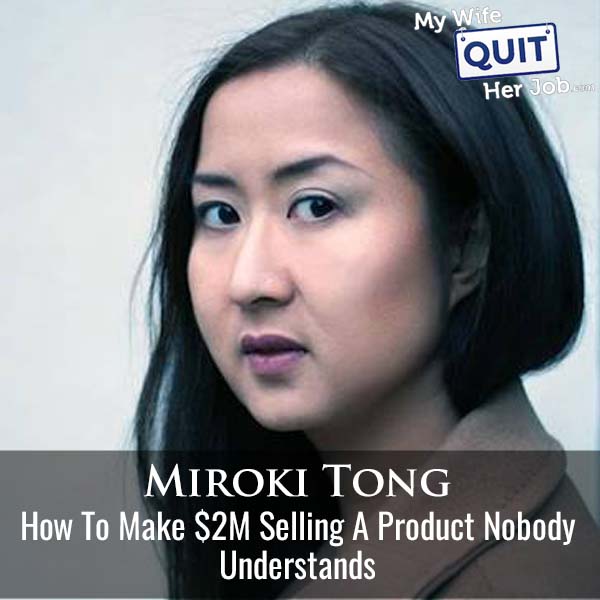
647: How To Make $2M Selling A Product Nobody Understands With Miroki Tong

In this episode, I sit down with Miroki Tong, co-founder and CEO of StoryEngineDeck.com, where she sells a product most people can’t describe until they hold it in their hands.

Miroki walks through how she and her co-founder turned a set of creative writing prompt cards into a million dollar Kickstarter campaign, and how they still run Meta ads at a 4-5x ROAS while refusing to use AI for anything creative. If you’ve ever worried your product is too weird, too niche, or too hard to explain to sell online, this one is for you.

Enjoy the episode!

Get My Free Mini Course On How To Start A Successful Ecommerce Store

If you are interested in starting an ecommerce business, I put together a comprehensive package of resources that will help you launch your own online store from complete scratch. Be sure to grab it before you leave!

What You’ll Learn

  • How to sell an obscure product
  • How to scale a Kickstarter to $1M+
  • How to achieve 4-5x ROAS on Meta

Sponsors

SellersSummit.com – The Sellers Summit is the ecommerce conference that I’ve run for the past 9 years. It’s small and intimate and you’ll learn a ton! Click Here To Grab A Ticket.

The Family First Entrepreneur – Purchase my Wall Street Journal Bestselling book and receive $690 in free bonuses! Click here to redeem the bonuses

Transcript

00:00
Welcome back to the podcast, the show where I cover all the latest strategies and current events related to e-commerce and online business. In this episode, I sit down with Miroki Tong, co-founder and CEO of StoryEngineDeck.com, where she sells a product most people can’t describe until they hold it in their hands. Marokee walks us through how she and her co-founder turned a set of creative writing prompt cards into a million dollar Kickstarter campaign, and how they still run meta ads at 4 to 5X return on ad spend.

00:28
while refusing to use AI for anything creative. So if you’ve ever worried your product is too weird, too niche, or too hard to explain to sell online, this episode is for you. But before we begin, I just wanted to take a second to mention that I have a free e-commerce community that I’m incredibly proud of and would love for you to be a part of. It is a place where real sellers come together to share wins, troubleshoot problems, and support each other through the ups and downs of building an online business. You can join completely free at mywifequitterjob.com slash community

00:58
and I would love to see you there. That’s mywifequitterjob.com slash community. Now onto the show.

01:09
Welcome to the My Wife Quit Her Job podcast. Today I’m thrilled to have Miroki Tong on the show. Now I got a chance to hang out with Marokee at Scott Huntingham’s Merchant Mastery event at Shopify HQ in New York about three or four weeks ago and I’m really glad that we met. Marokee is the co-founder and CEO of storyenginedeck.com where they sell one of the most unique products that I’ve encountered in a very long time. They sell tools that help creators build stories, worlds, and characters.

01:39
And you can think about it like a toolkit that helps you unleash your creativity. Now, in this world where everything is increasingly moving towards AI generated junk, it’s actually pretty refreshing to see a thriving company succeed in the creative arts. And with that, welcome to show, Maruki. How are you doing? Thanks so much for having me. I’m super excited to be here. Yeah, I I remember when I think you were one of the first people I met at that event.

02:06
And remember you were telling me about your product. was like, wow, that’s like a really unique product. I’m very curious how you came up with the idea and how you sell it. And before we start though, I hope I described the product correctly because I didn’t get a chance to play with it. I know you had one at the event. mean, I think you probably described it the most beautifully out of a lot of folks I’ve ever interviewed with. So I think you understand what we do. Okay, perfect. Yes. Well, do you want to first start by just giving a little bit more detail about how your product works and who it’s for just

02:36
just for the listeners. Yeah, of course. So Story Engine, the Story Engine, we create decks of creative writing prompts, which helps writers get unblocked, like unleash your imagination, just providing you with endless possibilities because we believe that creativity is like fundamental to the human spirit. I think it’s very necessary. I think that’s,

02:58
Even if we’re not, like I think some people say, oh, we’re not creative. Everyone’s creative in some ways, whether you’re telling bedtime stories to your children, whether you love partaking in music or watching symphonies or going to movies, reading a book, we are all creative and we all strive and thrive in creativity. And without a creative world, we have nothing. um And so Story Engine helps you just like find those endless possibilities. We have three flagship decks, Story Engine deck, deck of worlds and lore masters deck.

03:25
The first deck helps you create uh character driven uh story prompts. The second deck is for building worlds. um And then the third deck is for really getting interconnected lore, kind of like your conspiracy, like red string theory. It’s like, here’s a faction, they have this other warring faction. What is the specific location it happened in? So you can really craft your world from bottom up.

03:49
Um, writers of course use our decks. have a number of, you know, amazing A-list writers have used our decks. Hollywood writers have used our decks. Um, people who play D &D. So if you ever played, did you ever play D did. Yes, I did when I was really young. Just to be clear for anyone listening, when she says deck, it’s literally a deck of cards that help you. In like a treasure chest box. It’s like big. Yeah, it’s big. Actually, if I was smart, I would have had a deck on hand, but luckily.

04:17
My spouse had one in the corner of the desk. looks like this. it’s quite large. It’s like a treasure chest. So, you know, you can kind of really like kind of, you know, it’s in this beautiful like hinge box. There’s decks of like five cards inside. you can like, you know, you can kind of get a sense, like pull each card out and then you can, depending on the deck, some of them you stack next, you put next to each other, like this one you do. And then some of them you build little clusters together. So.

04:46
different ways of using our decks. yeah, so physical deck, I think it’s nice because in a digital world, actually that analog experience really helped, you know, kind of like that tactile performance. It makes your brain work differently. Right. I know even personally myself, I’ve started doing more handwritten notes sometimes when I’m brainstorming these days, because I find that different words, my vocabulary actually gets a little more broad.

05:14
I’m able to rearrange ideas a little bit more fluidly as opposed to saying, oh, I have to delete this or I have to like put it over here in this word document or everything’s just like connected with bullet points. I have a very engineer brain. So it’s actually funny that um I like the fluidity of the handwritten note, but because you have the cards, you can actually rotate them. You kind of really have that experience of experiencing every little thing and adjusting them as you like. um

05:40
So writers use our decks, people who play Dungeons and Dragons, the Dungeon Masters use it to create worlds or create uh NPCs in their settings. A lot of educators use our decks. it’s a really great tool in school, obviously, for like youth to, let’s say in English class, you can say, oh, well, here’s one prompt and you can see how maybe 30 kids can all come up with a different story based on it to really show the versatility of one’s imagination.

06:07
Sometimes people use it in history class, even science class to kind of get a sense of like studying ecosystems or ecology and just finding a way to make things more interesting for people. Maruki, you said you’re an engineer. How did you get into this line of work? Are you a writer also? um I should say I’m a failed engineer. So, you know, I grew up with the typical Chinese family that really said you had to be a doctor, an engineer or a lawyer.

06:33
um And then I uh defied all my parents’ expectations when I told them that I was going to become an actor. um So yeah, so I gave up going to school for engineering, actually ended up getting my theater degree and actually did an English minor as well. So yes, I am a writer. Okay. Hilariously, I hated writing essays in school. Hated them, hated them. But ah

06:56
And you know, when I was in theater, I did playwriting as well. So I am a writer. I enjoy and I love writing. uh I love the creative space. You know, my nutshell life stories, I did burn out of the industry in my late twenties. ah I kind of encountered all the roadblocks that one might encounter as a performer, know, like over-saturated industry, lack of work, really hard on your self-esteem, you know, really like…

07:23
all, you know, there’s so much expectations on how you need to appear physically. Unfortunately, it’s also not an industry that was very diverse at its time. It still isn’t, but it’s making a lot of strides. There’s more Asian getting there, there, getting there. But when I was in it, there really was not many rules for me. uh I was literally Asian woman in the business suit and Asian woman in nurse’s scrubs. would say that those are the those are my bread and butter rules. Doesn’t you know, not much acting in that. For now, the industry I went back and got my MBA. uh

07:53
got and then became a freelance strategic management consultant, uh of which then uh Story Engine, actually the my co founder Peter, at that time had asked me to consult for him and a few years of working together, asked me to join on as co founder and business partners. okay, that’s how I that’s how I landed with the story engine. So to me, and I remember when I first heard about your product, this sounds like a very difficult product to market online because it’s so unique and it requires explanation.

08:22
So how did you guys come up with the product and get your first sales? So I think our story is a little bit different than maybe the standard like e-commerce company per se, in that we started with crowdfunding. our very first, actually all three of our decks were launched via Kickstarter or BackerKit, which is another crowdfunding platform. And the funny story is at the time,

08:50
When Peter launched the story engine deck, which is the very first deck, so the deck I just showed you, he was actually launching a book of short stories at the same time. And he was actually really focused on promoting his book because that was his baby. And then he thought, you know what, like I create this writing tool for myself because I myself was feeling at that time he was uh really dealing with some major personal life stuff and was really struggling and kind of lost his inspiration to write. And um

09:18
He had actually, he was actually engaged in this really difficult lawsuit that he thought he would never get a chance to write again as a result on it, of it. And he thought, I want to find a way to invigorate myself. So he created this tool and he thought, Hey, maybe I should share this tool as part of my Kickstarter. And everyone was more obsessed with the tool than his book. So once he kind of got over his ego, he was like, Oh, no one actually cares about my book.

09:44
he realized that maybe there was something here and maybe there were lot of other people out there who were similarly looking for something to help them overcome their own writer’s block to things where they felt, know, when you’re like a writer, it’s kind of lonely. It’s a very solitary art. And I think a lot of people were just trying to find ways to get in big, get inspired. And, um you know, and I think that’s why they kind of gravitated to the deck in the way that it was.

10:14
I just wanted to take a moment to tell you about a free resource that I offer on my website that you may not be aware of. If you are interested in starting your own online store, I put together a comprehensive six day mini course on how to get started in ecommerce that you should all check out. It contains both video and text based tutorials that go over the entire process of finding products to sell all the way to getting your first sales online. Now this course is free and can be obtained at mywifequitterjob.com slash free.

10:43
just sign up right there on the front page via email and I’ll send you the course right away. Once again, that’s mywifequitterjob.com slash free. Now back to the show. Funnily enough, this was literally right before the pandemic as well. so I don’t know, like I don’t know if it worked in our favor or not because I’m sure it did actually like the isolation. And we gave away a lot of free resources during that time. Like we wrote, like Peter wrote a lot of blogs about how to stay motivated at home.

11:12
how to find creative things to do with your children. We release a lot of free resources. So when I said we have decks for, em a lot of educators use our decks, we actually designed lesson plans. So teachers can actually download them for free off our website because we really believe in the education system. And we know that without some of the best educators in our lives, like we wouldn’t be the creators that we are today. um Peter, you know, speaks very lovingly of his English teacher. I have some amazing English teachers in my life.

11:39
So we have free lesson plans that teachers can download off our website to use in conjunction with a Dex at school. We created eco-friendly versions that people could print at home. We have PDF versions for a more cost-effective option, all sorts of things. So I think that’s why people gravitate towards it that much. I think really that was like the beginning of the end, so to say. No, beginning of the end sounds really catastrophe. I should say this was the start of something

12:09
Beautiful and that just kept going, I suppose. So here’s what’s funny. I started my YouTube channel and I wrote my book during the pandemic because there was nothing else to do. So I think you guys caught it at a good time. I’ve never run a Kickstarter myself, but I do know that in order to get a successful Kickstarter, you already have to have some sort of audience, right? Because if you just list it and it’s just kind of random. So I’m curious, did you guys have an audience or did it literally just take off and Kickstarter started promoting you guys?

12:36
I would say we had a little bit of an audience that’s like for certain. um Peter, before becoming the now known as the co-founder of uh the story engine, also made a webcomic that I would say had like, know, like semi, like mid-tier fame, I guess, so to say. He had a good following and he was a writer already, mostly well-known sort of in the convention circuit. So all of us geeks and nerds would go to like different conventions like Van Expo.

13:06
So we, know, and I would say there’s a little bit, but the thing is, is that it wasn’t to the scale that the story engine or deck of worlds became. So deck of worlds, our second deck was, think it like, I think it became the world’s most crowdfunded world building tool. That one ended up crowdfunding a million dollars. And I think I had over six. Yeah. Yeah. So that first Kickstarter, the story engine deck, how much did that one make? 250,000.

13:35
Oh my goodness, is ridiculous. was one of those, I think by day three or six, Peter’s like, don’t even know what to do. I don’t know what to do. Because it was not what was expected. It was not what he had asked for. It was not what he expected, even a little bit. And the thing is, you can’t do that. actually? I think he asked for 50,000. Oh my gosh. That is crazy. Okay. Yeah. Literally, he was like, don’t know what to do.

14:03
It’s like, you know, people think it’s success is this thing that we all just strive for and we do. But sometimes when it goes far beyond your expectations, I think you get kind of hit with fear where you’re like, how do I do this now? Like, how do I accomplish this? How do I fulfill these goals? How do I satisfy these thousands of backers who are now expecting all of this from me? But I think the thing is you can’t just have an existing audience and

14:32
do something this successful. have a lot of friends with all sizes of following, some of quite large followings, run crowdfunding campaigns that are nowhere near that successful. um I think having an audience is valuable in getting the ball rolling a little bit, but you need a great product. You need a great page. I’m sure many other experts who even talk about building an e-commerce store has already shared this kind of advice before.

15:01
without proper lead gen, without investing in really good ads, without building uh a killer landing page, without a good founder story, without a great product, you still won’t get very far. Can we talk about this crazy Kickstarter that hit a million? What are some things that you guys did to make it more successful? I mean, the foundation, I think, was really important. I always say to people, if you don’t love being on camera, learn.

15:29
I mean like the actor. Yeah Hey, I was an engineer. I was so awkward. I was awkward AF when I was you know what like I was not a good actor I was trained into this it would have been easier for me to still be an engineer if actually left my own devices I am a hermit in a corner like not like looking at the public like don’t want to be outside would rather just be my hidey hole um

15:55
But the thing is, like people truly, think people, especially now, I think more than ever, are, we’re, we are craving human connection. Sure. You know, I think years of being, years of us being isolated in lockdown, no matter how introverted we are, like, so we are social creatures and we want to feel connected to people. And also, honestly, you talked about AI in the rise of AI, where there’s sometimes a lot of sense where we’re not even sure what’s real and what’s not real anymore.

16:23
to know that someone created something and you know, like the story engine, uh everything we create is human made. All are creative. We don’t use gen AI for anything. Every image is either licensed by a creator, an artist, a photographer, we even do some of the photography ourselves. Every prompt is created by ourselves and a team of writers. We work with uh some great writers in writers room, even all our marketing.

16:49
We actually don’t use AI for any of our marketing. Every newsletter is written by that makes sense. totally makes sense. Yeah. Written by Eric, um, who’s, who’s my spouse, uh, full disclosure, um, and works for the story engine written by Peter, everything we do, all are creative. So I think, um, you know, you have that killer founders video. I think there’s a lot of like. Unpretty things that people should also have from the get-go, like your shipping note, like even if you don’t have a product in your hand yet.

17:18
Measure it out, figure out the weight, use comparable products because people want to know what they’re about to invest in and how much money they’re about to put down. So unless you’re offering free shipping to everybody, um you want to get a sense of what you’re charging customers from the get-go so they know what they’re getting themselves into. We communicate that very clearly. um Always have your kind of like very lean budgets. Like this is the bare minimum I need to succeed.

17:44
And have your success budget. Like what if this went gangbusters as we did with Deck of Worlds? Cause one thing that a lot of businesses don’t always think about is what happens when you’re really successful and you can grow yourself into incompetence. Right? When you’re something like, if you have a lot, like if you’re only trying to sell a hundred decks versus 6,000 decks, that’s more costs, more logistics. When you start, when you are really successful in Kickstarter and crowdfunding campaigns, people start releasing what they’re called stretch goals.

18:14
So it’s like, Hey, you raised more than this. You’ve now raised more. What is the new goodie you’re now going to give to someone? And because, um, because we were unprepared the first time in the, in the second time, uh, we had like, Peter was making up stretch goals, uh, like on, you know, just being like, uh, I will make new lesson plans. I will design this cool new edition book. I like this new like guidebook. I’ll create this new thing. And then five years later, we were still trying to fulfill them.

18:43
Oh my goodness. Because there were all these little goodies that weren’t prepared for and demands your time and resource and creative energy. um And the last thing you want is your backers coming back like a year two being like so, you know, we all hear these stories, right? The Kickstarter where you never got the product. Yes. um And then the founders just disappeared with all your money. It’s terrible. You don’t ever want that. And if you want to be a company that is around for a long time, if you as a human being, as a founder,

19:12
to want you to be around for a long time and not with a black mark stuck upon you. You want to make sure you live up to those expectations. So planning for that in advance is really important. about the marketing of the Kickstarter itself though? Oh, I mean, I mean, so how does one make five X like, so you emailed your list probably. Yeah. What else did you do? So you had giveaways and then you have giveaways you do.

19:37
We do a lot of lead gen. I think that’s something that a lot of people do. Crowdfunders don’t think about. They literally think like the day you hit go is your day your crowd Kickstarter starts. Absolutely not. You want to build the momentum leading to the day you hit day one. Because if you hit day one and you’re not getting backers right away, people will start second guessing your campaign from the start. Right? You want to hit it like a rocket ship. It’s literally that process. Walk me through your lead gen process. Okay, so I mean,

20:05
We do quite a number of different lead gens at this point because obviously we have an online store, we have a Shopify store, we’re Shopify merchants, so we have our own dedicated newsletter for existing audiences and we do lead gen through that. We do lead gen through Kickstarter. We actually work with another company, so BaccorKit, like I said, they’re a crowdfunding platform, but they actually kind of started off as like a crowdfunding marketing arm.

20:35
They, uh, we actually hire them on to do a lot of our lead gen for us. Um, we put it out through ads, course. Oh, you guys are running Facebook at Metta ads. Yes. Yeah. We Metta ads. run some Google ads, um, really focus on the lead gen. And then, you know, the thing is, is it calm. One of the nice things about doing a crowdfunding campaigns, if you’re successful, it can compound. So you can actually go back to your previous projects and message people on that project saying, Hey, I have a cool new project. Come check it out.

21:04
So can bring them over. always, like always remember who every single pocket of your community is. Um, and I’m sure that, you know, I’m sure people who are listening to this podcast, I’ve heard this advice before, but we’ll say it again. There are never too many emails that you could send out. think we have a, all of us as founders have us like, Oh my God, I don’t want to spam people. And, but I, I try to think about it from my point of view, like I’m getting so many emails per day and there are things I’m genuinely interested in. Then I just forget because.

21:34
you know, it just goes down my like list in a day. So I actually appreciate a reminder if it’s something I care about. Can we talk about the meta ads real quick? Like, were you getting leads or were you driving them straight to the Kickstarter itself? So we do two things. So we do leads at the beginning and then during the Kickstarter, we drive to the Kickstarter. um We do really great ROAS. So and we focus on it really hard. We generally keep to like a four to five.

22:02
Roas. Really? Yeah. Okay, that is nuts. So do you just run it wide open and let let Meta find your people? Or do you have very targeted category? We let Meta find our people, I would say. uh And I think like running Meta for kickstart, like doing for kick, like Meta for crowdfunding campaigns is very different than our online store. I would say you have to monitor them a lot because the thing with crowdfunding campaigns is in the middle of a crowdfunding campaign. So the average crowdfunding campaign is roughly about 30 days. Okay. The middle part is pretty dead.

22:32
Not very much happens in the middle. Like you kind of get this huge like first 72 hours and it kind of does this. So for anyone who ever is looking at running a crowdfunding campaign, don’t panic. This is normal. You’d have not failed. But it is, that’s why you need that really big lift right at the beginning. And then you’re get another big lift at the end. But the middle is kind of this like, I don’t know, like, what do you call it? Like simmering pot phase. You’re almost like an auction kind of right? The middle sucks. Yeah. Yeah. The middle sucks. You kind of got to do all the

23:01
other work to prepare for the end, right? Like if there’s any time for you to be doing pivots, if you learned you made a mistake here, time to fix the mistakes and keep doing the ad, you still need to have that discovery out there. But your ads will die at that time. So the last thing you want to be is bleeding money. If you just set your ads and you’re like, I’ll see you in like two weeks. No, because in that time you would have lost a ton of money. So you have to be ready to shut them off, scale them back during key moments of the campaign and then scale them back up in the end.

23:30
So you have to kind of monitor them a little bit. But yeah, we do like we do run meta ads and they’re very successful. How much was how much is a deck cost? Story engine deck, I believe it’s you think I would know the cost of my own deck. I think they’re well, it’s because we’re Canadian. But we know. Yeah, no worries. But we price in USD. So my brain’s constantly like trying to think about all the different conversion costs. I think story engine deck is thirty two ninety nine.

23:59
And Deck of Worlds is $42.99. Don’t quote me on this. Story Engine Deck is $37.99. Oh, look, we’ve gotten more. And then Deck of Worlds, I think, is $42 or $43. And then Lord Master’s Deck is about $50. So your cost per acquisition is like $10 or less? Something like that. That is amazing. I don’t think I’ve really… On a consistent basis, that’s really hard to do.

24:29
Yeah, it’s interesting because, um know, as you said, you met me in New York at the MMA meetup and I will, like, I know one of the things my colleagues often say to me is like, like, your numbers are crazy. ah And I’m like crossing all my fingers and knocking on all the wood that, you know, with the way meta keeps changing things up that we won’t suddenly find ourselves struggling. Because I know it, I mean, it’s constantly changing. There are days that are hard.

24:55
we felt the dips like everyone else. of course, everyone. Yes. Yeah. But I think there’s a couple of things like we work really hard at creative. We’re always like putting out new creative, new ideas. We read a lot of customer feedback and not just the direct feedback reviews they leave on your website. We read the comments they leave on our ads. We

25:18
I’m always kind of keeping my eye out on what people are regularly asking us on our live streams. What is a repeated question that someone’s asking over and over? And I go, we’re failing at communicating this. So I usually take all of that. And when we sit together and think about our new ad creator, we go, well, here’s the burning questions that people keep saying. And here’s the things that people aren’t telling us when we ask, but we can sense it in the atmosphere. Let’s find a way to close that gap. oh So meta ads is, sounds like your primary, do people even

25:48
Like what are even the search terms for Google ads? I can’t, what would they be? uh we, mean, so the thing is, and this is one of our struggles. So you mentioned that the beginning, um, you know, that we create a unique product and it could be a hard sell because, uh, you know, our decks, like our decks, the best way to sell them is to demo them. We do one, we do one in-person event a year at GenCon, um, uh, which is in Indianapolis. It’s North America’s largest tabletop RPG convention and board game convention. Over a hundred thousand people go.

26:15
It’s just like take over all of Indianapolis. It’s nuts. takes over all of Indianapolis and we demo we’re just like, Hey, do want to build a character in 90 seconds? Hey, do you want to build a world in 90 seconds? And the second we demo it, clicks. Um, and I find that when we were researching our own, search terms and we were studying up on our own SEO, a lot of people find us directly. So they’re already looking up story engine, story engine deck. They already know who we are, but that doesn’t make it easy for us to find new people. So

26:44
Because a lot of our writers tend to be genre-based, like let’s say fantasy writers, we say writing tools for fantasy writers or how to create a great horror D &D campaign. So your meta ads, they target all those different avatars? Yeah. Okay, got it. Yeah, yeah, yeah. So a lot of it’s like, one of the ones we always do is for Dungeon Masters, it’s like, you’re creating the same bad, same shit story over and over again.

27:13
you your friends don’t want to play with you anymore. But if you use our deck, you’ll like have our friends. Like we had a meme. don’t know. It’s like SpongeBob. think it was like Squidward or something. He’s like sitting behind behind closed blinds he’s like look peering out and you see SpongeBob like running with Patrick outside and he’s like really happy. And we like Photoshop the story engine deck like in their hands. It’s like, this is your friends using our deck to play. sure your ads. mean, you guys are creative, so I’m sure your ads are amazing. Oh, I think we, I think we make some great content. Yeah.

27:42
Okay, so we have the meta ads and then Google ads, sounds like you’re just probably bidding on your brand terms and maybe some keywords that you found that are working. But it’s primarily the meta ads. Do you guys do a lot of social media? Because I know you guys were filming a lot at the event. In fact, you filled my film my friend Tony right in one of your skits. So you guys very heavy on social media? Oh, yeah, of course. Yeah, yeah, it’s definitely um it’s definitely our thing. um Obviously, some channels do better than others. uh

28:10
We love our YouTube channel. think, you know, when you talk about being able to explain things well, having these long form videos on YouTube is always the best way for our customers. you do long form videos on YouTube. Yeah, we do long form. We do shorts as well. Peter loves shorts. Peter got really into TikTok a few years ago. He actually had, he had released, he had actually published a book of short stories and his publisher had said, you know, as an author, you should be on TikTok. And he, he literally like deep.

28:39
dive like study TikTok went down this rabbit hole for I don’t know a couple of weeks and grew his TikTok to like over 100,000 followers in five days organically just by creating content. he loves this stuff like he loves it that really just peaks um that part of his ADHD brain that like loves that short form content. um But yeah, we do shorts and we do long form. um And we’re very active on most of our platforms. Can we talk about like the types of content you put on shorts? Is it

29:08
product focus or is it just like building an audience and being entertaining type of content? I think it’s both. And even if we’re being entertaining, we want it to be relevant to our work in some way. So it’s not just about, you know, it’s not just about creating a random viral video that doesn’t mean anything for the story engine itself, right? Cause then what’s the point? Going viral doesn’t necessarily, like it, you know, in this day and age when everyone wants to be an influencer and everyone wants to be super viral,

29:39
you kind of lose sight of your goal. And the thing is, that their goal is for people to use our decks and become big fans of our decks. So going viral for some random piece of content won’t matter much if people aren’t interested in our decks at the end of the day. So everything tends to usually focus around like getting stuck, being creative, uh using our decks and our decks might not always be in the videos. Sometimes it is just about being creative.

30:08
But we hope that if, you know, like we, if someone’s kind of getting intrigued by the idea of being creative, that they’ll get a chance to learn a little bit more about our brand in the future, because they either clicked on our profile to check out more, or maybe because they saw our content through, they’re going to get another piece of our content in the future that sees something about our decks. Do you guys plan out like the shorts or do you just kind of pick up the phone and just, uh, whatever’s on your mind that morning? Depends on our mood.

30:37
Okay. I would say Peter’s a genius at just like winging out new shorts all the time. And the thing is our deck is great for that because literally Peter will do like a talking head video that’s just like, let’s create like let’s create a genre mashup of Western and horror. And then he like whips out his decks and it goes bam, bam, bam. Like here’s, you know, I created something, look how cool it is. And I, you know, he is so creative. So he’ll see his like little prompting. He’s like, oh, I’m going to create the story about this like.

31:05
tortured, I don’t know, cowboy who is in this post-apocalyptic city on like this planet. You know, like he’ll just kind and then he’s like, but then there’s these like worms that live underground and they’re starting to create earthquakes and uh the world is ending, the civilization’s dying or something like that. So those are great for shorts content. um I require a little bit more scripting. um

31:32
I would say that I like scripting out content because that means I don’t run away with the work, right? um It allows me to say, what do I need to, I have this idea. How do I get from zero seconds to 60 seconds or zero seconds to 90 seconds and tell you the story that I’m looking for? Especially when you want to be talking about your product as well. You don’t want to be talking about your product with it sounding super pitchy as well.

31:59
Right? It’s like, why our deck? Our deck is so cool because we want people to organically feel engaged and organically enjoy the decks with us. um I like the, I like the conciseness of scripting. The more I think about it, the more I think your product is actually perfect for short form. You just go and just tell a bunch of stories and you don’t even have to mention your deck because you’re using the deck and okay. All right. Can we talk about long form? Like if you had to choose, would you do long form or short form? um As an elder millennial,

32:29
I love long form content. mean, in terms of the business, like effectiveness on driving sales and awareness. know what? That’s a, that’s a loaded question because I think just because we love long form content doesn’t mean that it’s what easily hits in today’s day and age and the algorithm. So, um, people it’s like, if you’re doing long form content, how do you hook someone so much that they’re saying, I am going to stay here.

32:59
for four minutes, for six minutes. um Even I struggle with that. If the content doesn’t look amazing. Yeah, like why would I stick around? We’re all busy people. We don’t have time. We need to know everything super fast. But I remember being told by several mentors at this point that’s like, if the content is great, people are gonna stick around. Don’t obsess so much about the perfect 45 second video, the perfect 90 second video.

33:25
If your video is 10 minutes, because that’s what you need to tell people something, make it 10 minutes. I think we have this 15 minute video on YouTube that talks about how to use one of our expansions. So we have these expansions. These are actually like the new ones we’re launching later this summer. This romance one actually was most requested by our customers for several years and for several years. And finally we decided to release one, but our expansions look like this. They’re for usually different genres, but we have one for our, for deck of worlds, which is about

33:55
culture keyhole. just little snippets of culture. um Like, let’s say, I don’t know, ah like, what is, what is the prayer that this village has? Or what is the song they sing in a tavern or something? And there’s just these snippets. So it’s a little bit different than the way a lot of our prompts, um prompt cards normally work. So Peter made this 15 minute video.

34:24
showing how it really works and people love that video. People love the how to’s. In fact, I’ve sort of said that we probably should do one for every one of our expansions where we just get a little bit of a deep dive into every single piece of our expansion so that people can really get a sense of how to best use them. Is your long form, are you guys on a schedule? Is it very consistent like every week?

34:48
No. I know it’s I know it’s not no. Oh, the shorts aren’t either. know you know what and we know all the you know, it’s funny because you mentioned Tony, Tony like looked at us in the eyes in New York and said, you should be going live every week. And we’re like, Yeah, but we we we want to sleep sometimes. We’re notoriously bad. We sometimes like, like, it some

35:14
You know, the thing about being creative is uh you know all the rules, like we all know the like to be to be a founder of everything. We know all the rules that we should be following, whether it’s for meta for content. And then it’s like then the second thing you ask is how much time do I have to do all this? Sure. So we really try hard to batch it so that it is more regular. ah But I will fully admit there’s times, especially when there’s deadlines, when product development or maybe we’re putting out a fire over here.

35:40
We have dry spells and then suddenly we’ll have a batch of content where we’re releasing it after week after week. We’re getting better. I would say we’re getting better. At least we’re not having these long droughts. It’s like, maybe we’re gone for a week and a half, two weeks. The social train keeps running, just so you know. It’s usually the video content that is the most demanding and sometimes tends to fall off a little bit.

36:05
Alright, let me ask you this. mean, since you have a very creative product, like what advice would you give people listening who actually want to launch a creative focused product, maybe even on Kickstarter? Like what would you tell them? Because I teach a class and I know that the types of products that you’re selling very successfully are actually quite hard to get off its feet. They are really hard. Like I’m not gonna lie. um There’s, you know, I’m on a few game publisher forums and it’s really heartbreaking to see

36:35
em how much a lot of them tend to struggle. There’s a lot of R &D that goes into it. It’s why kickstarters and crowdfunding campaigns are so helpful because they really do front a lot of that R &D cost. And there’s so much R &D to create uh a great game, a product. know, everyone just thinks, oh, I can make a game, but it’s not. It’s really, there’s so many gaps you’ll learn. There’s so many things in like the playing experience, you know, like, uh

37:02
There’s I’ve picked up a lot of indie games in my life and there’s so many times I’m reading the rules. I’m like, I don’t know how to play this game because the creator clearly didn’t articulate in the rules enough or you play and all of a sudden you found like a loophole. found a flaw. found a loophole. The game becomes unplayable over time. It takes a lot of work and then there’s a lot of development. So um don’t lose hope is maybe probably the first thing I would say. The second thing I would say is like, um

37:31
over communicate. like, when you’re running a Kickstarter, that’s the one thing I’ll say is like, when things are going wrong, like communicated to people, people don’t like people are not unforgiving. The reason why they’re unforgiving is if you’re not telling them that things are late or things are behind. um We have fulfilled late on like a number of our Kickstarters. um One time like in the, I think for Story Engine, the boat almost capsized.

37:57
Like, like, so it was like coming across the sea because it hit us in the storm. things happen, but what they want to do is be rest assured that you’re doing everything in your power to work with the backers at the end. Um, the other thing I’ll maybe say to creators, like stop undervaluing yourselves. Like I think creatives have a very bad habit of undervaluing their work, undervaluing their time. And then what they do is when they do something like launch a campaign, they undervalue what they want to ask for.

38:27
And then they end up fronting most of those costs at the end because they’re like, oh, I’m afraid they’re not going to buy my product or I’m afraid they’re going to get angry. Like I know the tariffs, you know, last year, all of us were in the middle of the tariff war. There were companies who literally said the moment this boat lands in North America, we’re going bankrupt because we can’t pay those tariffs. And then that’s when, you know, the tariff managers started coming up like in crowdfunding campaigns. They was like, okay, now you can charge your backers another 30%. And then you’re like, how do I tell my backers that they have to pay another 30 %?

38:57
Um, but lot of them try to eat the cost. That is not sustainable. If you want to build a one-off project, great, go do that. But if you actually want to build a long-term business, founders like stop undervaluing yourselves. Like you have to get paid something. You got to make money. If not, then you better have a full-time job somewhere that’s keeping you going, um, until the day you quit your job. Um, but like come up with every single metric, do your due diligence, do the math on everything.

39:26
Do your frickin’ math and build your budget. I think that’s actually where there’s often shortfalls, is people do not budget out what they’re looking for. Maybe they’re only budgeting out material costs. They don’t think about marketing. They don’t think about maybe the artists or the writers they’re gonna hire. They don’t think about what the shipping and fulfillment costs are gonna be. And next thing you know, you’ve lost money at the end of the campaign. What about just getting backers? What about getting a million dollars worth of backers? What advice would you give there? um Build a great product.

39:55
test your product and test it again. I mean, we do. you really think that it was because I know you the product obviously carried it through to a million bucks, but in the beginning to jumpstart it, would you recommend that new people just work on building an audience first social and lead up to it or? mean, it’s so hard because the thing is, is like, I, I think maybe, you know, I don’t

40:21
You can’t like, yes, build your audience. The thing is, is again, like I said, unless you want to spend years building your audience from scratch, getting them really to get to know you, which you can. Yeah. But most of the time people are ready to go now. Yeah. And the other thing is, that maybe the great thing you’re creating today is going to become over saturated in five years. So do you really want to wait five years or do you want to be first to market? That you have a great product, people will share it.

40:51
with other people Kickstarter does pick like, do they do keep their eyes out on great projects. So if the project is doing well, you will kind of get pumped up to like a projects we love. You’ll get the projects we love badge. They will help do work with you. Um, and similarly like, like, you know, companies like backer kid, um, I always recommend if you’re not like an ads expert leverage someone like backer kit, you know, they take a percentage. you know, it’s only your costs are scalable based on your success. Um,

41:20
And they know how to do it. So that’ll take some work off your plate. It’s actually so many, like so many creators I know will actually tell like companies like back to be like, I don’t want you to spend more than five grand right now. And they’re like, but the ROAS is seven. They’re like, no, no, no, I don’t want to spend more. And I think that’s crazy. If your ROAS is seven scale, you’re making seven times that. No, like that’s literally what the crea like they’re, they they’re so constrained. So

41:48
You know what? Maybe the thing is don’t be afraid of money. Like people are afraid of money. People are afraid of spending money. You have to spend money to make money, especially when it’s based literally on the scale of return. If you’re making seven times back, why would you not? You’re spending one dollar and you’re making $7 back. I think the math speaks for itself. So, you know, creators are people out there like don’t be afraid to scale if the return is good.

42:16
ah And leverage them. That’s how you grow your audience. Honestly, if you talk about growing your audience, that’s how you grow your audience Before we before we end this interview. I am curious. So when you were doing those kickstarters, what was like the winning ad? That drove a lot of sales. I don’t know Okay, was it a video was an image was it a lot of description or ah I? Think they work Holistically is what I say. So don’t ever pick one winner. I think everyone

42:44
everything works together. So they saw this static ad one time, the video ad is going to be more entertaining or maybe they got entertained by the video short because it’s short, it’s snappy, it’s funny. And then they go and look at a catalog ad or they look at like a descriptive static ad later that gives you all the information you need. Um, I think they all perform together. So if you’re building ads, like the one thing I’ll always say for anyone doing ads, like don’t skimp.

43:13
on the creative, put, build all the different types, long form, short form, you know, long text, short text. It all works in different ways. Try different, like, call to action headlines. Do it all. You need as much as you can so that the, you know, the magic algorithm can send it into the right spaces. And how often are you refreshing your creatives? I think we refresh them at least every month. Every month. Okay. Oh, that’s not that often actually. I usually do once a week.

43:43
Yeah, that’s a lot. That’s a lot. probably are not as extensive as yours, but, uh Meroki, for all the creatives out there, where can people find more about your product and what are all your social media handles so we can check out your content? Yeah, so you can find us at storyenginedeck.com and you can find us at Story Engine Deck on all the social channels, YouTube, Facebook, Instagram, threads, TikTok, Blue Sky.

44:11
Pinterest, though we don’t really do Pinterest anymore, but it’s there. All the things, if the platform exists, we’re probably on there at story engine deck. Awesome. Well, Moroki, it was a pleasure meeting you, pleasure having you on. And I’m just, it just makes me happy that that non AI creative stuff is still out there and being successful. I mean, because lately, you know, when I look at my LinkedIn feed, I look at my Facebook feed, it’s I can tell I can, I can spot AI from a mile away now.

44:41
Yeah, so could I. The newsletters kill me. The newsletters kill me. Yes, the links kill me. And I think that’s why we’re craving it. Human creativity will always be there. We strive for it. We long for it, no matter how much we think a tool like AI will serve us in some ways. um I think it’ll hit a plateau, and then the cream of the cream is going to rise to the top. I’m reminded of the days when Canva first came into play.

45:10
It really uh democratized social media for a lot of people who couldn’t do graphic design. And that was great. Helps a small business out. If you don’t have time to do, if you don’t, if you’re not a Photoshop expert, great. But over time, everyone got very bored of every single like soft beige color thing with like an archway, right? With a nice serif font. And that’s when the best graphic designers came to the surface. And, you know, we’ve kind of seen that kind of turnaround. And I think the same for AI is going to happen. Cool. Well, thanks a lot, Rookie.

45:40
Appreciate you. Thanks so much, Hope you enjoyed this episode. Now I love Moroki’s story and go check out our ads on the Facebook ads library to learn how to create ads to sell a very niche product. For more information and resources, go over to mywifequitterjob.com slash episode 647. And once again, if you’re interested in starting your own e-commerce store, head on over to mywifequitterjob.com and sign up for my free six day mini course. Just type in your email and I’ll send you the course right away. Thanks for listening.

I Need Your Help

If you enjoyed listening to this podcast, then please support me with a review on Apple Podcasts. It's easy and takes 1 minute! Just click here to head to Apple Podcasts and leave an honest rating and review of the podcast. Every review helps!

Ready To Get Serious About Starting An Online Business?


If you are really considering starting your own online business, then you have to check out my free mini course on How To Create A Niche Online Store In 5 Easy Steps.

In this 6 day mini course, I reveal the steps that my wife and I took to earn 100 thousand dollars in the span of just a year. Best of all, it's absolutely free!

Leave a Reply

Your email address will not be published. Required fields are marked *