Podcast: Download (Duration: 47:45 — 54.9MB)
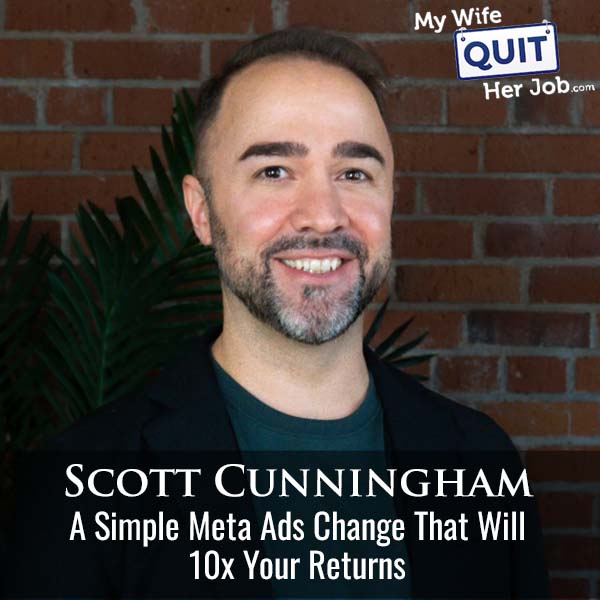
In this episode Scott Cunningham and I dive into something that honestly changed everything for me when it comes to Meta ads and getting a real return on ad spend. Scott is the creator of the Storyselling Formula and the moment I came across his work I knew I had to bring him on to break it down properly.
Enjoy the episode!
Get My Free Mini Course On How To Start A Successful Ecommerce Store
If you are interested in starting an ecommerce business, I put together a comprehensive package of resources that will help you launch your own online store from complete scratch. Be sure to grab it before you leave!
What You’ll Learn
- How To Apply StorySelling To Your Ads Strategy
- Scott Cunningham’s Tested Ad Setup Hack
- Quick Steps To Implement And Scale Meta Ads Fast
Sponsors
SellersSummit.com – The Sellers Summit is the ecommerce conference that I’ve run for the past 9 years. It’s small and intimate and you’ll learn a ton! Click Here To Grab A Ticket.
The Family First Entrepreneur – Purchase my Wall Street Journal Bestselling book and receive $690 in free bonuses! Click here to redeem the bonuses
Transcript
Welcome back to the podcast, the show where I cover all the latest strategies and current events related to e-commerce and online business. In this episode, Scott Cunningham and I dive into something that honestly changed everything for me when it comes to meta ads and getting a real return on ad spin. Scott is the creator of the story selling formula. And the moment I came across his work, I knew I had to bring him on to break it down properly. And it’s a simple change. And I know that sounds like a big claim, but I’ve seen it work across so many different campaigns and niches.
00:28
that I had to make a whole episode about it. But before we begin, I want to let you know that tickets for Seller Summit 2026 are now on sale over at sellersummit.com. And if you sell physical products online, this is the event that you should be at. Unlike most events that are filled with high-level fluff and inspirational stories, Seller Summit is all about tactical step-by-step strategies you can actually use in your business right away. Every speaker I invite is in the trenches, people who are running their own e-commerce stores, managing inventory, dealing with suppliers, and scaling real businesses.
00:57
no corporate execs and no consultants. Also, I hate large events, so I intentionally keep it small and intimate. We cap attendance at around 200 people, so you can actually have real conversations and connect with everyone in the room. We’ve sold out every single year for the past nine years, and I expect this year to be no different. It’s happening April 21st to 23rd in Fort Lauderdale, Florida, and if you’re doing over 250K or $1 million in revenue, we also offer a private mastermind for high-level sellers.
01:26
Right now, tickets are the cheapest they’re ever gonna be. So if you want in, go over to SellersSummit.com and grab your ticket. Now on to the show.
01:39
Welcome to the My Wife Quit Her Job podcast. Today I am excited to have Scott Cunningham on the show. Now, Scott and I, we were on the same panel at one of Kevin King’s virtual events and I’m really glad that we met. Scott runs merchantmastery.io where he helps early stage Shopify stores, actually Shopify stores at any stage really, reach their first 100K month through a strategy that we are gonna be talking about today on the podcast. He’s been an e-comm for over 15 years and his focus is on
02:09
customer centric marketing using human psychology, which is actually one of my favorite topics to make advertising much more effective. He’s spoken all over the place, traffic conversions, Adworld, Affiliate Summit. And in this episode, we’re just going to talk about what’s going on right now, what he’s doing with his clients to grow sales. And with that, welcome to the show, Scott, how you doing? Steve, what’s up? So good to see you again, my friend. Really happy to be here.
02:35
Yeah, I know you’ve been on this tear traveling all over the place like going on tour like a rock star. It’s fun. Yeah, we honestly, you know, yeah, I was telling you a little bit earlier about how we do like this tour, we’re hosting Shopify meetups, we really do believe in community. And like we go to a lot of the same cities every year. And so like, I was just out in like Toronto, Vancouver, Calgary, I’m going to Montreal tomorrow.
03:01
And we start to like really meet, like we’ve been doing this for five years in these same cities and we build friends and like collaborators and like, it’s been really interesting watching the community grow. yeah, it’s a lot of fun. Probably my favorite part of the business is just like going around all these different cities, learning all these, about what all these different entrepreneurs are doing. And who would have known that Canadian cities have such large volumes of Shopify stores? Never would have thought it. Yeah, it’s like, you know, I don’t know if you knew this one, but Shopify was born in Canada.
03:31
That I knew. I don’t know if that’s the reason. It also surprises me too because we’ve hosted events in New York a lot, which are very busy, very, very active. We’ve hosted them in Los Angeles and San Diego and all over the US, Colorado, Charlotte, Nashville, you name it. And we do recognize when we go to the Canadian cities, it’s I don’t know if it’s equal to New York or even busier than New York. It’s really, really vibrant up here.
04:00
really, really vibrant. So Scott, I know you studied psychology in school. uh How did you get started with e-commerce and do you sell today actually? Yeah, do I sell like my own products? Anything? Yeah, like I’m like, here, here. So here, I’ll basically give you a little bit of history. Like, okay, I studied psychology like way back in the day in university. There was like a class at the end of my degree that was like psychology and advertising. And that’s when I was like really fascinated with how to build a career out of
04:28
like psychology and I always found it fascinating to motivate people and get them to do things that are good for them. So I really believe that selling is like a responsibility. Like you could build the tools to sell, but if you’re not selling something that’s going to help people, then it’s not as good, right? So I really do believe in working with brands that actually have product validation, really good products. And we always tell people, like, if you haven’t sold your products to people and you haven’t confirmed that they like what you sell, we can’t help you yet.
04:57
Yeah, we’re not trying to trick people into selling. We’re trying to get good products in good customers hands and everybody’s happy. So yeah, anyway, I kind of like, you know, I went on to study public relations and then I was working in digital communications. I worked for like a giant brick and mortar store, helping them build their first e-commerce site. And then and then I just became like an accidental entrepreneur at that point. Like someone was like, hey, you did it for this store. Can you do it for mine? Next thing I know, I have like seven clients and I had to hire someone to help me. Nice.
05:26
Right? So that’s kind of how it all started. But yeah, I think the customer centric psychology is still most prominent thing today. So it’s funny what you just said, you know, we’re at this point right now where Amazon is getting way harder. In fact, they just announced price increases for 2026, which is going to hurt beauty and apparel a lot. So it’s more expensive products are getting knocked off. And at least in my community, which is composed of both Amazon and Shopify sellers,
05:54
I’m getting a lot more comments like, hey, I got to focus on my own brand. I got to get on Shopify. uh But know, success on your own store is a completely different ballgame than Amazon, right? And so my first question to you is, do you think that all Amazon products that are selling really well on Amazon can actually succeed on Shopify? Or does your product need certain characteristics in order to succeed? I wouldn’t throw out a generalization, say everyone could succeed on Shopify.
06:24
But if you have a lot of validation on Amazon, I feel like there’s a high likelihood you could also succeed on Shopify. Okay. Okay. But the key is like, you know, the biggest difference between Shopify and Amazon, right? Like Amazon comes with a built in marketplace of shoppers who are looking for products. Yep. So that’s the advantage. The disadvantage is that Amazon owns the customer relationship. So you don’t get to grow your own email list. You don’t get to grow your own life. You’re not in control of your lifetime value as much.
06:53
Right? There’s obviously like subscribe and save and like there’s ways to build repeat customers, but you’re not as in control when you don’t own the email list. Right? And so that’s the disadvantage on Shopify. The great advantage is that you own the list. So you own the entire customer lifetime value opportunity. You own the whole customer journey. The disadvantage is there’s no, there’s no built in marketplace. Right? So you got to go out there and find customers and like get them to your website. And so the way that.
07:19
The way that you do that in the Shopify world, the way that we’ve done it very effectively is like I was saying earlier, is like, or what you were saying earlier as well, is understanding the customers, understanding their pain points, their motives, creating content that like really resonates with the pain points that they’re living with and telling your story and compelling people to say, I got to check this out. And so it kind of forces you to be a really good like marketer, storyteller, like to really
07:47
dial in the benefits of your products. Whereas on Amazon, you’re just like, yeah, here’s everything about our product. Here’s the features, here’s what it does. And you can like choose what’s your best option based on the reviews and a couple other things. Yeah, a lot of it’s keyword focused. Keyword focused, Discoverability based on keywords. And so on Shopify, you’re kind of forced to do the hard thing, which is like sell your products in a really desirable way.
08:11
And if you could do that, like if you could take your success on Amazon and then build a story around your brand, you could probably have success on Shopify too. And it would probably leak into your Amazon sales too. It always does. It always does. So what I want to do today is I want to walk through your process and let’s just make up like a mock product and let’s walk through your process on how someone who’s starting from ground zero can get their first sales. Yeah, let’s do that. I love that idea.
08:40
Okay, so what product shall we choose? Let’s stay away from supplements, beauty, and whatnot. Anything strike your mind? What you’ve been working with the client or anything like that? How about double-sided wooden puzzles? Okay, that sounds interesting. yeah. Okay, this is actually a real merchant I’ve been working with and I’m fascinated by his business. His name is Oleg, he lives in Calgary. He’s got a business called Palmerus Puzzles. Okay. And I was really just going through the process with him and others.
09:08
on how to launch. And I was just really impressed with all the work he did. Okay, so that’s great. It’s fresh in your mind. Okay, so these puzzles just, so I imagine they’re both sides and then do they have to, do they only fit one way or when you finish one side is the other side automatically done also? It is automatically done also. But what you would do is you build the puzzle and sorry, back up for a second. Both sides of the puzzle, he works with real artists. Okay. gets these artists to create the designs for both sides.
09:39
And essentially when you build one, you’re done. You can like break it apart and then do the other side if you want. But a lot of his customers, like he has a really raving fan base and like his customers will buy every puzzle he puts out. And a lot of the times they will finish the puzzle and they will, they’ll hang it on the wall as an artwork. Oh wow. It’s really premium poplar wood. See, I was just going through this process with him, but like they’re, really high end collector type product.
10:06
Have you ever wondered how much your business is actually worth? Now I sold one of my businesses through Quiet Light and honestly, just getting that initial valuation changed everything for me. Not because of that number itself, but because of what came with it. My advisor walked me through exactly what buyers would be looking for, how I needed to restructure my accounting, what documentation I was missing, the gaps in my financials that might kill a deal before it even starts, and stuff that I really had no idea that mattered when it came to selling a business.
10:34
And here’s the thing, I wasn’t even ready to sell yet, but knowing what I needed to fix meant that I could actually start preparing and I now had a roadmap. Everyone at Quietlight has built or sold businesses themselves. So my advisor told me what needed to change. It was actually coming from real experience sitting across from buyers. And by the time I was ready, everything was positioned right and we attracted serious buyers. So if you’ve been thinking about selling someday, even if that day feels way far off, just getting a free valuation from Quietlight
11:04
will make a huge difference. You’ll learn what you need to fix right now so you’re not scrambling later. And if you’re interested, go over to quietlight.com. Okay, I can see the value props already. So, okay, so he goes to you, he has these puzzles. What did you, like how did you extract all this information out of him? And what did you do with it? Okay, so here I’m gonna start with, think, if you were, if this is for anybody, hey, you’re on Amazon, you’re going to Shopify, or you’re just only on Shopify. The way to win, okay, so there’s so many like,
11:33
changing variables in the world. You just said it, Amazon prices are going up. Oh my goodness, that’s going to kill so many Amazon businesses. The same thing happens with us in our Shopify world. Facebook ads are going up. Things are always getting harder. There’s economic downturns, there’s tariffs that we don’t know anything about, there’s AI innovations that we feel like we need to get on. There’s all these changing dynamics. The thing that you really need to do to really just thrive in any of these scenarios is double down on your own value.
12:02
Okay? And so if you want to compete in Shopify, it’s all about perception of value. And so the first thing you need to consider is like, how do I position my brand as a category of one? The best at satisfying my customers most prominent desires better than anybody who’s come before me. So it’s like, you know, so it starts with understanding what is your customer’s most prominent desire. Everybody who sells a product helps satisfy like a series of desires.
12:29
You got to understand what’s the most prominent one that they have right now. Because we’re not trying to force people to care about what we have. That’s a long sales cycle to try and get people to care. The fastest way to a sale is to tap into what they already care about and direct that desire on your product. So how did you figure that out in terms of these puzzles? Yeah, and so it’s really like…
12:55
You know, it’s kind of like I basically the first step I always start with is going through the desires. OK, and then once I know the desires, I teach these like four different types of what I call category of one headlines. OK, the position you is unlike anybody else. So when I say category of headline, that’s like the first pitch in the message. So if you if you had a Facebook ad, that would be the first piece of body copy that you would see. And the category of one, I always have this test. like if if a competitor can say it.
13:24
It’s not category one. So you have to say it in a way that’s never been said that’s unique to you. Okay. But it starts with a desire. So you would usually look at like, okay, puzzles. um What type of desire does my customer have? And honestly, a lot of these desire training that I’m going to go through right now, I got from one of the best copywriting books ever written. It’s written by Eugene Schwartz in 1966. It’s called Breakthrough Advertising. Okay. Have you heard of that one?
13:52
I’ve heard of it, but I’ve never read it. Is it uh still applicable to today? Obviously it is actually, otherwise you wouldn’t be saying it. It really is. It really is. And I’ve worked with a lot of my own mentors over the years, like Ryan Dice and Sam Huggins and a lot of these mentors I’ve worked with over the years. oh Almost all of them refer to this book as the best copywriting book. Okay, wow. Okay, that’s quite an endorsement. Okay. It is. It is. It is. And if you go online and look up this book, it’s like a thousand dollars on Amazon.
14:21
but you can find it for $200 from like a publisher that got the rights to sell it. So I was able to buy a copy for $200. It’s very best $200 you’ll ever spend. Okay. But in the book, and I’m not going go through like the whole book, but and I don’t use the whole book’s framework, but I use the part where he talks about identifying the most prominent desire. Okay. And so basically desires come from four buckets. Okay. And so like everybody who sells a product, you, you satisfy many desires for a customer, but we need to like brainstorm what they are.
14:50
So they come from four buckets. Two of them come from permanent forces in the world. The other two come from changing forces in the world.
15:01
I just wanted to take a moment to tell you about a free resource that I offer on my website that you may not be aware of. If you are interested in starting your own online store, I put together a comprehensive six day mini course on how to get started in ecommerce that you should all check out. It contains both video and text based tutorials that go over the entire process of finding products to sell all the way to getting your first sales online. Now this course is free and can be attained at mywifequitterjob.com slash free.
15:30
just sign up right there on the front page via email and I’ll send you the course right away. Once again, that’s mywifequitterjob.com slash free. Now back to the show. And so the two that come from the permanent forces, it’s mass instinct. Okay, so mass instincts are things that humans have had from the beginning of time. Connectivity, love, wealth, health, success, know, family, mass instincts. Okay, the other type of permanent force
15:59
is what he calls it the technology problem, I’m going to call it the innovation problem. It basically means I have a problem right now. Say I have eczema for my skin. I know we say eczema here in Canada, but I like to cater my language to the American. Okay, so eczema, right? I got eczema. I can’t solve it. So it’s like, I will buy and keep buying and buying and buying until I find something that actually has a solution.
16:27
So like he talks about Tylenol in the book where it’s like, you could get rid of your headache in 24 hours. That’s what they could do with Tylenol back in 1966, 24 hours to get rid of your headache. And so it’s like, I have a headache, but I need to get rid of it faster. Like I can’t endure 24 hours of pain. So I’m going to keep buying and buying and buying until I find something that solves it. So those are the permanent forces, massed instincts and innovation problem, as I call it. And then the next two, the changing forces are trends, trends that you piggyback off of where it’s like,
16:57
It’s things like buying face masks during COVID. It’s doing a tariff sale during tariff season. It’s like piggybacking off things that are happening in the world. It’s selling K-pop Demon Hunter t-shirts on a drop shipping website because it’s the hottest movie. And so it’s things like that for trends. And then last category is mass education. Mass education means what does my customer base understand about my product category today?
17:26
that they didn’t know about 10 years ago. So it’s the sum of all marketing, all advertising, all word of mouth, everything that people come to like mature in their understanding about a topic. And so in the book, he talks about like cigarettes where it’s like, when they first started selling cigarettes in marketing, was like doctors selling them like the best, the best cigarettes for doctors. And then, you know, this many years later, we know that cigarettes aren’t that good for you. And so it’s understanding that the evolution of perceptions.
17:55
about your product category. And so what you basically do is you brainstorm all of these categories. so have like, you know, puzzles, what’s the mass instinct, connectivity. Okay, so it’s like connectivity, family, hobbies, memories. Okay, and then you go down to the innovation problem. And it’s like, well, puzzle lovers buy these puzzles, but they like lose pieces, they get soggy, they collect dust on the shelf after they’re done.
18:24
They’re not that excited about them anymore. They’ve lost the novelty. And so now we can say, well, you’re going to get this something you’ve never seen. It’s the best puzzle. It’s double-sided. You can keep reusing it and all these other benefits. OK, that’s an interesting thing that I didn’t actually think about at first glance, which is the community and family aspect of puzzles. That’s a great angle.
18:45
Yeah, yeah, so that that’s the family one. That’s the mass instinct. The innovation problem is like we have a better novel thing that people will actually get excited about. The jaws will be dropping the floor. Okay, and then the next two is the trend where it’s like maybe maybe like these like crafty hobbies are a popular thing that people are doing again or like maybe puzzle makes making a comeback because of screen time. That would be a good trend actually. right. Okay, so it’s like avoid screen time. That would be a trend and then mass education.
19:14
would be something like, that could tie in as well, but it could be just something like, it’s been proven that the benefits of puzzle make more memories and kind of that sort of thing. And so then what you would do is you’d have this list of all these desires from each of those four sections and you would grade them. You would say which one has the most intensity and urgency to solve right now? Okay, which one has the most staying power? Like it’s not just the fat, it’s gonna be something that people need to keep solving.
19:41
and which one has the biggest scope where the most people that you sell to share that same desire. And then you pick your design. Is this something that you can just kind of plug into AI and have them write it or is it always better to just do it from your own personality and your own opinions? Okay, so I didn’t tell you this. I don’t think I’ve ever told you this and I’ve really had some good conversations since we met on that panel. But I built an AI called the Story Selling AI.
20:10
Okay, nice. Nice. And so like, I have the book actually somewhere near me here, the breakthrough advertising. earlier this year, between January and March, I taught a three month course on like how to write copy to sell your products based on the desires, based on the differentiation, based on the category one. And there was a lot of people in our community that went through the training and got amazing results. And then there was whole bunch of other people who were like Scott.
20:39
I can’t do this. Like, I’m not a natural copywriter. English isn’t my first language. You make this look easy. And I was like, okay, I got it. Like my duty to our community is always like, how do I make everything easier, but not just easier, better? Like I can’t have them use chat, GBT, it produces some garbage. Right. And so when I was teaching like the copywriting course, I told everyone, I’m like, listen, if you try to use AI for this, the problem with AI is it’s going to, it’s only regurgitating things that other people have already said.
21:08
And to have a true breakthrough ad, as Eugene calls it, like breakthrough ad, you need to say it in a way nobody’s ever said. And so I was really trying to caution people. like, you don’t, you want to use AI as a brainstorming partner, but not to create your headlines. And so what I ended up doing anyway, so a lot of people were like, I got good results or I couldn’t complete it. So I took the entire course. I spent like six months doing this. I built a custom GPT that interviews you. it’s, so I taught the
21:35
the AI to not take what’s out on the internet to only take from what the participant is sharing. Okay. And so it interviews you. It’ll be like, you know, what’s the top desire? What’s the like, it goes through this like unsolved desire, the final fix, it goes through your unique mechanism, it goes through like your origin story, it goes through like your features and benefits comparison to others. It goes through like all these questions that you answer. And then it mocks up drafts of each section based on like formulas, templates, examples I’ve given it.
22:05
I uploaded like 40 pages of instructions on what to produce once it has the information. Right. Nice. And I imagine that’s proprietary to your community, right? That custom UDPT? It’s proprietary to our community, but I will share it. I will share it with you guys today if you want. Oh, wow. Cool. Awesome. Okay. So, okay. We figured out the desires and whatnot. oh What is your usual next step? Is it meta ads or? Yeah. So,
22:31
I won’t go as deep because the reason I went so deep on the desires is like if you don’t get the desire right, everything else fails. Okay. So that is like in breakthrough advertising, they didn’t have Facebook ads back in those days, right? But they would write these long form ads and they would spend six months making the perfect long form ad that goes out in a magazine and it’s direct response. They’re trying to get people to read the magazine article and go buy. So the desire had to be perfect. In our world with Facebook ads, we can test this.
22:59
for a week and if it doesn’t work, we can test it again, right? So we’re a little bit spoiled now. But the desire is really important. So that’s why I spend a lot of time there. Once you have the desire, you use that to create a five-part messaging framework. It’s the category of one headline where you’re tapping into the raw desire, demonstrating how you solve that better than anyone else. Okay? And then it goes into the origin story. And the origin story, I have this like five-part origin story framework where it’s like the struggle, the journey, the spider bite, the revelation, the impact.
23:29
And what the origin story is ultimately showing, and this is really good for people going from Amazon to Shopify, is showing that, hey, I was just like you. I had the same problem as you. I recognized the problem. I searched the world for solution. I found nothing. I was fed up. I decided to be the person who was going to solve this. I traveled great lengths across the world and climbed mountains, swam oceans, almost drowned, got back up, and I solved it. And then people are like, okay, once you hear that kind of origin story, you’re like,
23:59
I’m trying to solve that. This person did all the research one could ever do. I don’t know any further. And so you’re trying to position yourself in the category nerd who fought the hardest to bring the solution to your customer base. Let’s say you’re interested in your story. Isn’t that interesting? It sounds like with this puzzle person, definitely they probably have some sort of backstory. What about someone who just sells like, I don’t know, garlic presses online? They probably didn’t have this revelation. They probably just noticed that
24:26
You it had good search volume at the time and not a lot of competition. think, I think that that is a formula for eventual failure. Okay. Okay. Like I think it is, I think it is. I just like, you should try and challenge the status quo on your category. Right.
24:49
Okay, I think that’s I started out with that first question. it seems like the people, the brands that you work with are people that are creating something new and not necessarily novel, but something different, right? Yeah. Well, okay. So like I also have nothing against someone choosing to sell a garlic press because it’s trendy. I have nothing against that. But I think that once you get that validation that you’re in the, you’re in the market, you’re a competitor, like you’re selling.
25:17
Do you want a business model that just waits till that product dwindles down and then you go and jump on the next one and you jump on the next one? Or do you want to stay in that category and keep competing? Right. Right. So like, I think it’s always like if you’re just looking for the next hot item and you keep chasing the next hot item, it’s like success one day goes down and you’re just chasing this hamster wheel. Yeah. But I think if you prove, hey, I’m actually pretty good at selling garlic presses, let’s commit to this and make our products better.
25:46
Let’s look at what the competition is doing and provide better solutions. So I like the idea of using that Amazon process to validate, get some momentum, get in the game. But if you want to stay and compete and become a brand, you got to challenge the status quo. You got to figure out what your unique value proposition is. Are you competing on price? Are you competing on the features, the benefits? What is it? Yeah. I’m curious, do all of your clients, are all of them like this? Because I have my own students that I teach Shopify also.
26:16
and lot of them struggle to go through this process because they don’t have like the story. They’re not, you know, you know what saying? So I’m just curious what you do. So if I had a dollar for every time a Shopify store owner told me they didn’t have an origin story, I can actually, wouldn’t even do what I’m Like we wouldn’t even be here today. I would just be retired on an island. Okay. So, so the truth is no one thinks they do, but I could tell you if you have product validation. So if you’ve sold your product.
26:45
to somebody and you’ve confirmed that they like what you sell, there’s a story there. Something must have led you there. Right. Because you’ll be better at selling your garlic press better than I ever would. I know nothing about garlic presses. Right. So something must have led you to that product. No. And you just got to kind of like document the story. I got this guy we worked with. His name’s his name’s Rodrigo. America. American Vinegar Works Vinegar Works. You can check out his website. He’s we met him through this organization called
27:15
uh Shopify for startups where they recruit the next up and coming Shopify like success stories and so they have to meet this criteria of like good merchant good products. He met all that criteria. They used to always recommend people from that community come over to merchant mastery and when I when we met him we were like, oh wow Rodrigo is amazing like he was doing the work he was implementing but then when he launched ads he wasn’t getting like he what he was like 0.5 ROAS is the best he could do so that’s not even breaking even.
27:45
that one row as a break even. And so we audited his ads and we were like, what’s going on here? You’re not doing anything with the origin story. Can you guess what he told us? I don’t have a unique origin story. And this is an extreme example because you’re going to see that we uncovered that he had the most remarkable origin story, but he didn’t see that he did. So we’re like, what led you to selling vinegar, Rodrigo? Because in my lifetime, I would never do that. I would never choose to sell vinegar in my lifetime. So what led you there?
28:14
And he’s like, well, to be honest, I kind of noticed that like vinegar was bland. OK, OK. So that’s that’s a thought. He’s like vinegar was kind of bland. I didn’t really like the options. That’s what he said. Right. And he’s like, so I thought like, you know, I was he’s like, I was in France and I went into this like library and I found this encyclopedia that showed this like old method from the 1800s on how to ferment vinegar in these barrels. And so I consulted the University of Massachusetts to see if they can mimic this process. And we built this facility.
28:43
Now I ferment my vinegar for nine days at a time and it has these bold flavors and all these kinds of things. When you hear that story, like obviously it’s pretty remarkable, I can’t believe he didn’t recognize it that was remarkable. Yeah. You’re like, I got to try that vinegar. Yeah. It’s funny, like when you’re deep in the weeds yourself, you don’t think anything that you do is really special when in fact it really is. That’s it. And he was an extreme example, but I can list a hundred more who are just kind of like, I’m going to sell this thing.
29:12
But it’s still fascinating. Like what in your life made you choose that category? What expertise did you have? What kind of desire drew you to that topic? Okay. The AI tool will really help write your origin story. Okay. With a few inputs. Like it asks you a few questions and it produces something pretty good. So in terms of, so we’re doing all this research right now, coming with the story, the desires and everything. uh What medium do you usually advise people go through next? Organic?
29:42
content, meta ads, is there’s probably more to this framework. Maybe we should finish that up first. The next three are easy. The first two were difficult, right? The category of one headline, we got to understand the customer psychology, the four buckets of desires, like grading the desires. That’s like a lengthy process. The origin story, we got to document how we led to this. The next three are easy. It’s the differentiation stack, which just compares your features, your benefits, your customer support to the alternative. Okay.
30:11
It’s like they do it this way. Well, we do it that way. Most most big box stores that sell vinegar are like not fermented all this. We do nine day fermented small batch like you’re just comparing. And then and then so it goes category one headline origin story differentiation stack testimonial stack where it’s you want to include testimonials that overcome the four biggest objections like price, trust, loyalty. And there’s one more. But then and then the last thing is the offer where you want to reduce risk or add an incentive for them to take action. OK.
30:39
Okay? And so I call this like your master story. If you have those five ingredients, you’re equipped to pitch your product as a category of one better than anyone else who’s coming for you. And so now to catch up with your second question is like, what do we do with it? What do we do with the master story? So this AI tool I’ll share with you. think it’s merchantmaster.io forward slash GPT. That might take you right to the AI tool. Okay. I’ll link that. Yeah. then basically you get the master story and then you want to use different parts of the story.
31:09
on your homepage, on your collection page, on your product page on Shopify. You want to use that narrative in your email flow so that when people arrive, they’re going through your email sequence with the same narrative. But ultimately the way that we’re acquiring customers in our world, like as long as you have any kind of validation, so you’ve sold on Amazon, you’ve sold at a farmer’s market, you’ve sold in person, you’re ready to launch ads, in my opinion, as long as you have validation. And so that’s what we like to do in the beginning. If you were just doing organic social posting, you’re going to be
31:38
spending forever with a lot of inputs for not that many outputs. And so we like organic social, we want to do it, but we want to start getting validation, a little bit of sales momentum with ads. Okay. All right. So naturally with the type of advertising or the work that we’ve done, meta ads is the obvious choice, Not Google ads, which is more keyword and search focus. Yeah, exactly.
32:06
This is a good lesson for anyone. I know you’re a Shopify guy. I know you got your brand and I know you got your community. But for anyone, I know like in Kevin King’s community and Norm, like it’s a lot of people sell on Amazon. And I think this is one of the key things to learn is that when we want to start an ad campaign, we want to start on a platform like Meta that we call like an interruptive channel. So it’s an interruptive channel. People aren’t searching for wooden puzzles or vinegar on Facebook. There’s no keyword searches. Right. So if we can get in front of the right people.
32:36
with the right pitch, like the right messaging, the right story, and compel them to stop what they’re doing on Facebook, which is like liking friends’ photos and consuming news or whatever they’re doing. we compel them to stop what they’re doing and come by, we know we have a good job. We’ve done a good job with our pitch. And then we would add on a channel like Google afterwards, where it’s like, we know we kick butt with our messaging, because on Google, you’re going after that high intent traffic, and if your positioning is not good, you’re going to lose to the competition.
33:05
If we know we can sell on Facebook, we know that that’s going to also do well on Google. Okay. uh I’m curious since uh Facebook recently announced a pretty big change in September, their Andromeda update. So I’m curious like what your ads and your campaign structure looks like today. Yeah, like they got rid of uh interest audiences, right? So that was the big shock to everybody’s system is that interest… I never using them anyway, so yeah.
33:34
We’re just doing open look alike. Yeah. Yeah. And open are great. Like we, we, we use a lot of interest audiences, but, but we know now with the whole meta ads update, all the targeting is done in the creative and the copy. Right. Okay. And so you’ve got to remember that it’s like, is, is my ad creative calling out my avatar and differentiating my product? That’s why this, this master story process that I was introducing you to in our world, we teach people to actually run an ad with the full long form.
34:04
Okay. Okay. And which means video basically, right? Uh, it means like the five parts, like headline, origin story, differentiation, testimony, offer. It’s like, it’s an, it’s a Facebook written ad, like this long. oh really? Okay. That’s very interesting because most ads that you see in the library do not do that. They don’t. And I can show you like, I had like 10 people in the last week tell me they have their best performing out of all time with this long form framework. Oh, that’s fascinating. Okay.
34:33
And it’s basically using the old Eugene Schwartz direct response marketing method, which is like tapping into their desire, heightening the emotion, heightening the urgency, compelling them to take action right now. And so it works really well when people read because it draws them in. It wins their attention, but it holds it. Right. Right. And so it’s a priming them to buy.
34:58
But it also, so obviously it works good when people are reading it, but it also works really well for targeting. Because you’re giving Facebook oh everything they need to know about what you sell to who, how much better it is, what it does. Like you’re feeding everything Facebook needs to know. What’s that going to add? I love it. Actually, I haven’t tried this before. I’ve been, yeah. Because what you’re describing, for me at least, I’ll do like a short video on it or I’ll have like a customer
35:28
you know, read off a script or something. But I kind of like that. I never thought to create long form copy in the actual ad itself. Yeah, and we usually take your so you’re not like we want to do the video too. We want to do take that long format, create a video version of it. But I would challenge you and encourage you to use the story selling AI to create your long form story with it. Okay, let me know how it goes. Does that imply then that like if you’re a brand new Shopify
35:54
store or like videos kind of intimidating. Does that imply that you can get good results with just image ads in this process? Yeah, like, okay, so here’s, here’s the other rule of thumb here. So not everybody’s going to read your long format, right? So it’s going to be really good at selling to the people who do. So it’s a good way to validate, does this narrative convert? So we like the readers are like our sample group, right?
36:18
And if it’s converting it, usually does. I’m feeling very confident that anybody who goes through that process runs a long format, it’s going to convert. If you do it the right way, I’ve had so much success with this long form style. And then we know, hey, this narrative sells. But now we want to capture the people who aren’t going to ever read a long format. And so we like to repurpose the long form into short form story ads, mid medium form, different carousel concepts.
36:48
static image concepts, video script concepts that also carry that same narrative. But I would try and test the long form copy ad with a still image, with a video, with UGC from the owner video, infographic, like I would test different creatives with the long form. I love it. I love it. Okay. All right. And so do you have multiple, I’m just thinking about like the meta ad structure. Are you just testing a whole bunch of different versions of your
37:17
your long form copy. Yeah. Where I what I’m trying to ask is, uh like, what is your ad structure? Do you test three creatives with two two long form copies or each each one only uses one creative one long format copy? Like what’s the testing structure? This is usually how we start up like a first time test like a first launch. We will come up with five versions of our ad copy. Okay. So we’re like, okay, we know we’re gonna get out there. We’re gonna launch.
37:47
And so I like to think about the first five ads as like, I use like a, I’m a Canadian, so I use like hockey analogy. Okay. Right. Where it’s like, that’s the bench. We warm the bench with the five ads that we think are going to perform the best. Okay. Okay. And then to go, to go on the ice, we start with two players on the ice first. Okay. So we’ve got a bench of ads that we think can perform and we’re only going to start with two in the beginning. Okay. All right. So.
38:17
Okay, so two ad copies. What about creatives? Yeah, okay. So we have the five ads we think we’re going to win. We have two that we’re going to put on the ice and we call these our best foot forward ads. Okay. So we have five ads that were pretty good and we tell people based on what you know about your customer, your insights, your instincts, what you’ve seen work before, pick two. If you were going to gamble your business on the two ads that you think are going to perform, pick those two to go on the ice first. Okay. Okay. And so you have your two versions of your copy.
38:46
You want to test each of those with three different creative. Okay. Okay. Yep. So it’s like two versions of the copy each one is and I would usually do like a from the owner video, a UGC and then like a static image or an infographic. Okay. Interesting. Okay. And then uh is this all going in one flex ad or are they individual ads? So this is okay. So now this is where I’m to have to go and talk to our media buyers. So this is like pre
39:16
meta update what we used to do. Okay. Okay. And so what we used to do is we would do it at the campaign level. So it’d be like a CBO campaign where the budget’s coming from the campaign level. Okay. And then we would have three, three ad sets. Okay. We would do interest, open, look like. Interesting. Yeah. think that might’ve changed. uh Yeah. At least for me, I can’t speak for everyone, obviously, but what’s worked has changed in like literally the last two months.
39:46
Yeah, and the advice is to put everything into one ad set. Yeah. Right. So that’s that is the update I was going to give. But it’s like, I don’t have the nuanced data to share with you about like, yeah, no problems. Yeah. Yeah. But like, but that is the advice now is just everything’s in one ad set. Okay. Yeah. And then so you’re running ads, would you advise like new Shopify store owners start on the organic or their resources better utilized elsewhere?
40:15
or just focus on putting out more creatives on a regular basis. Yeah, honestly, I meet some people who are like, I’ve all my sales organic. You know what they also tell me? It took me four years posting every day. Right? And so if you could endure four years of this, I don’t think organic is the best way to acquire customers first. Right. I would agree with that.
40:43
Yeah, and so we, really want to speed up the validation because if you’re posting organically, like not only is it not reaching that many people to start, we don’t know what messaging is going to get people moving. So it’s just like a really slow process of reaching people and validating what gets people to buy. And so ads are the fastest way to test what message compels people to shop. And so we, we, we would always start with like a really small, like $60 a day ad spend.
41:13
where our goal, excuse me, our goal is to break even on that spend within the first week. Yep. Right. then, and then we can stay in the game. But it’s, and then, and then we usually would like to scale that up to a bit. Once we start hitting like 10 K months and higher, then we know we’re like, built the prototype of the sales engine. We know the messaging works. We know we can grow this. That’s when we would start like layering on organic. So I think organic is, you can see my daughter running behind. That’s cool. Yeah.
41:40
There was uh a teacher strike in Alberta. So like all the teachers, all the kids, home right now. Okay. Wow. Because your postal system’s on strike too, you said, right? Yeah. It’s crazy. It’s crazy. But the big one for Alberta, not in all the provinces, our schools are completely shut down right now. That is nuts. Okay. The world we live in is like falling into chaos, feel. Yeah. And so, just to go back to what you’re saying, we like to…
42:09
Like if we want to build it on Shopify, we like to get the initial sales engine going with ads. We start to validate our messaging, get the website converting, get email performing, and then we know we have something. And then it’s like from there, we are going to start layering on social. Like social media is really good when you’re running ads for people vetting you. Like they’re like, well, who is this business? And they’re going to go look at your page. They’re going to see if you’re active. They’re going to see if you’re building community. It’s also really good for retention.
42:36
because they bought from you, they follow you on social media, they see that you’re active, that you’re staying top of mind. So it’s really good for like, like when they’re in the consideration stage before buying, and when they’ve already like, and they’re in like the repeat purchase opportunity mode. So really good for that. But then as you as you really start growing and your business is doing like a million and you want to get to 10 million, you need a very active organic social layer on top of that. Okay, so uh
43:05
So we talked about meta ads, we talked about organic, email is obviously a huge portion of all this. Are you guys using SMS in your flows and how does that compare with email for your Yeah, we do. Like our team, because we have Merchant Mastery, like our mentorship community, but I don’t know if you knew this, we also run an agency. Oh, I didn’t know that. Okay. Yeah. So we run an agency called Socialite that I founded in 2011. Oh, wow. Okay.
43:32
And we only work with like higher growth Shopify brands. So like, you know, there’s businesses doing anywhere from like 50 to 250 K a month in ad spend, I think upwards of maybe even half a million million maybe. Um, but so, so a lot of this stuff that we’re teaching at merchant mastery comes from our real world experience in running ads for all these brands. Okay. And so
43:57
We, our agency is like a top 3 % Google advertising partner. So we do a lot with Google. We’re a top Pinterest advertising partner, top meta advertising partner, but we’re also a, one of a few in the world of a Klaviyo like platinum diamond partner. Right. Nice. With exorbitant amount of sales and marketing with Klaviyo with email. And within that is not just email, it’s SMS. Right. And so with, with SMS, obviously you probably experienced this too, if you’re doing any SMS is it has higher open rates.
44:27
higher click through rates. um I think you need to, if you’re going to use it, start building your list as soon as you can. Yes. Right? But yes, I would say it’s been very effective and it’s more like it’s because in Klaviyo you can actually build your flow so that you can send out an email and if people don’t open, then you can follow up with an SMS. So yeah, we’re using both in the same automations.
44:49
Scott, I want to be respective of your time and clearly I didn’t realize all the businesses that you had. So why don’t you tell the audience where they can reach you? What all the different services that you offer? Yeah, I think like the way we really believe is like we’re here to help Shopify stores at any stage, like you said. And so most of the time, like with merchant mastery or socialite, we need businesses who have at least validation, but we even have
45:15
free training that we help people that don’t have validation. Like we try to help guide people at every stage. And so I think if you were a new business, we’d probably have some resources we could share. But if you’re a business who has product validation and you’re doing, you’re doing like sales somewhere, like you’re selling at a farmer’s market or Amazon. Yeah. Merchant Mastery might be a good fit. Merchantmastery.io is our website. And I think there’s like a free training on there in the top navigation bar. That might be a good place to check out. Where I actually go through this like story.
45:44
selling framework in that video. Right. And then if you were doing what was it like 100,000 a month, then the socialite? Yeah, our agency is like, you know how we built Merchant Mastery was because we’ve been Shopify partners since 2014. That’s when we’ve like really started getting involved with Shopify. And we started hosting the meetups and the events. And we started to build a pretty good reputation in the space. And we started to realize that there was a lot of early stage businesses that were approaching us that had no business hiring agency.
46:12
It’s like a lot of strain on a business hiring an agency too soon. So we were like, there’s so many great, great people coming to us. What do we do? Let’s maybe just teach them. So that’s how we built Merchant Master. We decided we’re going to teach people who shouldn’t be hiring an agency. Okay. And so I think when it comes to the agency, you want to be doing at least like probably 50K a month or trending towards that. Right. But I think the best time to hire an agency is probably when you’re closer to like 80 to 100K a month. I was going to say 50 is sounds a little low because you guys have to get paid too. So
46:41
It’s that bit. It’s like 50, 50 K only if we see that there’s like this upward trajectory, we’re about to just keep scaling it. Yeah. But if it’s like sales are declining, and you’re hitting 50 K, that’s a that’s a scary. Yep. Well, thank you so much for sharing your knowledge. I love everything that you do. I love the way that you presented all the material today. Actually, it was great with the storytelling and the frameworks. And uh yeah, just
47:08
Thanks so much. I’m so glad that Kevin introduced the two of us. Oh, Steve, I appreciate you inviting me out. I appreciate having the conversation with you. And hey, man, we got to hang out some more. Absolutely. Yeah. Hope you enjoyed this episode. If you’re currently running meta ads, you have to try Scott’s method. For more information and resources, go over to mywifequitterjob.com slash episode 633. And once again, tickets to Seller Summit 2026 are now on sale over at sellersummit.com. If you want to hang out in person,
47:37
in a small intimate setting, develop real relationships with like-minded entrepreneurs and learn a ton, then come to my event. Go to SellersSummit.com.
I Need Your Help
If you enjoyed listening to this podcast, then please support me with a review on Apple Podcasts. It's easy and takes 1 minute! Just click here to head to Apple Podcasts and leave an honest rating and review of the podcast. Every review helps!





Ready To Get Serious About Starting An Online Business?
If you are really considering starting your own online business, then you have to check out my free mini course on How To Create A Niche Online Store In 5 Easy Steps.
In this 6 day mini course, I reveal the steps that my wife and I took to earn 100 thousand dollars in the span of just a year. Best of all, it's absolutely free!