
Podcast: Download (Duration: 56:20 — 77.6MB)
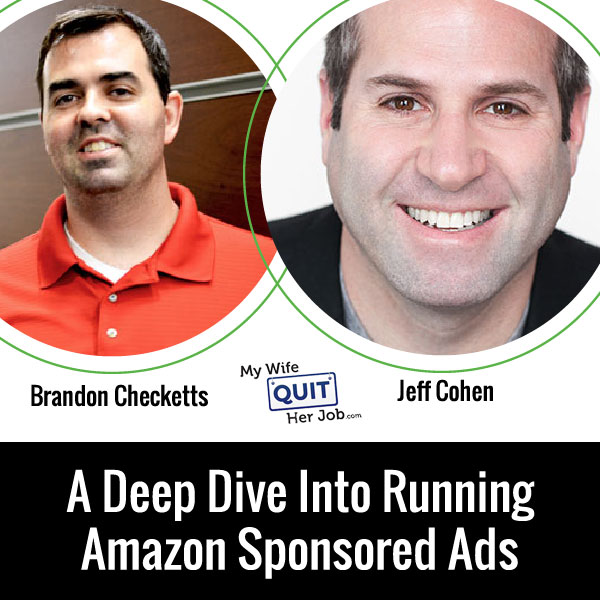
Jeff Cohen launched a product on Amazon with zero reviews using nothing but sponsored ads. His advertising cost of sale ran around 200%, and the point was buying sales velocity rather than turning a profit.
Reviews are no longer the prerequisite people assume. Shoppers clicking sponsored ads care less about review counts than organic browsers do, so ads convert even on a listing with none.
Jeff and Brandon Checketts both work at Seller Labs, where Brandon built Feedback Genius and Ignite. They work with a large number of Amazon sellers.
This episode covers building a listing from competitor keyword data, why overlapping keywords ruin your campaign data, when to move a keyword from broad to exact, and how much data you need before acting.
A note on timing: this is a 2017 conversation recorded after Amazon banned incentivized reviews in October 2016. Amazon’s advertising interface has changed considerably since.
Get My Free Mini Course On How To Start A Successful Ecommerce Store
If you are interested in starting an ecommerce business, I put together a comprehensive package of resources that will help you launch your own online store from complete scratch. Be sure to grab it before you leave!
Table of Contents
Key takeaways
- Use a reverse ASIN tool on competitors to find the keywords already driving their sales.
- Build your listing from that keyword data before your inventory arrives at Amazon.
- Skip the long automatic campaign and start with 50 to 100 non-overlapping broad match keywords.
- Overlapping keywords split your budget so thin that no keyword accumulates usable data.
- Accept a high ACOS during launch, since sales velocity drives organic ranking.
- Wait for roughly 50 to 100 clicks before judging a keyword statistically.
- Move converting search terms from broad to phrase to exact, raising bids at each step.
- Review campaigns weekly or every other week rather than daily.
How do you launch a product on Amazon without reviews?
Drive your first sales with sponsored product ads and convert some of those buyers into reviewers through follow-up email. Jeff did exactly this after the incentivized review ban.
The chicken and egg problem is less severe than it looks. Ad clickers are less review-sensitive than organic shoppers.
Accept losing money initially. Jeff ran roughly 200% ACOS to buy the first sales.
That extreme is optional. Sales start coming with zero or one or two reviews without going that far.
Follow-up email converts buyers to reviewers. That sequence is what turns velocity into social proof.
How do you find keywords for a new Amazon listing?
Run a reverse ASIN lookup on your competitors to see which keywords their products rank for. High ranking on a term means that term is driving their sales.
The logic is direct. Amazon ranks products on the keywords that convert for them.
Use those terms across your listing. Title, bullet points, description, and backend keywords all draw from the same research.
This replaces guessing. You are using actual converting search terms rather than imagining how buyers describe your product.
Do it before you go live. Build the listing while waiting for inventory to reach the warehouse.
Tools surface terms you would never invent. You might never think to call an apple slicer a fruit corer.
Should you run automatic Amazon campaigns first?
You can skip the long discovery phase now that reverse ASIN data exists. The old approach ran automatic campaigns for 7 to 30 days purely to gather search terms.
That waiting period costs real money. Hundreds of dollars spent experimenting before any optimization begins.
Automatic campaigns still have a place. Run one at a low bid alongside your manual campaigns for supplementary discovery.
Irrelevant traffic is at minimum wasteful. Whether poor conversion actively harms your listing is debated, and the wasted spend is certain.
Get the broad match campaign running first. The automatic campaign becomes a secondary source later.
What are overlapping keywords in Amazon PPC?
Keywords that compete with each other for the same impressions, such as bidding on both “apple slicer” and “apple cutter slicer.” They fragment your data across too many terms.
The failure mode is common. Sellers pull 400 keywords from a reverse ASIN tool and load them all in.
Each keyword gets a handful of clicks. Five clicks tells you almost nothing about conversion rate.
Density is what you want. Fifteen to fifty clicks on a broader keyword supports a real decision.
Target 50 to 100 keywords initially. Amazon still matches hundreds of search terms against those.
Human judgment sets the boundary. “Apple” alone draws iPhone shoppers, and “apple slicer red” is too narrow.
What is the difference between broad, phrase, and exact match?
Broad matches your words in any order with additional words included, phrase keeps your words together, and exact matches only that term plus plurals and misspellings. Start with broad.
Broad casts widest. “Apple slicer” catches “slicer for cutting apples” and similar variants.
Amazon reveals the actual search terms. Those come back in the search term report regardless of your match type.
Bids ascend with specificity. Exact carries the highest bid, then phrase, then broad.
Negative out promoted terms. When a search term moves to phrase, add it as a negative in broad so you stop bidding against yourself.
How much data do you need before optimizing a keyword?
Roughly 50 to 100 clicks for statistical confidence. A hundred clicks with zero sales is a clear signal to cut.
Brandon takes the statistical position. Fewer clicks cannot distinguish a 20% conversion rate from noise.
Jeff acts on less. Ten clicks with no conversions might mean lowering the bid, and ten clicks with three conversions might mean moving straight to exact.
Some keywords never accumulate volume. Jeff has run campaigns for months without reaching 50 clicks on certain terms.
Reset the clock after each change. Adjusting a keyword today means collecting fresh data before adjusting again.
ACOS is the metric to judge on. It combines conversion rate and cost per click into one number.
What ACOS should you target on Amazon ads?
It depends on where the product sits in its life. Launch justifies breaking even or losing money, and a mature product should hit your margin target.
The halo effect is the reason. Sponsored sales improve organic ranking, which brings free sales afterward.
Launch spending replaces the old giveaway. A 100% ACOS during launch is roughly equivalent to giving product away for reviews.
Maintaining rank often means breaking even. Holding position costs sustained spend.
Calculate the bid from your target. Given a target ACOS and a known conversion rate, the correct bid is arithmetic.
Raise bids in increments. Ten to twenty percent at a time on keywords that are performing.
How often should you check Amazon PPC campaigns?
Weekly or every other week. Checking daily leads to over-optimizing on data that has not accumulated.
Spend level should adjust the cadence. Tens of thousands a month warrants more attention than $100 a month.
Most sellers give up at this step. They run a campaign, struggle with the reports, decide it looks unprofitable, and switch it off.
The manual process is genuinely tedious. Downloading search term reports and building pivot tables discourages regular review.
What Amazon ranking tactics should you avoid?
Anything offered by unsolicited services promising page one rankings. Sellers get approached constantly on Skype, Facebook, and through Seller Central.
Those tactics are typically black hat. They risk suspension and produce temporary results at best.
Amazon has been enforcing aggressively. The gains do not justify the account risk.
Build tactics that compound instead. Listing quality, ad optimization, and genuine reviews survive policy changes.
Frequently asked questions
Can you sell on Amazon with no reviews?
Yes. Sponsored product ads drive sales to listings with zero reviews, since ad clickers are less review-sensitive than organic browsers.
How do you find keywords for an Amazon listing?
Run a reverse ASIN lookup on competing products to see what they rank for. High ranking means those keywords are converting.
Should you start with automatic or manual Amazon campaigns?
Start with a manual broad match campaign built from competitor keyword data. Automatic campaigns take 7 to 30 days to produce the same information.
What are overlapping keywords in Amazon advertising?
Keywords that compete for the same impressions, which splits your budget so thin that no single keyword gathers enough clicks to evaluate.
How many keywords should an Amazon campaign have?
Around 50 to 100 non-overlapping terms to start. Amazon will match hundreds of actual search terms against those keywords.
How many clicks before you judge an Amazon keyword?
Fifty to one hundred for statistical confidence, though some sellers act on ten clicks. A hundred clicks with no sales is conclusive.
What is a good ACOS for Amazon ads?
It depends on product maturity. Launch justifies breaking even or worse to buy ranking, and mature products should hit your margin target.
How often should you optimize Amazon PPC campaigns?
Weekly or biweekly. Daily changes prevent data from accumulating enough to support the next decision.