

Podcast: Download (Duration: 49:26 — 56.9MB)
Growing a consumer packaged goods brand means going deeper in the channels you already win before expanding into new ones. Kevin Rutherford took over Nuun with growth slowing, stopped their push into club and drug stores entirely, doubled down on existing retail partnerships, and then reformulated the core product to unlock a market that had been closed to them.
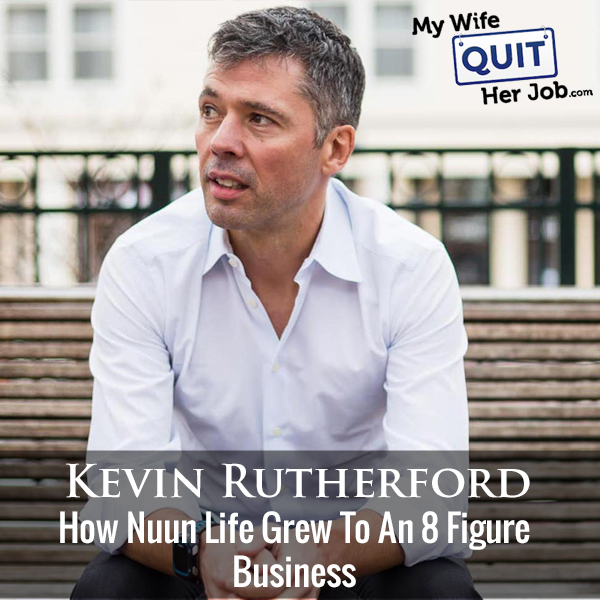
Kevin is the CEO of Nuun, which sells hydration tablets that dissolve into an electrolyte drink with almost no sugar. I take them twice a day.
This episode covers how the product was founded and validated, why retail distribution functions as marketing, the reformulation that opened Whole Foods, and how new need states expanded the business.
Get My Free Mini Course On How To Start A Successful Ecommerce Store
If you are interested in starting an ecommerce business, I put together a comprehensive package of resources that will help you launch your own online store from complete scratch. Be sure to grab it before you leave!
Table of Contents
Key takeaways
- Distribution is marketing. Retailers like REI conferred credibility the brand could not buy.
- Amplify what works before expanding. They stopped chasing club and drug channels entirely.
- Culture is the ultimate competitive advantage, and self-doubt in a team is a vicious cycle.
- The manufacturer said the clean reformulation was impossible. They did it anyway.
- Certifications are voluntary trust signals: non-GMO, gluten-free, vegan, kosher, batch-tested for banned substances.
- Sample through store managers to build proof points that filter up to head office.
- New need states were incremental, growing the business without cannibalizing the core product.
- Data matters more the further removed you are from the business.
How Nuun started
Nuun was founded roughly 15 years ago by triathletes in training, at a point when the alternatives to Gatorade were extremely limited.
The premise came from research suggesting the optimal approach separates hydration from fuel.
The physiology is the reason. Liquid arriving in your small intestine wants a balance of about 95% water, so concentrated sugars there cause intestinal distress, particularly while your body is already under the stress of exercise.
Fuel should use a different pathway, meaning food or gels. Hydration is about electrolytes, with only enough sugar present to help you absorb them.
Kevin’s historical note is that Gatorade at its 1964 invention was closer in composition to Nuun than to modern Gatorade. It shifted toward sweetness over time, and when its original artificial sweetener was banned, high sugar content replaced it.
How they validated the product
Validation started with the founders themselves, since they were the target customer, then extended to their peers.
They consulted a physician and sports scientist based in Australia on the composition.
The real-world testing was deliberately extreme. Training for adventure races and long-distance triathlons, where an adventure race means orienteering across rough terrain for 24, 48, or 72 hours.
Kevin’s framing of that choice is the torture test. If it works for an Ironman athlete under those conditions, it will work for anyone.
That principle survives as the innovation mantra: hydration you can feel. Work out the science, then validate it in the field.
Why certifications matter when regulation does not
Selling supplements online can largely skirt regulation, which is a known weakness of the category.
Nuun does go through FDA approval and works with retailers on ingredient agreements.
The voluntary certifications are the trust mechanism. Non-GMO Project certified, gluten-free certified, vegan certified, kosher certified, plus batch-by-batch testing to confirm no banned substances.
Those cost significant money and time, and the purpose is letting a customer confirm that what the company says matches what it does.
International expansion changes the calculus. Health Canada is considerably stricter, as are requirements for the UK, Australia, and New Zealand.
How the first sales happened
Fifteen years ago, tablets essentially did not exist as a category, so customers needed educating on what it was and whether it was safe.
The approach was starting small and specific. Who is this relevant for, which was athletes: adventure racers and triathletes.
The first store to carry Nuun was First Ascent in north Seattle. The method was persuading a store to try it, likely giving product free, then sampling in store.
From there it went store by store, building momentum while collecting feedback from both customers and retailers.
Kevin’s stated mistake to avoid is wanting to go big too fast. Starting small and adapting is what works, and what you adapt is usually your communication rather than your product.
Why word of mouth ran through store owners
Two mechanisms drove early growth.
Customer word of mouth among athletes recommending it to each other.
Then influencers, though not in the Instagram sense, which did not exist. The influencers were the managers and owners of leading independent triathlon, cycling, and running stores.
A recommendation from those people carried real weight, and combined with in-store and at-race sampling, that is what spread the product.
Why distribution is marketing
When Kevin took over about six years ago, the dominant channel was sport specialty: triathlon shops, bike shops, and REI.
REI has been a strong revenue partner and, more importantly, a credibility one.
His framing is that in many ways distribution is marketing. Being carried by a retailer of that stature confers legitimacy by association.
Grocery was growing and Amazon was building, and the volume was still concentrated in sport.
How to get into a large retailer
Kevin’s advice is proving the brand elsewhere first, because a retailer like REI will not take the risk on a startup and will consider a small emerging brand.
The scrappy route is building relationships at store level rather than approaching head office.
That means treating a store manager much like an independent store owner, getting a shot to see whether the product sells there.
Demonstrated sell-through at store level then filters up to headquarters, which is where you get a real conversation.
The general pattern he endorses is finding your proof points, starting small, and letting data do the persuading.
Why curated distribution beats broad distribution early
The boutique stores are not a stepping stone you tolerate. They are the right partners.
Kevin’s example is Sun Bum, whose equivalent was surf shops. They built proof points there, then moved into hospitality, growing the brand alongside the retailers rather than through them.
That produces a genuine win for both sides before you expand.
His underlying principle is about evidence. The further removed someone is from your business, the more they need data rather than your conviction.
What Kevin Rutherford did first as CEO
His approach on arriving was deliberately not changing anything.
The sequence was understanding what was happening, identifying what was working so it could be amplified, then working out what to stop doing and what to start doing.
The business was growing when he arrived, and the growth rate was slowing despite the company being small enough that it should not have been.
His diagnosis was not strategic. He believes the biggest difference in any business is the people, and that the team needed to believe in the mission and in each other.
Self-doubt is a vicious cycle, which is why he considers culture the ultimate competitive advantage even though it disappoints people looking for a business strategy answer.
How to amplify an existing retail partnership
The specific change with REI was treating them as a strategic partner rather than a customer.
They began developing unique items together and previewing upcoming innovation with them.
Kevin’s read on why that had not happened before is a belief problem. The team did not think tiny Nuun had the standing to approach REI that way.
Repositioning as the clear leader in hydration tablets changed the conversation to how both companies grow together.
The results followed: work on rei.com they had never done, more in-store demos to drive velocity, and deeper investment overall. Nuun was later runner-up for vendor of the year at REI across a category broader than nutrition.
Why they reformulated a product customers loved
With momentum restored, Kevin took the team back to defining their nutritional philosophy.
The mission is inspiring everyone to move more. The philosophy became giving you what you need and nothing you do not, which is hydration you can feel.
Applying that to the existing tablet exposed inconsistencies. It contained an artificial sweetener, originally there to keep the calorie count down, and a preservative for shelf life.
There was substantial internal resistance, because people loved the product as it was.
The manufacturer’s response was that a tablet meeting that philosophy was impossible. Kevin’s position was that they either solved it or found someone else, and the team solved it with them.
Why the reformulation opened a new market
The strategic framing he used with the board was that clean ingredients would open an entirely new market.
The actual driver internally was different. It was what the right thing to do was, and how they would make it for themselves.
Kevin’s note on that gap is about audience. You communicate in the language relevant to whoever you are speaking to, and the internal reason and the investor reason can differ while both being true.
The outcome validated both. Carrying momentum and proof points from REI and sport specialty, they went into Whole Foods nationally and every sports store, which he describes as changing the game entirely.
Why good strategy is also what you will not do
The clearest thing they stopped was channel expansion.
They had been pursuing club and drug channels, and had entered stores in both without performing well.
Pulling back to go deeper where they were already strong is what produced stronger growth rates.
The reasoning connects to their customer. Nuun buyers are highly involved, reading ingredients and wanting to know what a product is for. In a conventional general market they may simply not be relevant yet.
Kevin’s honest caveat is that you never truly know when a channel is saturated, and you go partly on intuition once awareness feels strong enough to justify the next adjacency.
How the product line expanded into new need states
The original product covers the sweat occasion: preparing to sweat, during, and recovering.
Energy came first, the same product with caffeine and B vitamins, which caused communication confusion because customers did not realize it was the same base.
Vitamins addresses daily health. The electrolyte profile is complete and deliberately lower, because you do not need 300 milligrams of sodium sitting at a desk, plus eleven vitamins and minerals research suggests most people are deficient in.
Immunity came from examining Airborne and Emergen-C and concluding the category was in a vitamin C arms race, escalating milligrams past what the body can actually absorb.
Rest is the most recent, aimed at more restful sleep.
Each has been genuinely incremental to the core sport product rather than cannibalizing it.
How to fix the confusion a wider range creates
The expansion created a real problem. Customers who previously knew exactly which product to buy no longer did.
The fix was simplifying the naming and making the occasion explicit on the packaging: Nuun Sport, Nuun Vitamins, Nuun Immunity, Nuun Rest.
Kevin’s guidance if you only want one is the original sport product, since high electrolytes work for any occasion and excess is water soluble and simply excreted.
The reason the others exist is optimization for people who want to dial in what they need for a specific occasion, which is exactly what a highly involved customer base wants.
Where Nuun grows next
More need states within hydration, built as electrolytes plus a specific benefit.
Beyond that, entering categories Kevin describes as sleepy and stagnant, applying the same nutrition-uncompromised philosophy.
His illustration is Justin’s, which entered a stale peanut butter category selling at around $2.99 a jar and built almond butter at $7.99 to $14.99, converting the entire category from peanut butter to nut butter.
The pattern is rethinking a category on better quality, better nutrition, and genuine efficacy.
Digital versus retail for a CPG brand
Kevin’s view is that digital is unambiguously the fastest growing market, and that the pace of change will never slow again, so an unprepared digital capability already puts you behind.
Traditional retail remains the larger part of Nuun’s business, with substantial growth still available there.
Growth rates are close on both, slightly faster on digital from a smaller base, with the gap closing over time.
The area he wants to improve most is their own direct-to-consumer site, less for revenue than for learning: data science, performance marketing, understanding their customer, and driving retention through loyalty.
The reason is ownership. On their own site they own all the data, which is what enables a deeper relationship.
Frequently asked questions
How do you get a product into a retailer like REI?
Prove it elsewhere first. Build sell-through data in independent specialty stores, or work at store manager level to get a trial, then let that evidence filter up to head office.
Should you launch a CPG brand online or in stores?
Both, according to Kevin Rutherford. Discovery often happens in store and converts online afterward, and most consumer shopping still happens in physical retail.
Are supplement certifications required?
Mostly not domestically, which is why they function as trust signals. Nuun carries non-GMO, gluten-free, vegan, kosher, and per-batch banned substance testing voluntarily.
What should a new CEO do first at a growing company?
Understand what is working before changing anything. Kevin Rutherford identified what to amplify, then what to stop doing, and treated team belief as the primary lever.
Should you expand into new retail channels quickly?
Not before you have saturated the ones you win in. Nuun stopped pursuing club and drug channels entirely and went deeper with existing partners instead.
Is it worth reformulating a product customers already love?
It can be. Nuun’s clean reformulation faced internal resistance and a manufacturer who called it impossible, and it opened Whole Foods and the entire natural channel.
How do you expand a product line without cannibalizing?
Target genuinely different need states rather than variations of the same occasion. Nuun’s vitamins, immunity, and rest products have been incremental to the core sport product.
What is the risk of adding product variants?
Customer confusion. Nuun had to simplify naming and state the occasion explicitly on packaging so buyers could tell which product suited which situation.