

Podcast: Download (Duration: 47:31 — 54.7MB)
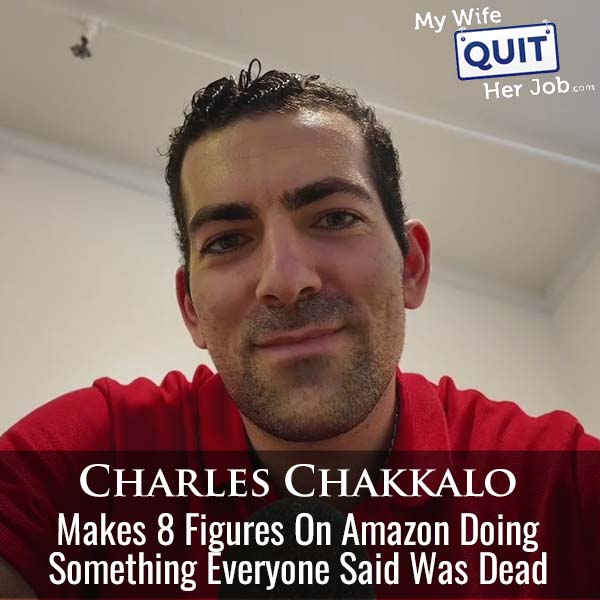
In this episode, I sit down with Charles Chakkalo, a student from my Create a Profitable Online Store course. Most people assume retail arbitrage is a worn out Amazon side hustle that barely covers gas, but Charles never accepted that ceiling.
He pushed the same model far past what anyone expected and built an eight figure business with multiple warehouses.
Get My Free Mini Course On How To Start A Successful Ecommerce Store
If you are interested in starting an ecommerce business, I put together a comprehensive package of resources that will help you launch your own online store from complete scratch. Be sure to grab it before you leave!
What You’ll Learn
- Does retail arbitrage still work?
- Where Charles sources his products for arbitrage
- How to actually make a profit with arbitrage
Sponsors
SellersSummit.com – The Sellers Summit is the ecommerce conference that I’ve run for the past 8 years. It’s small and intimate and you’ll learn a ton! Click Here To Grab The Recordings.
The Family First Entrepreneur – Purchase my Wall Street Journal Bestselling book and receive $690 in free bonuses! Click here to redeem the bonuses
Transcript
Welcome back to the podcast, the show where I cover all the latest strategies and current events related to e-commerce and online business. Now in this episode, I have a student in my created profitable online store course on the show, Charles Cicallo. Now most people think retail arbitrage is a dead Amazon side hustle that barely pays for gas money, but Charles has quietly turned the same dead model into an eight figure machine and runs multiple of his own warehouses as well. But before we begin,
00:26
I want to let you know that tickets for Seller Summit 2026 are now on sale over at SellerSummit.com. And if you sell physical products online, this is the event that you should be at. Unlike most e-commerce conferences that are filled with high-level fluff and inspirational stories, Seller Summit is all about tactical step-by-step strategies you can actually use in your business right away. Every speaker I invite is in the trenches, people who are running their own e-commerce stores, managing inventory, dealing with suppliers, and scaling real businesses. No corporate execs and no consultants. Also,
00:55
I hate large events, so I intentionally keep it small and intimate. We cap attendance at around 200 people so you can actually have real conversations and connect with everyone in the room. We’ve sold out every single year for the past nine years and I expect this year to be no different. It’s happening April 21st to 23rd in Fort Lauderdale, Florida. And if you’re doing over 250K or $1 million in revenue, we also offer a private mastermind for high level sellers. Right now, tickets are the cheapest they’re ever gonna be, so if you want in,
01:24
Go over to sellersummit.com and grab your ticket.
01:33
Welcome to the My Wife, Quit or Job podcast. You guys are gonna love today’s show. Now, a while back, my friend Dave Bryant of eCom Crew made this video about secret ghost sellers on Amazon who are essentially resellers who are making millions of dollars flipping existing brands, but kind of laying low. And so in this episode, I am thrilled to have Charles Chokalo on the show.
01:59
He’s one of the students in my class. He has built an incredible business through retail and online arbitrage in addition to private label. And if you followed me for a while, you know that I am not the biggest fan of arbitrage as a long-term business model, but Charles is the exception. He is one of the most successful arbitragers that I know and his results speak for themselves. Now, not only that, but Charles is what I would call an intense learner.
02:29
And I mean, intense. He literally goes to every single conference, probably knows every last detail about Amazon is today he is going to share exactly how he’s done it, what is working right now and the strategies that have allowed him to thrive in a business model that most people honestly struggle to scale. with that, welcome Charles. How you doing today? Nice intro. Well, I do talk to you like every single week. Do I not? Right.
02:59
No, mean, and listen, I mean, it’s not only an honor to be here just because the platform, it’s an honor to be here because once I was just a listener listening to podcasts like this and Scott Vulkers and now I’m being featured on the podcast itself. So it truly is an emotional journey that got me to a place where, you know, I’m amazed myself that I got here. Well, you totally deserve it, man. And for the audience.
03:25
who does not talk to you every week, how did you get started selling on Amazon? And how did it balloon to what it is today? So actually, I got started, I’m 29 years old, I got started selling on Amazon 15 years ago as a freshman in high school. Good Lord. Yeah, I went into so I love technology always did. Went into Best Buy got things on sale, and then started reselling on eBay and Amazon. I resold throughout high school.
03:55
And, uh, I was about, was prepping to go to law school in, uh, in college. My brother did the same thing, but in fishing gear, tap me on the shoulder. goes, you want to try this thing for real? And during college, we, you know, put our entire life savings into it. And we worked since the age of 10. So life savings was, know, not, not your average college age life savings either. And, uh, I worked for a couple of years as a litigation paralegal on top of that. And I said to myself, you know what?
04:25
I cannot get these 22 to 25 years back the ages the years between 22 to 25. I can’t get those back if this whole business thing fails. Law school will still be there. It doesn’t need me. So let me uh let me try this with my brothers and see how it goes. uh Long story short, I never went to law school and thankfully it took off from there.
04:47
uh So this is a family business. How many brothers do you have? I’m actually being curious about this myself because I work with my wife. What’s it like working with your family? So I mean, so I’m two brothers. And the best part of it is I knew I knew them. I know them a lot longer than I know my wife. We have very different skill sets and we have, you know, a life of relationship to build off of instead of just
05:15
a marriage which starts, you know, at least two thirds into your life. Sure. There’s an added element of complexity when it comes to more and more of the family relations when you’re sitting down around the family dinner, uh be it for a weekend, Thanksgiving for a holiday. Do you talk about business because that’s what you do and what you see with each other all the time? Do you, you know,
05:40
take a chance of pissing off the wives and maybe my mom because they’re not into it and we keep business very separate from personal. um It’s a different element of complexity, but we’re all on the same page and that’s how it really gets kept together. We know that business is in business. Sometimes it bleeds over into a comment on the dinner table where we may look at each other funny and then just say, you know, abandon this topic. We’ll switch it up later.
06:08
That’s how it really works. then when it comes to, mean, it could get pretty, obviously, we don’t all agree on the same thing all the time. And we could get into that when I talk about the shows that I go to. Okay. Yeah, go ahead. I mean, I was just gonna say, know, uh ecommerce can be intimidating for people to start. Yeah. And in terms of retail arbitrage, especially, I would say 10 years ago is a great way to get started.
06:37
But it just seems like for the past decade or so, Amazon has made it much harder for retail arbitrage on the platform. the audience is interested in e-commerce. so I just want your opinion just to kind of start out with, is retail arbitrage something that you would start today? And if the answer is yes, like if you’re having trouble getting started, walk me through the process of how to get started. So I want your opinion first on whether you even do this. ah
07:07
If you have relationships, not necessarily directly with companies, but with at least distributors that distribute authentic products, not product that falls off a truck, I would say it’s worth trying and launching with. If you’re going into stores and will be providing receipts as your proof of purchase, do not. The reason why I say that is because
07:36
at the beginning of this year, really Amazon has been cracking down on valid UPC or GS one codes on product pages or ASINs and they’re, going through about 400,000 ASINs a day and running it against GS one’s database and suppressing those ASINs that don’t have a valid GS one UPC on there. Let me explain what that means. Let’s say you’re going for Colgate toothpaste and
08:05
10, 15, 20 years ago, somebody created a page on Amazon for Colgate toothpaste using the wrong UPC, which by the way, you could have, and you probably still can buy UPCs that are not accurately affiliated with the brand that you want to sell on eBay or something like that for like a penny uh UPC or something. That UPC and ASIN have 15 to 20 years of data. That means sales, means reviews, that means Q and A, that means
08:36
listing copy that ranks number one for Colgate toothpaste. today and this year, especially Amazon decided to wake up and say, wait, all of these are invalid UPCs. We want to give more control of the product listings and brand presence to the brands. And uh it’s been part of our policy, but we just never enforced it for all these years. So we’re going to, we’re going to start suppressing all of these UPCs in ASINs. What that led to now,
09:05
is a bunch of sellers sending in pallets and pallets of inventory, in some cases trailers of inventory and all skewed for a certain ASIN and that ASIN is suppressed and they’re stranded with that inventory by Amazon facing the dilemma of do I pay for a removal, a disposal or something else because that inventory has to get out of Amazon somehow and it will cost the seller. The reason why I say you may want to get started with a distributor at the very least
09:35
is because you may have an avenue to reactivate that UPC or ASIN if you’re going through a distributor or definitely the brand. But you have to have the right contact and you have to have the right know-how about Amazon and seller support. Let’s say you go shopping though and then you check the listing and the UPC and it is in fact registered to Colgate in your example. Would that be okay? If you’re going with a store receipt, I would think it’s okay. um
10:05
It’s okay for the purpose of your product won’t get stranded at FBA But it may not be okay as far as proving the authenticity of your product which you definitely will face I mean even private label sellers face that for their own branded goods, so um Your case is less strong with a store receipt, but it’s not actually incompatible with Amazon’s TOS stores receipts are Considered to be full proof of payment
10:33
I mean, I’m sure you go through this all the time because your product mix probably constantly changes, I would imagine, right? Depending on whatever clearance. yeah. It’s not just close outs. It’s not just close outs. Sometimes it’s running products. uh We do close outs from time to time if we have a good deal on it and the rank is proper and so on and so on. But um yeah, we have constant running goods and we also have close out goods depending on what comes our way. How often does Amazon ask you for these receipts?
11:04
Next week, next week or em at the time of this recording, I’m going out to Amazon Accelerate in about 10 days. I made an appointment at seller cafe with seller support about this topic on my account health dashboard. I have 183 issues to resolve. Oh my gosh. Okay. Right. And that’s over the past six months. Every single account health issue has a response by me, but
11:33
I have a VA employed full time putting together invoices, paper trails, bills of lading, showing the authenticity and the basically chain of custody of my goods. Amazon almost instantly replies by saying not enough information was provided, vague, vague, vague. We’re not giving you any direction as to what we need further. That’s where I usually leave it.
11:59
At least I, you know, I settle for at least a paper trail so that if it ever comes back to bite my account on a more larger scale, I can point back to say, Hey, you were the vague ones. And I provided a response on a timely matter. But when I’m going to Amazon accelerate, I’m going to sit down with them in person. would say, I hope this doesn’t come back to bite me that all of that to say my account health rating is a perfect 1000, which to the
12:26
So when they ask you for the paper trail though, you can still keep selling during that period? Yeah, totally. um Except for cases where they give you notice that your listings will, your listing or the ASIN will be suppressed in 30 days. Some UPC mismatch, they do that. Some authenticity complaints, they do that. They actually give you 30 days to either sell out um or 30, yeah, 30 days to either sell out on the GS1 mismatch or 30 days to sell it on an authenticity mismatch.
12:56
But sometimes they actually isolate your inventory and don’t let you recall it if it’s a certain infringement, either authenticity or trademark. My goodness. Okay. What about uh just getting ungated in categories? Do you generally avoid that or do you just go through the ungating process? And if you do, what is that ungating process? So before, before we even buy a product, we go ahead and try to list it and to see if we’re ungated. uh The ungating process is hell and a half, but
13:26
is largely like the rest of Amazon is algorithmic based on your history, age of account, sales volume, and also account health rating, all those things combined. There are newer sellers that wouldn’t get ungated for the silliest of brands, but it depends on the, again, overall value of the account and largely, you know, like a seller like mine that’s been seasoned in this for a while.
13:53
we get ungated for brands that don’t really have control or don’t really care about their Amazon presence very easily. For the ones that do care about their Amazon presence, we were able to go back and forth with the paperwork just depending on the return on investment because we evaluate the time that’s good. That goes into that application. Um, that’s not to say that it’s a walk in the park either. It’s we’ve been regated on about eight or nine brands.
14:20
that I actually plan on bringing up at my cellar cafe appointment. So it’s not all dandelions and roses. Okay, so this kind of sounds like a hassle from an administrative standpoint. Yeah. So if you are just going through the clearance aisles, like at Walmart, for example. Don’t. It’s not sounding attractive right now. Don’t. Don’t. Okay. that portion of retail arbitrage is pretty much dead. Yep. That type. Okay.
14:49
So let’s talk about the type that you do. And you know what’s funny is uh we were just in office hours and there was a student like, hey Charles, can you just tell me who your distributors are? And that’s the secret sauce behind all this, right? uh If you were brand new doing this, and I know you have your relationships already, how do you even look? Do you just kind of Google distributors and just cold email them or what do you do? There’s a ton of shows. mean, distributors are always looking to, well, they’re basically all
15:19
structured the same way. The distributors have a direct relationship with the brand. You deal with a salesman who gets a commission that of whatever they sell to you, you ask those salesmen for their catalog and you go ahead, compare it to you download, keep you install it as a Chrome extension. You see the sales rank, you see the self, the self rate. So know exactly how much to order. And as far as locating those distributors,
15:47
There’s a bunch of retail shows to go to wholesale shows to go to. mean, ASD is one of them that happens biannually in Vegas. want to say, um, a lot of them, the second you say online will tell you to go scram, but, um, they’re there, they’re there. And, and with enough persistence, with that persistence, you’ll find them and one leads to another. And when you say that, and when you grow to a level where you could say, Hey, I can give you X amount of volume of, Hey, I could commit to.
16:17
X amount of dollars of POS per month per year that salesman’s heads gonna light up and say, oh my God, you know how much commission that is per month per year? And they may rethink their strategy. So tell me this, do you need a physical location to get approved for a lot of these guys? If you want to lie to the distributors and say that you’re an actual store instead of an online seller, yes. Okay, because this is sounding kind of like wholesale selling now where a lot of the guys today require a physical presence because they don’t want just like a bunch of Amazon sellers on.
16:47
Yeah. Yeah. And, and if you, mean, if you ask me, like I engage a lot on LinkedIn, that’s, that’s where I put a lot of my content. That was like, I sort of believe like a Nathan Barry approach of like growing in public. there was a recent post by Scott Needham, the founder of smart scout, because Lego and Hasbro just completely relinquished control of their brand on Amazon. And I engaged with them and I said, why, why is that a bad thing?
17:16
Hasbro and Lego are making the sales, as long as the sellers are selling authentic goods, they’re not relinquishing any control that they can’t reclaim any day. In fact, they’re making more sales and outsourcing the maintenance of their brand on Amazon to the resellers. So yeah, I mean, if you want to insist on an in-store or physical presence, that’s fine. But as a brand, if you don’t have the bandwidth, patience or capacity to deal with Amazon,
17:45
That’s one requirement that I’m seeing more broadly, but I don’t think it’s a bad thing for brands at all. So you go up to a distributor and you want to have some of the products. I would imagine like a whole bunch of other people are doing the same thing, right? I just wanted to take a moment to tell you about a free resource that I offer on my website that you may not be aware of. If you are interested in starting your own online store, I put together a comprehensive six day mini course on how to get started in e-commerce that you should all check out.
18:15
It contains both video and text based tutorials that go over the entire process of finding products to sell all the way to getting your first sales online. Now this course is free and can be attained at mywifequitterjob.com slash free. Just sign up right there on the front page via email and I’ll send you the course right away. Once again, that’s mywifequitterjob.com slash free. Now back to the show. Yeah.
18:40
Yeah, they’re all doing the same thing, but it’s up to you to be persistent and say, even though I’m online, I could still make you bank. Right. So let’s say that happens, but on their end, they probably have a bunch of Charles Chakalos, right? Right. Like selling stuff for them, right? So that means if they’re listening on Amazon, you’re listening on Amazon. Uh, there’s this like fight for the buy box, right? Yeah. Yep. And how do you deal with that?
19:05
So there’s the only way you can actually engage in retail arbitrage or wholesale or whatever you want to call it. It’s all the same to me is you have to have a repricer and it cannot be the Amazon repricer. It ultimately comes down to a game of margins. Who will operate at the slimmer margins? A philosophy is there will always be somebody willing to work for less than you. So, you know, a major unlock to, to
19:33
maximizing your margins in this space is owning your own logistics. No way will you make it in this if you think you can outsource all this to a 3PL that will unbox things for you, unpalatize things for you, label things on different FN SKUs, put it back on a pallet, ship it into Amazon FBA because the only way you’ll box out the other sellers on the listing is by offering it on FBA, which is a default requirement. Owning your own logistics is a big unlock as far as maximizing your margins.
20:02
and then you put your products into a repricer with a certain floor and a certain ceiling and you let it do the work. You are supposed to be doing the research before you buy products, so all of it is pretty much predictable, but it’s a game of margins. I mean, in general, the lowest price gets the buy box, right? In general, in general, there’s a little bit of lift that happens once you’re FBA and once you’re a seasoned seller and once you’re distributed adequately across the country so that you’re actually in the buy box across as many zip codes as possible.
20:31
And that goes into a different formula of how to ship into Amazon, how to ship in different warehouses. Is it a minimal split? it, is it a single inbound location? you playing, are you paying placement fees? Which is a totally separate conversation we didn’t touch on. All right. So walk me through, I’ve never used a repricer before. Walk me through how it works. mean, you got a whole bunch of people selling the same stuff. Sure.
20:56
And if they’re from the same distributor, I guess it’s just all about like the backend negotiations, what pricing you’re getting and whatnot, right? Yep. Well, all about the backend negotiations and then the prep. The prep is also a cost that you can, you can eat into as far as maximizing your margin. Okay. So how do you set the repricer? Do you just say, Hey, I want the lowest price not to be below? There are a few settings and I mean, there are a few repricing softwares out there and I recommend we can get into that later.
21:26
The repricer I use has a few features on aggressiveness. It’s sort of on a sliding scale of dominate the buy box, which means I don’t drive that price lower. I want to be in that buy box no matter what. And you can drive that price all the way to my floor price. You have a floor price, you have a ceiling price, and you have a different setting on aggressiveness for, say, maintain the buy box. You have seller specific rules that you can put in by saying
21:55
Hey, seller X always goes five cents below me. So just wait till seller X sells out and then compete for the price and try to drive the price back up. And, um, the repricers external to Amazon actually get refreshed every 15 minutes. So every 15 minutes, if anybody tells you it’s shorter, they’re lying. So every 15 minutes, the repricers pull a data feed from Amazon, see what the other sellers are priced at.
22:24
and then does their calculations, readjusts your price that way. That’s really the long and short of it. I could go further into detail if you have any particular. Well, okay, this is what I’m getting at. Yeah. Like you’re probably not the only one using that same repricer. I know I’m not. So you’re competing against other people using the same repricer. And let’s say it’s always get the buy box no matter what, then it always leads to the floor price, right? Yeah, but I mean, the other sellers do have a vested interest in not driving the price lower because then they make less money.
22:54
on the sale. They may dominate the buy box for a little more, but there’s still that interest there and that keeps prices pretty not a race to the bottom by default. There’s a common understanding that if they do that and if a seller does that and all the resellers know each other, we know the ones that do that, then we would simply implement that rule of, all right, wait till this guy sells out and then my stock is already checked in. Once he sells out, I’m just going to take the ride.
23:23
And then why would you put a ceiling price? You don’t want the buy box to be suppressed because if the price goes too high, the buy box will be taken away. Right. OK. Any tips for people using repricers? I’m sure this sounds complicated, actually. What’s your rules? Like, what are your if you were to set up your rules and just like a couple of sentences, what? em Don’t set your ceiling price to be more than 20 percent of the average buy box and.
23:50
Make sure you calculate your margins because you could be bleeding yourself dry if you don’t calculate prep, you don’t calculate freight into Amazon and you don’t calculate freight to your facility. All of that are actual costs and if you’re using a repricer that’s especially reporting on your profitability and performance, you better be factoring those in because there are sellers that don’t factor those in and uh I’ve literally seen them going. I know the names and I know the numbers. We get it from the same spot.
24:19
And I’ve seen them go under because all of those were just overlooked and not factored in. So you said a couple of interesting things earlier about owning your own warehouse. And I’ve seen your warehouse and you had this cool forklift that I’m really jealous of. I know most people don’t want a warehouse and everyone preaches three PLs, three PLs. I’ve actually talked to a couple of three PLs because my students always ask me for recommendations. And I’m like, because I run my own warehouse, I’m thinking to myself, this is really expensive.
24:49
Right? mean, for a for larger goods, I should say, if you’re just selling jewelry or whatnot, I think it makes complete sense. walk me through actually just tell me like what your savings are. And I’ve seen your where it’s much bigger than mine. A lot to deal with. Yeah, I mean, we have we have a couple we have two locations, one in Brooklyn, one in Westchester, New York. The it’s it’s
25:17
Okay, so before we went into it, we priced out a three PL and I think I was paying maybe like 30 cents a unit. And then I also had to pay from the unload of the trailer to the reload onto a pallet. And then they actually had to touch the goods per unit. Our unit cost is about 30 or 40 cents when we do it ourselves. And I’m talking just labor, not the cost of maintenance, electricity, taxes, utilities. Um,
25:46
But that’s a lot less of the calculation that I put into it. The more of the calculation I put into it is I can go downstairs and touch my goods. I don’t have to wait at the mercy of some 3PL that may not answer my calls one day, that may undergo a flood and not tell me that my goods are damaged. especially, I just spent the past 25 minutes telling you how lucrative the resale business was and you know,
26:13
Colgate toothpaste could have three different pages, that means three different FN SKUs. Not every 3PL can handle that level of nuance. So if one page gets shut down, I don’t have to go ahead and coordinate with a 3PL and explain to them how each sticker has to be redone and so on and so forth. I could just do it myself. We run the staff. Yes, I have to deal with HR. Yes, I have to deal with handling. I have to deal with three sets of parents dying when it’s nice weather outside.
26:42
All of those are number one skills. Number two, exposure to real America. And number three, I’m building an American workforce that I can take into any capacity as a business owner. I think that’s priceless. Not to mention the, if the facilities like ours that we, that we bought are also viewed as investment real estate. Sure. um All of that, all of the, both of those facilities were improved and those facilities
27:12
are actually located in areas where I know it’s industrial and it’s gonna only become more industrial. That’s the nuance of it. And then of course, top it all off. It goes back to the margins that I said earlier. All that works into our margins and is our basically competitive edge. I mean, these warehouses were relatively recent, right? Yeah, one of them was in 2020. Okay. There’s a funny story behind that.
27:39
And the most recent one was actually in November of 24. So almost coming up on a year now. So before the 2021, were you just using FBA? AWD didn’t exist back then. No, it didn’t. You know what we were doing? So we started this business in 2016 and coming up on 10 years now. Next year will be 10. And we were working out of the second floor of the storefront.
28:06
And we couldn’t palletize things. couldn’t, well, we, the way we palletize things was we, we basically, we had a conveyor belt from the second floor to the first built 26 pallets. Cause that’s a full trailer on the sidewalk and then loaded and then hoped. then, oh no, and then we loaded that onto a 26 foot truck rental that had a lift gate back to that 26 foot truck into a 53 foot trailer. We hoped Amazon sent us that day.
28:35
And then, uh, and then shipped it off to Amazon. Now I hope, I hope that was clear enough. Any clarification because it gets better. Uh, I think, I think it’s probably enough for the audience. it necessary to understand more? Okay. necessary to understand more. Okay. Long story short, I had 26 pallets sitting on the sidewalk one day. Amazon’s trailer did not show up and it just, and it was the end of the workday. We sent all the employees home.
29:04
My brother and I, we said, what are we going to do? We have all this merchandise and we can’t put the pallets back inside and close the door and go home for the night. We both, uh, I took a chair. He took a chair. We took, we stood on, we sat on both ends of the, uh, of the pallets on the sidewalk and you know, was a pretty ghetto area. So it wasn’t even exactly safe either. And, uh, we just said, we’re just going to sit here and hope for the best. And if Amazon sends us the trailer, they might, it started to rain.
29:33
At 2 30 in the morning, Amazon’s trailer decided to show up. Him and I did what our entire staff should have been doing and loading that trailer. And then we both looked at each other and we said, you know what? We need a spot where we could put stuff back inside and close the door. So that was the 2020 location. that’s and then that was able to fit pallets as recently as last week. Last week, our Brooklyn location is able to actually fit a trailer.
30:02
so that Amazon can drop off a trailer. We load it, a tractor comes and picks it up whenever it’s ready. So we graduated to, we could put the pallets back inside, close the door. So we could put a trailer back inside and close the door. So that was really cool. Okay. Your operation is much, your warehouse is much bigger than mine by far. Hey, no, no, This is, and this is an evolution and this is, um, I’m very hands on. I mean, I’m, I’m nothing like the conventional Amazon seller or, or what
30:29
Most people are at these, you know, DTC conferences where they sold multiple brands, they never touched their goods and stuff like that. I am really hands on to the point where I was at a conference less two weeks ago and people mocked me for driving that forklift saying you, the owner operate the forklift. Listen, the truth is I have somebody else who could do it, but it’s not as fun. know, I don’t like people that do that actually, because they this is just my experience.
30:58
They’re all like high level guys where if you just start asking them detailed questions, like low level questions, they don’t know what’s going on. em Yeah. So I totally, this is one of the things I appreciate about you Charles. Like you get your hands dirty. Actually, I appreciate it about anyone who gets their hands dirty with stuff, you know, instead of just kind of out trying to outsource everything kind of unknown. mean, like think of it just outside of, outside of e-commerce and Amazon DTC stuff. You’re a business owner at the end of the day.
31:27
I mean, that’s my engagement with having employees. It’s hearing what they have to say, hearing their perspective on things, hearing what life is like. mean, how isolated can we get? mean, us, us too know, and I’m sure most listeners know, how lonely it could be running the business in our field. I mean, some level of interaction is also good for the soul, I mean, in today’s day and age.
31:55
So with the AWD, I know they’ve had their share of fair disasters. Like, uh, so you, did you even consider AWD? No, I actually, left when they launched. Okay. I, uh, I thought to myself, wow, they’re really, because it was either simultaneous or near simultaneous with their product placement fee restructuring. And, uh, I saw, I saw it what it was. It was a strong arming into Amazon to own more of the supply chain than they already do. Yep.
32:24
For now, mean, people know that they’re trying to be the Alibaba of India. They want to own that part of the supply chain. They want the AWD to be the part of the supply chain and FBA so that they have basically all the data they need and they could do whatever they want with that data. However, that makes you feel. uh looked at AWD as a, just sort of a relief valve for the placement fee restructuring, but it didn’t end up being that complicated for us to just learn and manipulate our advantage.
32:54
that’s and actually when AWD was launching, it was before we bought the second warehouse and the second warehouse was purely a move to scale. uh I’m actually gonna be giving a presentation on that uh in a few weeks on how to scale through investing in yourself and your own operations. yeah. Cool. ah Okay, so let’s go back to the original premise of the episode like
33:23
If you were someone new, wanting to get into selling online, would you go the online arbitrage route? Let’s say you have 10 grand. Sure. Or 15 grand. Would you jump straight to private label? Cause I know you have a couple of private label products yourself. Yeah. Um, it’s, it’s amusing actually. So we, like, like I, like I said before, we, we specifically invested in scaling our resale operation this year and it has scaled big, but.
33:53
The same thing is with private label. has to and sort of unintentionally again through owning our logistics. uh There were a few other things that we did as far as refining our PPC, leaning a little more into the whole branding aspect of it. uh The A plus content, our storytelling ability and so on. But the 10 grand I would say is much better spent learning the private label route.
34:21
not investing in the resale route. Like I began with, the only adjustment I would make to that response is if you have those relationships to begin with. If you do, go ahead, by all means, God bless you. em But it won’t be easy. It won’t be easy. And there’s a lot less of a support system out there because most of the Amazon and DTC orthodoxy is based around private label, is based around branding. uh
34:50
there’s a lot less people and the market is thinning. There’s a less people in it. The market is thinning and um more sophisticated resellers are really the ones that are going to make it. And eventually I think they’ll be cut out, but there’ll always be a market to resell stuff. Yeah. Just on Amazon, it’s harder. I know it still happens on eBay and whatnot all the time. Yeah. Yeah. But eBay is story of its own. has nothing of the volume Amazon does. Correct. Correct.
35:19
Charles, let’s switch gears a little bit. I want to talk about Charles the seller. So you’ve been making quite a name for yourself uh in the Amazon space and you mentioned you’re speaking uh pretty soon. Did you say at Prosper or? No, so actually I’m giving so it’s funny on that on the whole warehousing topic. I’m doing a debate with Rob Hahn from Pattern. It’s up there. They’ve done over a billion on Amazon and they’re going public soon. uh They’re their own warehouse. uh
35:48
3PL operation and the big resolve is should every seller have some logistical capacity of their own? I obviously say yes, of course, they should have some operating capacity on their own where an emergency happens, they need to house their goods for some period of time, they should have that option. They shouldn’t be bound to a 3PL like handcuffs. um I’m doing that. There’s just so many horrors since we’re on this topic. There’s just so many horror stories from.
36:16
several of my friends where three PLs are always great until they fill up or if there’s some catastrophe over the holidays. I’ve had several friends these aren’t isolated incidents instances where they’ve had to rent a U-Haul fly like fly somewhere renting driving that far and then hunt go through the warehouse and hunt and peck for their stuff among these boxes among other companies doing the same thing. I mean,
36:41
I have a 3PL that if people ask me, I automatically refer them to because they’ve been great with everybody I know. Of course, I don’t use him, but I know him and I know people who do use him. And that leads into what I’m doing. I the beginning of this year, I thought to myself, listen, Charles, you’ve been in this space for 15 years in this specific business for nine. And I know a fair share of what’s going on in the world of Amazon, at the very least, e-commerce at the most. I mean, I attend 20 to 30 shows a year.
37:11
I have, thankfully I have partners who let me do that. And um one of them is merchandise heavy and other one is logistical heavy. And if I need to go out to a show, oh they hold down the fort while I do that. I build up those personal connections. I’m very, very, very up to date on the trends and I intend to be. If this episode didn’t prove it enough, I love being social.
37:36
I love learning how different people operate things. love learning about different people outside of business. And I said, let me just at least put it out there. I’m just a seller. Everybody else and their mother have a newsletter that try to get you on some sort of discovery call to retain you to some agency. I said to myself, but there’s no seller out there just saying what it’s like to grind your teeth and go through it. So I decided to put together that just a seller newsletter and um
38:05
So that’s justacellarnewsletter.com. Yep. That’s where you opt into it. Justacellarnewsletter.com. And I put out what it’s like to grow just as a seller. mean, in there you get, you’re automatically opted into my value welcome sequence with who I use for logistics, how I get certain truck loads out, how I run my operation, who I use for payroll. That’s cloud-based and not clunky old retail stuff. um
38:32
And I update you on what I think is going on in the industry. And the number one thing that I learned I have to do is deliver value. That’s the number one thing that keeps people coming back. That’s the number one thing that keeps people opening your emails, keeps people respecting you and you’re not devaluing their time. So that’s my North Star when it comes to that newsletter. And is it regular? No.
38:56
I mean, frankly, I say that in my welcome sequence. I run a business. not there to land you on some sort of discovery call. there to update you on certain things that are going on in the industry. But what is guaranteed is I’m not going to be selling you on anything. Something that I’ve been thinking about is maybe offering coaching, but that’s really it. mean, that’s something that crossed my mind. It does seem pretty regular. mean, yeah.
39:23
I make sure not to be completely absent in people’s inboxes. I don’t want that to happen. Yeah, and it takes a fair amount of discipline. it’s funny, Euderian can never do it for the life of you. How many times has he he’d taken it seriously? Yeah. Well, okay, so you’re providing a lot of value with your newsletter. With your arbitrage business, what do you think is going to happen? Because the value that you’re providing right now is
39:50
I guess packaging and you’re very efficient, would imagine, on the margins, which is why it works. Yeah. Right? But I guess what I’m trying to get at is, do you lose vendors on a regular basis and have to acquire new ones? No. No. Okay. No. I lose listings on regular basis and have to acquire new ones. Like I was telling you, the GS1 suppressions that are happening. mean, Amazon combing 400,000 Asins a day.
40:21
I was talking to a reseller yesterday on a mastermind I have with other resellers. They know sellers that lost up to 300 SKUs in one night. One night. woke up and the ASIN was suppressed. They could basically kiss a goodbye. I haven’t been that unfortunate, but that’s really the scary part.
40:44
Yeah, okay. So I guess my opinion of arbitrage hasn’t really changed much then. No, it’s really specialized, Steve. It’s really specialized. And what you do can be, it’s also considered wholesale, right? I mean, you have wholesale products also. Is that a different thing? Some people differentiate, they say retail arbitrage is going into the store and selling it online. Resale is just in general selling other brands and wholesale means
41:11
getting things on a case or pallet basis directly from the brand. I don’t distinguish between the three. I think it’s all the same stuff. I use it interchangeably. It seems like the wholesaling based on your definition seems a little bit more stable since you are essentially a distributor for a brand. And then what Amazon views as the Holy Grail is a letter of authorization directly from the brand. And if you’re
41:39
engaging directly with a brand and you’re able to secure something like that, that will be your sort golden ticket. But even Amazon doesn’t always honor that surprise, surprise. ah If you have a brand contract or some sort of licensing agreement, it’s a little better. If they’re able to authorize you on their brand registry, good luck finding a brand that knows how to do that. Yeah, I mean, very specialized, very lucrative. And once you have those relationships, they could be really, really fragile.
42:09
The relationships can? The relationships can, especially if you say, hey, I need you to delegate certain permissions to me on your brand, on your brand registry. Right. People get skeptical and then the brand may wake up one day and say, hey, I can just get another reseller and why do need you? Well, you got a track record and you know what you’re doing. guess that’s yeah. Yeah. The brands, the brands don’t really, and then you have brands that wake up one day. uh
42:38
happened to me, oh my God, I didn’t even, I actually told this to you at seller summit one year. I was using a brand to manufacture certain goods and they manufactured my goods up to 90 % of my catalog, my private label catalog decided to cut me off the next day. Not only were we acting as a reseller for that brand, we actually use them to manufacture our own goods. They said, huh, you’re having all the success? Cut off, we’re gonna do it ourselves.
43:09
That brand is now in multiple lawsuits and struggling to stay above float. Yeah. I, uh, I sort of relish and, uh, I’m waiting for them to come back. What percentage of your business is reseller versus wholesale versus just like liquidation arbitrage? So big picture, it actually fluctuates from 60 40 private label to resale to 50 50.
43:38
And if I were to break down the resale into wholesale retail arbitrage, it’s about 75 % resale and then 25 % retail arbitrage. Okay. That’s good to know. Dude, Charles, I feel like I’ve known you for a long time now. You know what it is? One, it’s on my bucket list one day. I need you to go back into like your Clavio or whatever it was and see how I engage with you at the beginning. I’m sure it was like 2020, 2021.
44:07
You know, our relationship goes back to 2018, 19, whenever Scott Volcker did brand accelerate alive. I saw you and Tony do a presentation. did it on, uh, of course your Bumblebee, of course Bumblebee. Yeah. Like how you sold the same thing on two different listings. One men. yeah. Same item. Yeah. And, I remember that. And then I remember once I bought your course, I was like, all right, this guy seems pretty cool.
44:37
I like to think I turned to something more than a teacher student relationship, maybe more of a friendship. Oh yeah, for sure. Because like you show up to everything, right? Yeah, I intend to. I call myself a serial learner. And again, it’s my partners that let me do that. You know, they tell me, don’t forget us when you’re rich and famous and you know, we let you do this. like, yeah, you did. Yeah, you did. And you know, I aim to return whatever I gained back to the business.
45:06
you know, be it my network or a sort of connection that can help out the business in some way. And you’re actually one of the few people also who I, you know, I see you at Seller Summit too, we hang out, right? So of course, like it can’t help. Yeah, it’s been good Charles. I’m glad that I’ve met you over the years. And honestly, you know more about like the little intricacies of Amazon because you’re in the day to day, your hands get dirty. Well yeah, it extends beyond that. I mean,
45:35
And I know plenty about, let’s say, the e-commerce side of things. I’m talking D2C, I’m talking Shopify, I’m talking uh DKIM, SPF. Amazon sellers generally don’t know that kind of stuff. Of course, because they don’t need to deal with it. They don’t need to deal with it. Right. And if you ask me, mean, yeah, it’s not directly in your field, but you should definitely be familiar with that. And it’s something that I make sure to stay up to date on as well. So yeah, I definitely know the intricacies of Amazon, but…
46:03
knowing how e-commerce in general works and what other people are using and other marketing tactics and other AI tactics, they’re not directly related to Amazon. Just broaden your horizons and may enable some creativity that other Amazon sellers in their Amazon bubble won’t be exposed to. So I try to stay within the Amazon field, but branch a little further and look at it from different angles as well. And Charles does share all this information. Did you want to just give your…
46:32
your newsletter URL one more time Charles? Sure, Justicellarnewsletter.com. ah It’s my pleasure to give any presentation, any value add that people would ask of me, be it resale, retail arbitrage, private label, even putting together a Shopify site, anything like that. I’m more than happy to give some time and value add. Well Charles, thanks a lot for coming on the show man. It’s been a long time coming. It is is an honor. It is a pleasure. uh to the listeners out there, it’s possible. It’s possible.
47:03
Hope you enjoyed this episode. It’s been a while since I’ve heard about anyone making money with retail arbitrage, but clearly there are people out there making it work. For more information and resources, go over to mywifequitterjob.com slash episode 616. And once again, tickets for Seller Summit 2026 are now on sale over at sellersummit.com. If you want to hang out in person in a small intimate setting, develop real relationships with like-minded entrepreneurs and learn a ton, then come to my event. Go over to sellersummit.com.
I Need Your Help
If you enjoyed listening to this podcast, then please support me with a review on Apple Podcasts. It's easy and takes 1 minute! Just click here to head to Apple Podcasts and leave an honest rating and review of the podcast. Every review helps!
Ready To Get Serious About Starting An Online Business?
If you are really considering starting your own online business, then you have to check out my free mini course on How To Create A Niche Online Store In 5 Easy Steps.
In this 6 day mini course, I reveal the steps that my wife and I took to earn 100 thousand dollars in the span of just a year. Best of all, it's absolutely free!


