

Podcast: Download (Duration: 51:45 — 59.5MB)
Google is the yellow pages and Facebook is the coffee shop. Sell something analytical, technical, or business to business and Google fits better, while products tied to culture, emotion, identity, or belonging perform on Facebook.
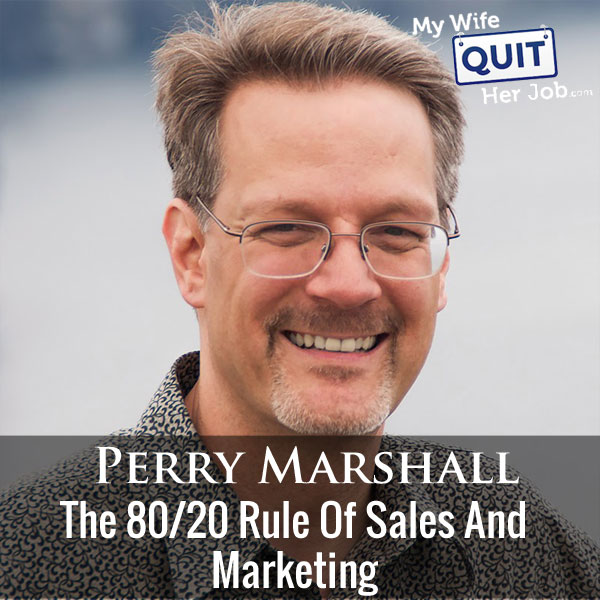
Perry Marshall wrote The Ultimate Guide to Google AdWords and The Ultimate Guide to Facebook Ads, and has consulted across more than 300 industries. He got into paid search when Google’s ad platform launched roughly six months after he went out on his own.
His central advice is narrower than most people expect. Master one traffic source and one conversion method before touching anything else.
This episode covers how to choose your platform, why retargeting should be your first campaign rather than your last, how to apply 80/20 to which products you advertise, and why Google’s own reps are a liability.
A note on timing: this is a 2017 conversation. Ad platform interfaces and targeting options have changed considerably since, so verify current features.
Get My Free Mini Course On How To Start A Successful Ecommerce Store
If you are interested in starting an ecommerce business, I put together a comprehensive package of resources that will help you launch your own online store from complete scratch. Be sure to grab it before you leave!
Table of Contents
Key takeaways
- Google suits analytical, technical, and B2B products, while Facebook suits cultural, emotional, and identity-driven ones.
- Facebook produces results within hours and ads wear out fast, while Google takes months to optimize and then runs durably.
- Start with retargeting and expand outward in widening circles until campaigns work on cold traffic.
- Rotate five different campaigns in retargeting rather than repeating one ad, which prevents banner blindness.
- Advertise the 4% of SKUs generating roughly 64% of sales rather than spreading budget across the catalog.
- Testing 10 radically different ad concepts typically produces a 3-to-1 spread between best and worst.
- Most advertisers use about 5% of available platform features, which is where the opening is.
- Expect to break even acquiring a customer and profit on the second sale.
Should you use Google Ads or Facebook Ads?
Match the platform to what you sell and the mental state of the buyer. Google users are searching with intent, and Facebook users are socializing.
Facebook fits cultural and emotional products. Anything tied to identity, relationships, or the tribe someone belongs to works there.
Google fits analytical purchases. Business to business, technical, and specification-driven products suit search better.
The speed profiles differ sharply. A good Facebook ad can generate responses within seconds and tends to wear out, while Google takes months to dial in and then runs like a freight train.
Perry offers scoring tools at isfbforme.com and isawforme.com. A dozen questions produce a one-to-ten suitability score, and the Google version also rates display and estimates competition.
How many advertising platforms should you use?
One traffic source and one conversion method until you have mastered both. Nobody can master six platforms at once.
The social media guilt trip is worth ignoring. Being present on every network is not achievable for someone just starting.
Narrow further than feels comfortable. Find a niche within your niche and work it relentlessly.
Distraction is the real enemy. It costs people entire businesses.
Why should retargeting be your first ad campaign?
Because it is nearly impossible to lose serious money on people who already visited your site. Retargeting someone from the last three days limits your downside while you learn the platform.
The economics are already in your favor. Somewhere between 1% and 10% of your visitors do what you want, and the strongest slice of the remainder can be brought back.
Most of that traffic is genuinely lost regardless. Roughly 70% to 80% will never convert, and the top of what remains is winnable.
Expand outward from there in concentric circles. Retargeting works like a clutch that keeps the engine from stalling as you move toward colder traffic.
A bad first experience sours people on paid ads entirely. Waking up to a $2,500 loss is how beginners quit before they learn anything.
Common objections are backwards. People find it creepy and resent paying to bring back their own visitors, and both are reasons the tactic works.
How do you keep retargeting ads from getting stale?
Rotate your five best campaigns rather than repeating one. Showing the same creative repeatedly produces banner blindness.
Multiple angles beat repetition. A returning visitor sees several facets of what you do instead of one message hammered over and over.
The side effect is a better impression. Varied ads read as relevant rather than creepy.
Note that Google offers two distinct types. Remarketing lists for search ads let you bid differently on prior visitors, and display network remarketing is a separate system entirely.
How is the Google Display Network different from Facebook ads?
Facebook targets a finite audience you gradually saturate, while the display network is a continuous parade of new people. That makes display more evergreen and Facebook more prone to fatigue.
Display carries more format options. Text ads, banner ads, and enhanced formats where Google tests combinations of your supplied text and images.
The hard part is that incumbents are entrenched. Advertisers using cost-per-action bidding lock onto sites that deliver acceptable returns, and Google favors incumbents much the way elections do.
Quality varies enormously across millions of sites. Low-quality inventory and click fraud are real, so much of the work is elimination.
How do you target the Google Display Network effectively?
Start with the less commonly used targeting methods, since roughly eight to ten exist and most advertisers use one or two. In-market targeting is a good entry point, reaching people Google identifies as actively shopping a category.
Category targeting is another underused option. Google maintains around 2,000 product purchase categories, so a baby products seller can target baby clothing specifically.
Guessing which individual pages will convert is a trap. Prediction at that granularity is close to impossible.
Limit exposure instead, then let data pick. Choose a narrow topic or keyword band, find the pages within it that convert, and eliminate the rest ruthlessly.
Perry’s framing is toehold, foothold, stranglehold. Get a few targets converting profitably, then expand from that base rather than attacking everything at once.
How do you apply the 80/20 rule to product advertising?
Advertise the 4% of your SKUs that generate about 64% of your sales. The 20% producing 80% has its own top 20% inside it, and that is where you start.
The ratio holds with remarkable consistency. Roughly 4% to 5% of what you sell accounts for about two thirds of the business.
Advertising the full catalog is financially reckless. At $10 of spend to learn a product does not work, a 30,000-SKU catalog burns $300,000 discovering that 29,950 products fail.
Within that 4% sits a smaller winner. Perry pushes clients toward the 1% that may be half the business, and toward owning it outright.
Being number one is the entire game. Number one on the internet is excellent and number four is worthless.
Product selection criteria go beyond volume. Highest margin, most unique, strongest selling proposition, and least commoditized.
Why Google Shopping is less competitive than search ads
Google Shopping is generally less picked over than national search campaigns. Search remains reasonable in local markets and gets brutally competitive nationally.
Perry describes a client who could never reach acceptable ROI on search. Aggressive experiments produced marginal improvement, and shifting the effort to Shopping worked considerably better.
That gives you room to develop. A less contested surface lets a campaign mature instead of bleeding money from day one.
How should you split test ads?
Test radically different concepts before testing wording. The classic advice about swapping a single verb is fine in principle and misses the larger opportunity.
Perry’s framing is forest, trees, branches, leaves. Establish that you are in the right forest before rearranging leaves.
Contrast the underlying emotional approach. One ad built on fear of what happens if the problem goes unsolved, another on how good life gets once it is solved.
The spread is large enough to matter. Testing ten genuinely different ads typically produces at least a 3-to-1 gap between best and worst.
That is also the gate to cold traffic. Somewhere around 90% to 98% of ads will never convert cold traffic, and finding the exception takes several rounds.
Should you expect to profit on the first sale?
Plan to break even acquiring a customer and make money on the second sale. Most markets sit near that equilibrium, with many advertisers running slightly negative on acquisition.
Sophisticated advertisers do this deliberately. They know their numbers well enough to know what they can afford.
Evaluate both holistically and campaign by campaign. Accepting a 15% loss on acquisition is rational when a known percentage of those customers buy something far more expensive later.
Then narrow by who those buyers actually are. Once high-value customers show a pattern in demographics or geography, you can shut off the loss-leading campaigns that never produce them.
Why you should not take advice from Google reps
Most have never spent their own money on advertising and are working against a quota. Perry knows agency owners who instruct their staff never to take those calls.
The default settings work in Google’s favor. New accounts open configured to spend rather than to perform.
The pattern is common enough to be predictable. A rep calls, recommends a campaign structure, and the advertiser loses a substantial sum, frequently on untargeted display placements.
The remedy is education before spend. Entering a mature auction against a house that sets the rules is not a game you win untrained.
Where is the opportunity left in mature ad platforms?
In the features almost nobody uses. Platforms develop targeting options aggressively, and roughly 90% of advertisers use about 5% of what exists.
That leaves unworked corners in any specific niche. Only a small number of very large advertisers exploit the full toolset.
The advantage compounds across small margins. Being slightly better than competitors in six or eight areas eventually wins, which is the principle of the slight edge.
Systematic testing is rarer than it should be. Few companies run even basic A/B tests properly, and almost none work from a planned testing roadmap spanning months.
Accurate tracking is the precondition for all of it. Measurement has to be configured correctly to feed you real information.
Frequently asked questions
Is Google or Facebook better for advertising?
Google suits analytical, technical, and B2B products where people search with intent. Facebook suits cultural, emotional, and identity-driven products where people are browsing socially.
What ad campaign should you run first?
Retargeting. It limits your downside while you learn the platform, then you expand outward toward progressively colder audiences.
How many products should you advertise?
Start with roughly the top 4% of SKUs, which typically generate about 64% of sales. Advertising an entire catalog spends most of your budget discovering failures.
How long do Facebook ads last compared to Google ads?
Facebook ads produce results quickly and wear out fast. Google campaigns take months to optimize and then run durably once dialed in.
How many ads should you test?
At least ten meaningfully different concepts rather than variations in wording. Expect roughly a 3-to-1 performance spread between the best and worst.
Should you make a profit on the first sale?
Usually plan to break even on acquisition and profit from the second sale onward. Most markets sit near that equilibrium.
Is Google Shopping easier than Google search ads?
Generally yes for national markets, where search competition is intense. Shopping tends to be less contested and gives campaigns room to develop.
Should you follow advice from a Google ads rep?
Treat it skeptically. Reps work against quotas, many have never spent their own advertising money, and default account settings favor spend over performance.