
Podcast: Download (Duration: 13:13 — 15.4MB)
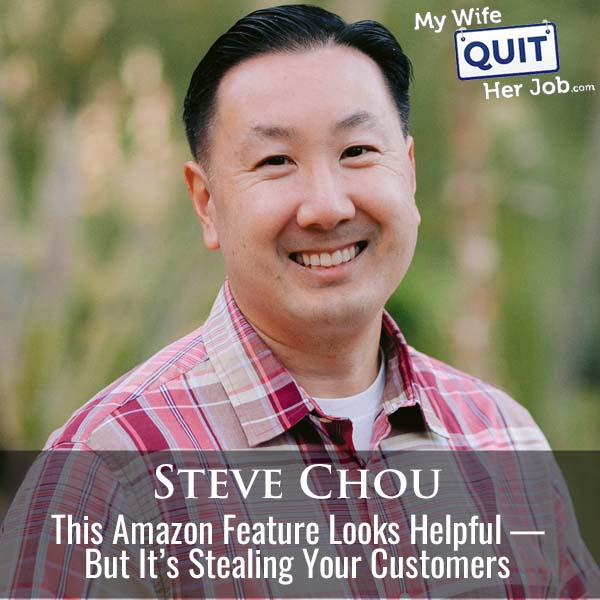
Amazon Buy With Prime adds a Prime badge and one-click checkout to your Shopify store, lifts conversions about 25 percent according to Amazon’s own data, and hands the customer email, retargeting pixel, and buyer behavior to Amazon in exchange. On this solo episode of the My Wife Quit Her Job podcast, I broke down the exact math on what Buy With Prime costs, what data you give up, and the narrow situations where it still makes sense.
The short version: for any DTC brand whose growth depends on repeat purchases, email marketing, or retargeting, Buy With Prime breaks the engine. You get a masked email like abc123@marketplace.amazon.com, your Facebook and Google pixels never fire, and Amazon quietly collects data on your best products so it can eventually clone them.
Below is the full breakdown: what the fee stack actually looks like on a typical $50 order, why the masked email is the single most damaging tradeoff, when the tool is worth using anyway, and the specific customer economics that show why repeat buyers matter more than your best-day conversion rate.
Get My Free Mini Course On How To Start A Successful Ecommerce Store
If you are interested in starting an ecommerce business, I put together a comprehensive package of resources that will help you launch your own online store from complete scratch. Be sure to grab it before you leave!
Table of Contents
Key takeaways
- Amazon claims Buy With Prime lifts conversions about 25 percent, and Amazon has never disclosed how the customer data it collects flows back into its own private-label program.
- Fees stack up: 3 percent Buy With Prime platform fee, roughly $5.38 in FBA fulfillment for a standard-size item, and 2.4 percent plus $0.30 payment processing. On a $50 product, that is about $8.38 in fees per order.
- The customer email you receive is masked (something like abc123@marketplace.amazon.com), so you cannot email, upsell, or run abandoned-cart flows to those buyers.
- Because checkout happens on Amazon servers, your Facebook, Google, and TikTok pixels never fire. That kills retargeting, lookalike audiences, and attribution.
- In my own Shopify store, Bumblebee Linens, 12 percent of customers repeat and generate 36 percent of revenue. The top 10 percent generate nearly 50 percent. Buy With Prime removes your ability to earn those follow-on sales.
- FBA fulfillment fees have risen about 96 percent since 2020. The fee stack that hurts today gets worse every year.
- The narrow use case: cold-traffic impulse buys under $30 with margin to spare, where you never expected a second purchase anyway.
What is Amazon Buy With Prime and how does it work on Shopify?
Amazon Buy With Prime is a checkout button you can add to your Shopify product pages that lets Prime members buy with their Amazon account and get two-day Prime shipping fulfilled from Amazon’s warehouses. Shoppers see a Prime badge on the page, click through, and check out with the payment method and address already saved in their Amazon profile.
For the brand owner, it looks like a free trust upgrade. You do not have to run the warehouse, you do not have to earn the shipping-speed trust yourself, and Amazon claims a roughly 25 percent conversion lift from just placing the badge. On the surface it is a plug-in that trades a few percentage points of margin for a bigger checkout button.
The tradeoff underneath is that Buy With Prime is not really an add-on to your Shopify checkout. It is a parallel checkout that pulls the customer out of your funnel entirely. Once they click Buy With Prime, the order is Amazon’s transaction, not yours.
How much does Amazon Buy With Prime cost per order?
Buy With Prime charges three fees on top of your product cost: a 3 percent platform fee on the order subtotal, a fulfillment fee of roughly $5 to $6 per unit for standard-size items, and payment processing of 2.4 percent plus $0.30 per transaction. On a $50 product, that stack works out to about $8.38 per order.
Here is the math for a typical $50 order:
- Buy With Prime platform fee (3%): $1.50
- FBA fulfillment fee (standard size): ~$5.38
- Payment processing (2.4% + $0.30): ~$1.50
- Total fees per order: ~$8.38
For comparison, Shopify Payments and Stripe charge about 2.1 percent plus $0.30 on my own store, so the payment processing piece alone is 0.3 points more expensive than what I would otherwise pay. The fulfillment fee is the biggest line item and it keeps climbing. Amazon’s FBA fees have risen roughly 96 percent since 2020.
If you run a typical DTC margin of 30 to 40 percent, Buy With Prime eats 25 to 30 percent of your profit on every order it touches. That is before ad spend, before your team, before rent, before the ongoing cost of finding the next customer.
Why the masked email destroys your DTC business
The single most damaging tradeoff with Buy With Prime is the masked email. Amazon does not give you the customer’s real address. You receive a forwarding stub like abc123@marketplace.amazon.com, and every attempt to email that customer goes through Amazon’s system, if it goes through at all.
For DTC brands, email is the entire retention engine. Every abandoned-cart reminder, restock alert, VIP early-access drop, coupon, and new product launch runs on email. A customer without a real email address is a one-time transaction with no follow-up, no second sale, and no way to move them into a loyalty flow.
The retargeting side is just as bad. Because Buy With Prime moves the checkout onto Amazon servers, your Facebook, Google, and TikTok pixels never fire on the purchase event. No conversion attribution, no lookalike audiences, no post-purchase upsell campaign, no retargeting the buyer for the next product in your line. All of it is gone.
The repeat-customer math that Buy With Prime breaks
Repeat customers are how a real Shopify brand becomes profitable, and Buy With Prime removes your ability to earn them. In my own store, Bumblebee Linens, we sell personalized wedding handkerchiefs. It is one of the lowest repeat-rate categories in ecommerce because most people only get married once.
Even in that hostile category, our numbers look like this:
- Repeat customer rate: 12 percent
- Revenue from that 12 percent: 36 percent of total revenue
- Revenue from top 10 percent of customers: nearly 50 percent of total sales
For most product categories, repeat rates run much higher (skincare, supplements, apparel, home goods all beat wedding accessories by a wide margin). The pattern is the same everywhere: a small slice of your buyers drives most of your revenue, and you can only reach them if you own the email, own the pixel, and own the follow-up.
If Buy With Prime is fulfilling 40 percent of your orders, you are losing your ability to earn 40 percent of your future repeat revenue. That is the actual cost. The 3 percent fee is the sticker; the missing 40 percent of your loyalty base is the real invoice.
How Amazon uses Buy With Prime data against sellers
Every Buy With Prime checkout tells Amazon which products are selling on your store, at what price, to which customer segments, and how fast. Amazon has a documented track record of using that kind of data to launch private-label competitors, undercut on price, and buy ad placements on the original seller’s own listing.
A friend of mine used to sell emu oil on Amazon and built a solid business until Amazon launched its own emu oil, undercut her price by 30 percent, and started running Amazon Basics ads directly on her product page. Her revenue tanked almost overnight. This is not a rare story. Amazon has done the same to luggage brands, battery brands, fashion labels, and household goods, sometimes at eight-figure scale.
Buy With Prime hands Amazon that data voluntarily, from off-Amazon sales you paid to acquire. You are running the market research for their next private-label launch, and you are the one paying for the traffic. The Prime badge is the wrapper on a surveillance product.
When Amazon Buy With Prime actually makes sense
Buy With Prime makes sense on cold-traffic impulse buys under $30 where you never expected a second purchase, and where your margin can absorb the roughly $8 fee stack. If the product is one-and-done, giftable, and being sold to a shopper who has never heard of your brand, the Prime badge earns its cost by closing sales that would otherwise abandon.
It also works fine as a short-term tool if you are already fulfilling through FBA for your Amazon marketplace listings and your unit economics already carry those fees. In that case, Buy With Prime is one more surface for the same inventory pool, and the incremental margin hit is smaller than it looks on paper.
Where it stops working is anywhere retention matters. If your business runs on subscription, email flows, abandoned-cart recovery, post-purchase upsells, loyalty programs, or a lifetime-value model, Buy With Prime breaks the engine that makes those things profitable. Your discount codes, subscription apps, and post-purchase upsell apps are all bypassed because the customer is not going through Shopify checkout anymore.
Buy With Prime vs Shopify Payments at a glance
| Factor | Buy With Prime | Shopify Payments |
|---|---|---|
| Platform fee | 3% of subtotal | 0% |
| Payment processing | 2.4% + $0.30 | ~2.1% + $0.30 (US, higher plans) |
| Fulfillment | FBA (~$5.38 standard) | Your choice |
| Customer email | Masked (@marketplace.amazon.com) | Real email |
| Ad pixels fire | No | Yes |
| Retargeting | Not possible | Yes |
| Subscription/upsell apps | Bypassed | Fully supported |
| Data shared with Amazon | Yes (product, price, buyer) | No |
The bigger picture: Amazon does not want to help your Shopify store
Amazon does not want to help your Shopify store; it wants to become your Shopify store. Buy With Prime is the same move Amazon has made repeatedly across categories over the past decade. Get inside the seller’s operation, learn the demand curve, then launch a competing product and take the margin.
I have been running Bumblebee Linens for 18 years, and Amazon is a deliberate minority of our revenue for exactly this reason. Every channel that owns the customer relationship is worth more than a channel that owns just the transaction. The moment you cede the customer, you lose the ability to compete for their next purchase.
The rule I use is simple: whoever owns the customer owns the future. If Buy With Prime helps you close cold-traffic impulse sales without touching your retention engine, use it strategically. If it starts eating your best customers or your best products, you are training your replacement.
Frequently asked questions
What is Amazon Buy With Prime?
Amazon Buy With Prime is a checkout button that Shopify (and other) stores can add to product pages, letting Prime members buy with their Amazon account and get two-day Prime shipping fulfilled from Amazon’s warehouses. Amazon handles fulfillment, payment, and returns, and the customer’s data stays with Amazon.
How much does Buy With Prime cost per order?
Buy With Prime charges a 3 percent platform fee on the subtotal, plus FBA fulfillment (about $5 to $6 for standard-size items), plus payment processing of 2.4 percent plus $0.30. On a $50 order that works out to roughly $8.38 in total fees.
Does Buy With Prime give you the customer’s email?
No. Buy With Prime returns a masked email like abc123@marketplace.amazon.com that routes messages through Amazon. You cannot send marketing email, run abandoned-cart flows, or export the address to a CRM.
Do Facebook and Google pixels work with Buy With Prime?
No. Because Buy With Prime moves the checkout onto Amazon servers, your Facebook, Google, and TikTok pixels do not fire on the purchase event. That breaks conversion tracking, retargeting, and lookalike audiences for those buyers.
When does Buy With Prime actually make sense?
Buy With Prime makes sense on cold-traffic impulse buys under $30, when the product is one-and-done, giftable, and your margin can absorb roughly $8 in fees. It is a bad fit if your business relies on repeat purchases, email marketing, subscriptions, or loyalty programs.
Will Buy With Prime hurt my Amazon private-label risk?
Possibly. Amazon has a documented pattern of launching private-label competitors after seeing sales data for successful third-party products, and Buy With Prime gives Amazon direct visibility into your off-Amazon sales. If you sell a product Amazon could easily clone, Buy With Prime raises that risk.
Does Buy With Prime work with Shopify subscription and upsell apps?
No. Because Buy With Prime bypasses Shopify’s checkout, discount codes, subscription plugins, post-purchase upsells, and cross-sell apps are all skipped. Any tech stack you built on top of Shopify’s checkout does not apply to Buy With Prime orders.