

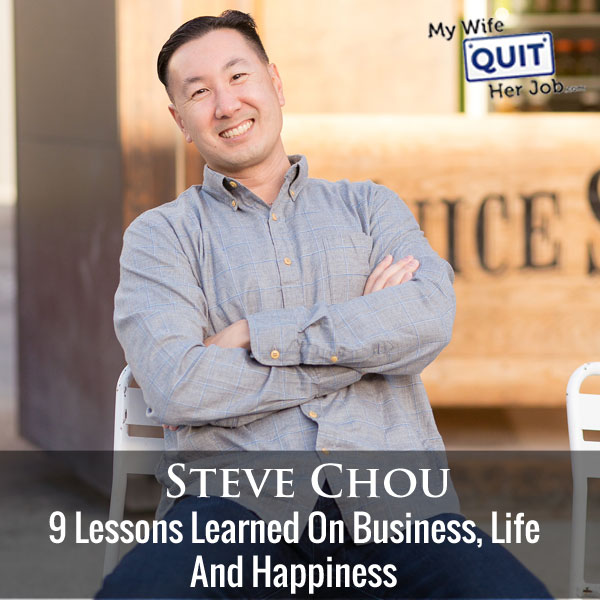
Podcast: Download (Duration: 29:29 — 40.8MB)
Reaching financial freedom did not make me happy, and 2017 was the year I found that out. I quit my job in October 2016 with two seven-figure businesses behind me, and by month four I was bored and missing the parts of my old life that had nothing to do with money.
Then I tore my Achilles tendon in July and spent weeks in bed. The forced downtime is what made me actually examine which parts of my life were working.
This is the first of three episodes recapping the year. The next two break down how each business performed and which strategies drove the numbers.
A note on timing: this is a 2017 year-end recap published in early 2018. The lessons are personal rather than tactical, so nothing here has aged out.
Get My Free Mini Course On How To Start A Successful Ecommerce Store
If you are interested in starting an ecommerce business, I put together a comprehensive package of resources that will help you launch your own online store from complete scratch. Be sure to grab it before you leave!
Table of Contents
Key takeaways
- Hitting a goal leaves you without direction, so build an overall vision for your lifestyle instead.
- Happiness breaks into five areas: wealth, mental stimulation, family, social stimulation, and physical fitness.
- Growing a business faster adds stress without adding proportional happiness, which is why steady manageable growth beats maximum growth.
- Consistency beats speed, and losing your routine stops progress entirely.
- If you do not know what business to start, document something you are good at and build an audience first.
- Comparing yourself to peers is the reliable route to feeling worse regardless of your actual results.
- Splitting attention across several projects produced nothing finished across an entire year.
- One complaint represents roughly 24 other dissatisfied customers, and resolving it quickly retains up to 95% of them.
What happens after you reach financial freedom?
The first three months are excellent and then something starts missing. I worked out daily, got in great shape, made every one of my kids’ games, and handled pickup and dropoff.
Around month four the boredom arrived. Both businesses grew double digits that year, so the problem had nothing to do with the businesses.
What I missed was the office. Being around people smarter than me for eight hours a day, and the technical challenge itself, had been doing something for me that I had not accounted for.
Losing the work also cost me an identity. I designed hardware and microprocessors for over 20 years, and tech moves fast enough that a year away makes returning genuinely hard.
The schedule was as good as it sounds and still left a gap. Work from eight to noon, lunch with my wife, a workout, and a free afternoon, with side projects that never gained traction.
Nine lessons came out of that year. The first five are personal: stop setting goals, understand the five components of happiness, protect your routines, help others while you figure things out, and appreciate what you already have.
The last four are about how you work: focus on one thing, partner with people who challenge you, treat customers like royalty, and take action before you feel ready.
Lesson 1: Set a vision for your lifestyle instead of business goals
Goals leave you stranded the moment you hit them. My goal from 2009 was to earn enough from the blog to quit my job, I did it in October 2016, and I arrived with no plan for what came next.
A vision keeps working after a milestone passes. Ours is to spend more time with family and reduce stress, and every business decision gets measured against that.
The evidence for the switch was our own experience. Hitting growth targets made us happy for a couple of days before we forgot about it and returned to the grind.
Fast growth has a real cost. Every product launch and new sales channel adds stress, and the holiday rush is uncomfortable no matter how good the revenue is.
So we shoot for steady manageable growth now. The extra money does not add enough happiness to justify the stress it takes to get it.
My hardest part is ego rather than economics. I watch peers making far more money online while their family or social lives suffer, and keeping that in perspective takes ongoing effort.
Lesson 2: Wealth is only one of five parts of happiness
Happiness breaks into wealth, mental stimulation, family, social stimulation, and physical fitness. I had assumed solving the first one would carry the rest, and it does not.
Wealth is genuinely handled. We do not spend much, both businesses cover the family comfortably, the kids’ education is set aside, and the house is ours.
Mental stimulation is where I fell short. Designing microprocessors demanded a level of problem solving that blogging, teaching, and running the store have not replaced.
Family is the area that improved most. I make every activity, I drive them everywhere, and I am joining the coaching staff for their basketball team.
Social stimulation went backward after I stopped commuting. Working alone at home means I go long stretches without talking to anyone, and my instinct against paying for a coworking space I do not strictly need has kept me from the obvious fix.
Physical fitness turned out to matter more than I expected. Running and sports were how I processed stress, and losing both to the injury pulled my mood down with them.
The practical move is to audit all five. Find the ones that are lacking and work on those rather than defaulting to more revenue.
Lesson 3: Routines matter more than motivation
Losing my schedule cost me two months of progress. Before the injury I worked out at fixed times and never missed, and my business work ran on an equally strict calendar.
The structure was specific. Sundays I write at Starbucks for four hours, Thursdays are Bumblebee Linens, and Wednesdays are office hours for my class.
The injury broke all of it at once. I stopped writing, stopped working on the store, and stopped working on the blog.
Filling gaps opportunistically failed completely. Hunting for random pockets of time produced nothing, because none of it was on the schedule.
Recovery came from rebuilding the calendar. Once I fit those blocks back in, even unable to walk, the work resumed.
Consistency beats speed. How often you do something matters more than how fast you do it.
Lesson 4: Help other people while you figure out what to do next
Helping others is what carried me through a year of not knowing my next move. I had enough free time that I seriously considered taking another full time job.
Instead I put the hours into students, readers, and listeners. Several students are earning six figures now and a handful are making millions a year.
One of them wrote a book about building a multimillion dollar business. Being able to help promote that is genuinely satisfying in a way revenue is not.
The same advice applies if you lack money or an idea. Everyone is good enough at something to teach it, so document it through a blog, a podcast, or video.
That is exactly how this business started. I wrote about running Bumblebee Linens in 2009, readers who wanted to spend more time with their families found me, and the audience came before any plan to monetize it.
Money followed the audience by years. Three years of nothing, then requests for a class, then affiliate revenue and advertising, then the course where the real revenue started.
Lesson 5: Appreciate what you have instead of comparing yourself to peers
Comparison is what reliably makes me miserable. I attend a yearly retreat for the Mayfield Fellows entrepreneurship program at Stanford, where classmates have built eight and nine figure companies.
Kevin Systrom of Instagram went through that program. I sell handkerchiefs and teach a class, which is not the kind of business that ends in a venture-backed exit.
The injury reframed all of it. Being my own boss meant I could be hurt for months without going to work, without obligations, and without losing income.
That flexibility is what a lifestyle business actually buys. It is worth more than the comparison suggests, and I am still working on being less jealous of people doing better on a metric I did not choose.
Lesson 6: Focus on one project at a time
Running several projects at once finished none of them. I had a SaaS business, an influencer-space project, and a personal coding project going simultaneously.
All three went nowhere. Free time created the illusion that I could carry all of them.
I see the same pattern constantly in my students. They sell on Amazon, build their own site, learn AdWords, run Facebook ads, and grow Instagram all at once, and none of it compounds.
Progress requires picking one thing. That is the change I am making for 2018.
Lesson 7: Work with partners who challenge you
Partners make the work better, which took me years to accept. I used to prefer operating alone because I did not trust anyone else to do the job as well.
Two of my businesses disprove that instinct. Bumblebee Linens would not exist without my wife, and Sellers Summit would not exist without Toni Anderson.
The difference shows up in how the work feels. A project with someone who pushes you is more fun and stops feeling like work.
Lesson 8: Word of mouth compounds in both directions
Treat customers like royalty, because each one talks to far more people than you would guess. A good share of Bumblebee Linens revenue is B2B, selling to hotels, event planners, bed and breakfasts, and small airlines.
Last year an entire crop of B2B customers arrived with no outreach from us. Normally we cold call or follow up with large-quantity buyers.
They were all fashion retailers, which explained it. One of our best customers changed companies and spread the word inside a small, tightly connected community.
The downside math is worse than most owners realize. Research from the Research Institute of America for the White House Office of Consumer Affairs found businesses never hear from 96% of unhappy customers, and each dissatisfied customer tells about nine other people.
That makes a single complaint a signal rather than an incident. One complaint implies roughly 24 more dissatisfied customers, who collectively tell about 216 people.
Resolution recovers most of them. Up to 70% will buy again if their complaint is resolved, rising to about 95% when it is resolved quickly.
The same amplification runs the other way. Genuinely delighted customers bring you business you never worked for.
Lesson 9: Take action before you feel ready
Commit publicly and let the obligation force the work. My Create A Profitable Online Store course sat on my to-do list for a long time while people asked for it.
I launched it with nothing built. I ran a webinar and told people that if they paid, I would produce the content on a regular schedule.
Thirty-five people bought, which came to about ten thousand dollars. Collecting that money is what forced the course into existence.
That course has since earned millions. Skipping that one webinar would have cost all of it.
Frequently asked questions
Does financial freedom make you happy?
Not on its own. I quit my job with two seven-figure businesses and was bored within four months, because mental stimulation, social contact, and fitness were all missing.
What are the five components of happiness?
Wealth, mental stimulation, family, social stimulation, and physical fitness. Audit all five and work on whichever are weakest rather than defaulting to earning more.
Why should you avoid setting business goals?
A goal ends when you reach it and leaves you without direction. A long-term vision for how you want to live keeps guiding decisions after any single milestone passes.
Is fast business growth worth the stress?
Often not. Every launch and new sales channel adds pressure, and the additional income did not increase our happiness proportionally, so we now target steady manageable growth.
What should you do if you do not know what business to start?
Document something you are already good at through a blog, podcast, or video and build an audience. Monetization options tend to appear once an audience exists.
How long does it take a blog to make money?
Mine made nothing for three years. The audience built first, then course requests, affiliate revenue, and advertising followed.
How many customers does one complaint represent?
Roughly 24. Businesses never hear from about 96% of unhappy customers, and each tells around nine other people.
Does resolving a complaint keep the customer?
Usually. Up to 70% of complaining customers buy again once their issue is resolved, and up to 95% when the resolution is fast.

